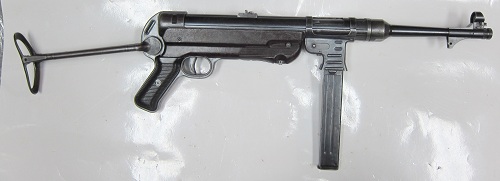
Steyr Mp40 [REDUX]

1 MP 40 584 Rt side Open - E

Hello bajtársak and fellow forumdwellers,

A bit more information came up on the gun, so Im now repeating an older suggestion.

The Mp40 does not need an introduction, every gamer can recognize it thanks to the countless games it was featured in.
Distinctive, stylish, practical, intimidating, its the Wehrmacht incarnated into a gun.
It’s still in use in at least one contemporary armed conflict.

However, the Mp40 has more than just one face.
We are all familiar with the classic Mp40, slow firing (550 rpm), extremely reliable and easily controllable submachine gun made to the highest standards.
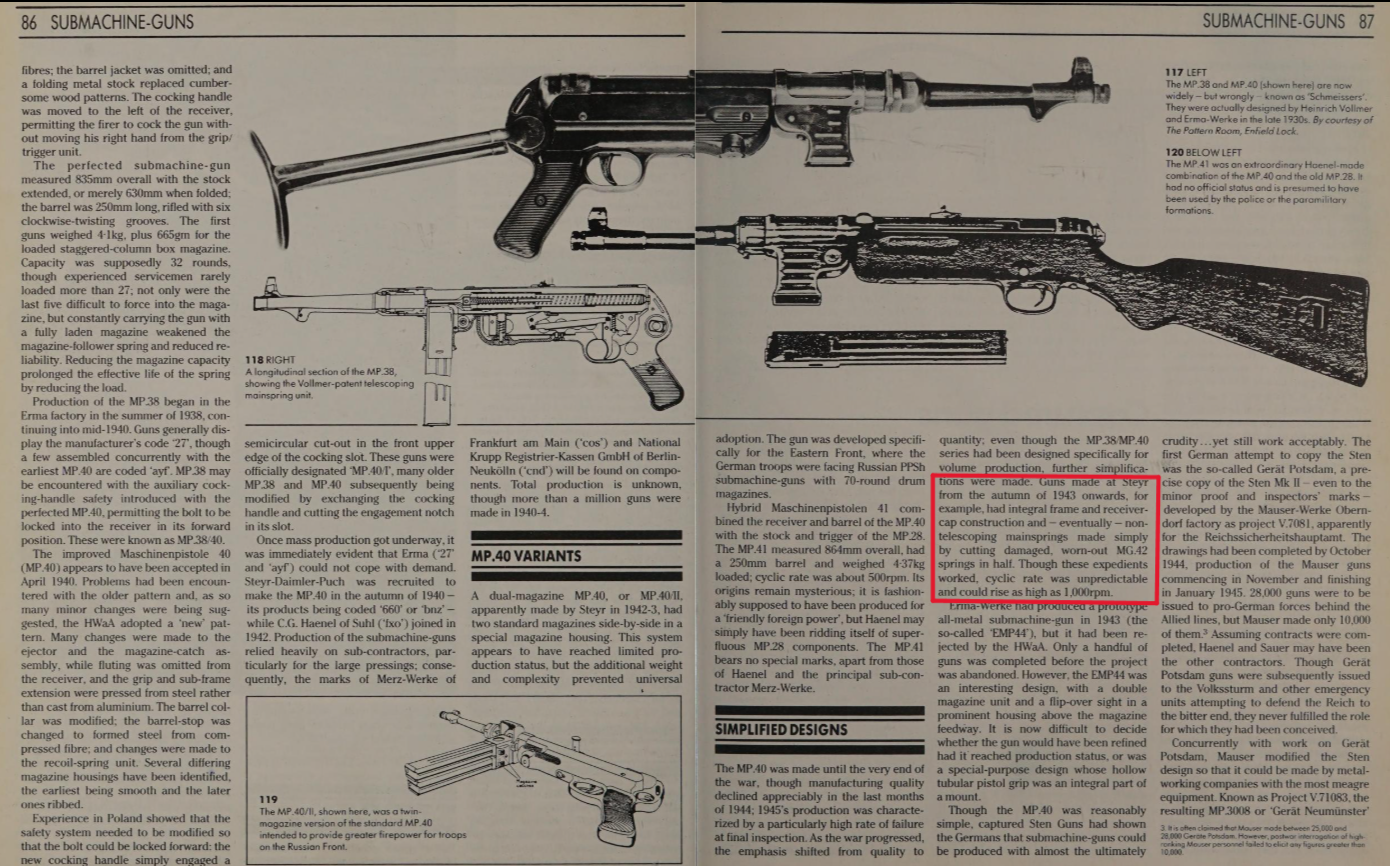
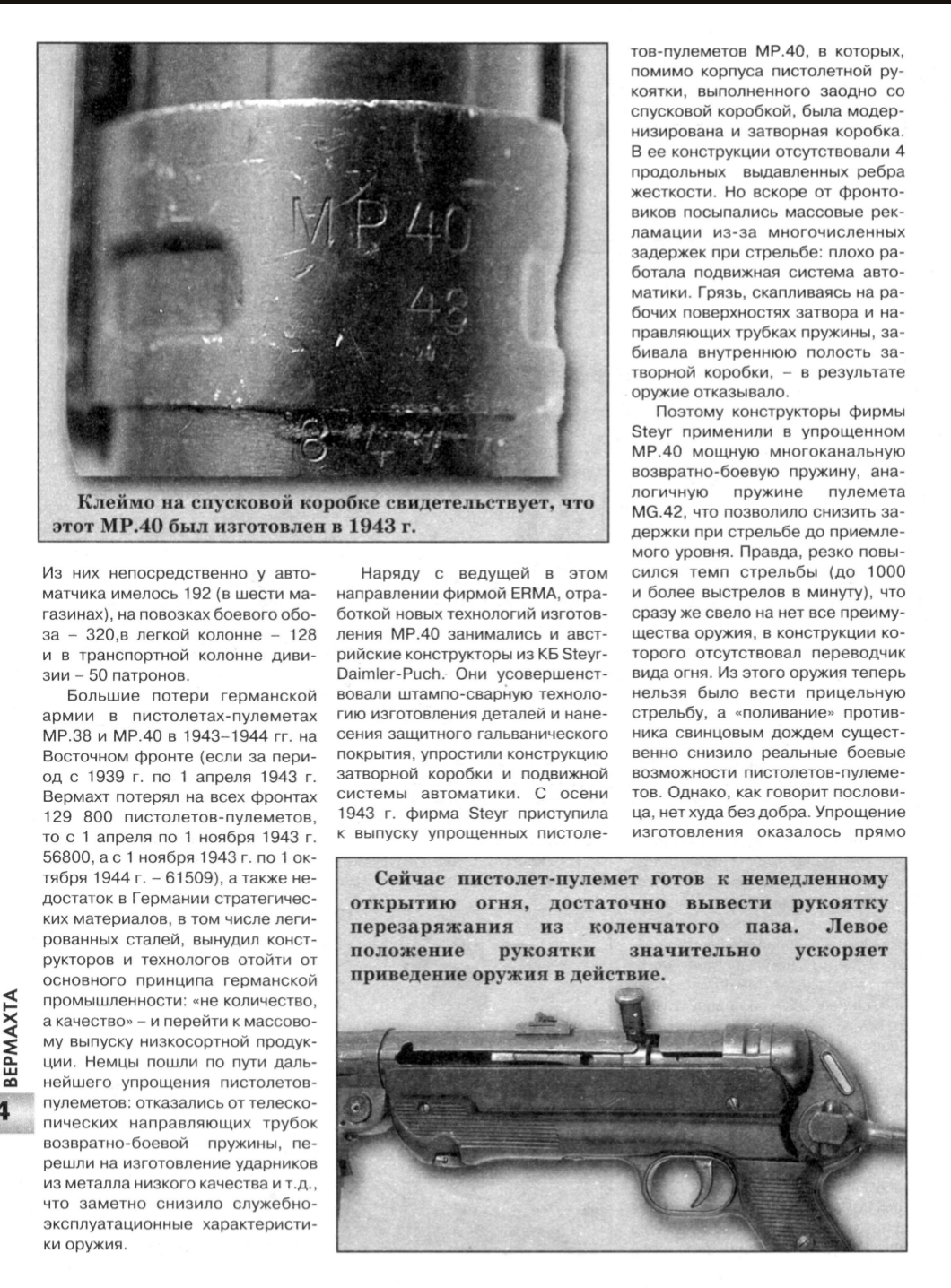
There is another face to the Mp40, a mass-produced, low quality control, desperation birthed gun with chaotically high fire rate. This is the Steyr Mp40 produced from 1943 onward.

The Austrian Steyr factory was actually famous for producing the Mp34 before the war, the highest quality submachine gun in the world at the time.
However the harsh reality of war pushed Steyr to simplify the Mp40 again and again to keep up with the ever increasing needs of the war. By 1942 Steyr was producing the most Mp40 SMGs in the entire Reich.

In late 1943 Steyr created the final variant of the Mp40 which Lyndon Haywood author of “The German Submachine Guns” dubbed it as “7th variation of Mp40”.
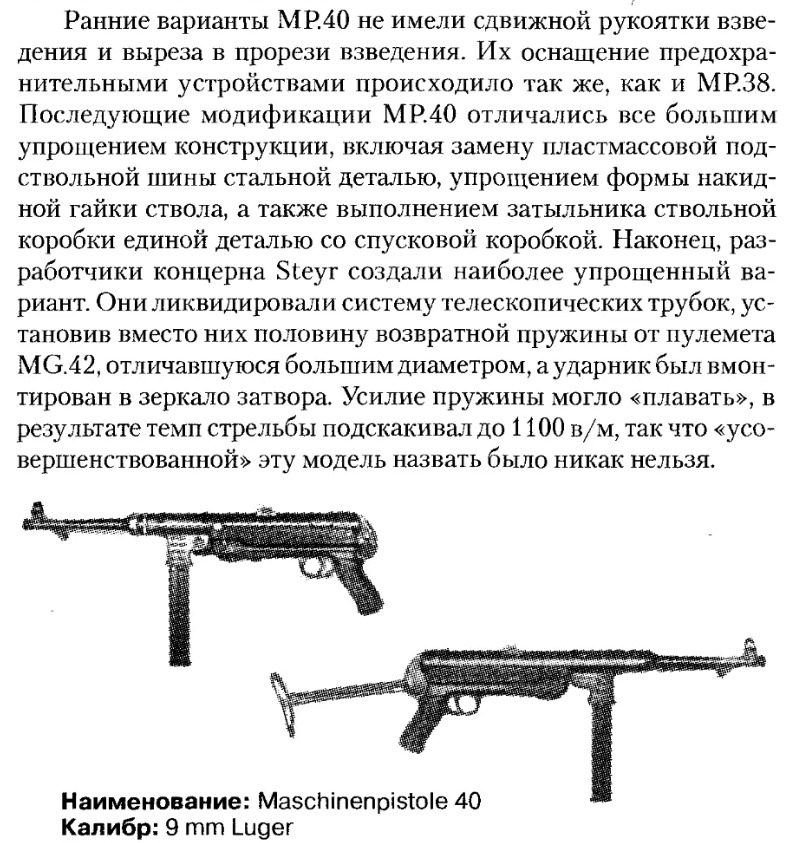
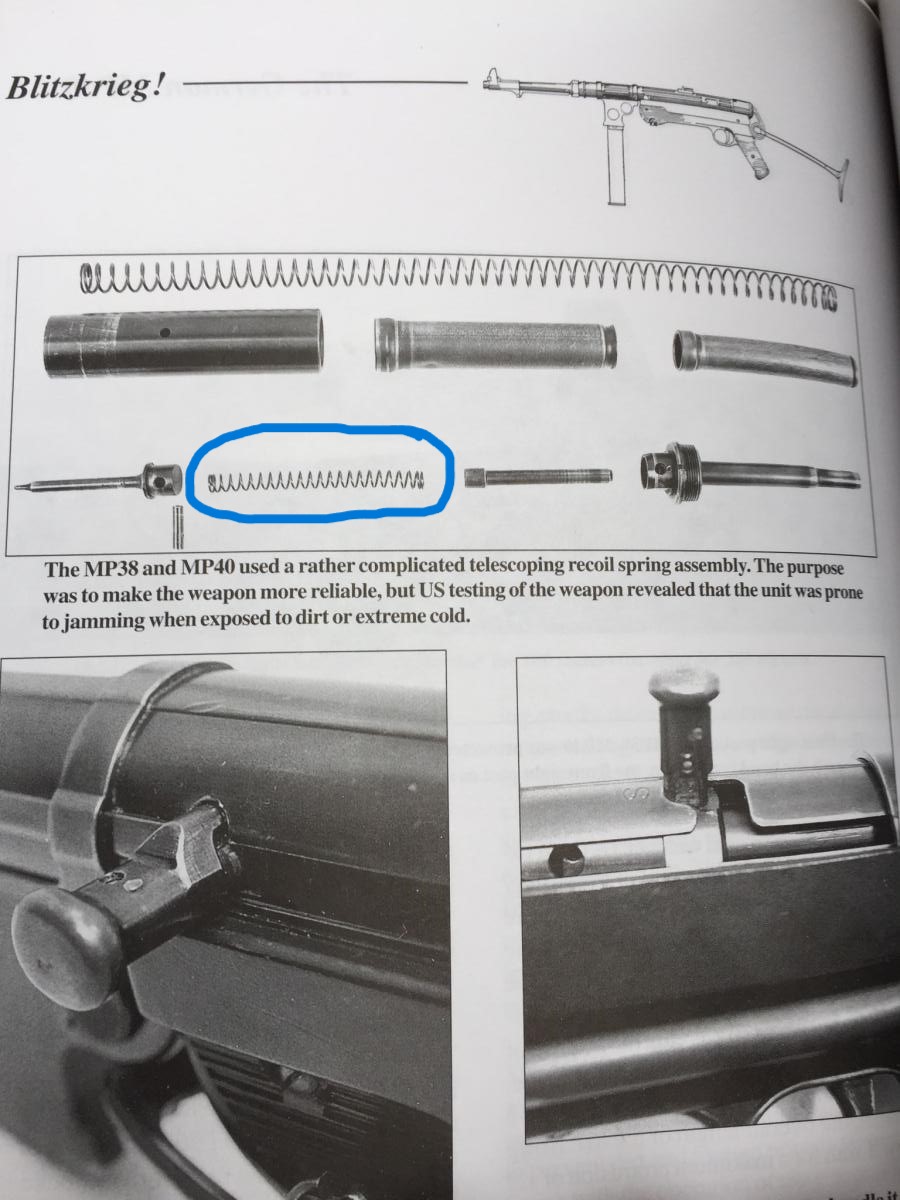
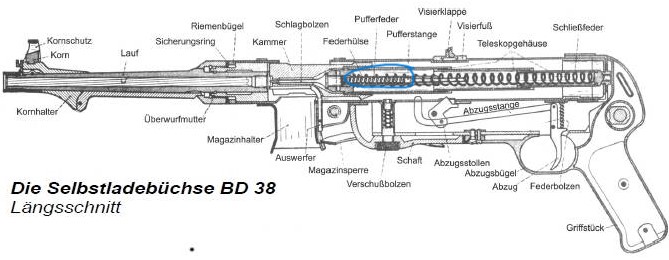
The firing pin was replaced with a solid one and the complicated telescoping bolt with an MG42 style spring. The origin of the spring is not clear, some speculate that its an MG42 recoil spring cut in half, however that would not be very economical.
The more technical sources use the term “MG42 style spring” instead, which is probably far closer to reality. Steyr also produced MG42 machine guns so it would not take them too many resources to produce purpose built springs for the Mp40.

This change has resulted in a significantly increased fire rate of 1100 rpm which was twice as much as the gun was originally designed for, naturally the Styer guns faced very high attrition as a result.
It is unclear how many Steyr Mp40 guns were made before in 1944 Mp40 production was completely terminated in favour of the StG44. During the time of the production, (from late 43 to early/mid? 44) tens of thousands of Mp40 were produced at Steyr however only a portion of them were made with MG42 style springs.
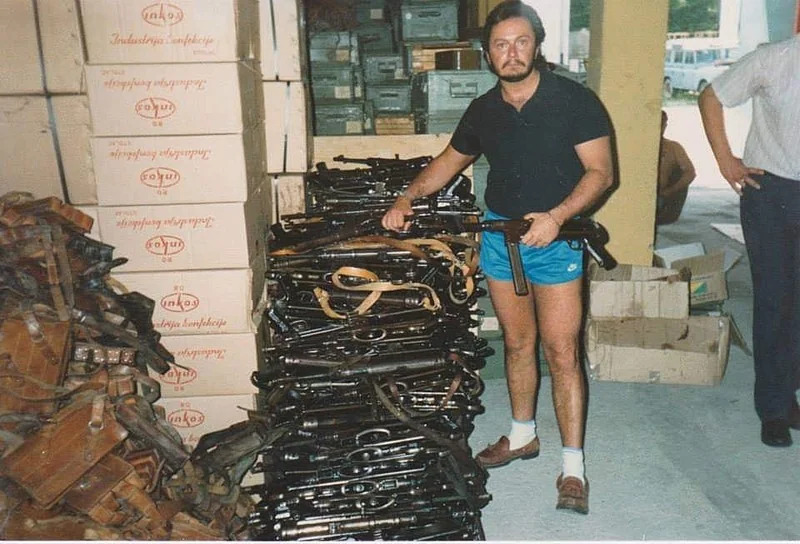
Few of them survived the war, the most likely places to come across them with the original spring still intact are in backwater regions that saw significantly less active fighting such as Netherlands, Norway, Denmark and certain parts of Yugoslavia.


This gun turned up in Bosnia, presumably it was either a museum piece or in storage of the Yugoslav army until it ended up in private collection in the 90s.
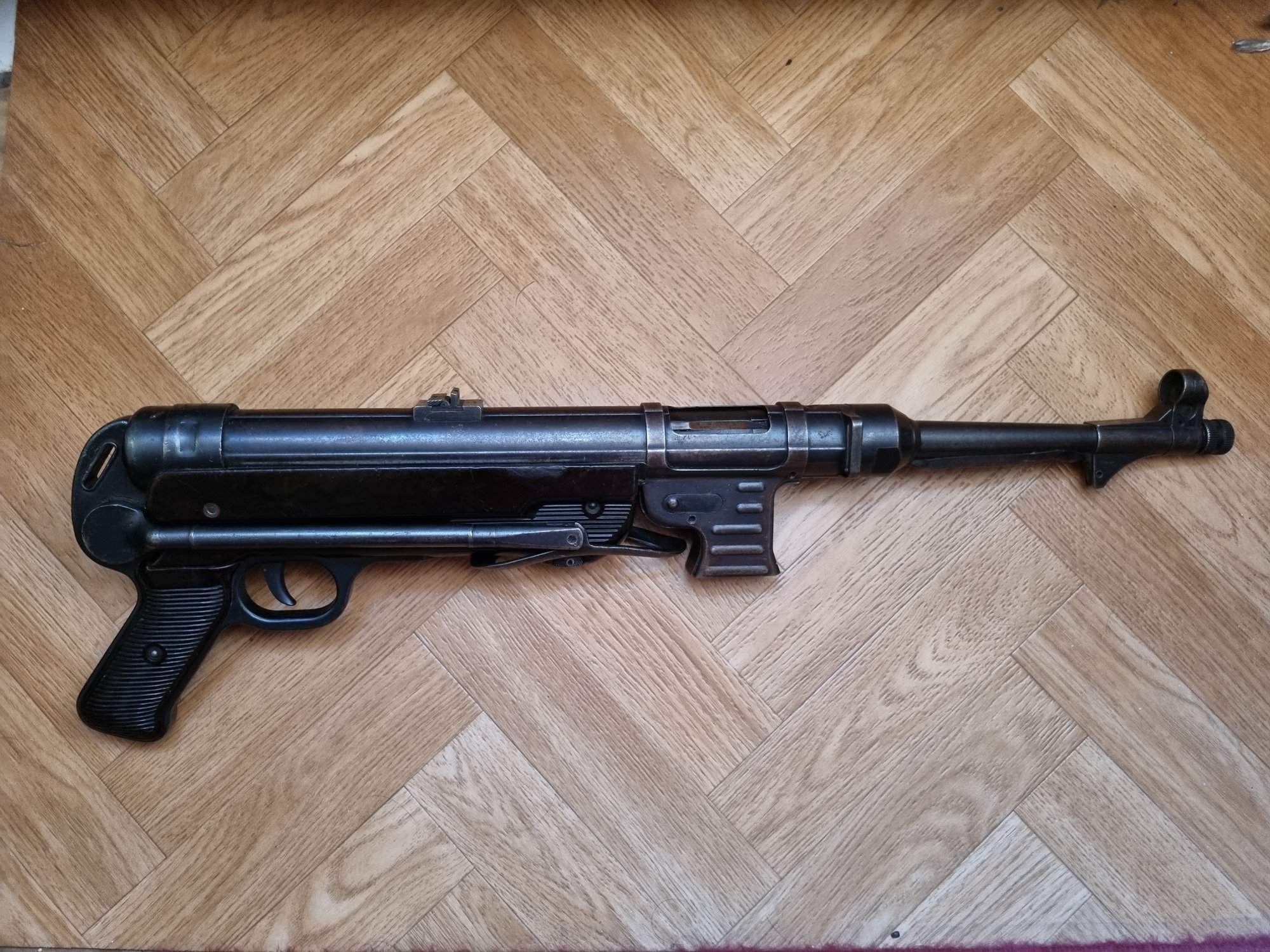
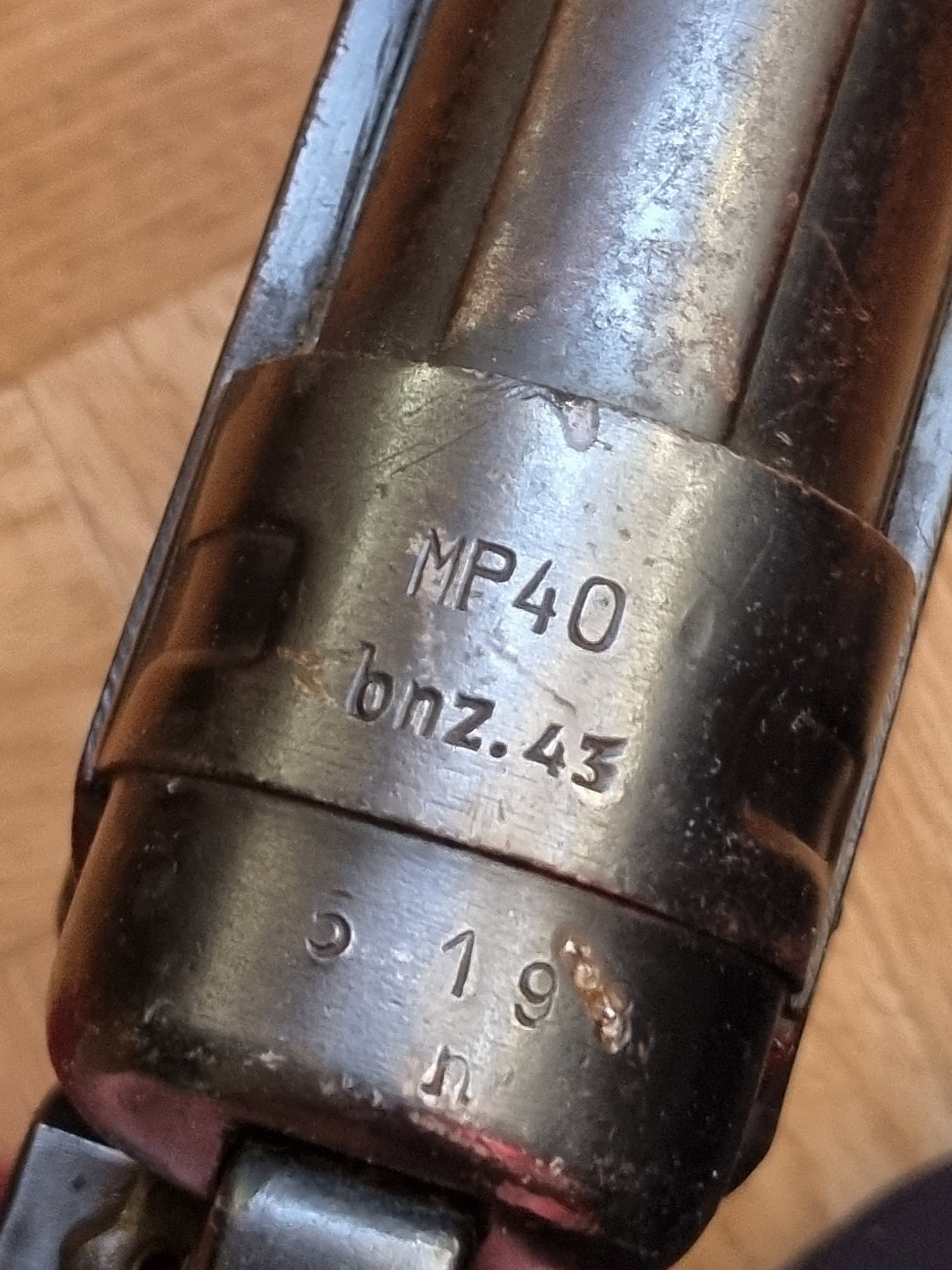
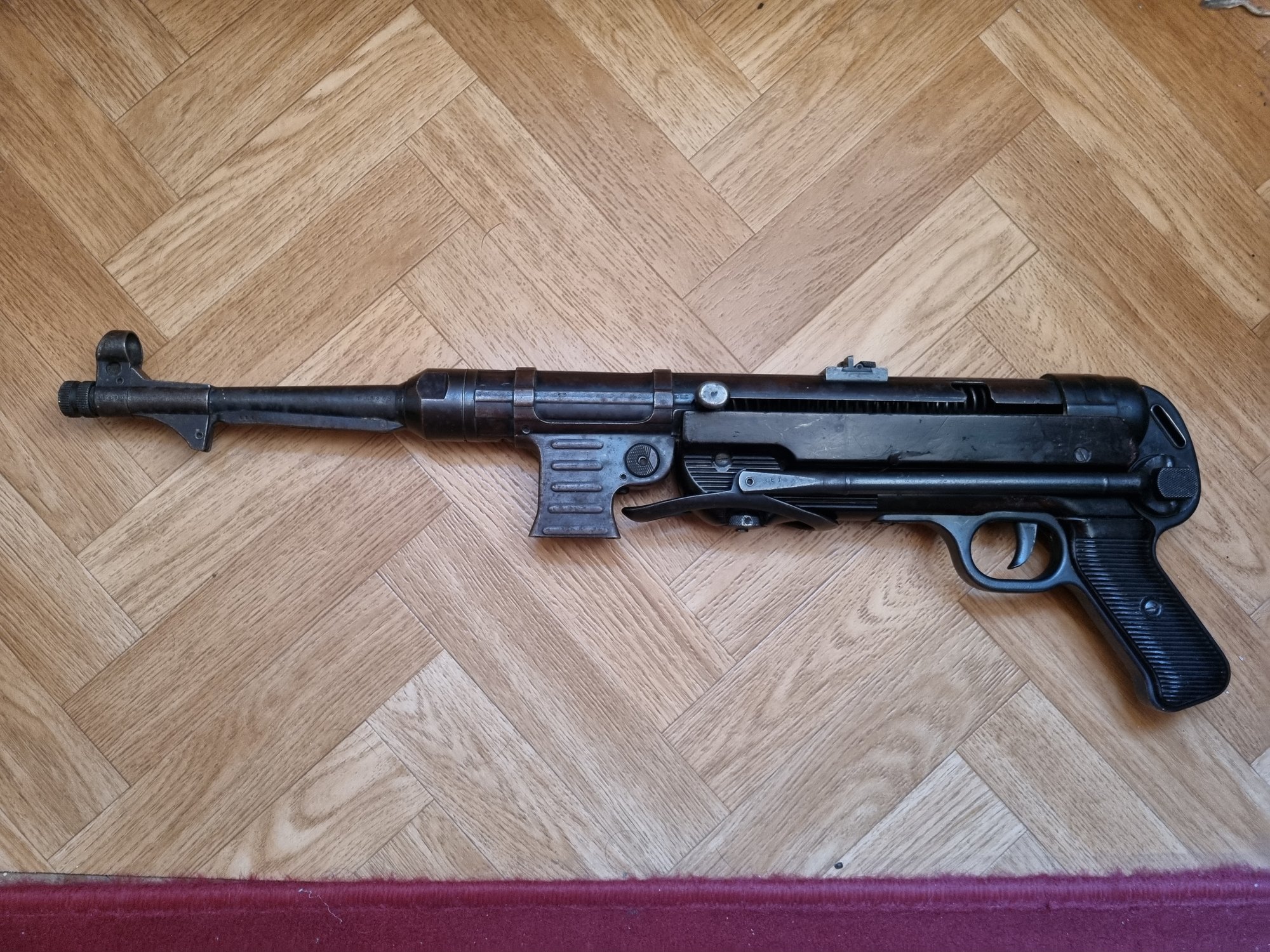

The markings (BNZ-43) and the details (integrated pistol grip, simplified two piece boltnut etc.) fit the time frame of the production too. The MG42 style spring inside is also visible.

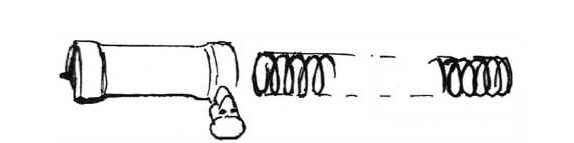
For comparison, this is an MG42 coil spring
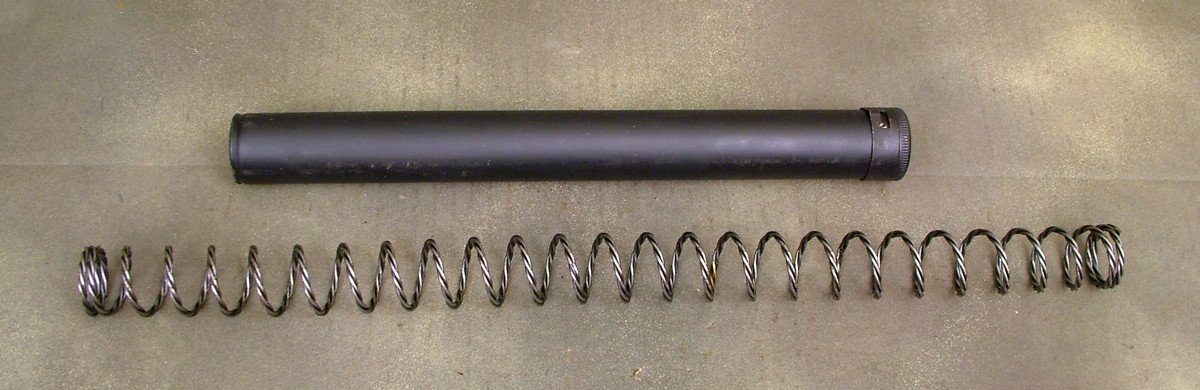

while Mp40 springs that were put inside the telescoping springs are significantly smaller and coil in a different distinctive manner.
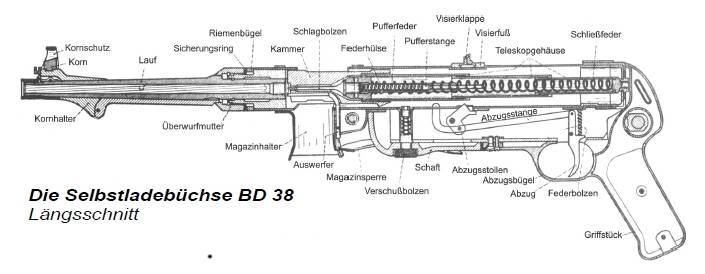
BD38

Sources:

Primary source:

The German Submachine Guns - L. Haywood

image

Guns of the Reich: firearms of the German forces, 1939-1945 by George Markham

The World´s Submachine guns by Thomas B. Nelson
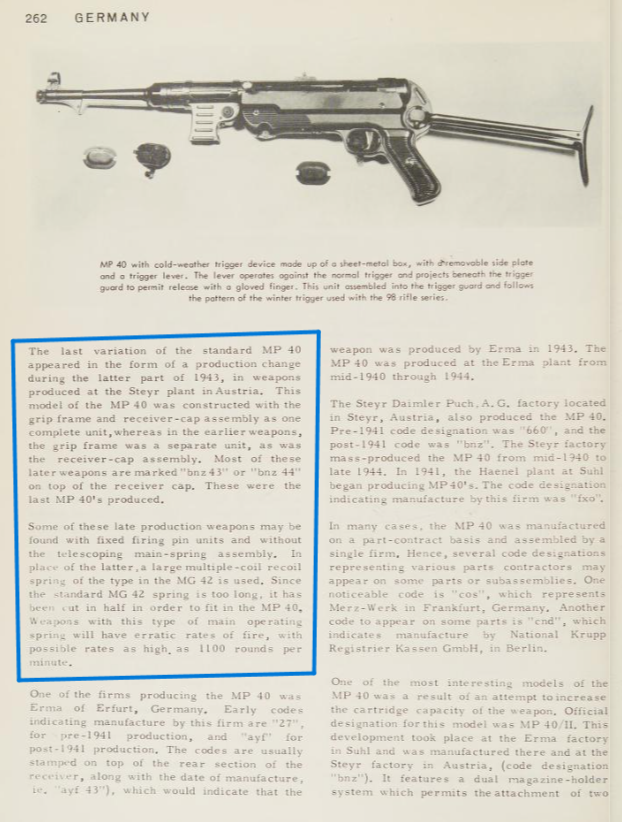
Tom Nelson Steyr MP40

sources in Russian

“Пехотное оружие Третьего рейха. Часть 3 - Пистолеты-пулеметы [Оружие. Спецвыпуск. 2001’08]” / "Infantry weaponry of The Third Reich. Part 3 - Submachine guns [Оружие. Спецвыпуск. 2001’08]”

unknown source
0e224d02e4132e2a8e4f6b47a78646d92d968cee

Would you like to see the Steyr Mp40 added?
  • Yes
  • No
0 voters
If yes, how would you like to see it added?
  • Tech Tree
  • Event/Premium
  • Battle Pass
0 voters
13 Likes

Can I get a link to the photo, please?

1 Like

Ofcourse. You will need to scroll for a while to get it.
But its from this site: Weblog | Die Maschinenpistole MP38, MP40, MP41

5 Likes

“I don’t know much about this rifle, so I’m sending you some pictures. I’m from Bosnia, and during the war here, my father saw one part of this rifle, and as he continued walking—about 500 meters further—he found the other part. He went back, took the first piece as well, and we assembled it. It doesn’t have a magazine or the spring that pushes the firing pin, so it’s not usable. This rifle has been sitting in my house under a wardrobe for years, collecting dust.”

It seems to me there’s a bit of a contradiction:

fake gun so no

2 Likes

image

10 Likes

real gun, no issue here (other than it being attached to chinamen squad for chinese whales)

1 Like

Cant take posts from soviet mains serious since their bias in every BR and the body armor.

This weapon should be added. Maybe as event weapon, maybe as BP weapon. Soviet mains will hate it.

15 Likes

I remain skeptical that the so-called “seventh variation” of the MP40 with half of an MG42 recoil spring was ever a standard production model. To me, it looks much more like a story that has been repeated from one publication to another without solid primary evidence.

The main reason is the lack of documentation. None of the books that mention this modification cite German factory drawings, Waffenamt documents, Steyr production records, spare parts lists, or official change notices. The claim simply appears in older secondary sources and is repeated almost word for word in later publications.

More importantly, modern specialist works such as The Schmeisser Myth (Collector Grade Publications) examine the evolution of the MP40 in great detail, including production changes at Steyr, yet they do not describe a serial-production variant using half of an MG42 spring. That omission is difficult to ignore.

If Steyr had really produced thousands of MP40s with a completely redesigned recoil system in 1943–45, I would expect far more evidence today: museum examples, well-documented collector guns, factory records, detailed disassembly photographs, and discussions by modern researchers. Instead, we mainly have an old claim repeated in several books.

I’m not saying such experimental or very late-war guns could never have existed. A small experimental batch or field expedient is certainly possible. But based on the evidence currently available, I don’t think there is enough to conclude that this was a standard serial-production MP40 variant.

2 Likes

Another point that makes me skeptical is the logistics.

The idea that Steyr was routinely cutting MG42 recoil springs in half to build MP40s seems counterintuitive. The MG42 was arguably the most important infantry weapon in the German Army, and German infantry doctrine was built around the machine gun. By late 1944 and 1945, Germany was trying to increase MG42 production as much as possible to replace mounting losses, while MP40 production was already being phased out in favor of the StG 44.

MG42 recoil springs were high-quality, heat-treated components manufactured specifically for one of Germany’s highest-priority weapons. It seems difficult to believe that the German armaments industry would routinely divert or cut up such parts for a submachine gun that was already being replaced. If this really was an official production change, I would expect to see contemporary factory documents or Waffenamt records explaining the decision. So far, I have not seen any such evidence.

2 Likes

Frankly, the owner of the gun is not an expert.
He had made it clear himself and it’s also apparent from the words he used (such calling the Mp40 a rifle instead of submachine gun) so we should take everything he says with a pinch of salt.

Its actually worth reading the whole thing and watching the video to get the full picture

Spoiler

June 25th 2025
A Forgotten MP40 from the Siege of Sarajevo

Earlier this month, I received an message from Bosnia. Attached were several photos of an MP40—split in two, incomplete, and tucked away under a wardrobe for years. The sender had recently stumbled across one of my website’s pages after watching a restoration video on YouTube. He wrote:

“I don’t know much about this rifle, so I’m sending you some pictures. I’m from Bosnia, and during the war here, my father saw one part of this rifle, and as he continued walking—about 500 meters further—he found the other part. He went back, took the first piece as well, and we assembled it. It doesn’t have a magazine or the spring that pushes the firing pin, so it’s not usable. This rifle has been sitting in my house under a wardrobe for years, collecting dust.”

But this wasn’t from World War II, as I first assumed. It was found during the Siege of Sarajevo—a brutal chapter of the 1992–1996 Bosnian War, in which the capital city was surrounded and shelled for nearly four years. Cut off from the outside world, residents relied on whatever they could find to defend themselves. That included not only police weapons and private firearms, but also pieces from museums, shooting clubs, and other institutions.

The MP40 in the photos was found on the front line in Sarajevo, near a river that marked the dividing line between the defenders and enemy positions. In this area, the opposing forces were sometimes less than 150 meters apart. According to the sender, his father found the two main parts of the gun separately and reassembled them. It was in surprisingly clean condition—almost as if it had never been used.

Although originally developed in the 1930s, the MP40 wasn’t just a relic at the time. In fact, it remained in limited use well into the postwar period; for example, Norwegian tank crews and home guard units were still issued refurbished MP40s as late as the early 1990s. So it’s not impossible that an MP40 ended up on the front lines of Sarajevo—not as a collector’s item, but as a potential weapon.

How this particular example got there, who discarded it, and why, will likely remain a mystery. Perhaps someone realized it couldn’t function without its firing-pin spring and magazine, and simply left it behind.

Still, this broken and non-matching MP40 tells a story. It’s not just a historical artifact, but part of a much more recent chapter of European history—one where old weapons briefly returned to new wars.

My thanks to the contributor from Bosnia for sharing both the story and the images. They not only help document an MP40, but also offer a human glimpse into a conflict still within living memory.

https://www.youtube.com/watch?v=cvBt3eOsGDk&t=88s

Actually, it’s pretty clear that the spring that pushes the firing pin is the second smaller spring (buffer spring) inside the telescoping spring assembly, that indeed would normally push the firing pin.

BD38

However, in our case it’s not a normal Mp40 so the firing pin is actually in the gun, just integrated into the bolt, though its not clear if the owner had realised that or not.
image

Well, maybe you are right in the sense that he did think the firing pin is also missing (after all, it’s a subtle and hard to tell difference that the firing pin fixed) and it’s mentioned in the video that the firing pin and spring assembly are normally a whole, integrated unit so that could definitely get him even more confused.
But even then, he believes that he is missing the telescoping bolt:

Not realising that the variant he owns skips the complicated and expensive multi staged spring entirely. Thats the whole point of the design.
Styre Mp40 recoil

Ofcourse he could not find out is already in a working condition, since he lacks a magazine without which its impossible to fire an open bolt gun.


Thank you for looking into it yourself, but I actually wouldnt have suggested this gun if I was not certain that it is real. I have already looked into the possibilities of it being post-war or the spring being just an Mp40 spring floating freely inside (this one I already debunked in the opening post).
I even considered the possibility that spring is from a Zastava M53 (Yugo MG42).

But after looking the history of the Mp40s in Bosnia, we can rule these out.

Yugoslavia stored away all captured weapons from WW2 and so the Mp40 were in storage for half a century until they were pulled out during the Siege of Sarajevo.
However, they did not see much use since there were barely any 9mm ammo to use and hundreds of 9mm guns.
So the only modification worth making to them is converting them to 7.62x25 Tokarev hence we can realistically cross out all possibilities of tempering with the gun.
image

8 Likes

As I believe @Valkay mentioned, the more technical sources calls them “MG 42 style/type springs”, while some others says they’re literal cut-up worn out ones directly out of a MG 42.

I think the theory here is that Steyr looked for ways to simplify production as the war draged on, doing away with the telescopic recoil system with a moving firing pin would be a noticeable change. Since Steyr also made MG 42s, they were in a position to make purpose made “MG 42 style” springs, rather than literally reusing and cutting up existing springs.

At least, that’s how I understand the theory.


Beat me to it. :+1:

Though I specifically talked about the springs only, you did way way more.

6 Likes

So quick to judge, yet as far as I remember only one doubtful picture of the PPSH-41 S existed, so this is a very similar situation here.

Not to mention there’s an actual surviving example, so it’s definitly not a fake gun.

7 Likes

The fact that it turned up in Bosnia suggests that it was issued to troops. However I can not say how many were made, production could range from a few hundred to some thousands (similar to Mp40/I). Afterall, with 1100 rpm fire rate and zero barrel cooling, the guns would not survive active and prolonged day to day combat for long.

Does it?
We actually dont know if those springs were made on Mp40 or MG42 assembly lines in the first place. Not to mention that the most expensive part of the Mp40 by mid 1943 was by far the complicated spring assembly, Im actually more surprised that simplifications were not attempted even earlier (maybe they were, just produced similar results). Sadly, lack or lost documentation would not be unique to the 7th var. of the Mp40 at all.

7 Likes

I suggest focusing exclusively on the topic of the firing pin right now. I know that the standard MP 40 bolt assembly has two springs, thank you. But you yourself said that in the 7 series, the firing pin is fixed in the bolt. Now the question is, why is a spring needed if the firing pin is stationary? It’s pretty obvious that with a stationary firing pin, the spring serves no purpose. Therefore, what spring that is necessary for firing are you talking about in that message?

Maybe I not made myself clear enough:
There is no second spring needed in a 7.th var. Mp40 but they are needed in a normal one.
Now naturally, the owner has no idea about this so he claimed that buffer spring is missing.

That means a person who ‘doesn’t know anything’ about weapons can say for sure which exact part it’s missing to function, despite the fact that they were the one who assembled it. Ok.

1 Like

The rest of it is still a normal Mp40 that anyone can assemble with proper instructions.
It’s actually the parts that are unique to 7th that got him confused.
Its like trying to fix a VW Beattle with Golf manual (manuals no longer contain fix guides, I know, but it’s the best example).

“I don’t know much about this rifle

And yes, he made it clear that he is unfamiliar with the design, however

From what he wrote, it’s clear that he believes the problem is the “missing” recoil assemble.
Its an all roads lead to Rome situation here.

Silenced Steyr White Mp40/I when

3 Likes

It should be a BR3 Tech Tree item; after all the PPSh-41 (box) spam, this would provide a reasonable counterpart. There are several uncommon SMGs that would be quite useful the MP41, for instance (I’m not sure if it’s already in the game or not), was actually a very good weapon in real life, slightly superior to the MP40, which was mostly issued to elite units. The Kilary 44M was supposedly a simpler variant of earlier models 39M and 43M but chambered in 9x19mm. Alternatively, Spanish SMGs chambered in 9x23mm Largo would make for solid SMGs to help balance things out against the Thompsons hit points.

1 Like