Introducing Tier 3 Grenade/Mine Variations – Poll Down Below
Hello Fellow ForumDwellers,
Enlisted’s current environment relies heavily on the universal “Explosive Pack” as a one-size-fits-all solution for all anti-tank and demolition needs (along with other grenade/mine types).
- Explosive Packs: Unreliable against high-tier armour like Tiger IIs or KV-1s, often requiring frustrating cook-time delays for a coin-toss result, which wastes a ton of time
- Molotovs: Burn engine decks to force crew exits, but fail to guarantee a hard destroy.
- TNT Charges: Exploiting Weak-Spots on vehicles that requires you to climb the vehicle, plant the TNT in the right spot, then detonate at a safe location (KV-1’s hatches for example.).
- AT Mines: Require players to manually plant and immediately shoot them at point-blank range for instant results, at the demise of the poor little soldier, of course.
This proposal introduces a diverse and historically accurate array of Tier 3 grenades and mines designed to standardize that high-risk, high-reward “plant-and-detonate” efficiency into regular infantry tools. Completing Tier 3 unlocks specialised equipment across all Battle Ratings that:
Deepens faction identity through unique, authentic equipment.
Expand tactical depth with specialised tools for specific roles.
Reward Tier 3 progression with impactful, game-changing unlocks
Rewards aggressive infantry plays with guaranteed, and efficient armour kills
Higher lethality demands better positioning, rewarding skill over luck
Just as completing Tier 1 and Tier 2 grants access to certain equipment, completing Tier 3 would unlock this specialised array of equipment better fit for every unique nation: giving players new tactical options to play with for late-gameplay throughout all the other Battle Ratings.
This proposal introduces a historically grounded, faction-specific arsenal of Tier 3 grenades and mines that dramatically expands Enlisted’s tactical depth. The key principles are:
- Specialisation over generalisation: no more only one-size-fits-all Explosion Packs
- Risk equals reward: the most powerful weapons require better positioning & time optimization
- Faction identity: each nation fights with historically authentic tools that give their own nation its own special leverage
- Progression matters: Tier 3 completion unlocks genuinely new gameplay options
| Category | Primary Role | Examples |
|---|---|---|
| HEAT Grenades | Anti-tank (thrown) | RPG-43 (USSR), Type 3 HEAT (Japan) |
| High-Explosive Impact Grenade | Anti-tank (thrown) | No.82 Gammon Bomb (Western Allies) |
| Magnetic Mines | Anti-tank (placed) | Hafthohlladung (Germany) |
| Demolition Charges | Anti-fortification / Infantry Clearing | Geballte Ladung (Germany), Satchel Charges (all factions) |
| Tactical Support | Utility | Mk 1 Illuminating Grenade (Western Allies) |
Part Uno: Anti‑Tank Grenades (RPG‑43 & Type 3)
Part Uno: Anti-Tank Grenades (Thrown HEAT)
1.1 RPG-43 (Soviet Union)
Expand Historical Setting & Development
Historical Setting & Development
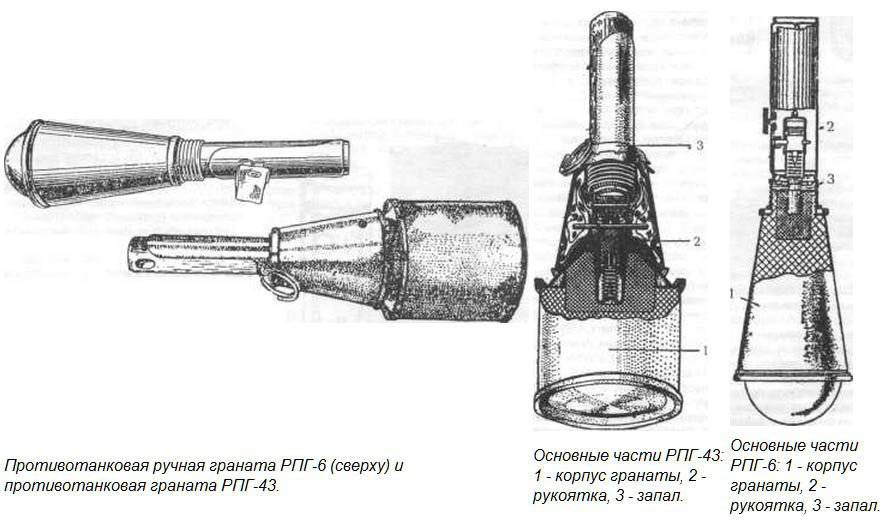
By mid-1942, the Red Army faced severe difficulties countering dense German armour formations. Existing thrown anti-tank weapons like the RPG-40 relied on sheer blast force, requiring massive high-explosive charges that were heavy, dangerous to the thrower, and ineffective against heavy plate. In response, designer N.P. Belyakov developed the RPG-43, which entered service in April 1943.
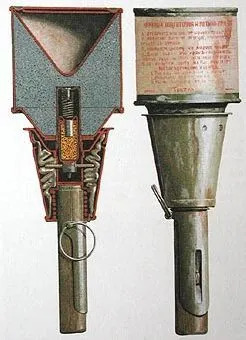
Weighing 1.2 kg (2.6 lb) with a length of 279 mm (11.0 in) and a warhead diameter of 102 mm (4.0 in), the RPG-43 packed 612 g of TNT into a shaped-charge warhead, making it the Soviet Union’s first mass-produced hand grenade utilizing the Monroe effect (shaped charge). To overcome the primary flaw of shaped charges, requiring a perpendicular 90° impact angle to form an effective metal jet; Belyakov designed a spring-loaded metal cap attached to two fabric ribbons inside the handle. Upon release in flight, the cap popped off, pulling out the fabric streamers to act as a drogue parachute. This stabilized the heavy warhead nose-first before impact, triggering an instantaneous impact fuze on contact.
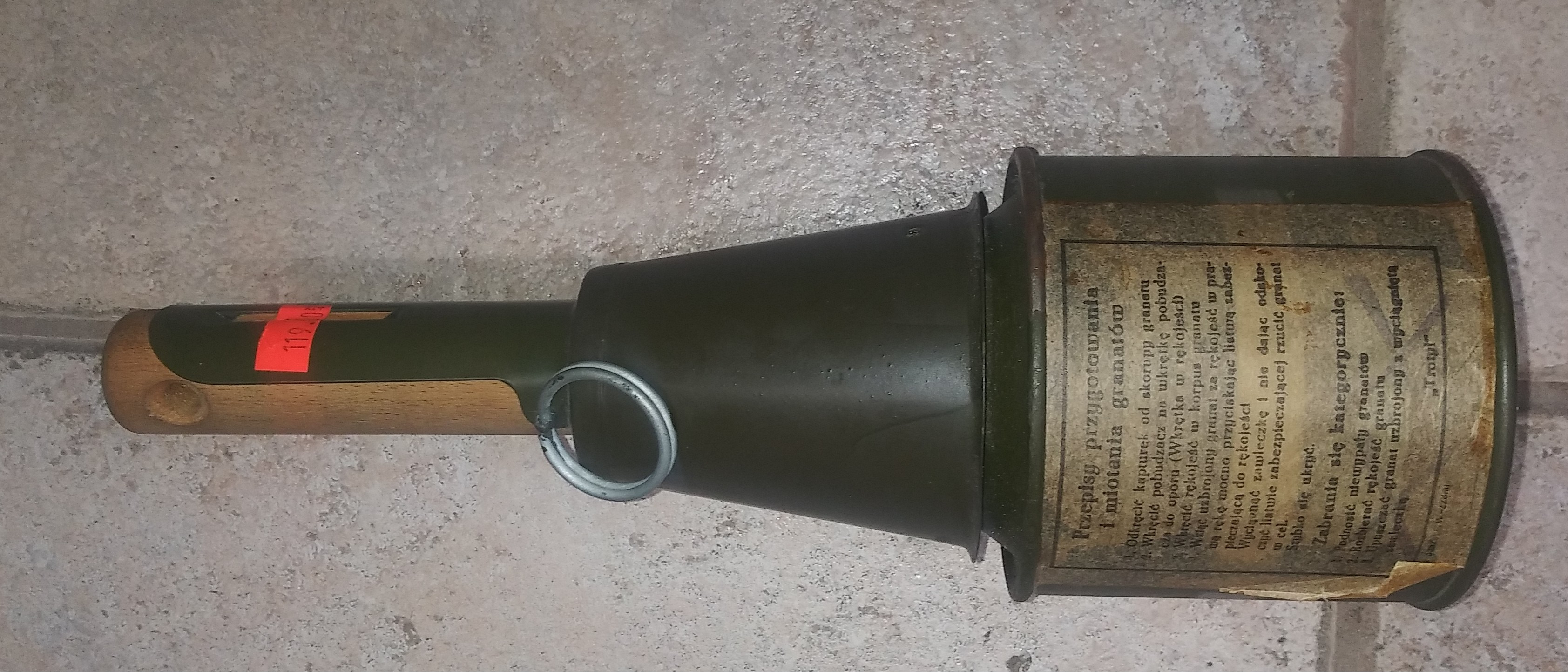
The RPG-43 was impact fused. It utilized an inertial impact fuze that detonated the grenade immediately upon striking a hard target, such as a tank’s armour. The design relied on the force of the throw and the impact to overcome a safety spring and activate the striker, which then ignited the detonator capsule. If the grenade did not hit the target with sufficient force, it would bounce off harmlessly without detonating.
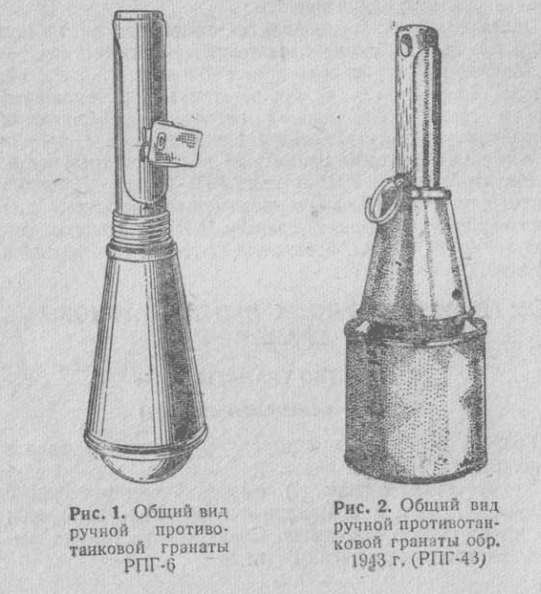
This design allowed the RPG-43 to achieve 75 mm of RHA penetration at a 90° angle, while its casing still produced a dangerous 20-metre fragmentation radius, making it a threat to both armour and nearby infantry alike. The RPG-43 saw massive combat deployment during the Battle of Kursk and subsequent Soviet offensives through 1945, forming the tactical backbone of Red Army tank-killer squads before being succeeded by the RPG-6.
[center]https://www.youtube.com/watch?v=Jq0bA-KSbB8[/center]
Gameplay Implementation
- Unlock: Tier 3 (Soviet faction)
- Role: Thrown HEAT anti-tank impact grenade
- Effective against: Thin side armour, APCs
- Ineffective against: Heavy tank frontal armour
- Penetration: ~75mm (flat) / ~65mm (sloped)
- Additional Feature: Fragmentation (could be implemented similarly to weaker impact grenades)
- Counterplay: Erratic vehicle movement; impact fuze requires direct hit on hard surface
1.2 Type 3 HEAT Grenade (Japan)
Expand Historical Setting & Development
Historical Setting & Development
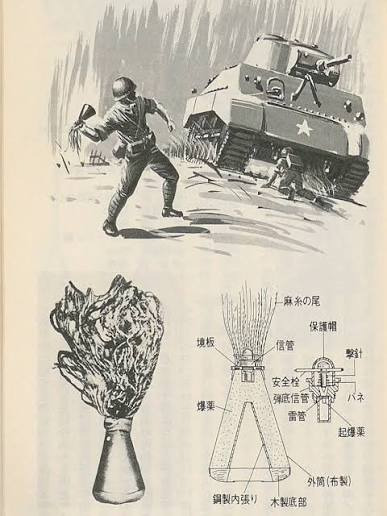
As the Pacific War turned defensive between 1943 and 1945, the Imperial Japanese Army (IJA) found itself severely outmatched by Allied armor like the M4 Sherman. Lacking modern anti-tank artillery and mobile armour, the IJA was late to adopt hollow-charge ordnance, largely because Allied heavy armour was scarce in the Pacific’s early years. To counter this growing threat, Japanese designers developed the Type 3 HEAT Grenade (also known as the “Ta-Dan” or タ弾) in late 1943 to give infantry a portable shaped-charge capability for close-range ambushes.
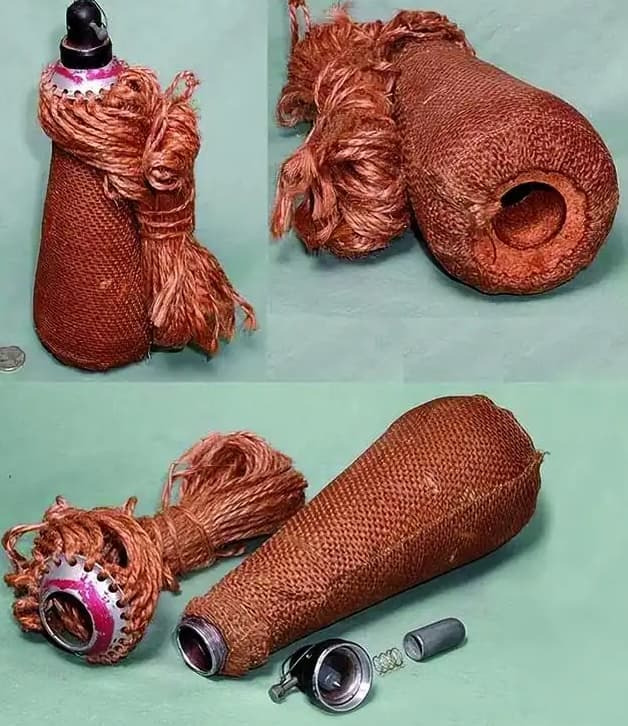
Weighing 1.27 kg (2.8 lb) with a length of 173 mm (6.8 in) and a warhead diameter of 110 mm (4.3 in) in its standard Ko (Type A) production variant, the weapon packed 853 g of HEX (RDX/TNA mixture) into a hollow shaped-charge warhead. The grenade consisted of a thin steel cone mounted on a wooden standoff nose cone to allow the metal jet to properly form, with high explosives cast directly around the cone and enclosed inside a sewn cloth or hemp bag. To overcome the primary flaw of shaped charges, requiring a perpendicular 90° impact angle to form an effective metal jet, with the top end featured a trailing stabilizer tail made of raw hemp or jute fibers. Upon being thrown, the tail unfurled in flight to act as a drogue parachute, stabilizing the heavy wooden nose forward before impact.
The Type 3 was impact fused. It utilized a basic inertial base fuze mechanism containing an unsophisticated striker held away from the detonator capsule solely by a weak creep spring once the safety pin was pulled. Upon striking a hard surface with sufficient velocity, the force of impact overcame the spring to drive the striker into the primer and initiate the main explosive charge. If the grenade failed to hit the target hard enough or at a solid angle, it would bounce off harmlessly without detonating.

While the primary Ko variant achieved 70 mm of RHA penetration at a 90° angle, late-war Allied strategic bombing severely damaged Japanese manufacturing infrastructure, forcing factories and field arsenals to produce lighter, less effective emergency substitutes. Smaller factory sub-types like the Otsu (Type B) and Hei (Type C) were scaled down to 853 g (1.88 lb) and 148 mm in length, reducing explosive weight down to 690 g of lower-grade fillers like PETN/TNT or Picric Acid inside yellow canvas bags. Meanwhile, local field arsenals, such as the Manila workshop in the Philippines, improvised non-standard, crude emergency variants using lengthened bodies, narrow cone geometries, and full hemp wrappings. These emergency variants suffered from significantly reduced armor penetration, structural fragility, and unreliable fuze safety, making the standard factory-built Ko the only variant reliable enough for anti-tank combat.
This design allowed the Type 3 Ko to serve as a massive improvement over earlier weapons like the Type 99 Magnetic Grenade (that could barely penetrate 20 mm of RHA, I was going to add it alongside the German Hafthohlladung, but no one needs that). Deployed extensively during the Philippines, Okinawa, and Burma campaigns, Japanese tank-killer squads utilized the Type 3 from concealed spider holes and dense jungle cover as a primary infantry anti-tank weapon.
Gameplay Implementation
- Unlock: Tier 3 (Japanese faction)
- Role: Thrown HEAT anti-tank impact grenade (Type Ko)
- Effective against: Thin side Armour, APCs
- Ineffective against: Heavy tank frontal armour
- Penetration: ~70mm (flat) / ~55mm (sloped)
- Counterplay: Erratic vehicle movement; impact fuze requires direct hit on hard surface
Part Dos: Gammon Bomb
Part Dos: High-Explosive Impact Anti-Tank Grenade
2.1 No.82 Gammon Bomb (Western Allies)
Expand Historical Setting & Development
Historical Setting & Development
Following the loss of massive quantities of heavy equipment during the Dunkirk evacuation in 1940, the British military desperately needed lightweight, flexible anti-tank weapons for airborne troops and home defense. Early improvised designs like the Sticky Bomb (No. 74) proved notoriously hazardous to handle in real combat. In response, Captain R.S. Gammon of the 1st Parachute Regiment developed the Anti-Tank No. 82, commonly known as the Gammon Bomb, which entered production in 1943.
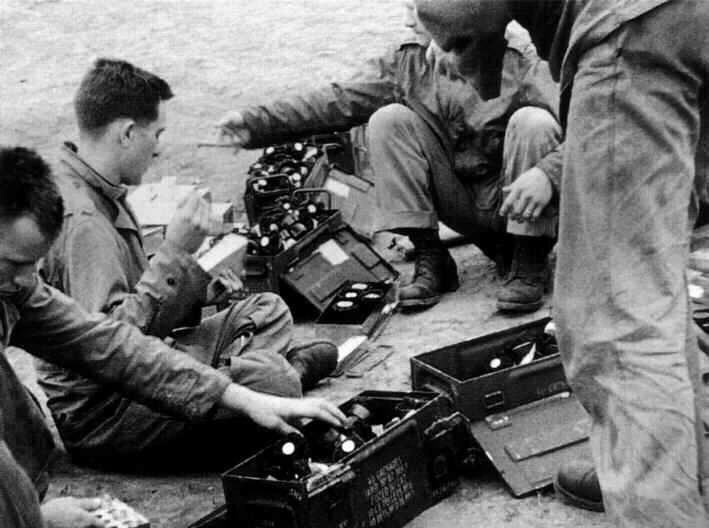
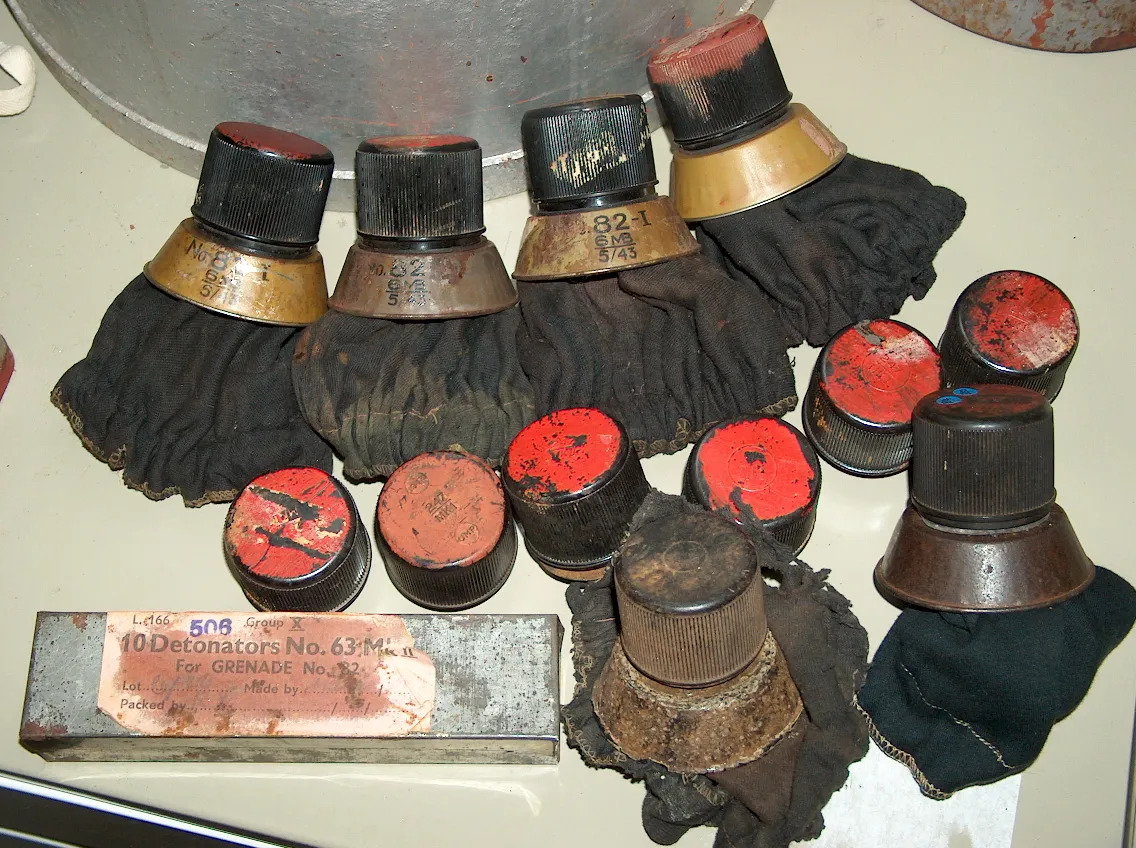
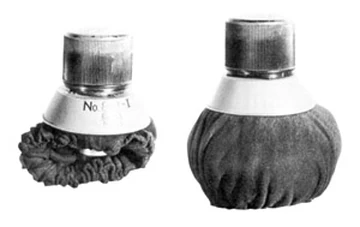
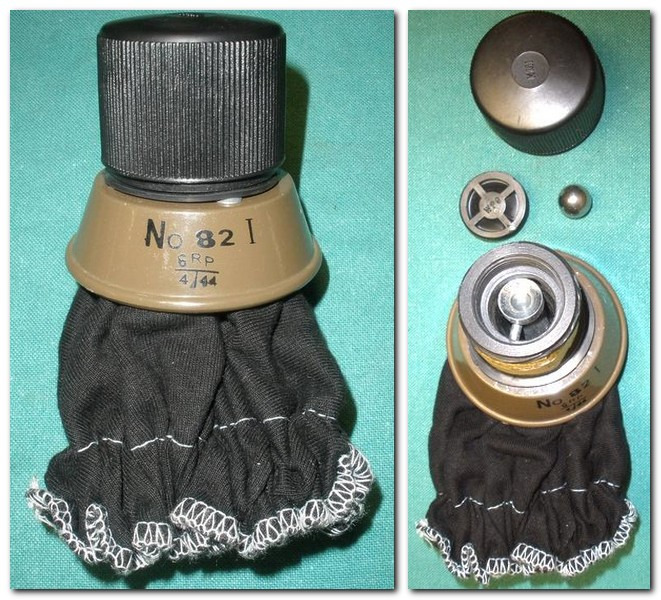
Weighing roughly 1.1 kg (2.4 lb) when fully loaded, the Gammon Bomb abandoned rigid metal casings entirely in favor of an elasticated knitted fabric bag attached to a heavy metal cap. The flexible bag allowed infantry to pack variable amounts of plastic explosive, typically up to 900 g of Nobel’s Explosive No. 808 or C-2, depending on whether the target was a light vehicle, a tank, or a fortified bunker. To overcome the primary flaw of thrown demolition charges, ensuring detonation regardless of flight orientation, the top metal assembly housed a No. 247 all-ways impact fuze. Upon unscrewing the protective plastic cap prior to throwing, a weighted fabric tape unwound in flight, pulling the safety pin free and arming the internal striker before impact.
The Gammon Bomb was impact fused. It utilized a sensitive lead ball bearing inside a curved housing that drove a striker into the detonator capsule upon striking any hard surface, initiating detonation with an extremely brief delay. If the grenade landed on soft ground or failed to hit with sufficient velocity, the ball bearing would not shift with enough force to overcome the safety mechanism, causing it to fail to detonate.
Unlike shaped-charge HEAT weapons, the Gammon Bomb relied on pure high-explosive blast and shockwave transfer, achieving an equivalent of ~30-40 mm of RHA disruption capable of blowing off tank tracks, crushing thin engine deck covers, or cracking turret roofs. Used extensively by British airborne units during Normandy (Operation Tonga), Arnhem, and the Rhine crossing, it was also widely adopted by US paratroopers (82nd and 101st Airborne) and OSS resistance teams due to its compact size and extreme demolition versatility.
Gameplay Implementation
- Unlock: Tier 3 (Western Allies faction)
- Role: Thrown blast anti-tank impact grenade
- Detonation: No fuse cooking. This gives tank crews a split-second audio cue with the pop of the top metal assembly, seconds before instant deletion.
- Why it’s different: Unlike the Explosive Pack’s 5-second fuse, the Gammon’s near-instant detonation punishes any tank that lingers within throwing range. A well-placed toss on an engine deck is an inescapable execution.
- Effective against: Thin top armour, tracks, APCs, fortifications
- Ineffective against: Heavy front/side hull armor plates
- Penetration: ~30-40mm (Overpressure)
- Unique trait: All-ways impact fuze ensures detonation regardless of impact angle or orientation (Concussion).
- Counterplay: Accepting your fate (or moving your turret to try to make the grenade detonate on harder armour).
Part Tres: Hafthohlladung
Part Tres: Magnetic / Placed Anti-Tank Weapon
3.1 Hafthohlladung (Germany)
Expand Historical Setting & Development
Historical Setting & Development
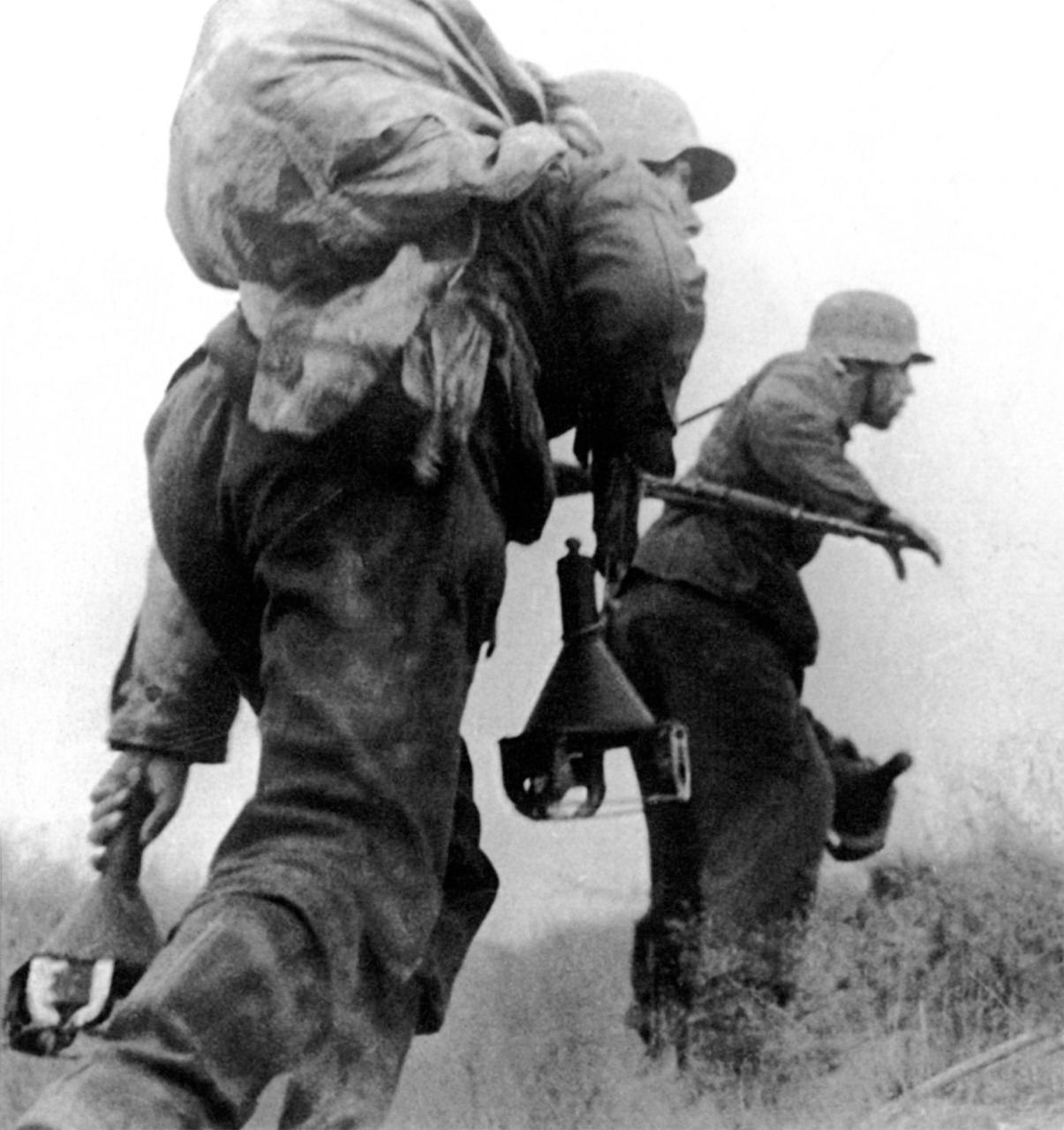
Introduced in November 1942, the Hafthohlladung (Adhesive Hollow Charge, nicknamed “Panzerknacker” or “Tank Breaker”) was developed for specialized German tank-killer teams (Panzerzerstörer). With the Red Army deploying vast numbers of heavily armored T-34 and KV-1 tanks, standard infantry anti-tank rifles and thrown weapons proved increasingly ineffective. In response, German ordnance designers created a hand-placed shaped-charge weapon utilizing three powerful horseshoe magnets mounted on its base to ensure secure attachment to enemy armor plates.
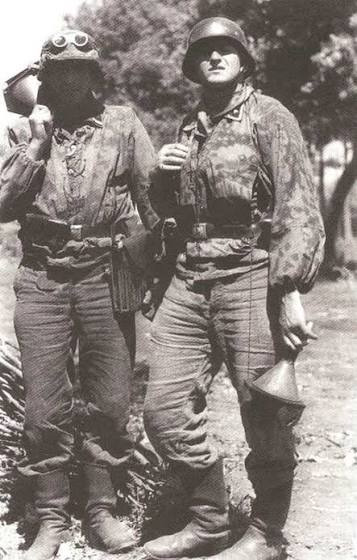
Weighing 3.0 kg (6.6 lb) in its primary H3 variant, and expanding to 3.5 kg (7.7 lb) in the reinforced H3.5 model: the weapon packed 1.5 kg of PETN/TNT wax into a conical steel housing. To overcome the primary flaw of shaped charges, it required a perpendicular 90° impact angle to form an effective metal jet, where the three base magnets provided a combined 45 kg of magnetic pull-force. This held the warhead firmly flat against a target’s hull, while three wooden standoff pegs ensured the precise distance required for the focused molten jet to form upon detonation.
The Hafthohlladung was delay fused. It utilized a standard friction-ignited delay fuze screwed into the top handle, activated when the operator pulled an igniter cord. The initial H3 model incorporated a 4.5-second delay fuze, which was later upgraded to a 7.5-second delay fuze on the H3.5 to afford the operator critical extra seconds to sprint for hard cover or dive into a trench before detonation.
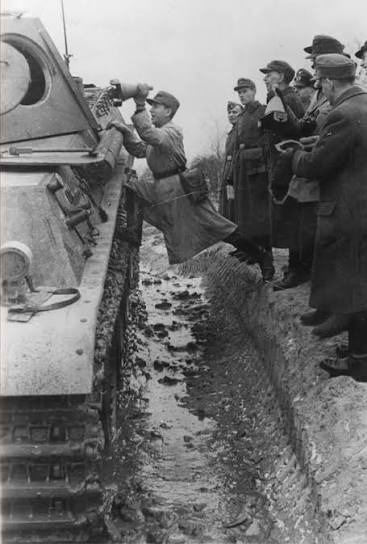
This design allowed the Hafthohlladung to achieve 140 mm of RHA penetration at a 0° angle (as well as up to 508 mm of concrete penetration), allowing it to punch through the armor of any operational tank in World War II regardless of sloped armor plating. Over 553,000 units were produced through 1944. Fear that Allied forces would reverse-engineer the design ironically led Germany to coat its own vehicles in Zimmerit anti-magnetic paste, despite the Allies never mass-deploying magnetic infantry anti-tank mines.
Gameplay Implementation
- Unlock: Tier 3 (German faction)
- Role: High-risk, high-reward placed magnetic mine
- Effective against: Any armour that a 140mm HEAT projectile can pen, tanks & APCs I guess.
- Ineffective against: Non-magnetic surfaces (wooden/fabric structures, heavy mud coating, though this is rare in-game outside of certain vehicle skins)
- Inventory Slot: Occupies the mine slot (1 per soldier), aligning it with other heavy specialty explosives (Satchel, Geballte).
- Placement Mechanics: Functions similarly to planting TNT on a vehicle, without a remote detonater. Walk up to the tank (melee range, ~1-2m), aim at the hull surface, and left click. Instead of a slow plant, the soldier performs a quick slap-on animation (~1 second). The mine instantly attaches, emits a loud metallic clank and distinct magnetic hum, and the 7.5-second fuse starts automatically, just enough time for the crew to bail.
- Counterplay: Infantry screening; escorting infantry or coaxial machine-gun fire can neutralize the attacker before placement. Incentivizes for supporting infantry columns.
Part Cuatro: Geballte Ladung & Satchel Charges
Part Cuatro: Demolition & Fortification Clearance
4.1 Geballte Ladung (Germany)
Expand Historical Setting & Development
Historical Setting & Development
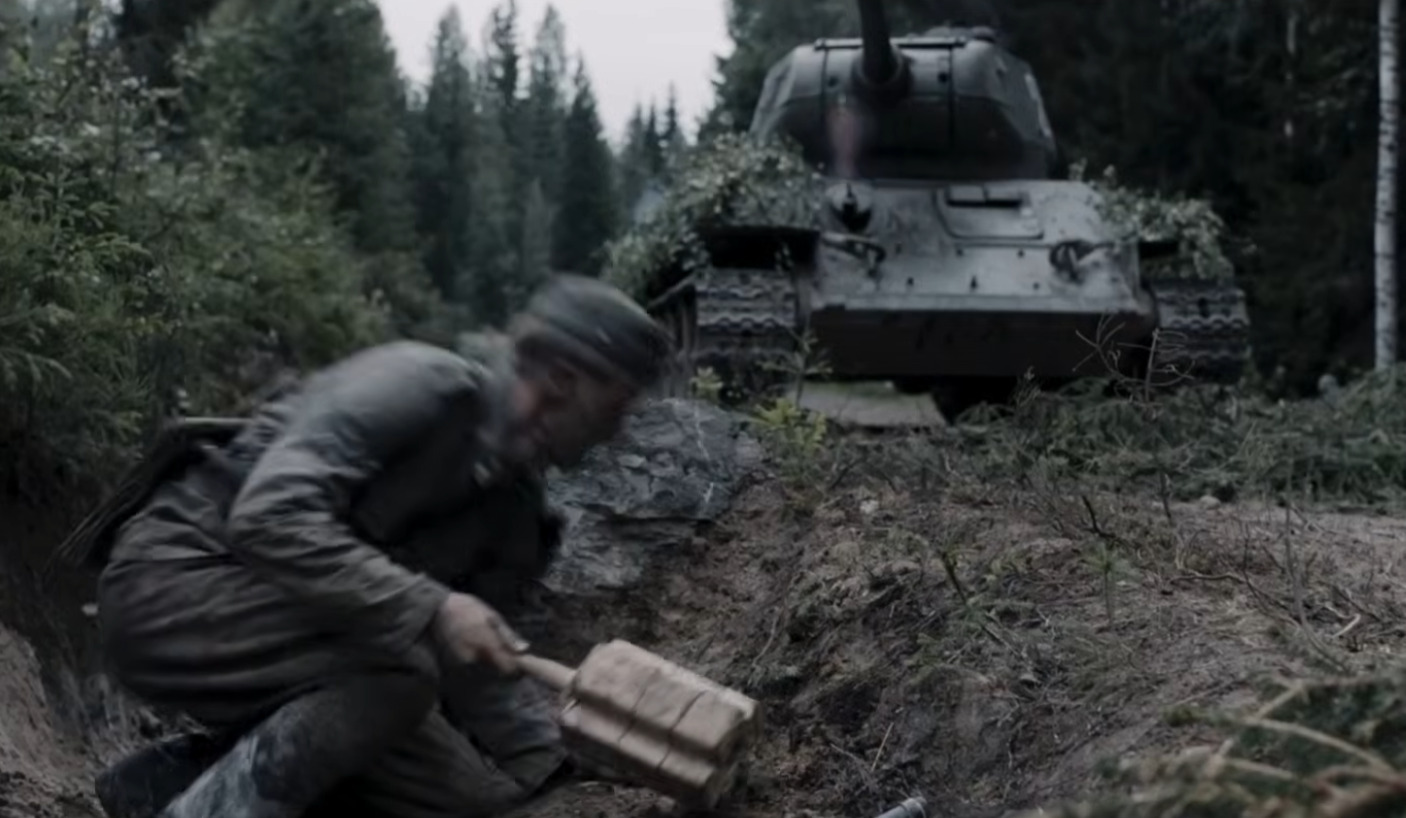
The Geballte Ladung (“Concentrated Charge”) was an iconic field-improvised demolition weapon originally developed during World War I and used extensively throughout World War II by German combat engineers (Pioniere) and infantry units. Rather than a standalone, factory-built weapon, it was assembled directly in the field by removing the wooden handles from six M24 Stielhandgranate (stick grenade) heads and binding them tightly around a central, fully intact M24 stick grenade using steel wire, heavy cord, or metal bands.

Weighing approximately 3.0 kg (6.6 lb) in its standard seven-head configuration, the bundled charge concentrated roughly 1.2 kg of TNT filler into a dense package. To overcome the primary flaw of field-improvised demolition charges, which went into ensuring all surrounding explosive heads detonated simultaneously without complex internal wiring; the assembly relied on sympathetic detonation. Pulling the friction cord on the central handle ignited the primary detonator, whose powerful initial blast instantly triggered the surrounding six warheads.
The Geballte Ladung was delay fused. It retained the standard central M24 grenade’s internal friction-pull fuze assembly, providing a reliable 4.5-second delay from the moment the porcelain bead was pulled. This delay gave the thrower enough time to hurl the heavy bundle, though its significant mass drastically reduced maximum throwing distance and required soldiers to dive for cover to avoid the weapon’s severe blast wave.
[center]https://www.youtube.com/watch?v=Qj9EMXpN-dA[/center]
This makeshift design produced an immense fragmentation cloud rather than a focused armor-piercing jet. Designed primarily for clearing trenches, rooms, and light obstacles, it relied on its dense shrapnel pattern to suppress infantry. While it could damage light vehicles, its blast was inferior to dedicated anti-tank weapons against heavy plate.
Gameplay Implementation
- Unlock: Tier 3 (German faction)
- Role: High-fragmentation infantry clear / light obstacle demolition
- Effective against: Infantry in cover, barbed wire, light barricades (soft damage to sandbags)
- Ineffective against: Heavy tank armour (25mm pen means it bounces off hulls)
- Penetration: ~25mm (Weaker than the standard Explosive Pack!)
- Fragmentation: As much fragments as 2.5 standard grenades with a 20m lethal radius. This makes it deadly to infantry in a wide area.
- Blast Damage: 200 (Lower than the Explosive Pack; will not one-shot sandbag walls (330 HP), but will destroy wire and light cover).
- Unique mechanic: Occupies the mine slot (1 per soldier). Features an extremely slow draw and throw animation (~4 seconds total). While equipped, the soldier moves with a 0% sprint factor, making them highly vulnerable. Accompanied by an audible warning voice line (“Geballte Ladung! Deckung!”).
- Counterplay: The long wind-up means enemies have ample time to shoot the thrower. The grenade can also be picked up and thrown back if the enemy reacts fast enough.
4.2 Satchel Charges (All Factions)
Expand Historical Setting & Development
Historical Setting & Development
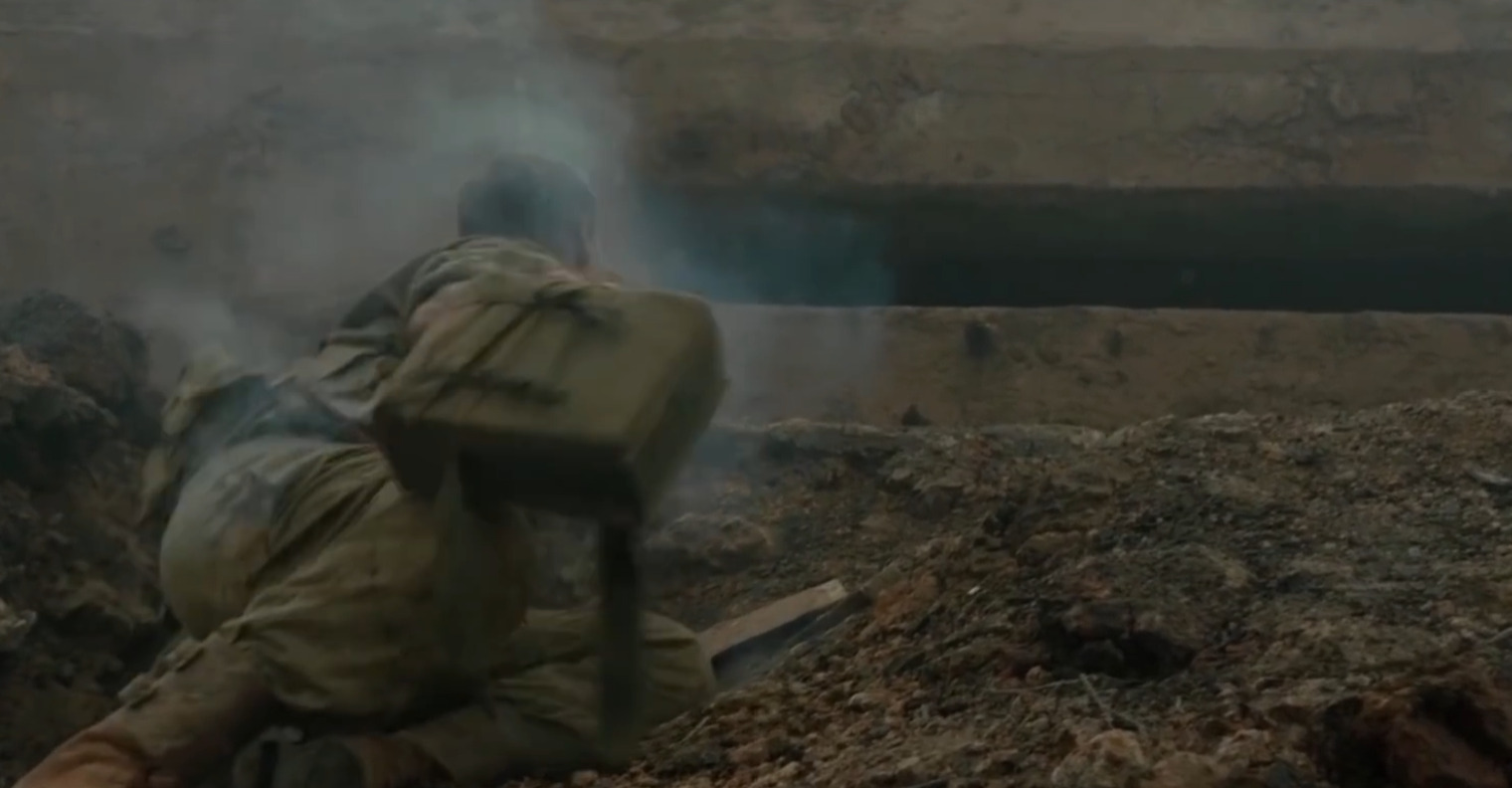
Standardized Satchel Charges were deployed by almost every major combatant in World War II as essential equipment for combat engineers (Sappers / Pioniere). Developed to bridge the gap between light hand grenades and heavy artillery, these canvas bags allowed assault troops to carry concentrated high explosives directly into enemy fortification belts. To ensure faction balance across all theaters, satchel charges function identically across all nations in capabilities, mechanics, and damage output, while visually reflecting each military’s historical demolition equipment.
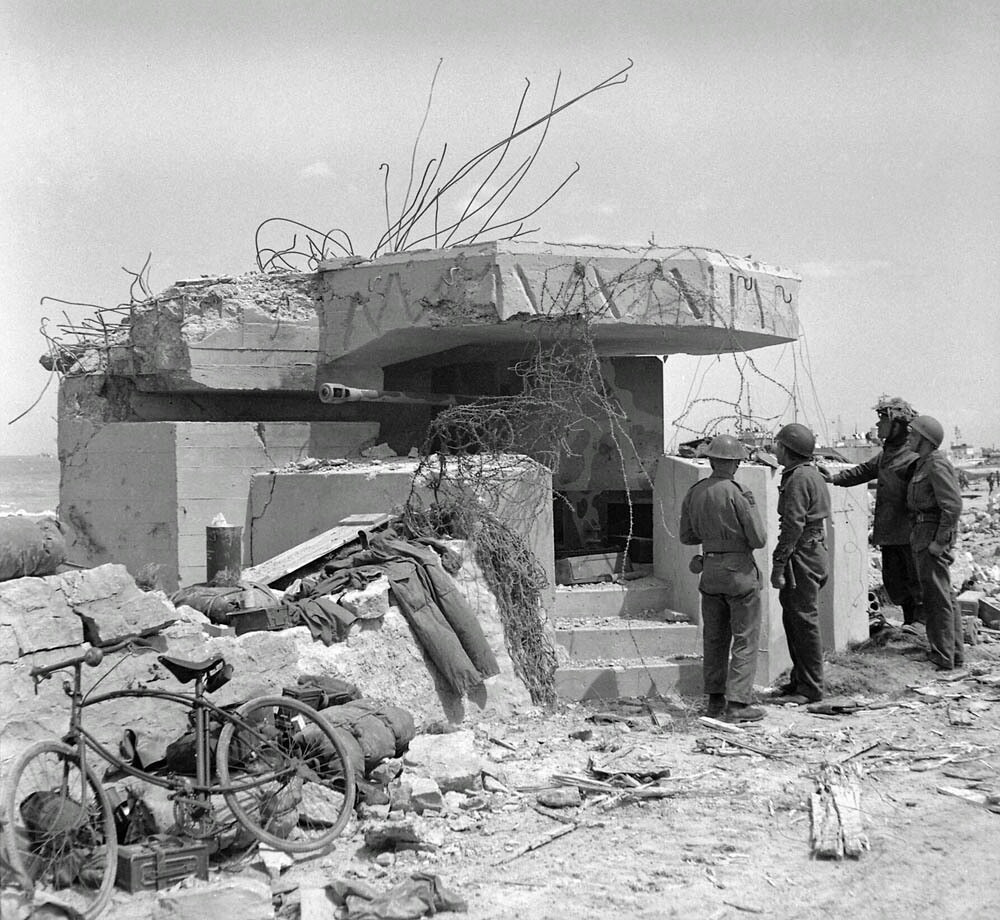
Weighing between 4.0 kg and 5.0 kg (8.8–11.0 lb) depending on national design, satchel charges packed 2.0 kg to 4.0 kg of TNT or Composition C/C-2 into rugged canvas, hemp, or sheet-metal containers.
-
United States: Deployed the M37 Demolition Kit, an olive-drab canvas bag holding eight 2.5-lb blocks of Composition C/C-2. Composition C-2 was malleable, waterproof, and boasted a higher detonation velocity than TNT (~7,300 m/s vs. 6,900 m/s), making it exceptionally destructive against concrete embrasures.
-
Soviet Union: Utilized heavy canvas satchels (Sumka Dlya Zaryadov, or makeshift satchels using rucksacks) packed with standard 200g and 400g brown-paper-wrapped TNT blocks ( M2 Demolition Block). Soviet urban assault groups relied heavily on these charges during room-to-room clearing in Stalingrad, Budapest, and Berlin.
-
Germany: Employed purpose-built canvas engineering packs (Pionier-Sprengtasche) and zinc Sprengbüchse 24 metal containers, often packed with 3 kg of press-molded TNT blocks fitted with friction-ignited delay fuzes (3 kg Sprengladung Demolition Charge).
-
Japan: Utilized hemp-wrapped, cord-tied bundles or simply bagfuls of picric acid or TNT fitted with rope handles and friction fuzes inside their canvas field bags, deployed extensively by specialized anti-fortification and anti-tank squads in Pacific island defensive networks.
-
Great Britain: Deployed the General Wade Demolition Charge and No. 1 Satchel Charge, utilizing canvas bags filled with explosive slabs designed specifically for Commandos and Royal Engineers clearing obstacles.
To overcome the primary flaw of heavy demolition charges, which was ensuring ignition after being thrown onto rugged terrain or rough concrete, the assemblies were fitted with timed safety fuzes or friction igniters. Pulling the igniter cord or striking the friction cap initiated a delay train, giving the engineer enough time to lob the heavy pack and take cover before detonation.
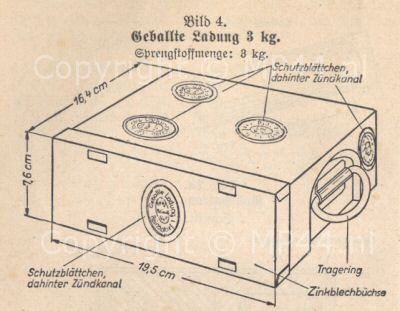
The Satchel Charges were delay fused. It utilized a delay safety fuze assembly providing a 4.0 to 7.0-second delay prior to detonation. This delay ensured that the charge remained stable upon landing, while preventing immediate recoil or premature detonation from heavy shock impacts.
[center]https://www.youtube.com/watch?v=bjA1xi2FGUI[/center]
This design produced a massive high-explosive shockwave rather than a shaped-charge jet, achieving an equivalent of ~40 mm of RHA disruption alongside crushing overpressure. Engineered specifically to neutralize concrete pillboxes, blow open reinforced steel doors, and shatter iron anti-tank obstacles, satchel charges were also deployed in emergency anti-tank roles to destroy track assemblies, collapse engine deck grills, or cave in thin hull plates.
Gameplay Implementation
- Unlock: Tier 3 (All factions)
- Role: Heavy anti-fortification demolition pack / structural demolisher
- Design Philosophy: Universal implementation: identical stats, fuze timers, and damage across all factions for balance, varying only in historical visual models and audio cues
- Effective against: Concrete bunkers, sandbags, HMG nests, rally points, engine compartments, tracks
- Ineffective against: Infantry in the open (pure blast, low fragmentation)
- Penetration: ~60mm (High-explosive blast/shockwave – excellent against roofs/tracks)
- Blast Damage: 280 (Enough to one-shot any player-built fortification)
- Slot Cost: Occupies the mine slot (1 per soldier), preventing soldiers from stacking both placed landmines and throwable heavy demolition packs
- Unique mechanic: Can be thrown a very short distance (~2-3m). Features a 7.5 -second delay fuze. Cannot be thrown back. Small arms fire cannot detonate it; only other explosives can destroy it (harmlessly).
- Counterplay: User is vulnerable and exposed during the short throw/plant animation; the long fuse gives tanks time to reverse if they spot the plant.
Part Cinco: Mk 1 Illuminating Grenade
Part Cinco: Tactical Support Equipment
5.1 Mk 1 Illuminating Hand Grenade (USA)
Expand Historical Setting & Development
Historical Setting & Development
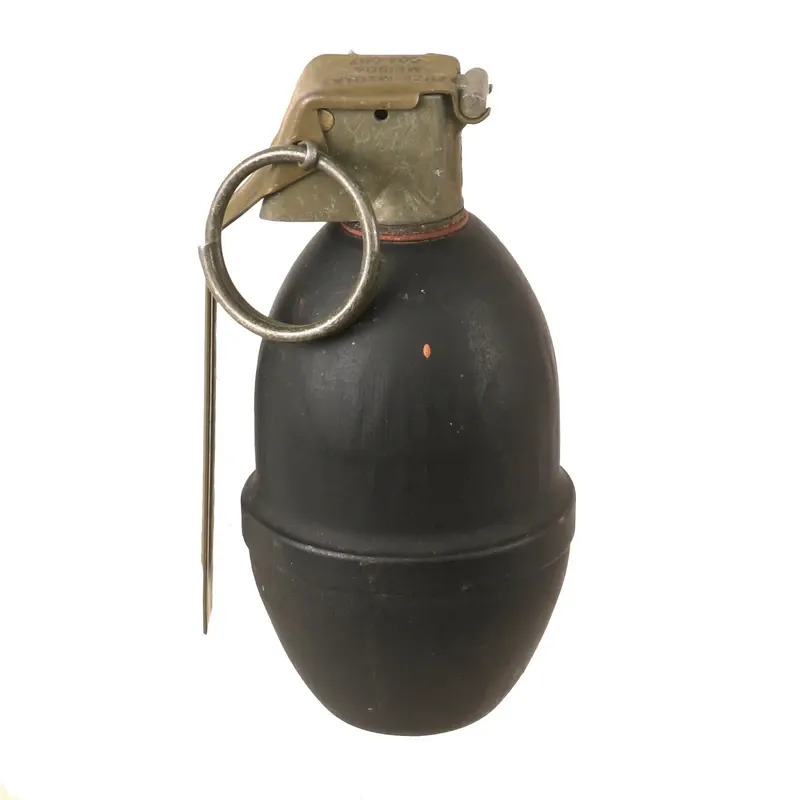
Developed by the United States Military during World War II specifically for night combat operations and defensive positions, the Mk 1 Illuminating Hand Grenade was a specialized pyrotechnic device engineered to reveal enemy movement in low-visibility environments. Rather than utilizing high-explosive ordnance, the Mk 1 featured a thin cylindrical steel body packed with a densely compressed magnesium-based pyrotechnic composition.
Weighing 283 g (10 oz) with a length of 110 mm (4.35 in) and a warhead diameter of 56 mm (2.19 in), the grenade was significantly lighter than standard fragmentation explosives. To overcome the primary flaw of hand-held torches or stationary searchlights—which instantly betrayed the user’s location to enemy snipers—the Mk 1 allowed infantrymen to hurl a high-intensity light source deep into pitch-black terrain or dead zones from behind concealed positions.
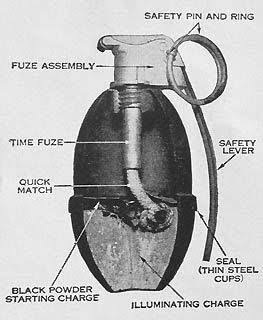
The Mk 1 was delay fused. It utilized a standard pyrotechnic delay fuze assembly that ignited upon handle release. After a short flight delay, the ignition charge ignited the internal magnesium core, bursting the thin outer casing to expose a fiercely burning chemical flare element.
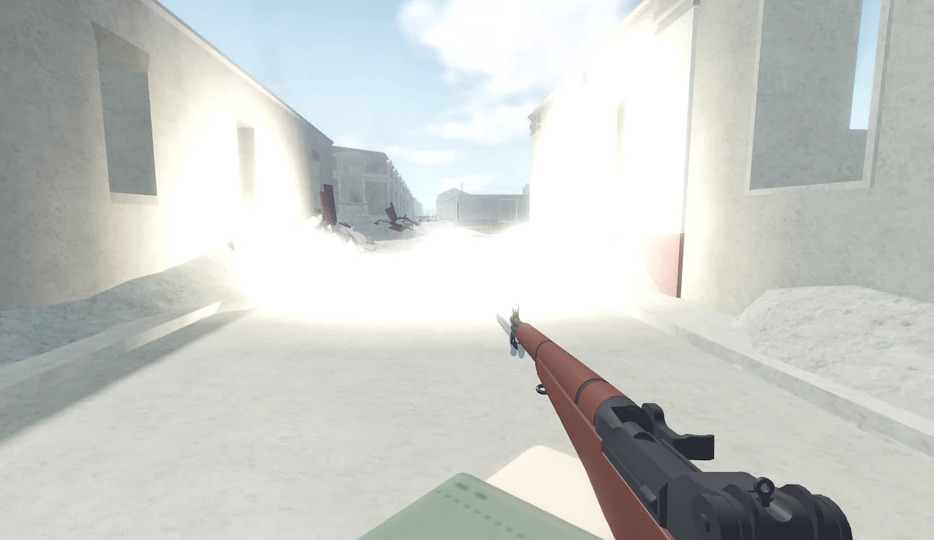
Upon full ignition, the grenade burned with an intense, brilliant white flame, producing approximately 55,000 candlepower over a wider 200-meter diameter illumination area. Beyond pure illumination, the immense pyrotechnic reaction generated extreme localized temperatures exceeding 2,000°C (3,600°F). While primarily deployed for perimeter defense during Pacific night engagements, where Japanese infiltration tactics posed a constant threat, and night patrols in Western Europe, troops occasionally utilized the Mk 1’s intense thermal output as an emergency incendiary device to destroy sensitive documents, light equipment, and clear enclosed positions.
Gameplay Implementation
- Unlock: Tier 3 (Western Allies faction)
- Role: Hybrid flash-blinding / fire damage grenade
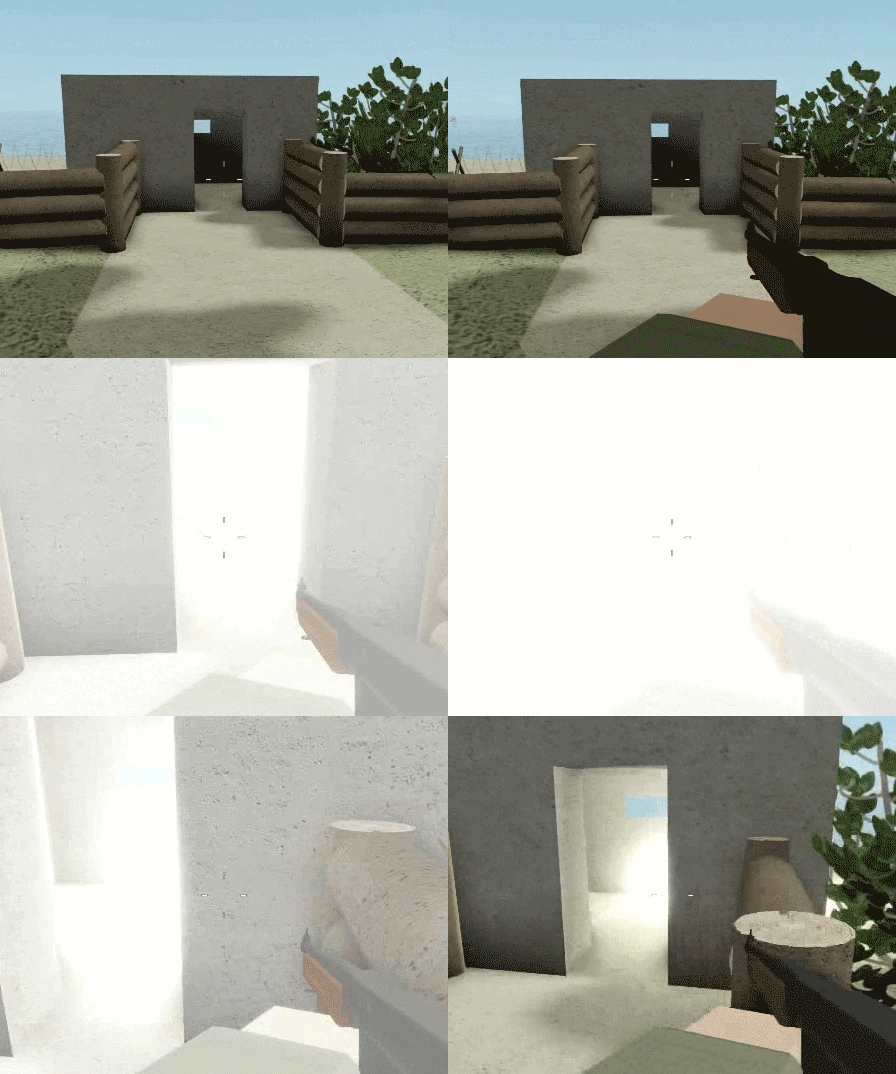
- Primary effect: Intense Flash Blinding: detonates with a bright magnesium flash, severely blinding any nearby enemies looking toward its immediate radius (20m effective range).
- Secondary effect: Localized Thermal Fire: creates a tight, high-temperature combustion zone directly at its center, dealing rapid fire damage to anyone standing inside the flash core.
- Illumination: Continues to emit light across a 20 m area for its full burn duration.
- Duration: The flare burns for 10 seconds (6 seconds at full brightness, 4 seconds dimming). It can be shot and destroyed (3 HP).
- Counterplay: Turning away or breaking line-of-sight mitigates the blinding flash; stepping out of the small center thermal radius avoids fire damage; shooting the flare extinguishes the light.
Part Seis: Balance Summary
Part Seis: Balance Summary
Penetration & Lethality Comparison
| Weapon | Faction | Type | Penetration | Fragmentation |
|---|---|---|---|---|
| Hafthohlladung | Germany | Magnetic placed | 140 mm | None |
| RPG-43 | USSR | Thrown HEAT | 75 mm (65 mm sloped) | Low |
| Type 3 HEAT | Japan | Thrown HEAT | 70 mm (55 mm sloped) | None |
| No.82 Gammon Bomb | UK/US | Thrown impact HE | 30 mm blast | None |
| Satchel Charges | All | Planted/short‑thrown HE (mine slot) | ~60 mm blast | Low |
| Geballte Ladung | Germany | Thrown demo blast (mine slot) | ~25 mm blast | A LOT of Shrapnel |
| Mk 1 Illuminating | USA | Utility | None | None |
Part Siete: How Would We Unlock These Tools Through Progression?
Part Siete: Progression Integration
TIER 1 COMPLETE → Fragmentation Grenades, Smoke, Molotovs
TIER 2 COMPLETE → Explosion Packs & Specialized Grenades
TIER 3 COMPLETE) → Specialized Anti-Tank Arsenal
After obtaining them, each faction’s infantry squads gain access to their unique ordnance, replacing or supplementing the universal Explosion Pack.
Part Ocho: How -iii- would Integrate these Tools with Existing Game Data
Part Ocho: Technical Specifications & Integration with Existing Game Data
Full datamined reference values, proposed stats, integration notes, and balance math are in the first reply below to keep the main post within the character limit.
Part Nueve: Critique, Counterpoints, and Final Clarifications
Part Nueve: Critique, Counterpoints, and Final Clarifications
“A good proposal isn’t one that avoids criticism, it’s the one that survives it.”
Before we wrap up, I want to address some excellent points my peers have raised during the review process. They are the same questions many of you are probably asking right now, soooo, let’s break them down!
9.1 The Hafthohlladung is Overpowered!!! 140mm is Too Much!!! >:C
The Critique: Giving Germany a 140mm pen magnetic mine that ignores slope will make them the undisputed tank-killing kings, breaking faction balance.
The Answer: Melee-range AT already exists, AND it’s worse than what we’re proposing.
| Weapon | Range | Fuse/Activation | Audio Warning | Penetration |
|---|---|---|---|---|
| Lunge Mine (Japan) | Melee (thrust) | Instant | None | 180mm |
| TNT Charge (All) | Melee (plant) | Instant (remote detonate) | None | 45mm |
| Hafthohlladung (Proposed) | Melee (slap-on) | 7.5s delay | Loud clank + magnetic hum | 140mm |
| Satchel Charge (Proposed) | Short throw (2-3m) | 7.5s delay | None (but long throw animation) | 60mm (overpressure) |
Look at that table. The Lunge Mine gives 180mm of pen with zero audio warning and instant detonation. The Hafthohlladung gives 140mm of pen with a 7.5-second fuse and a loud audio cue. That is strictly more fair to the tanker than what Japan already has.
If the Lunge Mine hasn’t broken the game, the Hafthohlladung won’t either.
9.2 This Just Creates an Insufferable Meta with Impact AT Options!!!
The Critique: Impact-fused AT weapons will create a frustrating kamikaze meta with no counterplay.
The Answer: These are thrown weapons, just like the Explosion Pack or a Molotov. You are lobbing it from behind cover or at mid-range, risking aiming for potential.
Counterplay for Tankers:
- Angle your armour. The RPG-43 drops from 75mm pen to 65mm against sloped armour. The Type 3 drops from 70mm to 55mm. A Tiger II angled at 45° will laugh off a frontal hit.
- Keep moving. These grenades require a direct hit on a hard, flat surface to form a proper shaped-charge jet. A moving tank makes that shot significantly harder.
- They are NOT magic. Unlike the Lunge Mine (180mm, instant) or TNT (45mm, remote-detonated), these grenades only pen 70-75mm. That’s enough for side/rear armour on medium tanks, but heavy tanks (IS-2, Tiger II, M6) will shrug them off unless you hit a weak spot (engine deck, turret ring).
Compare to the current meta:
- Explosion Pack: Cook for 5s, throw, gamble on 35mm blast pen. Reliable but slow and RNG-dependent.
- RPG-43/Type 3: No cook time, throw immediately, guaranteed pen if you hit a flat surface at the right angle. Higher skill ceiling, higher reward; but that’s completely useless against angled heavy armour.
They are skill-shot tools for veteran players who can arc a throw and read a tank’s positioning.
9.3 Why Do These Factions Get Special Weapons? Isn't That Unbalanced?
The Critique: Giving specific tools to specific nations creates an uneven playing field.
The Answer: Let’s look at the current inventory deficits:
| Faction | Missing Grenades | The Gap We’re Filling |
|---|---|---|
| USSR | Lacks Impact & WP Grenades | RPG-43 gives them an impact-fused AT option with slight frag, which replaces the missing impact grenade role. |
| Japan | Lacks Impact Grenades | Type 3 gives them an impact-fused AT option, filling that gameplay gap. They get the Lunge Mine & Shin Gunto, this is no different. |
| USA/UK | Has all bases covered | Gammon Bomb provides a high-skill, instant-impact demolition tool. |
| Germany | Has all bases covered | Hafthohlladung + Geballte gives them the heavy demolition/AT niche that matches their historical role. |
Every faction either gains a missing tool or gets a specialized upgrade to match their historical identity.
9.4 The Gammon Bomb Seems Too Strong for a Grenade Slot
The Critique: 300 blast damage + 30mm pen + 0s fuse beats the Explosion Pack in almost every way.
The Answer: At 30mm, it:
- Will not penetrate side or frontal hull armour.
- Will only damage engine decks, turret roofs, and tracks (requires precise aim).
- Acts as a high-skill, high-reward option for veterans who can arc a throw onto a tank’s weak spot.
It also fills the “demolition charge” role for the Western Allies without encroaching on the Satchel Charge’s territory. If you miss the roof and hit the thick side armour, you’ll just get a loud bang and a wasted grenade.
But Wait!!! What About the Poor Little Low-Tier Japanese Tanks? What Stops Players That Have Progressed Beyond Tier 3 from Equipping 3 Gammon Bombs per Soldier on a BR1 Squad and Instantly Erasing Ha-Gos?
| Weapon | Penetration | Fuse | Can It Kill a Ha-Go/Chi-Ha? |
|---|---|---|---|
| Explosion Pack | 35mm | 5s (cook) | Yes (overpenetrates 6-25mm of armour) |
| TNT Charge | 45mm | Instant (remote) | Yes (overpenetrates easily) |
| AT Mine | 35mm (blast) | Instant (shoot/trigger) | Yes (overpenetrates) |
| Gammon Bomb (Proposed) | 30mm (overpressure) | 0s (impact) | Yes |
Japanese light tanks are ALREADY wet tea rags.
- Ha-Go: 6-12mm of armour.
- Ta-Se: 9-12mm of armour.
- Chi-Ha: 12-25mm of armour.
An Explosion Pack already one-shots them from any angle with 0 effort. TNT already deletes them instantly. If the Gammon Bomb existed, it would just be yet another tool that does what the Explosion Pack already does, except it has 5mm less pen and a 0s fuse.
The Gammon Bomb is actually worse against light tanks than the Explosion Pack because:
- You can’t cook it to time it lazily.
- It requires a direct impact on the tank itself.
So the “Gammon Bomb seal clubbing Japanese tanks” argument is like worrying that adding a .22 pistol will break a game where players already have .50 cal rifles.
9.5 The Geballte Ladung is Useless!!!! It's So Much Weaker than an Explosion Pack!
The Critique: 230 damage and 30mm pen is strictly worse than the Explosion Pack’s 250 damage and 35mm pen. Why would I use it?
The Answer: You’re comparing blast damage and penetration, but you’re forgetting the fragmentation.
- Explosion Pack: 0 fragments.
- Geballte Ladung: Lots of fragments with a 20m lethal radius.
The Geballte is a bunker clearer. If you throw it into a room with 40 enemies, you kill all 40. The Explosion Pack would only wound Timothy.
It occupies the mine slot to prevent grenade-spam, and its long draw time means you have to commit to the throw. It’s a high-risk, high-reward anti-infantry obliterator, not a tank-killer. Use it for clearing fortified positions, not for hunting KV-1s.
9.6 This is Just Too Many Grenades, I HATE EXPLOSIVES!
The Critique: Enlisted already has fragmentation grenades, smoke, WP, impact, Molotovs, Explosion Packs, TNT, AT mines, AP mines, and the Lunge Mine. Adding 7 more explosives is unnecessary bloat that will confuse new players and power-creep the Explosion Pack into irrelevance.
A. The concern that “adding 7 new explosives = bloat” ignores one critical fact: these weapons occupy specific niches that are currently unfilled or poorly served.
| New Weapon | Role | Fills Which Gap? |
|---|---|---|
| RPG-43 | Thrown HEAT (USSR) | Gives USSR an impact-fused AT option + minor frag; replaces their missing impact grenade |
| Type 3 | Thrown HEAT (Japan) | Gives Japan an impact-fused AT option |
| Gammon Bomb | Impact HE (Western Allies) | Gives Western Allies a high-skill demolition tool; rewards precision |
| Hafthohlladung | Placed magnetic mine (Germany) | Germany’s answer to the Lunge Mine; 7.5s fuse is more forgiving to tankers |
| Geballte Ladung | Fragmentation demo (Germany) | Anti-infantry fortification buster |
| Satchel Charge | Heavy demo (All factions) | Concrete fortification buster; 380 damage one-shots any fortification |
| Mk 1 Illuminating | Tactical flare (USA) | Temporary Blindness; fills a role that currently doesn’t exist |
Each weapon fills a distinct tactical role that the current arsenal doesn’t address.
B. Will the Explosion Pack Become Obsolete?
The Explosion Pack remains the most versatile, reliable, and safe anti-tank option in the game. It’s the weapon you bring when you don’t know what you’ll face. The Tier 3 weapons are specialized tools for specific situations.
| Weapon | Is It Better Than Explosion Pack? | Why the Explosion Pack Still Wins |
|---|---|---|
| RPG-43 | Against heavy tanks? Yes. Against infantry? No. | Explosion Pack has better frag radius and can be cooked for airbursts. |
| Type 3 | Against heavy tanks? Yes. Against infantry? No. | Same as above. |
| Gammon Bomb | Against roof armour? Sure. Against side armour? No. | Explosion Pack is more versatile—works against any angle. |
| Hafthohlladung | Against heavy armour? Yes. | Explosion Pack is safe, you can throw it from cover instead of walking up to the tank. |
| Geballte Ladung | Against infantry in cover? Yes. Against tanks? No. | Explosion Pack is faster to draw, doesn’t slow you down, and penetrates more. |
| Satchel Charge | Against bunkers? Yes. | Explosion Pack is faster to throw more of and doesn’t require melee range. |
| Mk 1 Illuminating | For blinding enemies? Yes. Against anything else? No. | Explosion Pack actually kills things. |
9.7 Why Not Just Buff the Explosion Pack to Penetrate Over 50mm?
The Critique: “Adding 7 new weapons is way more work than changing one number. Why not just buff the Explosion Pack?”
| Problem | Consequence |
|---|---|
| No faction identity | Every nation would have the same powerful tool. No flavour, no specialization, NO FUN. |
| No risk-reward | The Explosion Pack is safe (can be thrown from cover). Buffing it would remove the need to take risks. That’s not very FUN. |
| No skill expression | You’d just cook and throw; there is no need to aim for weak spots, and no need to position carefully. |
| No progression incentive | If the Explosion Pack is already the best AT weapon, why care to grind to Tier 3 when all the major specialized classes are unlocked by Tier 2? |
| Uniform meta | Everyone runs Explosion Packs. No variety, no tactical depth. |
My goal is to make AT more interesting.
This proposal achieves that by:
| Feature | How It Achieves This |
|---|---|
| Faction identity | Each nation gets historically authentic tools with different playstyles. |
| Risk-reward | The best weapons require the most risk (melee range, long animations). |
| Skill expression | Impact fuses require precise aim; placed charges require stealth and positioning. |
| Progression incentive | Tier 3 unlocks genuinely new gameplay options, not just stat bumps to play with different weapons. |
| Tactical variety | Players must choose between AT, demo, and anti-infantry loadouts, fitting perfectly with what the game’s environment already tries to do. |
9.8 Addressing the Nitpicks: Illumination & Dropped Charges
A. Illumination Grenade Griefing:
“Won’t players just flash their own teammates?” (lmao)
Solution: Allies are either fully immune to the blinding flash, or it is reduced by 90% for teammates. The fire damage at the center still applies to everyone (so don’t throw it at your own feet), but the screen-whiteout only affects enemies. This completely removes the griefing potential while preserving its tactical value. This could be implemented similarly to WP grenades.
B. Satchel/Geballte Dropping on Death:
“If I get killed mid-throw, does the charge drop and blow up my team?”
Solution:
- If the player is killed during the wind-up animation (before the item leaves the hand), the charge simply drops inert at their feet and does not detonate. It disappears after a few seconds. No griefing, no accidental team-wipes.
- If the player completes the throw and is killed after the fuse starts, the explosive is already in the air/planted, so that’s fair game. The player committed to the action and the risk paid off (or didn’t, but boom is boom).
This keeps the risk-reward intact while removing any incentive for griefers to kill themselves with a live charge next to teammates.
Final Takeaway
Specialization over generalization. Risk equals reward. Faction identity matters.
If you have more questions, yap away brothern!!! I would love more criticism.
EDIT: THE RUSSIANS COULD ALSO FIELD THEIR OWN VERSION OF THE GERMAN GEBALLTE LADUNG W/ THE RGD-33 BUNDLE GRENADE
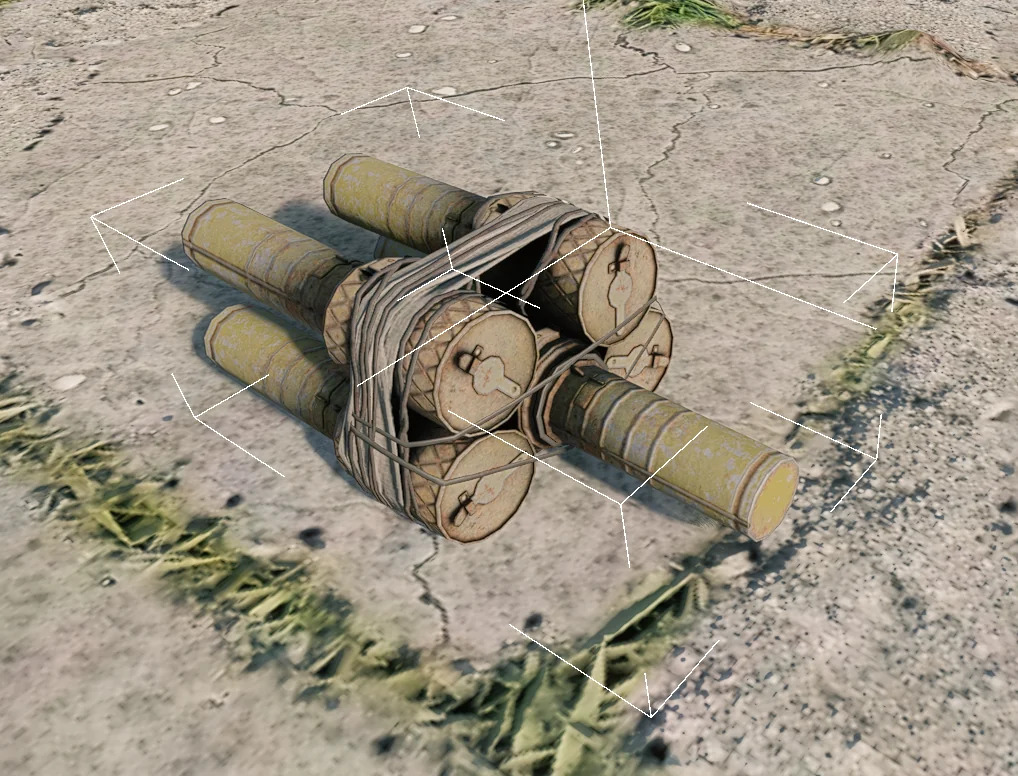
I also think the Geballte Ladung’s fragmentation radius is too much, could be adjusted but I’m lazy
Polls are in the SECOND reply below
Unified Sources
- RPG-43
- Military Factory, Anti-Tank No.74 and No.82 Gammon Bomb
- Hafthohlladung
- German Satchels
- Mk 1 Illuminating Grenade
- Gabellte Ladung
- Type 3 HEAT Information
- Enlisted Official Forums (community data & discussion)
- Euthy’s Spreadsheet

Signed, Lover of the Miscellaneous, the Esoteric, and the Eccentric, -iii-