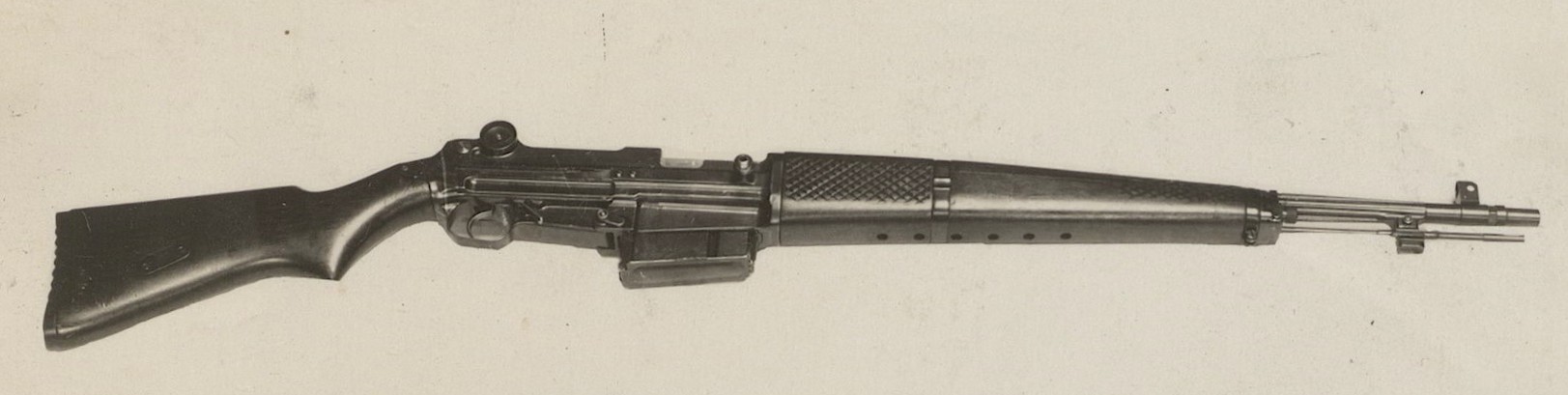
Type Otsu Short Rifle with a 10-round Magazine
The 10-round Magazine as the Core Concept
It appears that 10-round magazines were regarded as the primary baseline configuration. At the very least, this is indicated by the fact that the Type Ko rifle featured a non-detachable 10-round magazine and was developed by the Kokura Army Arsenal — the same entity responsible for formulating the requirements and conducting the trials. To add further detail, additional arguments supporting this theory are presented below.
In the draft oral report of the Chief of the Technical Bureau of the Imperial Japanese Army, prepared for the Imperial Inspection of Armament Samples in 1935 (Special Annex No. 16; JACAR document code C13071087600), 10-round magazines are mentioned exclusively. The document provides the following details regarding automatic (self-loading) rifles:
“Automatic rifles were developed and manufactured as trial prototypes of three types, intended to increase firepower and serve for sniping in infantry and cavalry combat, as well as for self-defense in other arms of service. All of them are capable of firing rifle service cartridges from a 10-round magazine with automatic chambering of a cartridge with each pull of the trigger. In terms of combat performance, they occupy roughly an intermediate position between an infantry rifle and a cavalry carbine. Which of these three types is the most suitable for service in the Imperial Army will depend on the results of further testing and consideration.”
In the report on the results of general winter armament trials in Northern Manchuria dated February 17, 1937 (Trial Issue No. 6; JACAR document code C01003230500), the verdict on automatic (self-loading) rifles was stated as follows:
“Overall functionality and firing reliability at temperatures around minus 30 degrees Celsius were recognized as consistently good, and the weapons were deemed suitable for practical use. No malfunctions in the feeding mechanism related to spring weakening [due to cold weather] were recorded. As for the magazine system: the Type Hei sample, which features a protruding box magazine, is inconvenient during aiming (holding the rifle) and carrying; therefore, the Type Ko was deemed more preferable for practical service.”
Initially, this conclusion by the trial committee seemed questionable to me. However, it makes much more sense when considering that the Type Hei rifle was tested with a 10-round magazine — which protruded significantly from the receiver on this model and could easily cause inconvenience during handling.
Type Otsu Short Version
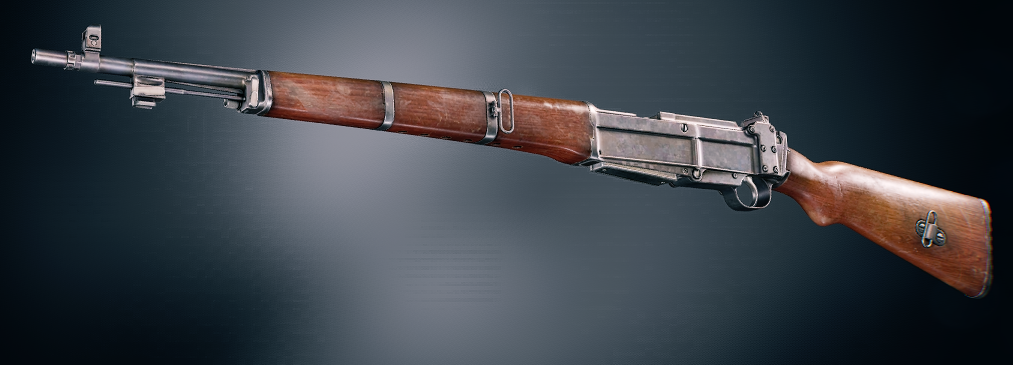
As you may know, for the automatic rifle design competition, Tokyo Gas and Electric engineers decided to adapt the basic ZH-29 design for the standard Japanese 6.5mm cartridge. The project was led by engineer Uchikoshi under Major General Naito. According to Japanese requirements, all three competition types were developed in two variants — literally “long” and “short”. The rifle currently represented in the game is specifically the long version of the Type Otsu.
For the sake of variety, the 10-round Type Otsu could be introduced specifically in this shortened configuration. Below is precisely such a version equipped with this magazine, taken from a Japanese album, along with a comparison table showing the specifications of the other rifles:
| Specifications / Rifle Type | Type Ko | Type Otsu | Type Hei | Type 38 Rifle |
|---|---|---|---|---|
| Weight (including loaded magazine), kg | 4.250 | 4.220 | 4.090 | 4.200 |
| Caliber, mm | 6.5 | 6.5 | 6.5 | 6.5 |
| Overall length, m | 1.060 | 1.080 | 1.060 | 1.276 |
| Muzzle velocity, m/s | 735 | 725 | 740 | 762 |
| Rate of fire, rounds/min | approx. 30 | approx. 30 | approx. 30 | — |
| Max. firing range, m | approx. 3500 | approx. 3500 | approx. 3500 | 4000 |
| Magazine type | Rotary (drum) non-detachable | Box magazine | Box magazine | — |
| Operating principle | Recoil-operated | Gas-operated | Combined gas and recoil | — |
Additional Photos
Photos

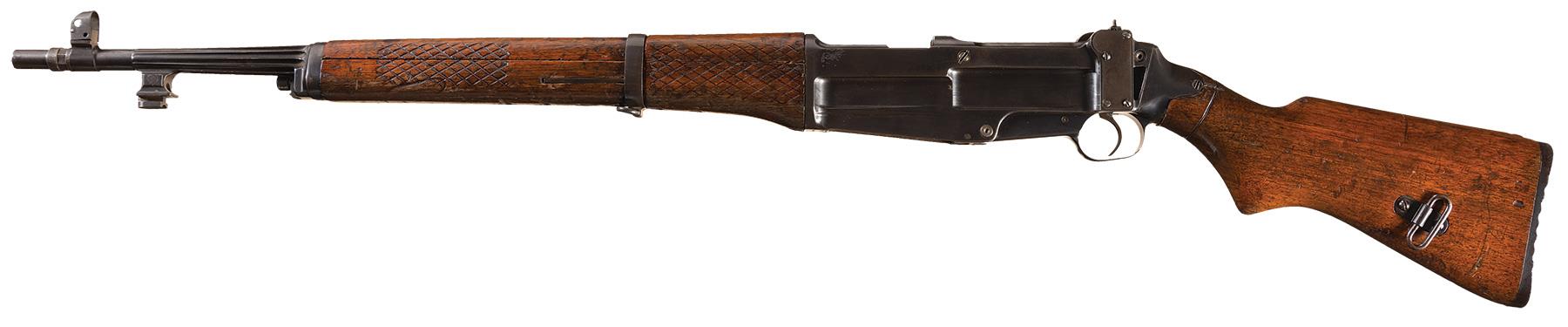
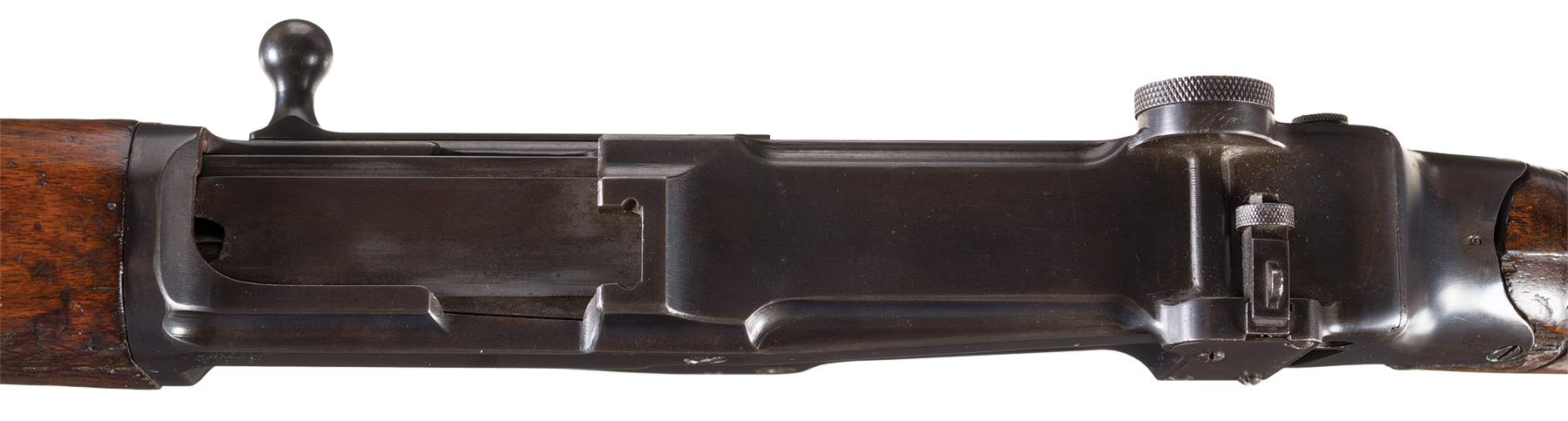
Reloading
The Type Otsu rifle currently in the game features an inaccurate reload animation. The soldier manually cycles the charging handle, even though the bolt should be released from the bolt stop simply by pressing the trigger. This is precisely how it operates on the ZH-29 (which is already in the game!), upon which the Type Otsu was based. Ian McCollum also explains this in a video on Forgotten Weapons:
Poll
- Yes
- No
- Short version (as proposed)
- Long version (as in-game)
- Both options
- Tech Tree
- Event — Standalone Weapon
- Event — Squad Weapon
- Battle Pass
- Premium Squad
Sources
Sources
Jiro Sayama’s book “Introduction to Rifles, Handguns, and Machine Guns” (小銃拳銃機関銃入門). Tokyo : Shio Shobo Kojinsha, 2008. — 451 p. — ISBN 978-4-7698-2284-4.
Rock Island Auction Company. Tokyo Gas and Electric Co. Prototype Rifle. Lot № 3302.
 THANK YOU FOR YOUR ATTENTION