Preface
In any game with an equipment system, once a strategy emerges that is strictly better than every alternative — and players discover it — all other options lose their reason to exist. They become what the community calls “dead content,” and the game’s strategic depth and loadout diversity collapse along with them. One of the core principles of good game design is to avoid exactly this: the emergence of a dominant strategy.
The current infantry Backpack system suggests that this principle may not have been fully considered in Enlisted’s design.
It should be emphasized up front: the infantry Backpack system is mechanically identical across all factions — only the visual models differ. This proposal therefore benefits every player equally, regardless of whether you main Germany, the USSR, the USA, or Japan.
history
(Backpack Options, Large vs Small, viability change)
—————— Using German equipment as an example.
Current State (feel free to skip if you’re already familiar)
1. Backpack Mechanics
- Every soldier has a Backpack slot;
- Except for premium and event squads, regular soldiers must unlock the Backpack slot through their squad’s research tree, or choose the secondary-weapon (dual-weapon) slot instead — choosing dual weapons locks out the Backpack;
- The Backpack slot can hold only one item at a time.
2. The Six Types of Backpack Items
The Backpack slot currently accepts six types of items (visual models differ by faction, but the function is identical):
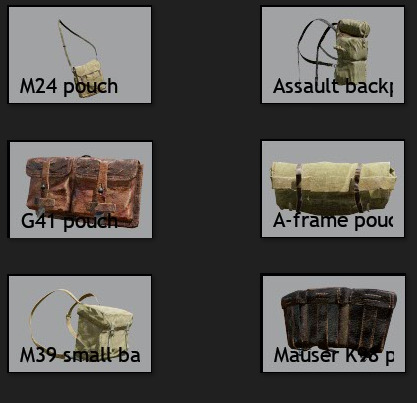
| Category | Designation (as used in this post) | Effect |
|---|---|---|
| Small Ammo Pouch | Minor Magazine (MM) | +10% total ammo, with a minimum of +1 magazine/drum |
| Large Ammo Pouch | Large Magazine (LM) | +100% total ammo (doubled) |
| Small Backpack | Minor Inventory (MI) | +1 item slot (2 total) |
| Large Backpack | Large Inventory (LI) | +3 item slots (4 total) |
| Small Grenade Pouch | Minor Grenade (MG) | +1 grenade slot (2 total) |
| Large Grenade Pouch | Large Grenade (LG) | +2 grenade slots (3 total) |
Since Britain was merged into the US faction and Italy into the German faction, the US and German factions each have 12 visual models (6+6), while the other factions have 6 each. This does not prevent us from dividing them into two broad categories: Small Backpack Items and Large Backpack Items.
3. Unlocking Backpack Items
These items must also be unlocked through the tech tree:
Small Backpack Items are tied to Tier I weapon research, and Large Backpack Items to Tier III weapon research.
——————
The Problem
- After completing Tier I research, new players will use various Small Backpack Items during their progression toward Tier III. But once Tier III is done and Large Backpack Items are unlocked, who would ever keep using the Small ones?
- Large Backpack Items functionally supersede Small Backpack Items in every respect: LM’s +100% crushes MM’s +10%; LI’s +3 slots crush MI’s +1; LG’s +2 grenade slots crush MG’s +1.
- The Small Backpack Items’ only “advantage” is lower weight and reduced stamina drain. In practice, this weight advantage is almost negligible — unless a soldier carries two primary weapons (mortars, rocket launchers, etc.), most classes will never notice the mobility difference from a single Backpack item. And players who do carry two primary weapons wouldn’t be equipping an ammo pouch in the first place.
- The Backpack slot has no Battle Rating (BR) restriction: low-BR soldiers can carry Large items, and high-BR soldiers can carry Small ones. There is no natural “low BR uses Small, high BR uses Large” split.
- The research tree is linear: players must research and purchase Small Backpack Items before they can unlock Large ones. This means players are forced to invest resources into “stepping stone” items whose value drops to zero the moment the Large versions unlock.
And so Small Backpack Items go from “stepping stones” to a mark of inexperience. Does a piece of design really exist just to make players feel like noobs while grinding?
This is a textbook dominant-strategy problem: same slot, same players, and the Large Backpack Item is always the one correct answer.
——————
The Solution
I propose splitting the current single Backpack slot into two independent slots:
- Large Slot (Backpack) — name and function unchanged; it can equip all six Backpack items (LM, LI, LG, MM, MI, MG);
- Small Slot (Knapsack) — can only equip the three Small Backpack Items (MM, MI, MG).

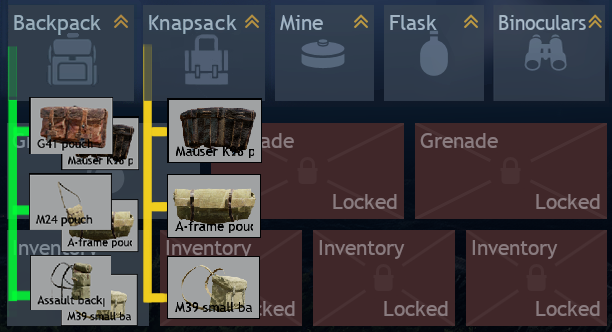
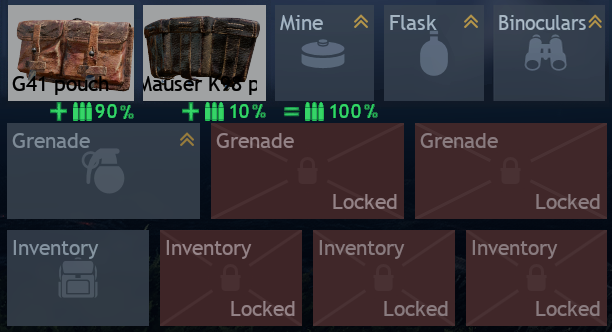
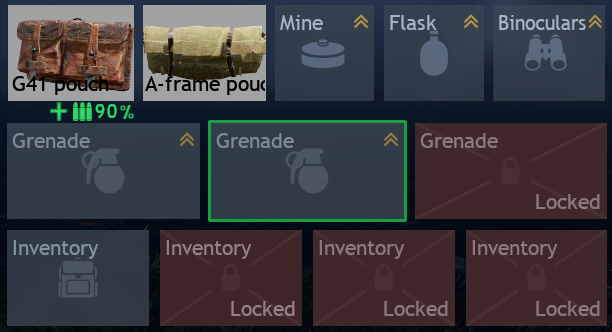
Players may equip one item in each slot and combine them.
Note: equipping a Small Backpack Item in the Large Slot is considered a “light loadout” — its effect is simply the Small item’s own effect, with no value-shifting involved, so it is not covered in the nine combinations below.
Core Principle: 1 + 1 Is Not Greater Than 1
Splitting the slot is not a way to hand players two free slots. The entire proposal rests on one axiom:
The combined effect of a Large item plus a Small item must not exceed the effect of a single Large item in the current version of the game.
In other words, the split exists to revive Small Backpack Items, not to inflate overall power. Large items have their values reduced to “make room” for Small items; when combined, the total effect exactly equals the current single Large item.
Players still face a real trade-off between specialization and flexibility: maximize one dimension with a single Large item’s peak value, or cover multiple dimensions and accept that each one is weaker than a specialist’s. The trade-off hasn’t disappeared — it has simply changed from a false “single correct answer” into a genuine curve of choices.
——————
Numerical Design
1. Ammo Pouches (Magazine)
The in-game descriptions use percentages, but for clarity I will describe the mechanics directly (percentages vary by weapon magazine capacity and type):
| Item | New Mechanic |
|---|---|
| Minor Magazine (MM) | Adds 1 magazine/drum worth of ammo |
| Large Magazine (LM) | Total ammo is doubled, then reduced by 1 magazine/drum (i.e., current LM’s ammo count minus one magazine) |
| LM + MM | Doubled minus one magazine, plus one magazine = total ammo doubled = current LM effect |
Example (SMG, 1+3 magazines, 40 rounds each, 160 rounds total):
| Loadout | Calculation | Total Ammo |
|---|---|---|
| No item | 40 + 120 | 160 |
| MM | 160 + 40 (+1 mag) | 200 |
| LM | 160 × 2 − 40 (doubled minus one mag) | 280 |
| LM + MM | 280 + 40 | 320 (exactly the current LM effect) |
Special weapon (LAD MG, 150 rounds, no spare magazine):
| Loadout | Calculation | Total Ammo |
|---|---|---|
| No item | 150 | 150 |
| MM | 150 + 150 (guaranteed +1 mag) | 300 |
| LM | 150 + 150 (guaranteed +1 mag) | 300 |
| LM + MM | 300 (guaranteed-magazine rule, not stacked) | 300 |
| This is the well-known absurdity of the current “guaranteed magazine” mechanic: for weapons with no spare magazines, the Small and Large ammo pouches produce identical results. I treat this as a known special case and do not expand on it here. |
2. Backpacks (Inventory)
| Item | New Value |
|---|---|
| Minor Inventory (MI) | +1 item slot (2 total) |
| Large Inventory (LI) | +2 item slots (3 total) |
| LI + MI | +3 item slots (4 total) = current LI effect |
3. Grenade Pouches — Weight-Based Tiering
The Grenade Pouch is the most special case in this proposal. Because the current Large/Small Grenade Pouch values are too close (+2 vs +1), simply “reducing the Large to make room for the Small” would make both items identical and erase the distinction between them. I therefore propose a weight-based tiering system:
| Tier | Weight | Items | Usable In |
|---|---|---|---|
| Standard Throwables | ≤1.5 kg | All grenades (≤500 g), TNT Charge (1.2 kg) | All grenade slots |
| Demolition Explosives | 3 kg class | Demolition Blocks, Geballte Ladung, etc. | Only the Large slot’s Demolition Charge Slot |
| Item | New Mechanic |
|---|---|
| Minor Grenade (MG) | +1 standard grenade slot (≤1.5 kg throwables only) |
| Large Grenade (LG) | +1 standard grenade slot, and upgrades the base grenade slot into a “Demolition Charge Slot” (can hold 3 kg demolition blocks; downward-compatible with ≤1.5 kg throwables) |
| LG + MG | 3 grenade slots (1 Demolition + 2 standard) = current LG’s total slot count |
The Large Grenade Pouch’s unique identity = unlocking the ability to carry 3 kg demolition charges. This is what makes it irreplaceable as a Large Slot option, and what fundamentally distinguishes it from the Small Grenade Pouch. TNT is unrestricted — standard slots can carry it as before.
Note: the detailed data and proposal for 3 kg demolition charges (such as the German Hafthohlladung, Geballte Ladung, and the engineer Demolition Blocks common to all factions) will be covered in a separate standalone suggestion, not in this post.
Add Demolition Blocks — Clear Tank Wrecks, Breach Obstacles, Destroy Armor - Suggestions / Weapons - Enlisted — official forum
——————
Nine Combinations
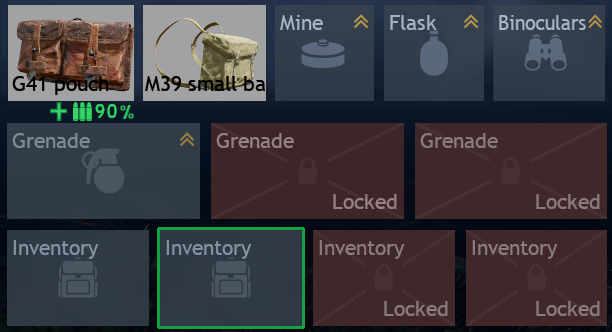
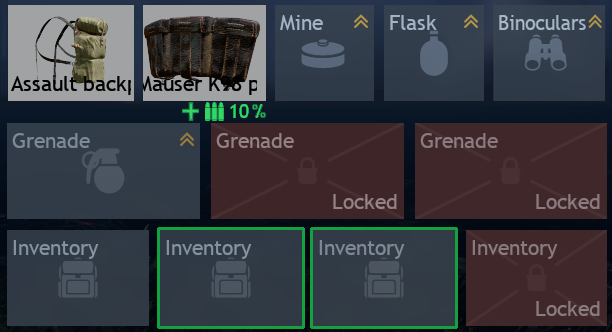
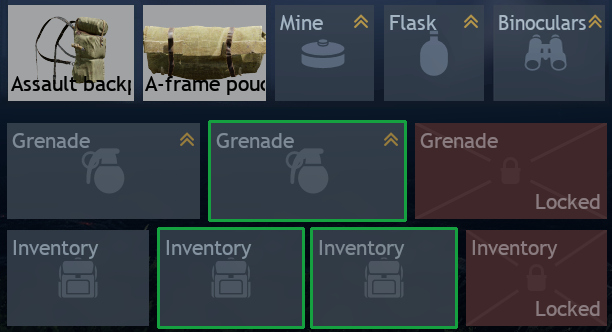
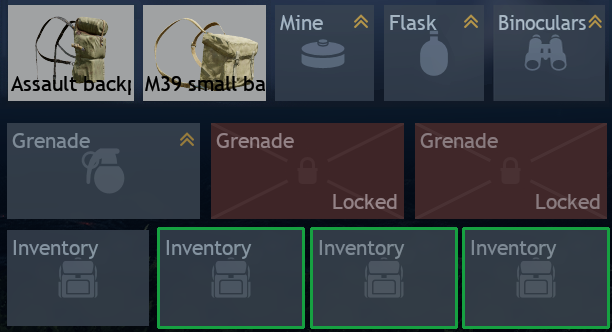
After the split, the Large Slot (3 choices) × the Small Slot (3 choices) produces nine more sensible combinations:
| Combination | Total Effect |
|---|---|
| LM + MM | Total ammo doubled (= current LM) |
| LM + MI | Doubled-minus-one-magazine ammo + 1 item slot |
| LM + MG | Doubled-minus-one-magazine ammo + 1 grenade slot |
| LI + MM | 2 item slots + 1 magazine |
| LI + MI | 3 item slots (= current LI) |
| LI + MG | 2 item slots + 1 grenade slot |
| LG + MM | 1 Demolition slot + 1 standard slot + 1 magazine |
| LG + MI | 1 Demolition slot + 1 standard slot + 1 item slot |
| LG + MG | 1 Demolition slot + 2 standard slots (= current LG slot count) |
| ============================== |
==============================
==============================
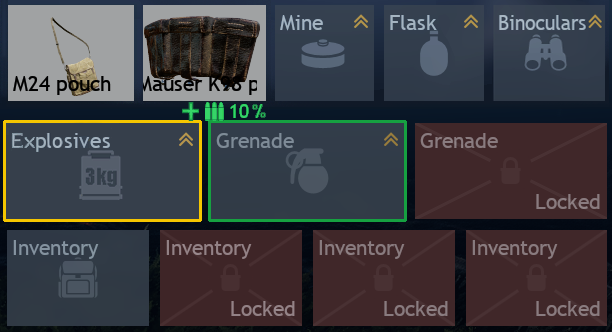
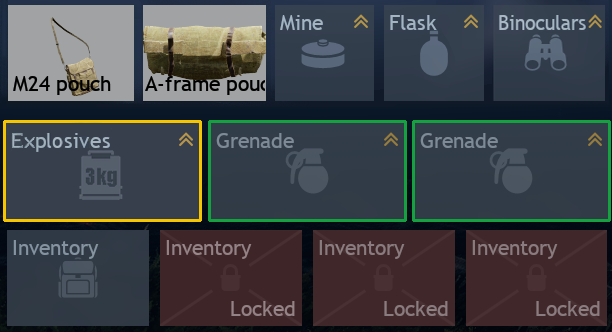
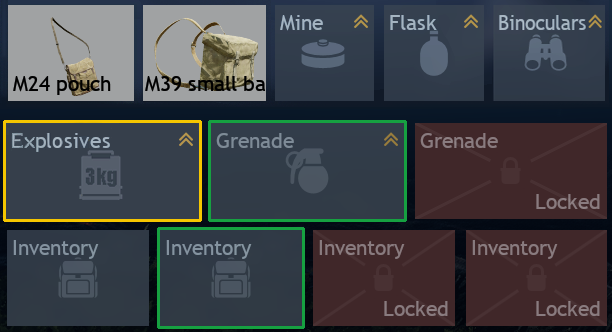
——————
Impact
As a brand-new Backpack mechanic, if the Knapsack slot is added for all classes, then beyond the standard classes (Rifleman, Engineer, Assaulter, etc.), the specialized classes gain far more flexible options:
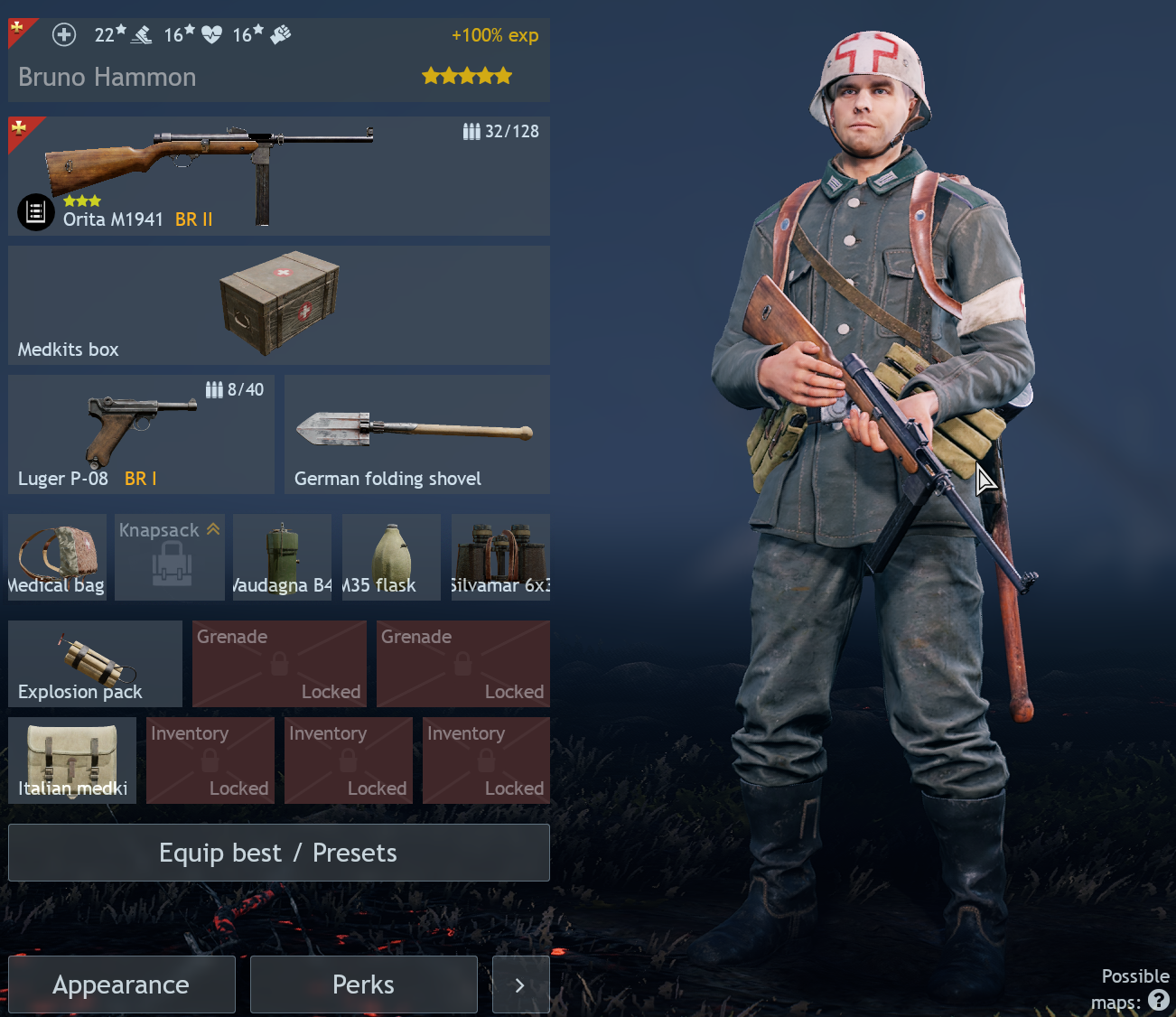
Medic:
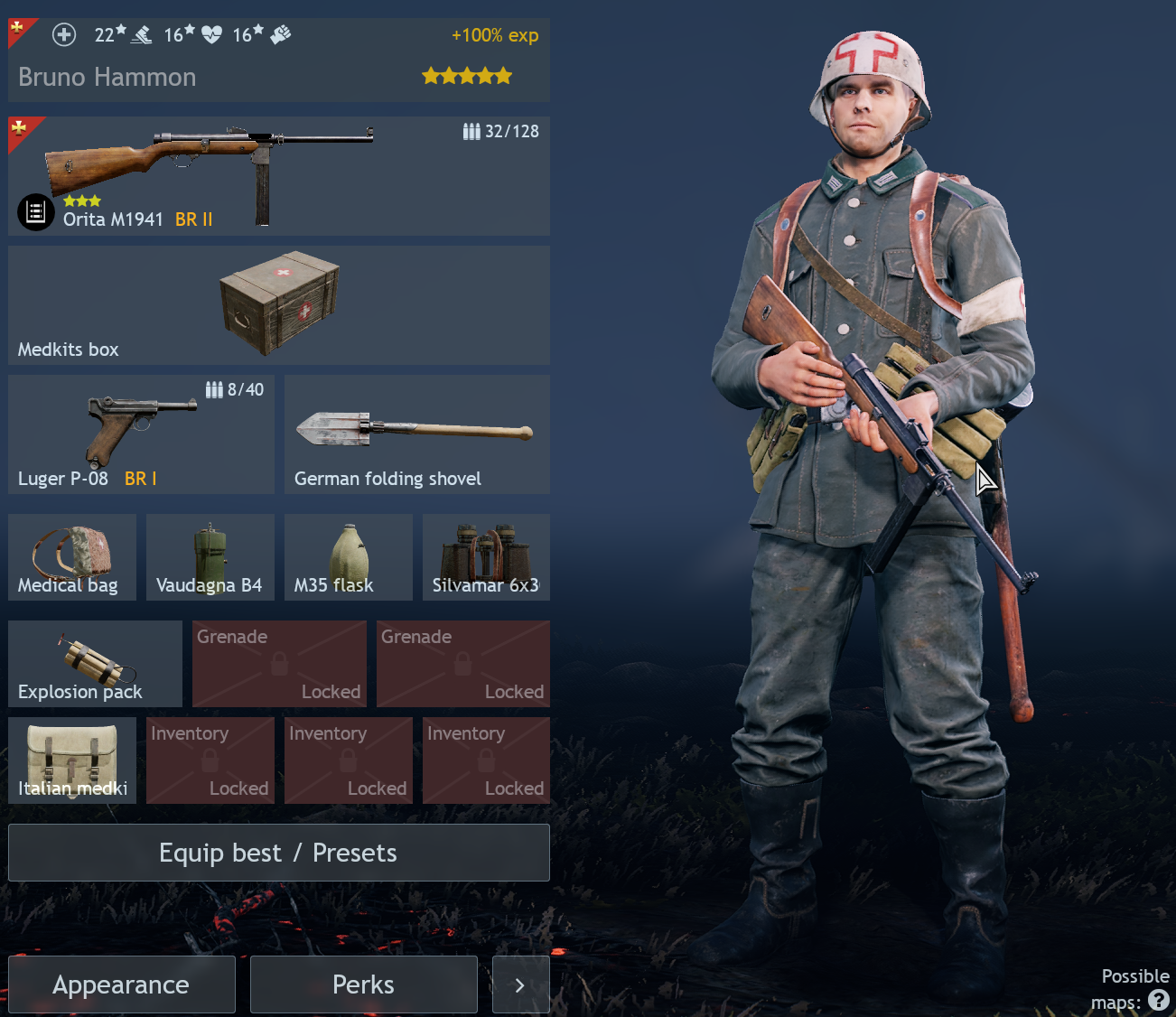
The Medic’s Backpack slot is currently force-occupied by the medical kit and cannot be removed, so Medics cannot carry any Large Backpack Items (see the Medic Rework thread: Medic Rework). With a Knapsack slot, Medics could equip MM, MI, or MG — indirectly improving their functionality and giving them options they currently lack. For example, the community’s long-standing complaint that “Medics using SMGs run out of ammo under pressure” would be slightly alleviated.
NOW
AFTER
Paratrooper / Pilot:
Their Backpack slot is force-occupied by the parachute and cannot be removed, so they cannot carry any Large Backpack Items. A Knapsack slot would let them equip MM, MI, or MG.
NOW
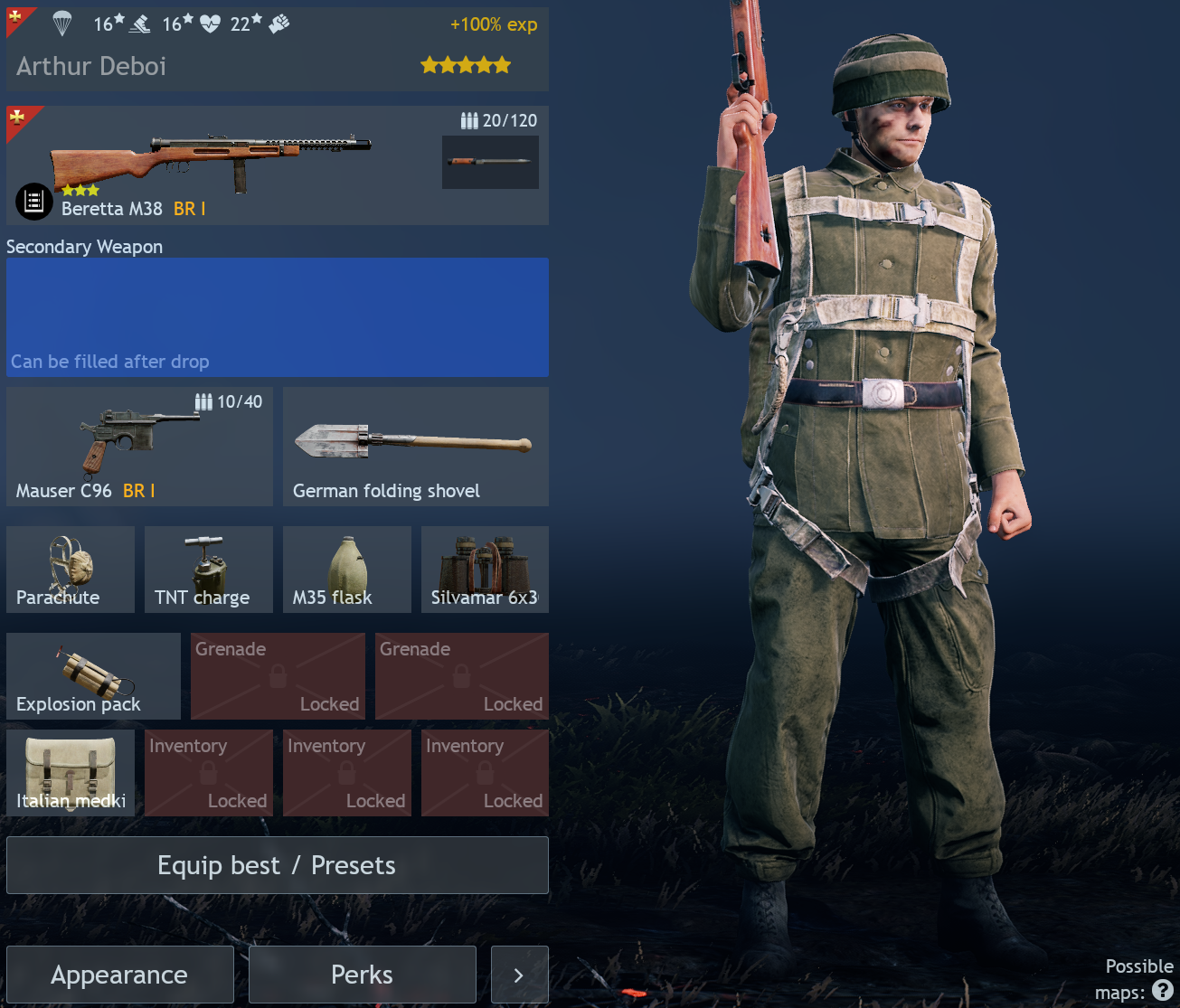
AFTER
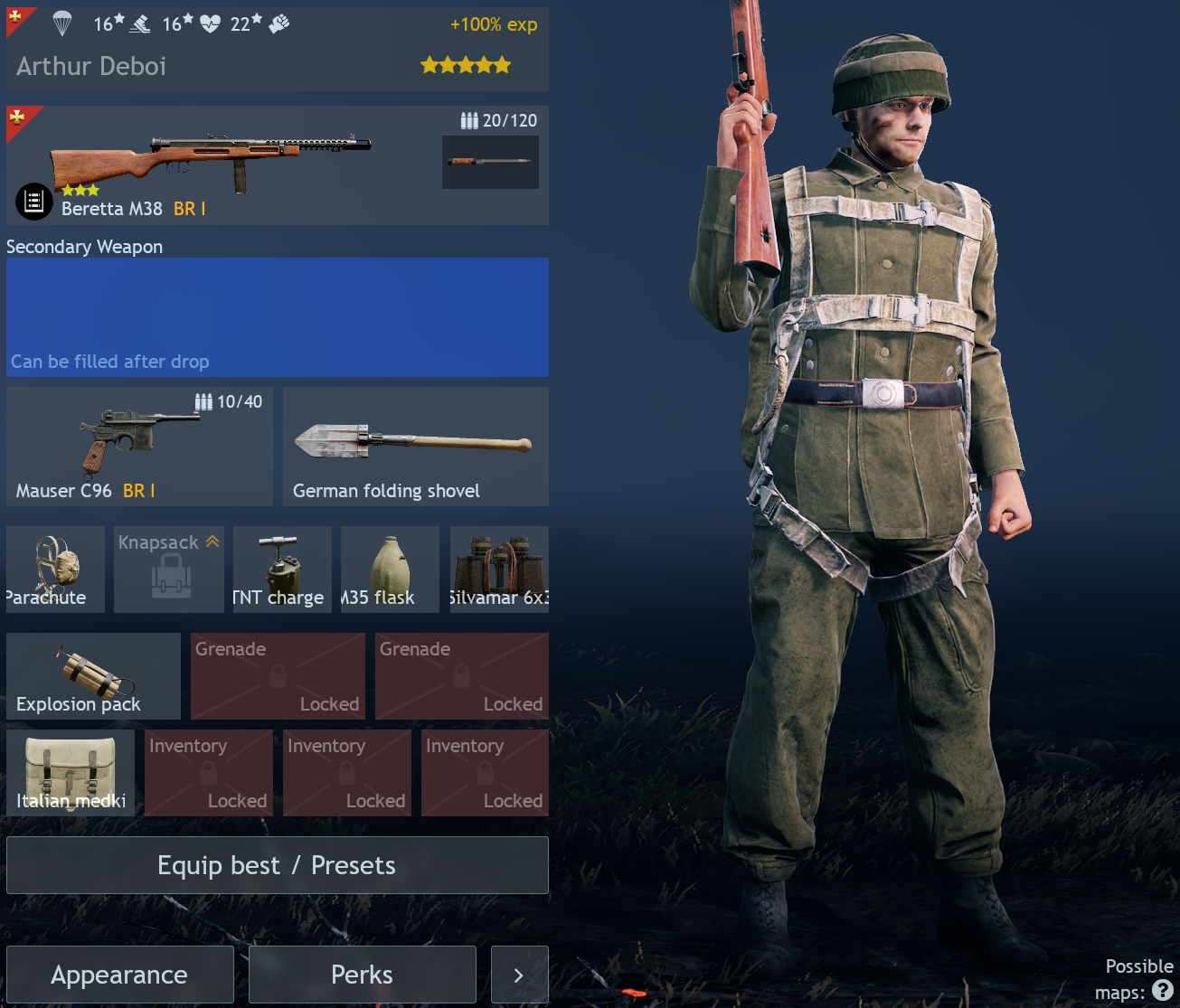
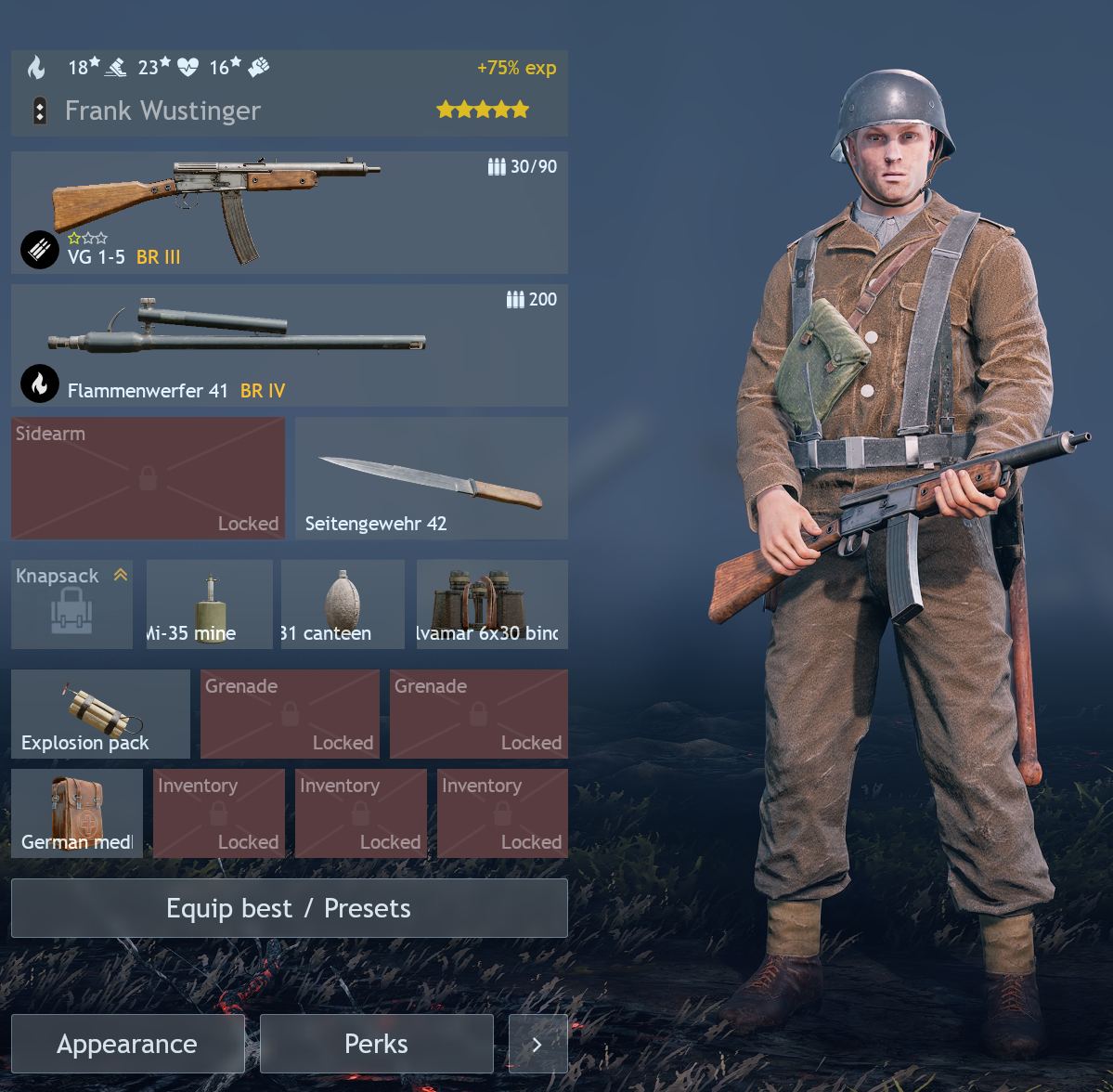
Flametrooper:
The Flametrooper’s Backpack slot is used by the fuel tank by default and is not even shown in the equipment screen, so they cannot carry any Large Backpack Items. A Knapsack slot would let them equip MM, MI, or MG.
NOW
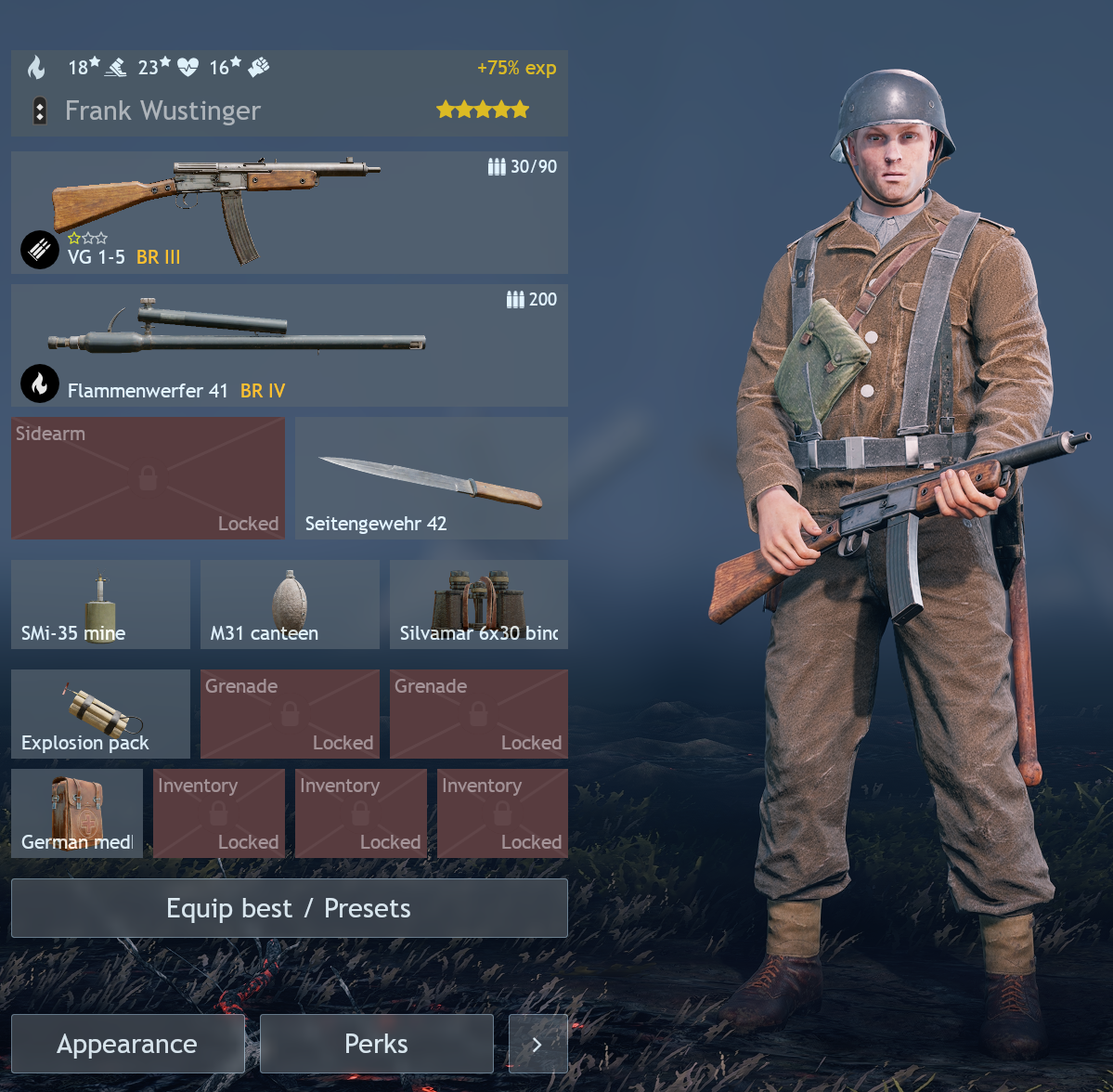
AFTER
Radio Operator:
The Radio Operator’s Backpack slot is force-occupied by the radio set and cannot be removed, so they cannot carry any Large Backpack Items. A Knapsack slot would let them equip MM, MI, or MG.
NOW
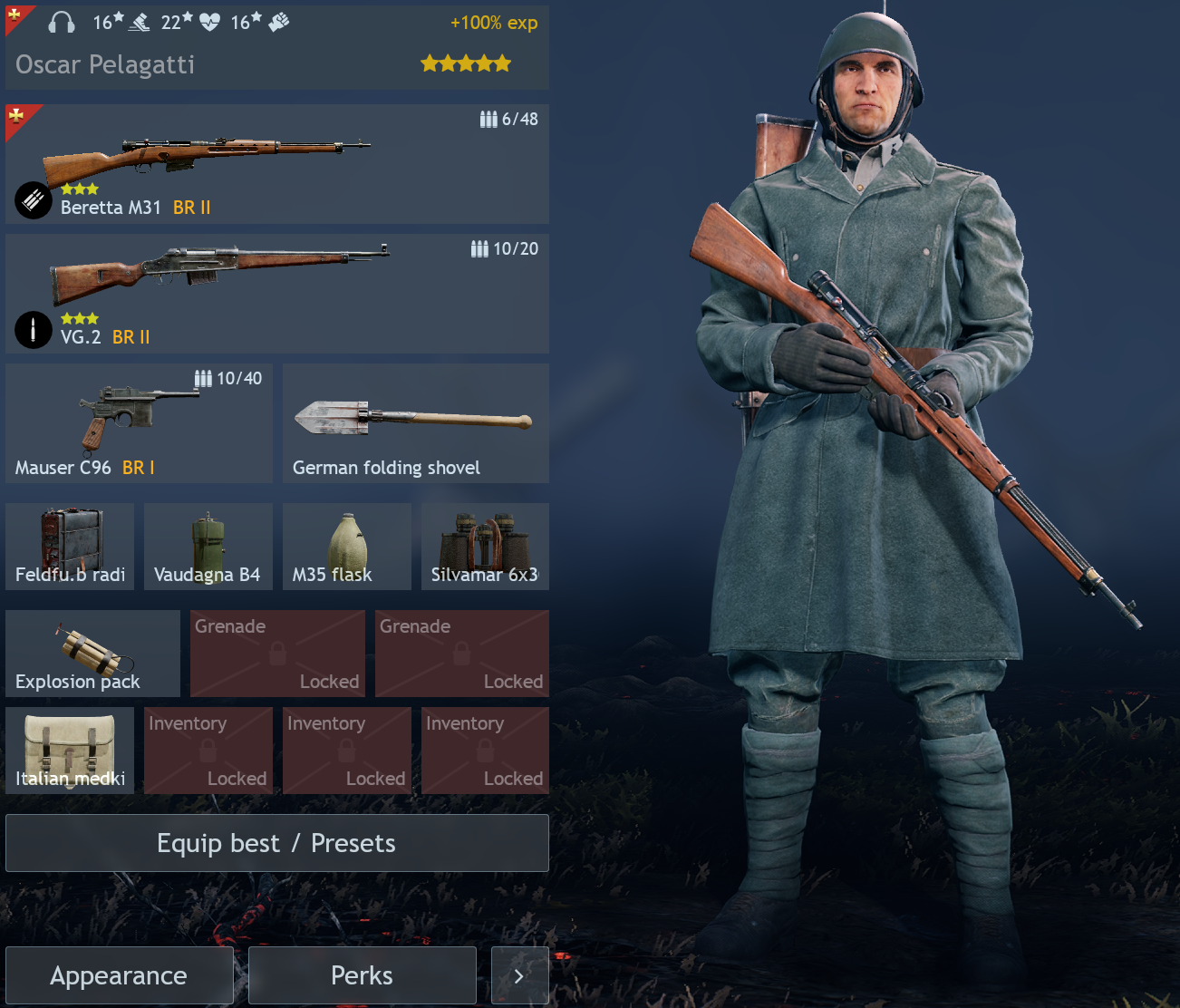
AFTER

Guerrilla:
The Guerrilla is a special case. As everyone knows, the Guerrilla’s Backpack slot is force-occupied by their unique large ammo pouch and cannot be removed; the Guerrilla can also carry a secondary weapon (dual weapons), but this large ammo pouch only applies +100% ammo to the primary weapon. I propose that when a Guerrilla equips MM in the Knapsack slot, the Minor Magazine’s effect applies to the secondary weapon instead; equipping MI or MG works as normal.
NOW
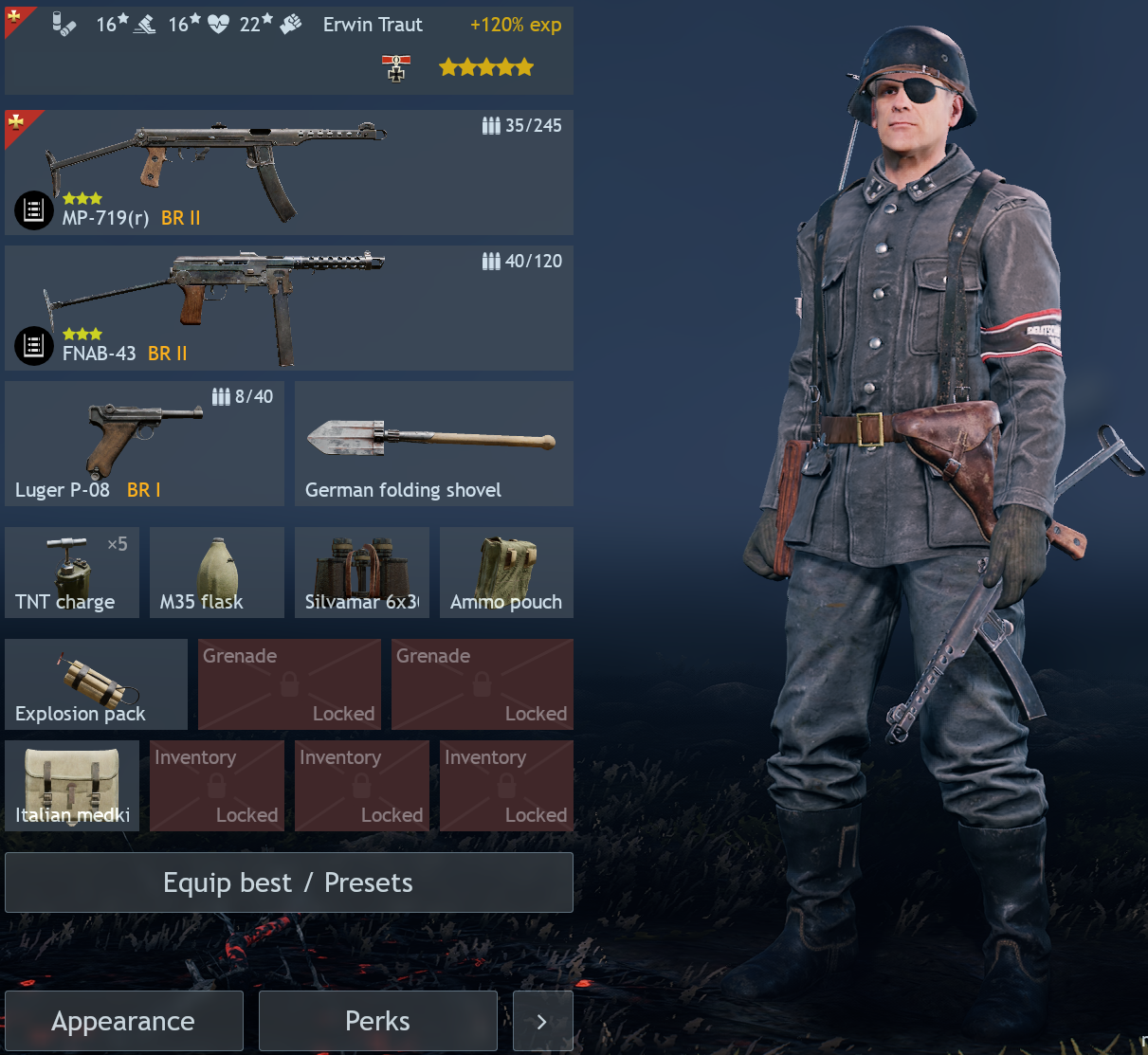
AFTER

——————
A Lower Barrier to Entry
Regular soldiers currently have to unlock the Backpack slot through their squad’s research tree, which means many new players are stuck without a Backpack slot for a long time during early progression. I therefore propose that the Knapsack slot does not require research:
The Knapsack is unlocked by default in every soldier’s equipment screen.
This achieves three things at once:
- It puts the currently-dead Small Backpack Items to actual use;
- It partially alleviates the long-criticized shortcomings of the specialized classes;
- Most importantly, it lowers the entry barrier for new players — and the new-player environment in this game is already harsh enough.
——————
So What’s the Cost?
This proposal has been carefully thought through, and its guiding principle is 1 + 1 ≤ 1. There are no hidden costs — everything is already laid out above.
The core logic can be summed up in one sentence:
Let Large items keep the peak of specialization, let Small items gain a reason to exist, and let combinations offer flexibility — while the combined total never exceeds what a single Large item already provides.
——————
Poll
- Yes, I support this proposal
- Yes, with suggestions
- No, I do not support