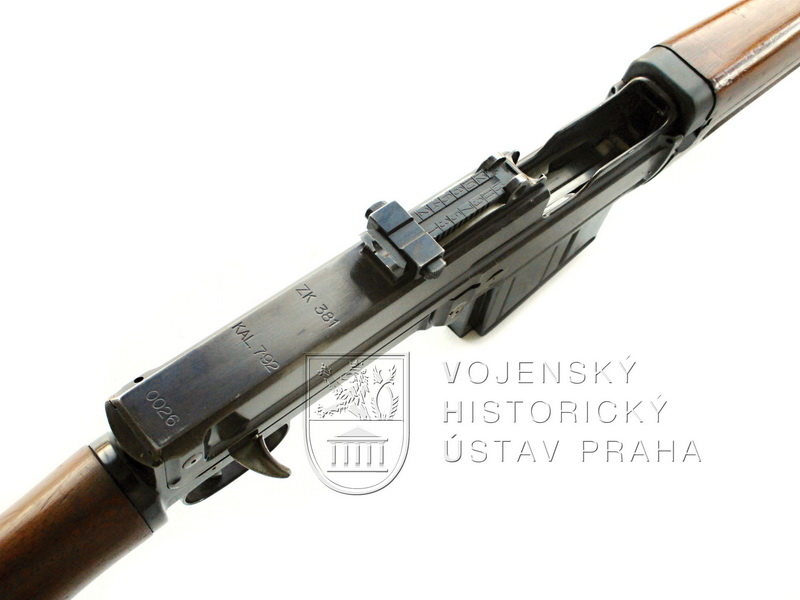
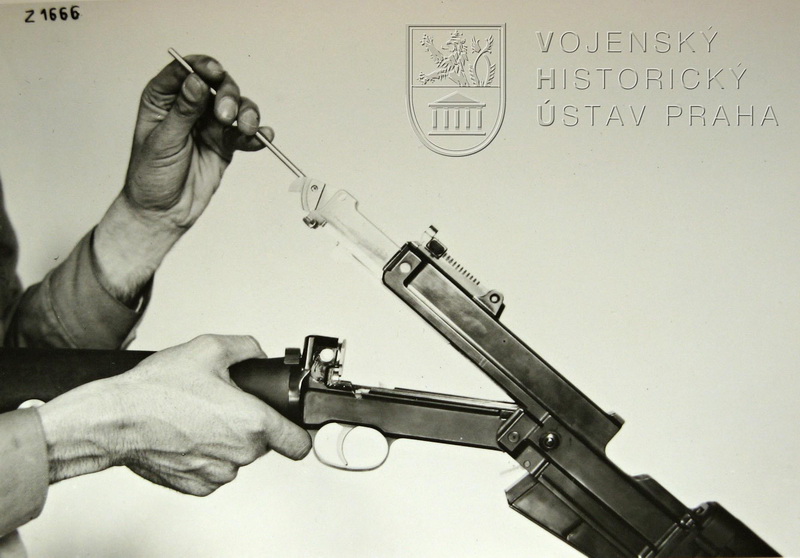
In February 1938 Josef Koucký began work on rifle which was designated ZK 381 and it represented a very viable design with a number of original elements. Its operating system used a locked breech with gas pressure on the piston, but unlike the ZH rifles of Emanuel Holek or the Strakonice vz. 35, it had a bolt that folded into the lower part of the breech housing.

In the spring of 1938, a Soviet military delegation visited the armory, among the weapons on display, ZK 381 caught their attention, and they expressed interest in its conversion to the Soviet 7.62 x 54 R (7.62 mm Mosin) cartridge. The Soviet side supplied the armory with 30,000 rounds for internal tests, as ammunition of this caliber was not produced in Czechoslovakia at the time. The armory produced two samples, one with a non-removable magazine for 5 rounds and the other with a standard, detachable magazine for 10 rounds. The samples were designated ZK 381 Au, with the additional designation being the internal code used by the armory for the USSR.
In addition to the Brno arms factory, designers from Strakonice also participated in the tests at the Kolomna polygon, which took place in the first half of October 1938.
The test results not only showed the pitfalls of completely different cartridge designs, but also brought a lot of knowledge about the Soviet weapons testing methodology.
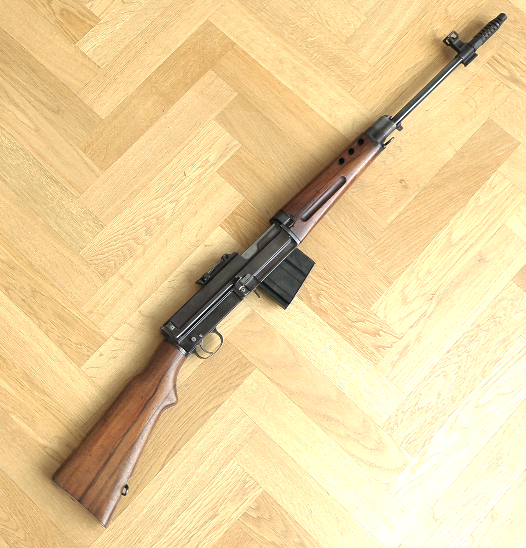
For the next announced round of tests, the Soviet commission demanded that the weapon be modified to have a magazine, structurally based on the AVS 36 automatic rifle, the stock be modified to have a shape corresponding to the Mosin rifle, and the design of the sighting telescope. As early as December 1938, the arms factory apparently put three samples into production with the designation ZK 381 Au II, of which pieces with numbers 014 and 016 have survived. One of them passed internal durability tests in March 1939 by firing 14,000 rounds. As a result of the occupation of the remaining part of the republic, there was no demonstration in the Soviet Union, although contacts with the Soviet side had not yet completely ceased.
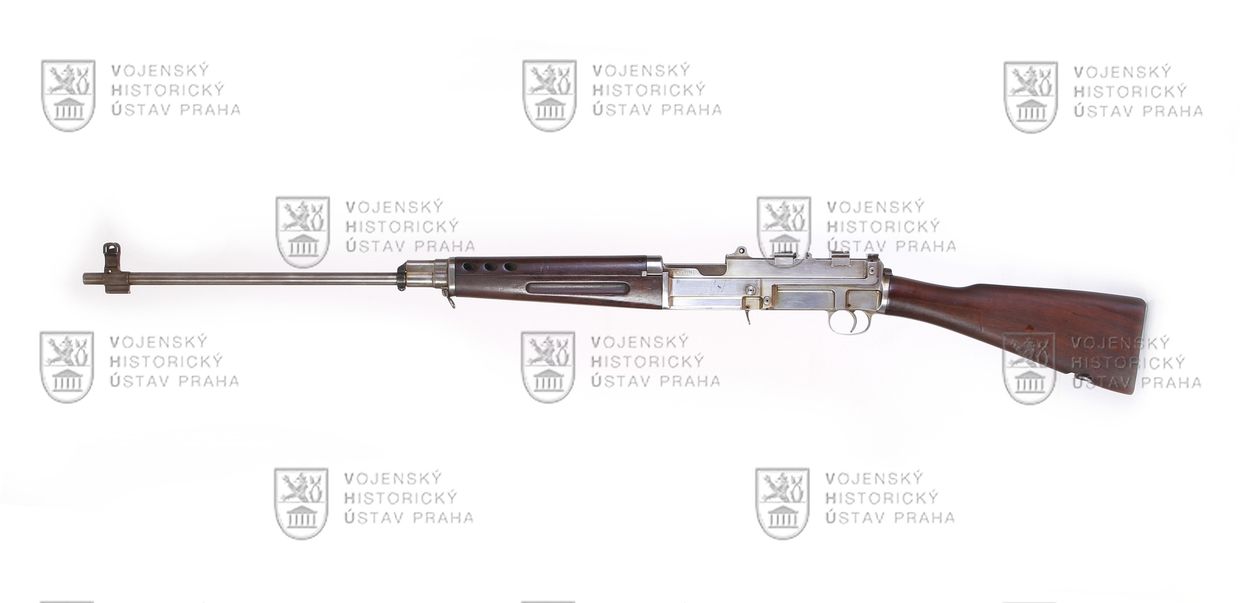
Even before the occupation, from February 26 to March 6, 1939, Josef Koucký, Emauel Holek, ing. František Sikyta and Otakar Galaš demonstrated the ZK 381 in France, successfully, but without further results.
The ZK-381 was also tested in Germany, Spain, and Italy but also without success.
In June 1939, the arms factory experimental workshop received an order to produce 8 ZK 381 rifles and another 5 were to be manufactured according to the specifications of the German military administration. We do not yet have any further information about the tests at the Kummersdorf testing center, where they were assessed by the infantry weapons department.
More detailed information about the ZK-381
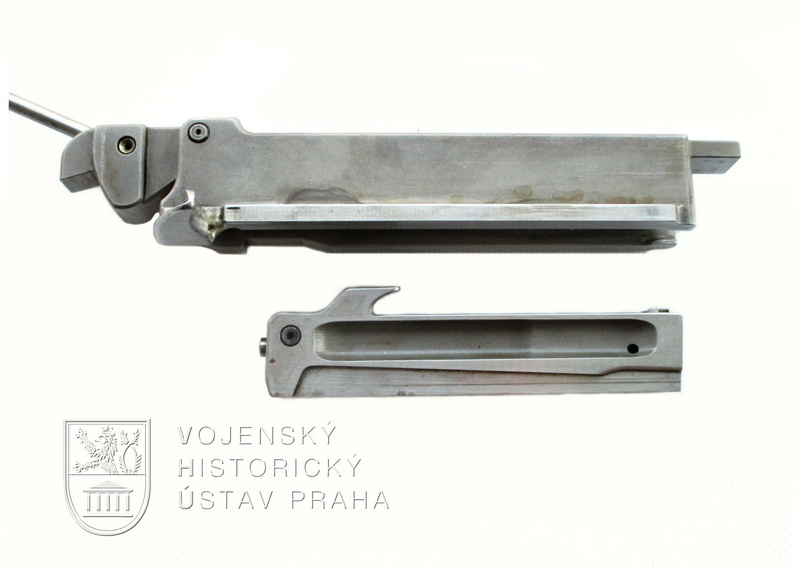
The locking surface of the breech did not rest in a recess in the breech housing, but in a transversely inserted support with an eccentric head and secured by a nut. The advantage of the solution was that it was no longer necessary to produce a precisely tolerated and particle-hardened locking surface in the lower part of the breech housing. The replaceable support also allowed for precise definition of the breech clearance in the event of its increase, both as a result of increased breech clearances due to wear from shooting and inaccuracies in serial production. The arms company applied for patent protection for the solution in February 1938 and received patent No. 67,035.
pushed backwards by a spring in the piston. The rear of the piston passed through a guide in the bridge of the breech block and transmitted the impulse of the collected gases to the front surface of the bolt carrier. The support not only secured the piston in the rear of the guide, but also returned the piston to the front position by spring pressure. The elegant design of the piston was covered from above by a wooden handguard, secured in the rear by a flexible yoke, whicph the shooter only needed to release with the tip of a sharp bullet. The design of the piston was protected by the arms factory with patent No. 72,096, also filed in February 1938.
Josef Koucký also used the flexibility of the arm for securing the gas cylinder cap (expansion sleeve), held in the tube by a pair of symmetrical teeth. The patented solution also included the possibility of fixing the cap arm with a plunger stem placed under the barrel. The gas cylinder cap could also be installed upside down, whereby the shooter closed the bypass channel and the rifle then functioned only as a repeater. The factory applied for protection for the design in July 1938 and received patent No. 71,873.
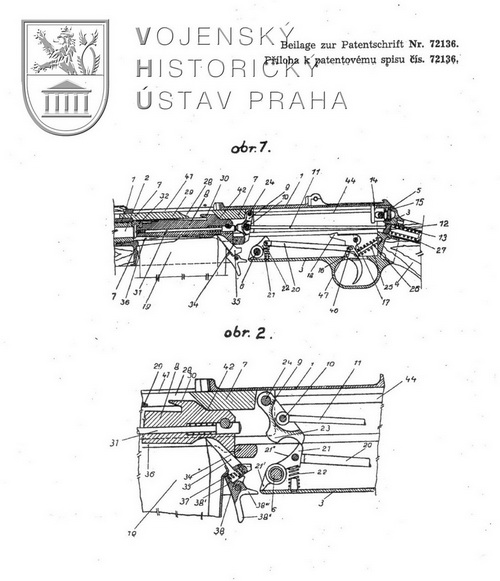
Josef Koucký solved the firing mechanism in a very unconventional way. He completely abandoned the traditional concept of a hammer placed in the lower part of the bolt housing and spring-loaded by a separate firing spring. He placed the rotating hammer directly in the rear part of the bolt carrier and connected it to the support rod of the recoil spring. The recoil spring not only controlled the forward movement of the bolt, but also functioned as a firing pin. A similar solution had not yet appeared in any self-loading rifle. Zbrojovka applied for patent protection in December 1938, but it was not until June 1943 that it received patent number 72,136.
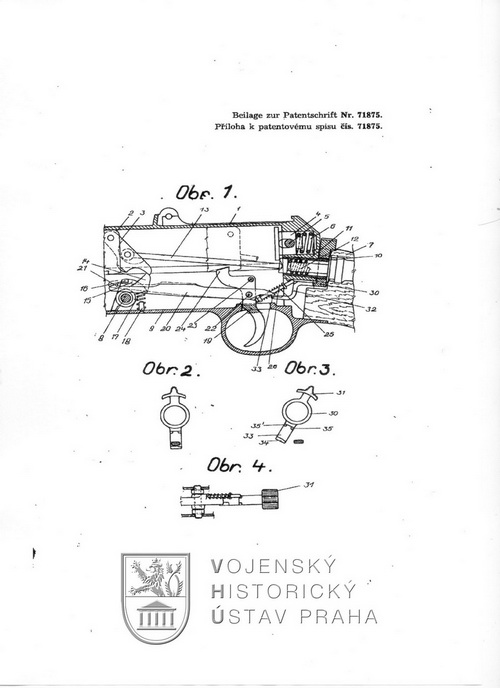
The rifle also had an original trigger mechanism with an added fire readiness function. After the last round was fired, the trigger bar caught the bolt carrier. After changing the magazine, it was enough to pull the trigger, which released the slide and loaded the first round into the chamber. A second pull of the trigger then led to a shot. Although the subject of patent No. 71,875 was the rotating safety of the trigger mechanism, the patent, filed in January 1939, also covered the design of the trigger mechanism.
More Photos
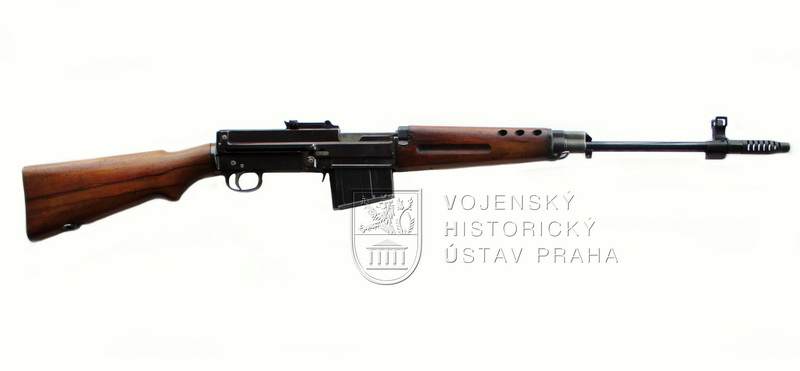
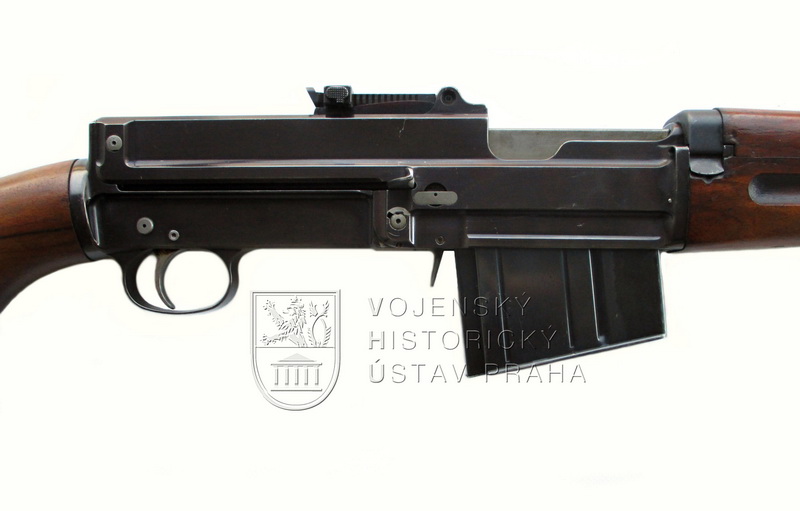
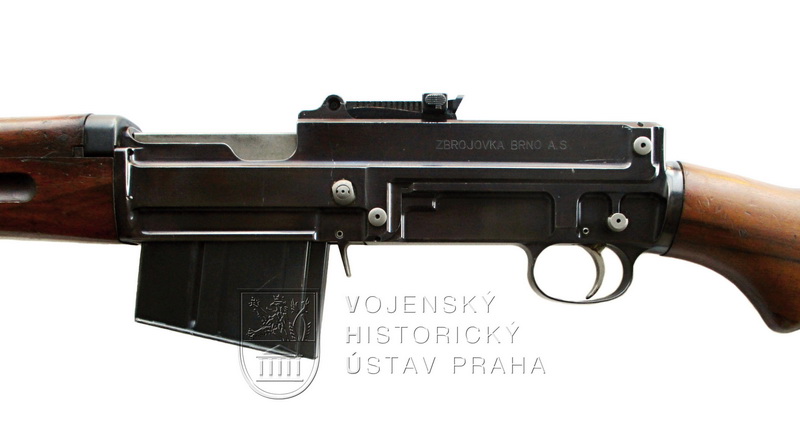
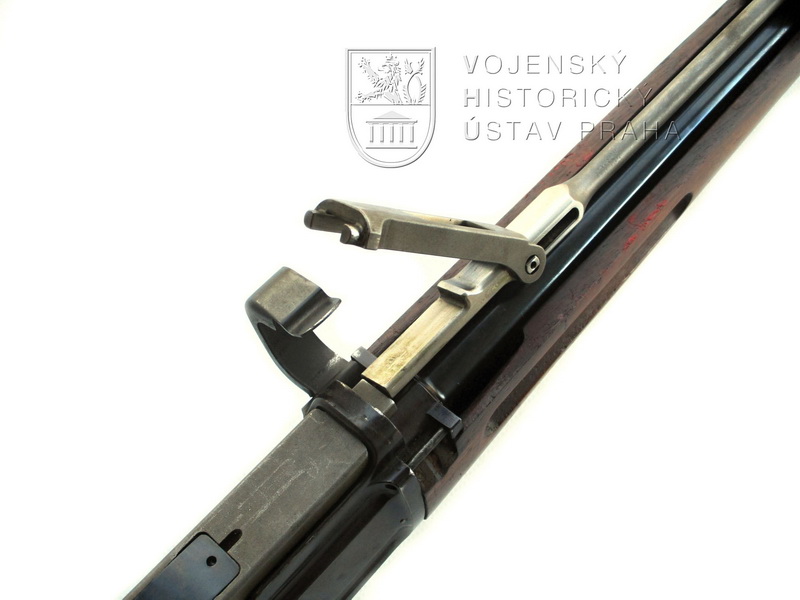
| Specifications | |
|---|---|
| Caliber | 7.92 mm Mauser |
| Cartridge | 7.92x57 mm Mauser |
| Length | 1168 mm |
| Barrel Length | 522.5 mm |
| Barrel Length (including Muzzle Brake) | 593 mm |
| Weight without the Magazine | 4.3 kg |
| Magazine Capacity | 10 Rounds |
 Weapon Type
Semi-Automatic Rifle
Battle Rating (BR)
BR3
Type
Event Weapon (Without squad)
Availability
Germany doesn’t have any good semi-automatic rifle in the TT (and many people don’t have the SVT Pavesi and Pavesi M42) so it would be interesting to have the ZK-381 in an event to solve the problem a little.
Gameplay Purpose & Role
It doesn’t fill any gap, but it solve the problem of a good semi-automatic in Germany BR3 a little.
- Yes
- No
- TT
- BP
- Event Weapon (without squad)
- Event Weapon (with squad)
- Premium Squad
