Comrades, this year is the Year of the Horse.
(The Chinese zodiac, where each animal takes turns as the symbol for the current year)
That’s quite interesting.
When it comes to “horse”, what do you think of?
That’s cavalry!
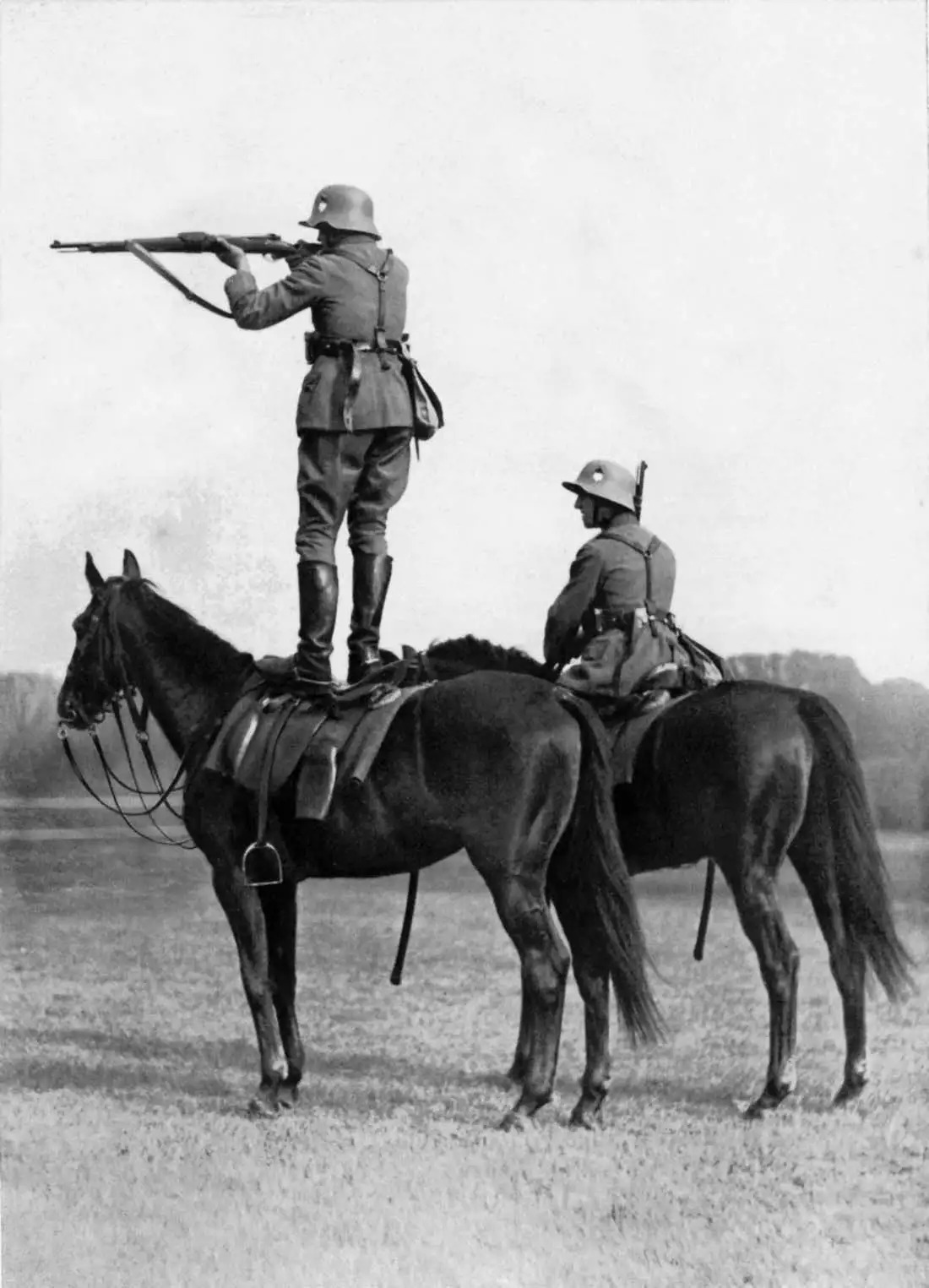
Although our game is not suitable for horses, we can offer unique cavalry equipment, uniforms and weapons for each faction!
During World War II, there were still a large number of cavalry units in service.
But they are no longer suitable to be the main force.
They mainly undertake auxiliary tasks such as reconnaissance, transportation and patrol.
Of course, in times of crisis, they would also dismount and engage in battle as infantry.
1、Axis powers, Italy
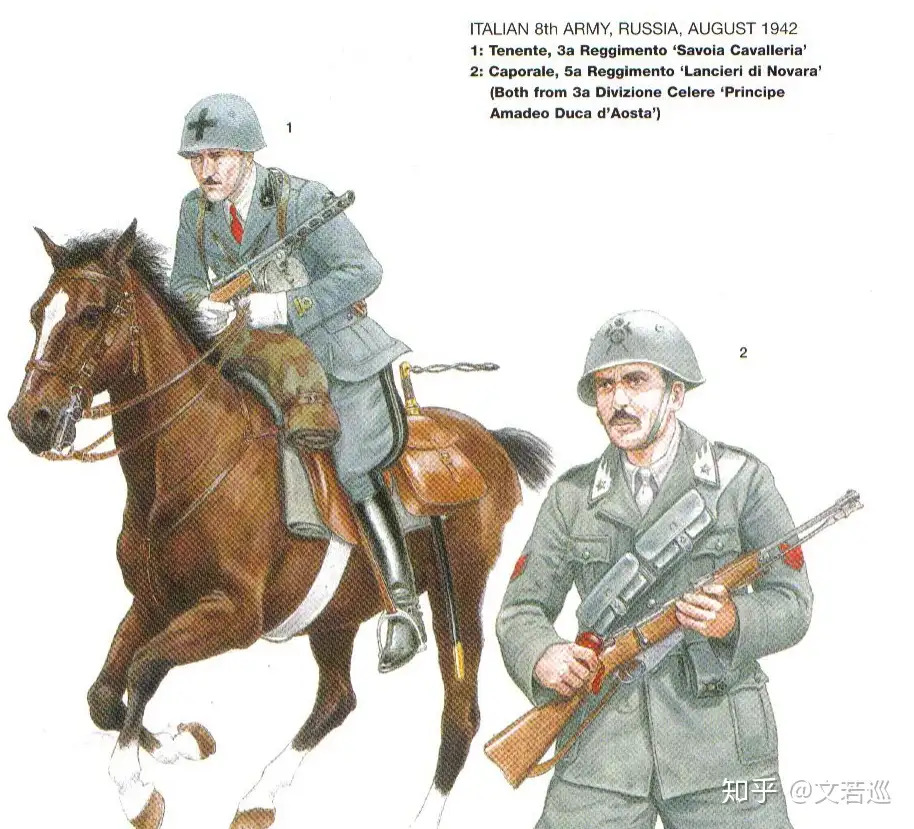
As a member of the Axis powers, like Germany, Italy during World War II also maintained its own cavalry. Among them, the most famous was the protagonist of this article - the Savoia Cavalry Regiment. Dressed in red stripes and wearing the distinctive Crusader uniform, this traditional and ancient cavalry regiment undoubtedly was one of the rare elite units in the entire Italian expeditionary force.
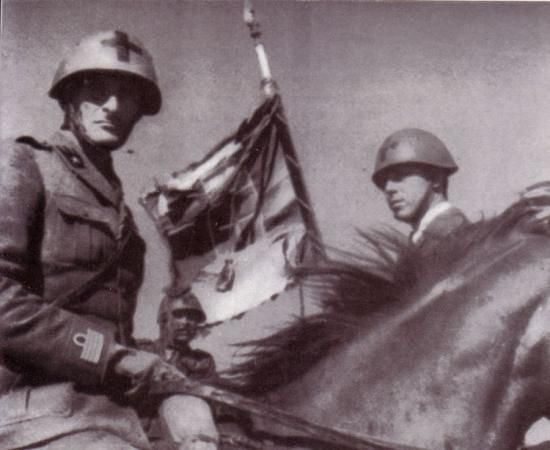
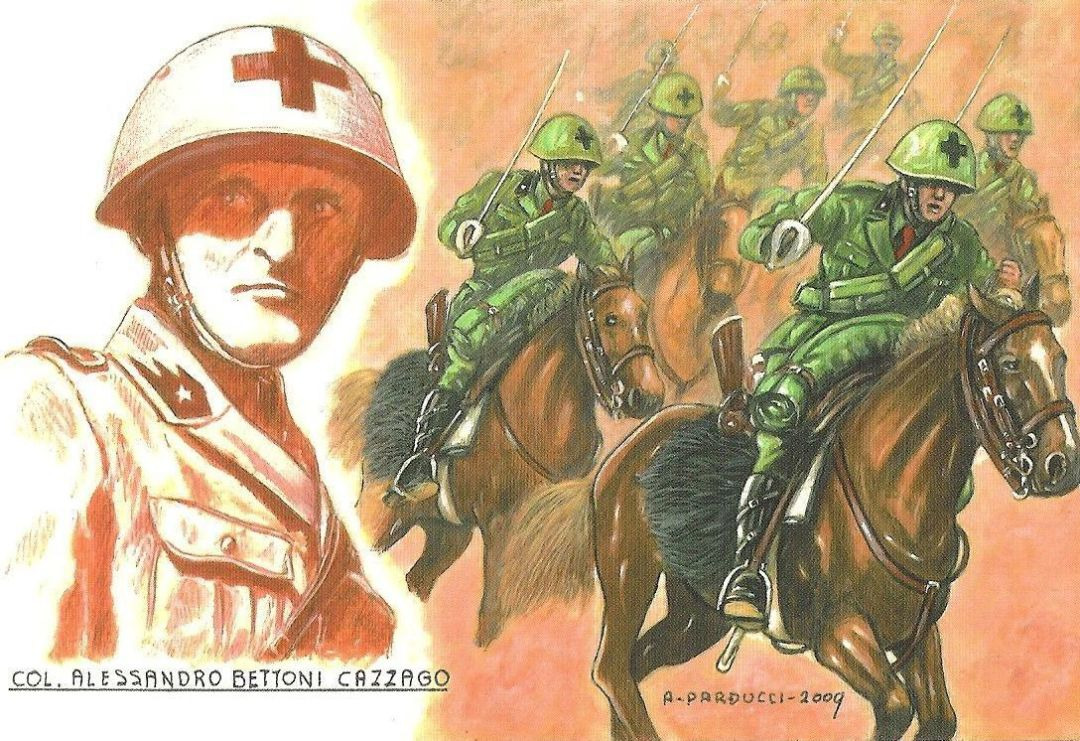
Although officially called a “regiment”, the Savoya Cavalry Regiment only had around 600 cavalrymen, and each cavalry squadron (equivalent to a company) had only about 40 people. With these mere 600 men under the command of the then regimental commander, Colonel Alessandro Bettoni Di Cazzago (who was a colonel in the 1892), they used their gleaming sabers to completely disband an entire Soviet regiment, leaving them all sprawled on the ground in confusion!
The painted portrait and real photo of Colonel Cazzago. He was born in 1892 in an aristocratic family in Brescia, Italy. He participated in World War I and, due to his extraordinary courage and boldness, he also received the bronze and silver military bravery medals. In 1920, he transferred to the 3rd Savoya Cavalry Regiment and became the regimental commander in 1942. On August 24, 1942, Colonel Cazzago commanded the regiment to launch a “sabre charge” against the Soviet forces, demonstrating with tactics that cavalry was not completely outdated. It was precisely because of this bold action that the Italian defense line was able to be preserved, and he was once again awarded the silver military bravery medal.
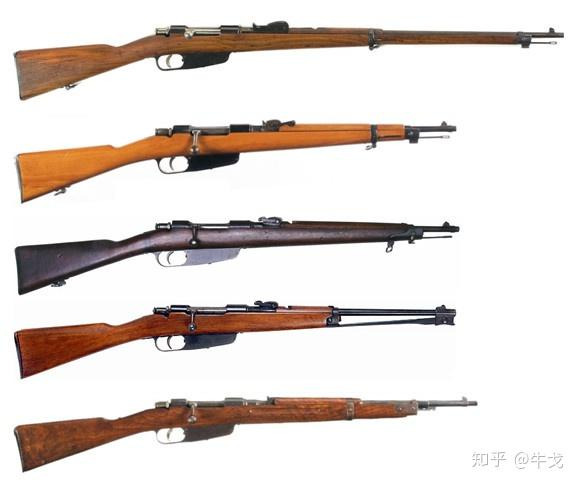
From top to bottom in the picture are the Carcano M91 rifle, the Carcano M91 carbine, the Carcano M91 special forces carbine, the Carcano M91 cavalry carbine, and the Carcano M38 carbine.
The Calcaro M91 rifle has a total length of 1255 millimeters and a barrel length of 780 millimeters; the cavalry carbine has a total length of 920 millimeters and a barrel length of 444 millimeters; the M38 carbine has a total length of 1022 millimeters and a barrel length of 533 millimeters.
We can consider the cavalry models among them as the distinctive weapons of the cavalry unit.
2、Allied forces, United States
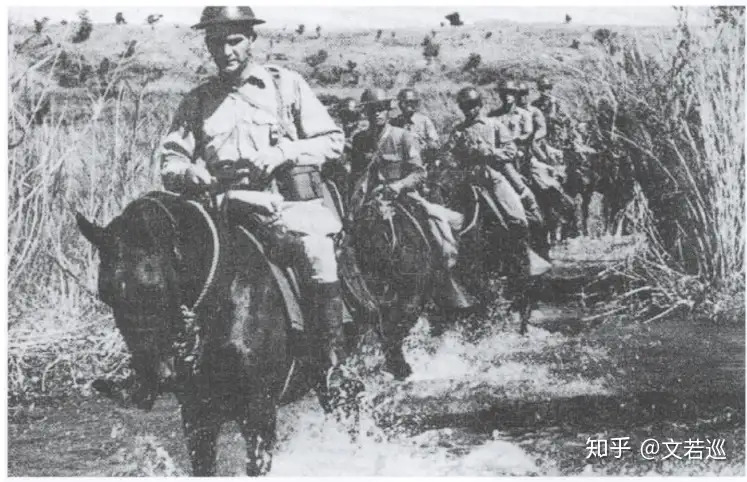
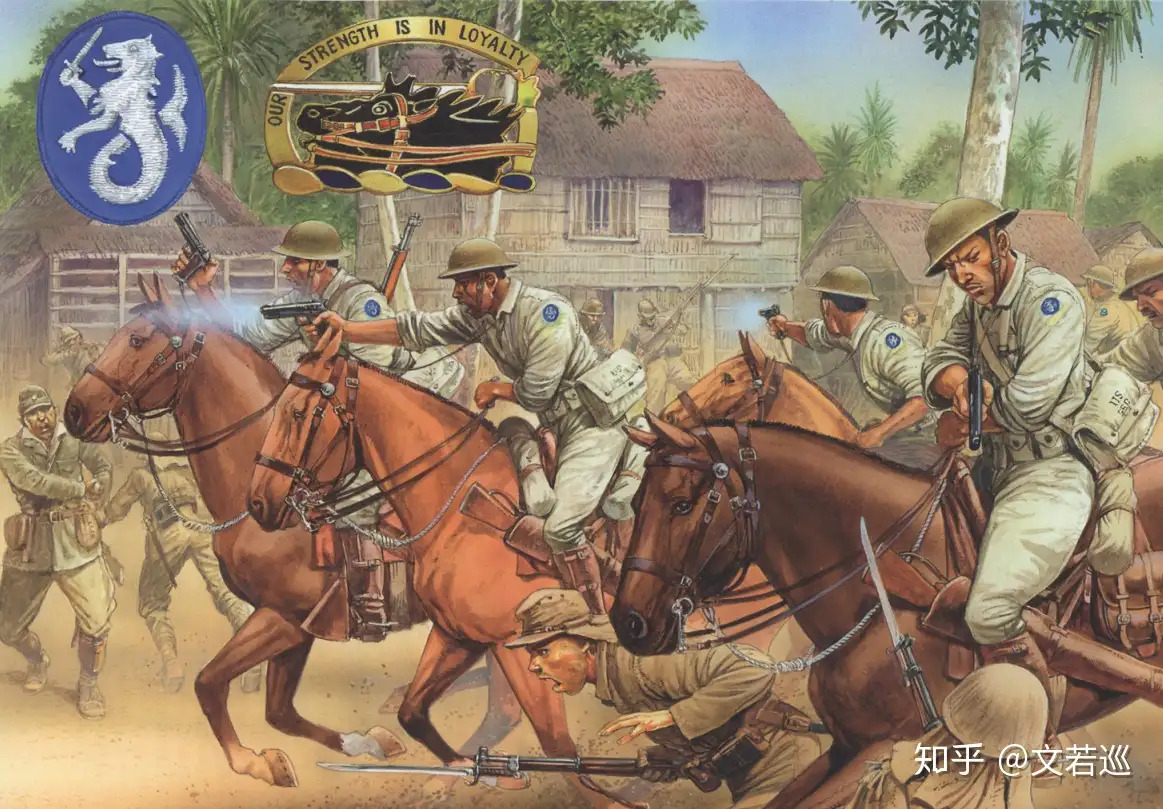
C: The last cavalry charge, 26th Cavalry Regiment, January 1942
The last cavalry charge in the history of the United States Army took place on January 16, 1942. The 26th Cavalry Regiment (Philippine Reconnaissance Regiment) on Bataan Peninsula engaged in strengthening their positions and attempting to consolidate the frontline against the continuous Japanese offensive for a week and a half. The F Company of this regiment, under the command of Lieutenant Edwin P. Ramsey, attempted to occupy the villages upstream of Morong River before the Japanese forces arrived. The advancing cavalrymen discovered that several hundred troops of the 65th Brigade of the Japanese Army had already entered the village, while more people in the distant barrio were wading across the river. After realizing that only a bold and decisive action could turn the situation around, Lieutenant Ramsey ordered his 27-person command platoon to charge at the Japanese force’s center, which was unprepared. The cavalrymen charged on horseback and shouted as they rushed into the small village, then launched close-range fire. Only a few frightened Japanese made a counterattack, while most fled towards the river, and most of them died there. Before the arrival of the remaining two platoons, Ramsey established a skirmish line at the river bend. For the Japanese skirmishers who were scattered and still remaining on the banks of the Morong River, Ramsey led some people to search them out through the village, while the Japanese artillery fire on the opposite bank began to be intense. The 1st Regular Philippine Division’s troops quickly arrived and ensured the safety of the position. Lieutenant Ramsey evaded the Bataan surrender and established the guerrilla area in the central part of Luzon. Because he led this last charge, he later received the Silver Star Medal and the Purple Heart Medal.
Left upper corner small picture: Philippine Expeditionary Force emblem (left) and the emblem of the 26th Cavalry Regiment (right).
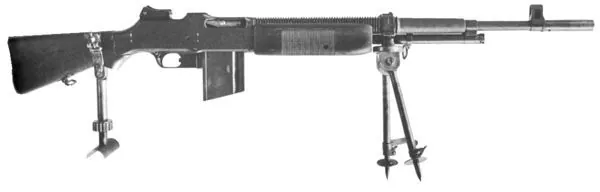
Machine guns designed for cavalry units。
The M1922 light machine gun was the first major improvement to the M1918 BAR. It was produced in small quantities in 1922 and was mainly equipped for the American cavalry. The M1922 light machine gun is characterized by the installation of a heavy barrel with heat dissipation ribs on its surface. A pair of adjustable-length tripods are installed on the barrel sleeve, a single tripod is added to the bottom of the stock, and there is a hinged support plate on the bottom plate of the stock to stabilize the gun on the shoulder during fully automatic firing.
3、Axis powers - Japan
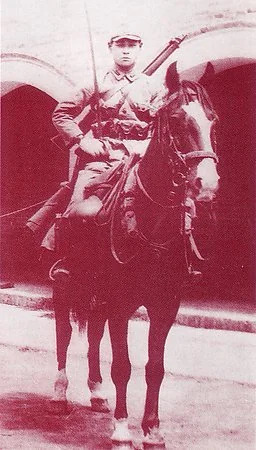
Due to the vast grasslands and inconvenient transportation in the Far East battlefield, the Japanese army extensively employed cavalry units, and even at one point, they used them as the main force in battles.
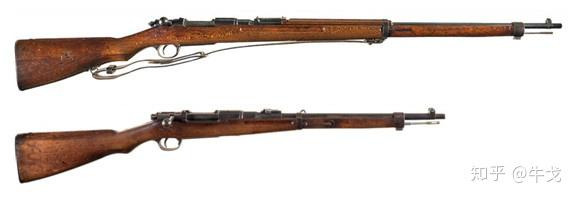
This rifle was the predecessor of the Type 38 Garand and belongs to the Mauser series. However, unlike the similar imitations made by other countries which largely maintained the original design, the Type 30 rifle underwent significant improvements both internally and externally during the imitation process, and the modifications were very successful.
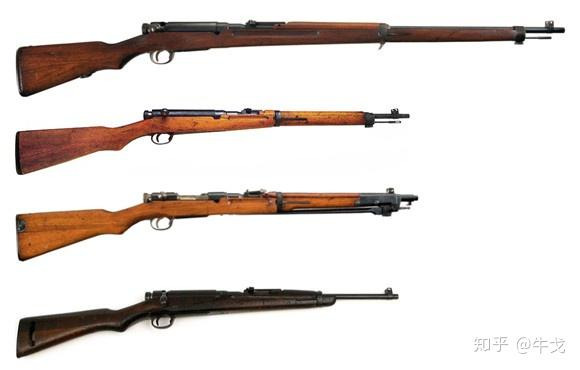
In the above picture, from top to bottom, they are: Sanmao Type Rifle, Sanmao Type Carbine, Sican Type Carbine, and an unknown model of 65mm Rifle.
The full length of the rifle is 1276 millimeters, with the barrel measuring 797 millimeters; the full length of the Type 38 carbine is 966 millimeters, with the barrel measuring 487 millimeters.
All the rifles and carbines in this series fire 6.5X50mm semi-capped pointed rifle bullets.
Among them, the 【Sican Type Carbine】 was a cavalry weapon specifically designed for the Japanese cavalry units.
4、The Soviet Union
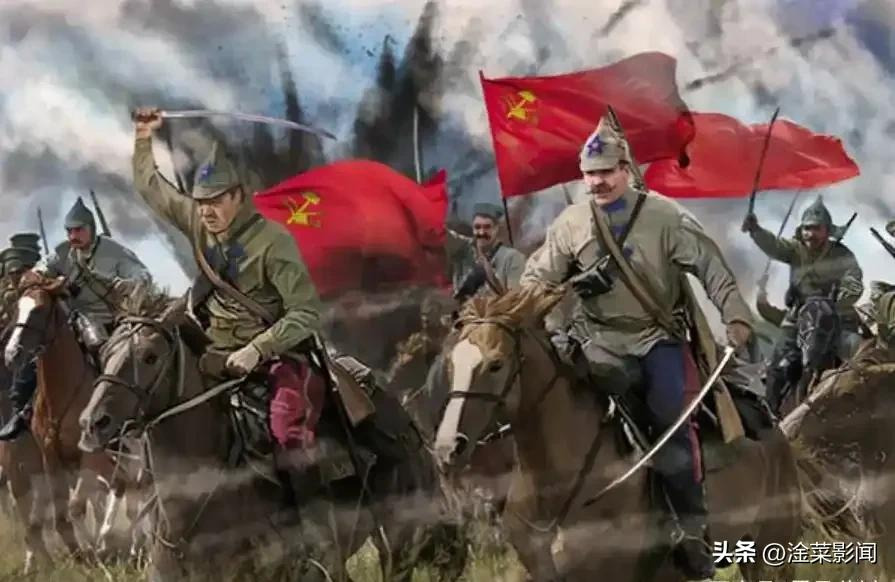
There’s no need to say it. The cavalry of the Soviet Union was very famous.Especially the Cossack cavalry
Of course, the difference between their weapons and their infantry is not very significant.
Perhaps it is lighter and easier to operate.
Imagine a cavalry unit in their uniform appearing on the battlefield.
Does this indicate that our battle was extremely intense, to the point where even the cavalry had to dismount and engage in combat?
Moreover, the distinctive cavalry uniforms and the unit designations of the cavalry forces are definitely things that all of you, who enjoy collecting, would like to acquire.
So, do you want the cavalry troops, armed with some distinctive cavalry weapons, to join our battlefield as infantry?
- Yes
- No