There are three polls in total below.
Two of them are for each of the two guns respectively.
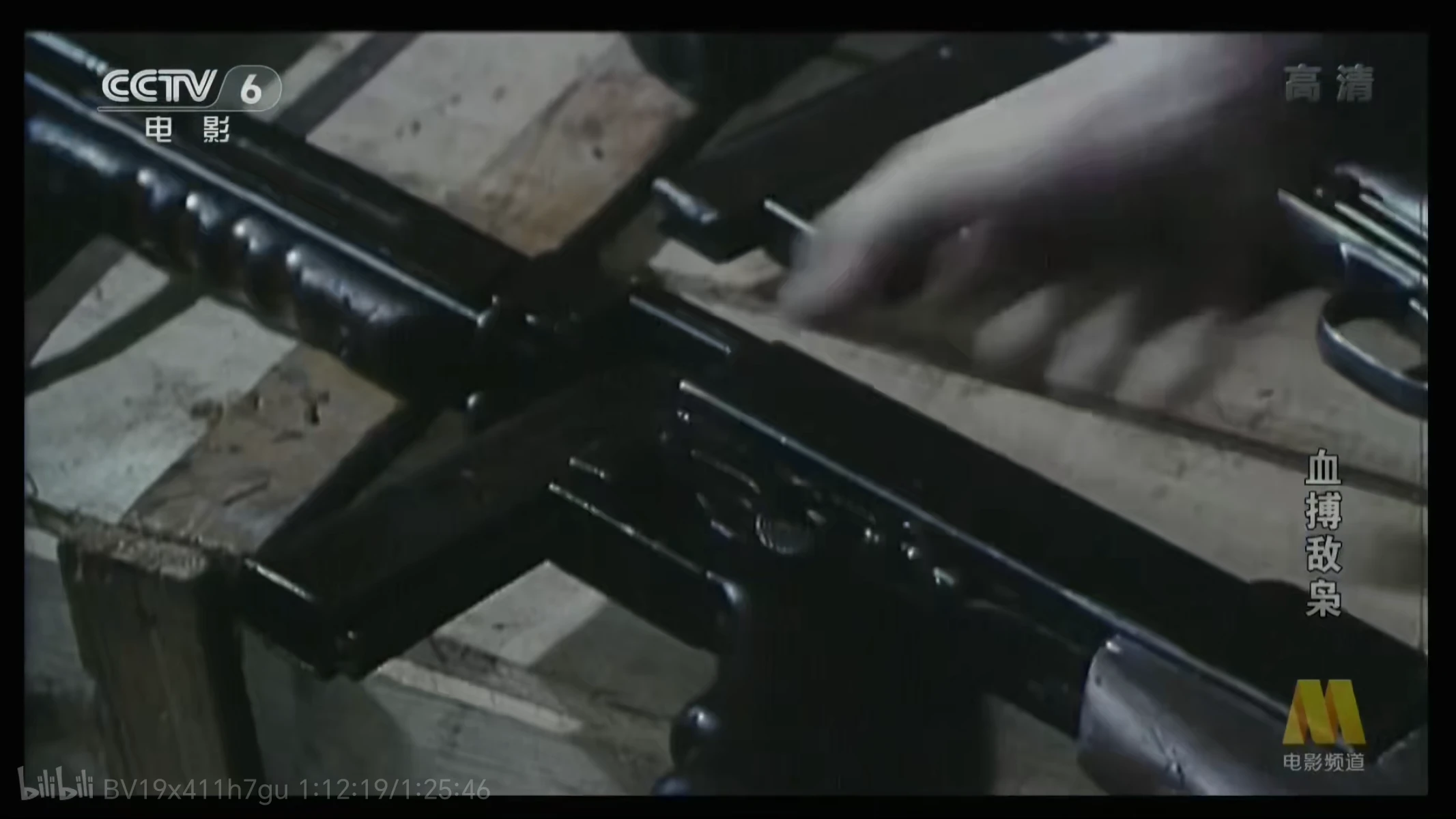
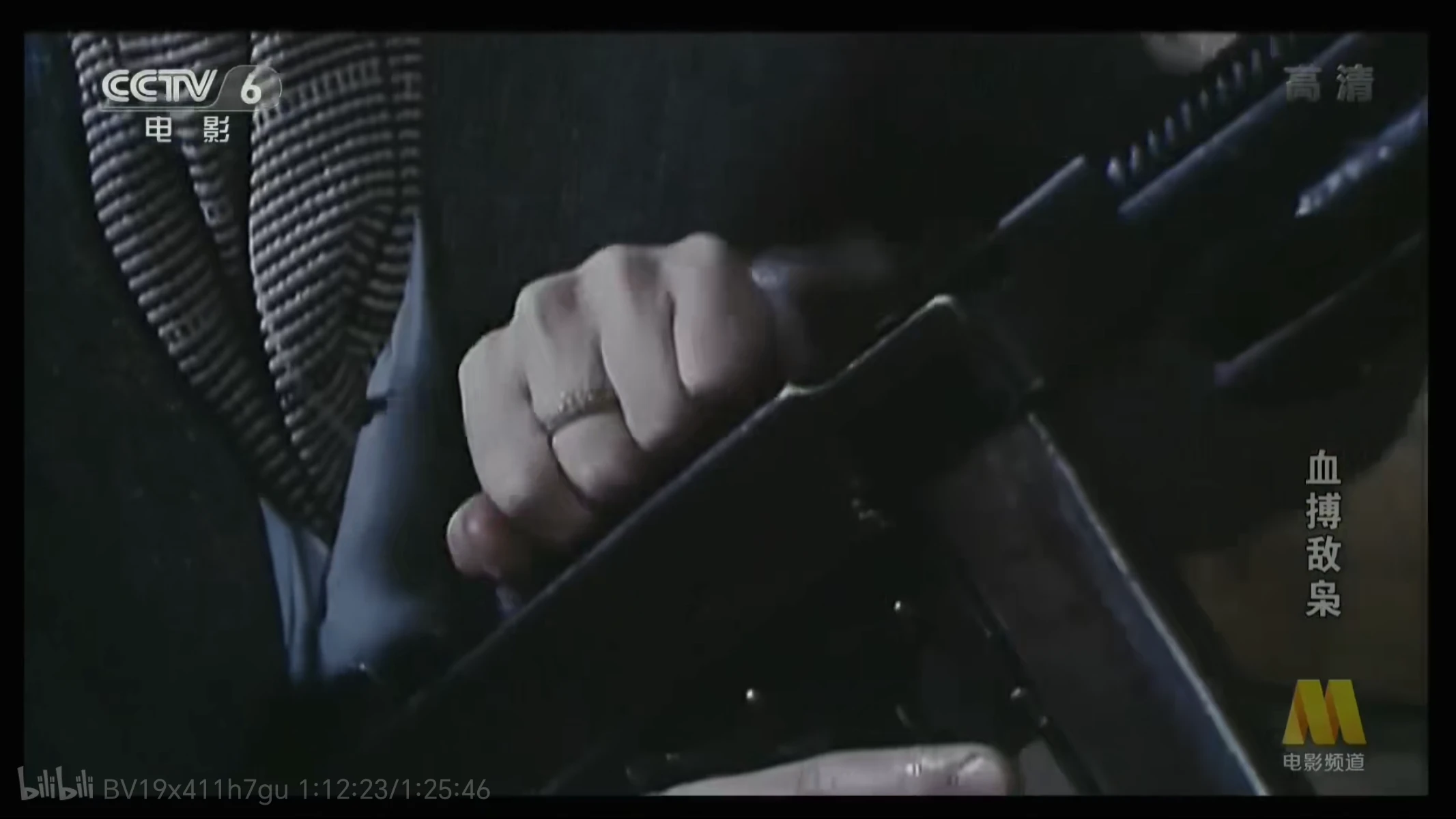
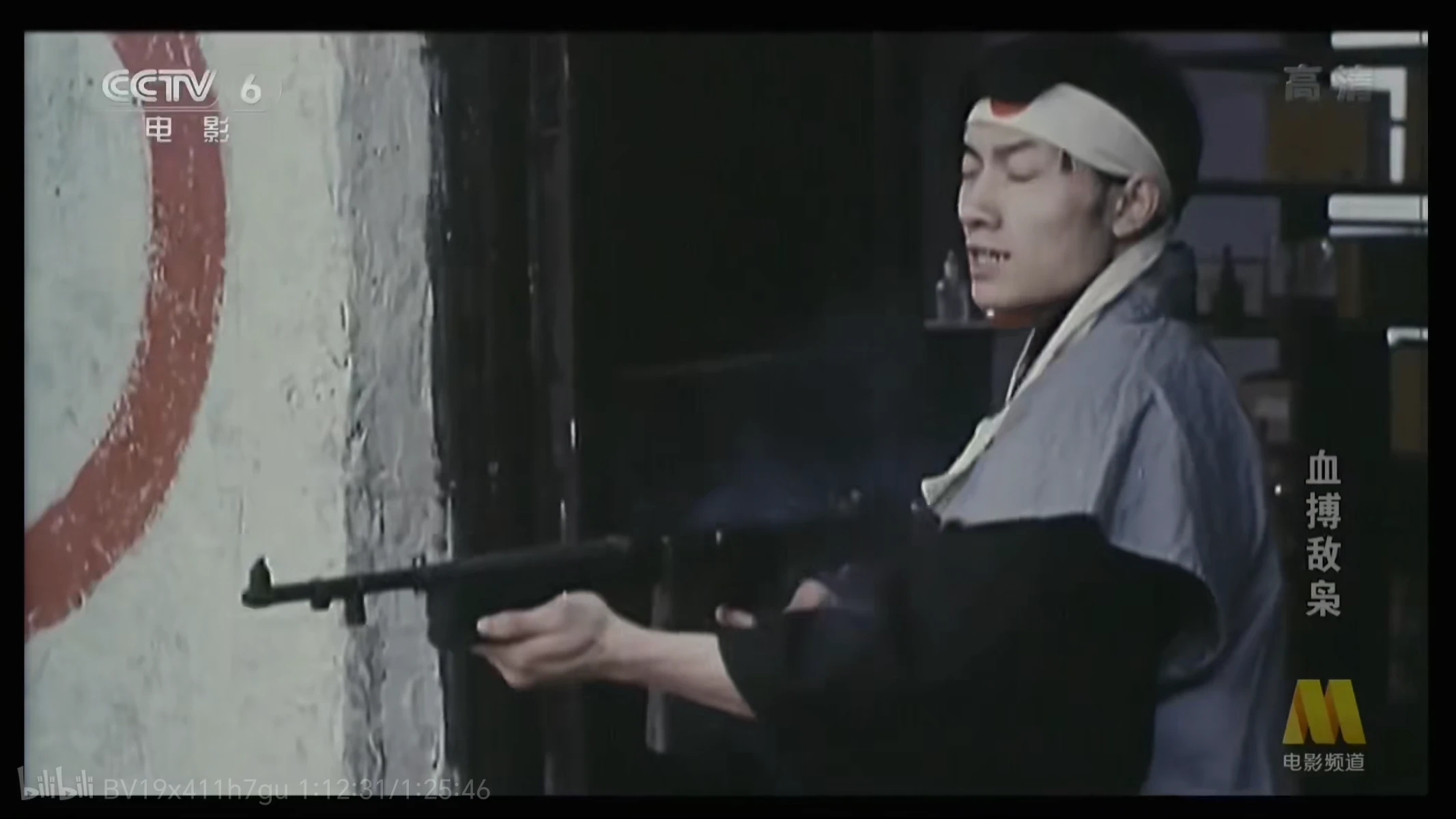
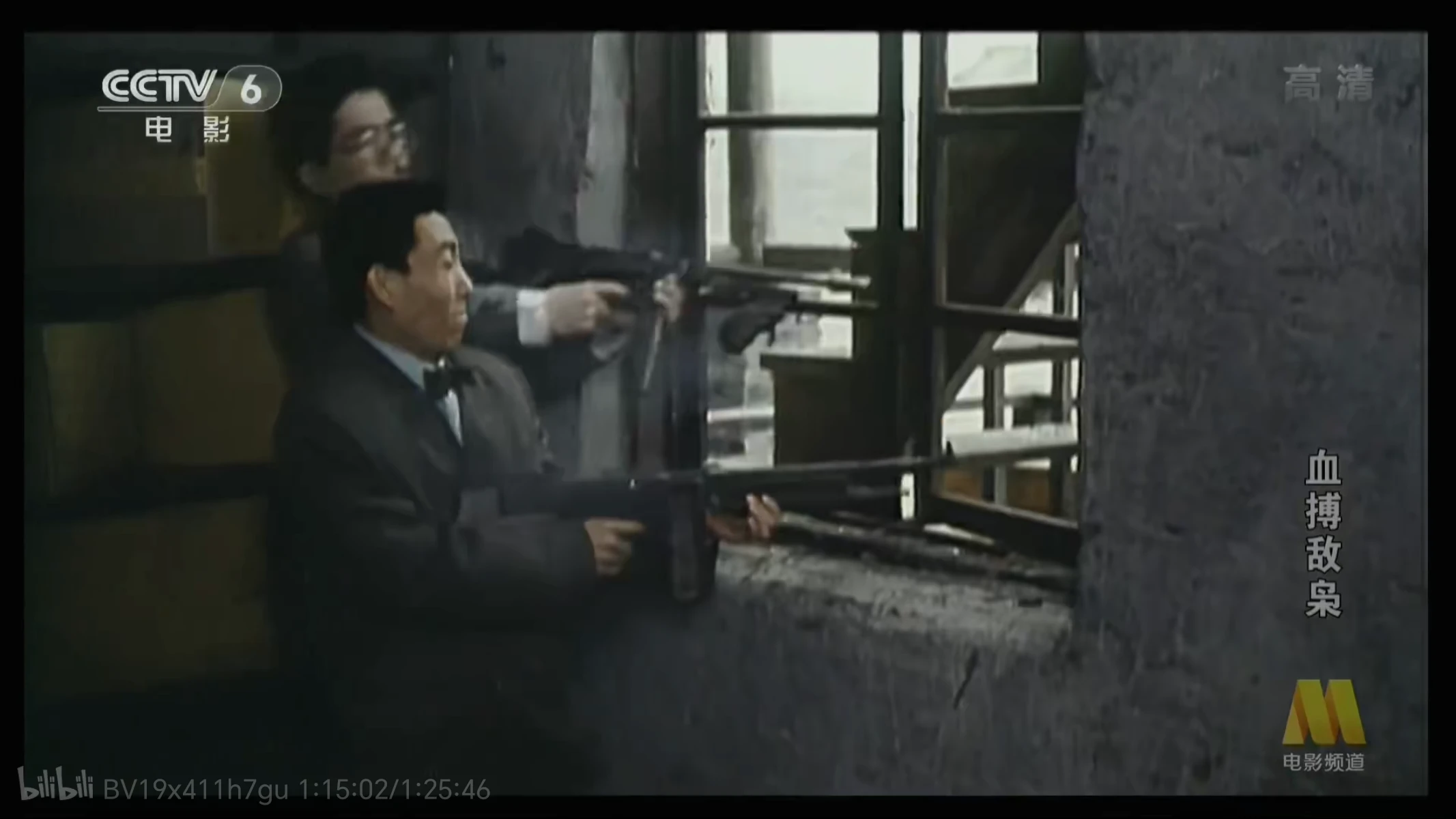
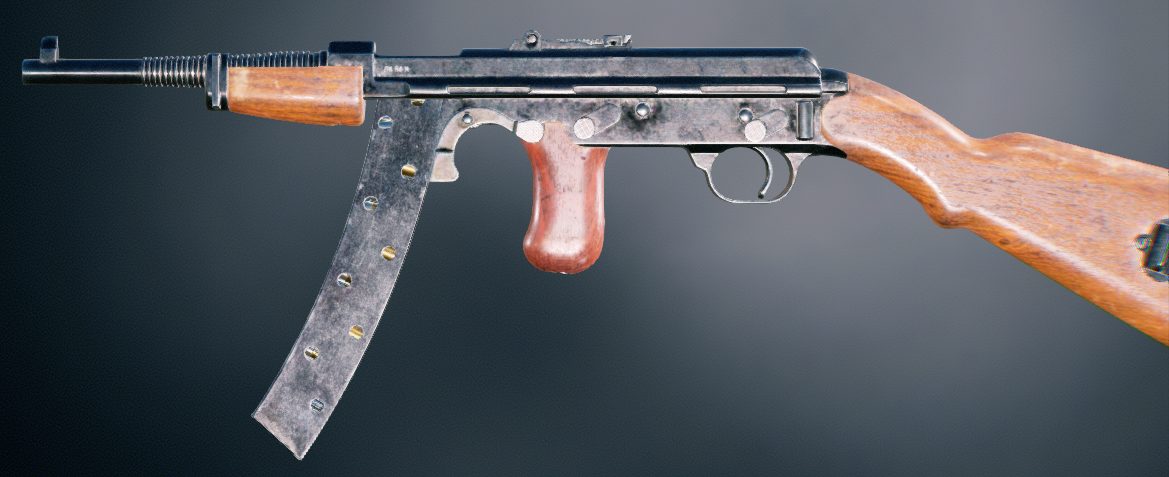
Displayed in the submachine gun showcase on the east side of the second floor of the Chinese People’s Revolutionary Military Museum are two uniquely shaped domestically produced submachine guns.
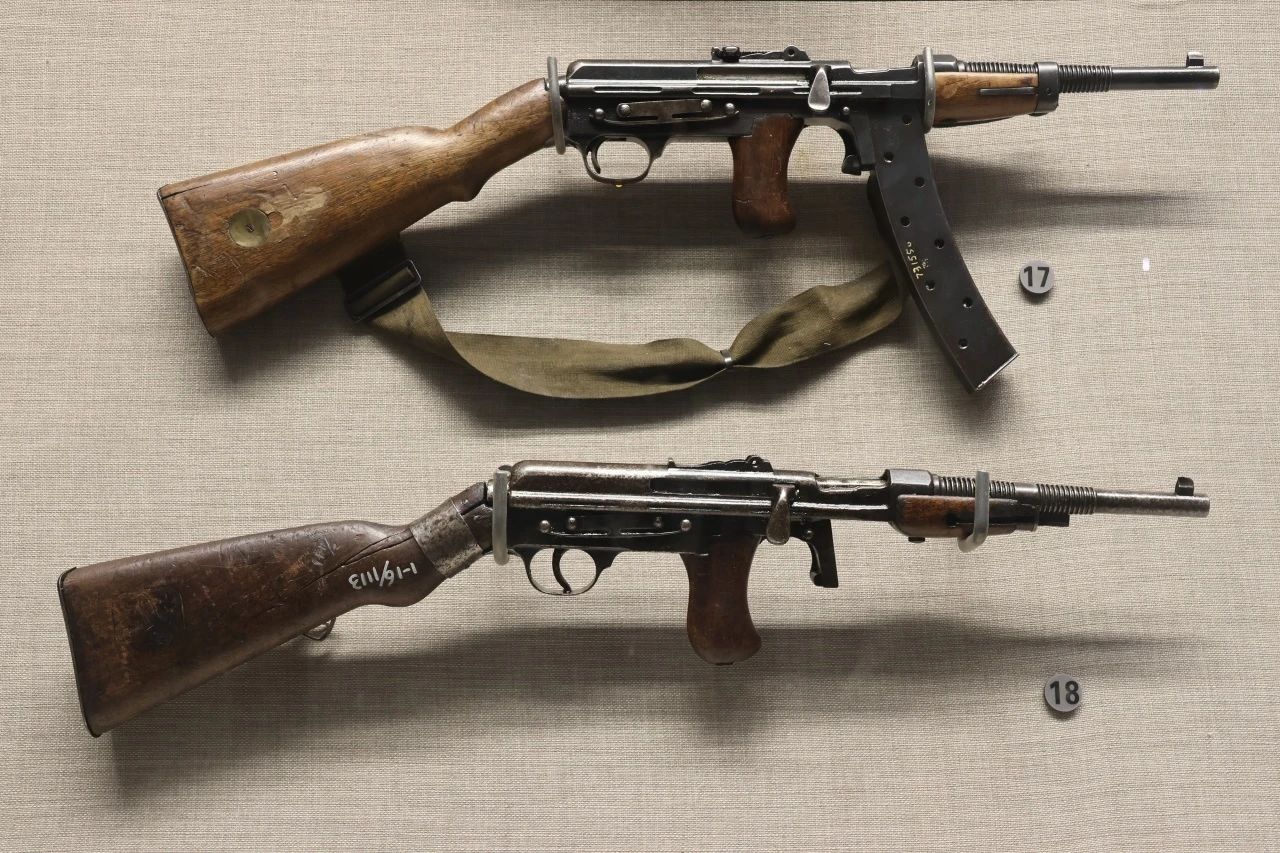
Military enthusiasts at home and abroad have long been curious about their designation, origin and internal structure.Fitted with a fixed leaf spring similar to that of the American Thompson submachine gun on the right side of the receiver, the firearms were once speculated to be a special variant of the Thompson.
Some also believed they were manufactured in the repair workshop of Sichuan landlord Liu Wencai, based on a photo taken at the Liu Family Manor in Dayi.
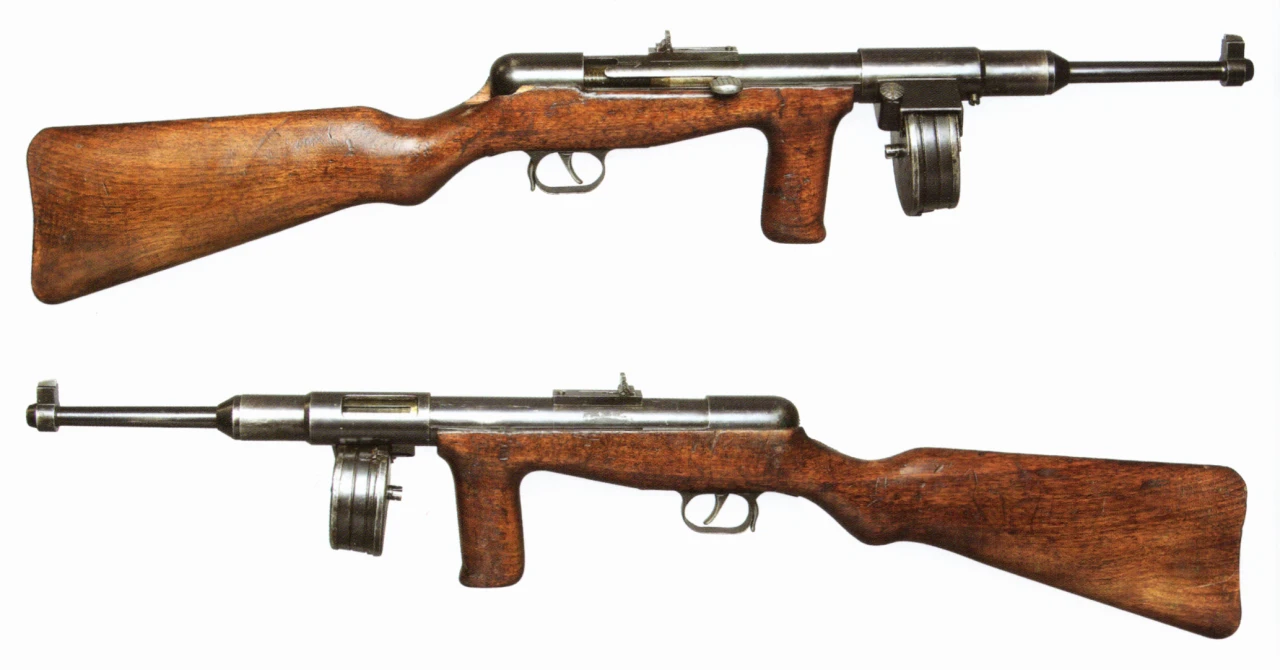
In the article Thompson? Or Vollmer? Textual Research on Two Submachine Guns Displayed in the Military Museum published in Issue 11 of Ordnance Magazine (2020),the author inferred they were Chinese copies of the German Vollmer submachine gun (designed by Heinrich Vollmer, translated as “Fuerma” in the Republic of China era) due to their overall layout resembling the Vollmer.However, physical disassembly and comparative research confirm the design is derived entirely from the Thompson submachine gun, having no connection with the Vollmer whatsoever.
【Sichuan Arsenal Portable Submachine Gun】
Measured from the physical exhibit marked No.17 in Figure 1:
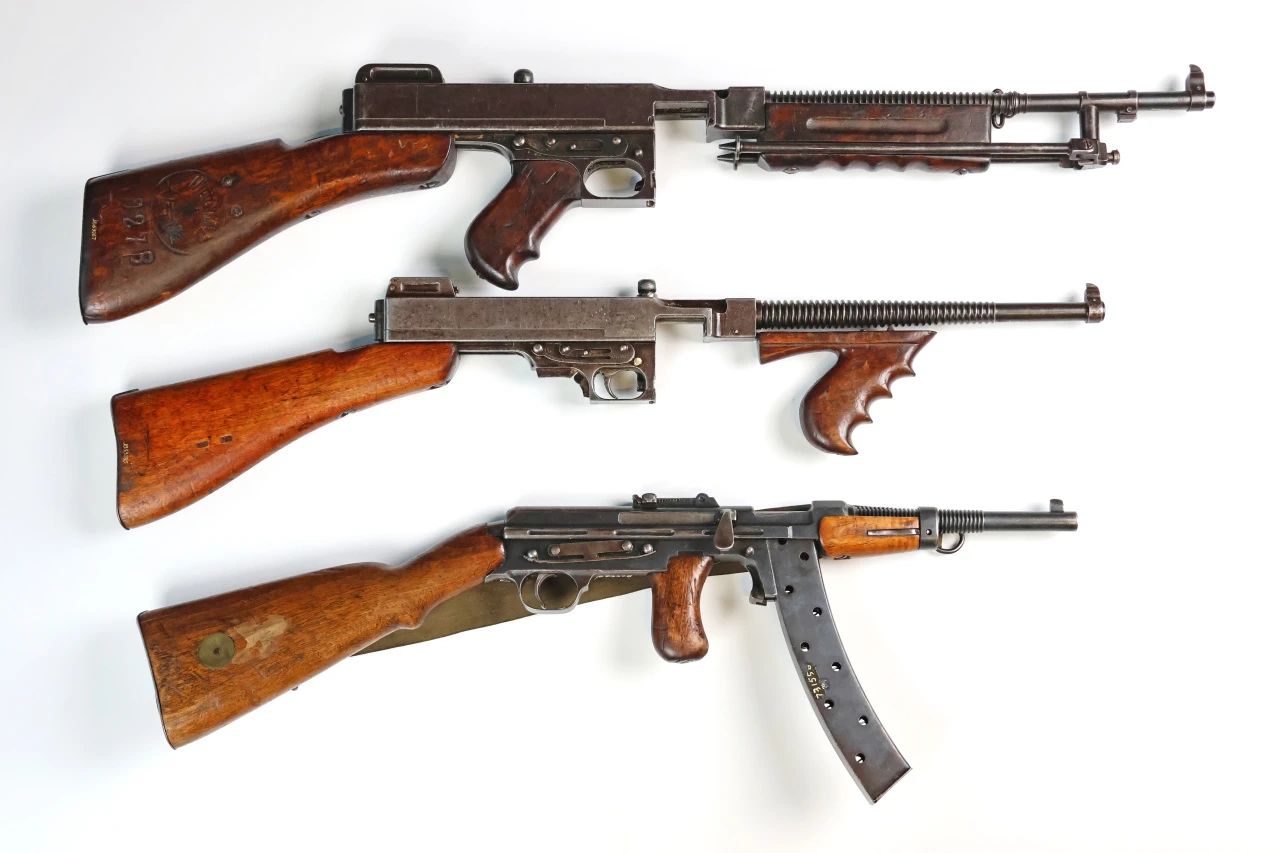
Overall length: 735 mm
Barrel length: approx. 200 mm
Weight (unloaded with sling): approx. 2.82 kg
Weight (with empty magazine): approx. 3.1 kg
A total of five original examples of this model are known to exist, each differing slightly in barrel, bayonet mount, handguard, foregrip, stock and inscriptions.
One specimen bears an inscription on the left upper receiver: Made by Sichuan Arsenal, Portable Submachine Gun, 21st Year of the Republic of China【民國廿一年四川兵工廠造手提冲锋槍】
The calligraphy style matches that of Mauser rifles and Thompson submachine guns copied by Sichuan Arsenal
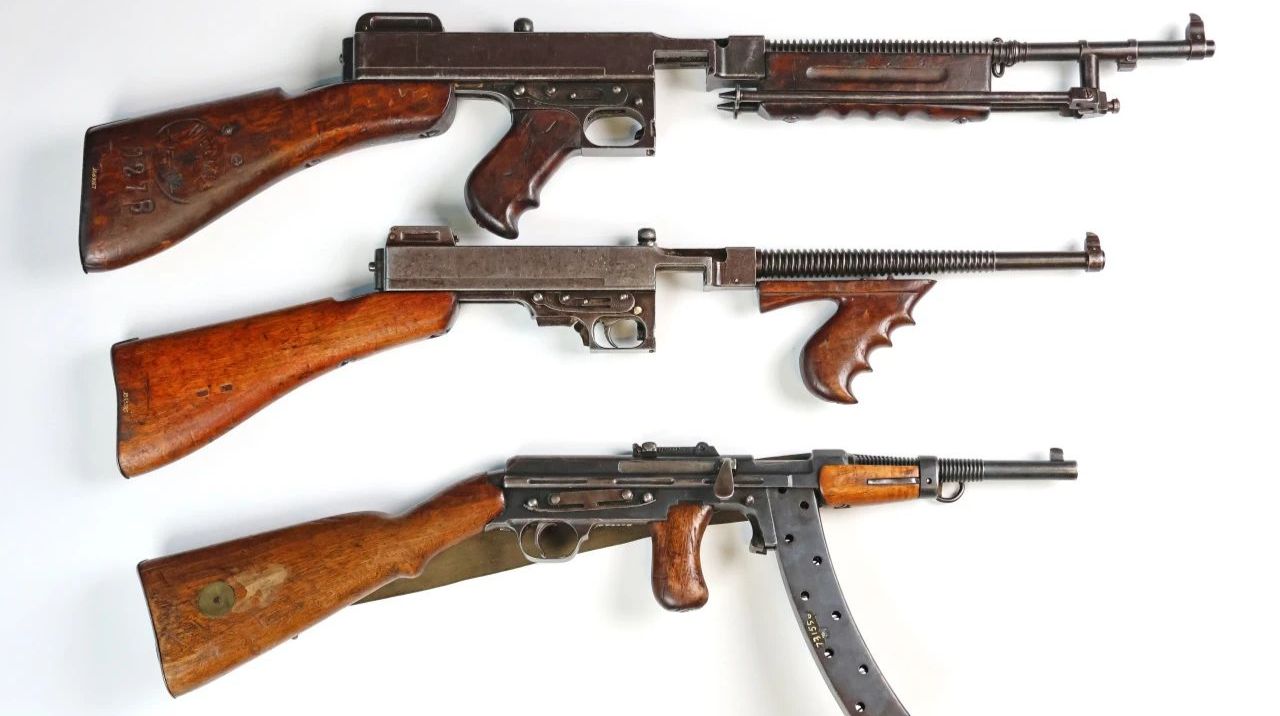
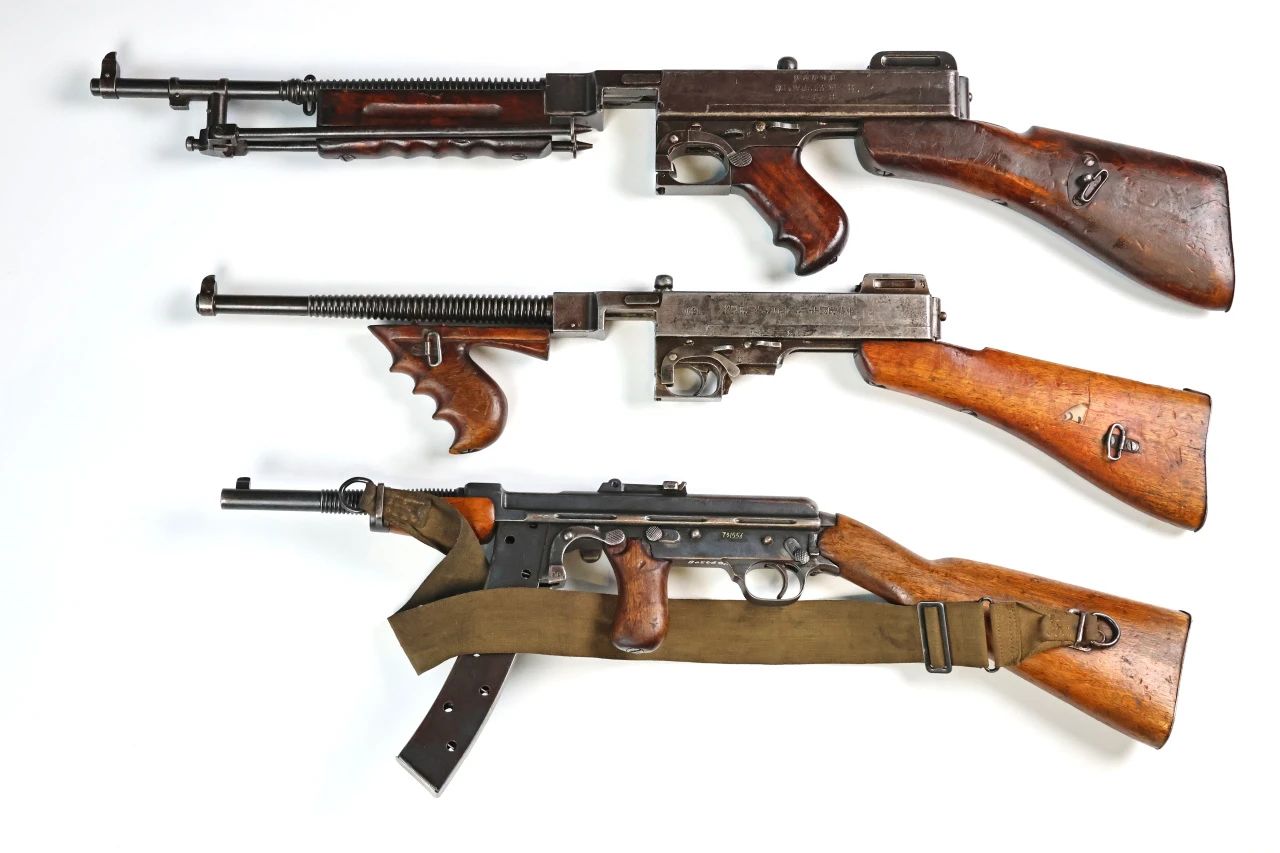
In modern times, three types of submachine guns developed from the Thompson M1921 were produced in Sichuan, all chambered for the 7.63 mm caliber. Listed in order:
- The “assault machine gun” made by the 21st Army Ordnance Repair Depot, featuring an extended barrel, a bayonet mount and a bipod;
- A copy of the Thompson M1921 manufactured by the Sichuan Arsenal, with overall dimensions reduced from the original version;
- A simplified variant of the Thompson M1921 designed and produced by the Sichuan Arsenal, hereinafter referred to as the Sichuan-made submachine gun.
【Bolt Assembly】
This firearm is fundamentally based on the American Thompson M1921 submachine gun, retaining nearly identical layout and structure. It adopts a similar cylindrical bolt head and rectangular bolt body, and also uses an open-bolt firing system. Interestingly, it omits the brass delay block in the middle section of the bolt. This mechanism is commonly known as the Blish Lock. Its designer intended to achieve a semi-delayed blowback effect with this structure, though in practice it only slightly reduced the rate of fire (The Thompson M1 submachine gun adopted by the U.S. military in April 1942 also removed this mechanism).
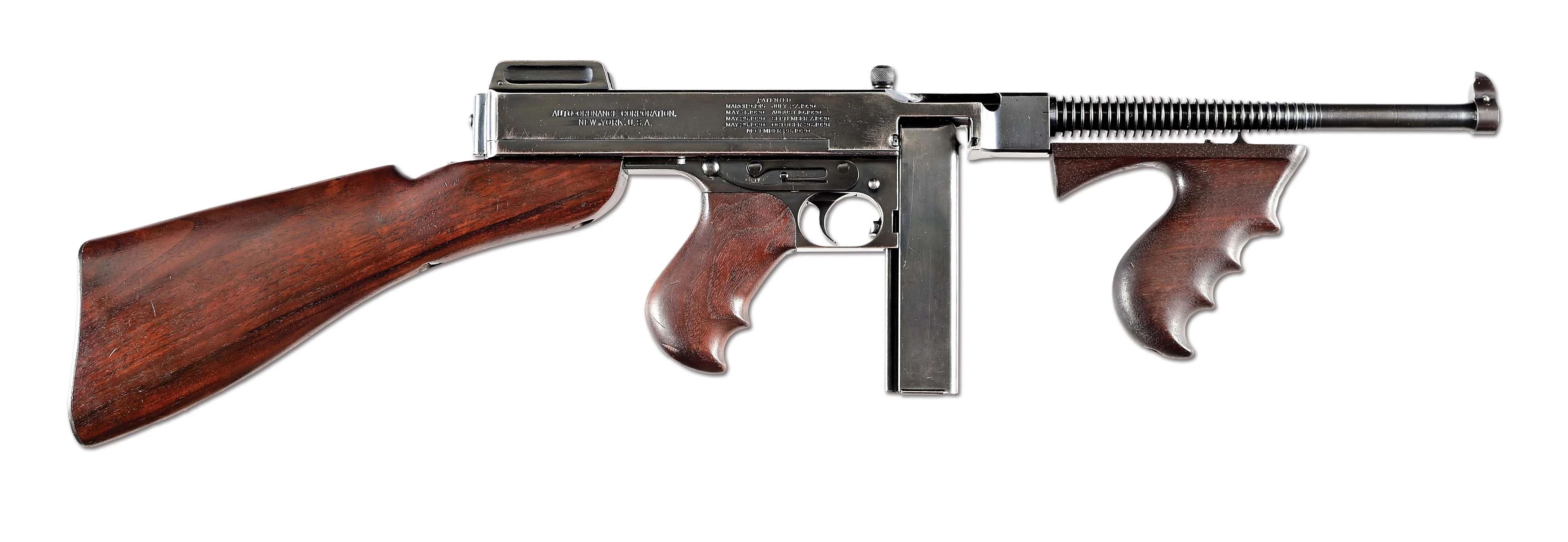
The American Thompson M1921 submachine gun
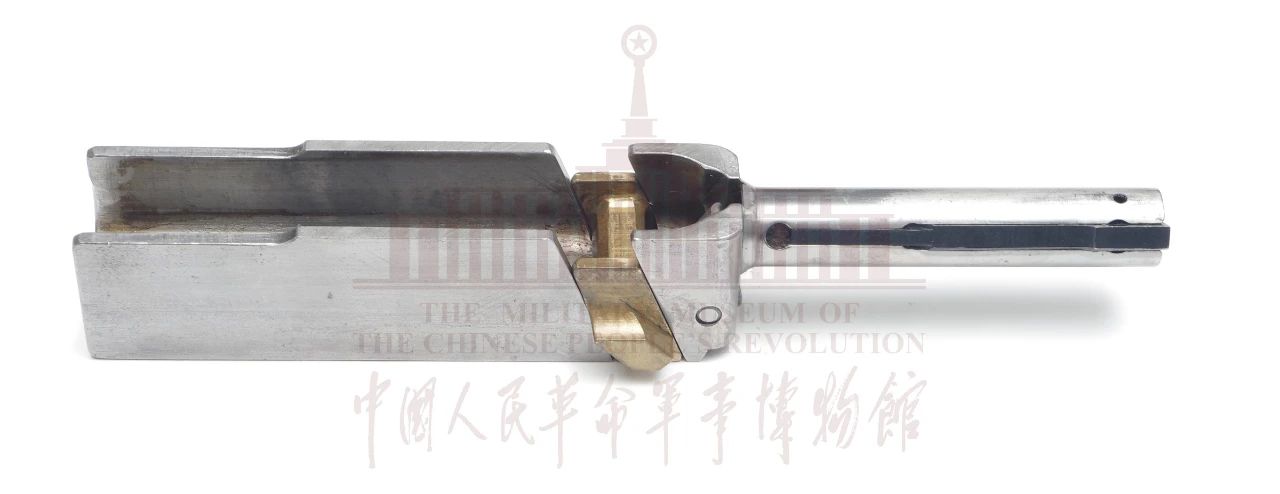
The Thompson M1921 fitted a brass delay block on its bolt body
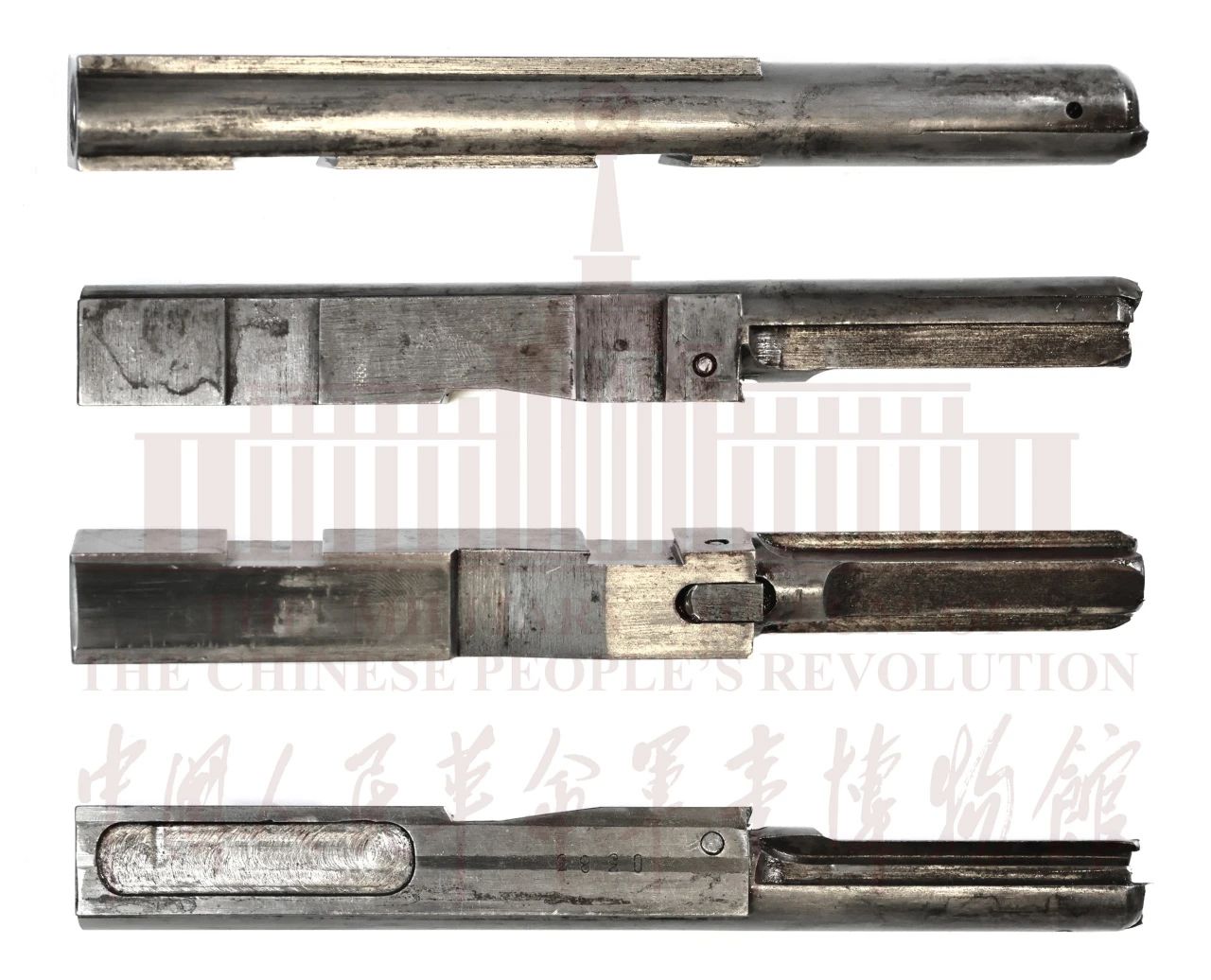
The bolt of the Sichuan-made submachine gun omitted the more-harmful-than-beneficial delay block
The bolt features fine craftsmanship with smooth mirror-like finished surfaces(The bolt is crafted to a high standard. Its sides, bottom, and the inner surface of the recoil spring bore are extremely smooth, even possessing a semi-mirror finish. Only obvious tool marks remain inside the lightening grooves on the left side of the bolt body.)
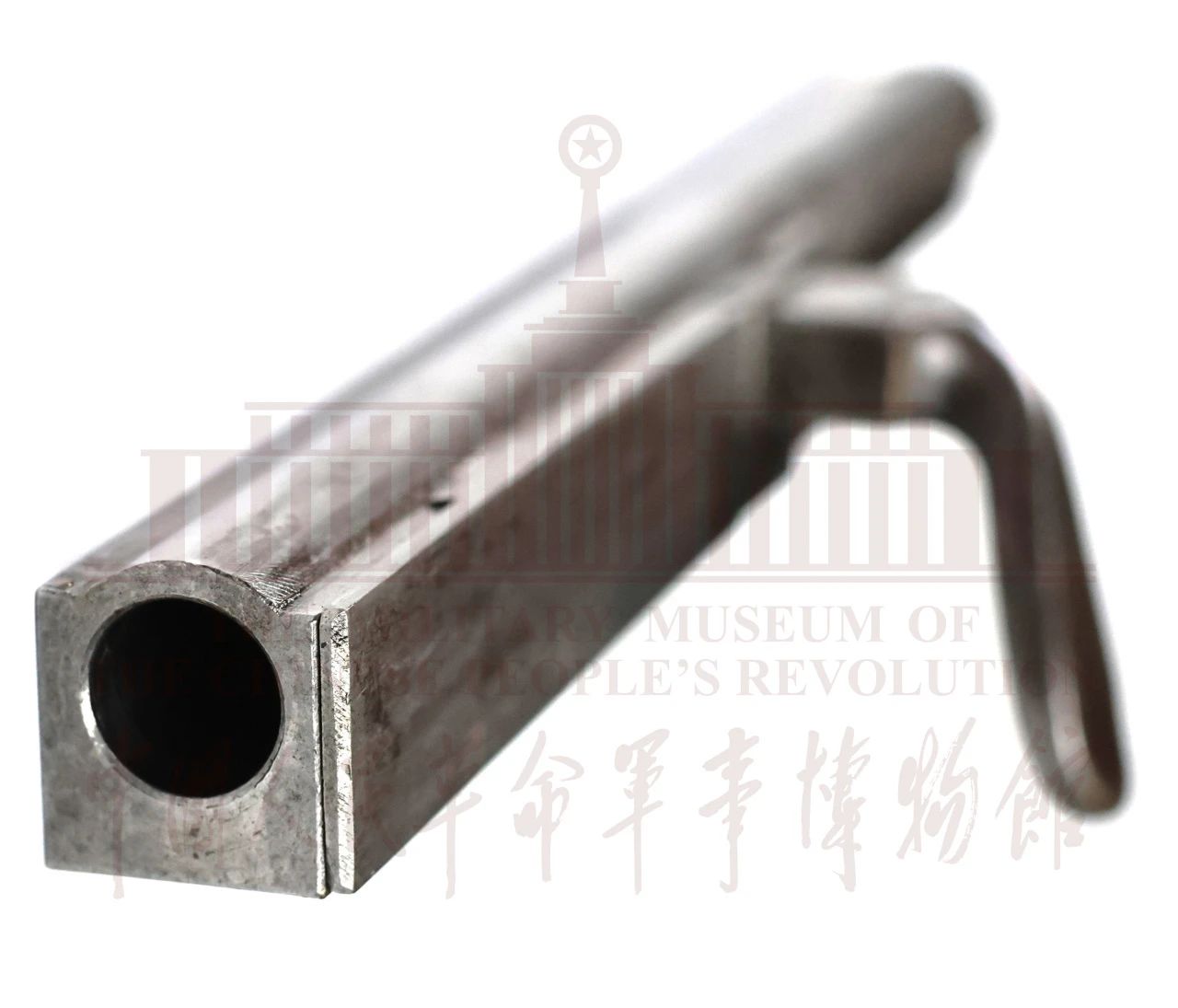
A deep bore at the rear of the bolt body designed to house the recoil spring
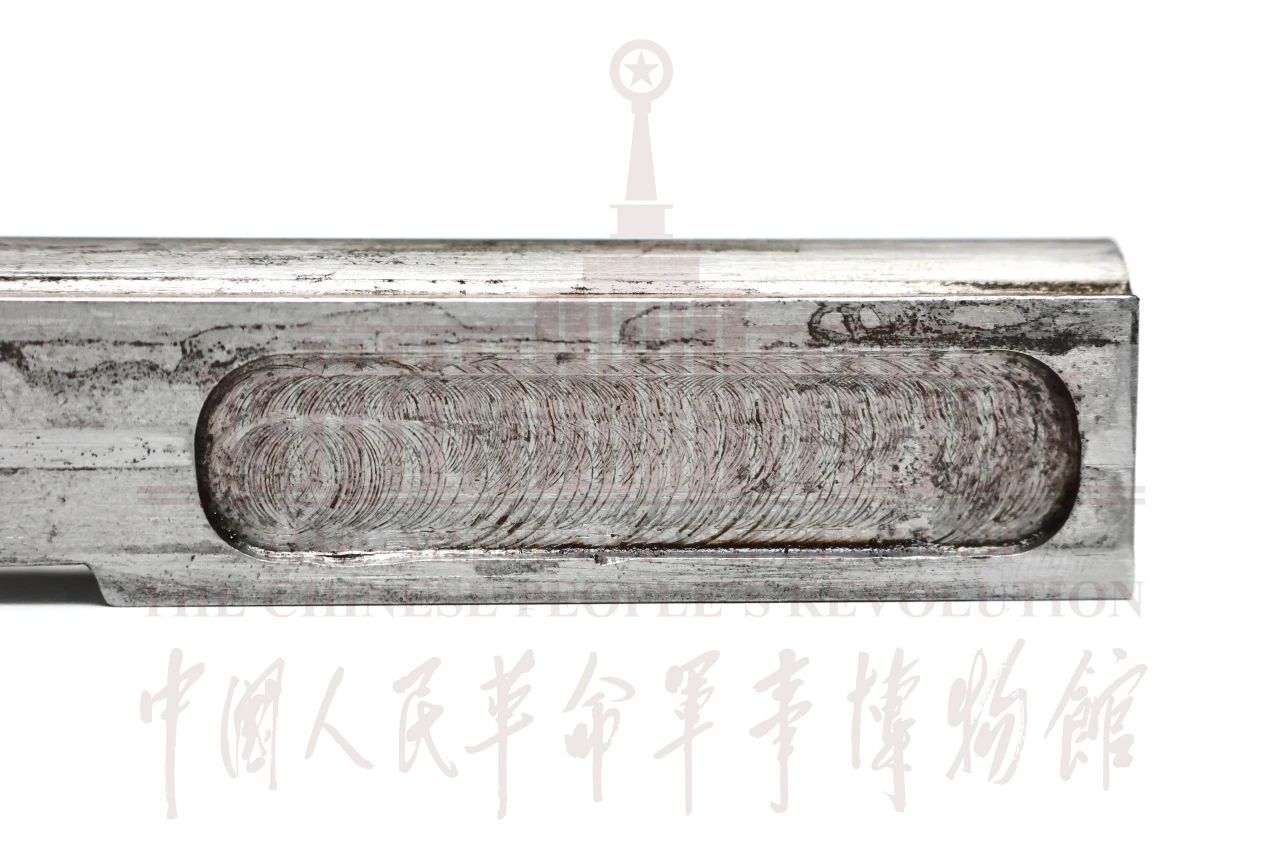
The only noticeable tool marks on the bolt are located inside the lightening groove on the left side of the bolt body。
【Trigger Mechanism】
The firing mechanism is identical to that of the Thompson submachine gun, adopting a floating firing pin with a lever installed at the rear of the pin. When the bolt moves forward fully into battery, the bottom of the lever strikes the corresponding ledge inside the receiver, driving the firing pin forward to strike the primer of the chambered cartridge and complete ignition.
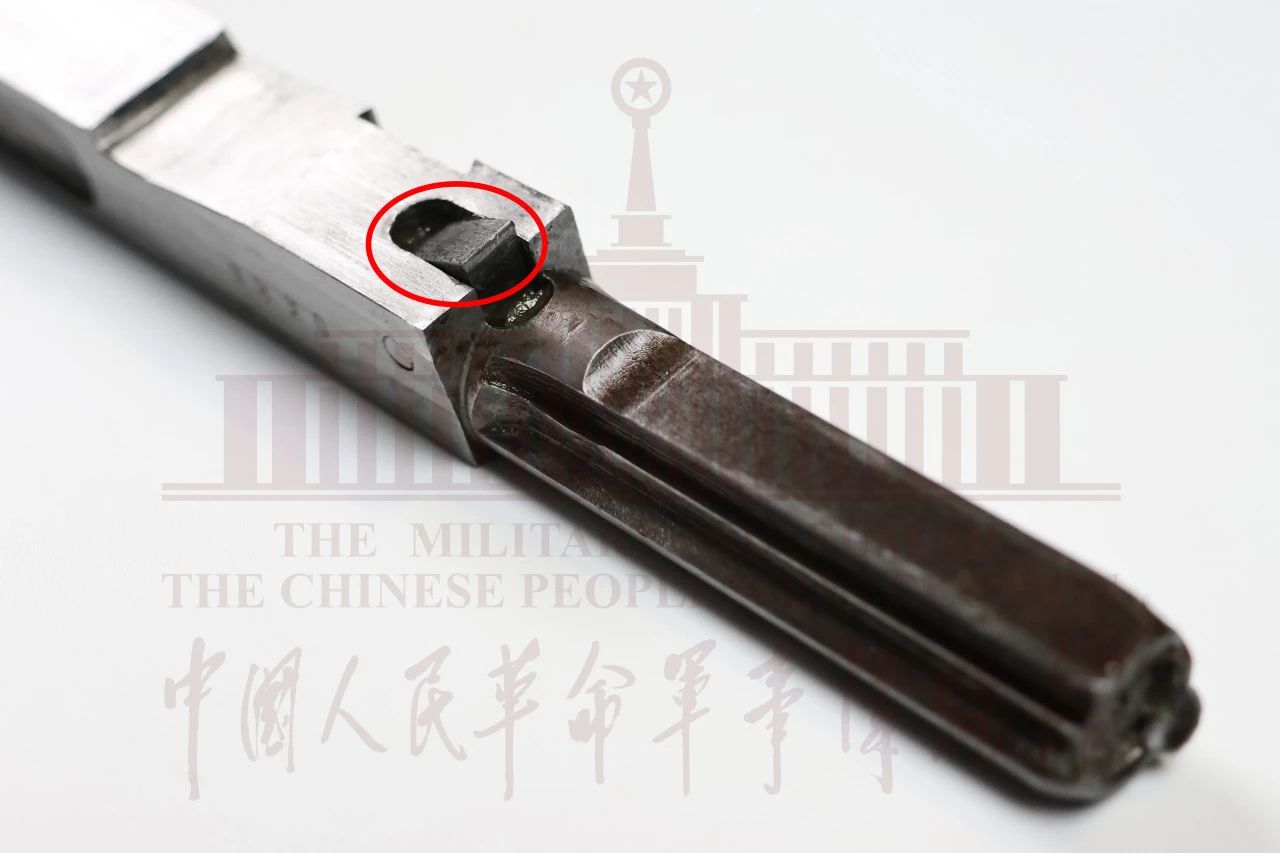
Lever at the bottom of the bolt body.
【Receiver】
The assembly design of the Sichuan-made submachine gun follows largely the same logic as the Thompson. The upper and lower receiver halves interlock via grooves and are secured in place by a spring retaining catch. Press the button on the left rear of the lower receiver to depress the spring catch, then slide the upper receiver forward for removal.
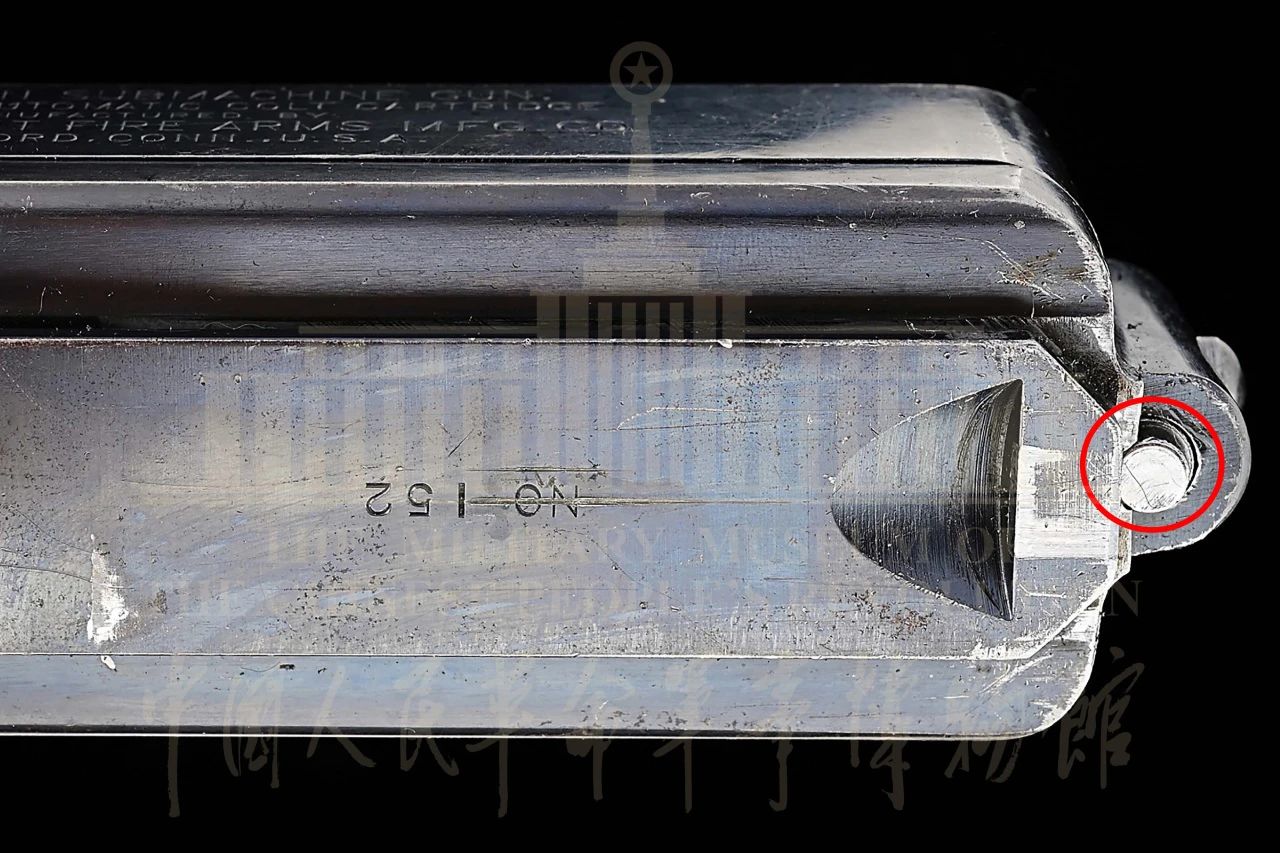
Bottom view of the Thompson M1921 receiver. The receiver and firing assembly are secured together by a spring retaining catch at the rear of the receiver.
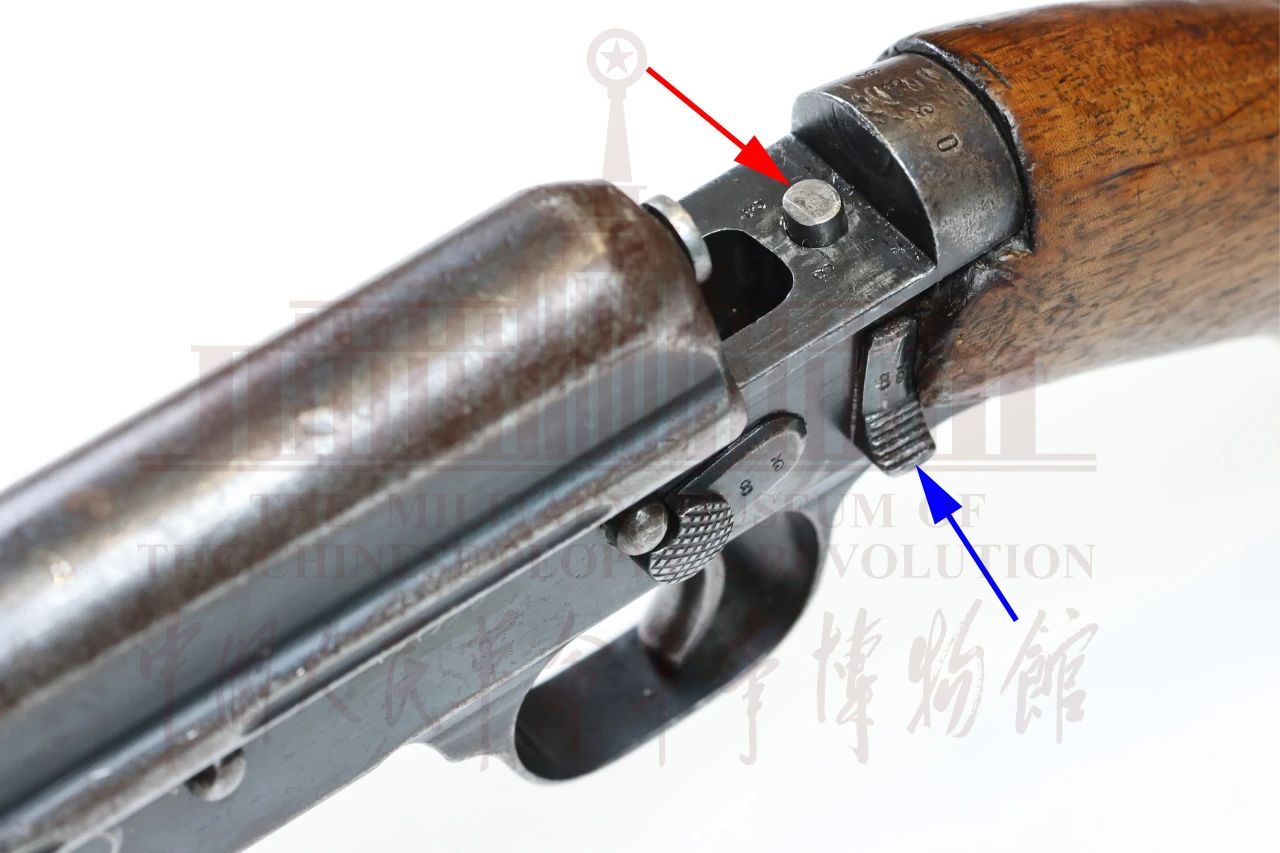
The spring retaining catch of the Sichuan‑made submachine gun is located at the rear of the lower receiver (red arrow), serving to lock the upper and lower receivers together. This catch is linked to the release button on the left side of the lower receiver (blue arrow). The button is machined with anti‑slip knurling for easy downward pressing to disengage the lock.
The upper receiver houses the bolt, charging handle, recoil spring, recoil spring guide rod and other components, while the lower receiver accommodates the trigger, sear and other fire control group parts.
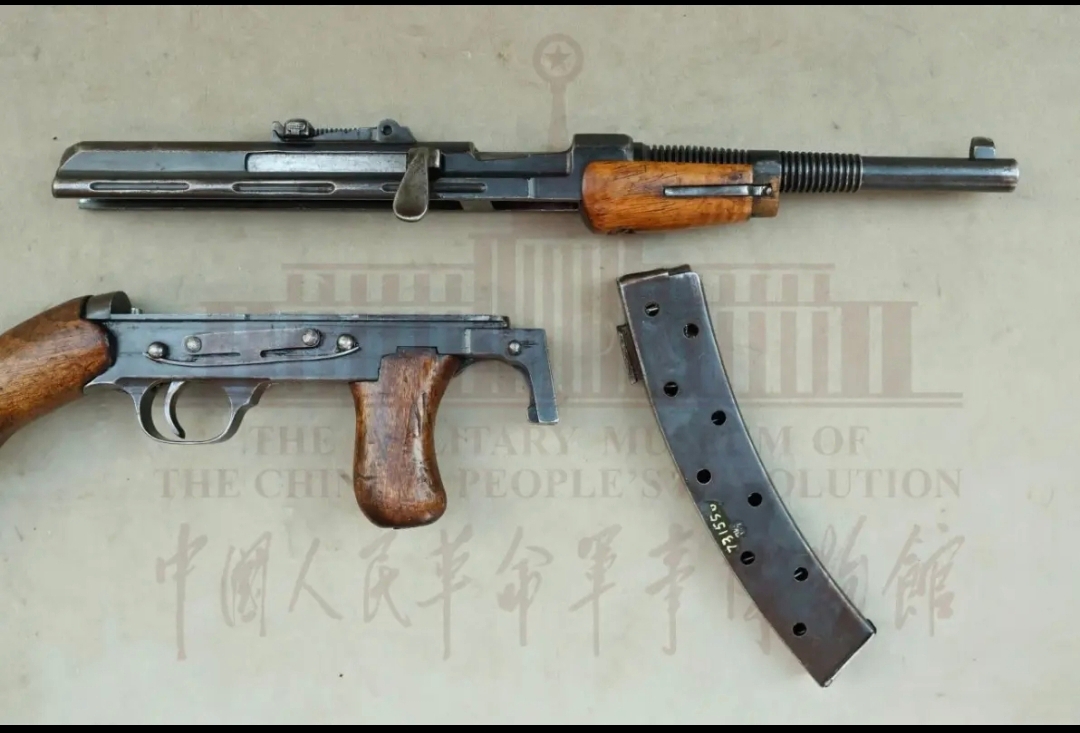
The overall layout of the Sichuan-made submachine gun inherits the design features of the Thompson M1921.
【Recoil Spring & Guide Rod】
The recoil spring and guide rod of the Sichuan-made submachine gun are housed inside the upper receiver.
A stepped surface is provided on the middle and rear section of the guide rod for easy disassembly.
During disassembly, simply compress the recoil spring toward the muzzle and release it, and the guide rod will pop out backward.
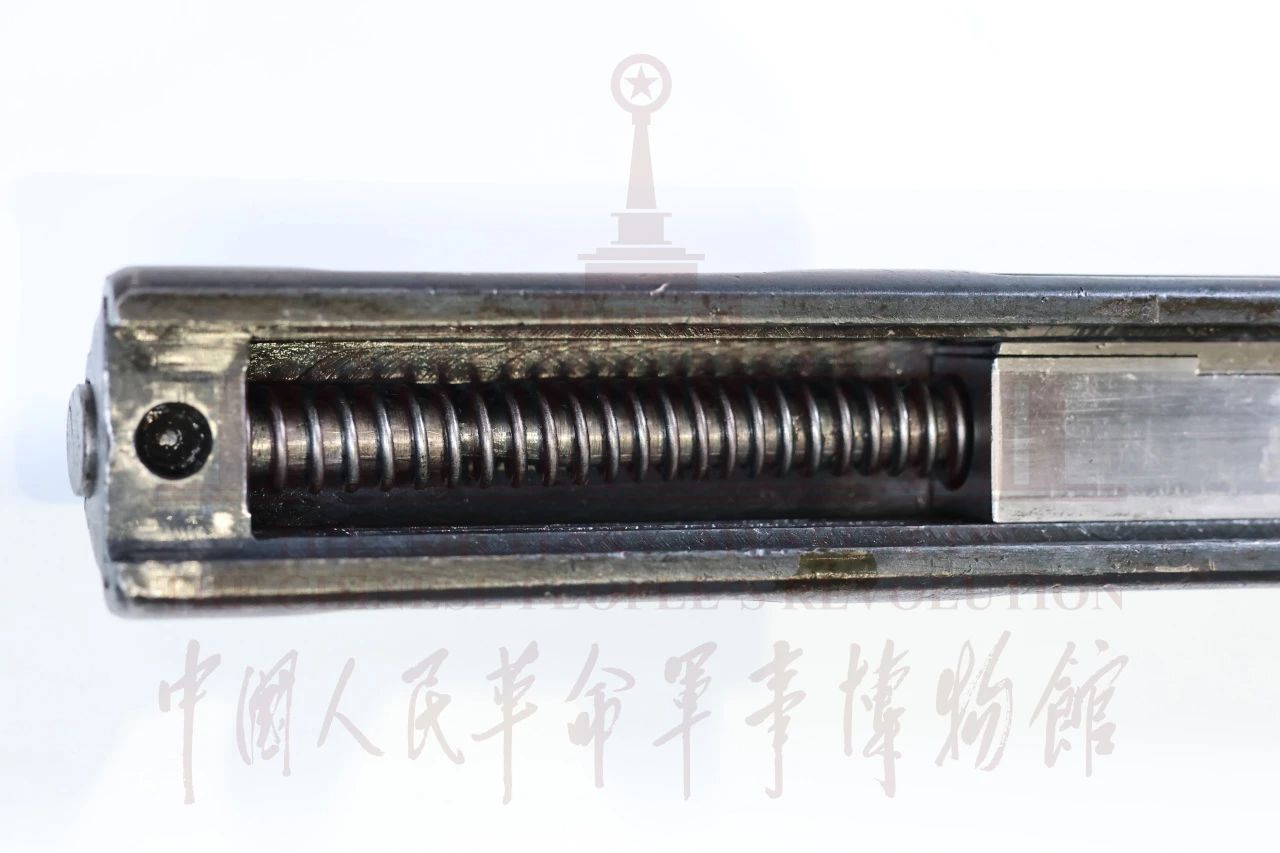
Recoil spring and guide rod (bottom view of the upper receiver).
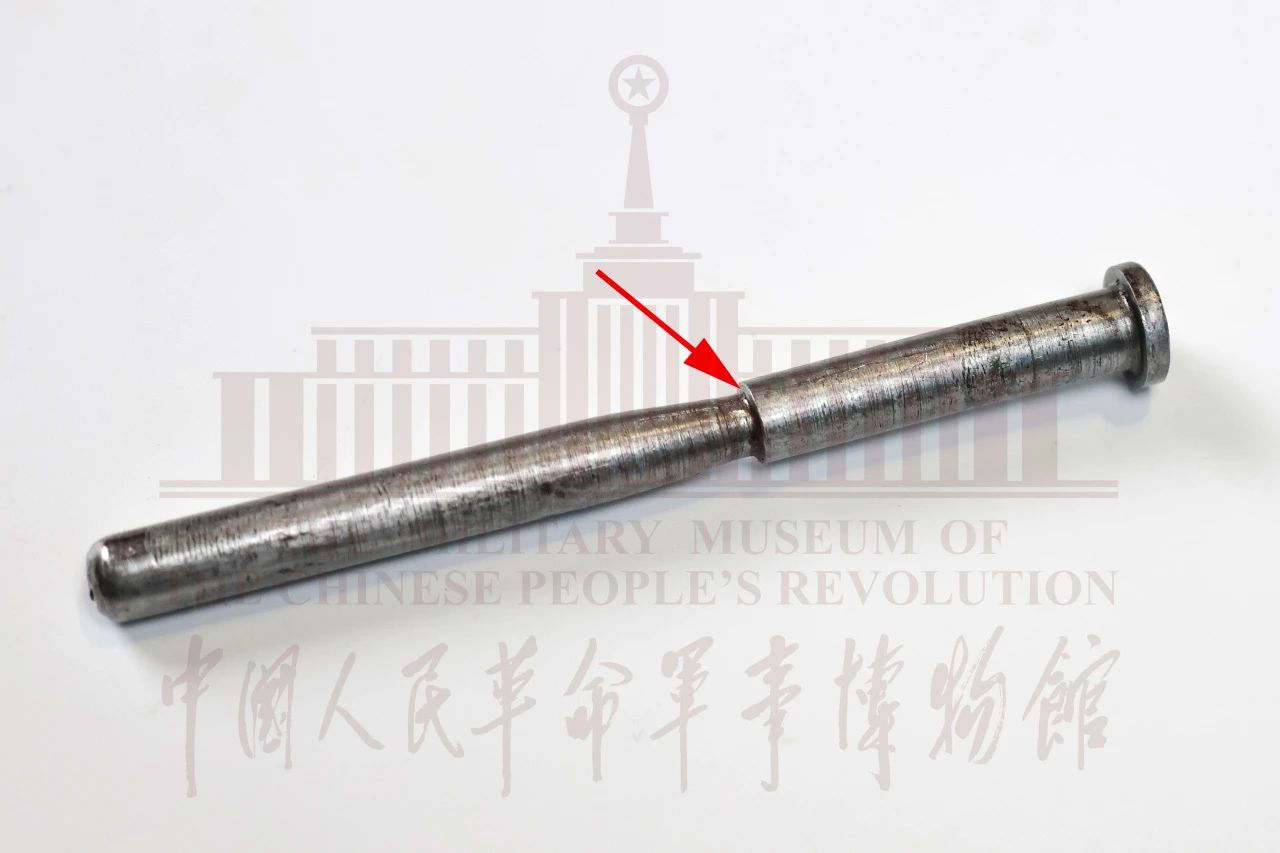
Stepped surface on the middle and rear section of the guide rod.
【Charging Handle】
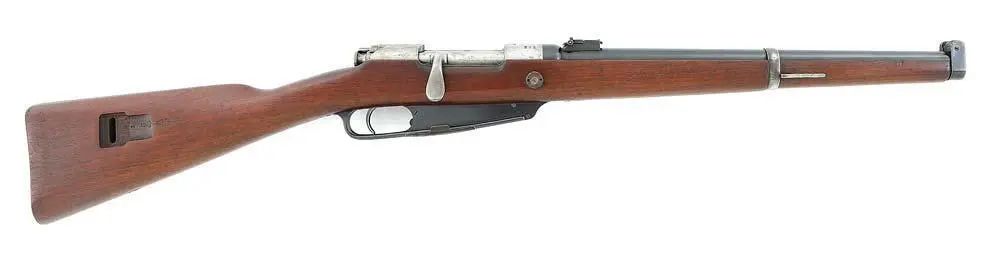
The firearm features a uniquely designed charging handle. It adopts a spoon-shaped handle similar to that of the German Kar88 cavalry carbine, which is flat overall and curved downward. A tenon is machined on the inner side of the charging handle, mating with the groove on the right side of the bolt body. This structure resembles the mortise-and-tenon joint of traditional Chinese wooden components, showing ingenious design.
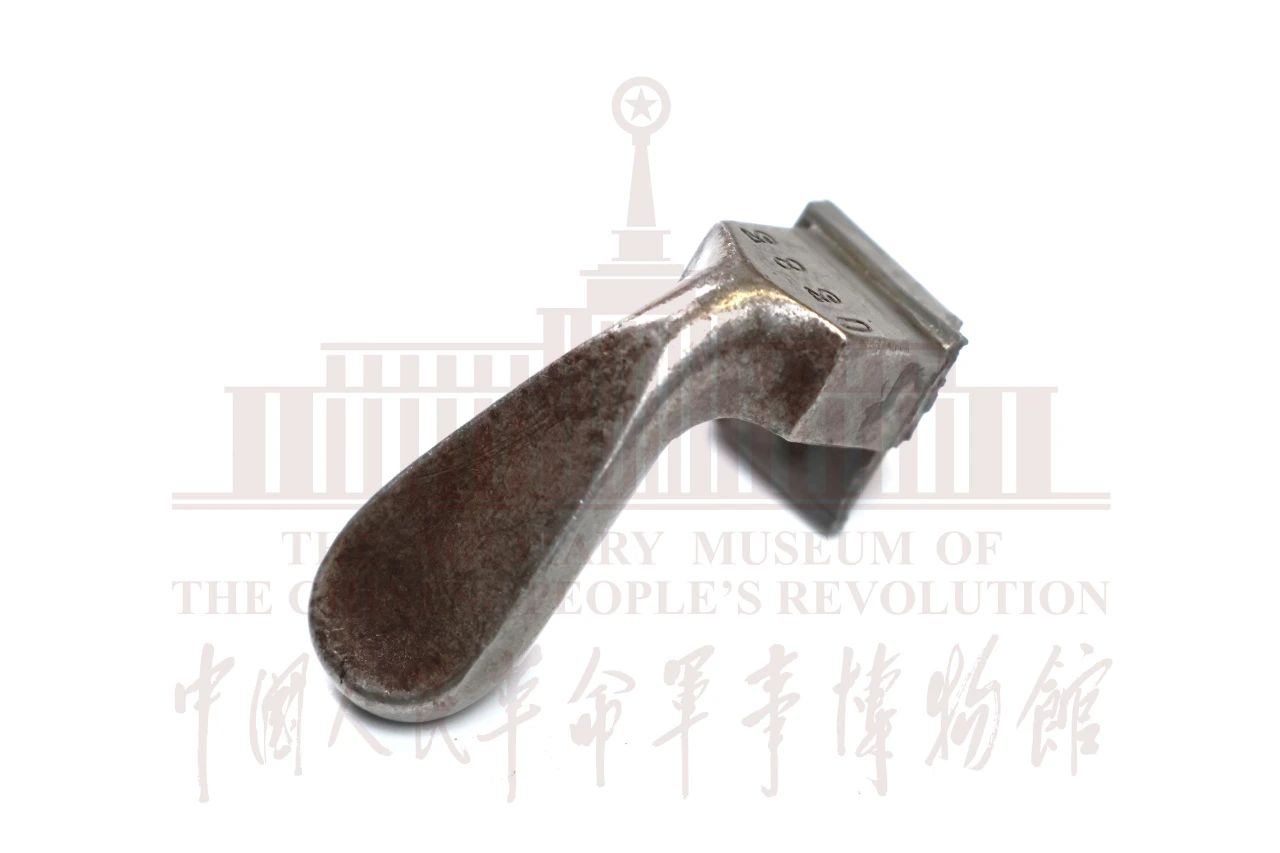
Flat and downward-curved charging handle.
Spoon-shaped handle of the German Kar88 cavalry carbine.
Mortise groove on the right side of the bolt body;
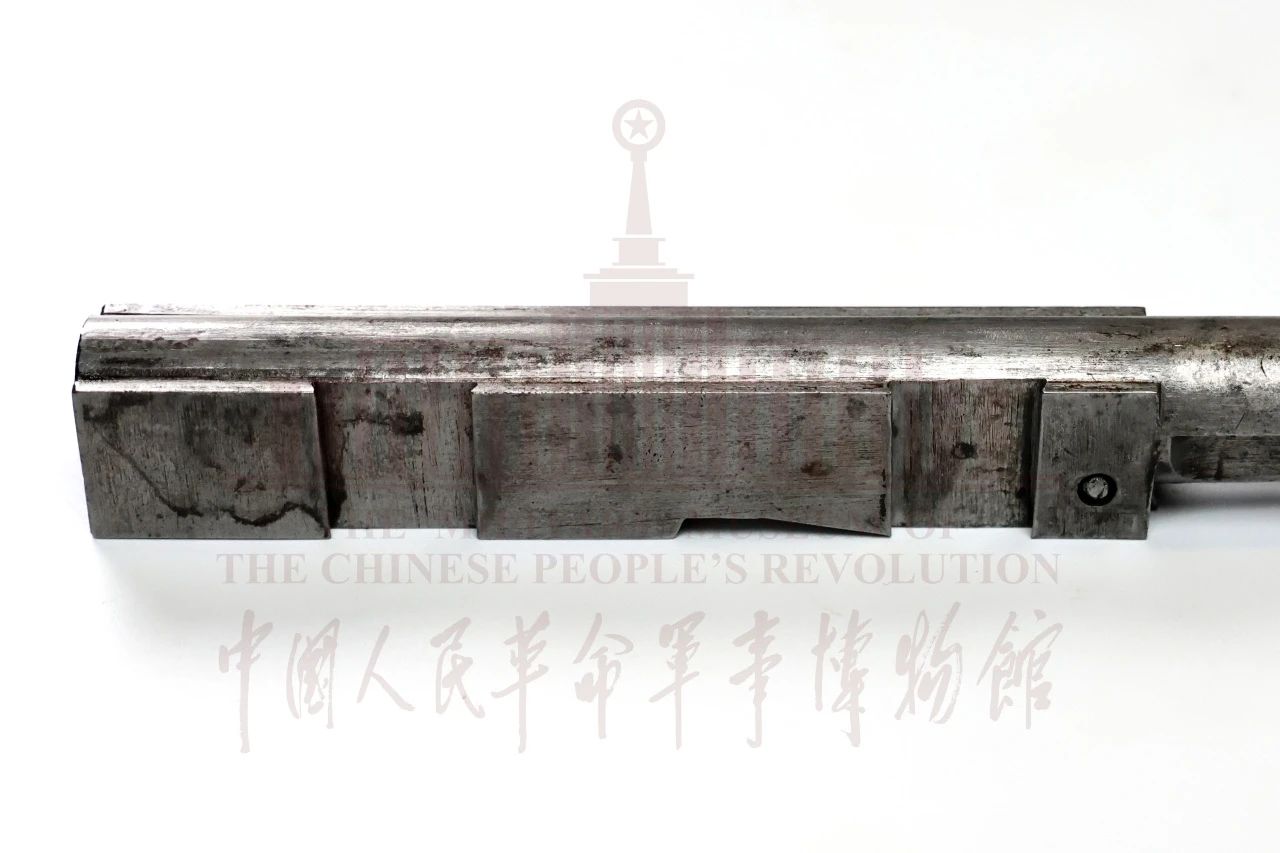
the front groove (right side in the above picture) mates with the charging handle.
In addition, a roughly rectangular flat spacer plate is fitted to the rear of the charging handle, also fixed to the right side of the bolt body via a mortise-and-tenon structure. This is likely a design legacy left by Chinese craftsmen when dissecting and simplifying the Thompson submachine gun, inheriting its original charging handle layout.
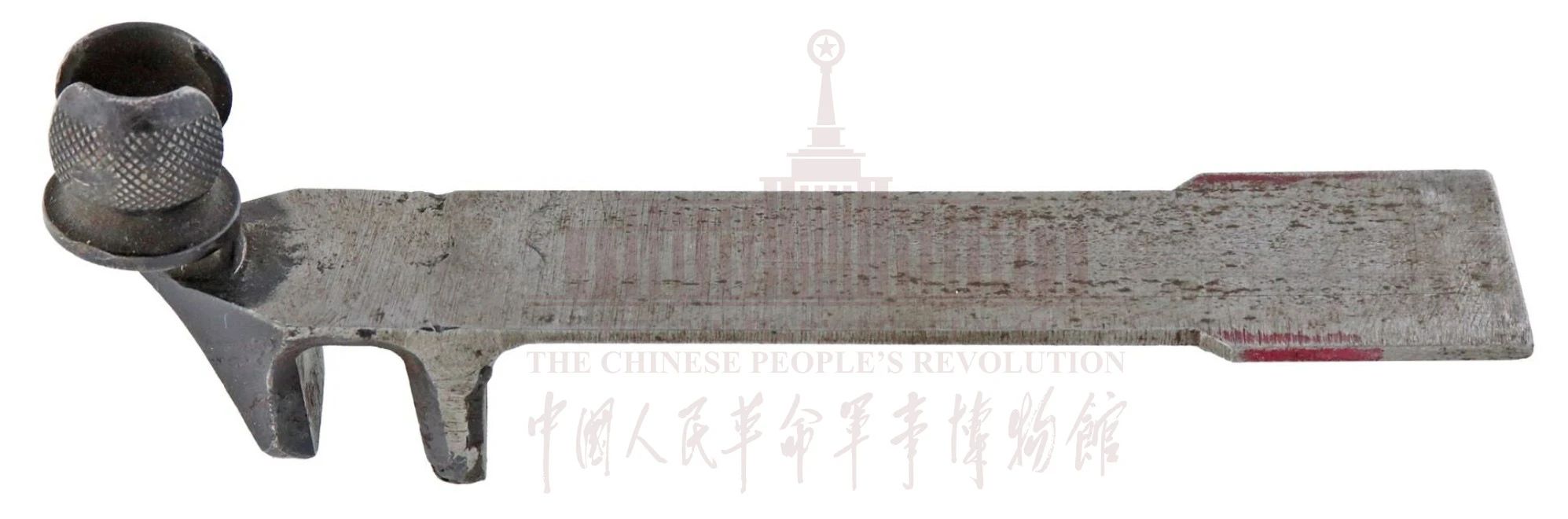
The charging handle of the Thompson M1921 mainly consists of two parts: a spherical grip head and an extension that drives the bolt.
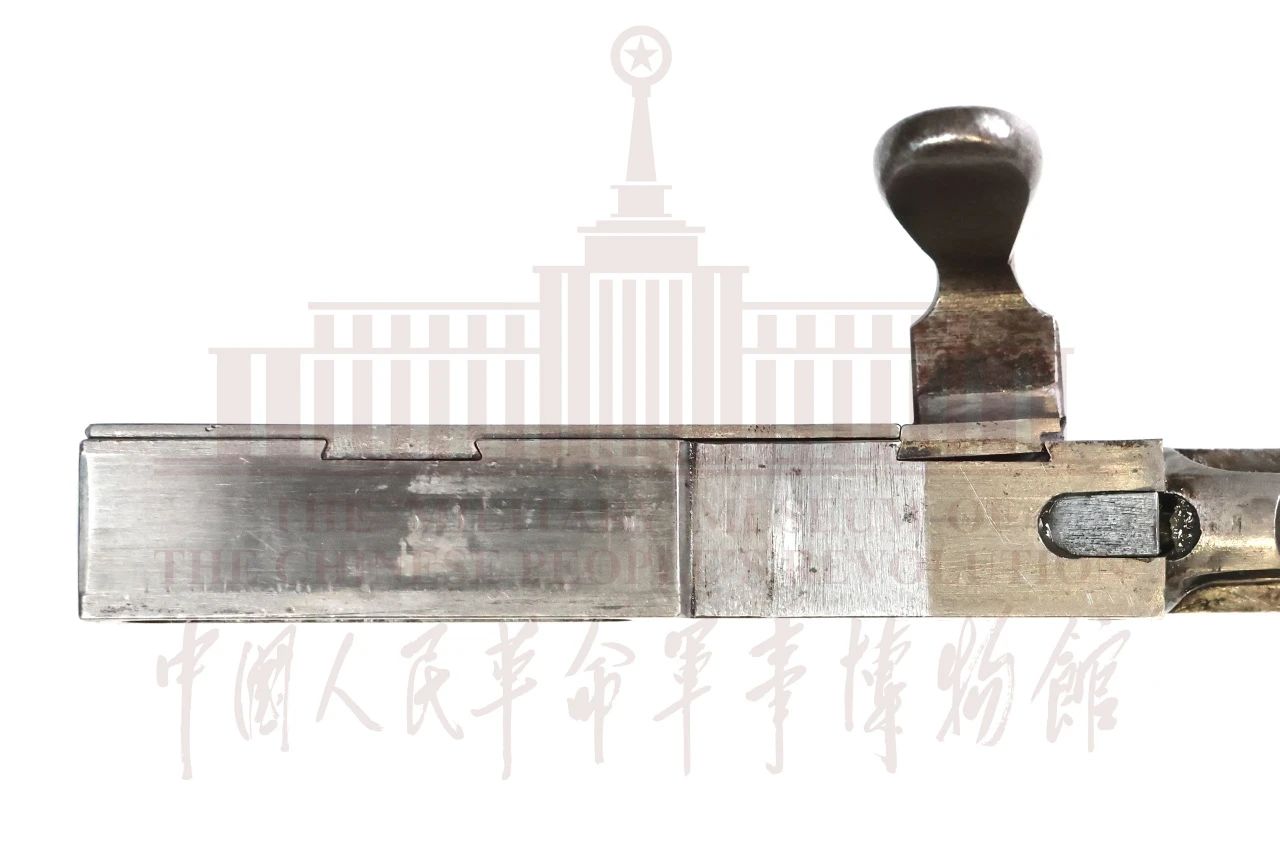
The Sichuan-made submachine gun fits a roughly rectangular spacer behind its charging handle, which also connects to the right side of the bolt body through a mortise-and-tenon joint.
Meanwhile, the spacer fills the gap between the right side of the bolt body and the inner wall of the receiver, effectively sealing the charging handle slot. This improves the weapon’s tightness and makes it less susceptible to contamination by sand, dust and other debris.After removing the guide rod, recoil spring and bolt (pull the bolt to the rearmost position and lift the bolt head upward for removal), the charging handle can be rotated to disengage from its slot and then taken out from the bottom of the upper receiver. This special disassembly method is the reason why the charging handle of the Sichuan-made submachine gun is designed in a spoon shape.
However, the overly flat profile results in minimal effective contact area with the hand, making it laborious to pull. The operator’s hand is also prone to being scraped by the rear fixed leaf spring and fire group pivot shaft.
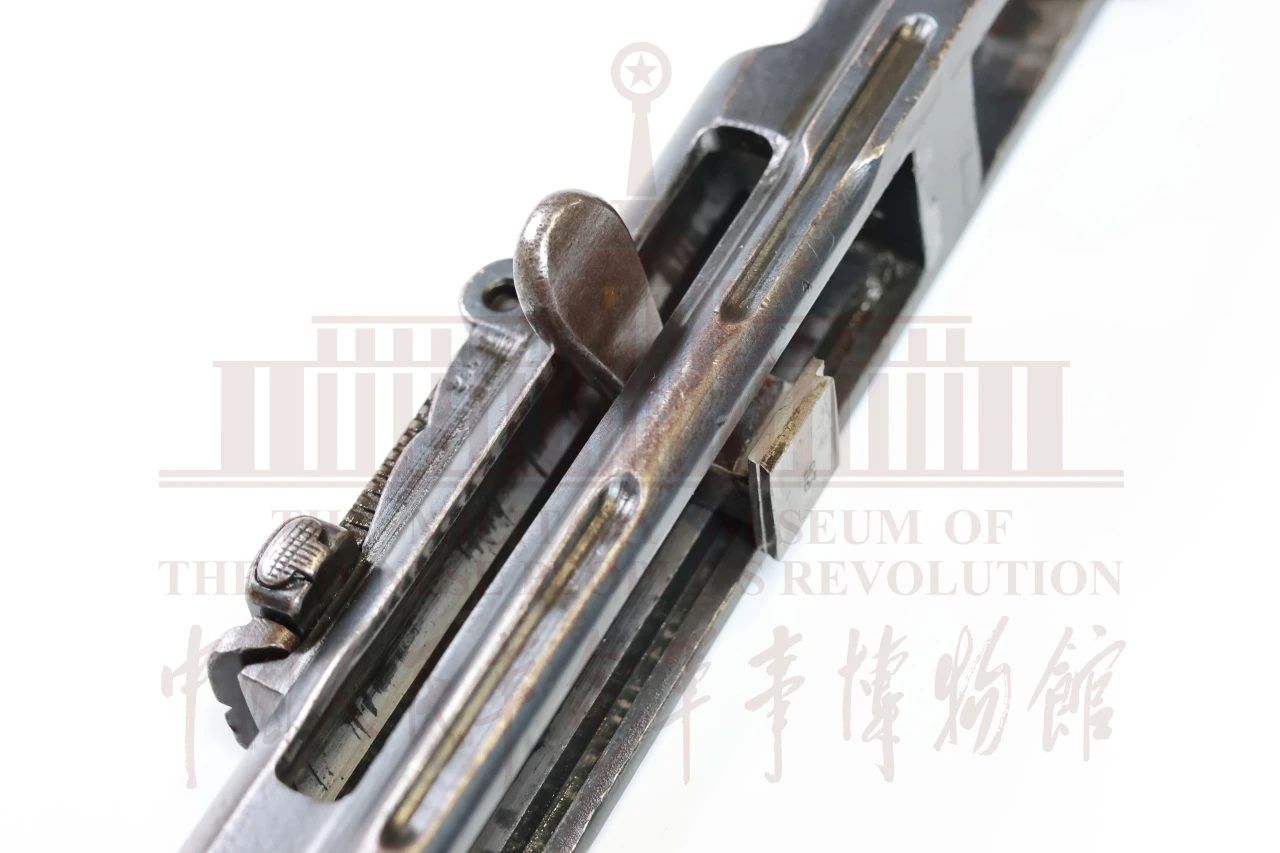
Since the charging handle of the Sichuan-made submachine gun must be installed and removed from the bottom of the upper receiver, a flat shape is mandatory.
【Safety and Selector Switch】
The fire control group of the Sichuan-made submachine gun is largely identical to that of the Thompson, with two levers acting as the safety and fire selector respectively. Interestingly, it reverses the front-to-rear position of the trigger and sear — the Thompson places the trigger forward, while this weapon puts the sear at the front. This layout allows the trigger to be moved rearward, eliminating the pistol grip and adopting a rifle-style fixed stock instead.
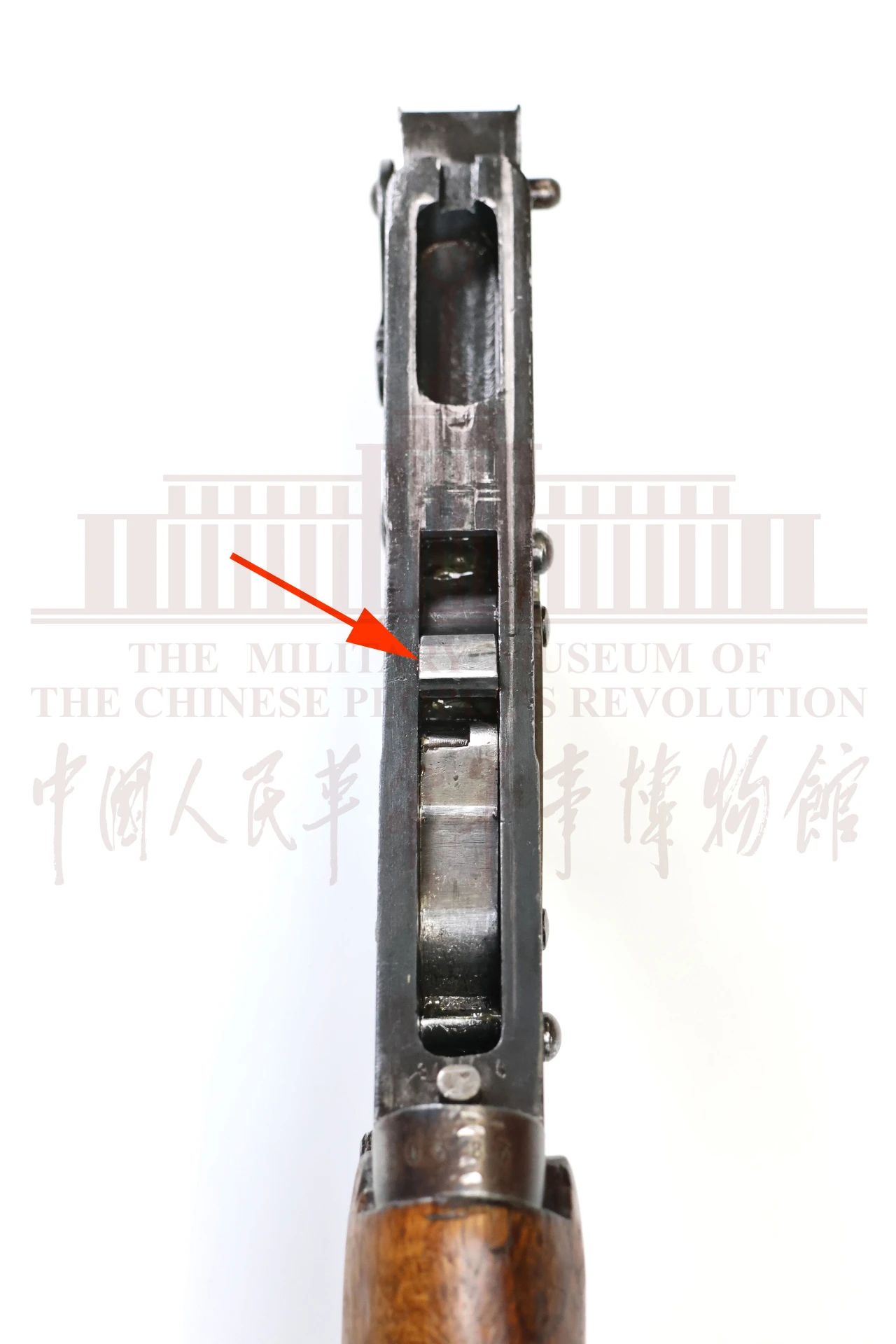
Lower receiver of the Sichuan-made submachine gun, with the sear at the front and the trigger at the rear.
At the same time, the positions of the safety and selector levers are also reversed: the safety lever is placed at the front (some specimens are marked with the Chinese character for “Safe” at the safety position), while the fire selector lever is at the rear (some are marked with the character for “Semi” on the semi-automatic setting).
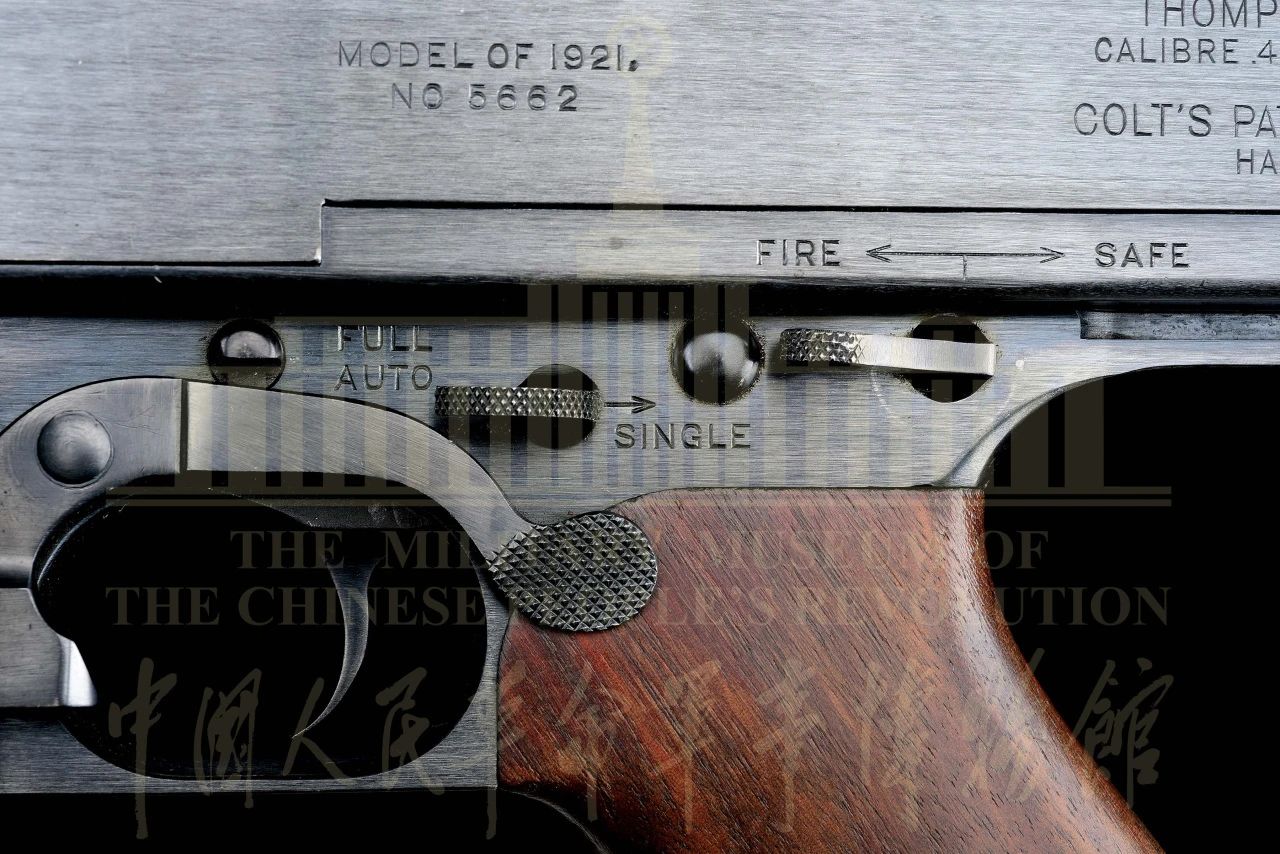
The fire selector lever and safety lever of the Thompson M1921.

① Safety lever and ② fire selector lever of the Sichuan-made submachine gun
In addition, the leaf springs used to secure the pivot shafts of the safety lever, sear, trigger and fire selector on the Sichuan-made version are similar to those of the Thompson, almost copying the original design. Only minor shape differences exist due to adjusted pivot positions.
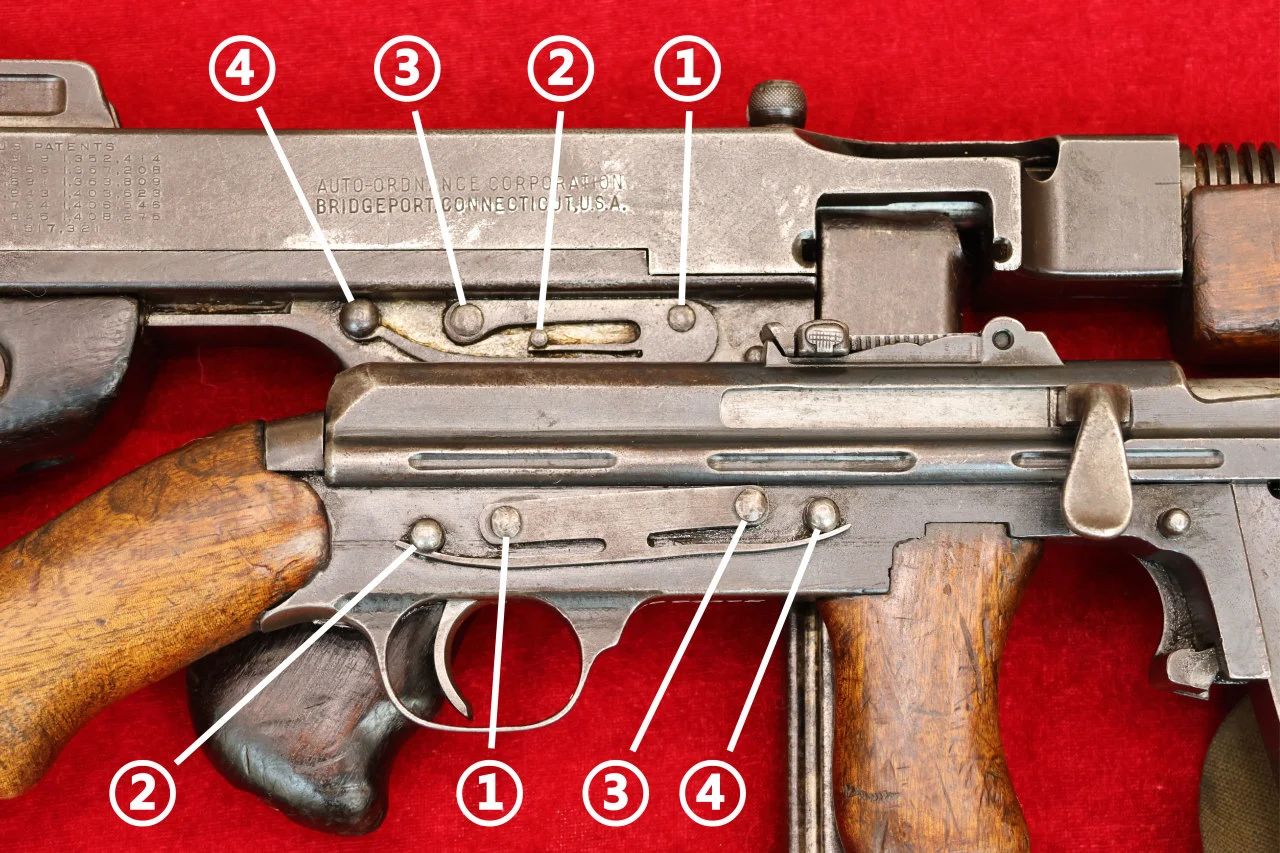
Leaf springs of the Thompson (upper) and the Sichuan-made submachine gun (lower), corresponding respectively to: 1. Trigger pivot; 2. Fire selector pivot; 3. Sear pivot; 4. Safety lever pivot.
【Magazine】
In the 1930s, the original .45 ACP cartridge for the Thompson submachine gun was not mainstream in China, while the 7.63×25mm Mauser pistol cartridge was widely prevalent. For this reason, the caliber was changed to 7.63 mm. Copies of the Thompson produced by the Sichuan Arsenal and the 21st Army Ordnance Repair Depot also adopted this caliber. Its muzzle and barrel are noticeably slimmer than those of the original .45 caliber Thompson.
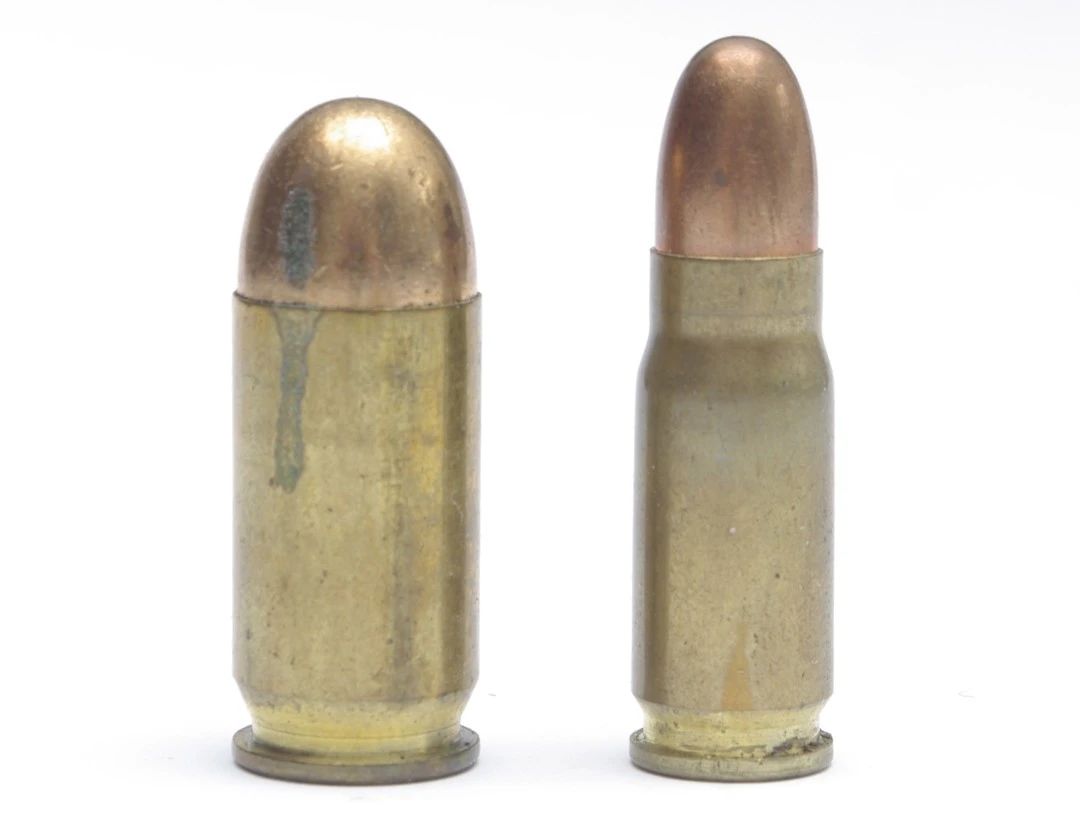
The .45 ACP cartridge (left) is a straight-walled round, while the 7.63×25mm Mauser cartridge (right) is a bottleneck round.
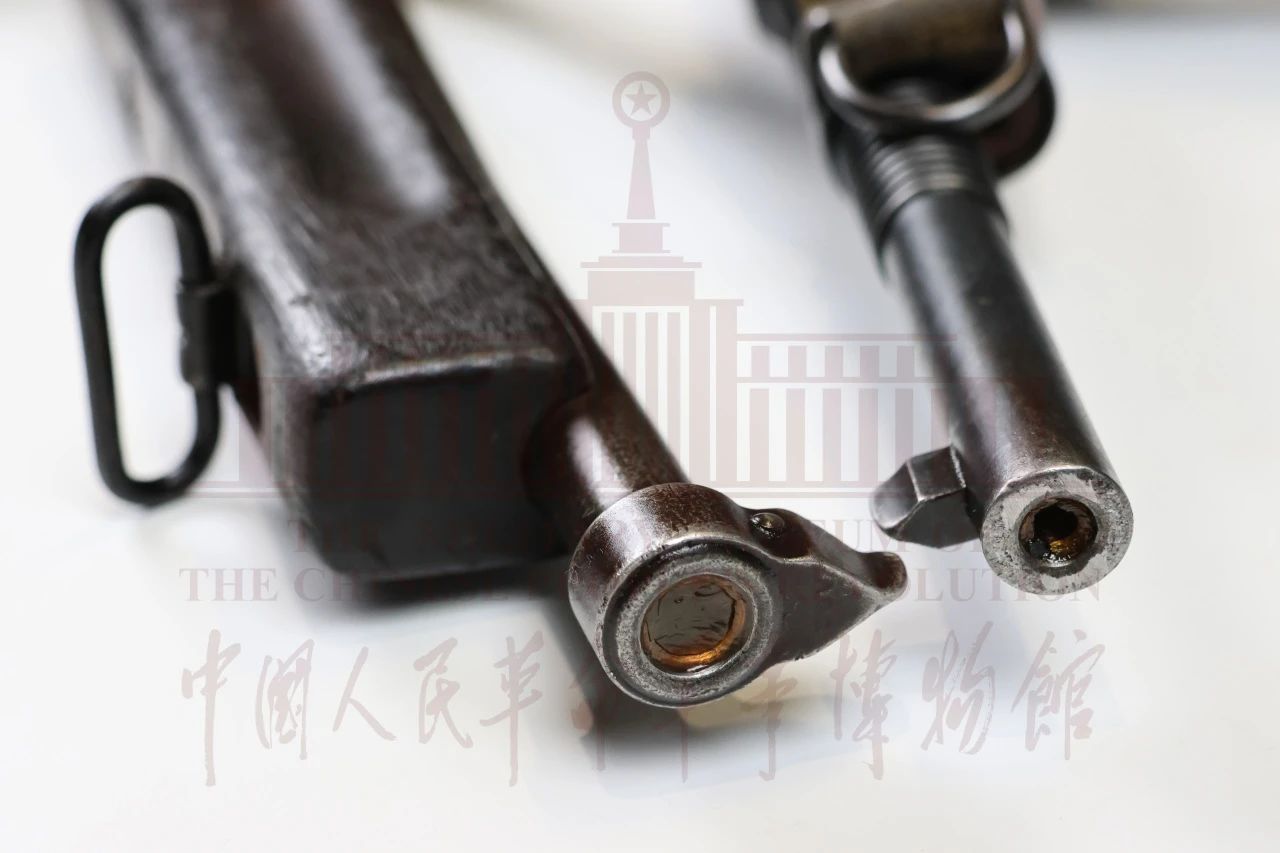
Muzzle comparison between the Sichuan-made submachine gun (right) and the Thompson M1A1 (left), showing an obvious difference in thickness.
The magazine of the Sichuan-made submachine gun also imitates the Thompson design, adopting a double-column double-feed structure. Round observation holes are cut on both sides to check remaining ammunition. However, sand and debris can easily enter the magazine through these openings and impair feeding reliability.
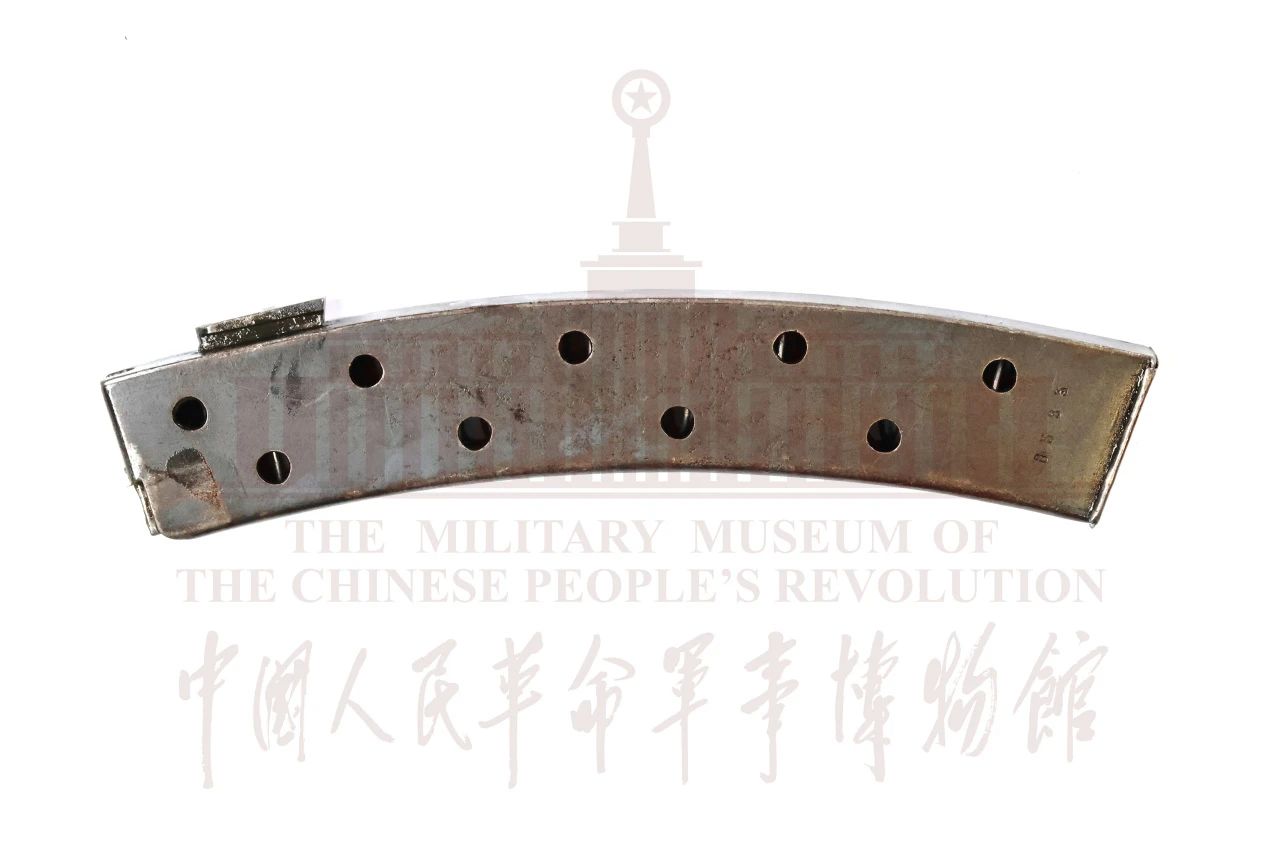
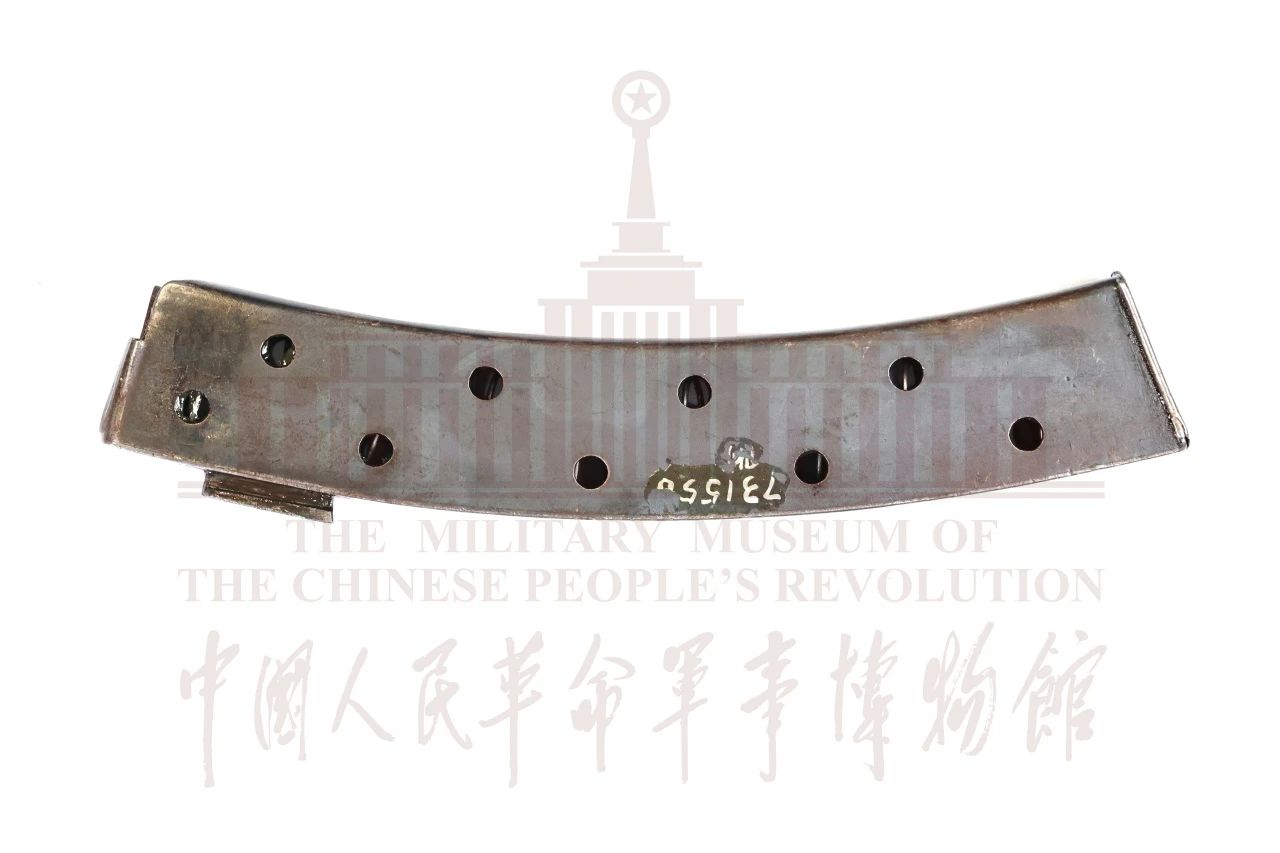
Curved magazine of the Sichuan-made submachine gun.
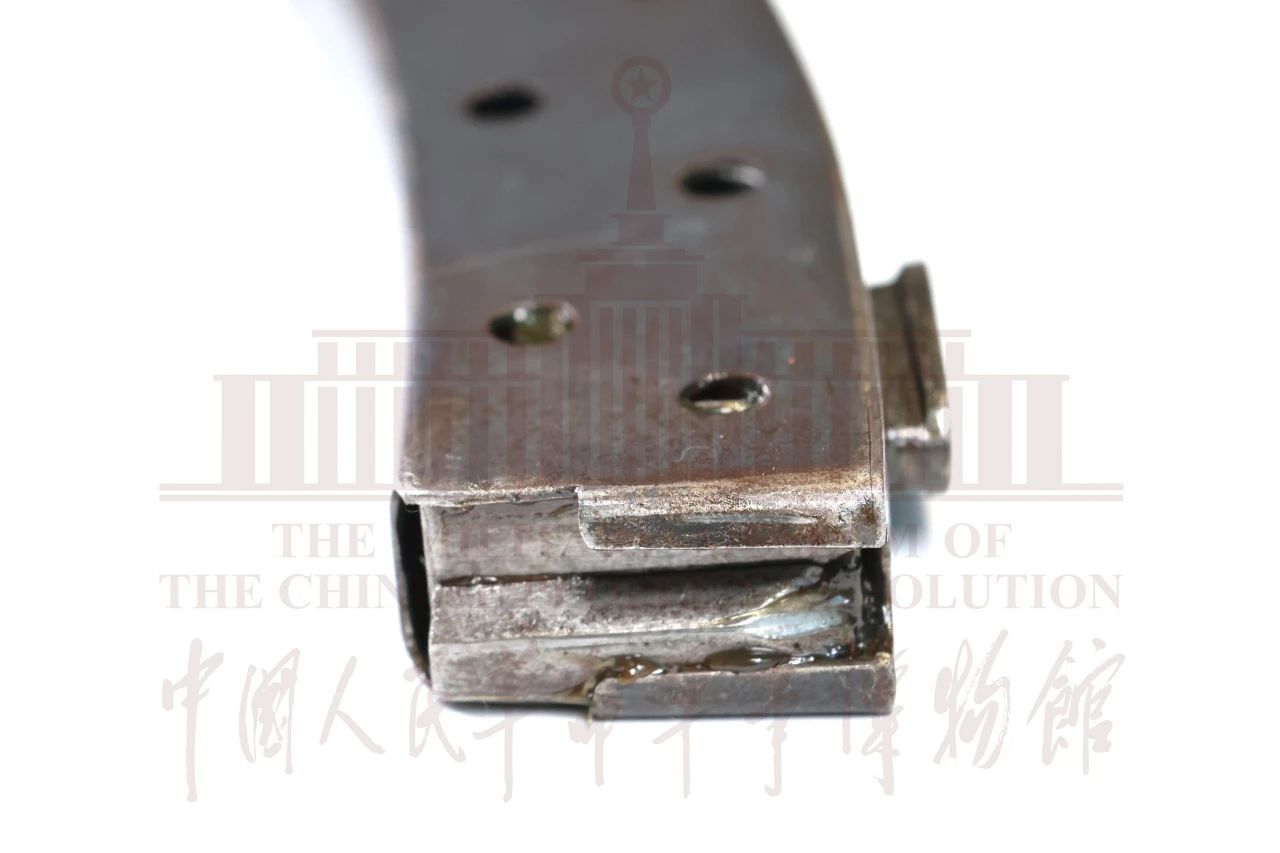
Close-up of the magazine feed lips
To test magazine capacity, the author loaded plastic dummy rounds by hand. Significant resistance was felt at 20 rounds, and loading became nearly impossible at 32 rounds. Considering the thin magazine base plate might be damaged by excessive compression of the follower spring, the dummy rounds were unloaded.
Estimated from the remaining internal space, the magazine capacity Its capacity should be around 40 rounds. After more than ninety years, the follower spring still maintains strong tension, which benefits feeding reliability. The bolt is lightweight with a high theoretical rate of fire; a robust follower spring greatly improves operational reliability during firing, though it makes manual loading quite strenuous.
In addition, the magazine well and magazine catch are directly copied from the Thompson. A locating tenon at the rear of the magazine mouth guides insertion into the magazine well and locks into place with the catch.
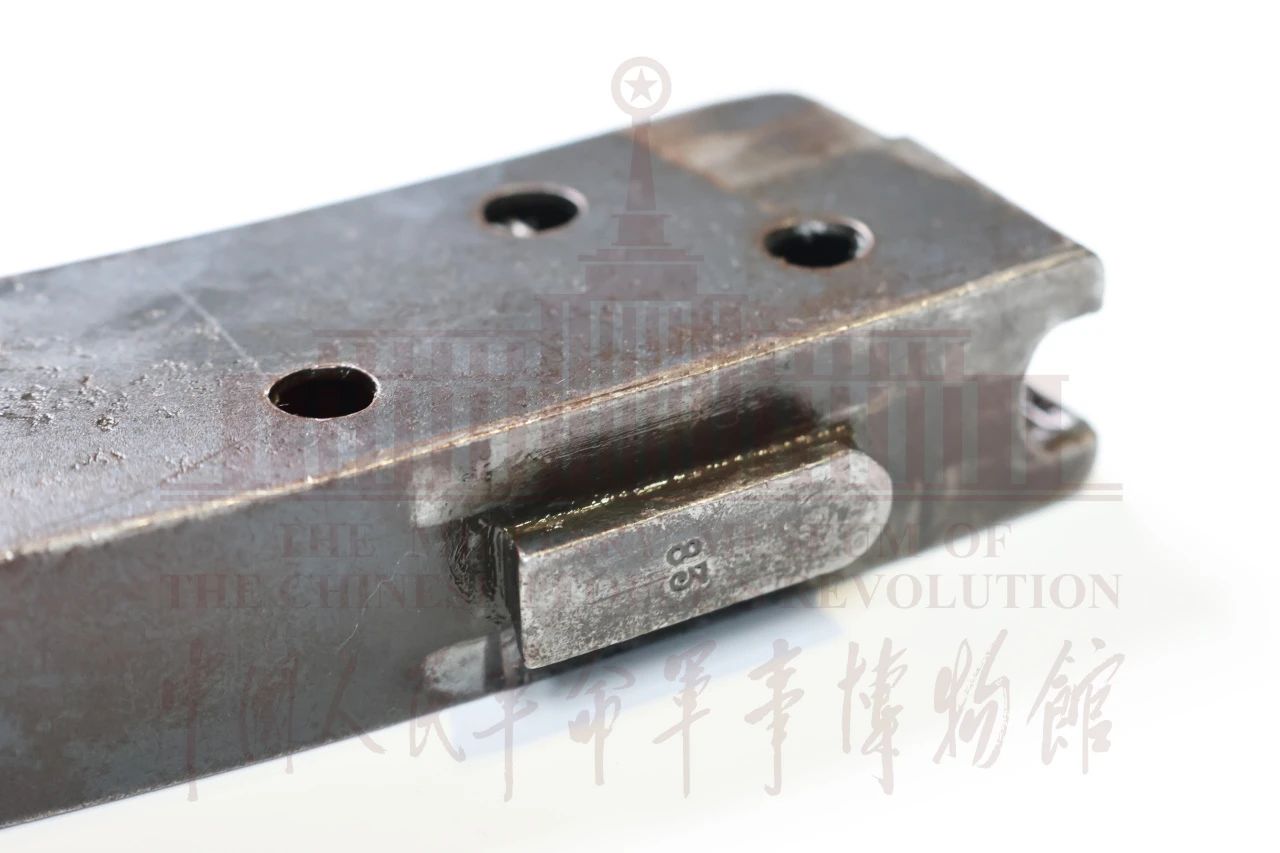
Locating tenon at the magazine mouth for mating with the magazine well and catch.
The magazine catch is a hook-shaped component knurled for better grip. Lifting the rear end of the catch upward (rotating counterclockwise) releases the magazine.
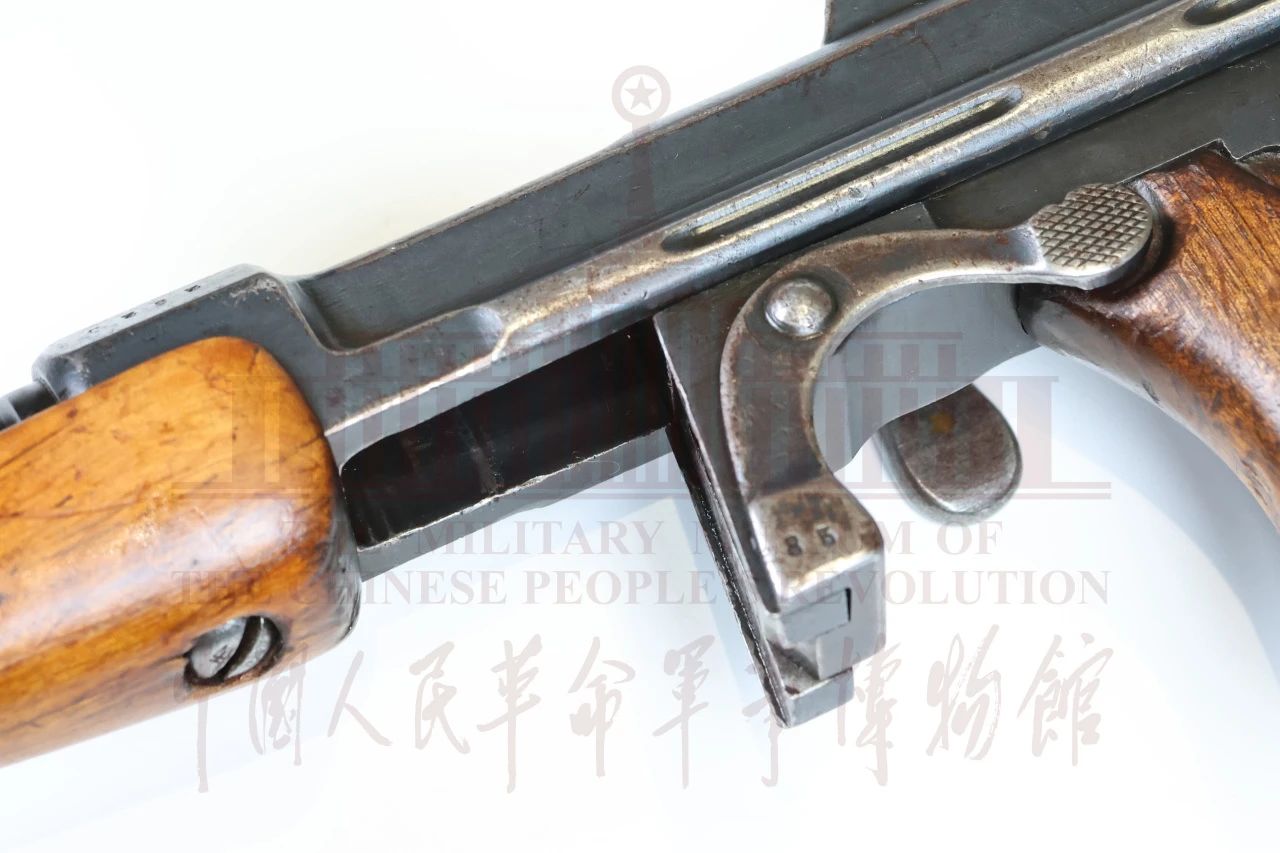
Magazine catch of the Sichuan-made submachine gun.
Magazine catch of the Thompson submachine gun.
【Imitation of the Mauser C96】
Interestingly, the Sichuan-made submachine gun borrows several iconic features from the Mauser C96 pistol, commonly known as the Broomhandle Mauser. It features a polygonal barrel collar, with the barrel screwed into the collar via threads. Fake Mauser markings are engraved on the top: WAFFENFABRIK MAUSER OBERNDORF A/N.
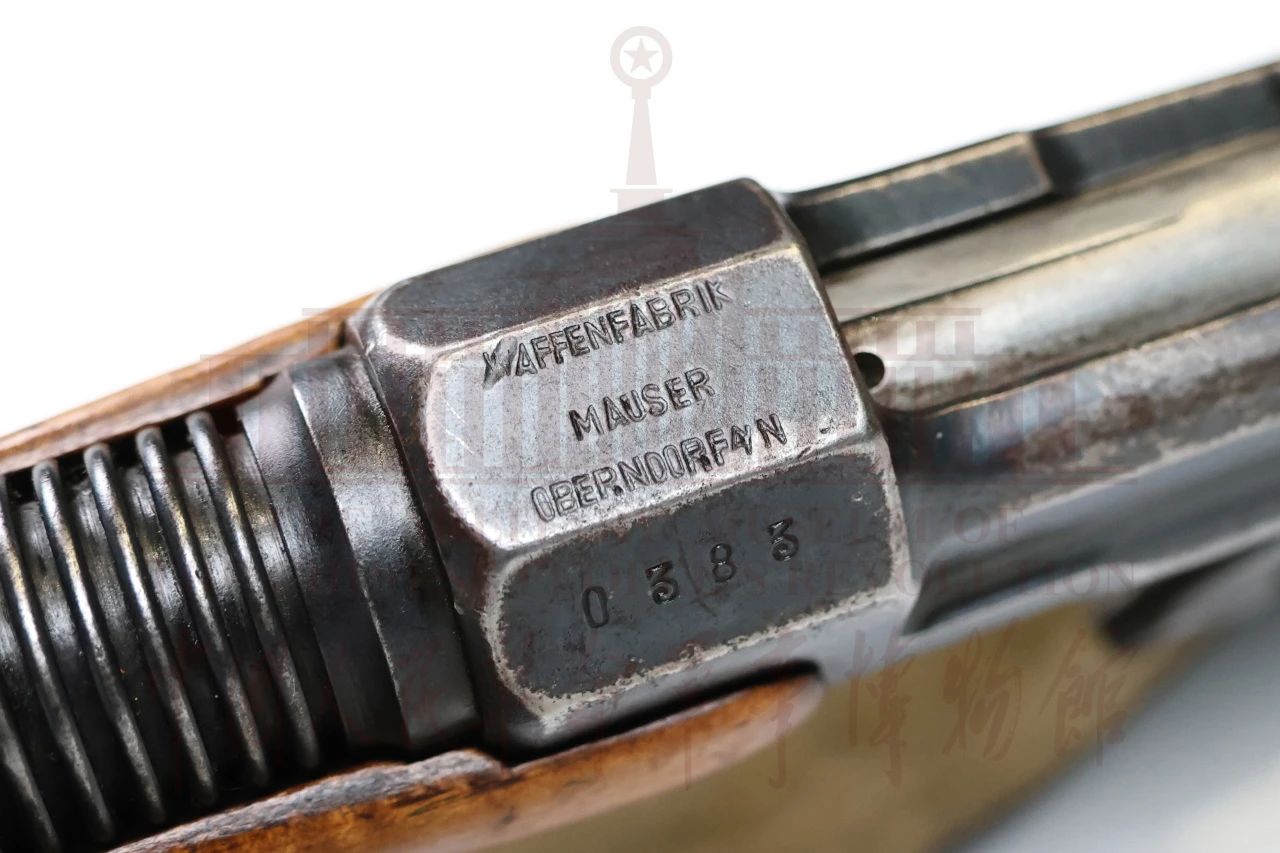
The polygonal barrel collar imitates that of the Mauser C96 pistol, with counterfeit Mauser markings engraved on its top surface
Such fake markings were quite common on domestically copied pistols in modern China, and occasionally appeared on locally made Mauser rifles. Without original Mauser factory stamping dies, domestic factories engraved each letter one by one. This resulted in uneven character and line spacing, and even misspelled letters or upside-down inscriptions.
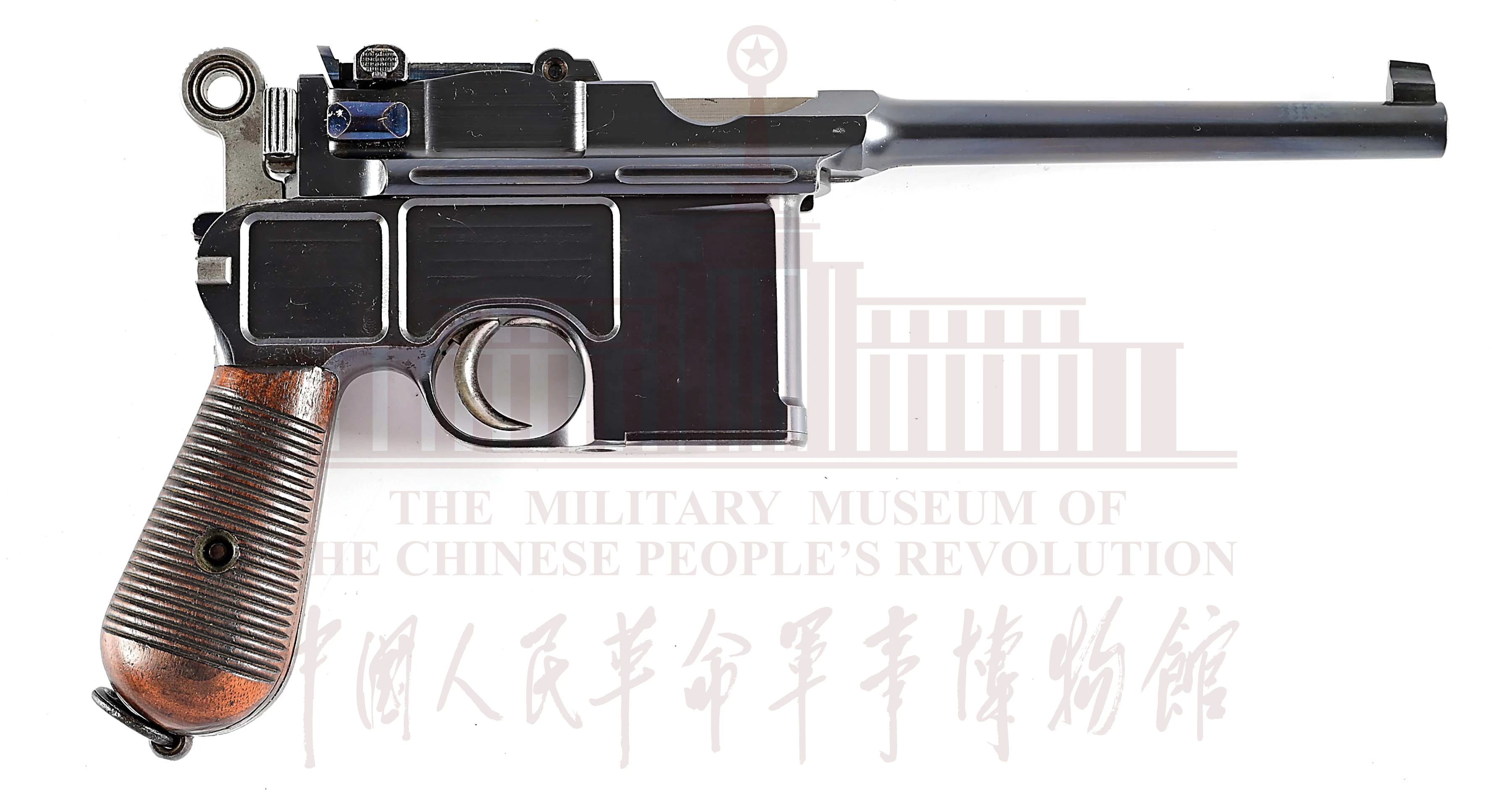
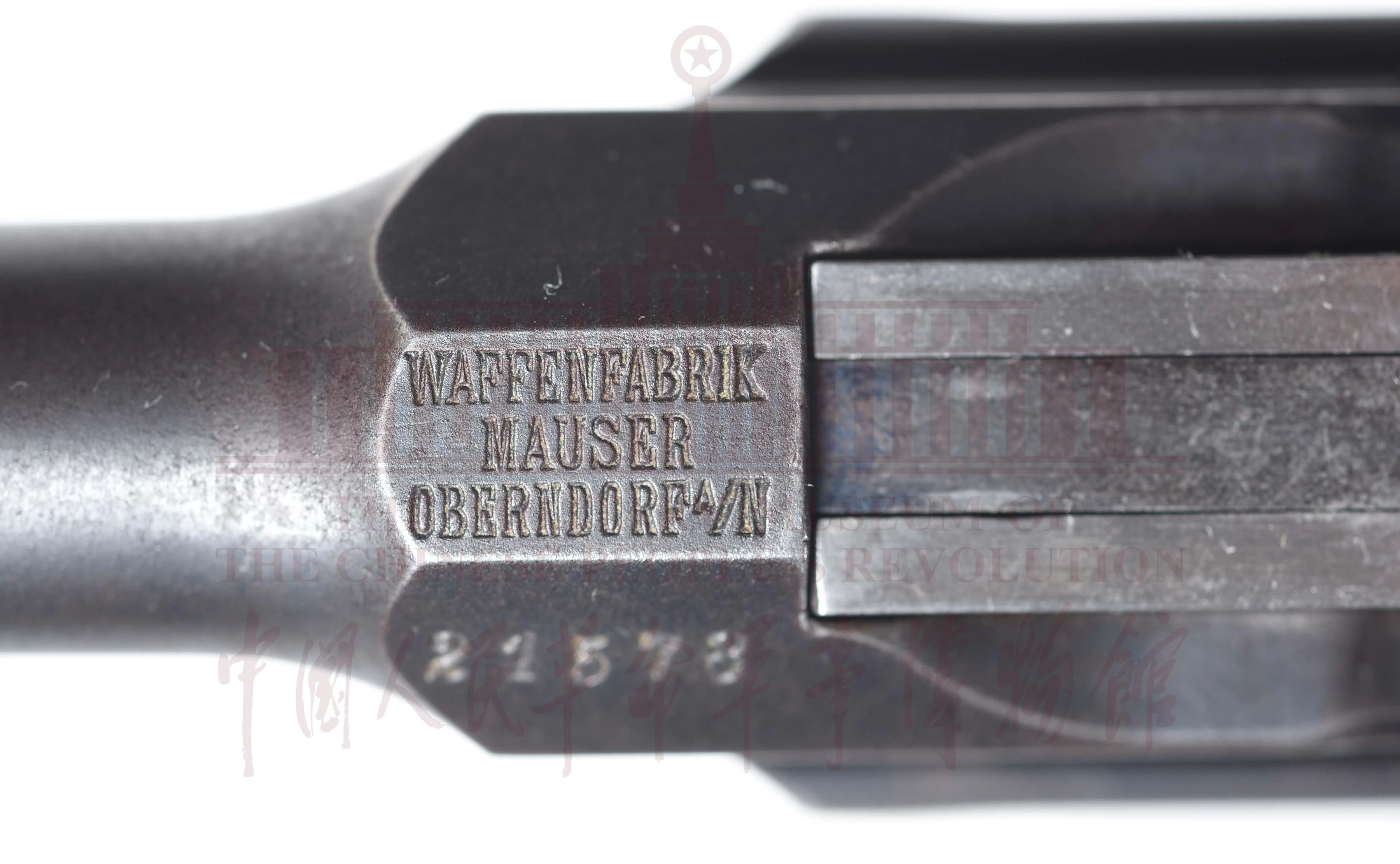
Polygonal barrel collar and factory markings of the original Mauser C96 pistol
The receiver and fire control housing of the Thompson submachine gun connect via a dovetail groove, just like the barrel collar and grip frame of the C96 pistol. The lower section of the upper receiver on the Sichuan-made submachine gun mimics the contour of the C96 barrel collar, protruding outward and milled with elongated lightening grooves.
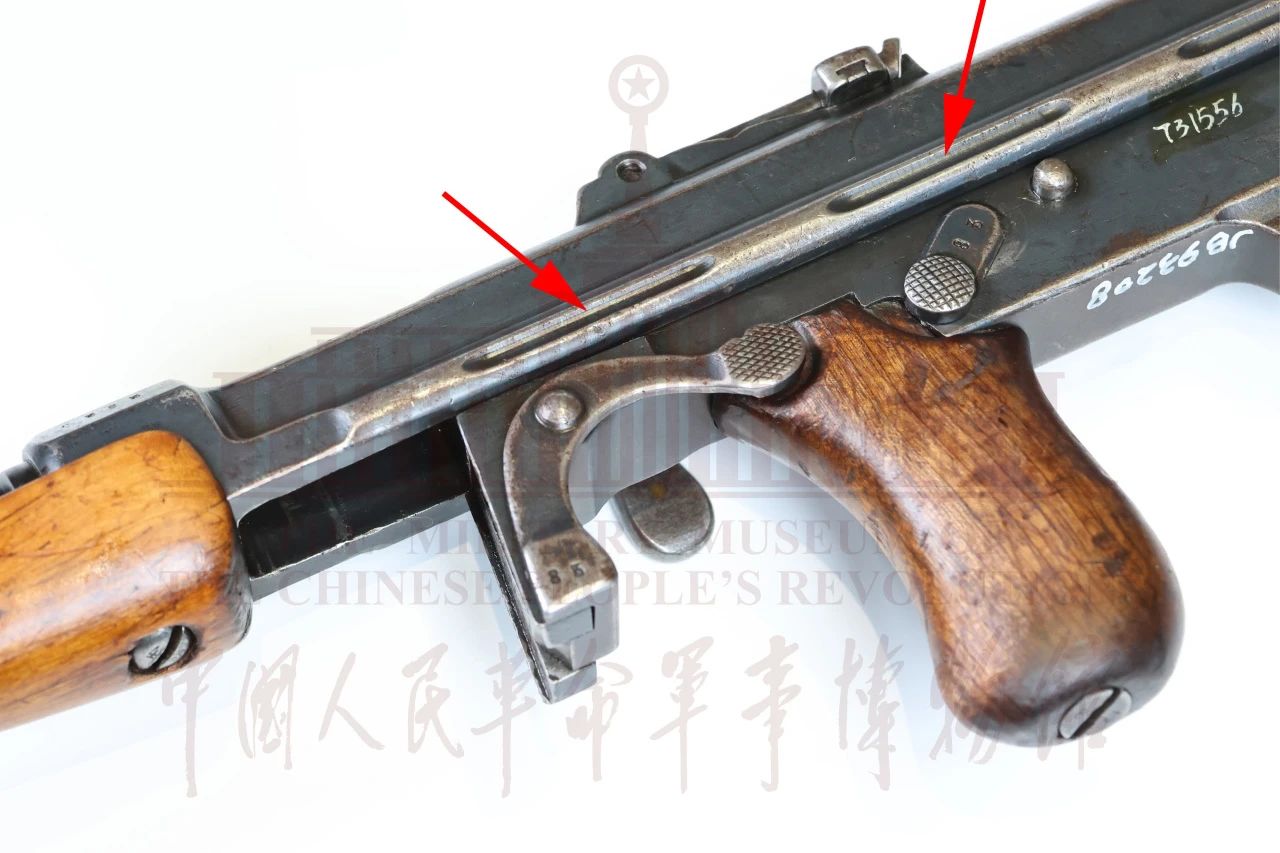
Lightening grooves at the lower section of the upper receiver.
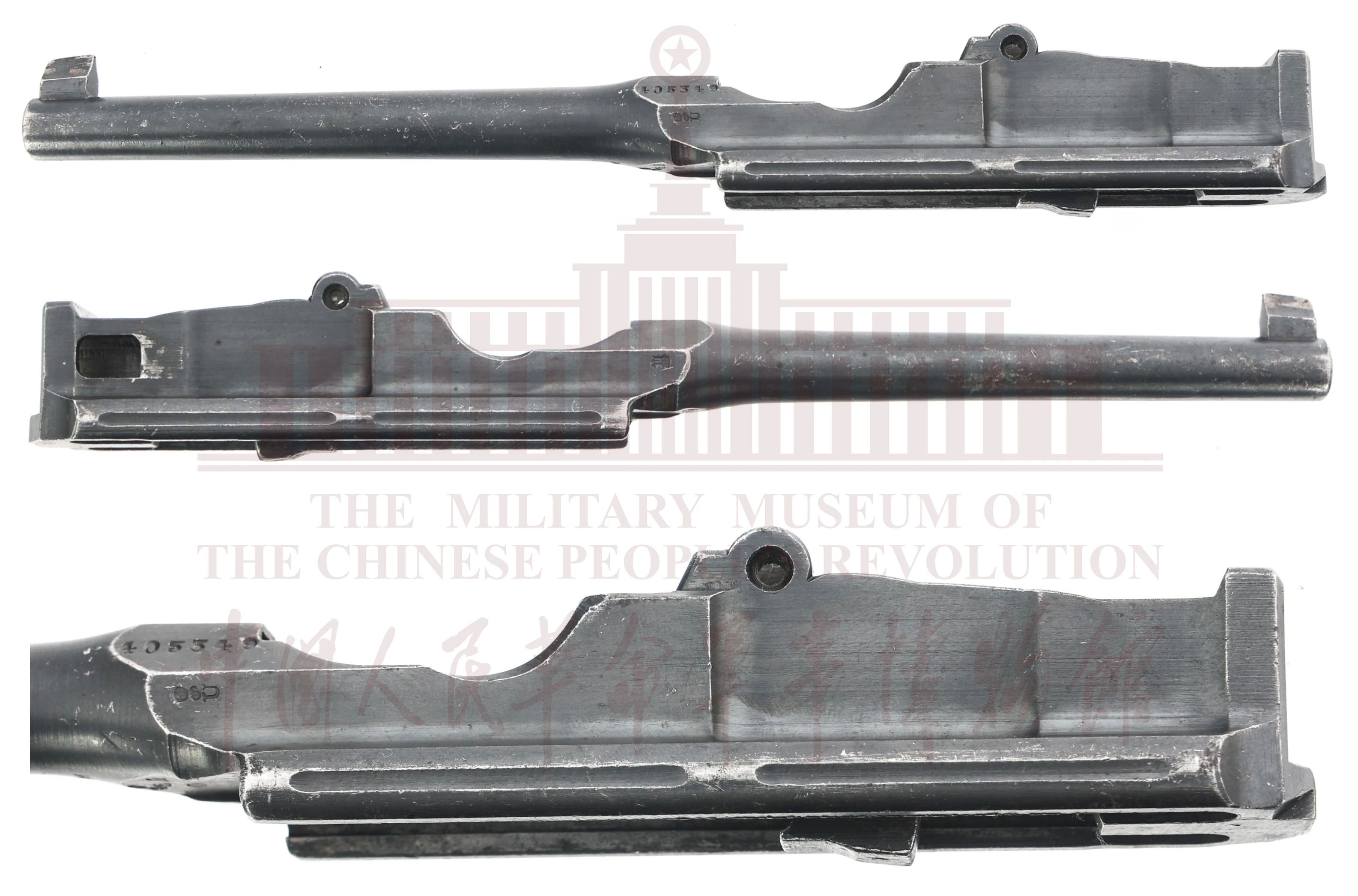
Barrel and barrel collar assembly of the Mauser C96. The bottom of the collar locks into the grip frame via a dovetail, with elongated lightening grooves cut on both sides — a feature directly copied by the Sichuan-made submachine gun.
Its curved tangent sight is also patterned after the Mauser C96. Fitted with a V-notch rear sight and an adjustable slider, it is graduated up to 1,000 meters.
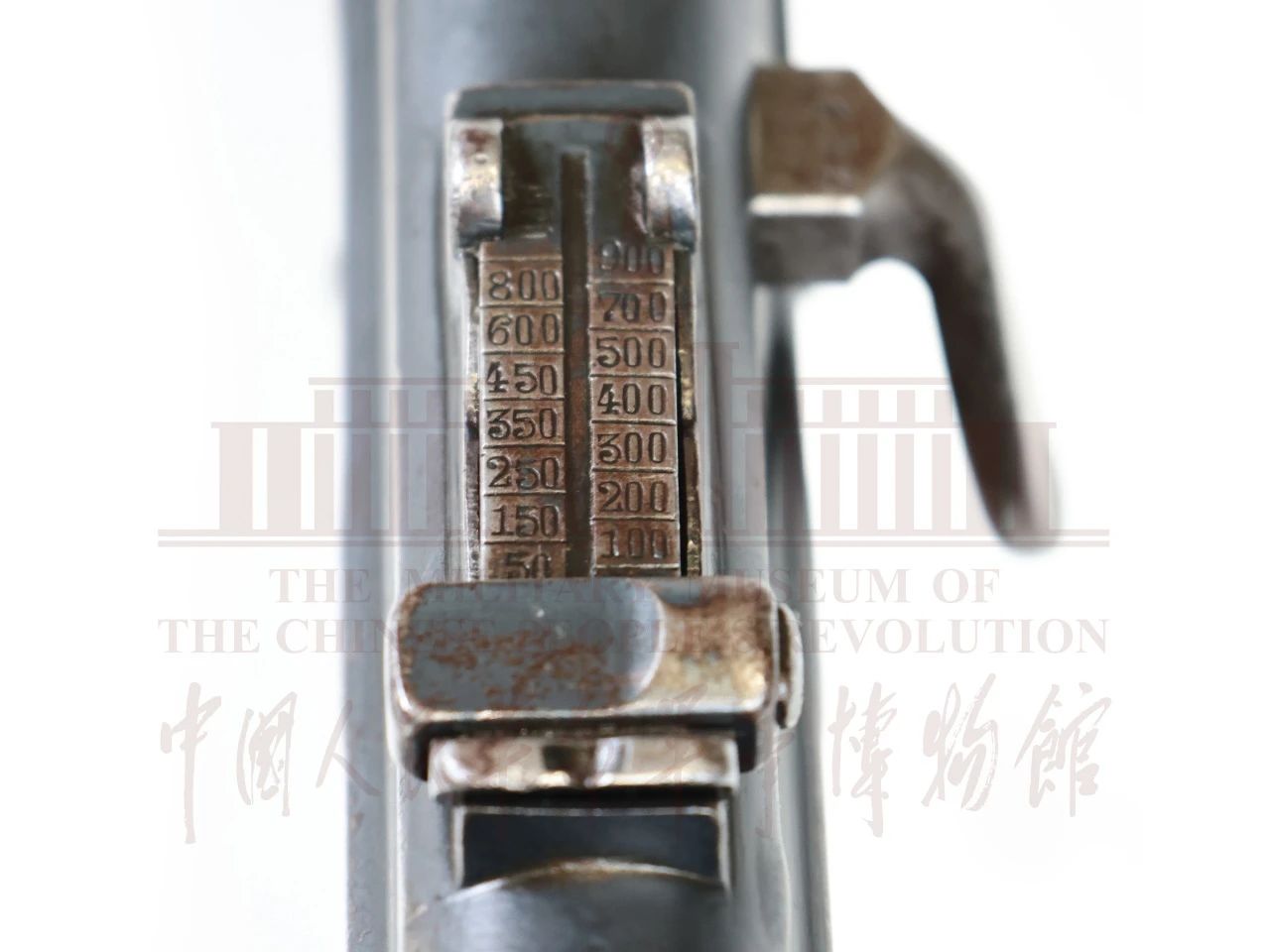
Tangent sight of the Sichuan-made submachine gun
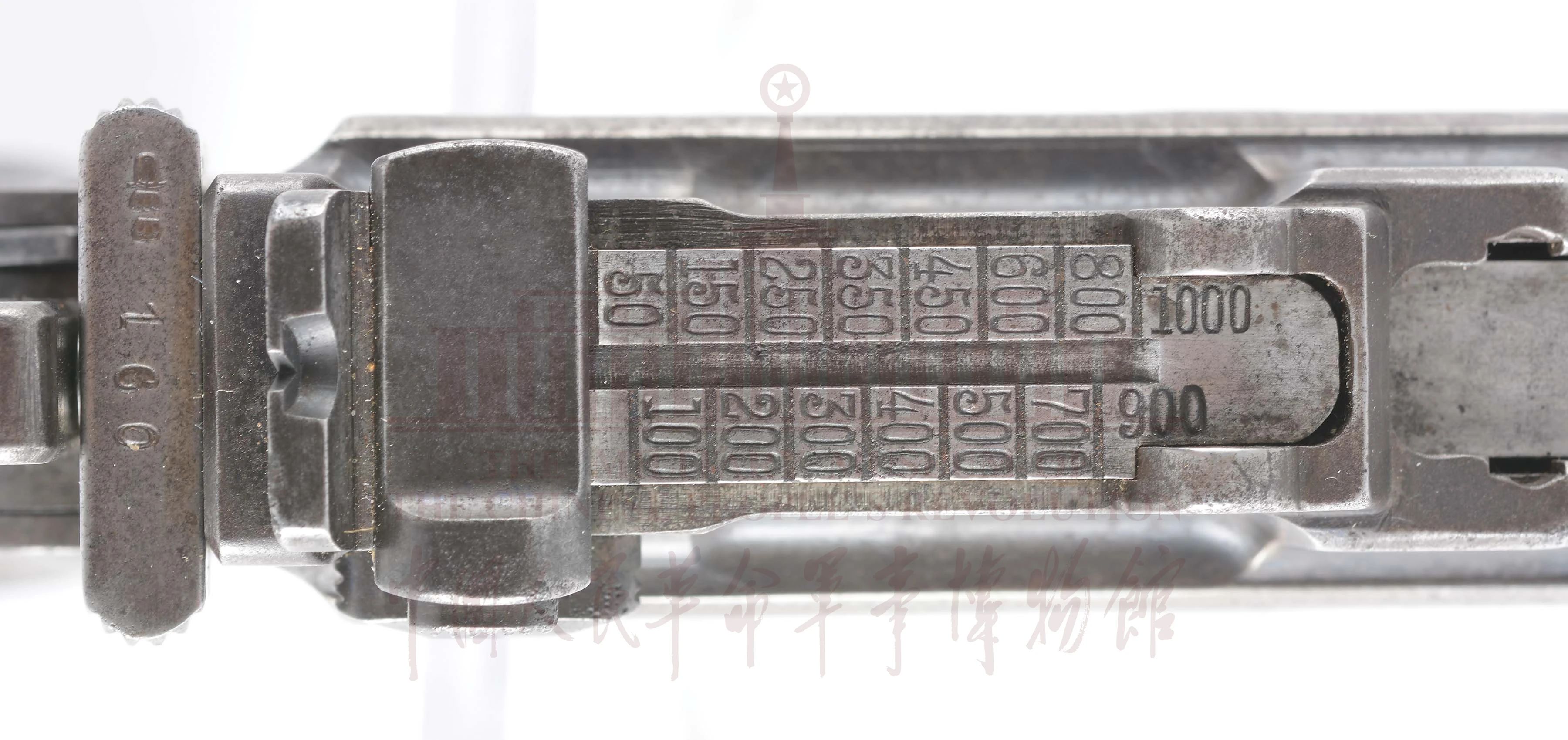
Tangent sight of the Mauser C96 pistol
【Handguard】
The wooden components of the Sichuan-made submachine gun are distinctive. A compact handguard under the barrel provides a secure grip, fastened by a single screw at the bottom and an annular barrel band at the front. The barrel band resembles that of Mauser carbines, featuring a sling swivel on the left side and secured by a leaf spring on the right of the handguard. Some examples are fitted with Mauser-style bayonet lugs.

The wooden components of the Sichuan-made submachine gun are distinctive. A compact handguard under the barrel provides a secure grip, fastened by a single screw at the bottom and an annular barrel band at the front. The barrel band resembles that of Mauser carbines, featuring a sling swivel on the left side and secured by a leaf spring on the right of the handguard. Some examples are fitted with Mauser-style bayonet lugs.
Some specimens are machined with finger grooves on both sides of the handguard for improved handling. A few variants feature an extended barrel and handguard fixed by two screws without a barrel band. Grooves on both sides store folded bipod legs, while the wavy bottom contour fits naturally to the fingers. The sling swivel is mounted separately on the barrel cooling fins.
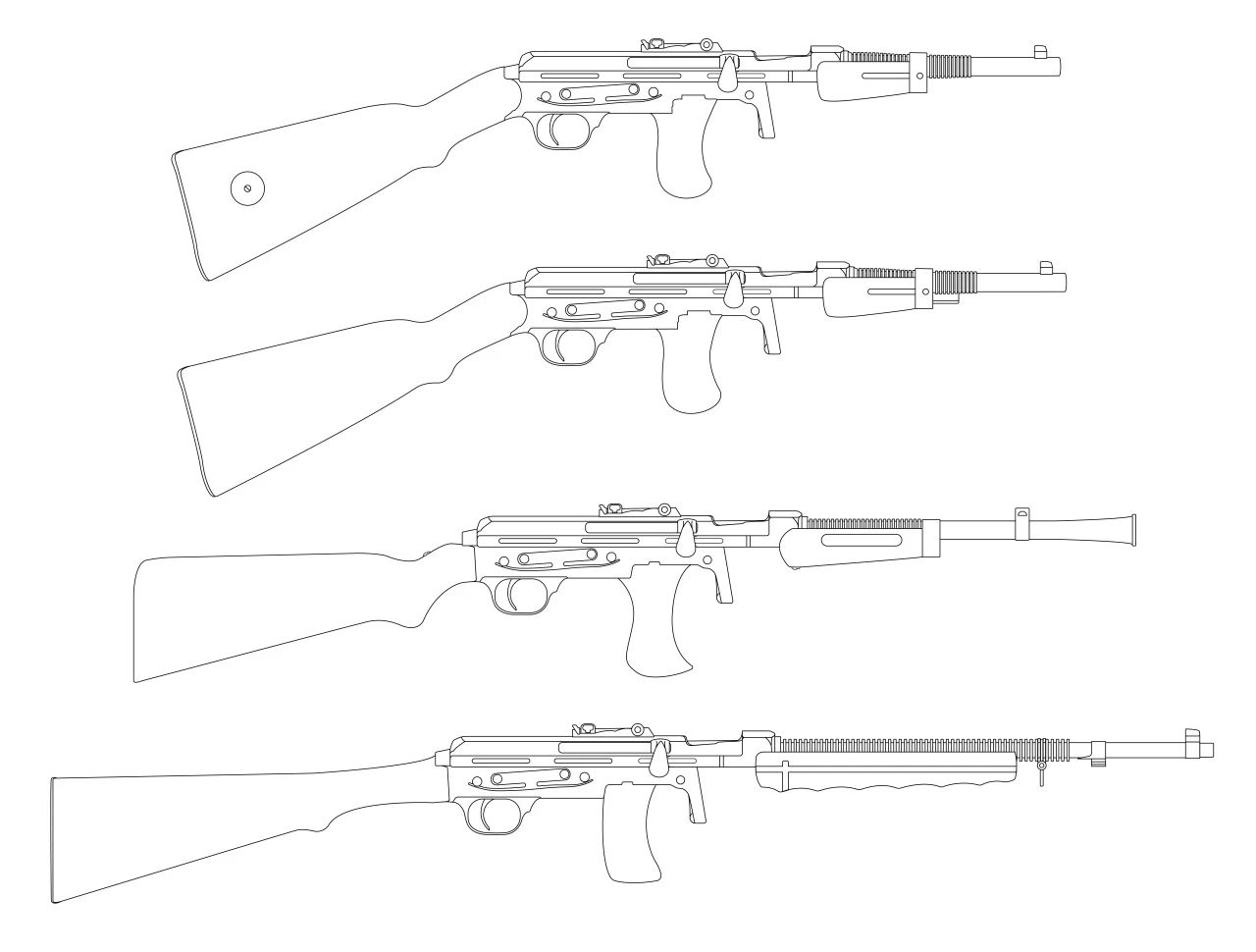
Four variants of the Sichuan-made submachine gun:
- No bayonet lug (Serial No. 0383);
- Fitted with bayonet lug;
- Extended barrel with muzzle flash hider, finger grooves on handguard, no bayonet lug, stock and foregrip of different design;
- Longest barrel, bipod storage grooves on handguard, wavy base contour, with bayonet lug, custom stock and foregrip shape.
【Foregrip】
A foregrip is installed between the magazine well and trigger guard at the weapon’s center of gravity, fixed by a single screw from underneath. It offers a comfortable hold whether the operator grips the handguard or the dedicated foregrip.
Unique integrated foregrip
【Stock】
The stock is fastened to the rear of the lower receiver in a manner similar to the British Lee–Enfield SMLE rifle, using a long central bolt running into the stock. For disassembly, the butt compartment lid must be opened first to access and remove the bolt with a long screwdriver. A sling swivel is fitted on the left side of the stock.
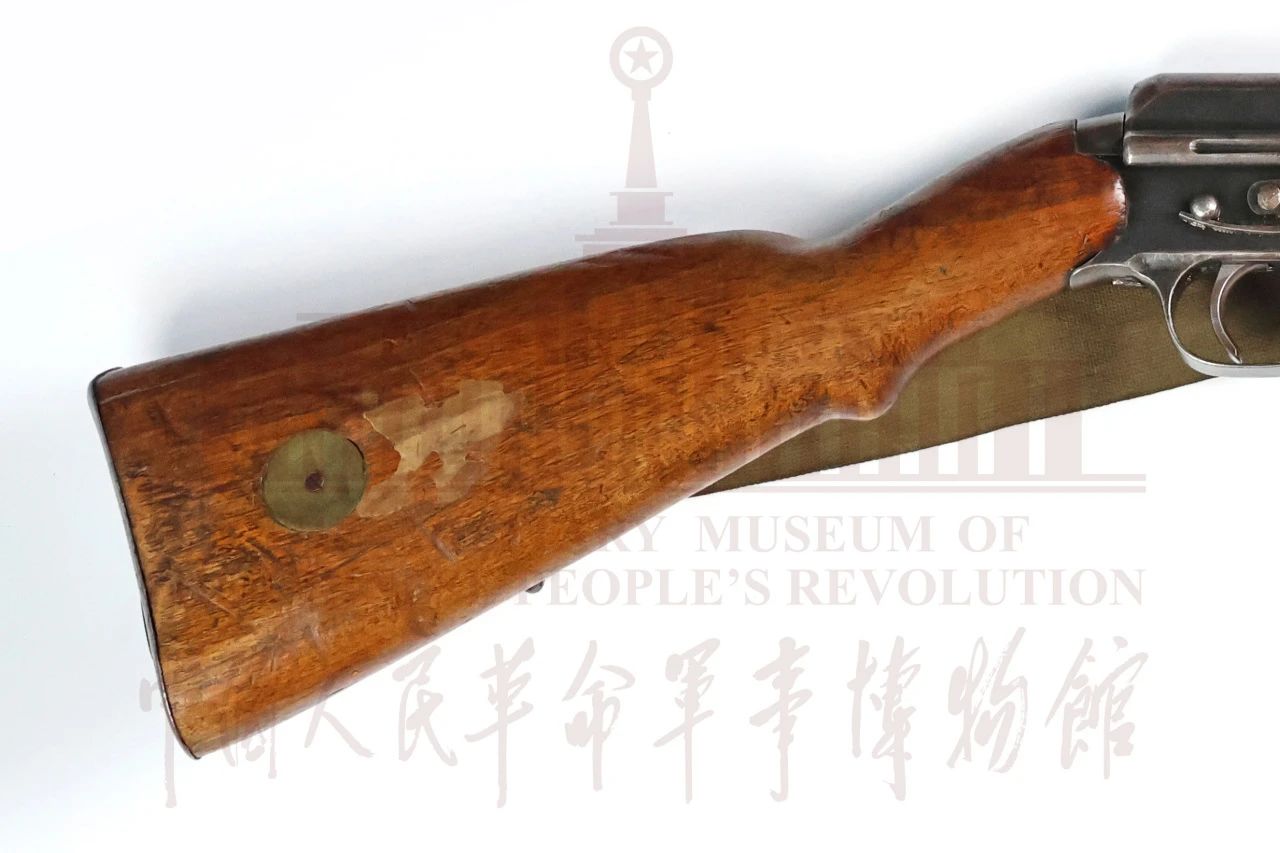
Brass decorative disc on the right side of the stock

Stock of the British Lee–Enfield Mk III rifle, with unit markings typically engraved on the right-side brass plate.
【Service Users】
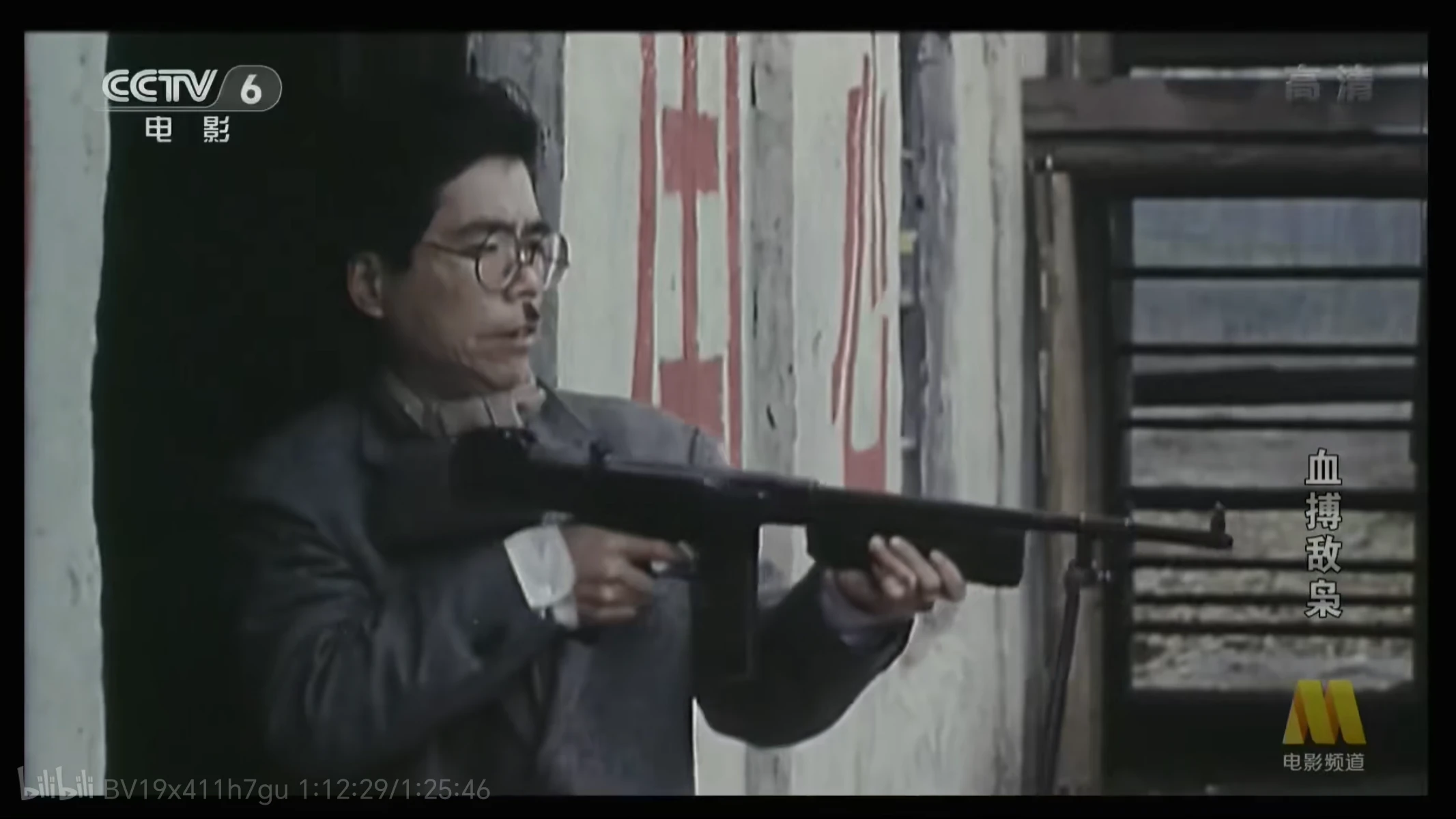
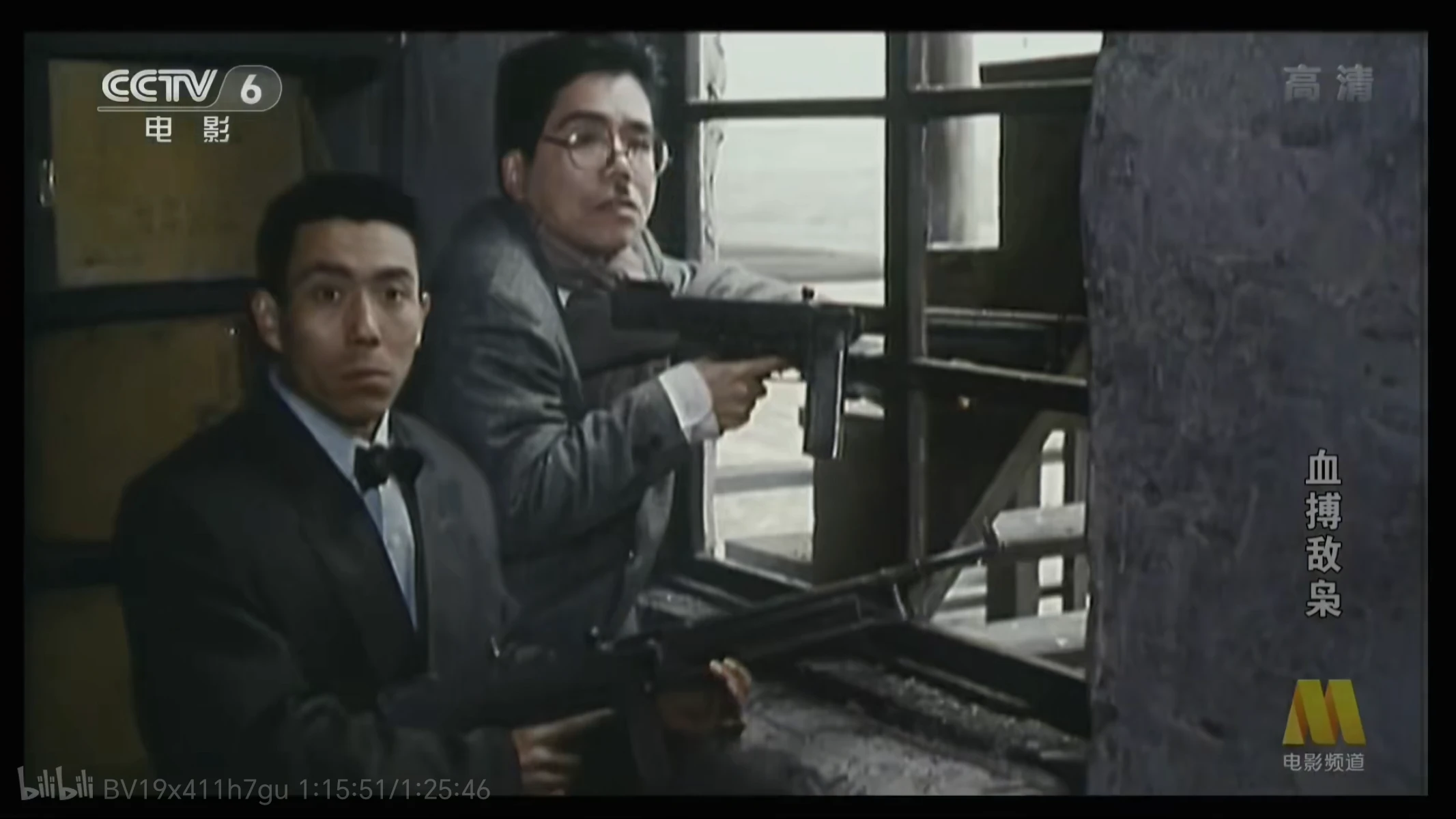
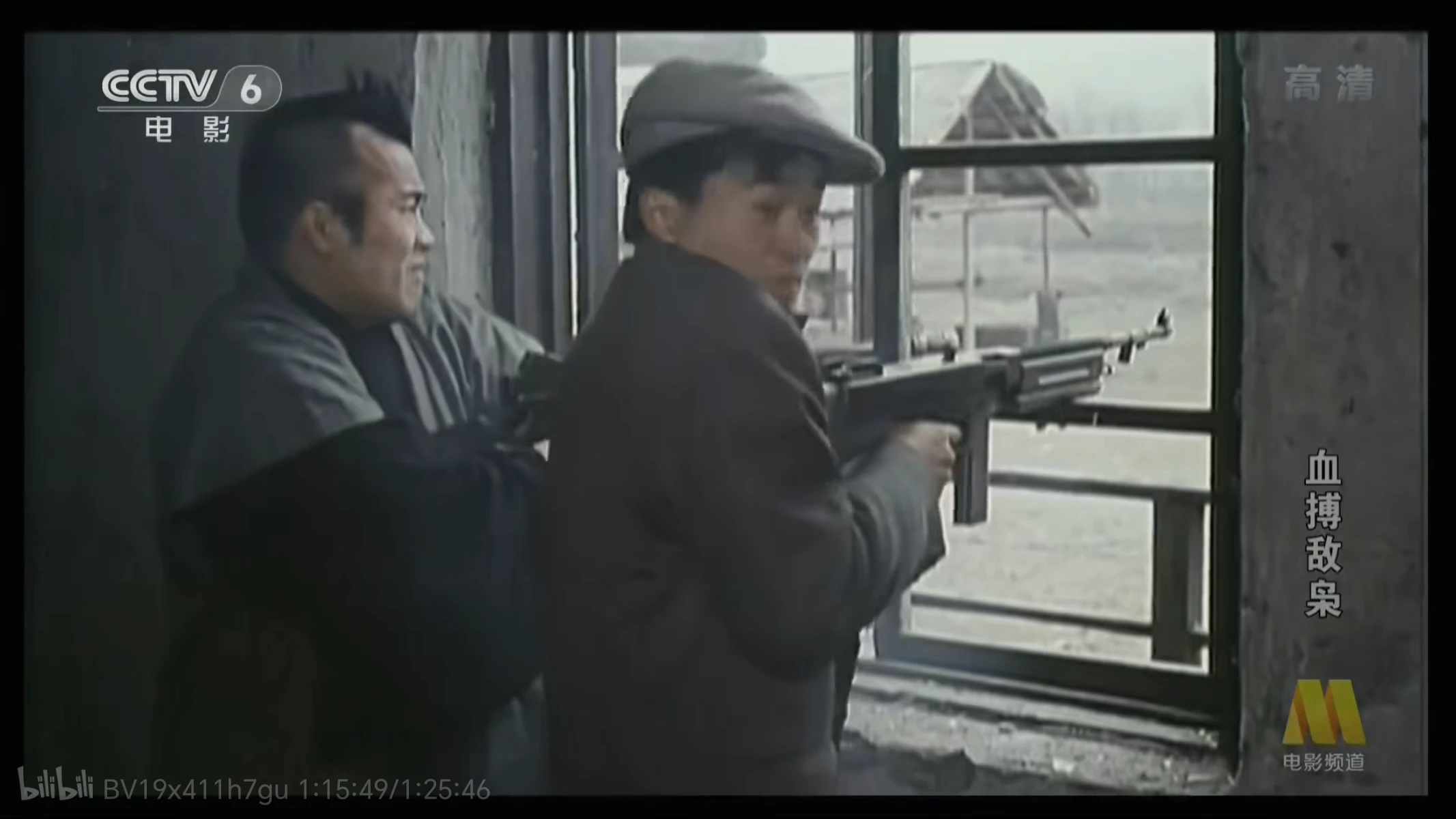
Judging from surviving specimens and historical photographs, production output was limited, yet the weapon saw wide use. The notorious Sichuan landlord Liu Wencai employed this submachine gun to suppress and kill peasants.
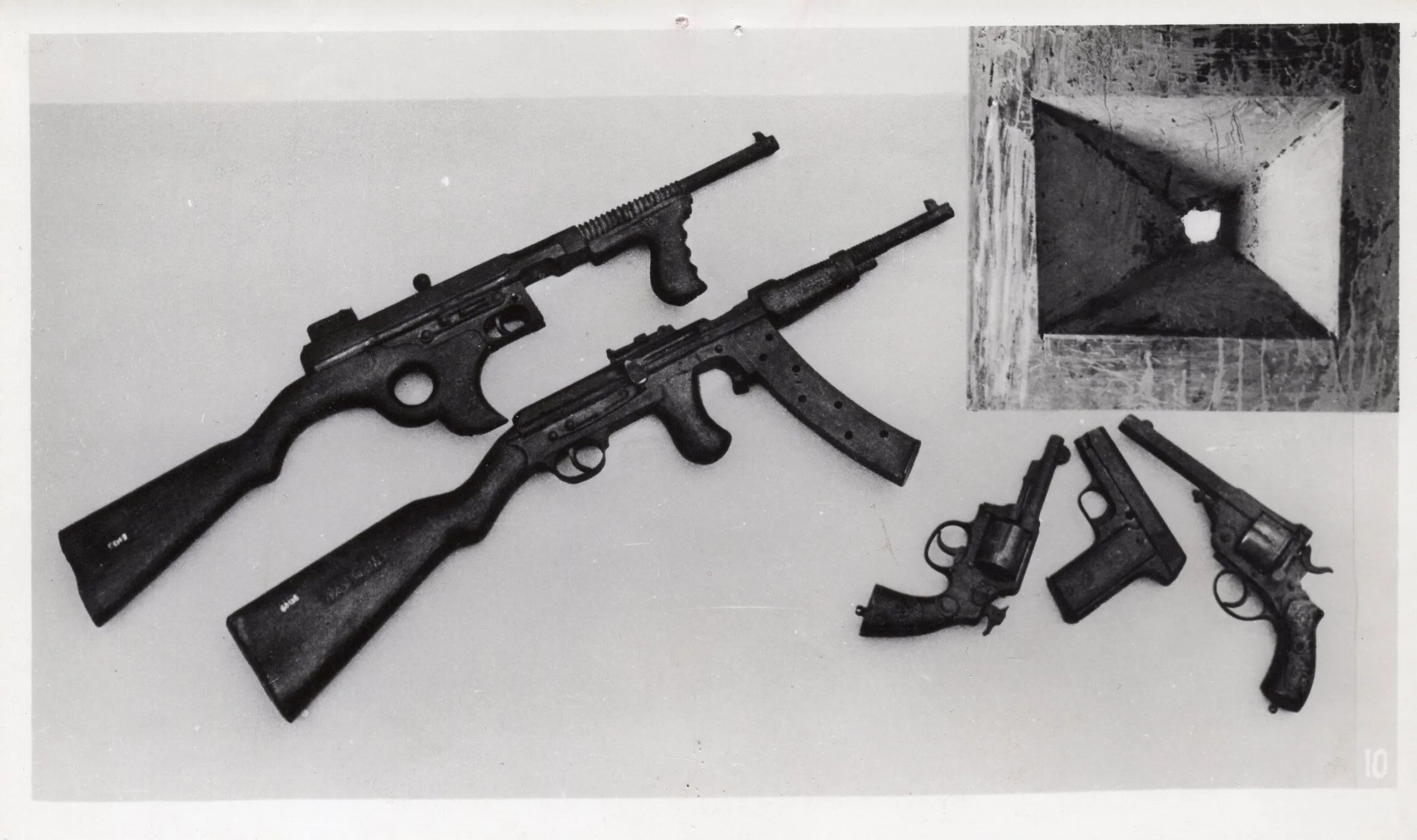
Firearms used by Sichuan landlord Liu Wencai against peasants, including a Sichuan-made submachine gun and an odd-stocked copy of the Thompson.
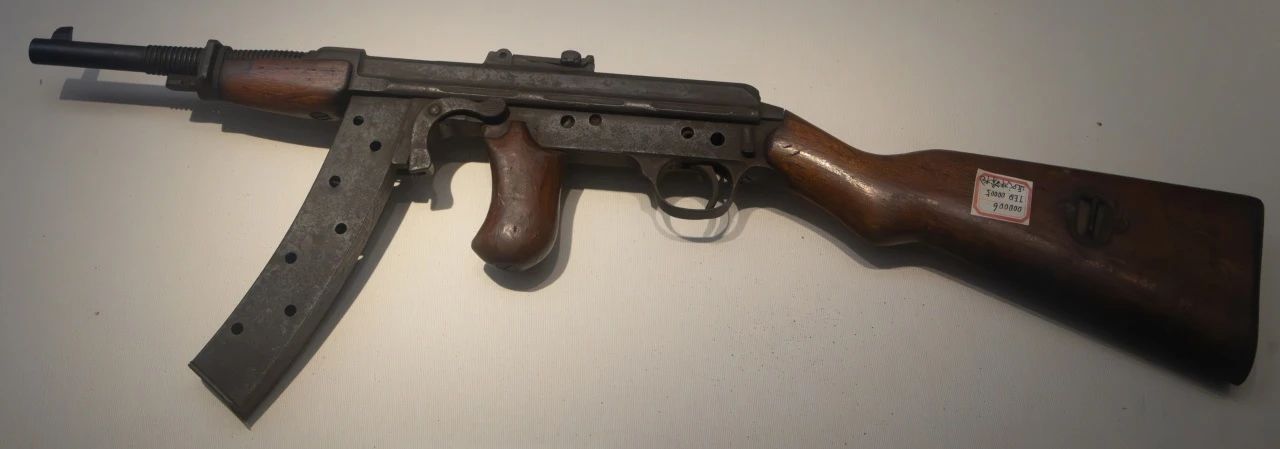
Sichuan-made submachine gun displayed at Chengdu Museum, labeled as a collection from the Dayi Liu Family Manor Museum
During the Agrarian Revolutionary War, many of these submachine guns were captured and used by the Red Army. In the War of Resistance against Japanese Aggression, photos taken by American journalist Harrison Forman in the Shaanxi revolutionary base show a militiaman carrying this weapon slung over his back. Though partially covered by a carrying case, its curved magazine and distinctive foregrip make it easily identifiable.
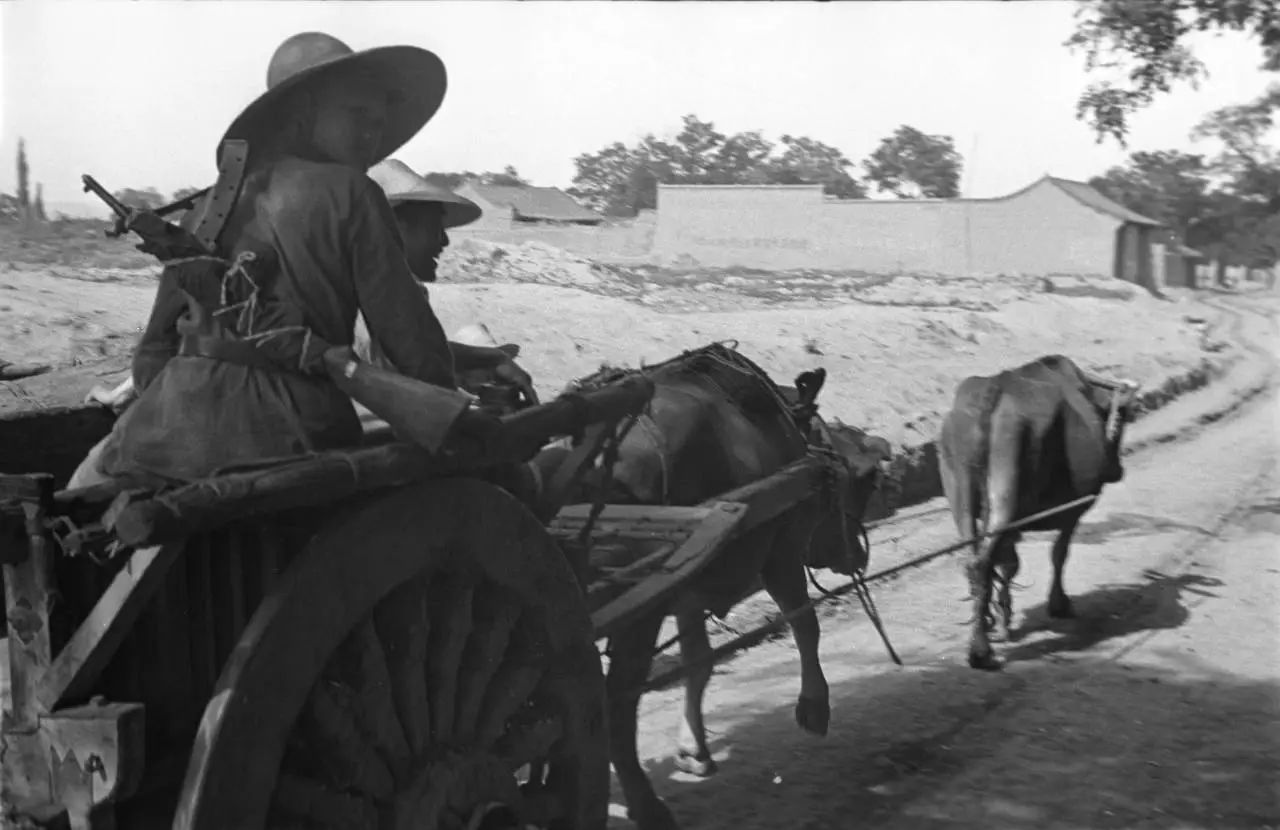
Militiaman photographed by Harrison Forman in the revolutionary base, carrying a Sichuan-made submachine gun on his back.
【Conclusion】
After the full-scale outbreak of the War of Resistance in 1937, Sichuan arsenals were gradually taken over by the Nationalist Ordnance Department, halting production of niche weapons such as this locally made submachine gun.Ergonomically, it is more compact and lightweight than the original Thompson, with a well-balanced center of gravity and comfortable handling. In terms of workmanship and tolerance control, it ranks among the finest domestically produced firearms of its time, standing far above other weapons made in Yunnan, Guizhou and Sichuan. The surface finish of some components even surpasses that of the WWII-era U.S. Thompson M1928A1.
Design-wise, it inherits the core layout of the Thompson M1921 while incorporating original refinements such as the mortise-and-tenon charging handle assembly, showcasing the ingenuity of local gunsmiths. Meanwhile, redundant additions like the extra metal spacer behind the charging handle and purely decorative Mauser C96 styling reveal the conceptual limitations of firearms design understanding in that era.
This is the most comprehensive, complete and objective material I have collected and compiled.
It is officially backed by the Revolutionary Museum’s collection and historical records.
I would also like to thank the original author who conducted field tests and compiled the research on this firearm.
I am merely a compiler and arranger; honestly, this work is far from easy.
If you like this piece, feel free to give it a like. I spent four hours putting this together.
Below is a poll regarding this firearm in-game.