The new submachine gun of the German army: MP SS 42 submachine gun
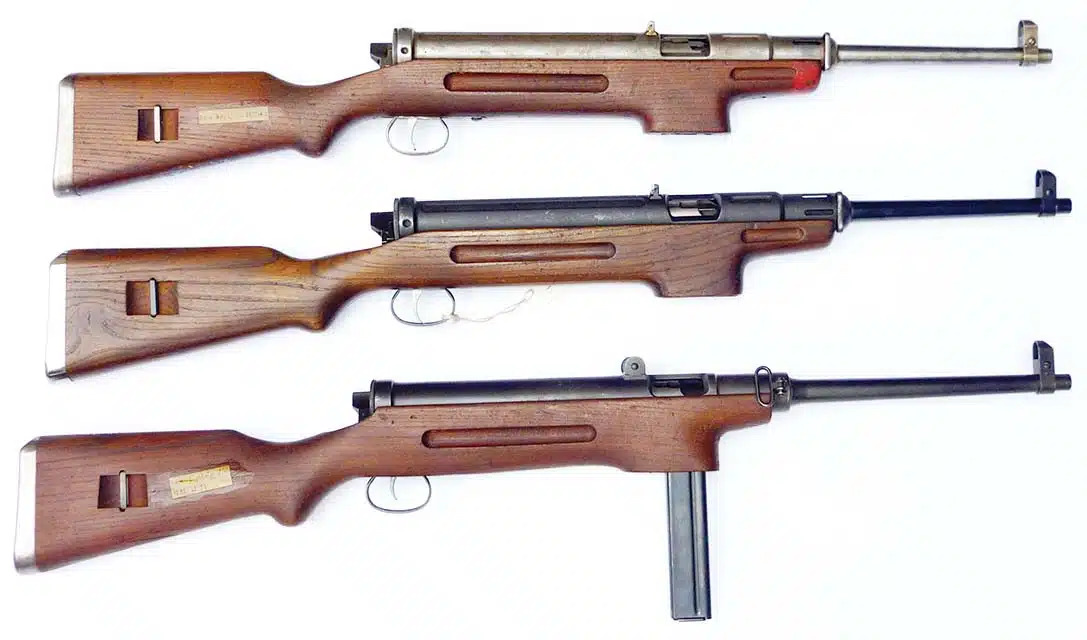
The MP SS 42 submachine gun is also known as the ZK-403 submachine gun. It was designed by Czechoslovakia before World War II and was planned to be equipped and used by the SS during the war, but it ultimately remained at the prototype stage.
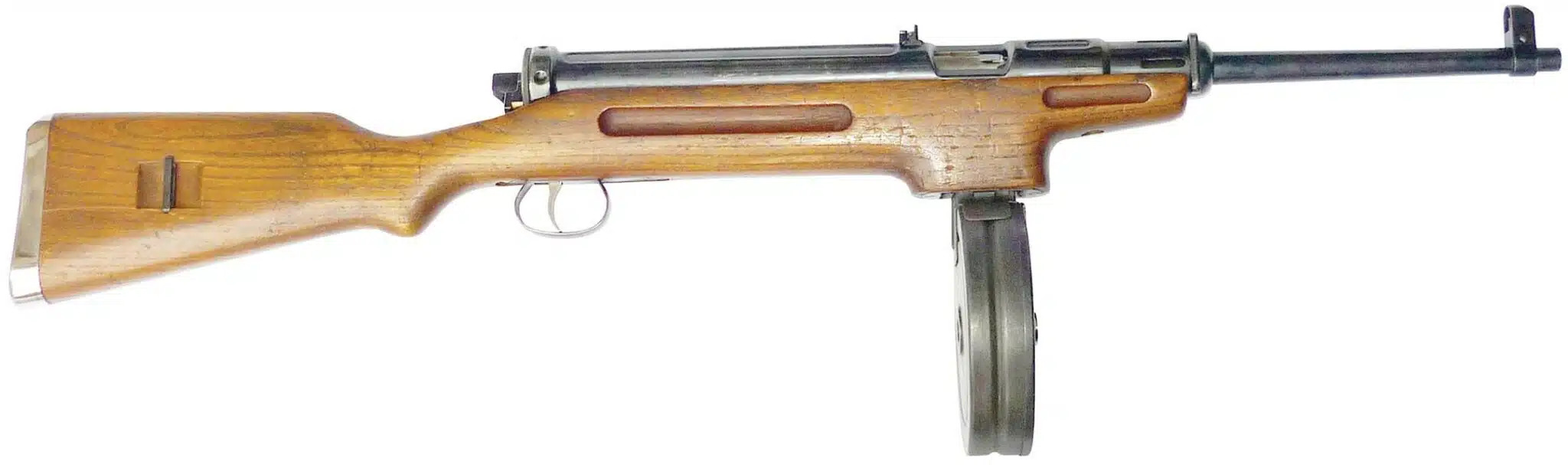
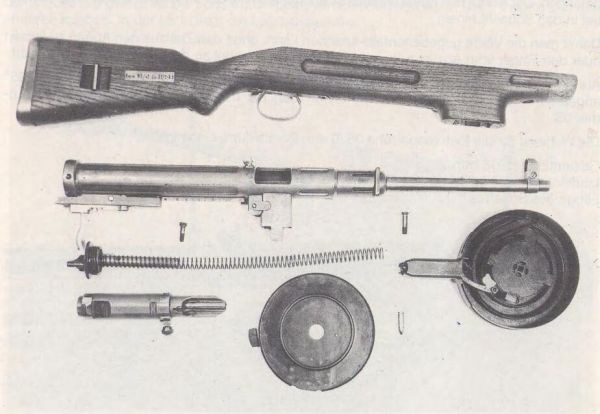
The wooden stock of the MP SS 42 submachine gun is very similar to that of the 98k, including the stock base and the shoulder strap ring. However, there is a protruding magazine well at the magazine position, which helps to secure the magazine and provides a place for left-handed holding. The weapon fires 9x19mm Parabellum pistol rounds, the same as those of the MP40. It is said to adopt a semi-free recoil mechanism, with the ejection port located on the right side of the receiver, and the flip-type sight has two positions.
The protrusion at the tail end of the receiver is the speed control lever for the machine gun. There are three positions for adjustment, namely safety, semi-automatic and fully automatic. It is said that these were specifically requested by the SS. The submachine gun can be fed with either a box magazine or a 64-round drum magazine. The release button for the magazine is located on the magazine itself, and is similar in position to that of the MP40 magazine release button. The gun shown in the picture has the inscription “Waffenwerke Brünn A.G.” and “V-1235”, as well as the weapon’s serial number 08.
So I think it should have two versions, one with 32 rounds and the other with 64 rounds.
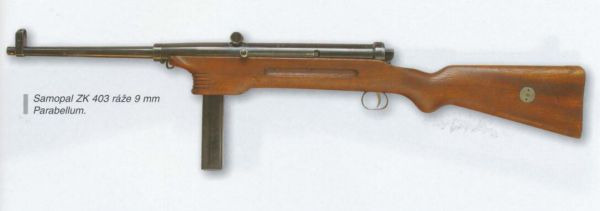
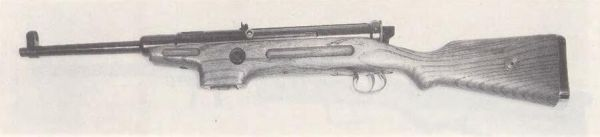
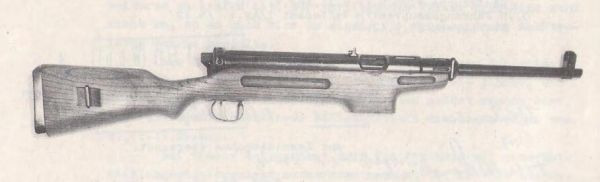
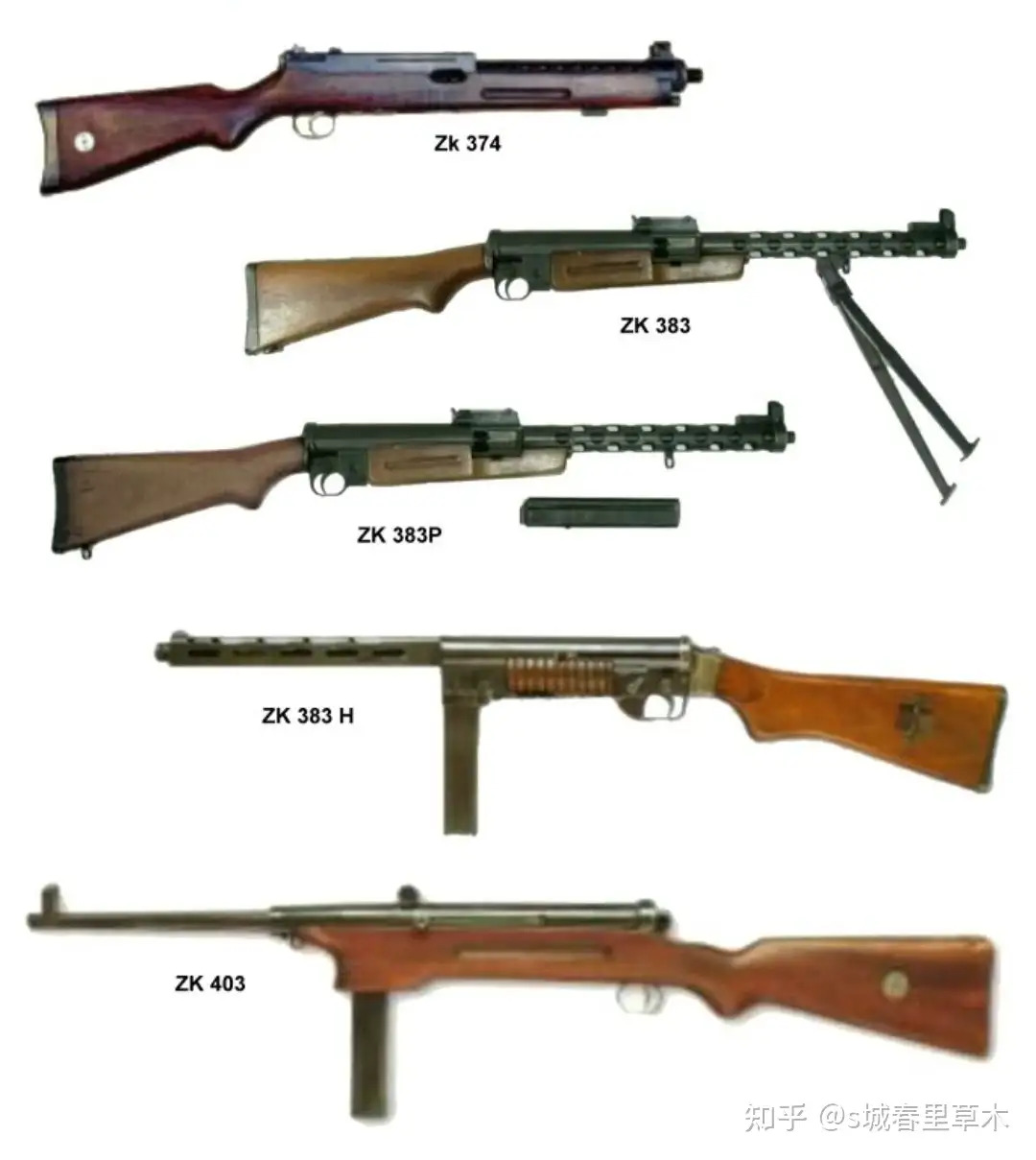
When it comes to the gun designers of Czechoslovakia, the Kucik brothers, Josef Kucik and František Kucik, must be mentioned. Before and during World War II, these two legendary gun designers oversaw the design of numerous light weapons, with their model numbers all beginning with “ZK”, meaning Kucik Arsenal (Zbrojovka Koucký). However, due to the country’s fall, most of the designs by the Kucik brothers were not put into use. Today, we are going to introduce such a submachine gun, the ZK-403.
In 1940, the Kuzki brothers designed a submachine gun called ZK-403, which used a 9mm Parabellum caliber instead of the Czech-style 9mm Browning short round. Since Czechoslovakia had already fallen, the design of the ZK-403 did not take into account the use by the Czech army but only considered export. The ZK-403 was showcased in Spain, but it did not receive much attention and the weapon never moved beyond the prototype stage.
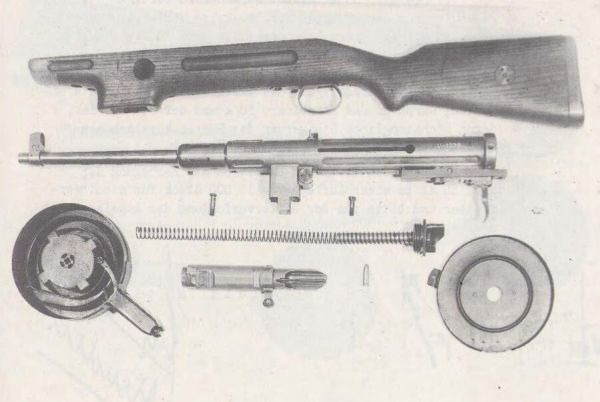
However, the ZK-403 was later targeted by the SS. The SS was a key force of the German army during World War II. After occupying Czechoslovakia, the SS took control of the Brno Arsenal in Czechoslovakia and obtained various types of new Czech light weapons as well as sample guns. Some of them were even more superior in performance to the current equipment of the German army. Therefore, the SS tried every means to make them their own, and successful examples include the M SS 41 anti-tank rifle, etc.The disassembly diagram of MP SS 42 and the disassembly diagram of the drum magazine
On February 18, 1942, Heinrich Gattner, who was the director of the Central Office of the SS at that time, sent a report to the Army Ordnance Office Company. The report discussed some issues of the MP40 submachine gun on the battlefield. It mentioned that the MP40 was an excellent close-range weapon under clear weather conditions. However, due to the large slot on the pull handle, in damp and muddy environments, or when crawling forward, debris could easily enter the magazine of the MP40, affecting the reliability of the weapon. Additionally, the wall of the magazine of the MP40 was too thin, and after being bumped, it would affect the movement of the bolt. These problems were rarely encountered in the MP35 submachine gun, and the SS equipped a small number of MP35s.
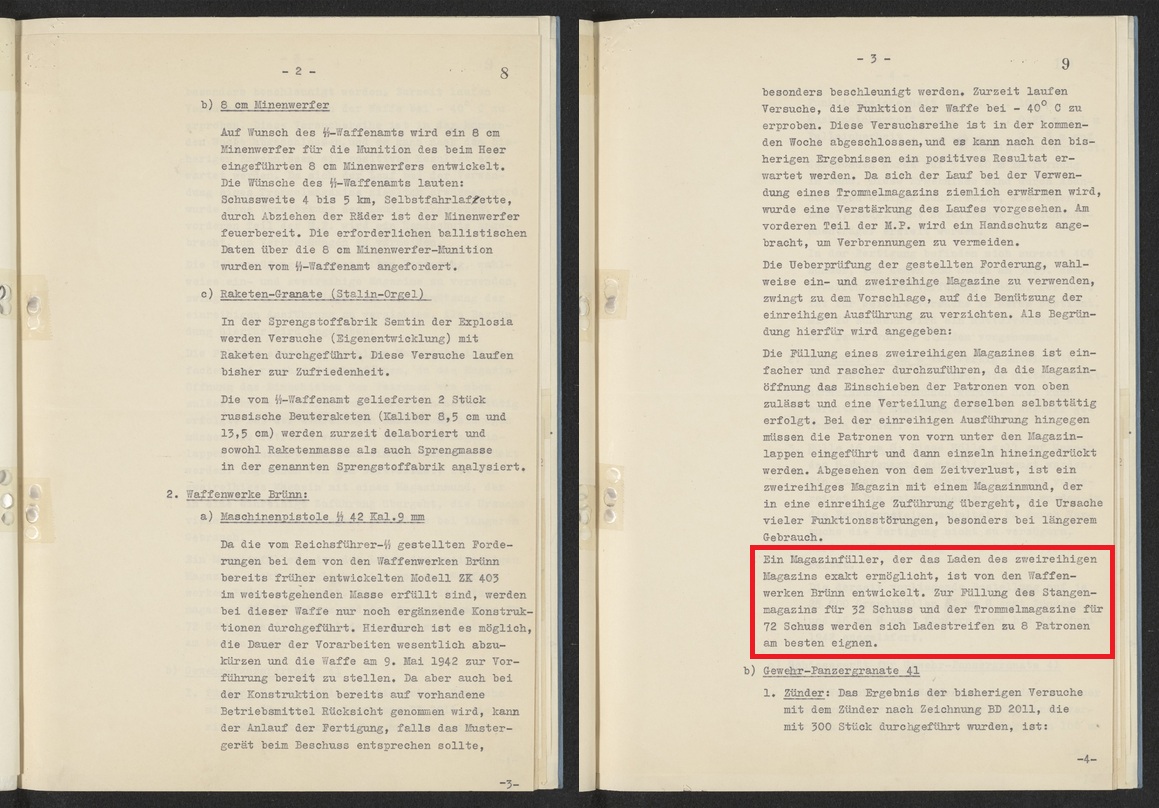
From this report, we can see that the SS had already become dissatisfied with the MP40. Therefore, on March 20, 1942, the SS decided to manufacture a new submachine gun at the Brno Arsenal in Czechoslovakia. On June 4, both the Czechoslovak Arsenal and the Brno Arsenal sent a document to the SS, reporting on the company’s development. It was in this report that the name MP SS 42 first appeared, which was also known as the ZK-403 submachine gun.
Shortly afterwards, the Břeclav Arsenal submitted a prototype of the ZK-403 submachine gun to the SS for testing and adoption of this weapon. However, unexpected complications arose at this point. Since the adoption of military equipment required approval from the Heereswaffenamt (Army Armament Office), the SS directly bypassed the Army Armament Office when adopting the new submachine gun. The latter was very angry about this and refused to approve the SS’s new submachine gun, and reported the matter to the Minister of Armaments and Ammunition of the Reich. On August 28, 1942, the Minister of Armaments and Ammunition convened a meeting of all parties to attempt to reach a settlement on this matter. At the meeting, reasons were given for not allowing the SS to be equipped with the new submachine gun, but the reasons cited were all very weak.
The Army Ordnance Bureau acknowledged that there were reliability issues with the MP40, but mainly caused by the magazine. The MP SS 42 was not approved because it used a wooden stock. Although the wood provides a more comfortable grip and good ergonomics, frontline soldiers are all equipped with gloves, so the wood was unnecessary. In fact, soldiers’ gloves are prone to damage and loss, and this can be confirmed by the photos sent back from the front line. The report also mentioned the development of the Mkb assault rifle, so the MP SS 42 could not be approved. The decision to develop an assault rifle was correct, but this was a long time later, and the final result was the StG-44. Another reason for rejecting the MP SS 42 submachine gun was its excessive length, while the length of the StG-44 was similar to it.The disassembly diagram of MP SS 42 and the disassembly diagram of the drum magazine
In any case, the MP SS 42 project had to be terminated, simply because it was not what the Army Ordnance Bureau requested to develop. The attitude of the Army Ordnance Bureau was very clear: I admit that I have acknowledged the shortcomings of the MP40, but I will not approve your submachine gun. This is typical bureaucratic interference. In fact, similar difficulties were encountered during the manufacturing of the M SS 41 anti-tank rifle. The open and covert struggles between these two institutions - the Army Ordnance Bureau and the SS Armament Office - have been ongoing for a long time.
One plan failed, and another was devised. The reliability issue with the MP40’s magazine was acknowledged by the Army Ordnance Bureau. Reports from the front line also indicated that soldiers complained that the 32-round magazine was too small and struggled to handle the 71-round drum magazine of the Soviet PPSh-41 submachine gun. The MP SS 42, on the other hand, could use a 64-round drum magazine for reloading, and its ammunition capacity could rival that of the PPSh-41. The SS forces were preparing to take advantage of this advantage once again.
First, on September 13, 1942, the SS Viking Division boasted in their report about various Soviet light weapons and suggested replacing some of the equipment in the German army. Undoubtedly, this was a veiled reference to the MP40 and MP SS 42. On October 12, the SS again reported to the Army Armament Bureau, suggesting to replicate the PPSh-41 submachine gun. However, the Army Armament Bureau maintained its usual attitude. I admit all the shortcomings you mentioned about the MP40, but the PPSh-41 is no better either. They rejected this suggestion. And at the end of the report, in a very sarcastic tone, they “thanked” the SS (with an underline below “SS”) for their suggestion.
Subsequently, the Party-SS Armament Office contacted Jüttner, the director of the Party-SS Command General Office, reporting on the situation regarding MP SS 42 and attempting to force the Army Armament Bureau to comply with the order through a high-level directive, in order to equip the MP SS 42. After understanding the wishes of the troops, Jüttner contacted Minister Speer of the Reich on December 14, 1942, hoping to directly issue an order to produce 10,000 MP SS 42s.
Although Minister Speller was already in a position of considerable power and influence, he was not very knowledgeable about weapons. Therefore, he consulted the opinion of the Army Ordnance Bureau. As could be expected, the MP SS 42 was rejected once again. The plan to force the Army Ordnance Bureau to comply by exerting pressure from the top also failed.
On April 12, 1943, four months later, Minister Schaper of the Reich wrote a reply to Jochtern, stating that after investigation and consultation, he believed that producing the MP SS 42 was not reasonable. However, the reasons given were completely different from those previously provided by the Army Ordnance Bureau. The first reason was that the MP SS 42 used the same ammunition as the MP40, with no substantial performance improvement; the second reason was that the production capacity of the Brno Arsenal was damaged, and it needed to give way to other “higher-level requirements”.
The last card played by the SS was all but blocked by the Army Ordnance Bureau. The MP SS 42 was ultimately not equipped for the troops and only a few prototype guns were produced. Among them, the ones with serial numbers 08 and 09 are preserved at the Military History Institute in Brno, Czech Republic.
So I think it should have two versions, one with 32 rounds and the other with 64 rounds.
Do you hope to see this kind of weapon included in our game?
In particular, the Germans currently do not have enough submachine guns.
- Yes(32)
- Yes(64)
- Yes(all!)
- No