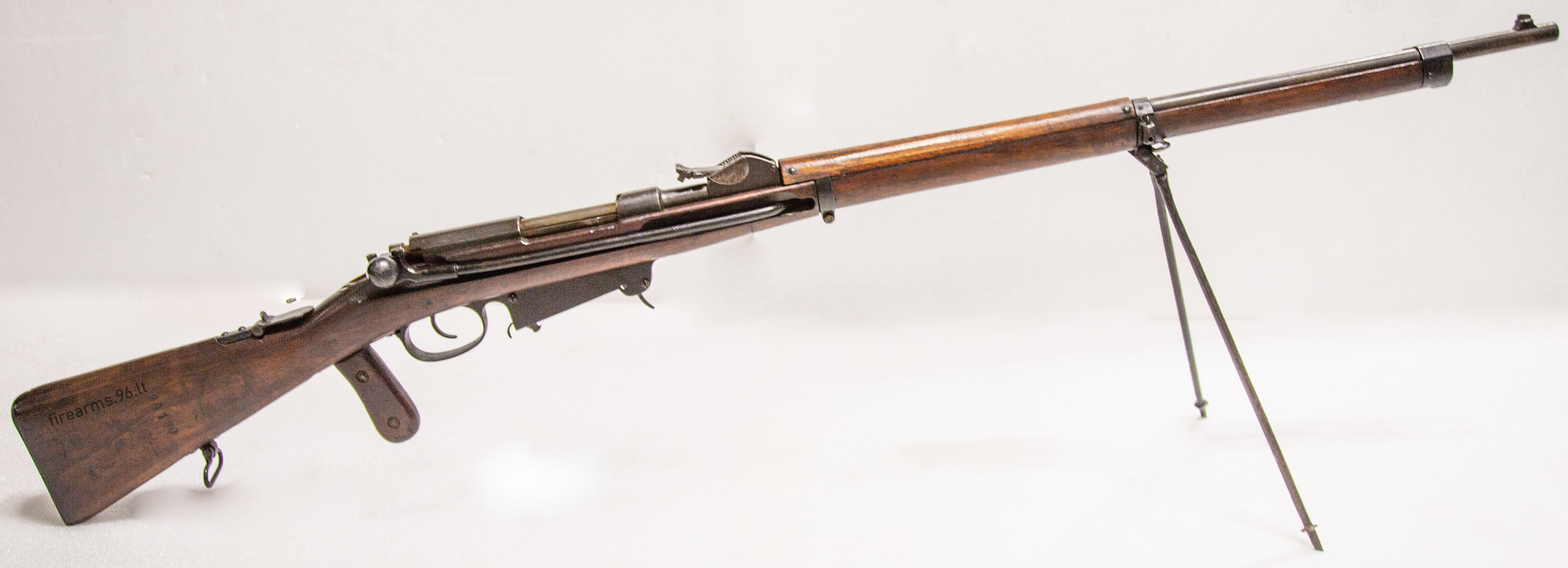
During WW1, Bulgaria converted 1300 M1888/90 rifles converted to semi-autos, most of them were destroyed after the war. It’s chambered in 8×50mmR and fed with 20 round detachable magazine.
The reason I suggest this rifle is because German don’t have any high-damage semi-automatic rifles like the Farquhar-Hill M1918 (16.8 damage) .Mannlicher 1888/90’s barrel length is 765 mm, which is much longer than the Mondragon M1908(577mm), so give it higher damage would be reasonable.
Big +1
Genuinely convincing argument here. The barrel-length logic is sound — a 765mm barrel versus the Mondragón’s 577mm absolutely justifies a meaningful damage bump, and combined with the 20-round detachable mag, it’d give Germany a semi-auto that actually competes with the 03 in terms of stopping power
I dont know if this helps, but these are the characteristics based on the Mannlicher 1888/90
I also found something interesting:
Unusual Mannlicher 1888 self-loading conversion
This rifle was an attempt to convert the Austrian Mannlicher 1888/90 bolt-action rifle into an automatic gun. The provenance is entirely unknown and there are no markings to indicate who the conversion was done by, or when it was made. It is highly unlikely to be a product of the ŒWG factory in Steyr, or anything to do with Ferdinand Mannlicher; it has also been suggested that it originates from the Netherlands, although according to the Dutch expert Bas Martens, this is not the case. The Mannlicher 1888 rifle was so widely used around the world that it is difficult to associate this gun with any one country. It may be Bulgarian, Greek, Russian, or even Chinese in origin. The only known record of a similar Mannlicher 1888 conversion was a Polish gas-operated design that appeared in the 1920s, known as the DOG rifle, although that was a far more competently-made weapon than the rifle shown here.
A somewhat likely candidate for the designer of this conversion is the Russian engineer Yasnikov who was the Master Armourer at the Tula Arms Plant during World War I. Yasnikov designed a gas-operated conversion of the Mannlicher 1895 rifle which appears to have been similar in design to this Mannlicher 1888/90 conversion, albeit a little more refined. It is possible that the 1888/90 conversion was an earlier and more rudimentary attempt by Yasnikov to develop a Mannlicher-based automatic rifle.
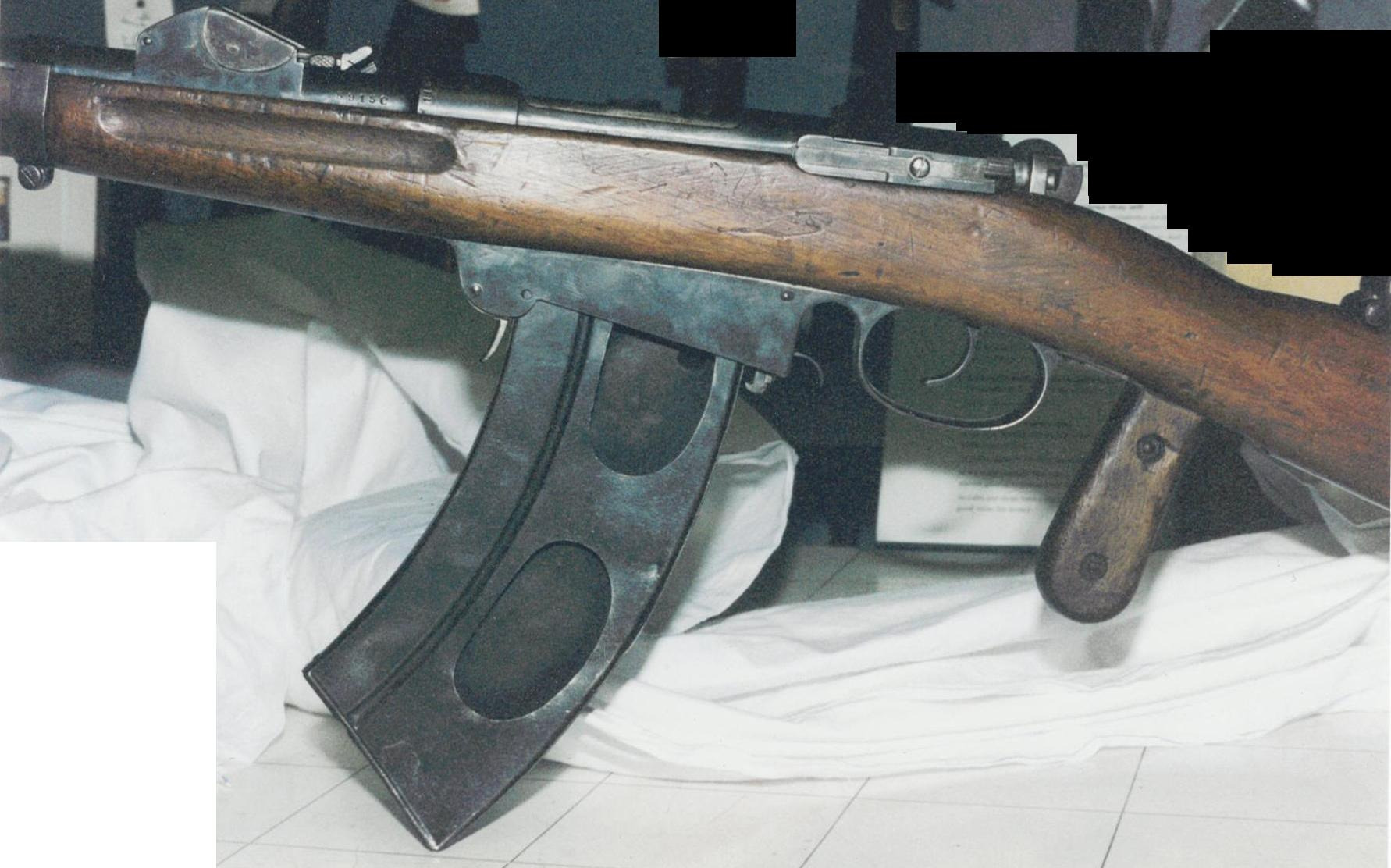
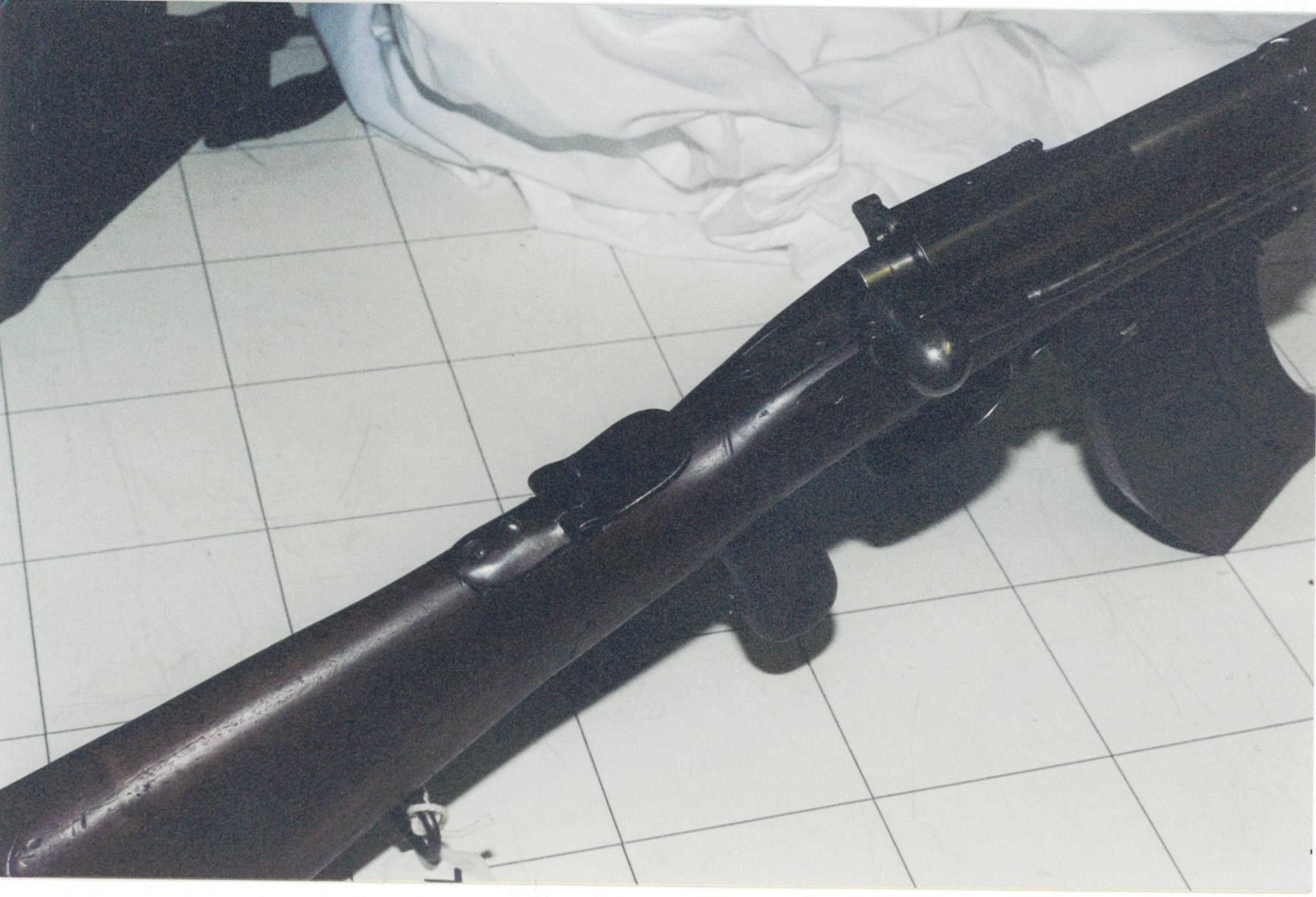
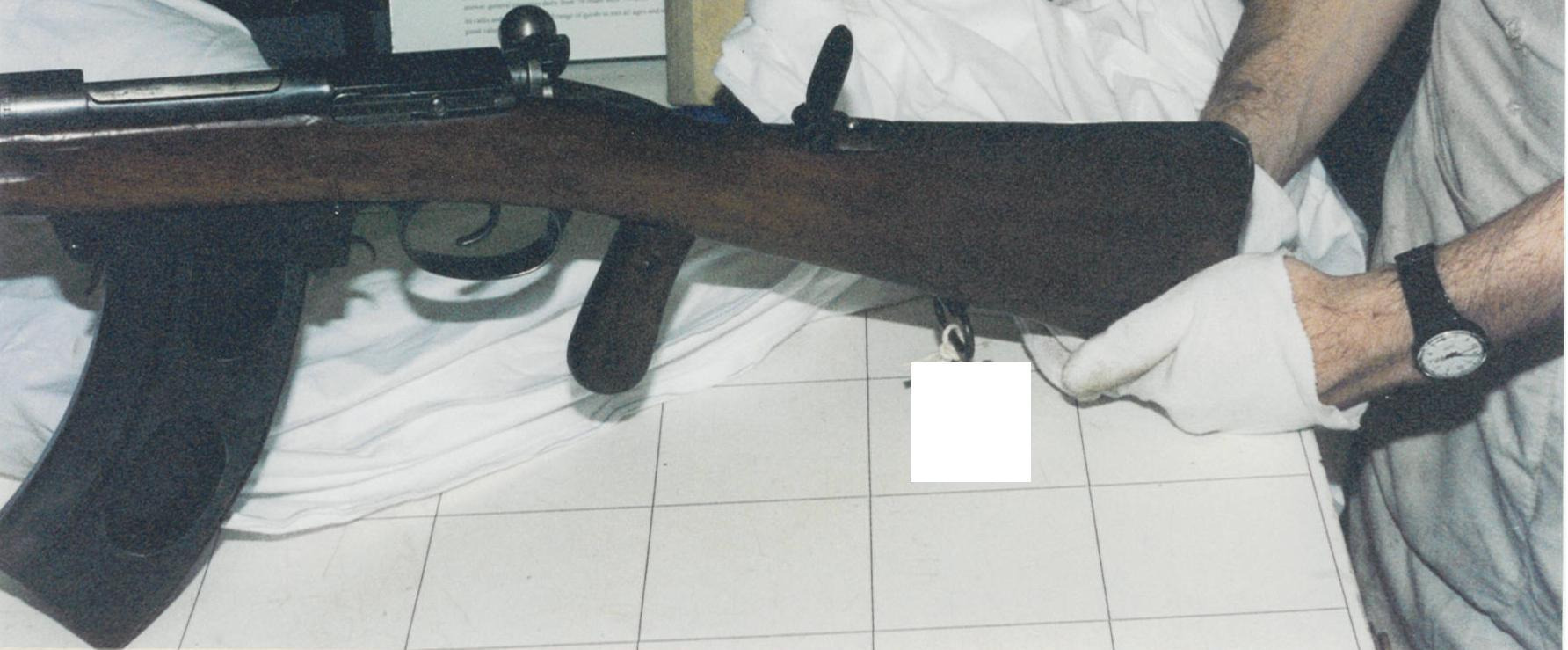
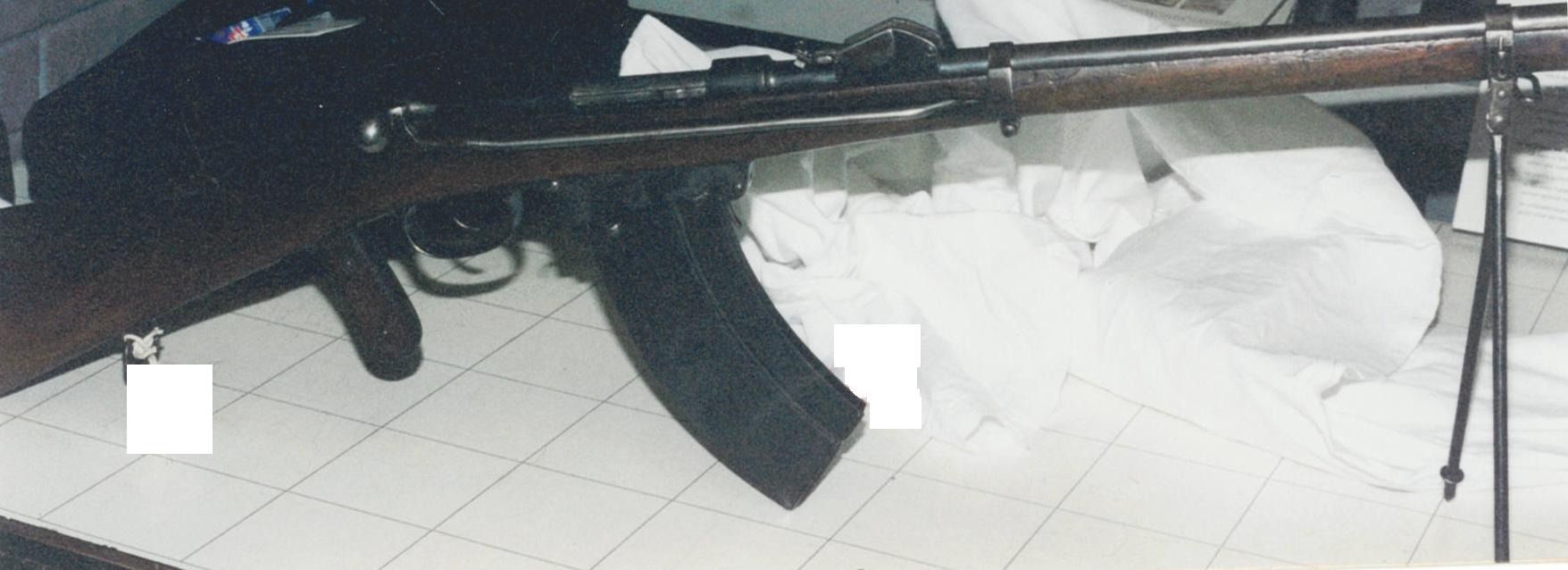
This conversion was almost certainly made by hand, as the standard of the added components, such as the gas piston and bipod, are poor. The bipod does not stow and simply hangs on a loose hinge underneath the barrel. It is very crudely made from cast metal. The gas tube recedes into the fore-end of the stock and reaches to the barrel. The exposed section of the gas tube houses the piston which engages the bolt. There appear to be no extra frills to this design and it is one of the most basic gas-operated conversions I have ever seen. The stock has been fitted with a small pistol grip which, while quite unergonomic, is a sensible feature as it removes the user’s hand from the stock and prevents their thumb from being snagged by the bolt as it reciprocates. Additionally, a rather flimsy stop plate has been screwed to the cheek rest, which hinges up to protect the user’s face from being struck by the bolt - although the structural integrity of this plate is somewhat questionable.
The floor plate of the Mannlicher magazine has been removed and the hollowed-out magazine has been reconfigured to act as a feed housing, taking a rudimentary extended magazine (not pictured) which appears to have been fashioned from an existing magazine, probably from a light machine gun or automatic rifle. The magazine has two large, circular cut-outs on the left side which allow the user to check the cartridges as they sit in the magazine, but also make the bullets susceptible to dirt and fouling. The addition of an extended magazine capacity and bipod may imply that this weapon is designed to fire automatically, like a machine gun.
Hopefully more information about this rare conversion will come to light in the future.