We all known that during WW1 and WW2 soldiers were allowed to buy and carry there own firearms. Not only that but war trophies were commonly taken, German and Japanese handguns were prized possessions. Though famously one soldier sent an entire jeep home piece by piece.
Made humorous when one mash soldier threatened to eat said same model of jeep in an attempt to get out of the army. Patton was one famous soldier who carried multiple guns including his killing Magnum Registered.
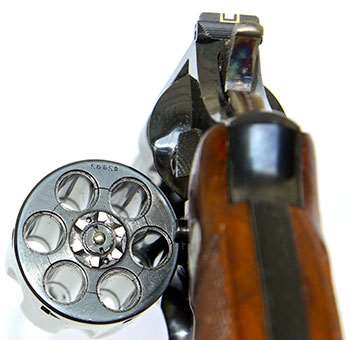
The Magnum should be a slow firing powerful gun perhaps forcing the soldier to shoot two handed. The gun of course would not use moon or half moon clips but be loaded one bullet at a time. on the other hand it should be a one hit kill even to the body. Do you feel lucky punk, well do you.
- Magnum registered Long
- Magnum Registered Short
- No
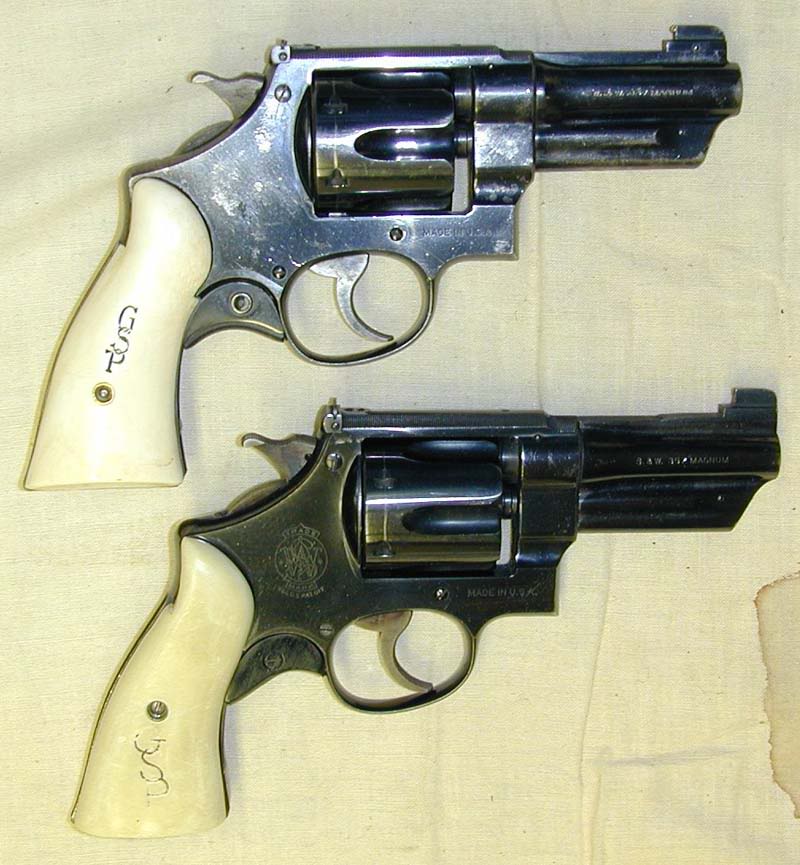
Although popularly remembered as the “two-gun” General, Patton actually seldom wore both of his “carrying guns” together. And, he owned several personal pistols aside from the two usually photographed on him in WWII. Further, his guns were usually ivory handled, NEVER pearl, as they were sometimes mistaken. The handguns most associated with him, and which are now in the Patton Collection of the West Point Museum, are a .45 Long Colt Single Action revolver, 1873 Army Model, and a .357 Magnum Smith & Wesson revolver.
- tt
- bp
- event
- premium
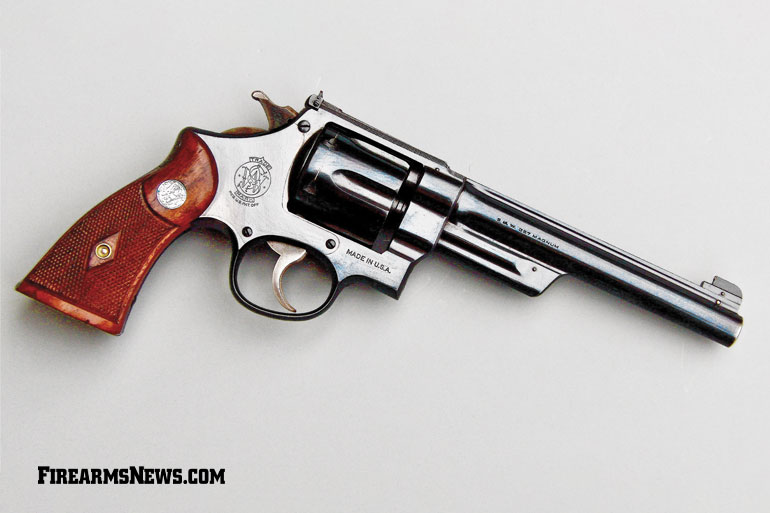
The Smith & Wesson Registered Magnum is the introduced in 1935.
Introduction & Production: Produced from 1935 to 1939 (with a total of 5,524 to 5,500 units made), before it was standardized and later renamed the Smith & Wesson Model 27 in 1957.
Each revolver was custom-ordered and hand-fitted on a large carbon steel N-frame Buyers could select barrel lengths ranging from 3.5" to 8.75", different finishes (blued or nickel-plated), custom sights, grips, and trigger pulls. Registration Certificat: Every gun came with a unique registration number stamped on the frame and a hand-signed certificate from Douglas Wesson guaranteeing the firearm.
It cost $60 during the Great Depression (an expensive luxury at the time) and is now a rare collector’s item.