Japan’s allies carrying new weapons: Thais using Type 66 semi-automatic rifles
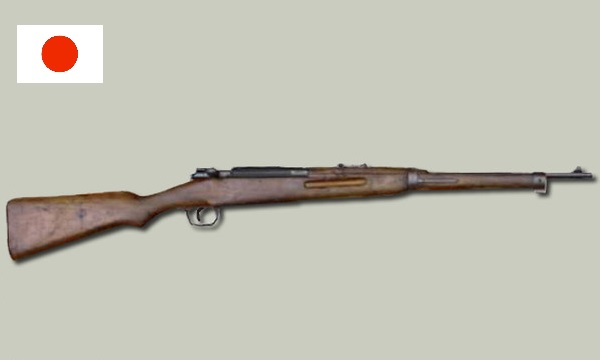
The Type 66 rifle was a bolt-action rifle produced by Japan for Thailand in 1923.
When King Rama VI succeeded King Jula隆功 and took the throne, the Thai military decided to update the light weapons. Rama VI became the highest decision-maker for this matter. Rama VI received British-style education and hoped to standardize all the rifles to the British.303 caliber. He indeed purchased 10,000.303 rifles for some of his elite troops. However, the Thai generals did not think this way. Because of this, the original 8mm system would have to be completely replaced to ensure the uniformity of ammunition. Later, Rama VI came into contact with a Japanese company that exported the Type 38 rifles (modified to 8mm caliber). The 8mm Type 38 rifle cartridges were cheaper than the Enfield rifle cartridges. The king decided to order 50,000 rifles firing this type of cartridge in 1923, which were called the 66 Type Semi-automatic Rifles (Thai calendar year 2466). That is to say, this was a Japanese rifle adopted by the Thai military, firing 8×52mmR rifle cartridges.
Interestingly, although the style of the 66-type rifle and the 38-type rifle is very similar, there are almost no interchangeable parts between the two, not even screws can be interchanged due to the different pitch. The front sight and the barrel are integrated, while the rear sight is in the style of a Mauser rifle rather than a Japanese rifle. The 66-type rifle adopts a snap-fit mechanism similar to the Japanese 30 bayonet, but in reality, the 30 bayonet cannot be used because the caliber of the 66-type rifle is larger than that of the 38-type rifle.
The final production of the 50,000 66-type rifles ordered took five years. It was not fully completed until 1928. The reason for this slow production remains unknown. It might have been caused by the Thai government’s desire for installment payments, or it could have been due to the damage to the equipment of the relevant factories caused by the 1923 Tokyo earthquake.
The 66-type rifle is extremely rare in the United States today because it was not exported by Thailand. It wasn’t until the 1970s that it was available in the US, and in 1968, the GCA reduced the import of military weapons. As a result, most of the 66-type rifles ended up in Europe and Commonwealth countries rather than in the United States.
The Type 66 rifle adopts a rotating and rear-pulled bolt-action operating mechanism. It has a barrel caliber of 8mm and fires 8×52mmR rifle rounds. The overall length of the rifle is 1050mm and it can hold 5 rounds of ammunition.
| Type 66 Semi-Automatic Rifle | Details |
|---|---|
| Originating Country | Japan |
| Caliber | 8mm |
| Projectile Type | 8×52mmR Rifle Bullet |
| Overall Length | 1050mm |
| Barrel Length | ? |
| Overall Weight | ? |
| Capacity | 5 rounds |
| Automatic Mode | Pull the bolt after rotation |
| Equipped For | Army |
So, did the Thais really participate in our battle? The answer is, indeed, yes.
In 1943, Thailand followed Japan in attacking Burma and attacking the Chinese Expeditionary Force. The most elite 1st and 3rd Divisions of the Thai army, led by Japanese Major General Moriyasu Seiji (29th Military Academy, 41st Military College, and then the Chief of Staff of the Thai Garrison Forces), attacked the 93rd Division of the Republic of China Army stationed in Jingdong. However, the 93rd Division, led by Lieutenant General Lu Guoquan (2nd Huangpu Military Academy, 2nd Military College), was able to defeat the Thai army with one division against two, maintaining an advantage. Within a day, with the strength of a single division, it defeated the two divisions of the Thai army and killed over 300 Thai soldiers, capturing a battalion commander of the Thai army. After the Thai army suffered a crushing defeat, they refused to accept defeat and, despite losing many troops and soldiers for over a month, still failed to capture the 93rd Division’s position in Burma, Jingdong. In May 1943, Thailand finally used its trump card, which was the “Elephant Troops”. These elephants were not real elephants but Japanese-made tanks. Finally, under the impact of dozens of Japanese-made tanks, the Thai army finally broke through the defense line of the 93rd Division, which was equipped with only machine guns and ordinary rifles, and drove the 93rd Division back to within the Chinese border.
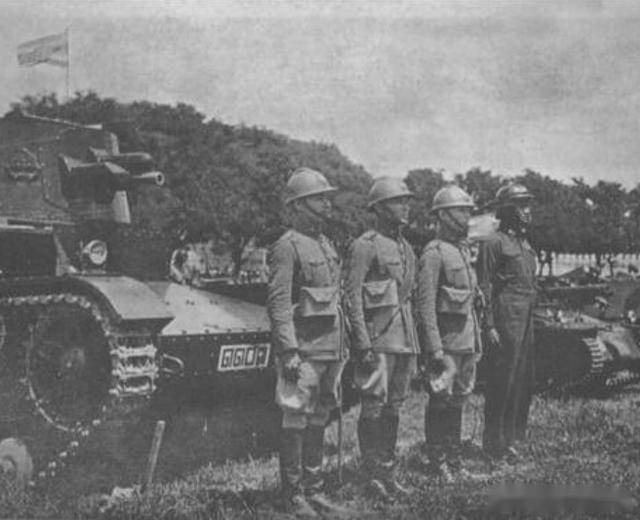
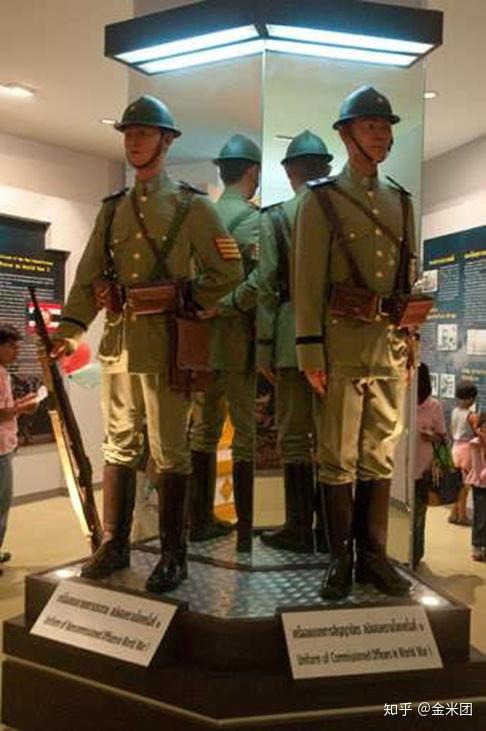
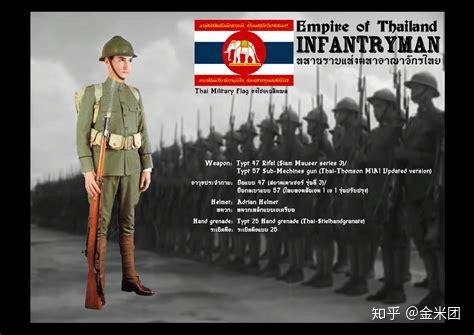
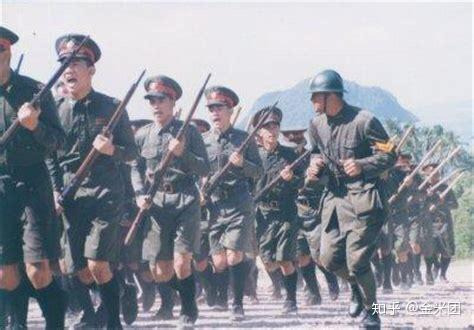
So, do you want this Thai team, armed with such weapons, to join our battlefield as an ally of the Japanese?
- Yes
- No