Hello, guys!
I’m looking for some info about 8 NRA army of China to suggest it as an even squad. Could you help me with? Which books or docs can help to find out their participation with a Red army, ammunition and arms?
Hello, guys!
I’m looking for some info about 8 NRA army of China to suggest it as an even squad. Could you help me with? Which books or docs can help to find out their participation with a Red army, ammunition and arms?
You said I’m not sleepy at all. I will definitely try to look for it for you. But why does this army name sound like it’s not from the Communist Party? It sounds like it’s the other one - the enemy force of the Communists, the Nationalist Party’s name. Uh, do you want me to mark a bunch of links? If I really send out a lot of links, it might take up too much space, right?
I think if you choose a team, there are actually many heroic teams to choose from. It doesn’t matter which one you pick. As long as you have participated in battles in the Northeast region, you can use them. The key point is: What weapons is this team going to equip?
Low-level? Or high-level? Or maybe some special equipment?
For instance, a red spear
Or perhaps some special exclusive weapons like a big cleaver
Or dual-wielding two C96s as the main weapons
While also equipping a 150% increased movement speed “Ghost Head Cleaver”
I guarantee that everyone will go crazy buying it.
If it’s an ordinary common weapon, then the weapons of various countries will have some traces of appearing in China to some extent.
I’ll take another look. The literature is quite fragmented, so I need to select high-quality sources—many materials are either unavailable offline or may be subject to non-disclosure agreements, making them unsuitable for casual use.
Reading about this period of history is truly distressing; the struggle of the Northeast Anti-Japanese United Army was extremely arduous. Of the 30,000 troops, only less than 1,000 managed to flee to the Soviet Union after just two short years. The Kuomintang’s policy of non-resistance was utterly despicable and foolish beyond measure.
Regarding the unit with an “8” in its designation that you’re curious about, it did exist: during the Soviet Union’s August Storm offensive against Japan in 1945, the unit cooperating with the Soviet army was the Northeast Anti-Japanese United Army Training Brigade, which was externally designated as the 88th Independent Infantry Brigade of the Soviet Far Eastern Red Banner Army. Established in August 1942, this brigade was led by Brigade Commander Zhou Baozhong and Political Commissar Li Zhaolin, with a total strength of over 2,000 personnel. Though formally under Soviet command, its core was composed of Chinese personnel, holding significant historical significance. After the Soviet Union declared war on Japan, the brigade marched back to Northeast China alongside the Soviet army to jointly combat the Japanese Kwantung Army.
In terms of weaponry, the Northeast Anti-Japanese United Army was equipped with the PPSh-41 submachine gun but most likely did not field the SVT series rifles in bulk. Other equipment details are as follows:
Previously, the redemption cards for the Thompson Squad sold out quickly, fully demonstrating players’ love and enthusiasm for Chinese-themed squads. I remember that when Company of Heroes 2 released the Nanjing DLC, it spread rapidly across China, with countless players purchasing it to show their support. Currently, World War II games lack sufficient representation of the Chinese battlefield, a grievance that weighs heavily on Chinese players. The casualty figures of Chinese military and civilians during the war are irrefutable facts, and this history of resistance should not be overlooked. If a high-tier squad based on the Northeast Anti-Japanese United Army’s 88th Brigade is launched in future games, it will undoubtedly spark a wave of purchases.
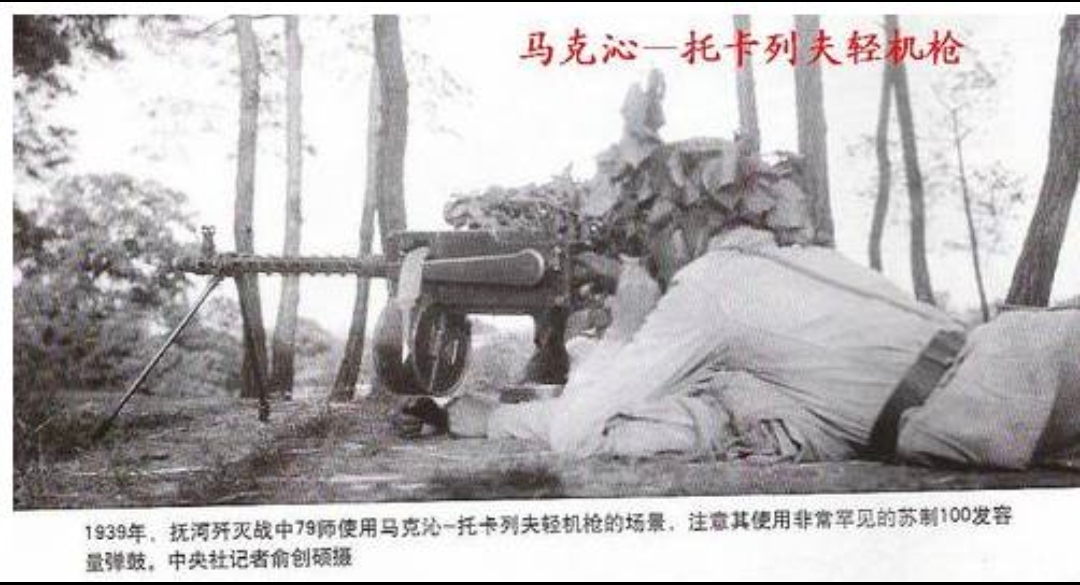
Maxim–Tokarev Light Machine Gun
In 1939, during the Fubei Annihilation Campaign, the 79th Division employed the Maxim–Tokarev light machine gun. Notably, the weapon was fitted with a highly rare Soviet-made 100-round drum magazine. Photograph by Yu Chuangshuo, central news agency correspondent.
No no, this is exactly friendly side corps, chinese people army. 八路军
I`m realy excited about Dadao Dui corps - enjoy its opera in Chinese national theatre.
If you find some info about general Zeng Ke Lin in Mukden in sept 1945 - I`m owe you!
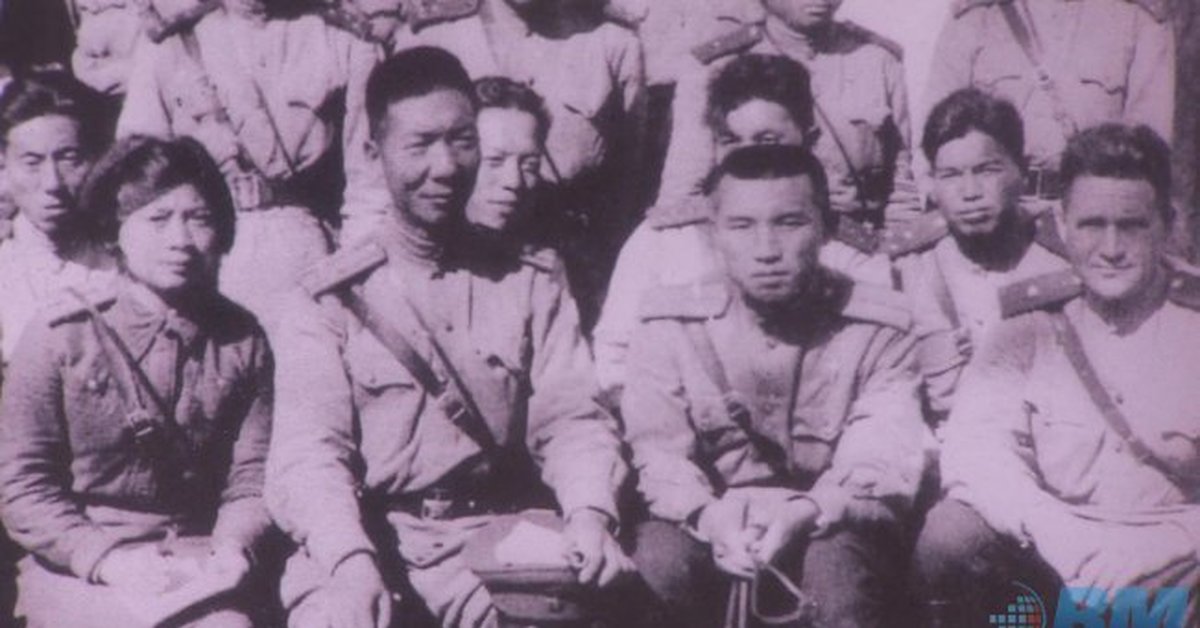
Fengtian, which is now Shenyang, witnessed General Zeng Kechlin’s activities here in September 1945. These activities were a crucial part of his advance into Northeast China and had a significant impact on the Communist Party of China’s strategy for governing Northeast China. The details are as follows: 1. Encounter setbacks and successful negotiations: On September 5th, Zeng Kechlin led his troops to reach Shenyang. Initially, the Soviet troops stationed in Shenyang used the “Sino-Soviet Treaty of Friendship and Alliance” as an excuse and did not recognize the legitimacy of this military unit due to the absence of military rank markings. They did not allow them to get off the vehicles. Subsequently, Zeng Kechlin repeatedly negotiated with the Shenyang Garrison Command of the Soviet Army. The deputy political commissar Tang Kai exposed his Soviet tattoo of the sickle, hammer, and five-pointed star on his arm to identify himself, and finally the Soviet Army reluctantly allowed the troops to get off the vehicles. However, they required them to first stay 30 kilometers away from Shenyang at Sujiatun. On September 7th, the commander of the Sixth Army Group of the Soviet troops stationed in Shenyang, General Kravchikov, and others also hosted a banquet for Zeng Kechlin and others, and both sides engaged in friendly talks. After that, Zeng Kechlin’s troops officially implemented military control over Shenyang. 2. Reorganizing the Japanese Air Force Squadron: On that month, Zeng Kechlin’s troops learned that the Japanese air force commander, Lin Miyilang, with 300 people and over 40 aircraft, was fleeing south. He immediately sent a negotiation team to persuade him to surrender, and finally successfully persuaded Lin Miyilang to disarm. This surrender resulted in the seizure of 46 various types of aircraft and the capture of 300 people including pilots, mechanics, and other relevant personnel, laying the groundwork for the subsequent construction of our military aviation forces. 3. Expanding the army and taking over surrounding areas: After entering Shenyang, Zeng Kechlin, centering on Shenyang, divided his troops into multiple routes to take over multiple areas in Liaoning and vigorously expanded the army. He established four security battalions in the Feixi District of Shenyang and also formed multiple brigades, tank regiments, and student corps in surrounding areas such as Benxi, Jinzhou, and Liaoyang. The size of his troops rapidly expanded under his leadership. 4. Reporting to Yan’an to promote strategic decisions: On September 14th, Zeng Kechlin took a Soviet military aircraft to Yan’an. The next day, the Central Political Bureau listened to his detailed report on the situation in Northeast China. This report enabled the Central Committee to understand the actual situation in Northeast China and directly pushed for the establishment of the Northeast Central Bureau and the determination of the strategic policy of “advancing northward and defending southward,” laying the foundation for subsequent efforts to open up the Northeast base area.
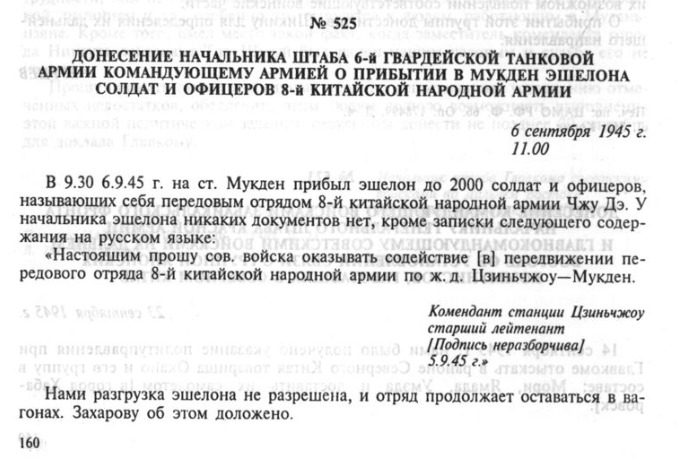
REPORT BY THE CHIEF OF STAFF OF THE 6TH GUARDS TANK ARMY TO THE ARMY COMMANDER ON THE ARRIVAL IN MUKDEN OF A TRAIN WITH SOLDIERS AND OFFICERS OF THE 8TH CHINESE PEOPLE’S ARMY
6 September 1945
11:00 hrs
At 9:30-9:45 hrs, a train carrying up to 2,000 soldiers and officers arrived at Mukden station, calling themselves the advance detachment of the 8th Chinese People’s Army of Zhu De. The train commander has no documents except a note in Russian with the following content:
"This is to request the Soviet troops to assist in the movement of the advance detachment of the 8th Chinese People’s Army along the Jinzhou–Mukden railway.
Commandant of Jinzhou station
Senior Lieutenant
[Illegible signature]
5 September 1945"
We have not permitted the unloading of the train, and the detachment continues to remain in the railcars. Zakharov has been informed of this.
The displayed artifacts and related documents from authoritative venues such as the Chinese People’s Revolutionary Military Museum and the Eighth Route Army Taihang Memorial Hall can clearly depict the equipment situation of the Eighth Route Army during the war period. The details are as follows:
Firearms: The museum exhibits and related documents record various core firearms. For example, the homemade August 1st type horse-mounted rifle, with a short and lightweight body and a foldable trident bayonet, was suitable for guerrilla warfare and hand-to-hand combat, and is currently on display at the Military Museum; there are also replicas of the Hanyang 88-type rifle (Hanyang-made), the Czech ZB26 light machine gun (Czech-made), the civilian 24-type heavy machine gun, etc. There are also many physical objects or records of captured firearms, such as the Japanese 38-type rifle, the Taisho 11th-year light machine gun (the “crooked gun”), and others. In addition, there are also purchased 1891-type Mosin-Nagant rifles.
特别策划丨枪炮声中的胜利回响 - 中国军网
Artillery and Mortars: The Military Museum has the first 92-type infantry gun captured by the Eighth Route Army in the Pingyuankou victory, as well as the 75mm mountain gun captured by the 129th Division in the Dajiangzhuang battle, and there is a precious photo of the gun-taking hero and the gun. Regarding mortars, the museum displays the Dinglong 50mm mortar, which was a copy of Japanese equipment and improved by the Eighth Route Army, and there is also the 82mm mortar used to kill Abe Kojiro in the Huangduling battle. These equipment have corresponding battle history records in the documents.
掷弹筒:配备到战斗班的抗战利器 - 中国军网
Simple and Homemade Auxiliary Weapons: The Taihang Memorial Hall of the Eighth Route Army once exhibited early equipment such as broadswords and red cap guns, visually presenting the situation of equipment shortage in the early stage of the war. The relevant documents of the Military Museum also record that local military factories produced a large number of hand grenades, and later through technological improvements, the explosive fragments of hand grenades filled with advanced explosives increased significantly; at the same time, they also made homemade landmines and other weapons, combined with the shell-burning technology to produce ammunition, which became common equipment in guerrilla warfare.
It’s great that you were able to find the original document. What I came across was similar, but most of it was compiled by news media and not as historically detailed as yours. Historically, this general was initially denied entry but later managed to get in, moving Japanese aircraft and supplies for three days and three nights.
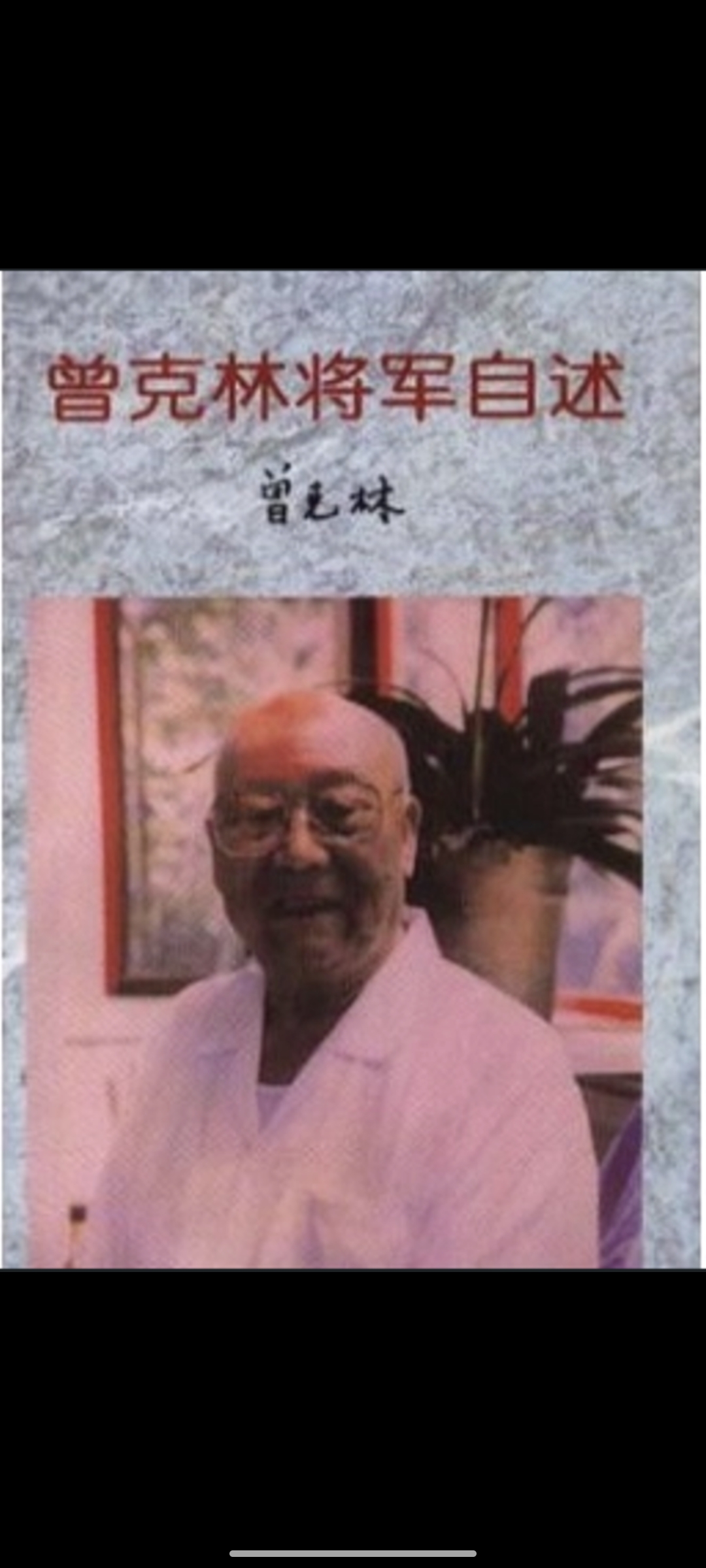
General Zeng Kelin
In 1945, when leading his troops into Northeast China, General Zeng Kelin twice faced situations where his entry was initially denied. These events are recorded in historical documents and his own accounts, as detailed below:
Additionally, after the victory in the War of Resistance against Japan in 1945, other commanders such as Yang Dezhi and Chen Geng were unable to enter the Northeast due to Nationalist forces blocking key routes. However, this resulted from changes in the military situation and the consequent suspension of advancement plans, rather than direct refusal of entry—which differs from Zeng Kelin’s experience.
I will continue searching for additional documented records.
General Zeng Kelin’s Personal Account
Published in 1997 by Liaoning People’s Publishing House
General Zeng Kelin’s Personal Account is a military memoir authored by Founding Major General Zeng Kelin, published in August 1997 by Liaoning People’s Publishing House. As part of the “Generals’ Personal Accounts Series,” the book follows a first-person narrative style, documenting the author’s military career from the Red Army era to the period after the founding of New China. It covers major historical events such as the counter-encirclement campaigns in the Central Soviet Area, the Long March, the War of Resistance Against Japan, and the Liberation War[1].
The book provides a detailed exposition of the strategic advance into Northeast China in 1945 and key historical facts regarding the reception of Japanese weapons transferred by Soviet forces[2]. It also includes vivid descriptions of the author’s personal combat experiences. The entire work spans 245 pages, is presented in a paperback format, and was originally priced at 11.50
WOW It would be exciting if somethere will be a link to it!!
Thanks! I will try to find an entire book in web
Hmm, a link? Perhaps I can look for it.
Will be very pleased, if you look for some open links of this book! Also I suppose also a make suggestion about add some 8 army squad would be properly good!
I found it! But you need to install a reader to access it — not sure if that’ll be an issue for you.
老图书–《将军自述丛书_曾克林将军自述》电子版合集 时光图书馆
This is all in Chinese, but it carries a distinct whiff of Soviet legacy.