PISTOLS
Since the beginning of the Meiji era, the Imperial Japanese Army adopted American-made Smith & Wesson revolvers, issuing them to the Imperial Guard Cavalry, transport troops, and non-commissioned officers (NCOs) of field and mountain artillery batteries. They were also issued to the NCOs and enlisted men of the Military Police (Gendarmerie), established in the 1881. The “Russian Model” was designated as the No. 1 Model Revolver, while the “American Model” was called the No. 2 Model Revolver. Smith & Wesson revolvers were also adopted by the Navy; the 1886 manual “Naval Revolver Drills” includes instructions for the No. 1 Model.
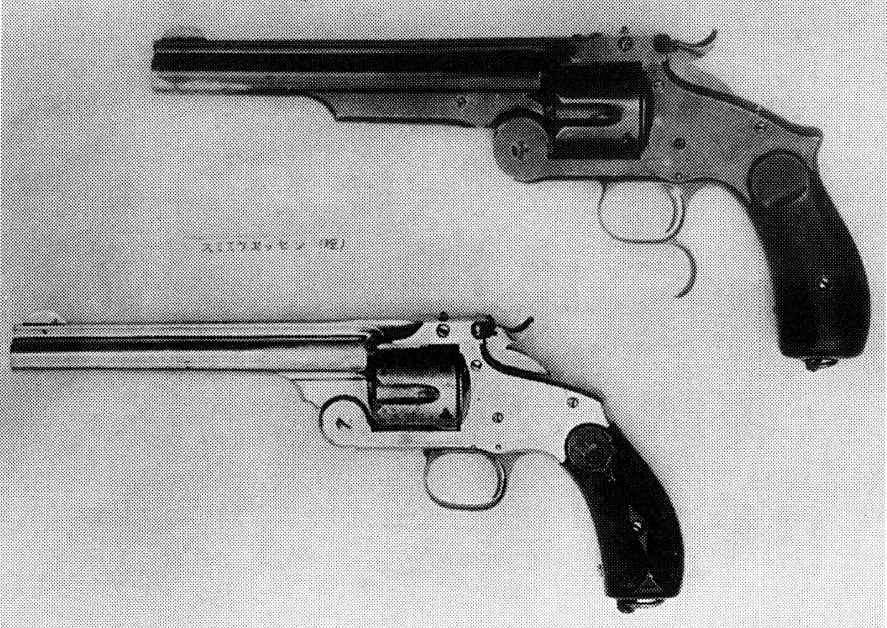
| Specification | Smith & Wesson Revolver |
|---|---|
| Caliber | 10.66 mm |
| Overall Length | 347 mm |
| Weight | 1210 g |
| Capacity | 6 rounds |
| Bullet Weight | 13.81 g |
More photos
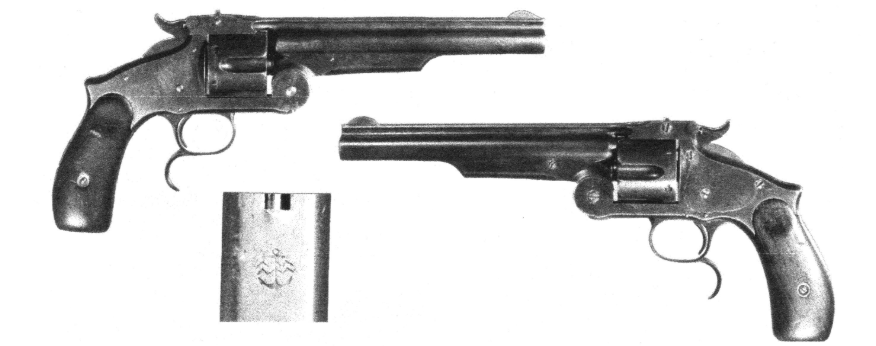
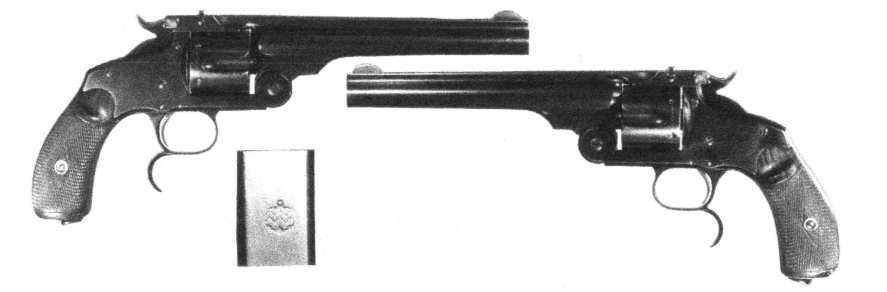
Until this point, the Japanese Army had relied entirely on American-made Smith & Wesson revolvers. However, this was contrary to the fundamental principle of weapon independence and resulted in economic losses. Consequently, plans were made to produce firearms domestically. Following research conducted at the Tokyo Artillery Arsenal starting around the 1888, a top-break six-shot revolver was designed. After testing by the Artillery Committee yielded favorable results, it was officially adopted on March 29, 1894, as the Type 26 Revolver.
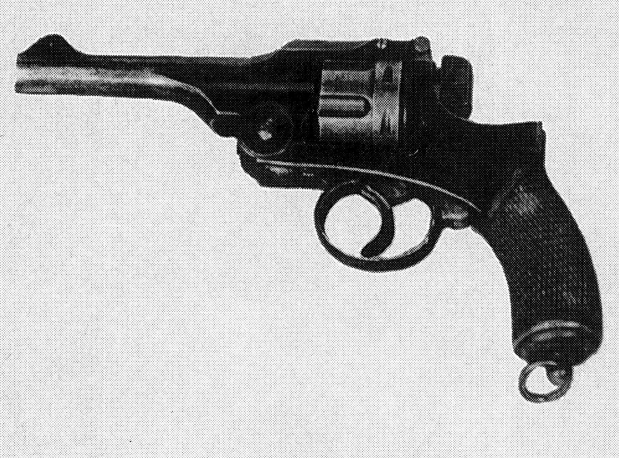
At the time, the Type 26 was a state-of-the-art model. It featured a mechanism where a six-chamber cylinder rotated in connection with the firing mechanism, aligning the chambers sequentially with the barrel. The caliber was set at 9mm. By October 1896, a blank cartridge for the Type 26 — which had been under development since 1892 — was also completed.
| Specification | Type 26 Revolver |
|---|---|
| Caliber | 9 mm |
| Overall Length | 229 mm |
| Weight | 904 g |
| Muzzle Velocity | 230 m/s |
| Capacity | 6 rounds |
| Bullet Weight | 9.8 g |
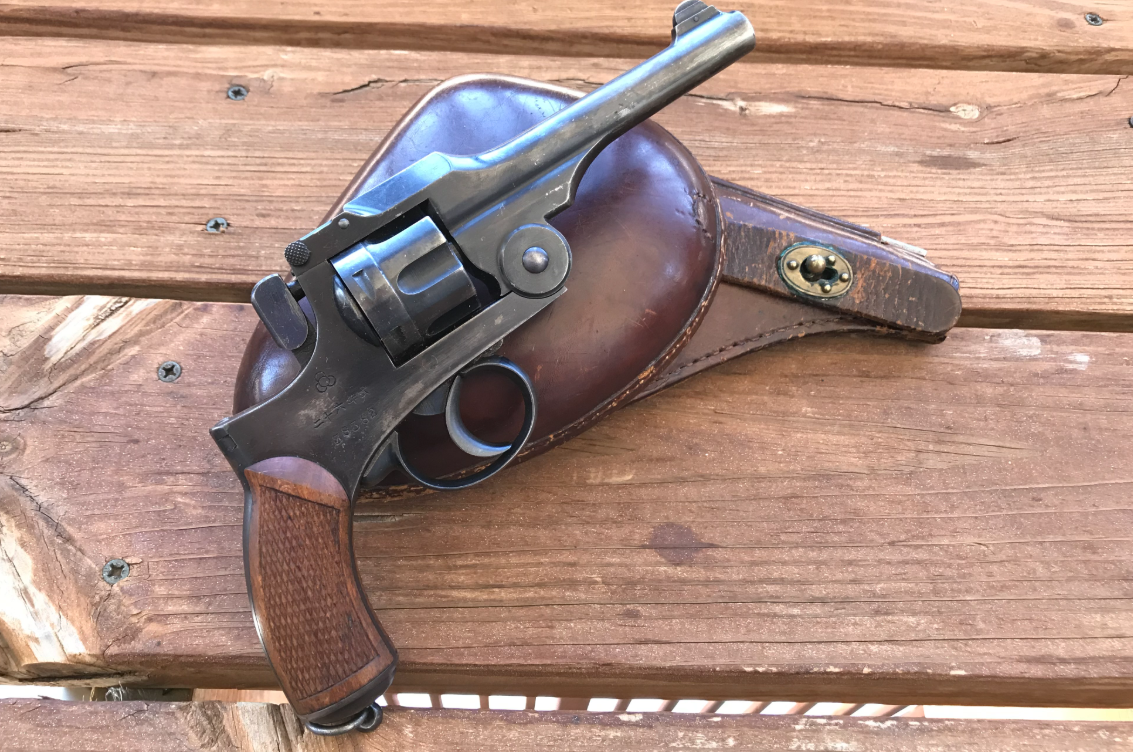
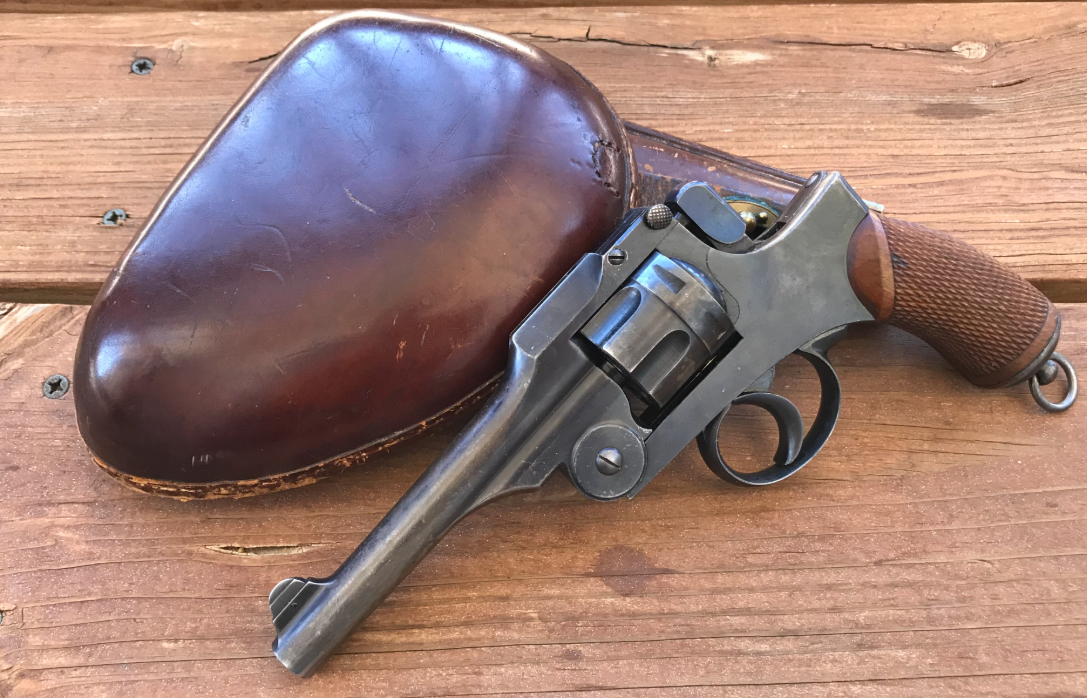
The development of Japanese automatic pistols began around 1899 with the study of foreign models, including the Parabellum system, and their subsequent field testing during the Boxer Rebellion. By 1902, technical analysis of designs by Bergmann, Borchardt, Mauser, and Browning provided the foundational data for creating domestic weapons intended to replace the obsolete Type 26 revolver. Under the leadership of Kijirō Nambu at the Tokyo Artillery Arsenal, two prototypes were developed: a “Large Model” for frontline units and a “Small Model” for officer self-defense.
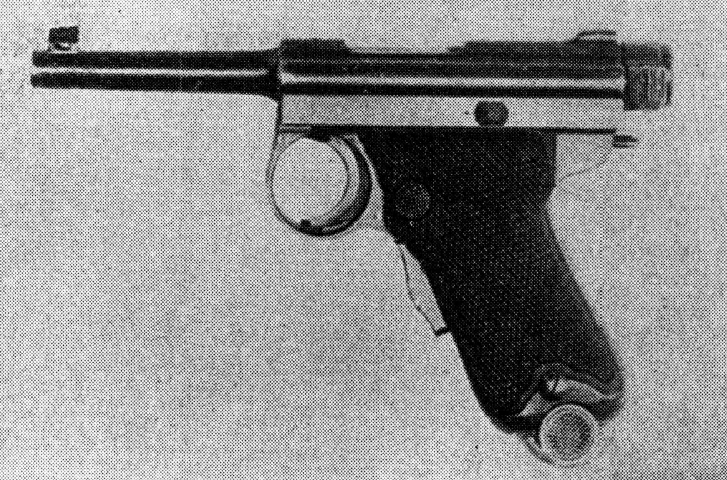
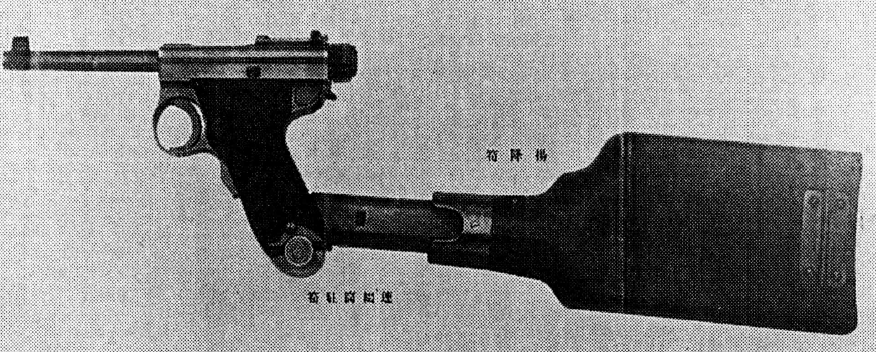
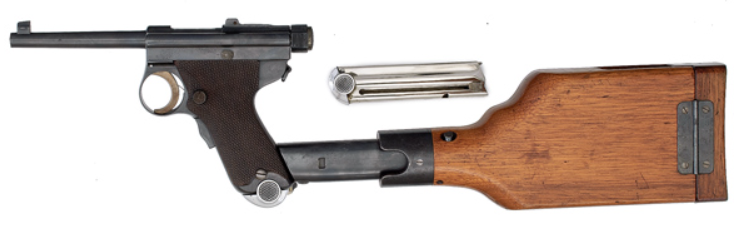
Between 1908 and 1910, the Large Model underwent official trials under the designation “Type 41 Automatic Pistol”. This system was produced in two primary variations: Ko and Otsu. The principal distinction between them lay in their accessories: the Ko variant was equipped with a wooden holster that doubled as a shoulder stock for firing at ranges of 300–400 meters, while the “Otsu” variant was supplied with a standard leather holster. Despite positive test results and the confirmation of the design’s originality, the official adoption of the Type 41 by the army was blocked by War Minister Terauchi due to budgetary constraints.
The technical differences between the Nambu models were dictated by their tactical roles and calibers. The Large Model utilized an 8mm cartridge and an 8-round magazine, providing an effective range of up to 100 meters. The Small Model featured a 7mm caliber, a 6-round magazine, and a total mass of 920 grams. A characteristic feature of both systems was the placement of the magazine within the grip and a short-recoil operation (approximately 5mm), where the bolt remained locked in the open position after the final round was fired. Although these pistols never achieved official status as the primary army sidearm, they were widely purchased by officers, utilized by the Imperial Japanese Navy, and exported to China.
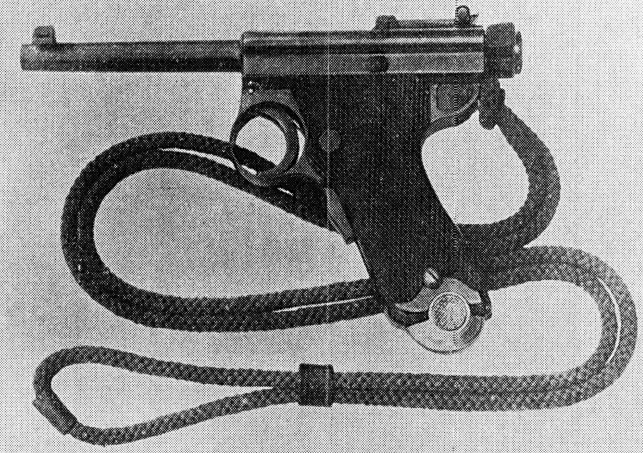
| Specification | Nambu Large | Nambu Small Type |
|---|---|---|
| Caliber | 8 mm | 7 mm |
| Overall Length | 229 mm | 174 mm |
| Weight | 945 g | 548 g |
| Muzzle Velocity | 315 m/s | 280 m/s |
| Max Range | 500 m | — |
| Capacity | 8 rounds | 6 rounds |
| Bullet Weight | 6.6 g | 3.65 g |
More photos
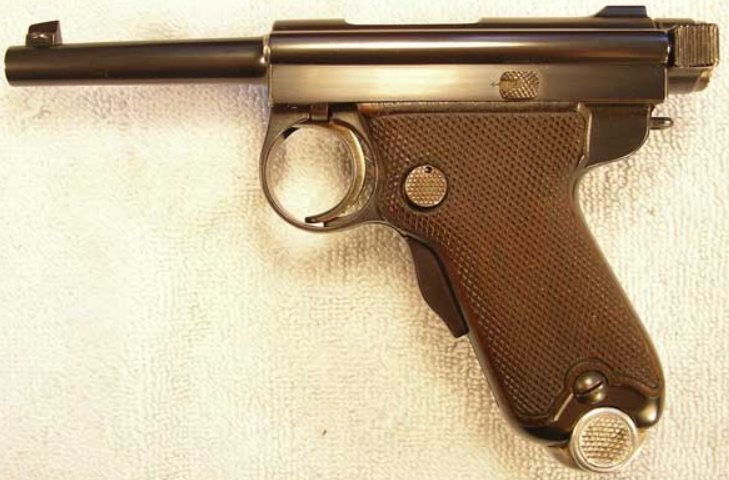
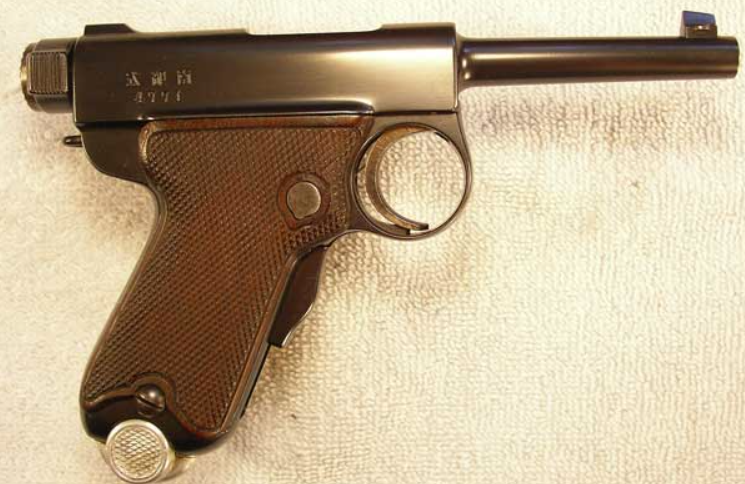
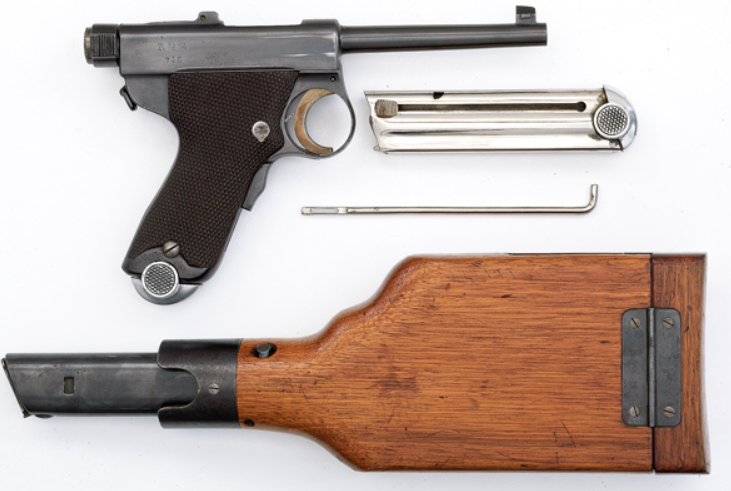
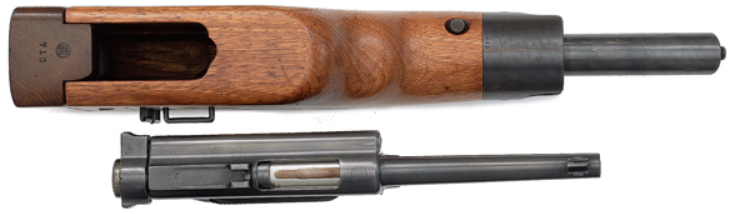
The Hino system pistol, also classified in international historiography as the Hino-Komuro M1908, is a semi-automatic handgun based on the rare blow-forward operating principle. Developed by Japanese Lieutenant Kumazo Hino, the design is characterized by the absence of a moving slide or bolt; the receiver and firing pin remain static, while the cycling of the action is achieved through the longitudinal movement of the barrel under the influence of propellant gases and a recoil spring.
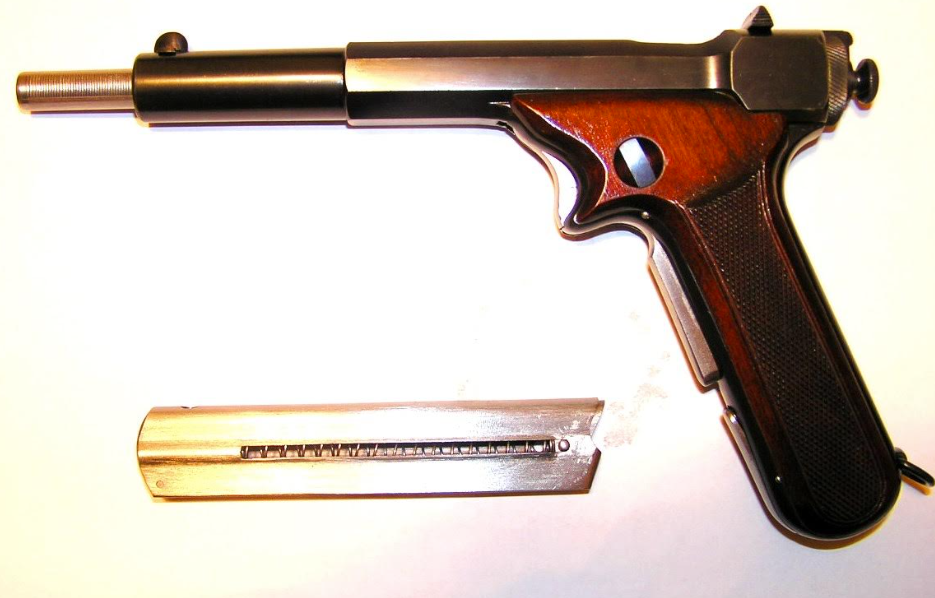
The technical cycle of the action involves the barrel surging forward upon firing to extract the spent casing. Upon reaching its forward-most point, the barrel is driven backward by spring tension, chambering a new round from the magazine and impaling the primer against a fixed firing pin. Initial cocking requires the operator to manually pull the barrel forward until it is engaged by the sear. This mechanism is considered inherently unsafe: should the operator’s fingers slip during cocking, the barrel returns to its original position under spring pressure, resulting in an accidental discharge due to premature primer ignition.
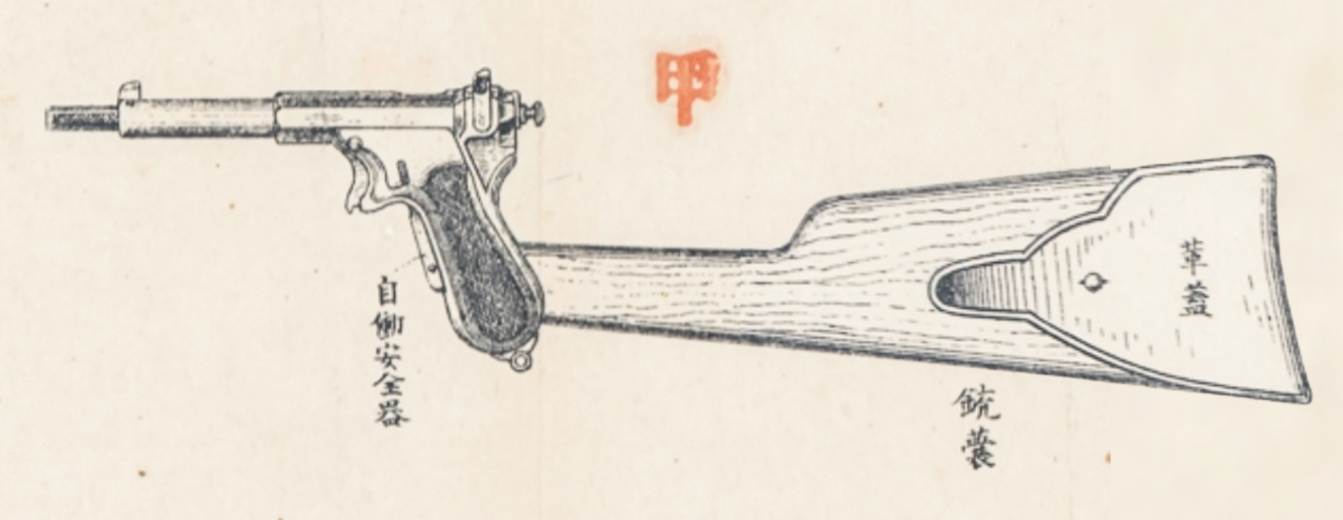
The operational safety of the Hino system is further compromised by the absence of a trigger guard and the unconventional layout of its controls. Both the grip safety lever and the trigger are situated on the front strap of the grip. This configuration increases the risk of accidental discharge during high-stress handling, such as drawing the weapon from a holster. Furthermore, the design lacks an independent disconnector; improper trigger manipulation can consequently lead to uncontrolled automatic fire.
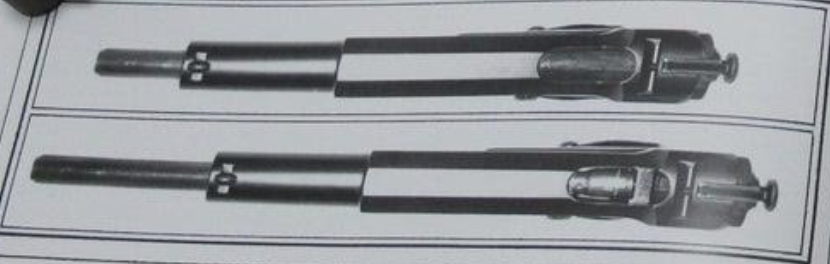
Currently, extant and documented specimens are confirmed in .32 ACP and 8mm Nambu calibers, both featuring an 8-round magazine capacity. However, archival promotional brochures from the early 20th century stated that the manufacturer offered variants in a wide range of calibers, from 5mm to 8mm. In these specifications, magazine capacities reportedly varied from 8 to 15 rounds depending on the ammunition type. Despite its engineering uniqueness, total production reached only approximately 500 units, and manufacturing ceased by 1912.
| Specification | 7.65 mm Model (.32 ACP) | 8 mm Nambu Model |
|---|---|---|
| Barrel Length | 194 mm | 217 mm |
| Total Length | 237 to 256 mm | 265 mm |
| Weight | 680 g | 907 g |
| Magazine Capacity | 8 rounds | 8 rounds |
More photos
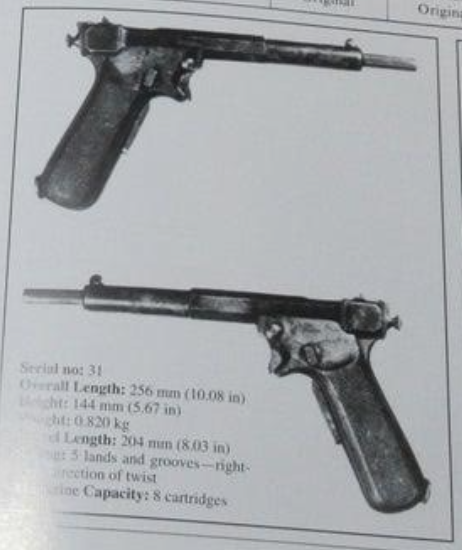
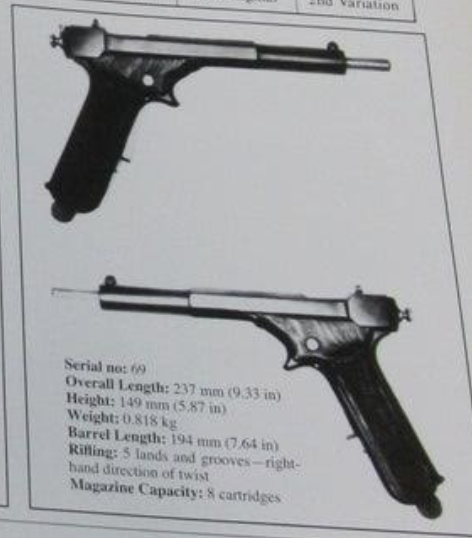
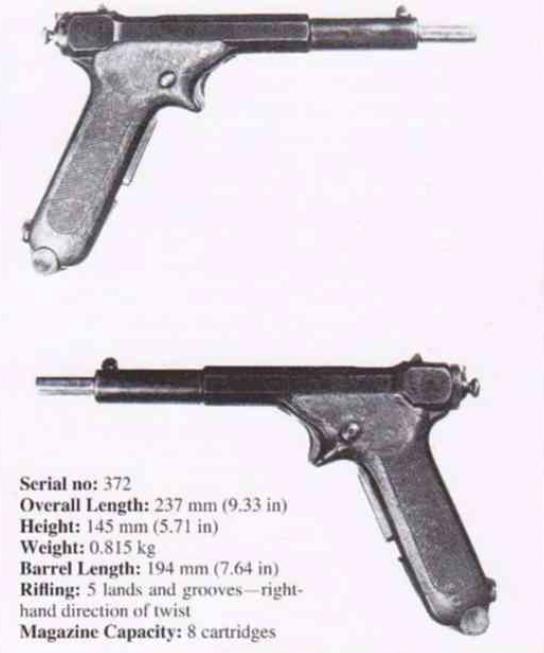
The most notable iteration of this handgun system is the 7.65 mm caliber specimen bearing serial number “32.” Although existing technical documentation is limited to low-quality photographic evidence, this specific unit represents a significant evolution of the original design. While there are hypotheses suggesting this firearm may have been modified in China, current expert consensus points toward a Japanese modification executed between 1939 and 1941.
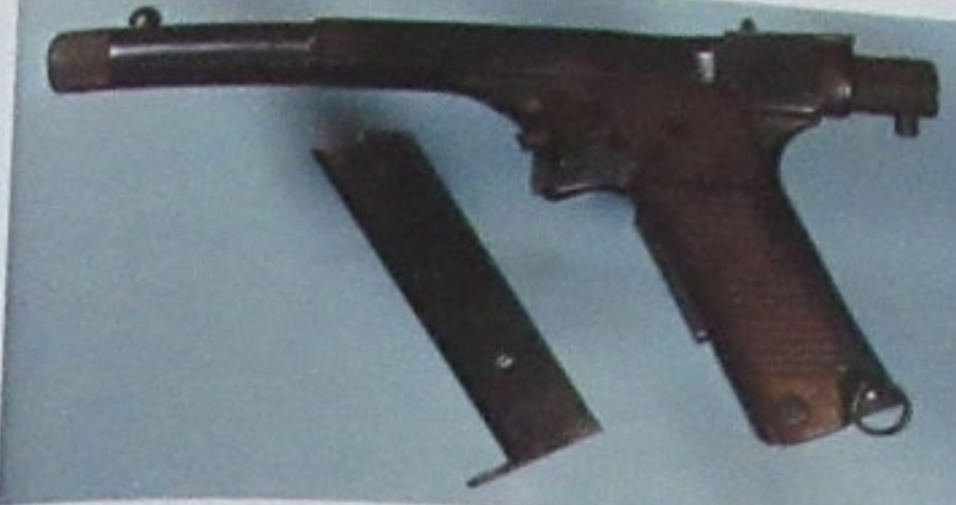
The modification addressed several critical flaws inherent in the standard Hino-Komuro design through the following upgrades:
- Enhanced Safety System: A secondary manual lever safety was integrated into the design, resulting in a dual-safety configuration.
- Adjustable Firing Pin Mechanism: An adjustable firing pin assembly was introduced. It is theorized that this mechanism was intended to facilitate the safe unloading of the weapon, a procedure known to be hazardous in the base model.
- Refined Ergonomics: The ergonomics of the barrel were substantially modified, significantly improving the ease of the cocking process.
These engineering adjustments appear to successfully mitigate the primary operational deficiencies of the original platform. At present, specimen №32 is located in a Japanese repository.
he Type 26 revolver had already become obsolete by that time and was found to be ineffective for troops in Manchuria wearing winter uniforms. It had even reached the point where the Kempeitai (military police) of the Kwantung Army were being issued large Mauser-style military pistols.
In April of the 1921, the “Experimental Model Ko Automatic Pistol” was designed by the Technical Department as a revision to the Type 26 revolver, and an order was placed with the Tokyo Artillery Arsenal. Subsequently, numerous tests were conducted regarding rate of fire, accuracy, penetration, and durability. Following practical trials entrusted to the Infantry School, Cavalry School, and Field Artillery School, and after several modifications, the functional results were deemed favorable.

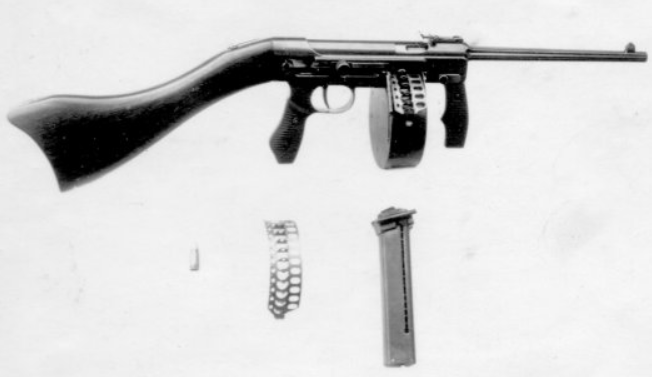
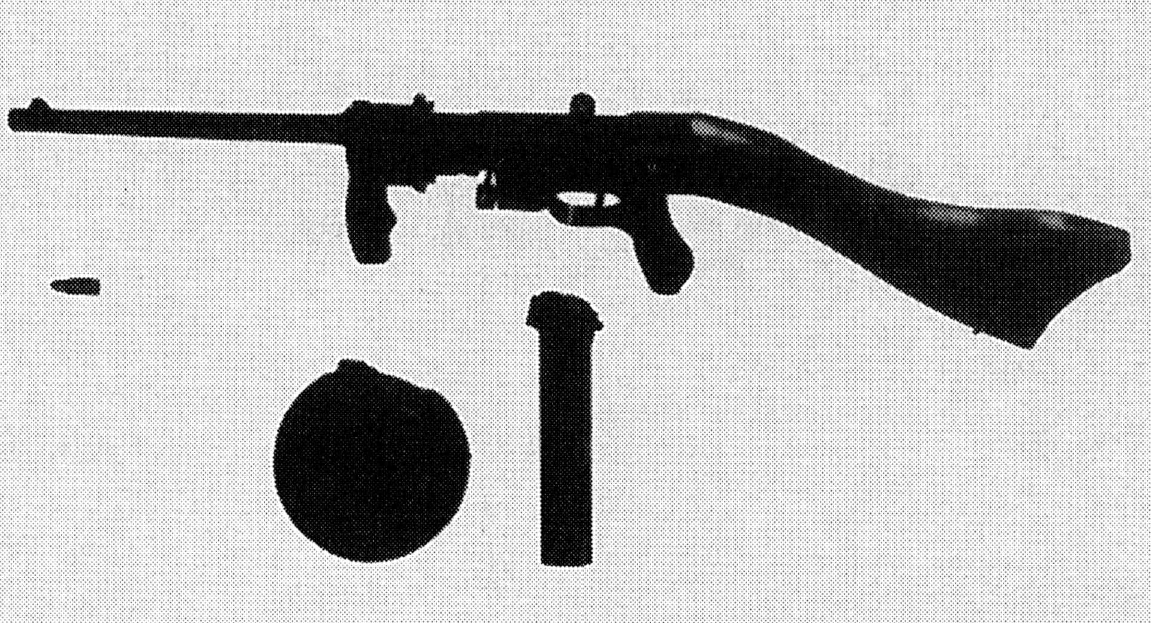
Ultimately, it was recognized as the replacement for the Type 26 revolver. However, at that time—though it was never realized—there were plans to arm infantry light machine gun sections with machine carbines. Because of this, the Experimental Model Ko Automatic Pistol was considered somewhat lacking in power and was also high in price, leading to the review being suspended once again.
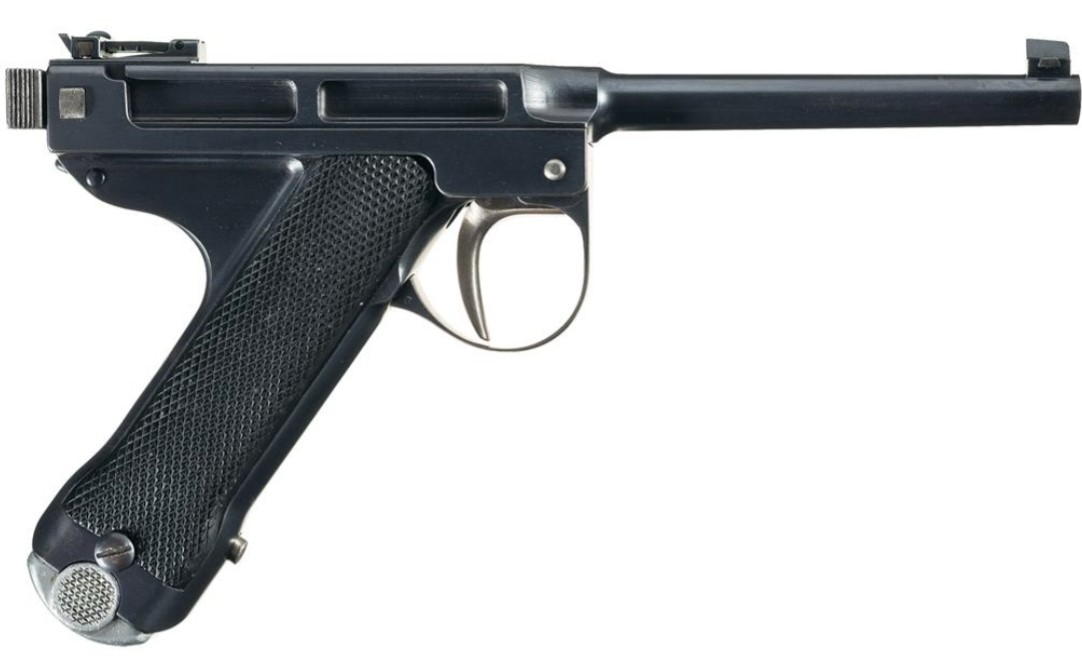
Following these developments, a service pistol was finally established to replace the Type 26. Ultimately, the internal structure and functions followed the design of the Nambu-style Large Automatic Pistol. To make production as easy as possible, the Small Arms Manufactory of the Tokyo Arsenal carried out design prototypes, devising a way to manufacture many of the parts using a lathe.
| Specification | Model Ko pistol |
|---|---|
| Caliber | 8 mm |
| Overall Length | 257 mm |
| Weight | 1100 g |
| Muzzle Velocity | 330 m/s |
| Max Range | 300 m |
| Capacity | 15 rounds |
| Bullet Weight | 6.6 g |
The development of the new pistol began with a set of stringent requirements: no shoulder stock, a magazine capacity of at least 8 rounds, and the ability to engage personnel at ranges up to 100 meters. The first five prototypes were completed in November 1922. However, in March 1923, while work was underway to improve the design, the prototypes and all documentation were destroyed in a fire caused by the Great Kanto Earthquake.
In 1924, testing resumed with new samples. Military schools held differing opinions: the infantry and cavalry deemed the weapon suitable, while the artillery corps found it too bulky. Ballistic tests showed an average muzzle velocity of 317 m/s and good accuracy, but also revealed reliability issues—frequent misfires and casing jams occurred, necessitating a redesign of several components.
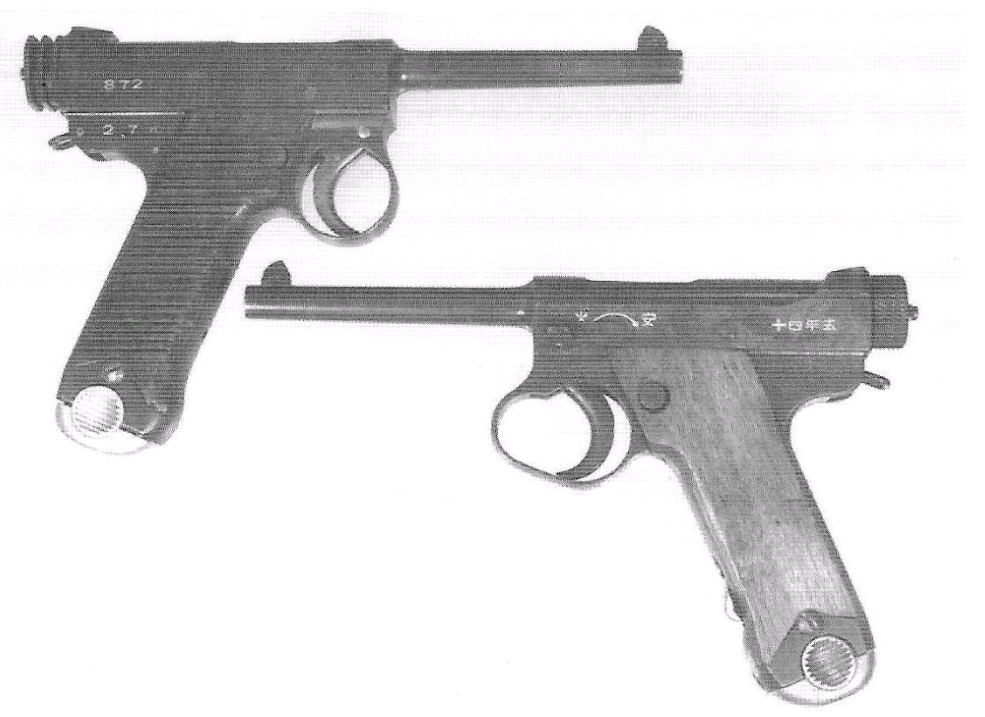
During final trials in December 1924, the prototypes were split into two modifications: Model Ko and Model Otsu. Following additional tests in early 1925, it was decided that Model Otsu was better suited for mass production due to its simplified design. Consequently, on August 22, 1925, Model Otsu was officially adopted as the “Type 14 Pistol.”
Even after its adoption, the Type 14 underwent continuous modifications:
- 1934: The diameter of the cocking knob (bolt ring) was increased, and the rear sight notch was widened.
- 1938: The magazine floorplate material was changed to a different aluminum alloy to streamline production.
- 1939 (Most Significant): The trigger guard was significantly enlarged, allowing soldiers to fire the weapon while wearing heavy winter gloves.
| Specification | Type 14 Pistol |
|---|---|
| Caliber | 8 mm |
| Overall Length | 230 mm |
| Weight | 890 g |
| Muzzle Velocity | 334 m/s |
| Max Range | 1600 m |
| Capacity | 8 rounds |
| Bullet Weight | 6.6 g |
In July 1921, the Army Technical Headquarters initiated a department plan to develop a sword integrated with a pistol, incorporating feedback from the Cavalry School to establish the following design requirements:
- Purpose: The pistol is intended for use while mounted, specifically for combat during breakthroughs or pursuits where a saber cannot be effectively used. It is also for self-defense for scouts and messengers.
- Design: A small, easy-to-handle automatic pistol is built into the hilt of the saber. Two prototypes were to be made: Ko, where the barrel and blade intersect at nearly a right angle, and Otsu, where the barrel and blade are nearly parallel.
- Pistol Characteristics: Utilize a short-recoil system with an 8mm caliber. Ammunition should be identical to those used in prototype automatic pistols whenever possible. The magazine must be easily detachable and replaceable even while the sword is drawn. Magazine capacity must be at least 8 rounds. A safety mechanism is mandatory, and the design must allow a rapid transition from a shooting posture to a slashing posture without releasing the grip.
- Sword Characteristics: Weight must be distributed for optimal balance in both thrusting and slashing. The blade length follows the Type 32 (Ko) saber. The standard weight of the weapon excluding the scabbard is 1.8 kg.
- Carriage: The sword is kept in a steel scabbard and always suspended on the right side of the saddle.
- Deadline: The target completion date for the first prototype was May 1922.
The pistol used for this project was the Nambu automatic pistol, which existed in “Large” and “Small” variants. Tests conducted by the Army Technical Evaluation Department starting in September 1907 yielded good results and proved its practicality. This led to a request from the cavalry to adopt the pistol, and the idea of integrating it with the saber emerged for carrying convenience.
In January 1922, following the approval of the design requirements, four prototypes were ordered from the Tokyo Artillery Arsenal. The project was officially authorized by the War Ministry and added to the “Second Weapon Research Policy” for cavalry equipment.
In June 1922, the Otsu prototype — consisting of a Type 32 saber equipped with a Small Nambu pistol—was completed. However, because the parallel alignment of the barrel and blade limited freedom of operation, research on this model was discontinued. Work then began on the Ko type. Design changes were made to use the Small Nambu ammunition, and the blade length was shortened from the original Type 32 (Ko) length of 835 mm to 780 mm.
In January 1923, one Ko prototype was finished. It proved difficult to handle as a sword, and the right-angle intersection of the magazine and barrel caused feeding issues. Work on the remaining three ordered units was suspended. Furthermore, during the Great Kanto Earthquake in September of that year, these prototypes were lost to fire, forcing a temporary shelving of the research.
However, in June 1924, a new order was placed with the Tokyo Artillery Arsenal, and a new unit was completed in November. It was sent to the Cavalry School for practical testing. In December, the school determined that this model had not yet reached the stage of practical utility.
In January 1925, based on the Cavalry School’s feedback, two prototypes with adjusted barrel-to-blade angles were ordered from Gas & Electric Industry Co., Ltd. These were completed in April, after which the Tokyo Artillery Arsenal was commissioned to attach the saber components. Separately, two “Large” prototypes were produced. These were based on the Prototype Otsu automatic pistol (which later became the Type 14 pistol; the Prototype Ko automatic pistol was a large 1.1 kg pistol with a 15-round magazine). Tests in August showed that the small model was generally good, but the large model performed poorly. After further modifications, both were submitted back to the Cavalry School for practical trials.
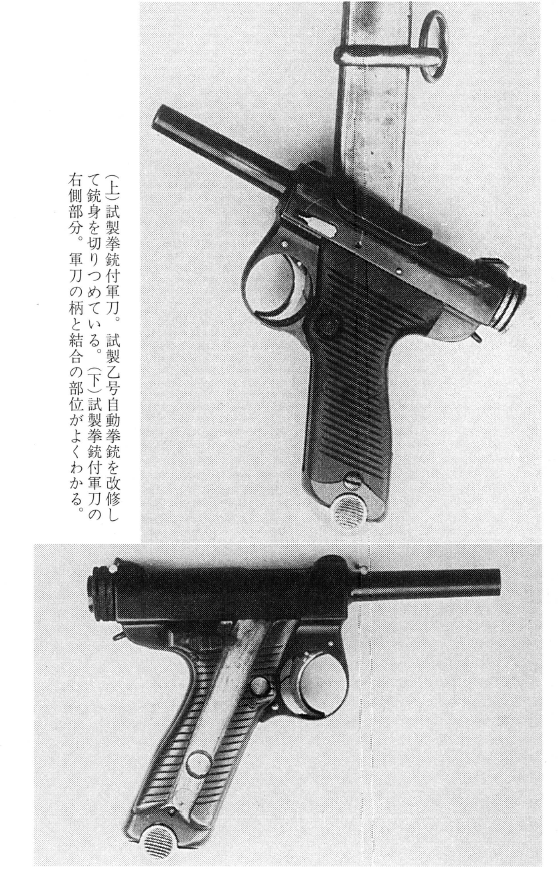
In January 1926, the Technical Headquarters received a report from the Cavalry School. While noting that the small number of samples and short test period made a final judgment difficult, the report stated that the connection between the pistol and sword—the vital part of the weapon—was not sufficiently robust, making its long-term durability questionable. Essentially, the cavalry branch that had originally requested the weapon ultimately rejected its adoption.
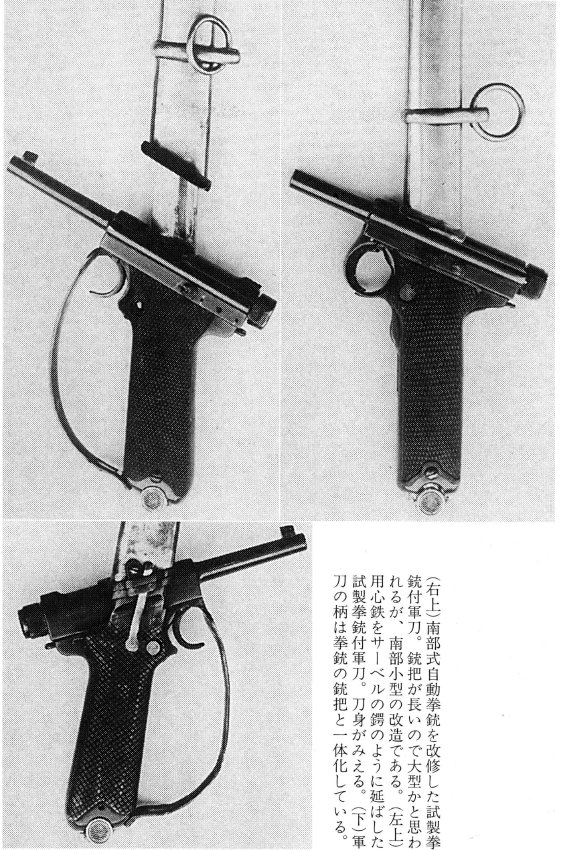
There were several reasons for this: technical difficulties in maximizing the performance of both the sword and the pistol remained. Meanwhile, the excellent Type 14 pistol had been adopted and was soon to be issued. The cavalry concluded it was better to carry a separate pistol and a perfect saber rather than endure the inconvenience of a hybrid “chasing two hares”. Considering high production costs and maintenance difficulties, further research was deemed unnecessary. In February 1929, the project was officially canceled.
The history of the Japanese Type 94 pistol began as a response to a severe crisis in officer sidearms. Before its introduction, Japanese military personnel relied on either the weak and expensive 7mm Nambu pistols or the excessively heavy and bulky Type 14 models. Due to the lack of a high-quality domestic alternative, officers purchased over 30 different types of foreign pistols, creating logistical chaos regarding ammunition supply and repairs. To resolve this issue, development of a new service weapon began based on a design by Colonel Nambu, and in January 1933, the army ordered the production of a pilot batch.

More photos
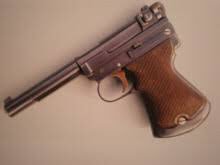
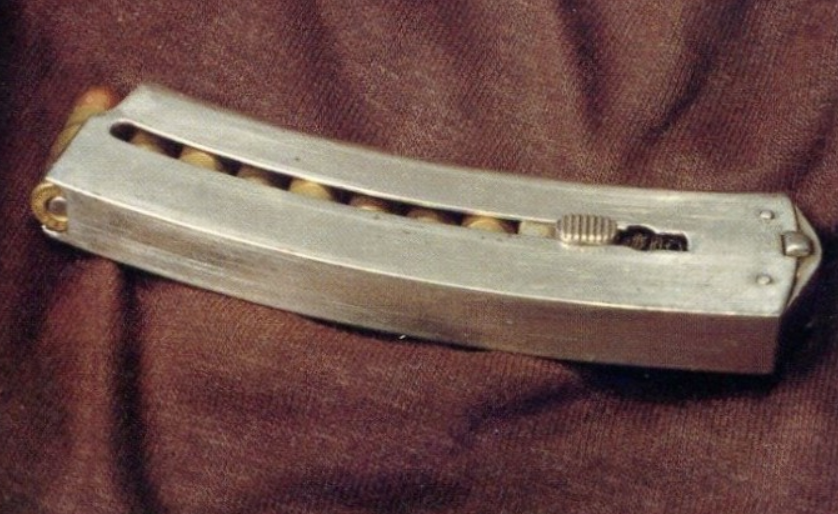
The new pistol was subject to strict technical requirements: it had to weigh no more than 800 grams and utilize the standard 8mm cartridge. The design aimed for maximum simplicity, reliability, and cost-effectiveness, ensuring that mass production costs did not exceed 50 yen, including the holster. High penetrating power was also required—a bullet fired from a distance of 50 meters had to penetrate a pine board more than 90 mm thick. Furthermore, the pistol was to feature a double safety mechanism and be capable of disassembly without special tools.
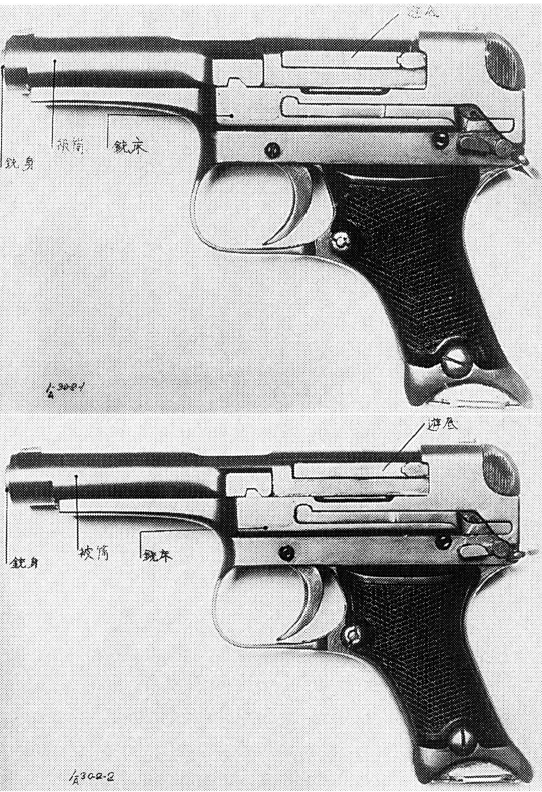
During initial testing in 1934, the prototype showed promising results in terms of power and accuracy, even surpassing Browning pistols in these metrics; however, issues arose regarding slide reliability. To eliminate jams and misfires, the design was refined: the position of the slide stop was adjusted, the rear sight height was reduced to simplify production, and the trigger shape was modified for better use with gloves. Additionally, the magazine release notch was enlarged, ebonite grips were added, and the overall weight was reduced by lightening the frame.
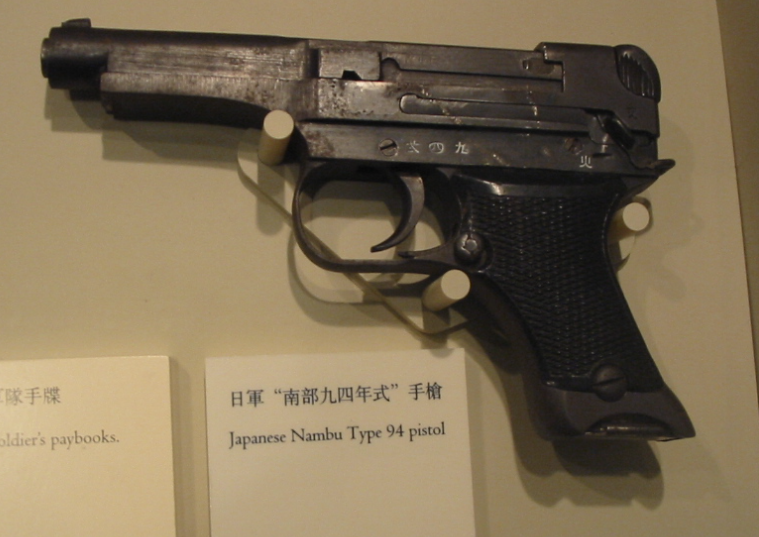
Following the successful completion of re-testing in June 1934, the pistol demonstrated compliance with all design standards, achieving an impressive penetration depth of up to 140 mm at 50 meters. On December 12, 1934, the model was officially adopted as the “Type 94.” The final version featured a muzzle velocity of 285 m/s and a 6-round magazine. The adoption of this model helped standardize officer weaponry, allowing them to purchase the pistols for personal use through military arsenals.
| Specification | Type 94 Pistol |
|---|---|
| Caliber | 8 mm |
| Overall Length | 181 mm |
| Weight | 730 g |
| Muzzle Velocity | 284 m/s |
| Max Range | 1300 m |
| Capacity | 6 rounds |
| Bullet Weight | 6.6 g |
In February 1940, the Japanese command officially classified captured Chinese 7.63mm Mauser C96 pistols (I believe that in Japanese documentation, Spanish copies of the Mauser C96 and their select-fire versions did not have any specific designation other than Mauser C96 or Type Mo) as the Type Mo Large Pistol. The weapon was granted limited-standard status, and by 1943, Japan had established its own domestic production of ammunition for this model."
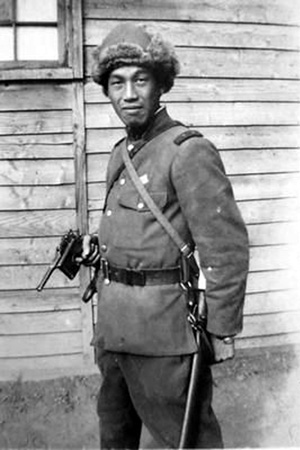
| Specification | Type Mo Pistol |
|---|---|
| Caliber | 7.63 mm |
| Overall Length | 645* mm |
| Weight | 1680 g |
| Muzzle Velocity | 450 m/s |
| Max Range | 1000 m |
| Capacity | 10 rounds |
| Bullet Weight | 10.4 g |
*Note: Together with the attached shoulder stock holster.
From March 13 to March 16, 1943, functionality and accuracy tests for the “Ha-Ke” type pistol were conducted at the Irako firing range. This pistol was manufactured by Bunji Hamada of the Nippon Gun Instruments Company (Nihon Jūki Kabushiki Kaisha). In the Army, it was given the secret name “Hamada Type Pistol” and was officially designated as the “Type 2 Pistol”. Colonel Yoshikazu Dogane and Lieutenant Colonel Kenji Taniguchi were the officers in charge of the testing.
Two variants of the pistol were submitted for testing: one with a 6-round magazine and two units with 8-round magazines. The results generally showed good functional performance; no serious breakdowns occurred, though it was decided to implement minor design refinements. Its accuracy was found to be comparable to that of the Type 94 pistol.
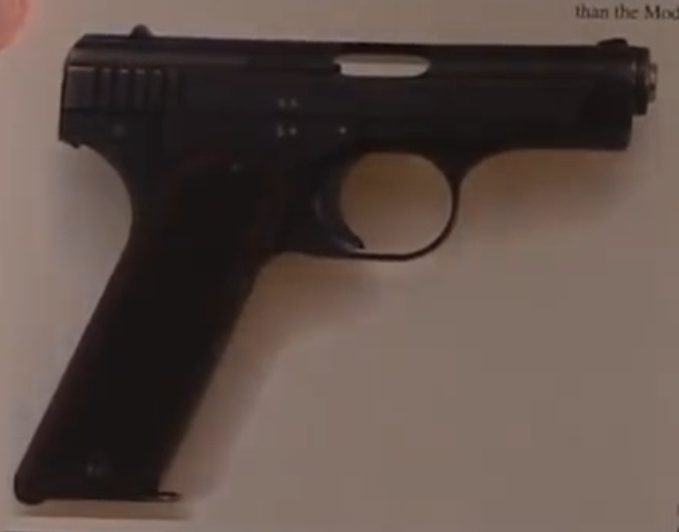
This pistol was primarily developed for officers and paratrooper units. It utilizes a blowback system with a fixed barrel. The design is simple and easy to manufacture, and its functionality and durability were deemed generally satisfactory. Minor modifications were made to the recoil spring and a few other components.
A prototype was created to verify the functionality and interchangeability of the magazines. It was recognized that the pistol possessed high military value, and on October 12, 1943, it was officially adopted as a standard-issue weapon.
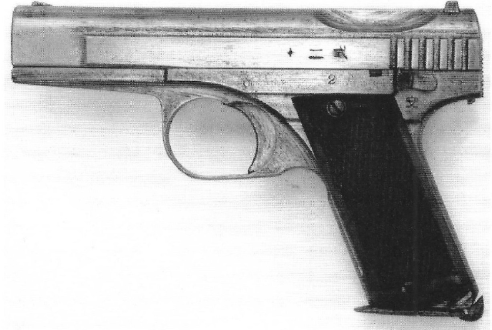
Particular note was made of the convenience of the automatic slide stop mechanism: when the ammunition was exhausted, the slide would lock in the rear position. Upon inserting a new magazine, the weapon would immediately be ready to fire (during reloading, the slide would automatically chamber a round), which was extremely effective in combat. Patents for the technical solutions were officially published in June and July of 1943 and were finalized in September and November of the same year.
Initially, a 7.65mm caliber pistol was developed based on these technical solutions. Although that specific model was not adopted by the Army, it was referred to as the “Type 1 Pistol” and served as the technical foundation for the development of the “Type 2 Pistol”.
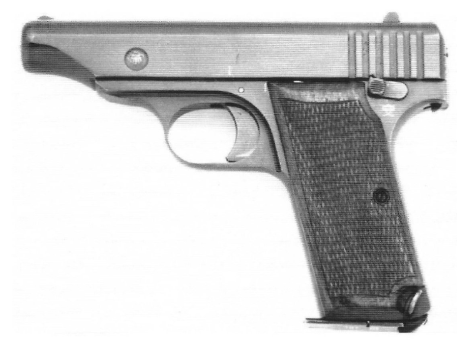
| Specification | Hamada Type 1 (7.65 mm) | Hamada Type 2 (8 mm) |
|---|---|---|
| Caliber | 7.65 mm (.32 ACP) | 8 mm Nambu |
| Overall Length | 159 mm | 176 mm |
| Weight | 680 g | 795 g |
| Magazine Capacity | 9 rounds | 6 rounds (Prototypes: 6 or 8) |
The Inagaki Shiki (Inagaki Type) is a self-loading pistol developed in the early 1940s by Iwakichi Inagaki, a former subordinate of Kijiro Nambu. After retiring from the Imperial Japanese Army, Inagaki established a manufacturing business in Suginami, Tokyo, to produce this handgun. Although it was used by both the Imperial Army and Navy to supplement the shortage of standard-issue sidearms, the Inagaki was never officially standardized as a “Type” model like the Type 94 or Type 2 pistols. Total production is estimated at approximately 500 units.
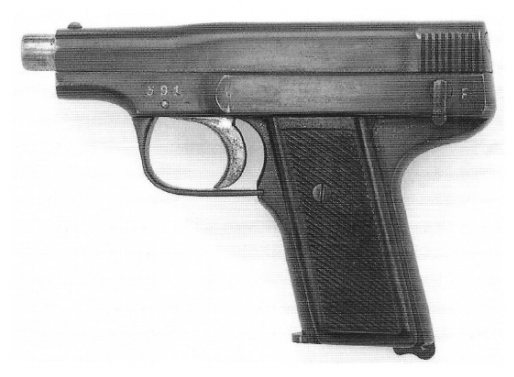
The standard production model is a medium-sized, straight-blowback semi-automatic pistol chambered in 7.65 mm (.32 ACP) with an eight-round magazine capacity. It features a single-action concealed hammer mechanism and a 72 mm barrel that protrudes approximately 13 mm from the front of the slide. A unique characteristic of its design is the disassembly process, which requires the trigger guard to be pivoted to the left to remove the slide and barrel. Internally, the pistol utilizes 12 rifling grooves and two parallel recoil springs positioned at the rear of the slide.
In 1942, an 8 mm prototype was developed as a potential low-cost replacement for the Type 94 pistol. This version was slightly larger and heavier, but it was ultimately rejected by the Army’s Technical Research Institute. According to historical accounts, the 8 mm Inagaki was deemed unsatisfactory due to the fragility of its construction, particularly its reliance on leaf springs. Today, the Inagaki is considered the rarest of all officially adopted Japanese military handguns, with only about three or four 7.65 mm specimens and three 8 mm prototypes known to exist.
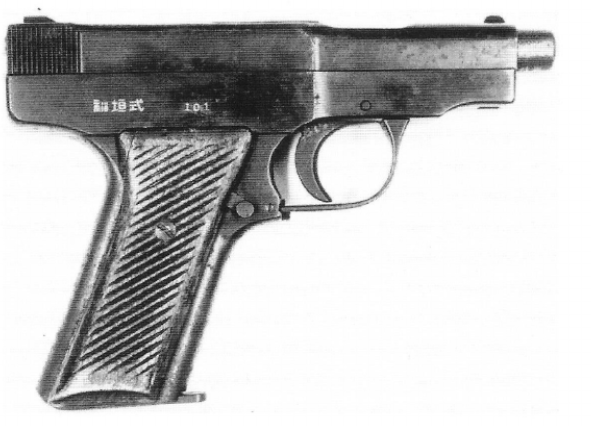
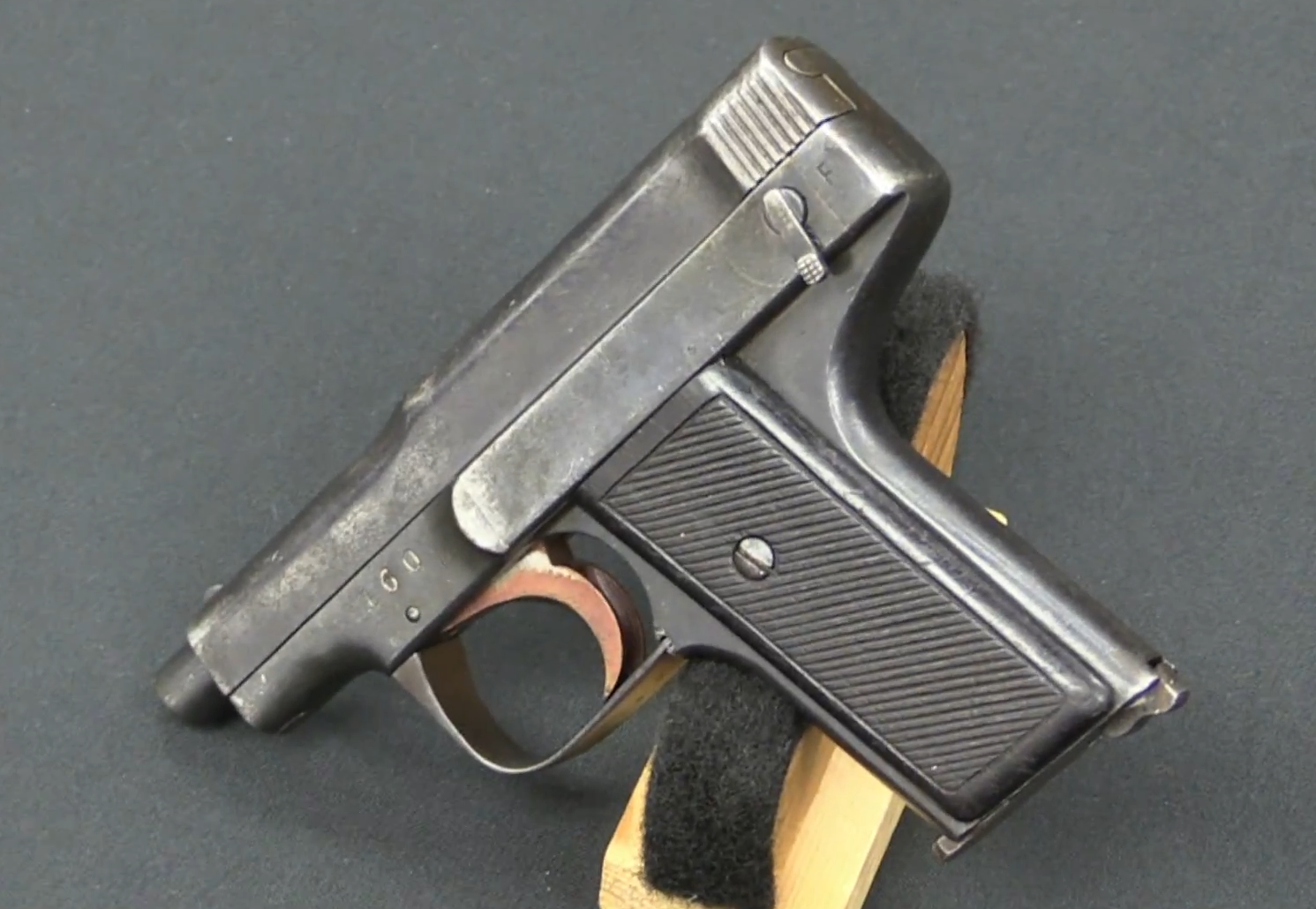
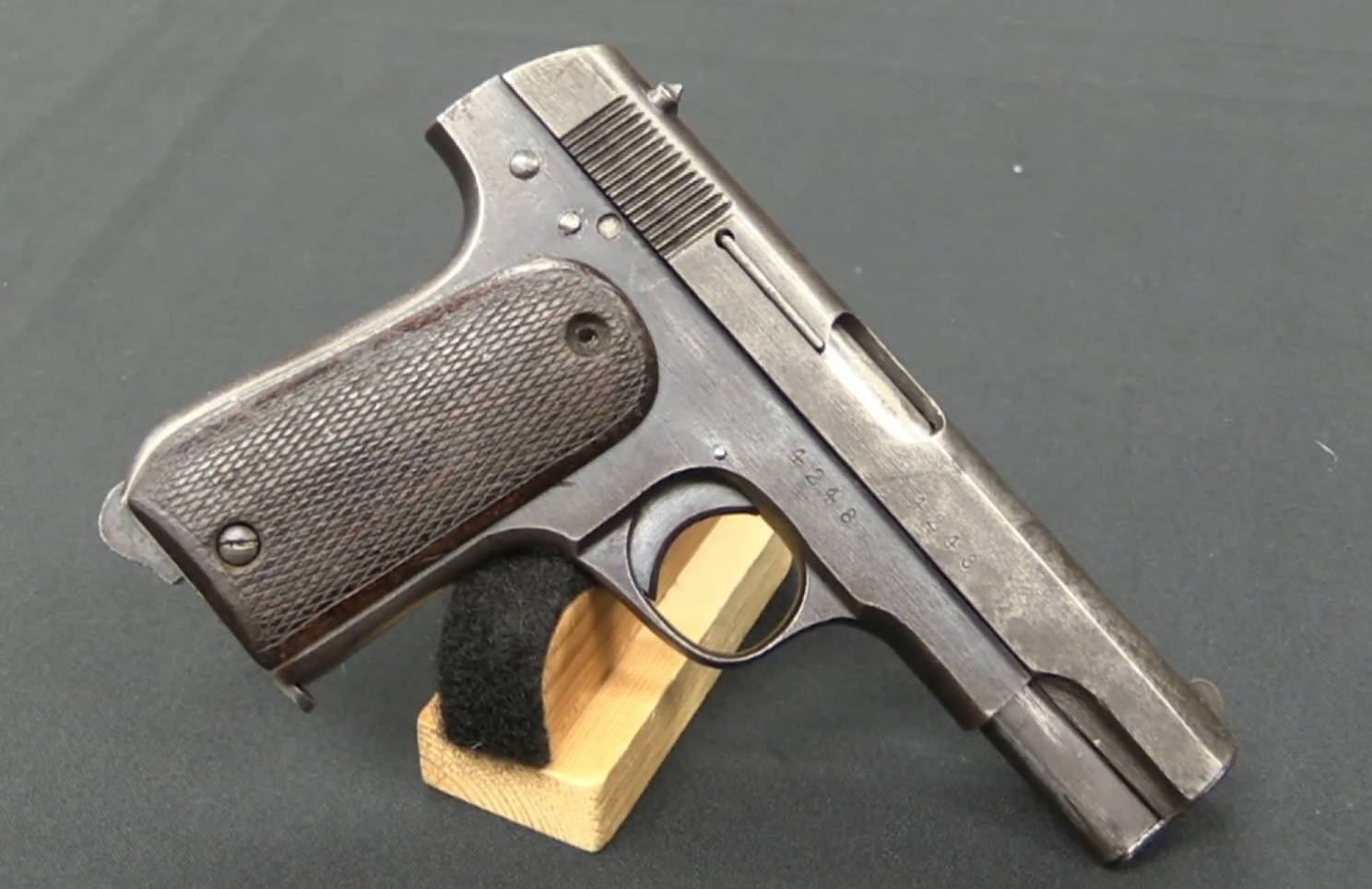
| Specification | 7.65 mm Model (.32 ACP) | 8 mm Prototype (8 mm Nambu) |
|---|---|---|
| Caliber | 7.65 mm (.32 ACP) | 8 mm Nambu |
| Magazine Capacity | 8 rounds | 8 rounds |
| Overall Length | 165 mm | 180 mm |
| Weight | 650 g | 900 g |
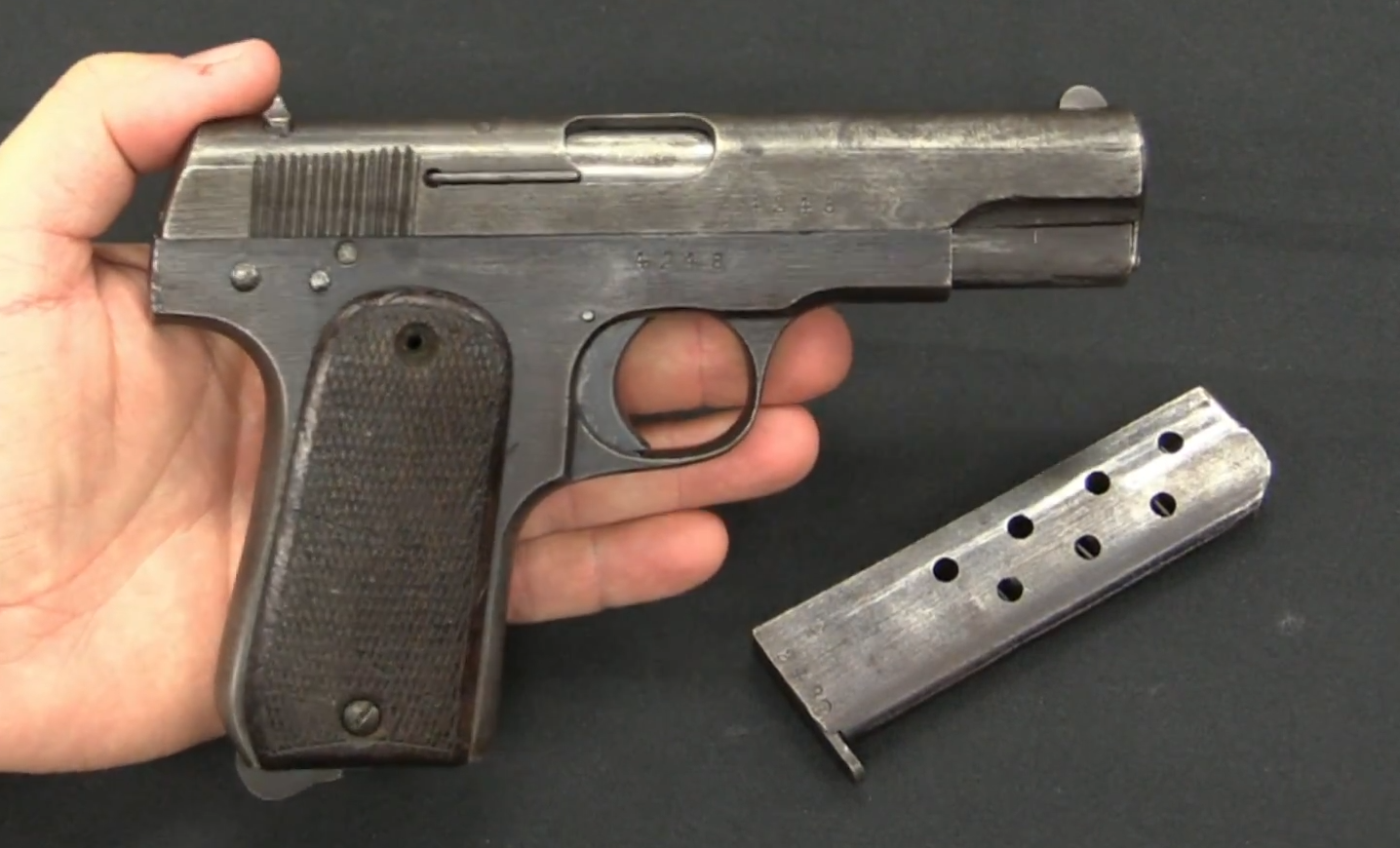
The Sugiura pistol (Sugiura Shiki) was developed in Japanese-occupied China during the Second Sino-Japanese War. Production began in 1941 at the Sugiura Factory in Beijing, which was later renamed the North China Factory. While the design is likely Japanese, the weapon is not strictly a Japanese-made pistol, as it was manufactured in China under Japanese direction. Initially intended to supply the pro-Japanese Chinese forces of the Wang Jingwei regime, these firearms were also issued to the Japanese military to compensate for material shortages, serving as both official issue and private property of officers.
The weapon was manufactured in two distinct models: a 7.65 mm (.32 ACP) version and a 6.35 mm (.25 ACP) version. The 7.65 mm model was largely a copy of the Colt Model 1903 Pocket Hammerless, mimicking its slide shape and concealed hammer mechanism, although the grip safety found on the Colt was omitted. The 6.35 mm model was a unique scaled-down version with no direct counterpart in the Colt M1903 lineup. Both variants were straight-blowback semiautomatic pistols featuring detachable eight-round magazines and wooden grip panels with crosshatched patterning.
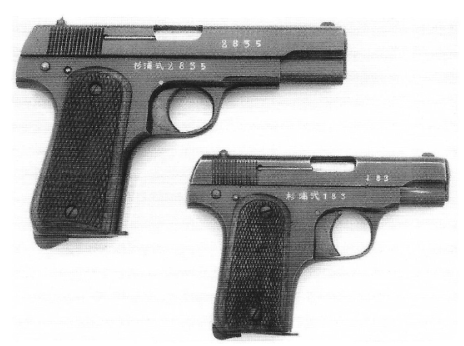
Following the end of the war, the Chinese continued production of both models, leading to a total of four primary variants. The Sugiura is considered one of the rarest Imperial Japanese handguns; the estimated production of the Japanese-marked variants is approximately 430 units for the 6.35 mm model and 2,330 units for the 7.65 mm model.
| Characteristic | 7.65 mm Model | 6.35 mm Model |
|---|---|---|
| Caliber | 7.65 mm | 6.35 mm |
| Cartridge | .32 ACP | .25 ACP |
| Magazine Capacity | 8 rounds | 8 rounds |
| Overall Length | 180 mm | 140 mm |
| Weight | 907 g | 482 g |
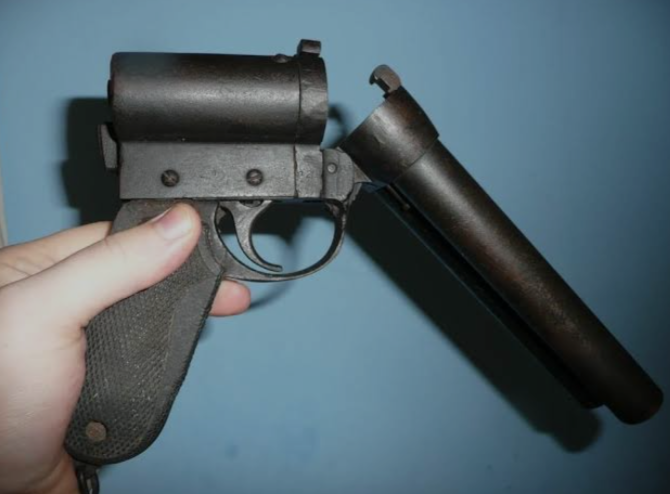
In the closing months of World War II, the Imperial Japanese Navy developed two types of unusual pistols. They were intended to arm naval base guards as substitutes for scarce rifles and submachine guns. For a long time, these were believed to be ordinary signal flare guns; however, historians have discovered documents confirming their true combat purpose: firing standard 12-gauge shotshells.

Produced at the Yokosuka Naval Arsenal, these weapons were characterized by extremely poor craftsmanship. The frames featured a primitive black lacquer finish, and the construction was so unreliable that modern researchers are strongly discouraged from attempting to fire them.

Model Features:
- Double-Barrel Variant (Type 4): This model featured plastic grip panels and internal strikers. The mechanism cocked automatically when the barrels were “broken open” for reloading. It was equipped with a safety and a selector switch to determine the firing order of the barrels.
- Single-Barrel Variant (Type 5): An even more simplified model, constructed almost entirely from stamped sheet metal parts. Unlike the double-barrel version, it utilized an external hammer that had to be manually cocked by thumb before each shot.

| Feature | Type 4 (Double-Barrel) | Type 5 (Single-Barrel) |
|---|---|---|
| Caliber | 18.8 mm (12-gauge) | 18.8 mm (12-gauge) |
| Weight | 1.25 kg | 0.817 kg |
| Overall Length | 264 mm | 267 mm |
| Barrel Length | 165 mm | 210 mm |
| Capacity | 2 rounds | 1 round |
| Cocking Method | Automatic (via unbreeching action) | Manual (external hammer) |
More photos
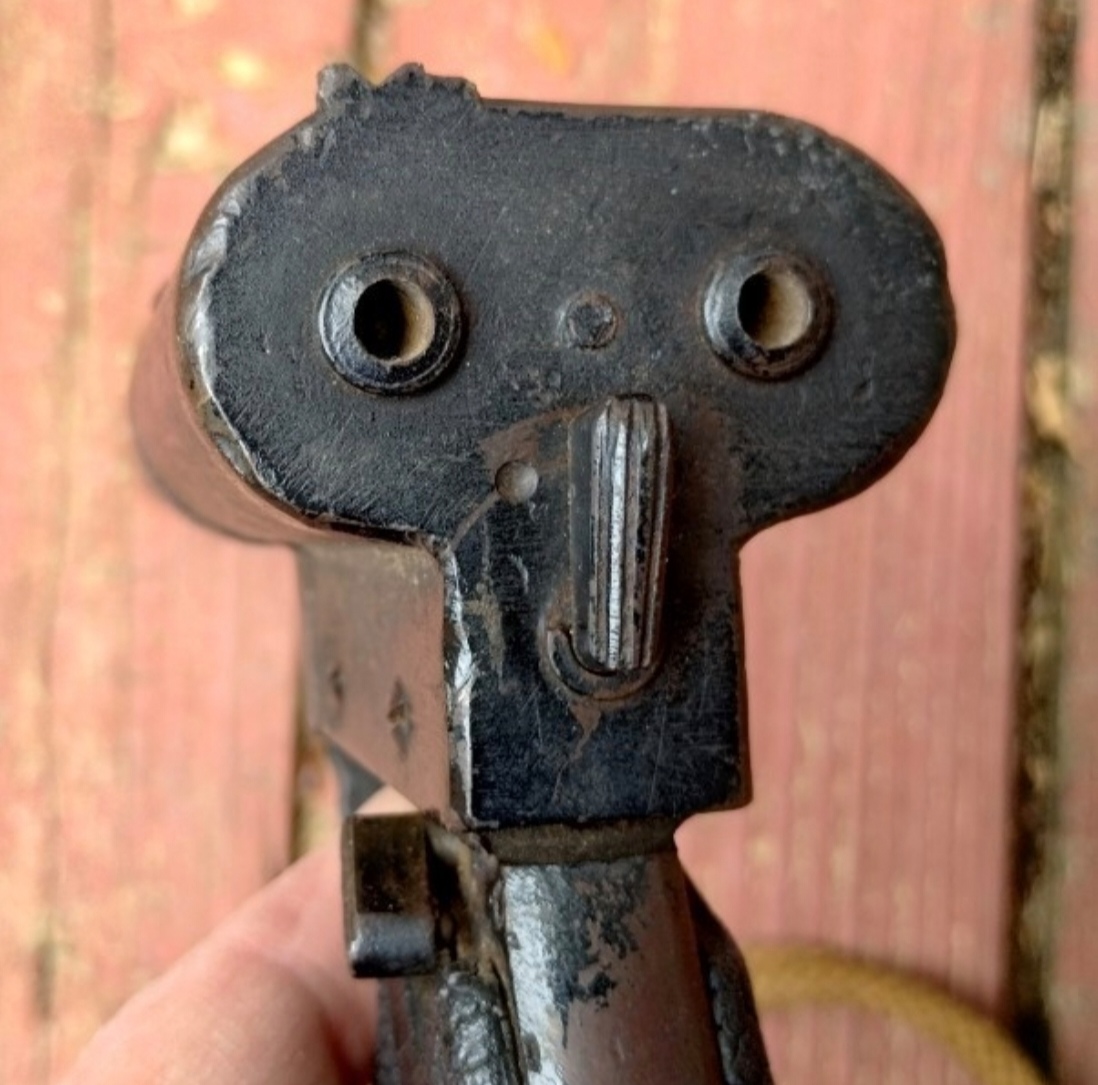


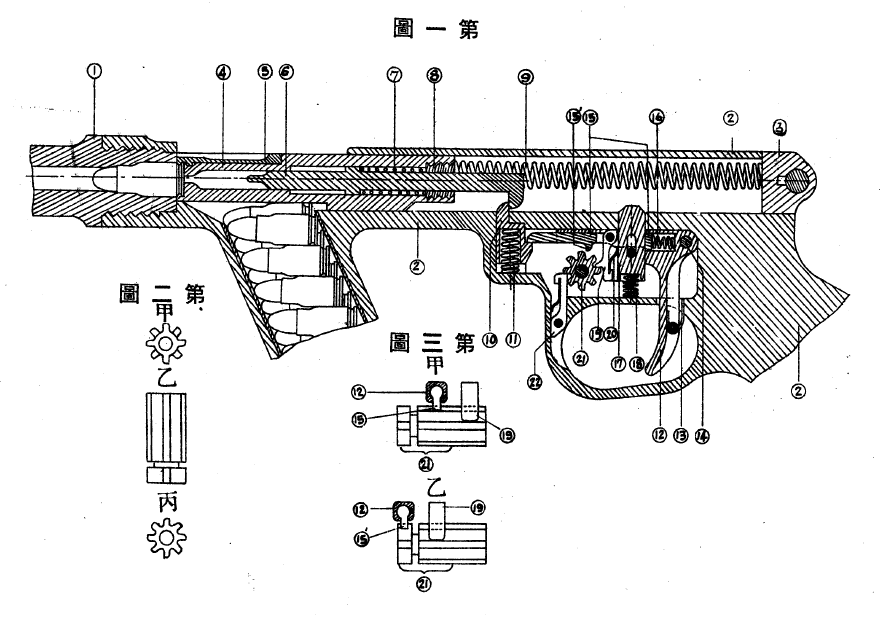
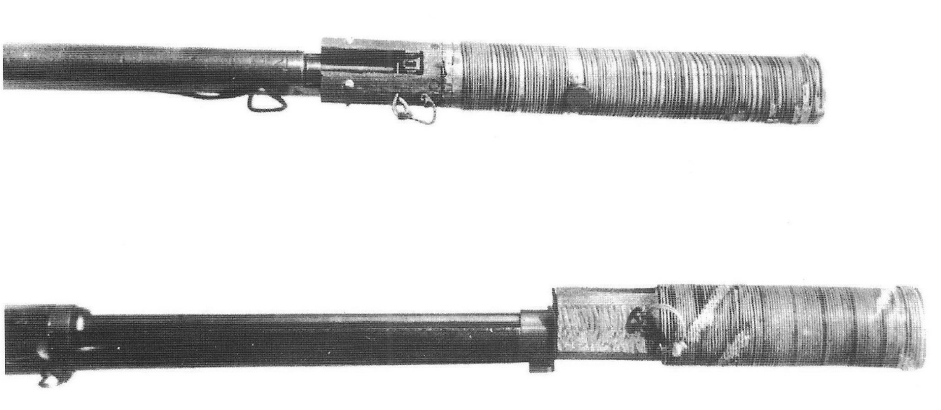
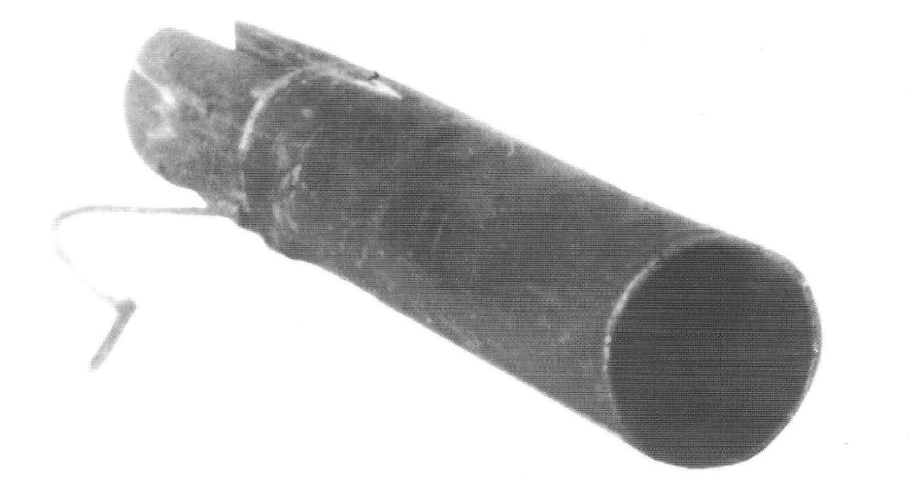
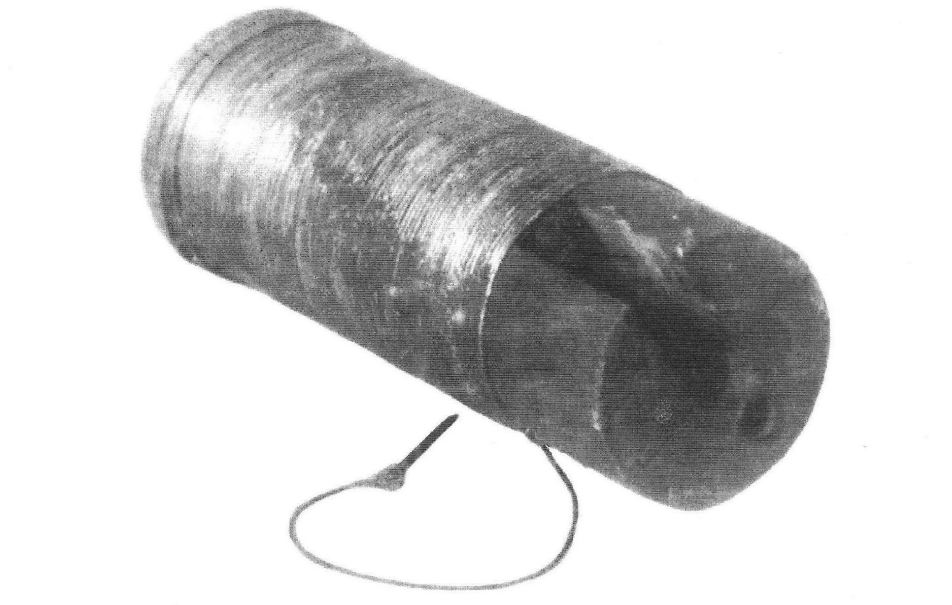
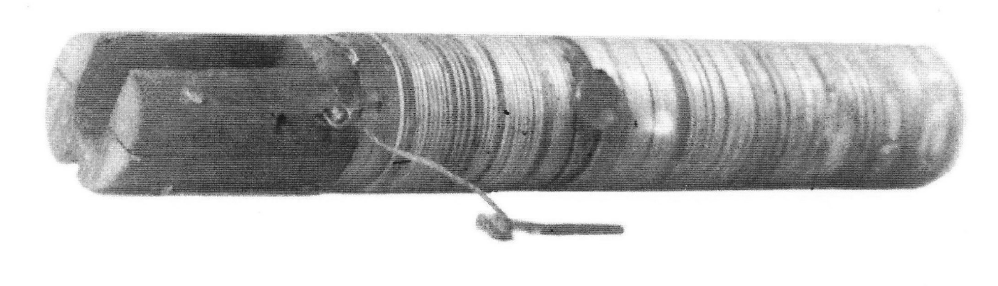
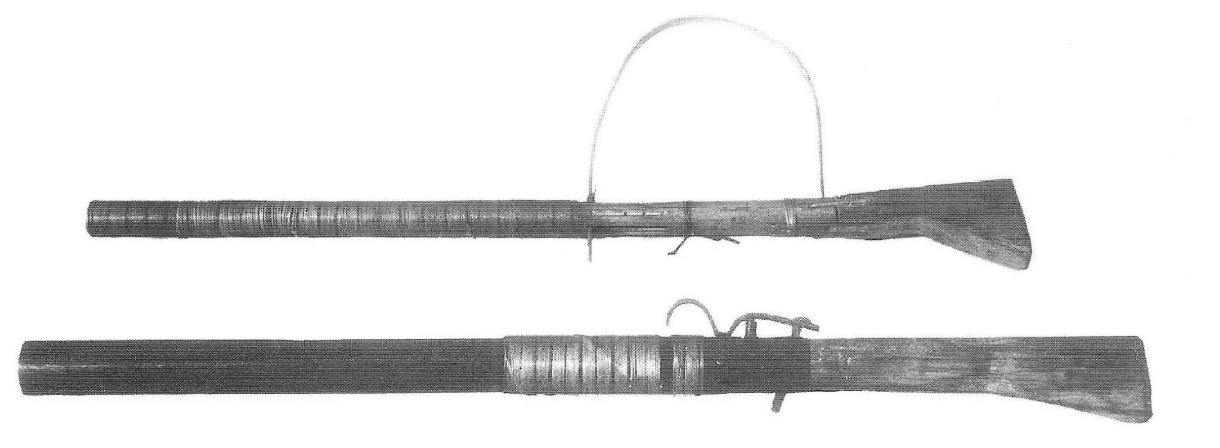
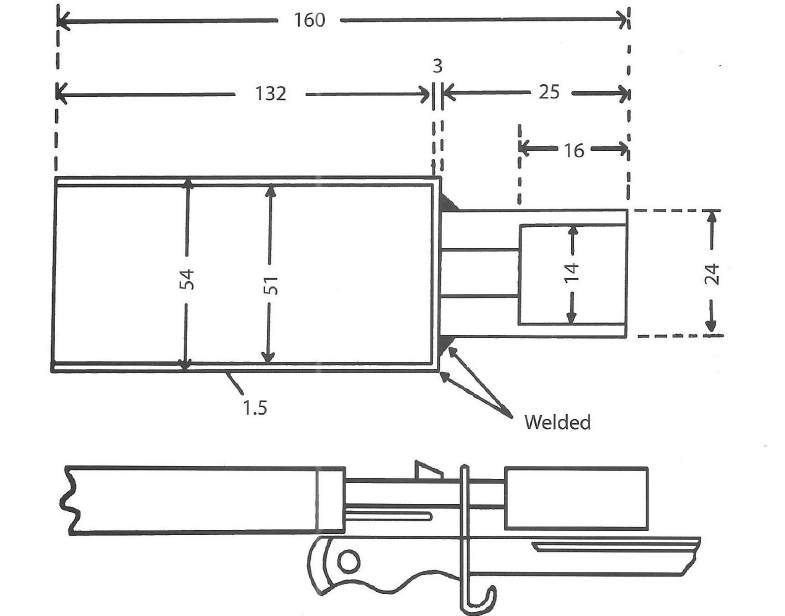
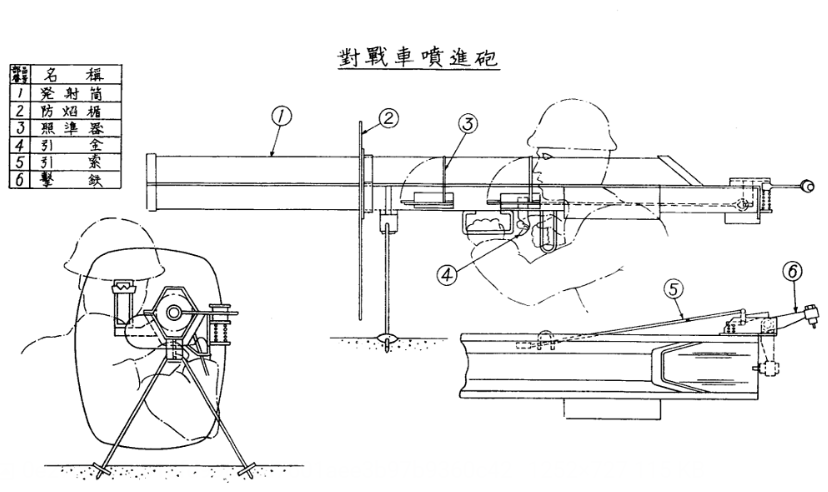
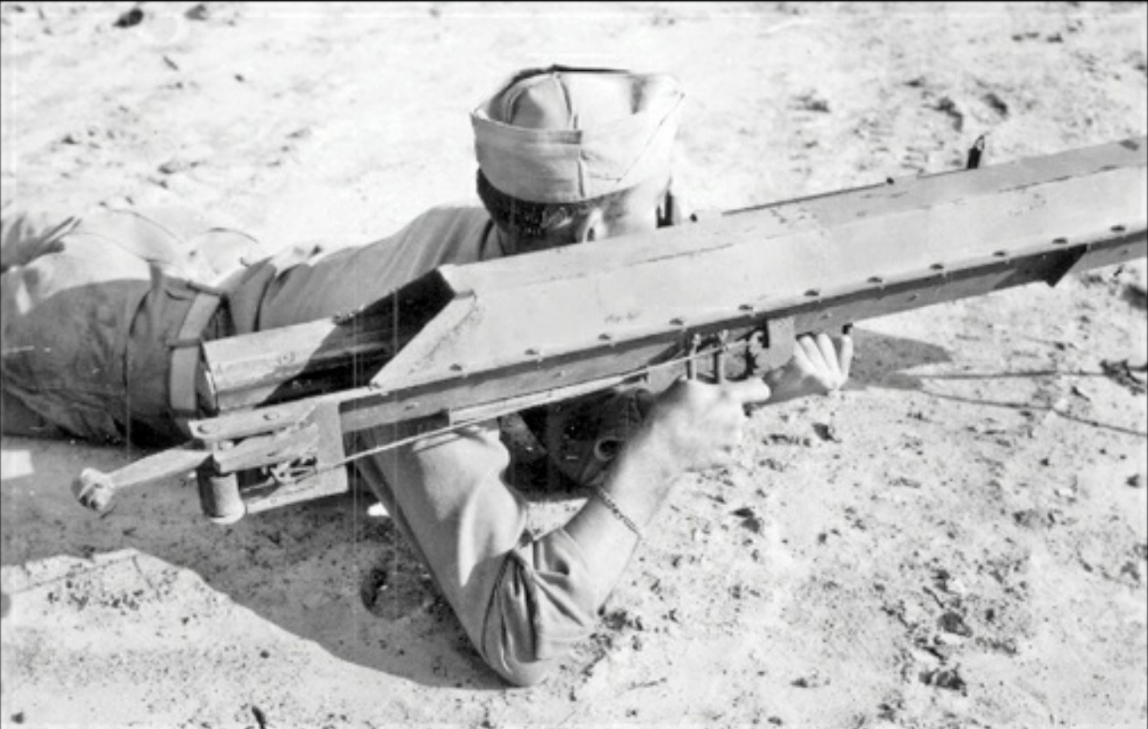
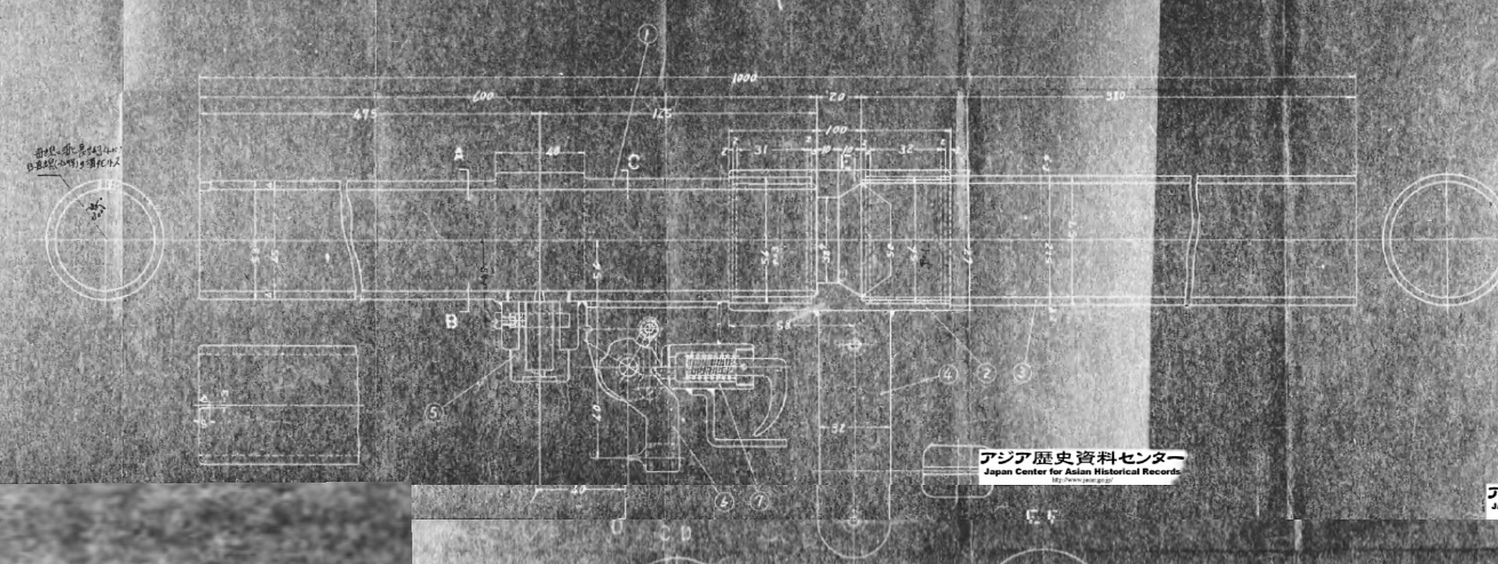
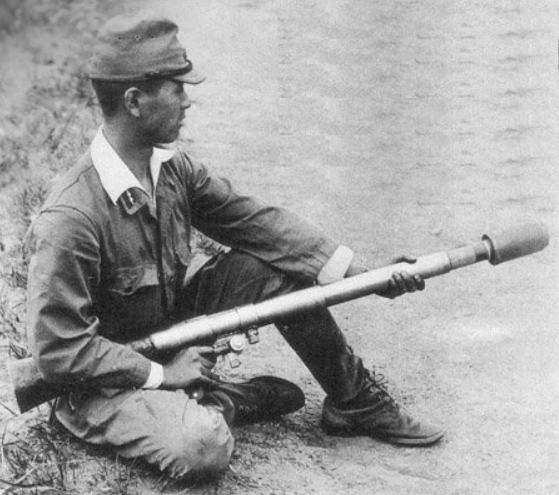
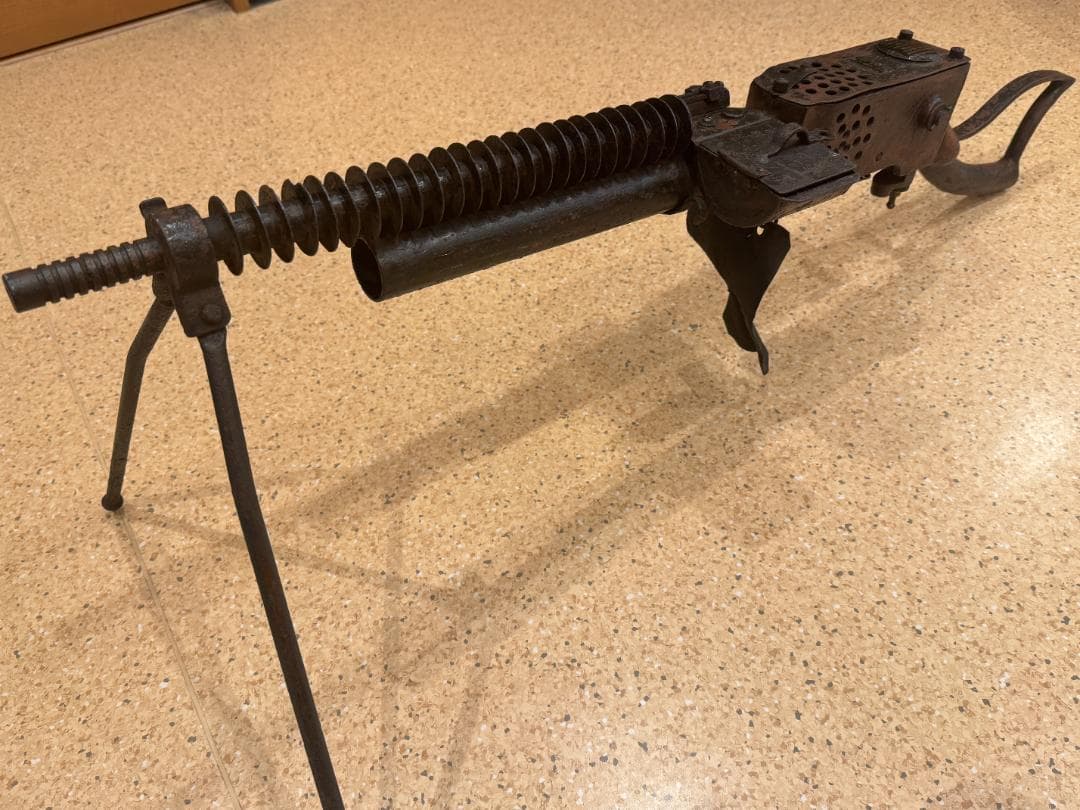
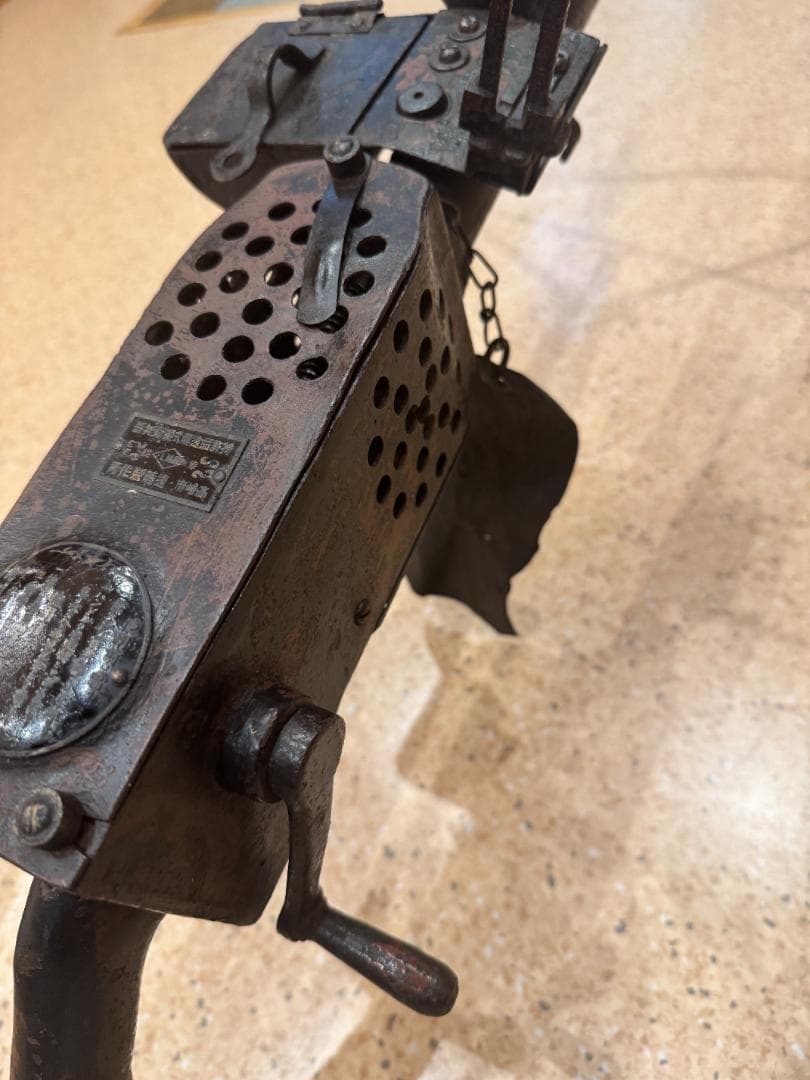
Designed for the defense of the nation and to equip volunteer forces, the National Pistole was a type of weapon that could be manufactured at any small factory or blacksmith shop. The design was simple, featuring a barrel formed from a common piece of pipe with a 13 mm diameter. It used a load of 3 to 5 grams of black powder, while the projectile was created by cutting an ordinary metal rod into sections approximately 15 mm long. The mechanism utilized an S-shaped spring-loaded percussion lock to strike a primer placed in a recess at the top of the breech.


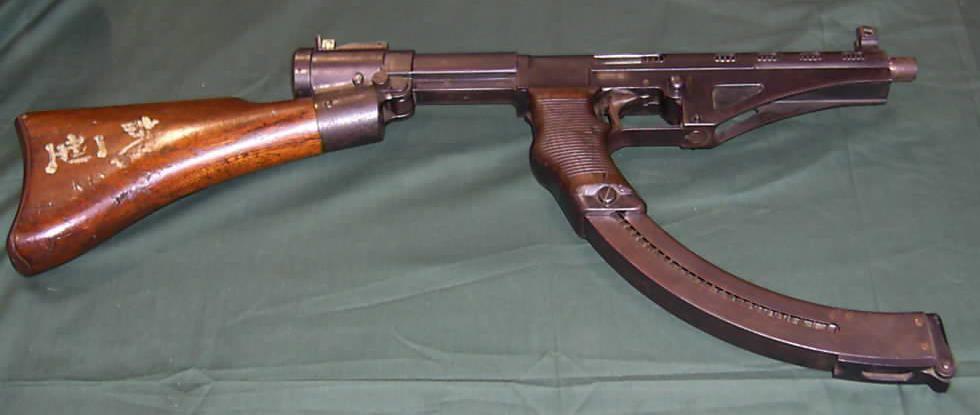
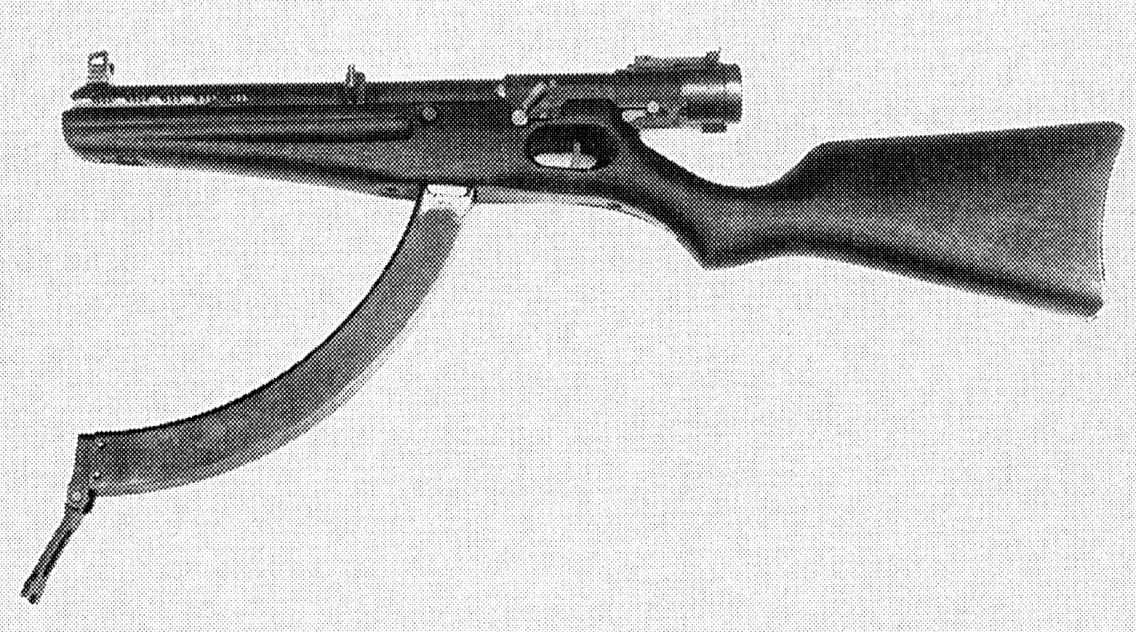
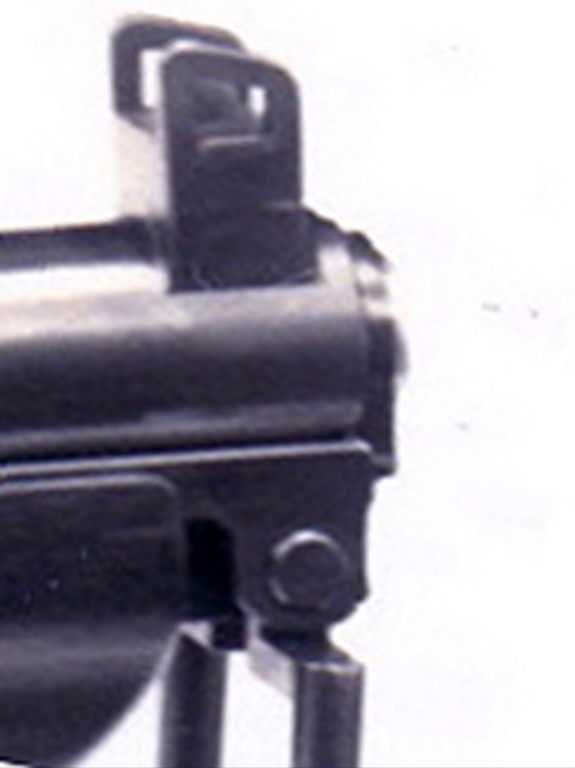
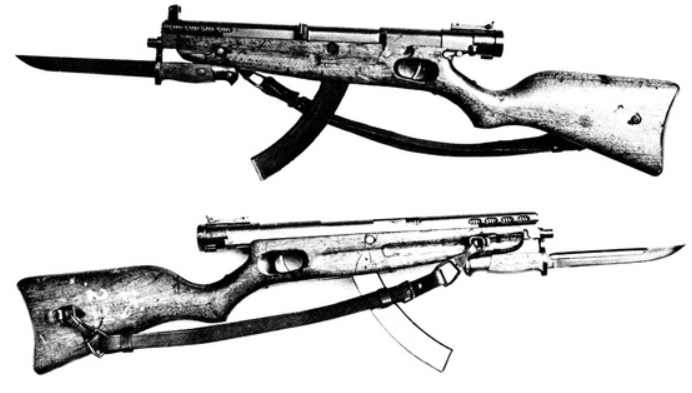




























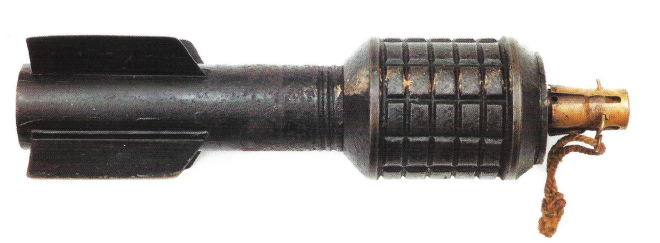
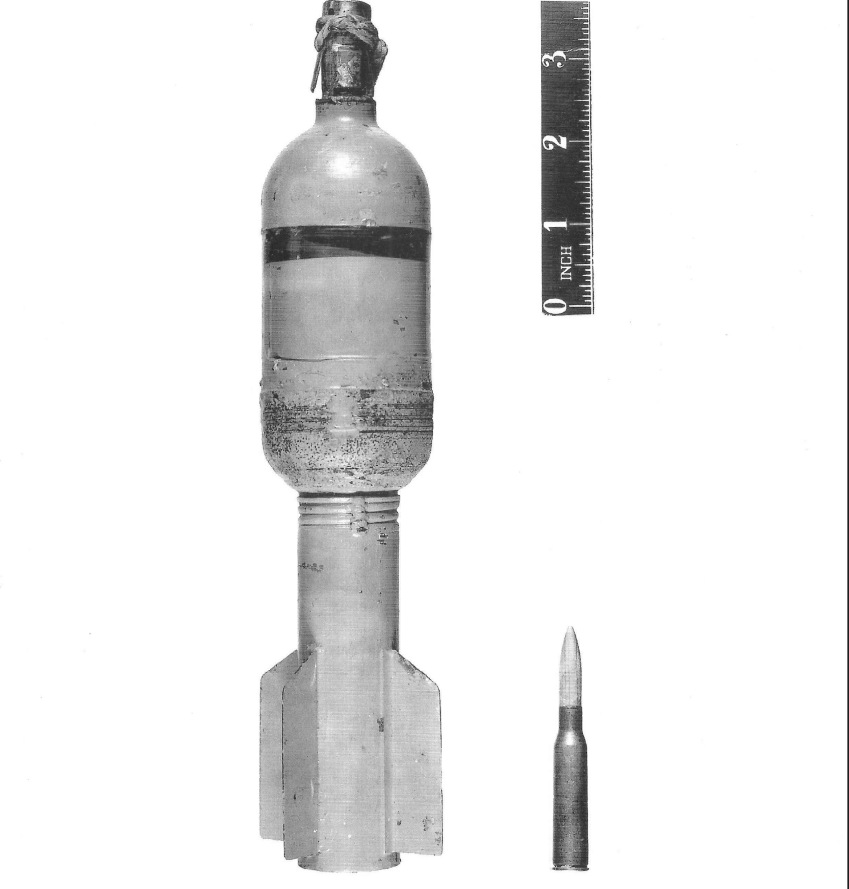
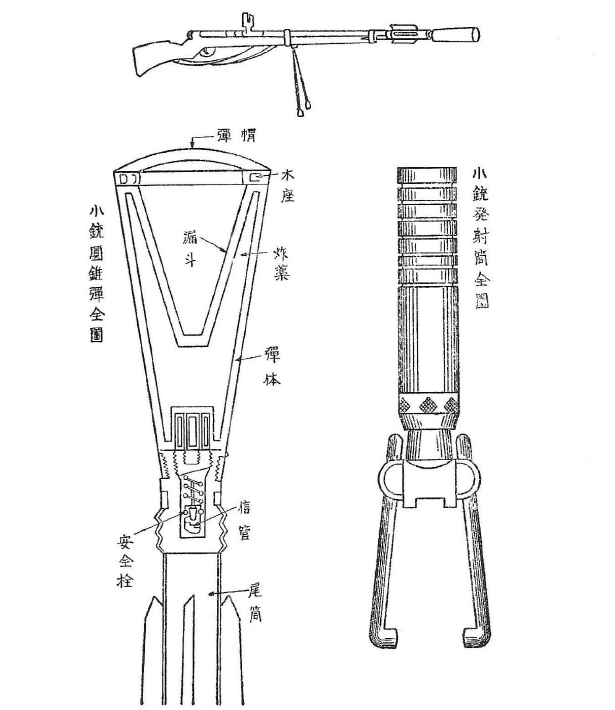
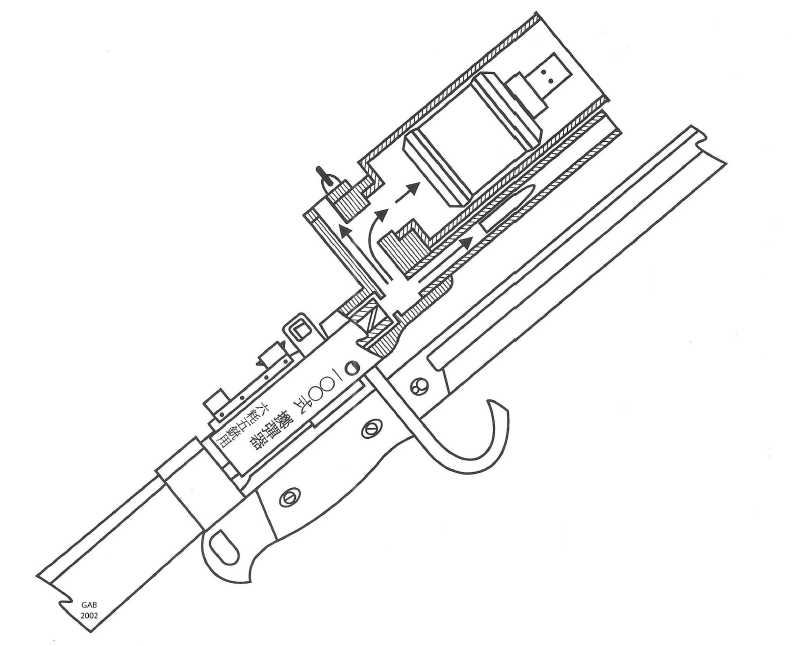
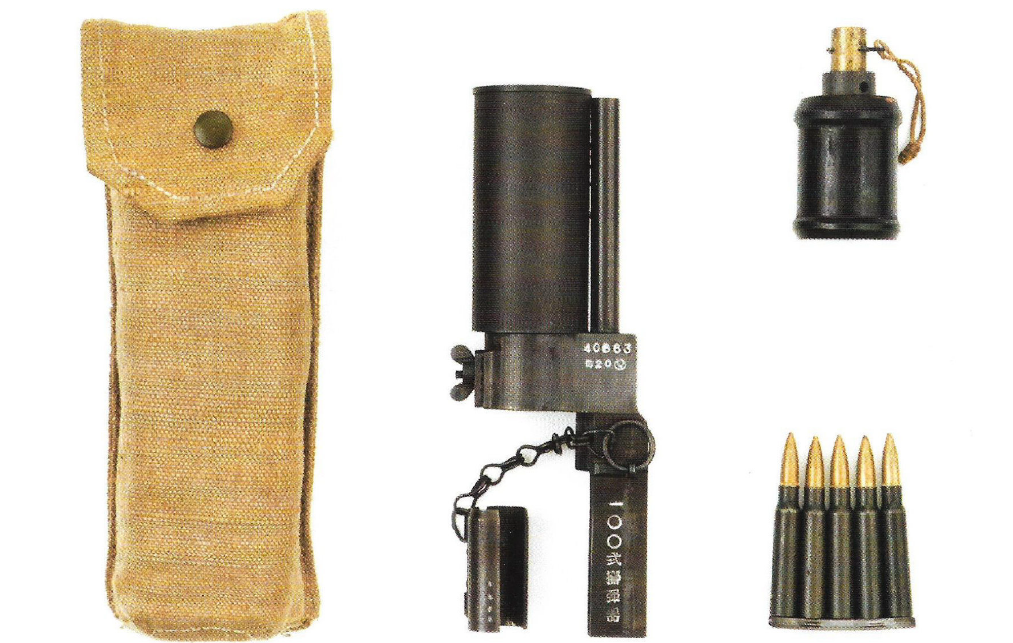
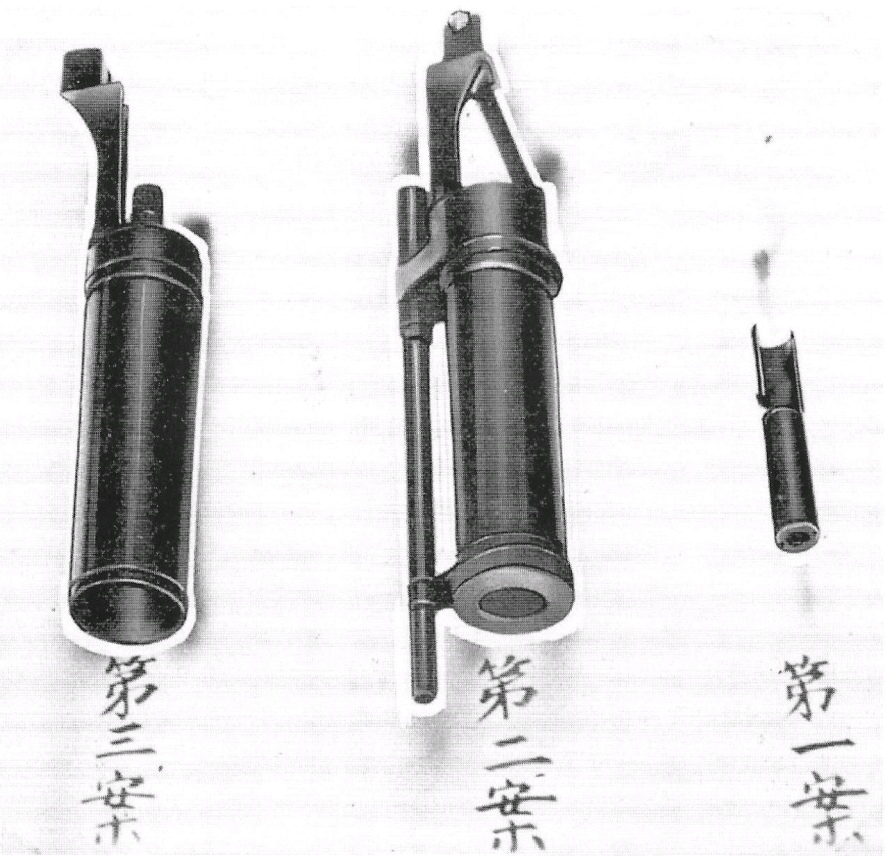
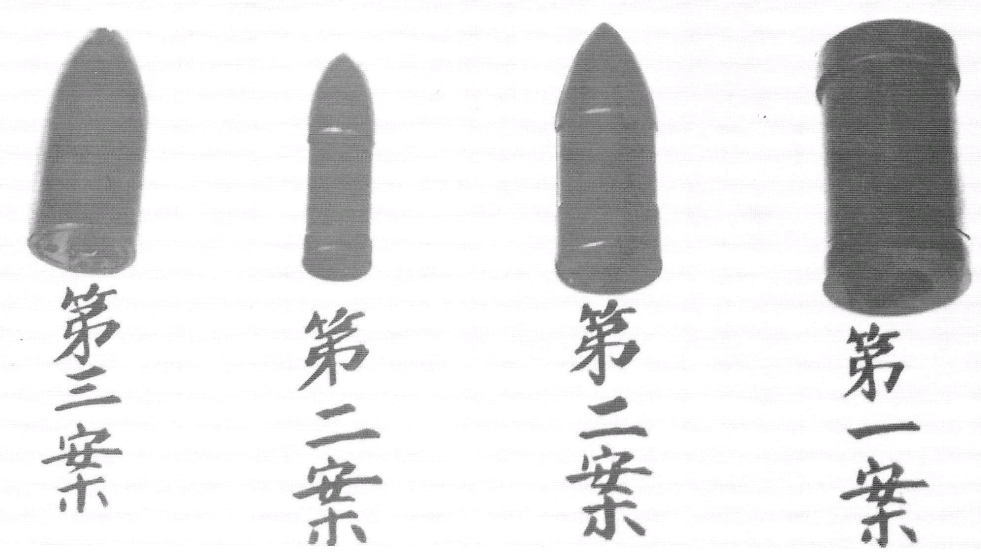
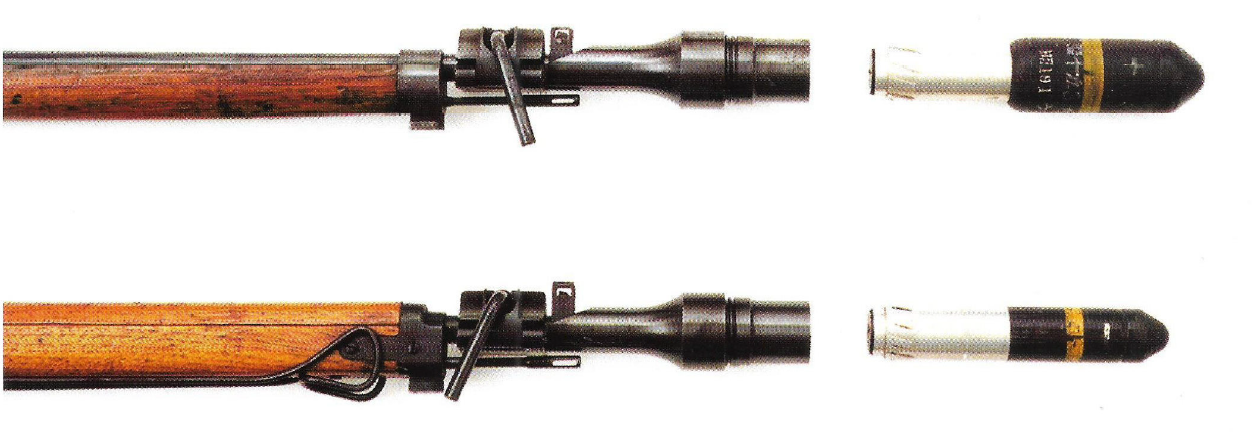







 .
.