Domestic soviet AT rocket launchers as alternatives to foreign ones - Part 2

In this part of the topic I will suggest more domestic AT launcher designs fit for BR 2 and 3.


PG-6
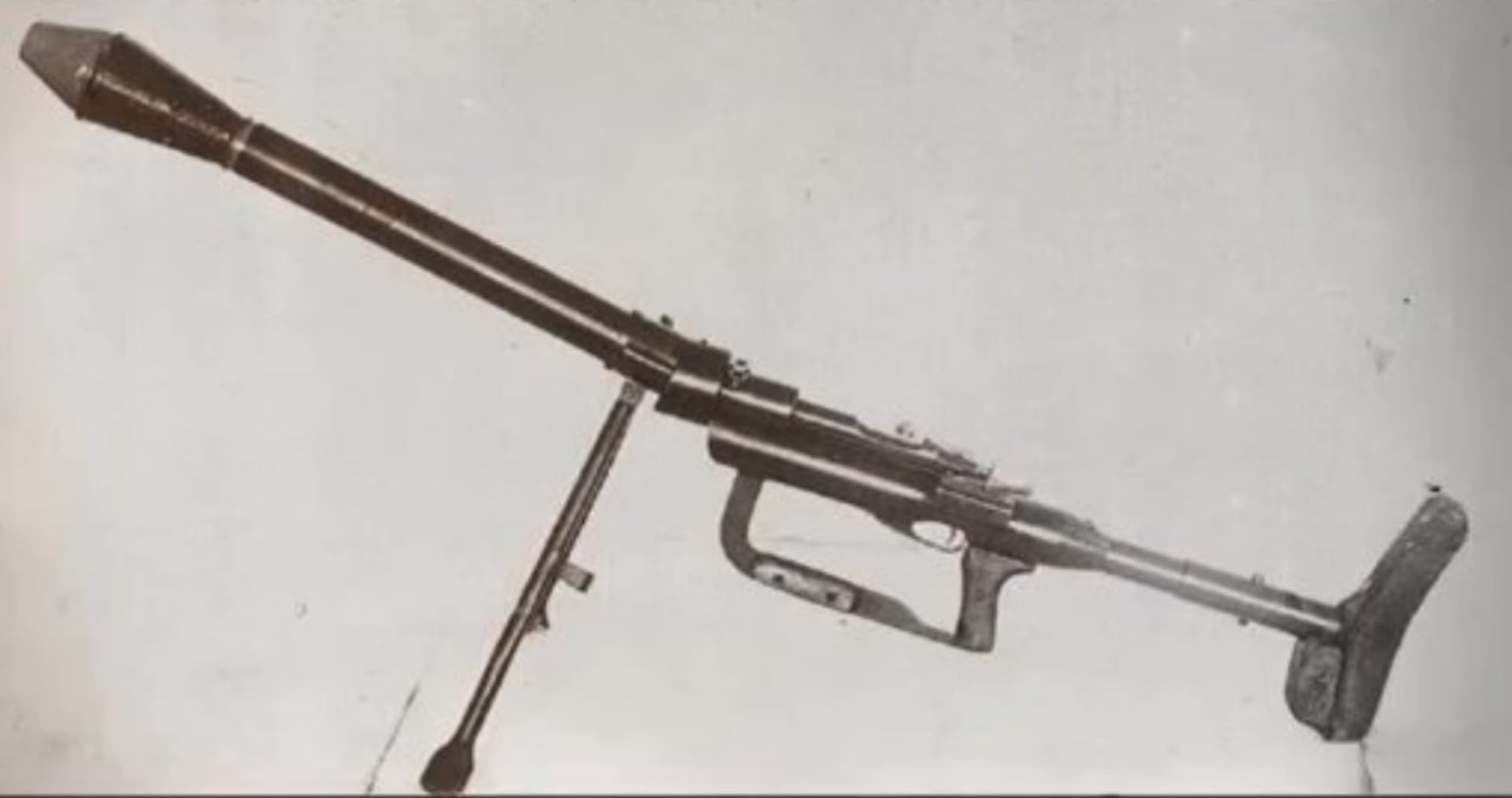
This is an interesting weapon in that it was made of already existing parts: the barrel was taken from a 50mm mortar, the receiver from a mosin rifle, part of the buttstock and the bipod from a PTRS, and the projectile was a modified RPG-6 AT grenade.

The RPG-6 grenade has 120mm of pen, the exact velocity of the projectile is unkown but it would be safe to guess less than 40 m/s like the RMN-50 as it was noted not to have great accuracy or range during trials.

Summary:

  • Less than 40* m/s
  • 120 mm of pen
  • BR 3
Would you like to see the PG-6 in the game? If yes, how should it be added?
  • Yes, in the tech tree
  • Yes, as an event or BP weapon
  • Yes, as a premium squad weapon
  • No
0 voters

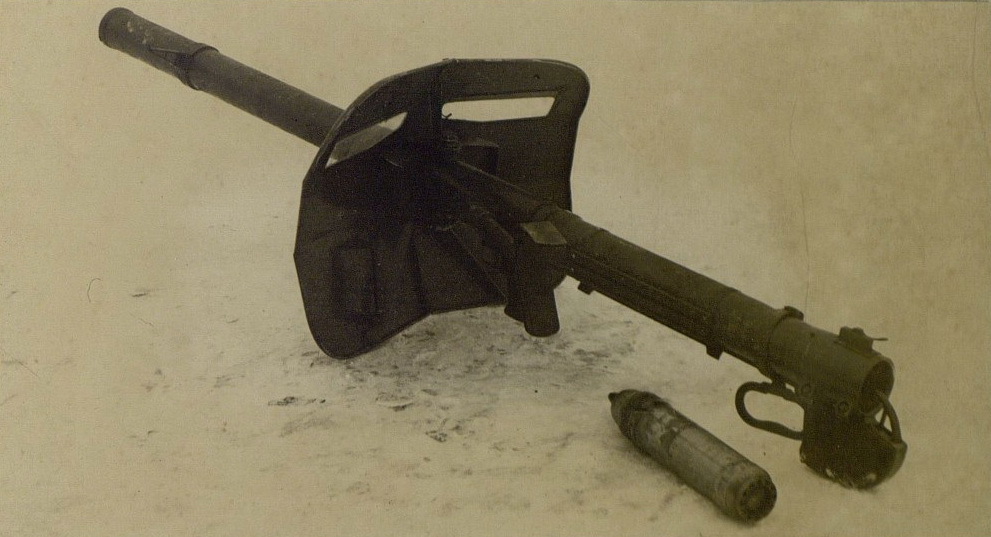
PTR-82

PTR-82

This prototype of the PTR-82 used RPM-82 and the later RBG-82 rocket projectiles which were fired at a very high velocity of 200 m/s and 176 m/s.

Its maximum penetration was up to 100mm with the RPM-82 (in the photo) but due to them being spin stabilized results were varied and the penetration was usually lower so making it pen 10mm less would be the realistic option.

The RBG-82 which was the later 1944 grenade ditched the spin stabilization and switched to non rotating fin stabilization, it had a higher penetration of 150mm.

Summary:

  • Velocity of 200 m/s for the RPM-82
  • Velocity of 176 m/s for the RBG-82
  • BR 2 using the RPM-82 with 90mm of pen or
  • BR 3 using the RBG-82 with 150mm of pen
Would you like to see the PTR-82 in the game? If yes, how should it be added?
  • Yes, in the tech tree
  • Yes, as an event or BP weapon
  • Yes, as a premium squad weapon
  • No
0 voters
Which projectile should it come with?
  • The RPM-82 with 90mm of pen for BR 2
  • The RBG-82 with 150mm of pen for BR 3
  • Both, for different versions of the weapon at BR 2 and BR 3
0 voters

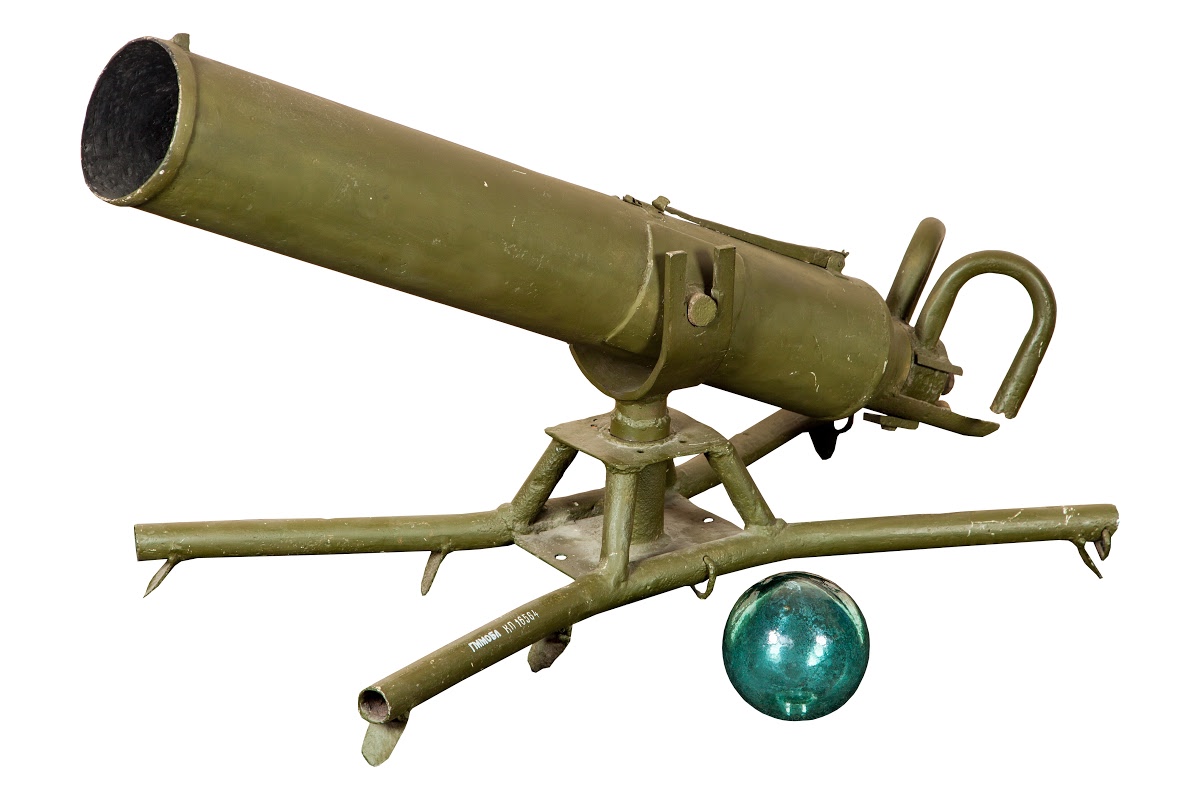
M1941 ampulomet with FBM-125

This version of the ampulomet would be portable but it should only be able to fire when mounted due to its design.

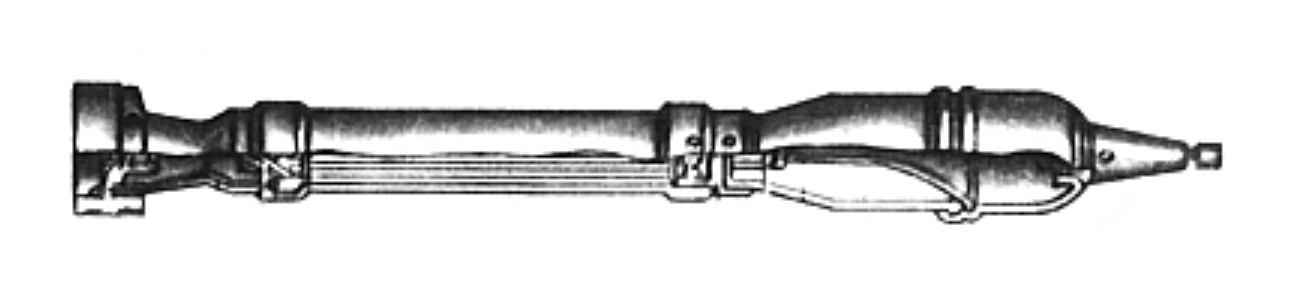
FBM-125 HEAT grenade with up to 90mm of penetration:
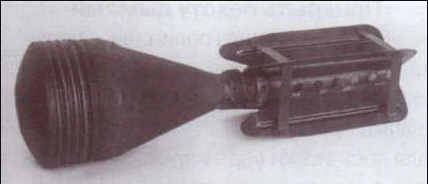
FBM-125

Summary:

  • Low velocity
  • 90mm of pen
  • Can fire only when mounted
  • BR 2
Would you like to see the ampulomet with the FBM-125 grenade in the game? If yes, how should it be added?
  • Yes, in the tech tree
  • Yes, as an event or BP weapon
  • Yes, as a premium squad weapon
  • No
0 voters

Petropavlovsky model 1931 rocket gun

1931-soviet_rocket_rifle

The world’s first hand held 65mm rocket propelled grenade launcher, 325 units were produced. It was used by parts of the NKVD for conducting special operations. It had acess to the RS-65 rocket assisted 65mm AP projectiles. It had no HEAT shells.

Summary:

  • Low velocity
  • 60*mm of pen with AP shell, penetration lowers with distance
  • BR 2
Would you like to see Petropavlovsky’s rocket gun in the game? If yes, how should it be added?
  • Yes, in the tech tree
  • Yes, as an event or BP weapon
  • Yes, as a premium squad weapon
  • No
0 voters

If anybody has access to some more info about these launchers please do post them in this thread as most of the sources I used are no longer available!

Here is the first part of this topic:
7 Likes

Soviets do not need another rmn 50.

Where does it say these launchers should get HE and mortar shells?

I included that as extra information but since people are misunderstanding I will remove them from the topic.

Feel free to vote again if that affected your opinion.

2 Likes

Feel free to restore the original rendition of your post… because if it was included in the post then it’s related to your suggestion… i find it ironic after removing the information about HE you then ask where in this post does it say they should get HE? If i recall you included it in the pen stats with a BR.

The BRs were added last minute to follow the rules of weapon suggestions, in hindsight I should have moved the BRs to a different location.

So if it wasn’t intended to be apart of your suggestion and not for the game why did you give it a BR as then it wouldn’t be subject to the rules?

Again, very funny you say this after removing the information you included about it in the post… i mean… really?

However to do away with this nonsense, i have changed my votes appropriately… i do think a domestic launcher is very much needed for the soviet tree.

Yeah would be nice, especially for the PTR-82

All very interesting, didnt know about most of them so impressed.

I think new Battle pass next week is the Soviet one, maybe hopefully one of these makes it in at some point!

Information about these launchers is rare so its no surprise that people dont know about them.

I wanted to include even more obscure ones, such as the prototypes for improved breech loading ampulomet designs specifically made to launch 100mm and 82mm HEAT grenades, but I am unable to find photos of them or their general specifications.

1 Like

Here are some articles that include more information on the PTR-82 and its projectiles:

A summary of relevant information in the articles:

The start of development

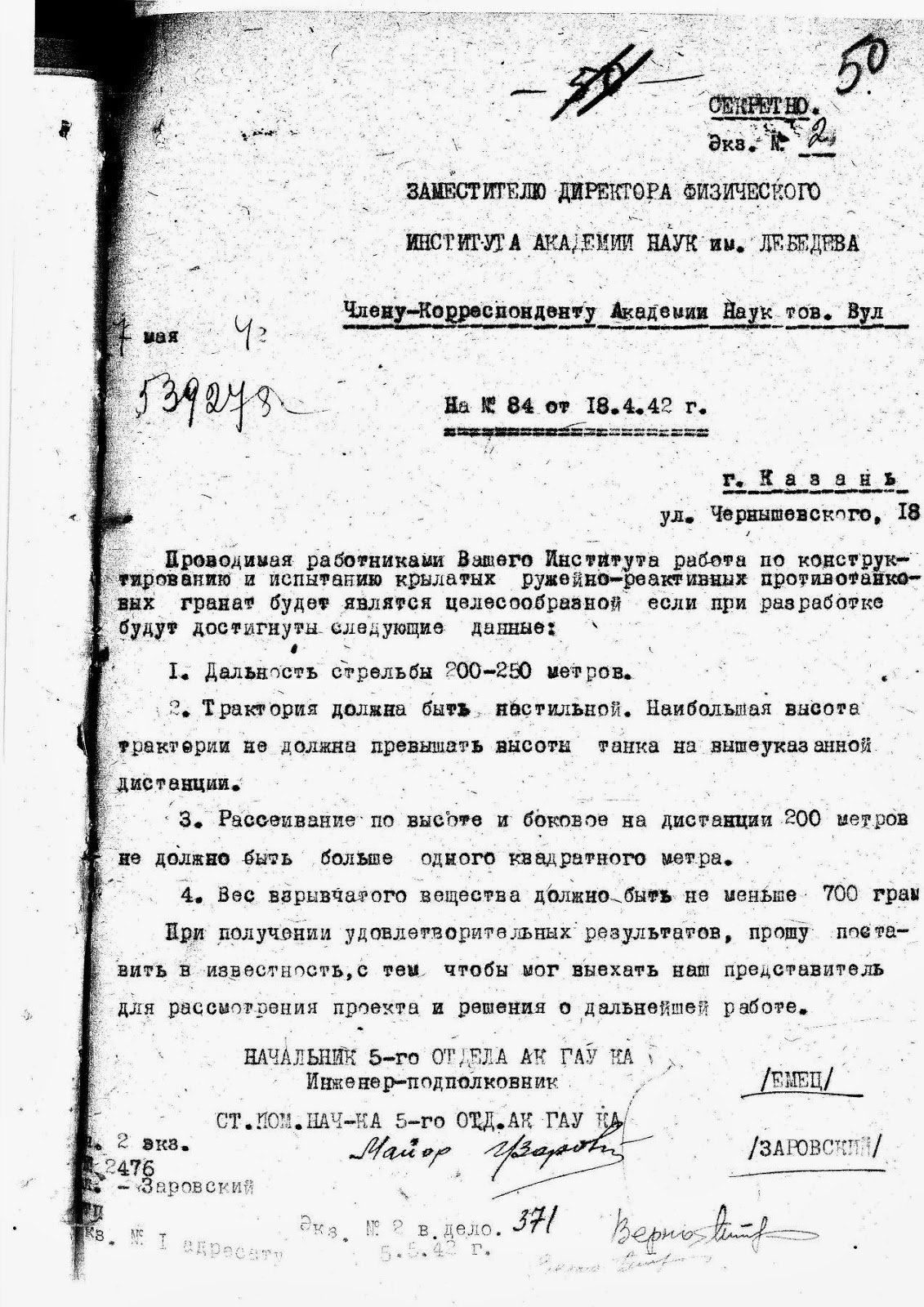
Original required specification for the new anti tank rocket launcher:

"The work on fin-stabilized rocket propelled anti-tank rifle grenades being developed at your institute would be useful if the following performance is reached:

1. Range: 200-250 meters.
2. Trajectory: as flat as possible. The trajectory must not be higher than a tank’s height at this distance.
3. The dispersion at 200 meters must not cover an area greater than one square meter.
4. The explosive filler weighs no less than 700 grams."

In March 1942, a group of engineers from the USSR People’s Commissariat of Oil (NKNP) under the leadership of A.P. Ostrovsky, acting on instructions from the Main Artillery Directorate (GAU), began developing a rocket-propelled antitank launcher and armor-piercing cumulative-charge grenades. The first rifles consisted of tubes 96 mm in diameter, 929 mm and 1330 mm long, mounted on a bipod with a collimator sight.

In March 1943, rifles and grenades with a significantly modified design were tested at the Scientific Research Proving Grounds for Small Arms (NIPSVO). Instead of stabilizing the grenade’s flight with fins, the principle of rotational motion was used, imparted to the grenade by inclined nozzles. The grenade body took the form of an elongated projectile and was made of plastic. The rifle had a longer barrel and mechanical sights consisting of a rear and front sight, but even this design was not sufficiently reliable, and the grenades were not stable in flight.

The PTR-82 and the RPM-82

In April 1943, the rifle underwent further significant modifications, receiving an 82 mm caliber, familiar to the RS-82 unguided rocket projectile. This adoption of technical solutions from a production-ready product finally yielded the first positive results. In September, specialized research institutes were brought in to help. The rocket portion of the new grenade was developed at Research Institute No. 3 of the Council of People’s Commissars (SNK), and the warhead at Research Institute No. 6 of the People’s Commissariat of Ammunition (NKB). The grenade’s velocity more than doubled, and its firing range increased to 300 meters. Armor penetration at a distance of 50 meters reached 90-100 mm.

In addition to reducing the system’s caliber, the electric ignition was replaced by a pin-type ignition system with a striker and trigger mechanism, and the grenade was given a special fuse. The projectile’s propellant charge was also improved, replacing three grades of nitroglycerin propellant. The grenade’s body became metal, and a locking mechanism was added to the barrel for loading. The rifle received a safety shield with handles for the gunner and loader. The weapon’s design also allowed for safe shoulder firing.

By early 1944, the rifle could penetrate the armor of “all German tanks, including the T-6 Tiger tank (except for the T-6’s frontal armor, which had 110 mm).” Moscow factories began pilot production of the rifle and ammunition. Resolution GOKO-5098ss of February 6, 1944, ordered the production of 250 PTR-82 82 mm anti-tank rocket rifles and 10,000 RPM-82 anti-tank rocket mines by April.

The RBG-82

In May of 1944, non-rotating grenades were tested to determine the cause of poor armor penetration. It was discovered that nutation during the grenade’s rotation significantly reduced armor penetration. SKB-36 later developed rotating grenades with a non-rotating explosive charge, which, due to nutation, demonstrated high dispersion and poor armor penetration.

Beginning in June 1944, the RBG-82 armor-piercing grenade received fin-stabilized stabilizers. The new grenade had a different HEAT warhead and a fundamentally different tail (rocket) section. The grenade’s flight speed was reduced to 176 m/s, and its forward propulsion was achieved by exhausting gases rearward from the rocket chamber through six straight nozzles. The fins had eight long, straight, ringed fins. This version of the ammunition also failed to demonstrate satisfactory results.

After this, the grenade was given a single central nozzle and annular stabilizers. This grenade achieved better accuracy than all previously tested RBG-82s. However, one significant drawback emerged: due to the concentrated effect of the propellant gas stream, the crew required special clothing, and the shield glass became unclear. (This was the reason the shield was made bigger and the glass smaller on the later versions of the PTR)

Name PTR-82 RPR-82
Year of development 1943 1944
Caliber, mm 82 82
Length, mm n/a 2090
Weight, kg 22 37.8
Ammunition type RPM-82 RBG-82
Grenade Weight, Kg 4.5 3.99
Initial velocity, m/s 200 176
Direct fire range, m 200 200
Armor penetration, mm 90 150
Rate of fire, rpm 5-6 5-6

As for the RPR-82, from my understanding of the articles it was just a carriage mounted PTR-82 with no notable modifications done to how it operates so they technically should be able to use the same grenades.

There are no photos of the RBG-82, only descriptions which closely fit to the PG-82 rocket used by the SPG-82.

2 Likes

If this is a compendium of Soviet AT weapons id add the LPG-44 to the mix, a lighter Panzerfaust analogue

EDIT: Bah just saw its in part 1. All good think you got almost all the options available, looks great!


1 Like

Thanks, noted

3 Likes