An unidentified grenade launcher from the Sino-Japanese War

A
  • br2
  • br3
  • br4
  • no
0 voters

A grenade gun from the Yantai Museum’s collection

The museum’s inventory record simply lists this item as a “captured Japanese weapon”; it lacks a specific name, and there is no information regarding who captured it, or when and where the capture took place.

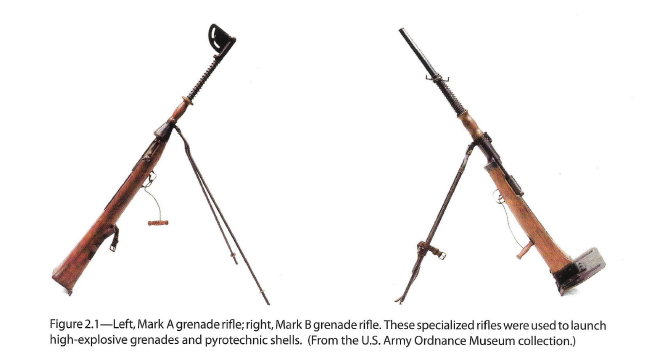
The weapon resembles a light machine gun and is equipped with a bipod. It features a large caliber (visually estimated at 30–40mm), a relatively short barrel, and a shoulder stock. Sling swivels are located on the left side of the barrel and stock, allowing it to be carried over the shoulder. While it resembles a firearm, its caliber far exceeds 20mm, and it lacks a feeding mechanism, an ejection port, and a trigger; instead, it has a cocking handle on the right side, leaving its loading and firing methods unclear. Conversely, while it might be considered a form of artillery, its overall structure—including sights consisting of a front post and rear notch—mimics that of a light machine gun, yet its operational mechanics remain obscure.

The author posits that this is a specialized grenade launcher, or “grenade gun.” Given the lack of detailed records regarding this specific weapon—and the fact that neither Western Allied nor Soviet forces fielded such a weapon during World War II—the author conducted extensive research into weaponry used during the War of Resistance. This research focused particularly on the grenade dischargers (knee mortars) used by the Japanese military, as well as similar equipment employed by the Eighth Route Army and Nationalist forces.

Close inspection reveals that this weapon at the Yantai Museum has an outer barrel diameter of 42 mm and an inner diameter of 35 mm (matching the 35 mm caliber of China’s Type 87 grenade launcher). It weighs approximately 7 kg, has an overall length of about 1,000 mm, and a barrel length exceeding 450 mm—making it relatively long for its class and capable of a correspondingly greater range. The barrel thickens gradually from the muzzle toward the section bearing the inscription, a design that accommodates the varying pressure of propellant gases within the chamber. No loading port is visible, implying that the grenade is loaded via the muzzle. Since the weapon is fired from the shoulder, recoil must be kept low; consequently, it utilizes the high-low pressure launching principle, a fundamental mechanism of modern grenade launchers. It lacks a conventional trigger, likely employing a pull-cord or push-button firing mechanism. The sighting system suggests high accuracy, with a design optimized for direct fire supplemented by indirect fire—offering superior performance compared to grenade dischargers and mortars. A bipod is fitted to enhance stability, and a carrying sling allows for shoulder-slung transport, facilitating mobility.

  • tt
  • bp
  • event
  • premium
0 voters

The photograph shows a makeshift Chinese grenade launcher (a 35mm handheld grenade launcher) created by the ordnance specialists of the People’s Liberation Army of China during the Yan’an period / the Second Sino-Japanese War.
Depending on the museum classification and historical documentation, it is referred to as the “35mm handheld grenade launcher from the Shandong (or Jiaodong) Communist Arsenal” or the “Eighth Route Army grenade-launching gun.”
• Year of creation: Developed and manufactured between 1941 and 1943. This specific specimen is held in the collection of the Yantai Museum (Shandong Province, China).
In the records of the Yantai Museum, this weapon was long misidentified as having been “captured from the Japanese invaders.” In reality, however, this unique piece of weaponry was designed and manufactured by the Chinese guerrillas themselves—fighters of the Eighth Route Army of the PLA—for use in the struggle against the Japanese.
The weapon was of such high quality and so unconventional for a partisan workshop—featuring a factory-made wooden stock, neatly crafted bipods, and an unusual bolt mechanism—that museum staff could not believe it had been produced in a makeshift workshop; instead, they concluded that it must be a rare Japanese design.
Researchers examined archives from the Shandong and Jiaodong guerrilla zones. It was discovered that between 1941 and 1943, local Chinese engineers and ordnance specialists—some of whom were highly skilled—attempted to develop a mobile infantry support weapon. They combined the concept of a Japanese-style mortar/grenade launcher (featuring a sliding-wedge breech mechanism and a 35mm caliber) with the ergonomics of a machine gun (incorporating a bipod and a shoulder stock).
In total, only about four of these experimental rifle-grenade launcher units were produced at the ammunition plant in the Penglai area. They did not enter mass production, primarily because the partisans were unable to establish a large-scale, high-quality manufacturing process for the complex fuzes required for the 35mm grenades.
The Chinese built the grenade launcher itself: between 1941 and 1943, the Eighth Route Army’s ordnance specialists in Shandong Province designed the weapon from scratch and assembled it by hand. It was their own original invention.

1 Like

thank you I was going to tell this it should be at least american thing, if you want bring something weird for japan I have 2 beauties from ww1 period, you can read more here
imagen

This isn’t Japanese they didn’t even capture it as a trophy. It’s Chinese, built from scratch partisans.
The partisans who created this grenade launcher were part of the Eighth Route Army. This was the primary military force of the Chinese Communist Party (CCP) under the leadership of Mao Zedong, operating in the north and east of the country (including Shandong Province, where this weapon was produced).

1 Like

They already have the arisaka mortar I don’t think they need more

1 Like

You’ve read that this isn’t Japanese, right? Japan didn’t even capture this particular piece. It’s a piece of Chinese guerrilla equipment, made by the Communists—the 8th Route Army.

Same happens soviets would get It wen they already have the RMN 50

I don’t even have an RMН-50.