The plan to expand Japanese allies: Italians
We cannot directly join other countries because that might involve some political factors. However, we can also include Italians. Italian soldiers fought for both Germany and Japan at the same time.
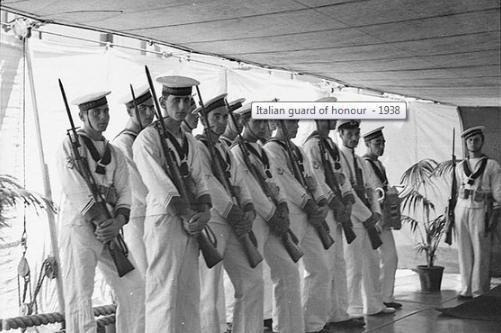
In 1899, Italy made an unreasonable demand to the Chinese government to forcibly lease the Sanmen Bay in Zhejiang Province. The Qing government rejected this request. The following year, the King of Italy specially dispatched a 53-person “expeditionary force” to participate in the military operation of the Eight-Nation Alliance in capturing Tianjin and Beijing. Subsequently, Italy obtained the right to station troops in Tianjin, Beijing and Shanghai. In 1925, Mussolini, who had already consolidated the fascist regime in China, decided to send an “Eastern Expeditionary Army” to China. A 300-person force arrived in China.
In the early 1930s, the relations between China and Italy developed well. In November 1937, the three fascist countries of Germany, Italy and Japan formed an axis. Chiang Kai-shek was quite disgusted with Italy’s overly close relationship with Japan, and the relations between China and Italy began to deteriorate. In the spring and summer of 1937, the full-scale war between China and Japan was on the verge of breaking out. The Italian ambassador in China and a fascist party member, Carlo Fumakalli, urgently sent a telegram to Mussolini, requesting to dispatch more warships and troops to China to strengthen the defense of the Italian concession and embassy area. This request was approved. In 1937, the Italian army and navy sent a total of 1,200 troops to China.
During the first few years of the Sino-Japanese War, the Italian troops in China experienced a relatively peaceful period. However, the Japanese were very disgusted with the presence of an additional European armed force in their occupied area. Due to Italy’s repeated defeats, on July 25, 1943, Mussolini was arrested by the king. Immediately afterwards, on September 8, Italy established a new government called Badoglio, withdrew from the Axis, and pushed the Italian soldiers stationed in the Far East into a dangerous situation. Many Italian naval ships in China, Singapore, Kobe, Japan, etc., were within the sphere of influence of the Japanese forces. The commanders of many ships learned that Italy had surrendered and decided to sink their ships to avoid being captured by the Japanese. The “Rabanta” and “Carrotto” even fired on the Japanese troops seizing the ships and the Shanghai puppet police in Dongjiaominxiang. Finally, they sank in the Huangpu River. When Italian ships were brutally looted by the Japanese, the Italian army in the concessions and embassy areas in Tianjin, Beijing, Shanghai, and the embassy and consulate areas also faced a life-and-death choice. On September 9, 1,000 Japanese troops launched a fierce attack on the Italian embassy in Dongjiaominxiang and the Beijing radio station with the support of cannons and 15 light tanks; in the Tianjin concession area, the Italian troops were surrounded by 6,000 Japanese puppet troops…
In this “September Martyrs’ Surrender Incident” called by the Japanese, the Japanese captured nearly 1,100 Italians. The Japanese offered them two choices: either declare allegiance to the “Italian Social Republic” (i.e., the “Salò Republic”) founded by Hitler, or be sent to concentration camps. 170 Italian soldiers sold their souls and joined the Japanese. The rest were imprisoned by the Japanese in concentration camps in Northeast China, Korea and the Philippines. After Japan’s surrender, the Italian soldiers imprisoned in concentration camps in China were rescued by the US troops on September 1945 and returned to Italy on a US warship in March 1946. The history of the “Eastern Expeditionary Army” sent by Italy to China came to an end.
After conducting research, the Italian military decided to form an elite battalion from the core forces of the “San Marco Regiment”. This battalion consists of 3 companies, each with 100 soldiers. The 3 companies are respectively named “San Marco Company”, “Libya Company” and “San Giorgio Company”. In March, this carefully selected unit officially set off for China.
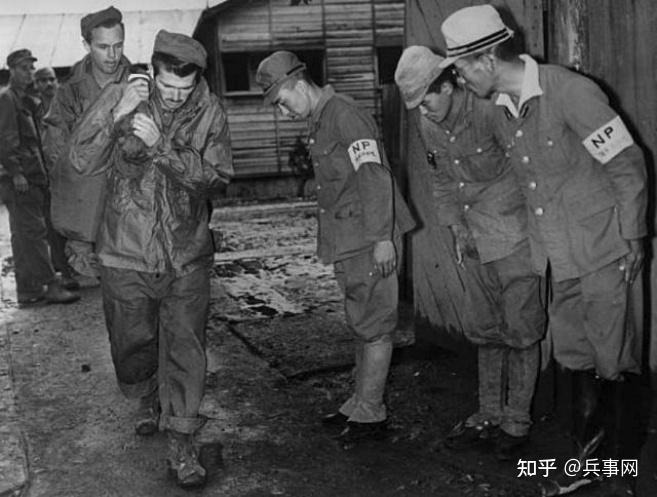
According to the description in the literature, approximately 1,100 Italian soldiers were captured by the Japanese army in China.
Later, approximately 170 people were willing to surrender to the Japanese army and join it.
(Although, the Japanese did not place much trust in them and did not let them engage in combat. Instead, they were mainly assigned to guard duties.)
Do you think this is an opportunity to introduce an Italian unit into the Japanese army and thereby increase the number of allies for the Japanese forces?
They might continue to use their own Italian weapons, or they might use the Japanese weapons, or they might use the weapons seized from the Japanese forces (these seized weapons could be from China, or from the British on the Burma front, or from the French in Vietnam.)
- Yes
- No