A Japanese tank of significant collectible value
Because it is the lightest tank in the world.
The Type 94 ultra-light tank has a self-weight of only 3.2 tons. This vehicle is small in size and light in weight, and is one of the lightest tanks in the world since the 1930s. The so-called “94” refers to the last two digits of the 2594th year of the Japanese imperial calendar (that is, the year 1934 AD). It is mainly used for command, communication, search, and alerting, and can also be used as a gun tractor or ammunition carrier.
The Type 94 Light Armored Vehicle was developed by Hino Motors of Japan starting in 1933. The prototype was completed in 1934 and was given the name Te-Ke. It entered service in 1935 and was quickly deployed in the poorly-conditioned regions of Manchukuo, being assigned to infantry divisions as independent armored vehicle battalions (each battalion equipped with 6 vehicles). After the outbreak of the Anti-Japanese War in 1937, the Type 94 Light Armored Vehicle was also put into combat, mainly for infantry support, reconnaissance support, and armored transportation. Although the Chinese military was equipped with outdated equipment and lacked anti-tank weapons at that time, people soon discovered that a single explosive package and a bundle of grenades could easily destroy the lightly armored Type 94 Light Armored Vehicle, whose thinnest armor was only 6 millimeters, and sometimes even could be penetrated by rifles. Nevertheless, they continued to serve on the Chinese battlefield. After the outbreak of the Pacific War in 1941, they were widely deployed in the infantry divisions of the army and the marine corps. Before the production of the Type 94 Light Armored Vehicle was halted in 1937, approximately 800 units were produced.
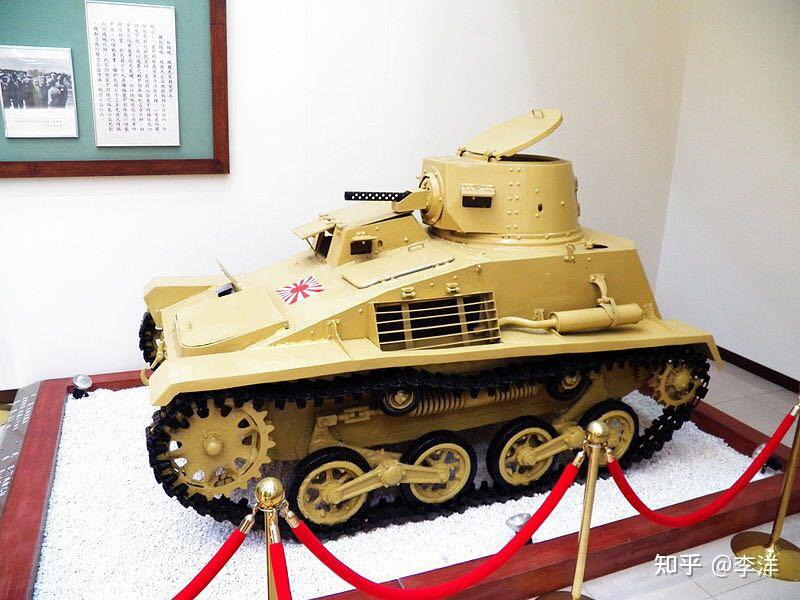
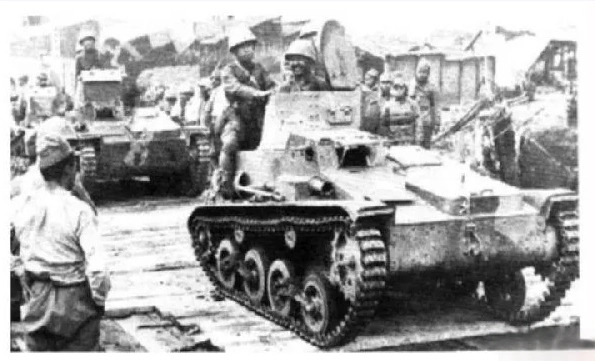
The cockpit and power compartment of the Type 94 ultra-light tank are located at the front of the vehicle body. The cockpit is on the right and the power compartment is on the left. The engine is placed behind the gearbox, which is in the middle of the vehicle body, towards the front. There is an inspection window for each of the engine and the transmission system, facilitating maintenance and disassembly.
The fighting compartment is located at the rear of the vehicle body. There is a gun tower on the upper part, and its main weapon is a 1 machine gun. In the early days, it was a 6.5mm Type 91 machine gun, which was later replaced by a 7.7mm machine gun. A few vehicles were equipped with a 37mm gun. There are hatches for the gunner and the driver, and a rear door is also opened at the rear of the vehicle body to facilitate the crew’s boarding and disembarking as well as communication with the towed vehicle. After specially opening the rear window of the gun tower, it can be seen that its main weapon is only a 7.7mm heavy machine gun. Its handle is different from most firearms in the world, but it is similar to the Japanese “odd-handle” machine gun. Its firepower is far inferior to the 12.7mm machine gun of modern armored vehicles.
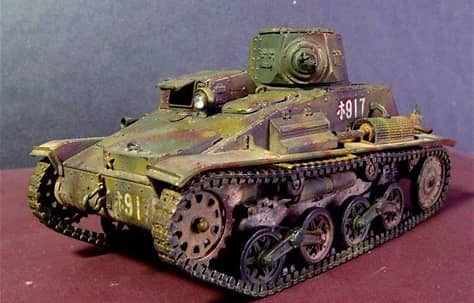
Tank dimensions: Length 3.08 meters, Width 1.62 meters, Height 2 meters;
Engine power: 23.5 kilowatts
Maximum speed: 40 kilometers per hour
Maximum range: 208 kilometers
Passengers in the vehicle: 2 people.
Main weapon: 1 7.7-millimeter machine gun
Ammunition thickness: 4 - 12 millimeters
Do you think it’s appropriate to have these Japanese tanks join our battlefield?
Because it is very small and very cute~
- Yes
- No