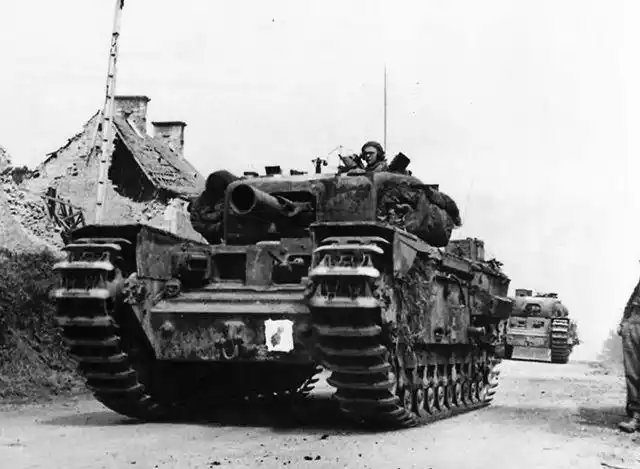
It has arrived! The bunker-smashing behemoth, featuring its iconic 290mm colossal mortar.
Vehicle Component
Armor Thickness & Angle
Details & Notes
Hull Front (Upper)
102 mm (4 inches) / 0-24°
Cast or rolled homogeneous armor. Very thick and well-sloped, providing superb frontal protection against most contemporary anti-tank guns.
Hull Front (Lower)
89 mm (3.5 inches) / 0-45°
A weaker but still substantial plate, angled back.
Hull Side
76 mm (3 inches) / 0°
Vertical plate. Often had additional 25 mm (1 inch) appliqué armor bolted on, bringing total to 101 mm (4 inches) .
Hull Rear
64 mm (2.5 inches) / 0-18°
Adequate protection against flanking fire.
Hull Top/Belly
16-19 mm (0.6-0.75 inches)
Standard for infantry tanks, vulnerable to mines and high-explosive overhead strikes.
Turret Front
88 mm (3.5 inches) / 0-10°
Massive cast turret (Mk III had partly welded turret). The gun mantlet for the Petard mortar was equally thick.
Turret Side/Rear
76 mm (3 inches) / 0-10°
Rounded cast shape offered good effective thickness.
Turret Top
20 mm (0.8 inches)
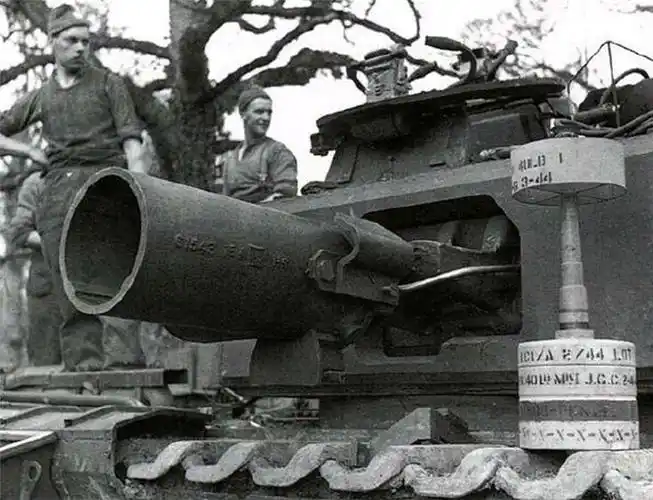
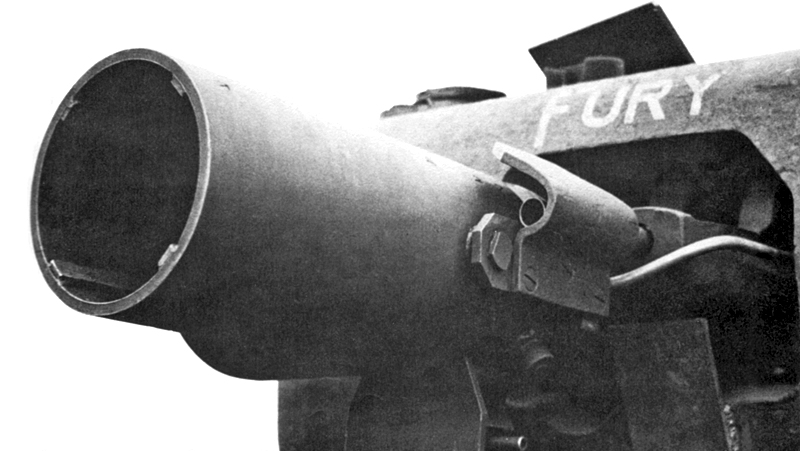
Folding 290mm Petard mortar
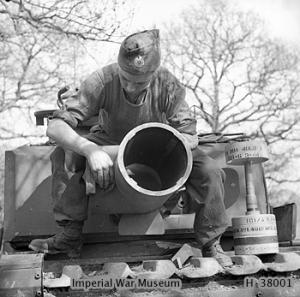
This 290mm mortar used a barrel made from 20mm-thick steel tubing, with four rifling grooves and a muzzle-loading design. It fired the “Bomb, Demolition Number I” shell, officially designated as the No. 1 Demolition Bomb. This was essentially a massive projectile carrying an 18-kilogram high-explosive charge. Its destructive power relied purely on immense blast force, making it several times more powerful than a standard 150mm high-explosive shell, which typically contained only a few kilograms of explosive.
Due to the massive size of its mortar, it required external reloading outside the vehicle. In War Thunder, this results in a lengthy 20-second reload time and an effective range of only 130 meters.
The Churchill AVRE series of specialized tanks, while armored fighting vehicles, were not designed for tank-to-tank combat. Only the variant equipped with the 290mm mortar saw extensive frontline combat use. These vehicles were primarily operated by the Royal Engineers.
So, I believe this vehicle is only suitable as an Event Vehicle .
Definetly the Mk IV Chruchill over the Mk III, since they made way more Mk IVs.
Also, some might point out that this thing should be BR IV, due to the gun. Point out in response that the “gun” is a spigot mortar, with a effective range of around 100 meters, you will naturally be forced out of the Greyzone to use this thing effectively, meaning it’ll be very voulnerable.
I think if they model the shell inside the barrel being explodable it MAYBE could be br 2. Since it can’t rlly get into range with other tanks and Churchill are pretty easy to take out with explosive packs and tnt.
I am in no way interested in seeing it crippled enough for it to be BR II… We also already have the Alecto in BR II.
BR III, best choice I think, and personally I was expecting more pushback from people wanting it in BR IV instead, but those people haven’t shown up yet I guess.
Yup… Like sure, max range is just over 200m, but those shots are incredibly arched, you won’t be shooting inside buildings with that thing, hence why you need to move up to be effective.
Idk, I still think BR III is the perfect placement. It has quite a lot of armour, and two MGs (assuming hull-MG functionality in the future), a closed turret… That’s survivability and two more MGs above the Alecto… I don’t think they can be on the same BR, without the suggested mechanic you brought up… And with that, it just feels unnessesary…
The armour is the same as the current Churchill Mk III,
The shell is 12kg of explosive mass - 4 more than the sig, diminishing returns mostly, and the game already plays fast and loose with explosive yields so it can be adjusted,
Reload is slightly faster than the KV-2
and
Range is supposed to be the balancing factor here, I don’t think that makes it a negative…
I still think it’s a perfectly fine and a very fun gimic vehicle in BR III… Would likely still be using the base tank over it, if I had to choose only one to bring.