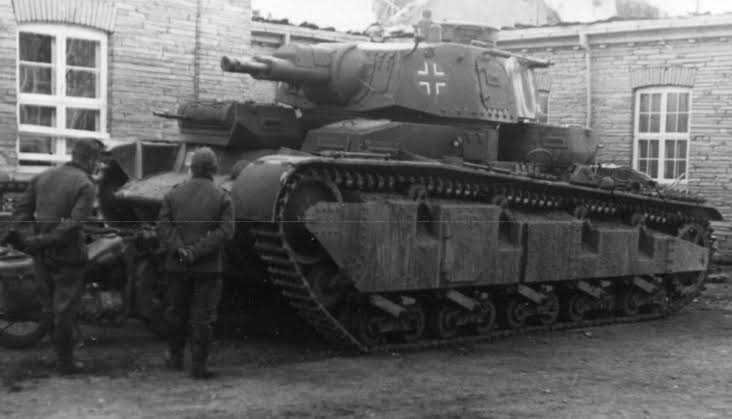
The Neubaufahrzeug, or Nb.Fz., (which translates to “New construction vehicle”) was a prototype German heavy tank made around 1933, developed under a codename while Germany was still publicly following the Treaty of Versailles’ restrictions on tank development. The tank was designed with the aim to combat enemy tanks and fortified structures, of which the slightly later panzer 3 and 4 were made for, but this was intended to be able to fulfill both roles in one tank. A series of 5 prototypes were completed before it was deemed too heavy and slow, and what little work on it there was stopped 1936. This would not be the end of this tank though, three examples were used during the invasion of Norway in 1940. There, one even fought against British and Norwegian forces, but faced damage from Boys anti-tank rifles and gad to pull back after some usage. It isn’t entirely clear what happened to these tanks after Norway was taken, but eventually in 1942 the remaining examples were scrapped for materials, but one was used in 1944 as a target to train Volkssturm members on the Panzerschreck and other anti-tank weapons, and was the last known Nb.Fz.
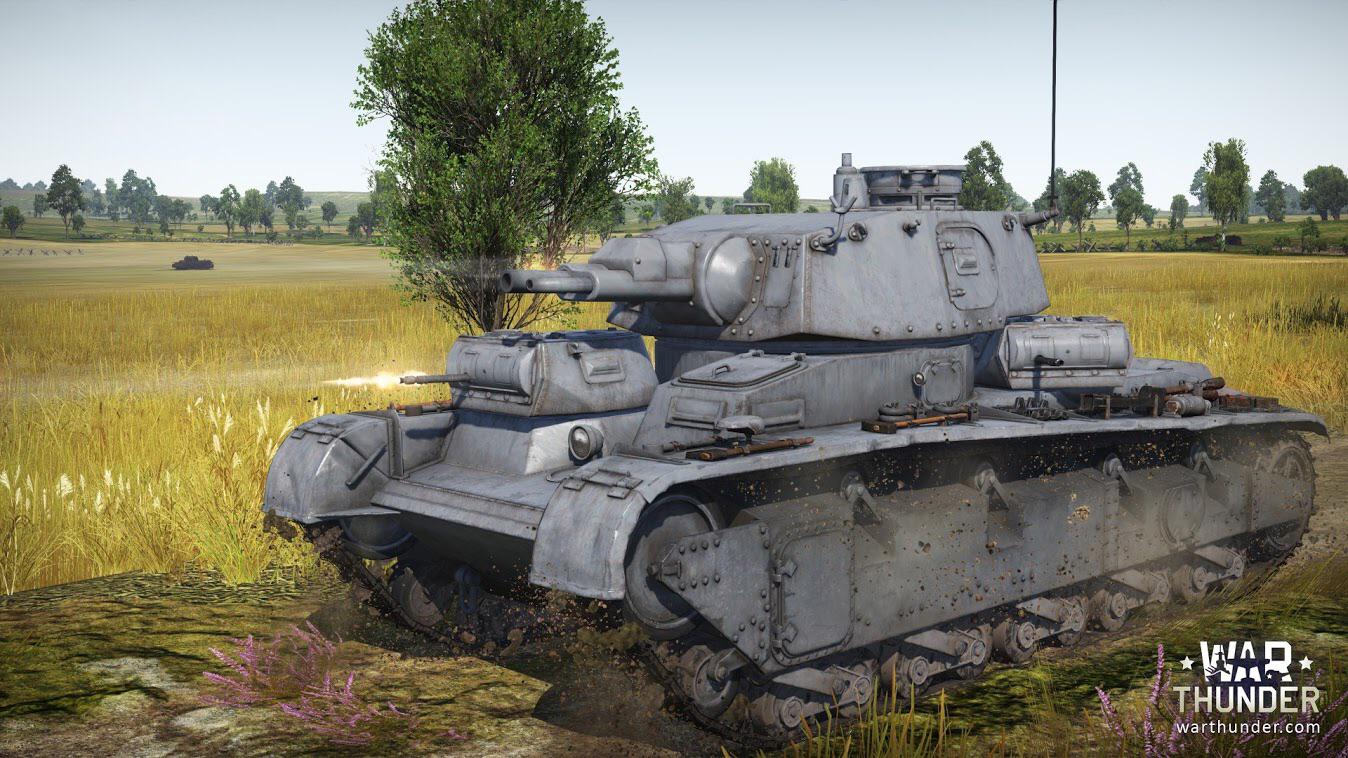
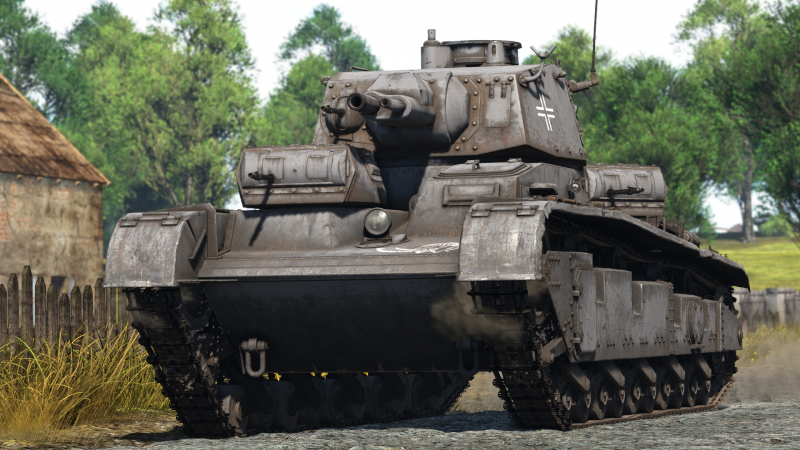
The design of the tank is quite unique in a variety of ways. It is multi-turreted, with one facing forward and the other facing the rear, which increased the total crew to 6 members, compared to the standard 5 of most tanks. Both of these turrets housed a MG13 machine gun with the 75 round drum. But the thing that really sets it apart from other tanks is the fact that it has two cannons, both in the turret. One is the short 75mm KwK 37, and the other is the 37mm KwK 36. But, while this all sounds great, this tank does have some downsides. The first and largest, is that despite it being quite large, there is almost no armor. The armor most surfaces is only 13-15mms thick, and the very thickest plate is only 20mms, which means that even M13s and T60s pose a significant threat to you, not to mention AT rifles or other AT weapons. The two cannons have very different velocities, so trying to hit the same area with both simultaneously is difficult past close range is difficult. The tank is also fairly slow at only 30 Kph, but this isn’t a huge downside. Due to only 5 being made but seeing combat, I think that this would best be served as an event vehicle.
As for the BR, that is a difficult question. While the short 75 cannon is good AND it has a coaxial 37mm cannon, the armor is abysmal to the point anything bigger than small arms fire will obliterate the tank, and the benefit of the 37mm cannon wouldn’t be very powerful most of the time. I think that that what BR it is placed in depends on what ammunition is provided. The 37mm cannon can use an APCR round with better penetration, instead of the normal low penetration APHE as a potential balancing factor for the following solutions. If the 75mm cannon only has APCBC, HE, and smoke (the numbers of each can be changed around as needed for balance), it has potential to possibly be BR1, but might be a little controversial. On the other hand, the 75mm cannon can get a mix of HE or APCBC and HEAT (the 80mm pen version), it could possibly go to BR2, but at that point, the standard Panzer 4 E and F1 would be much better, the same cannon without any of the downsides of this tank.

- Yes
- No
- BR1 with APCBC and HE
- BR2 with HE and HEAT
- BR2 with APCBC and HEAT
- Yes
- No, keep the APHE