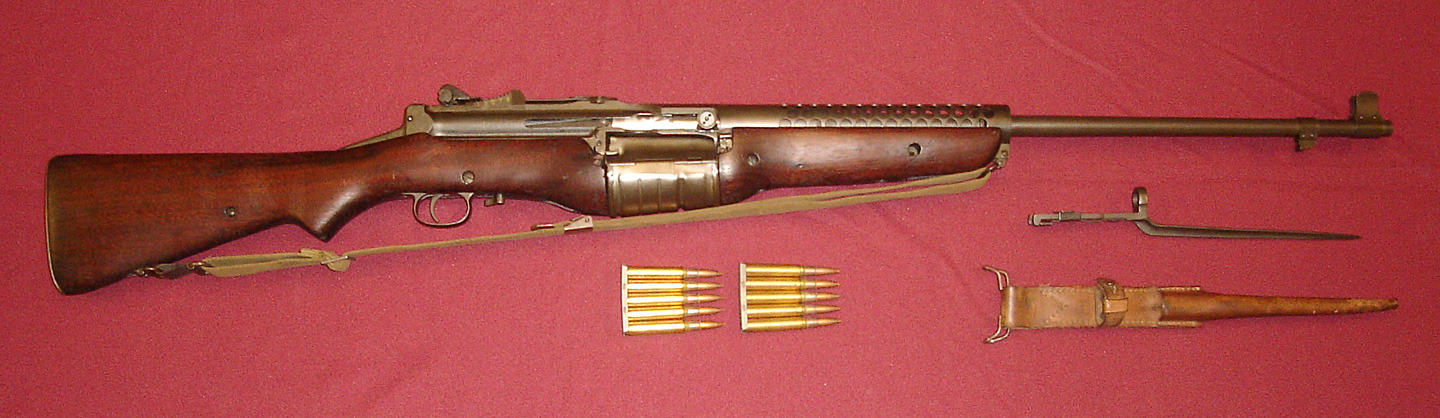
I was doing research on alternative sniper rifles for America becasue USSR has AVS 36 up against FG42/ STG 44.,… Where dose that leave America? Still number one with M1c, but that doesn’t have to be it. It gets better. The Johnson Rifle, most reliable rifle of all time; is missing it’s sniper variant.
It is more accuarate than M1 garand. The writer is talking 1"moa whereas M1 is 3"moa. The receiver can handle the full 75,000 psi load of the original M1 ball ammo and din’t have to go back to 1906 standards re designated M2. Accuarate out to 1000 meters this rifle can use the more powerful AP ammunition that M1 couldn’t handle.
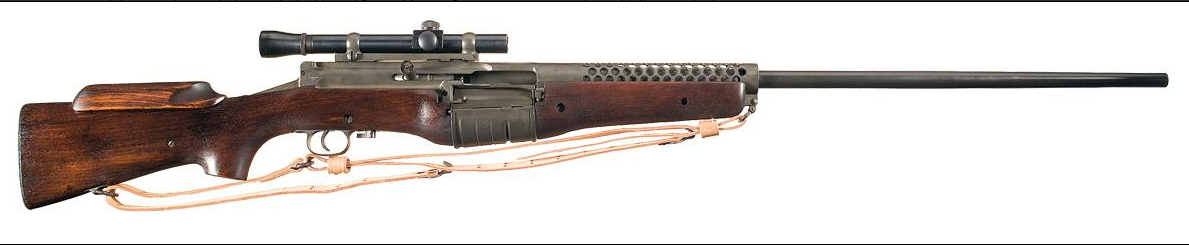
Here I found a factory modified 27" exteneded heavy barrel. 2.5x Johnson Sniper rifle…
There is no way this modification was done during WW2. Why on earth would someone butcher a sniper rifle to make sniper out of another one during the war? that too much risk and most NCO would not allow it either.
However post war many such sport shooters were made as those guns were sold off for cheap!
A quick search says the Johnson M1941 rifle was used by select scout-snipers in the U.S. Marine Corps during the early Pacific campaign of World War II, starting around 1942–1943.
Johnson Rifles and Machine Guns
The Story of Melvin Maynard Johnson, Jr. and His Guns:
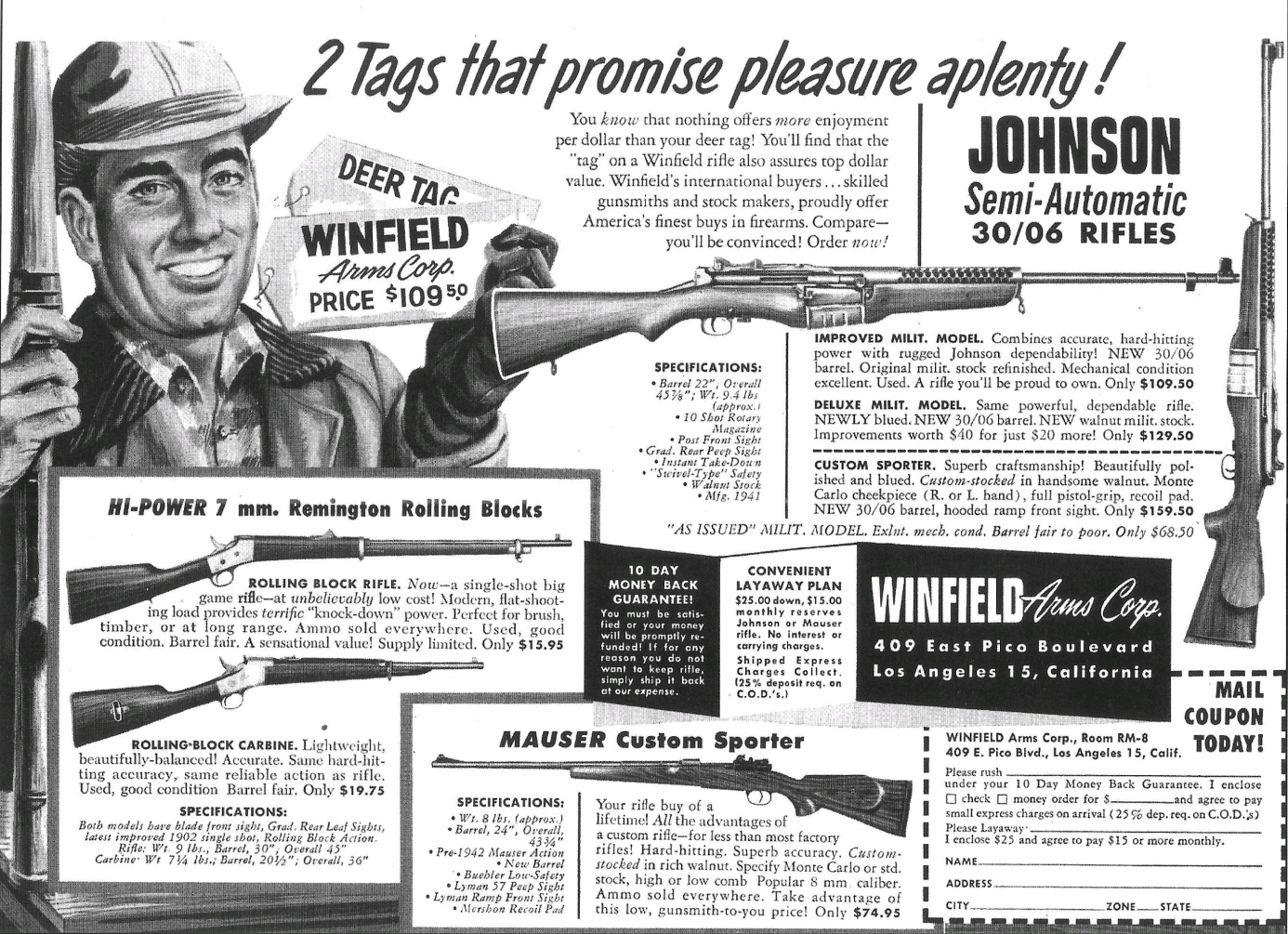
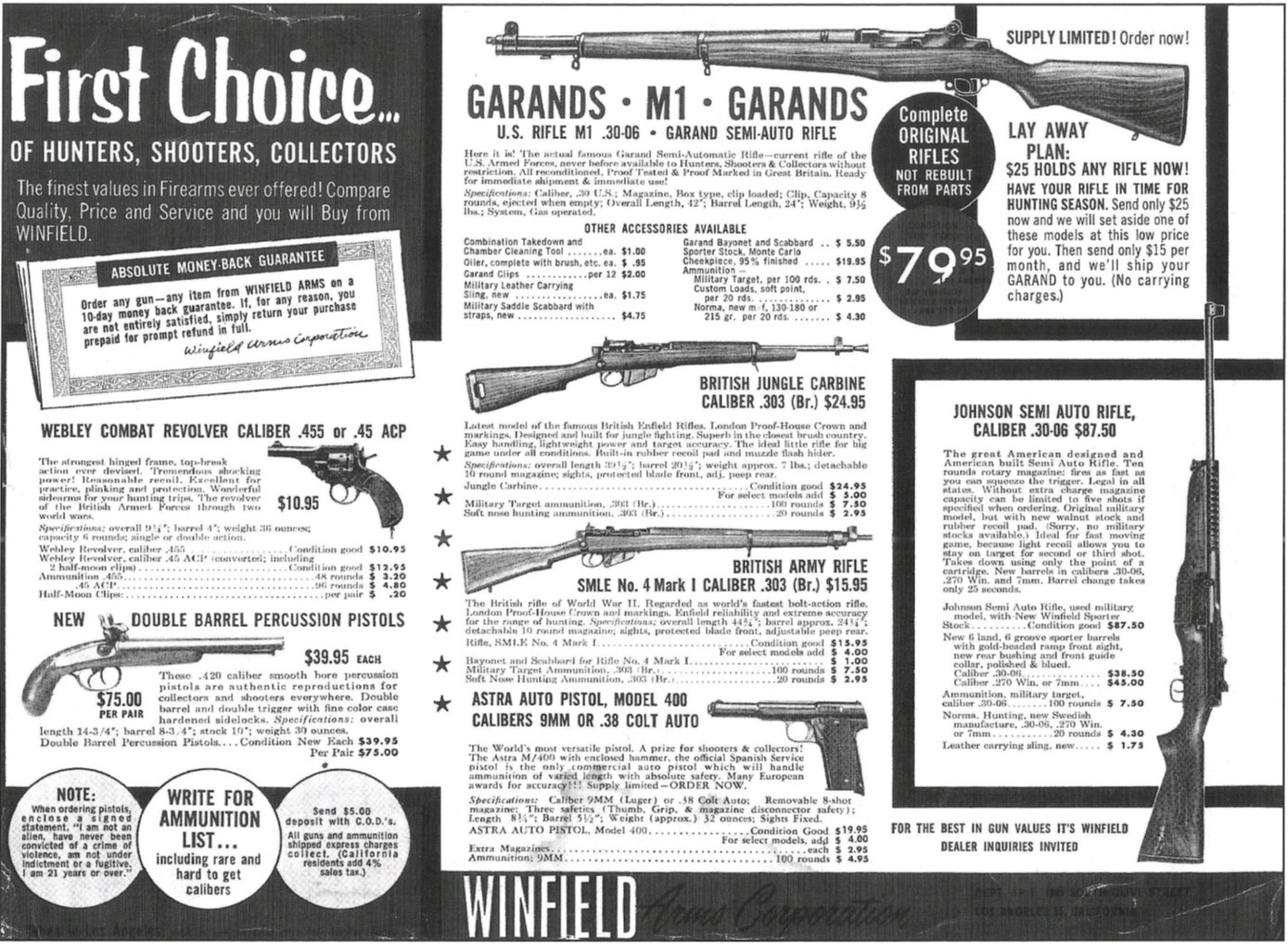
The M1941 Johnson rifles acquired by Cummings from the Dutch in the early 1950s were resold to Cecil Jackson, a British expatriate whose sister had married an American military officer. 408 After Jackson had emigrated to the United States, he and his partner, California gun dealer Robert Lee, established Winfield Arms Corporation in Los Angeles, California. In order to put many of the Johnson rifles into working order, Jackson needed a quantity of spare parts. The only Johnson spare parts in the United States were the components left over from the failed Johnson Automatics, Inc. The Winchester Repeating Arms Company had purchased the remaining assets of Johnson Automatics, Inc., including the spare parts. Shortly thereafter, Winchester sold the Johnson parts to the gun parts firm of Numrich Arms Co. of West Hurley, New York. Cecil Jackson needed the parts and contacted Numrich to negotiate purchasing the items. According to George R. Numrich:
…we bought the parts from Winchester, who needed the space they took up so badly they deliv-ered them to us in their own trucks. About two months after receiving the parts we got a call from a Canadian firm requesting Johnson parts. Their agent came down, inspected the parts, and pur-chased a huge quantity of them. It took about 18 months to find out why Cecil Jackson [Winfield Arms] had purchased some 16,000 [Johnson rifles] from the Dutch government, shipped [half of] them to Canada and “sat” on them for a year and a half, waiting for the next lot of some 8,000 to come up. If he had advertised them immediately he would not have been able to purchase the lot at the quite low prices of the first. In the meantime, he needed the parts to get the first lot in order for mail order sales.
After putting the surplus Dutch Johnson rifles into working order, Winfield Arms sold many of the rifles by mail order from the mid-1950s to as late as the mid-1960s for $68.50 “as is” in military configuration with the barrels in fair to poor condition due to the corrosive ammunition that had been used in them and lack of proper maintenance. Other Johnson rifles were rebuilt into attractive “sporterized” guns by the Winfield Arms staff, who had hired stockmaker William R. Hutchings. The sporterized Winfield Arms Johnson rifles were available in .30-06, .270 Winchester and 7mm calibers and featured new barrels made by the Apex Rifle Company of Sun Valley, California. Many of the parts used on the rifles had been acquired from Numrich Arms, but some were refinished and reworked to incorporate such cosmetic touches as “jeweled” bolts, etc. Prices for the sporterized Johnson rifles ranged between $129.50 to $250.00 depending on degree of sporterizing and accessories. The “top of the line” sporterized Winfield Arms Johnson rifle sold for $323.95 and featured a 4X Bushnell telescope.
The order was cut short because of the Japaneese occupation of the Dutch Indies and the rifles were given to the USMC. I think they made about half of them. But the Government didn’t like them. They were used b the USMC in the invasion of Guadalcanal. The M1 wasn’t ready yet and were ordered all scrapped because the Government didn’t want anybody to know about them because they didn’t want it to interfere with the M1 Garand. IDk what happened to them but I read all the ones used by the para marines were buried on the island of New Guinea- Bougainville when the unit was disbanded… Some of them found there way to the western front. You see puctures. But that one up there is numbers matching barrel to receiver. Hasn’t been re-manufactured. I looked into it. All that stuff is from 1941/2. The scope lost out to whatever they used on the Springfield rifle, but was a major contender. It’s an M1c scope.
The Johnson rifke had higher chamber pressures so it could use the new ammunition… M1 ball where as the Garand had to go back to the old ammunition designated M2.
M1 is a higher pressure round and also a heavyier bullet to compete with Mauser…
Blockquote
Experience gained in World War I indicated that other nations’ machine guns far outclassed American ones in maximum effective range. Additionally, before the widespread employment of light mortars and artillery, long-range machine gun ‘barrage’ or indirect fires were considered important in U.S. infantry tactics. [6] For these reasons, in 1926, the Ordnance Corps developed the .30 M1 Ball cartridge using a 174-grain (11.3 g) bullet with a 9 degree boat tail, traveling at a reduced muzzle velocity of 2,640 ft/s (800 m/s). This bullet offered significantly greater range from machineguns and rifles alike due to its increased ballistic coefficient . Additionally, a gilding metal jacket was developed that all but eliminated the metal fouling that plagued the earlier cartridge.
Blockquote
Wartime surplus totaled over 2 billion rounds of ammunition. Army regulations called for training use of the oldest ammunition first. As a result, the older .30-06 ammunition was expended for training; stocks of M1 ammunition were allowed to slowly grow until all of the older ammo had been fired. By 1936 it was discovered that the maximum range of the new M1 ammunition and its 174-grain (11.3 g), boat-tailed bullets was beyond the safety limitations of many ranges. An emergency order was made to manufacture quantities of ammunition that matched the ballistics of the older cartridge as soon as possible. A new cartridge was developed in 1938 that was essentially a duplicate of the old M1906 round, but with a gilding metal jacket and a different lead alloy, resulting in a bullet that weighed 152 grains (9.8 g) instead of 150. This cartridge, the Cartridge .30 M2 Ball, used a flat-based bullet fired at a higher muzzle velocity (2,805 ft/s) than either of its predecessors.
AI overview…
M1 Ball (174-grain) and M2 Ball (152-grain) differ primarily in bullet weight, purpose, and range. M1 was a long-range bullet designed for WWI machine guns (5,500+ yard range), while M2 was introduced in 1938 as a lighter, shorter-range round (3,400 yard range) safer for existing ranges and better suited for the M1 Garand rifle. [1, 2, 3, 4, 5]
Key Differences:
Bullet Weight: M1 Ball uses a 173–174 grain bullet, while M2 Ball uses a lighter 150–152 grain projectile.
Range: M1 Ball has a maximum range of approximately 5,500 yards; M2 Ball has a shorter maximum range of roughly 3,400 yards.
Design & Purpose: M1 has a boat-tail design for better long-range accuracy. M2 was developed to reduce the range of .30-06 ammunition because M1 was deemed too dangerous for many training ranges.
Garand Compatibility: While M1 was original, M2 was developed to be the standard, safe service round for the M1 Garand.
Appearance: Early M2 rounds sometimes featured a stannic stain (tin coating) for identification, according to a post on Military Surplus Collectors Forums. [1, 2, 3, 6, 7]
Why the Switch?The M1 Ball had a range that exceeded the safety limits of many US training ranges, causing a need for a shorter-range, lower-power round, which led to the reinstatement of a 150-grain bullet similar to the original 1906 cartridge, notes a post on Military Surplus Collectors Forums. [1, 2]
We can guess what the muzzle velocity based on general rules… +20-30 fps per 1" barrel length
Here with 30 06 you can see a 100 fps increase in muzzle velocity with 2 inches.
That AI overview is hilarious. Sounds something like a politician would say. The reality is the M1 Garand couldn’t handle the chamber pressure of the new cartridge so they had to go back to something from 1906. we have a 75,000 psi receiver versus 50,000 psi. That is a huge discrepancy. It’s not even as good as NATO ammunition.
I’d like to see this using the M1 ball with higher pressure as that is most likely what they had in Gudalcanal before the Garand entered service. Maybe introduce AP into the game.
Before we get into it we have to note accuracy. Here we have a firearm that is easy to clean. Pull one lever and remove the barrel. No one has this luxury. This will be the cleanest rifle on a daily basis for accuracy. Than you have the barrell itself. Nothing is protruding on it. It is straight barrell. Nothing is hanging off it. No added weight from handguard, sights or muzzle break to decrease accuracy. This will be your most accurate gun. Just a bullet going down an unaffected straight barrel.
This guy here is a small arms expert and is excellent at going over the history of small arms.
I was reading from the onset that the Johnson rifle was highly customizable being able tpo withsatnd the higher chamber pressure 75,000psi for the more powerful m1 ball ammunition. 27" heavy extended barrell was probably design feature from the getgo to get maximum performance out of the new M1 ball cartridge.

 .
.