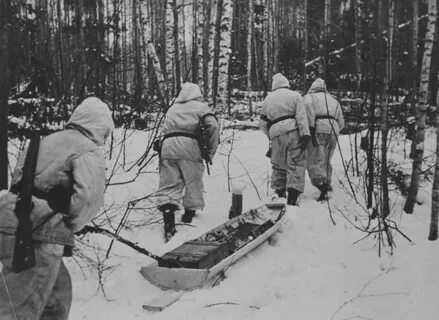
Victory at Moscow became absolutely clear after the Nazi invaders were driven 70-120 kilometers from the capital. Immediately afterward, Stavka decided to continue the offensive and planned the Tropetsko-Kholmovsky Operation, the goal of which was to cut off communications between the Demyansk group and the Valdai-Staraya Russa railway.
From the Red Army, the 3rd, 11th, and 34th Shock Armies advanced. The Wehrmacht’s 2nd Army Corps came under their attack.
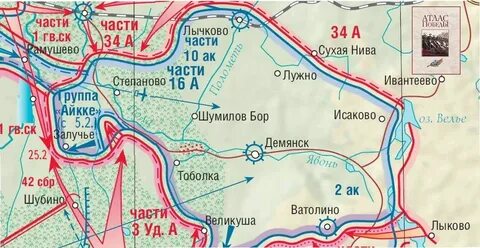
On January 29, the Tropetsko-Kholmovsky Operation began, along with the Rzhev-Vyazma Operation, whose goal was to eliminate the enemy slightly to the south. On January 29, the Red Army began closing in on the Demyansk pocket, but because Adolf Hitler refused to grant permission to withdraw, six German divisions, totaling 100,000 men, were cut off from the main Wehrmacht forces on January 8.
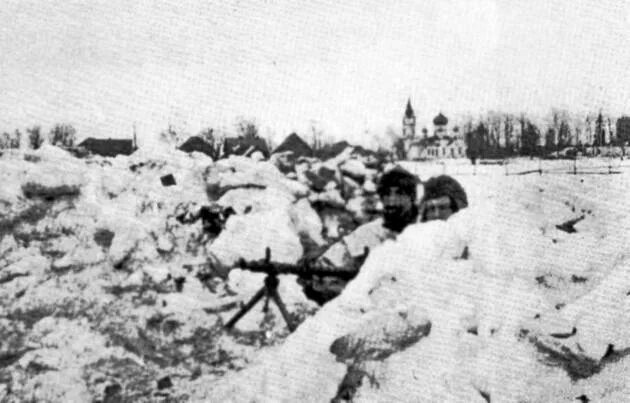
Already in February 1942, the Red Army conducted the Demyansk air operation, which completely failed and resulted in the deaths of almost all the paratroopers.
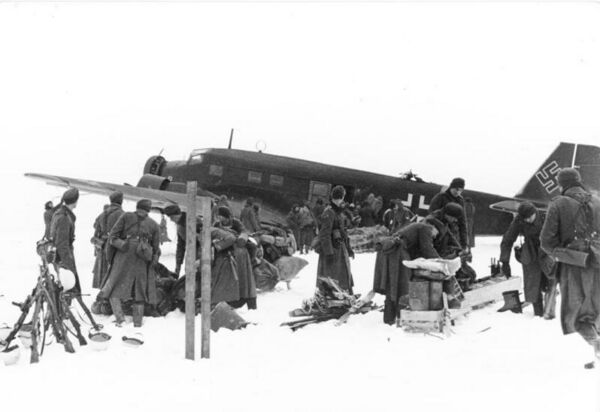
Realizing his mistake, the head of Nazi Germany ordered the supply of food and ammunition to the Demyansk pocket. Ju-52 transport aircraft made 100-150 sorties carrying the necessary supplies to the airfield in Demyansk itself. On average, 265 tons of cargo arrived for the Germans per day. Over the course of the entire airlift, 15,446 tons of medicine, food, ammunition, and weapons were delivered. Soviet aviation was unable to disrupt these road transports, and during the German encirclement, Soviet pilots shot down between 112 and 265 cargo aircraft. While supplies were flowing in, the Germans established a fairly strong defensive line on the ground within the encirclement.
On March 21, 1942, southwest of Staraya Russa, from both inside and outside the encirclement, the Wehrmacht launched two powerful attacks, breaking through the Red Army’s defenses and creating the Ramushevo Corridor, 6-8 kilometers wide, on April 21, 1942. Now, the Soviet troops had no chance of destroying the group in Demyansk.
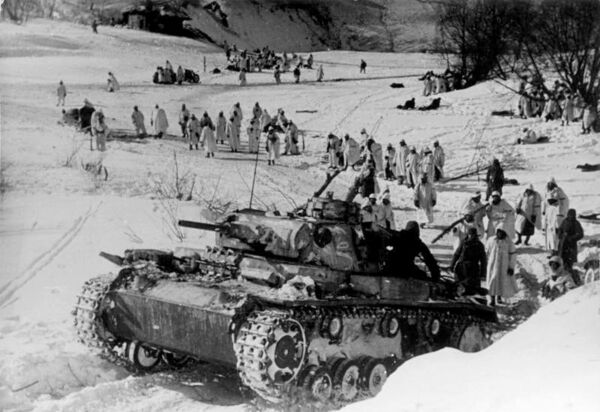
In total, from May 1942 to February 28, 1943, the Red Army conducted nine operations to break through the defensive line in this sector. Only on March 18, 1943, was the Red Army able to liberate Demyansk and destroy the remaining enemy forces there.
Although the operation was unsuccessful for the Soviet soldiers here, although the assigned task was not completed as quickly as possible, at the same time, as many as 15 Wehrmacht divisions were concentrated in this section of the front and were unable to provide any assistance to Field Marshal Paulus in his offensive at Stalingrad.
