 Enlisted Pro Tool | Weapon Calculator, Virtual Shooting Range & Tank Armor Simulator
Hey everyone!
How many times has a discussion about weapons on this forum turned into a battle of psychics? One person insists that automatic rifles have terrible accuracy, another says they emptied half a magazine into an enemy, someone else claims Soviet body armor can tank anything, while the King Tiger and Jumbo are supposedly immortal.
Whenever someone asks, “Do we have any actual numbers?”, things get interesting. Someone posts a table showing 13.2 damage, someone recalls one bad match, and someone else simply declares a weapon either overpowered or garbage.
But what if we could stop guessing and start calculating?
How many bullets does it take to kill? At what distance does a weapon lose its advantage? How much difference does body armor make? Where will your shots land when firing a burst while standing? And will a particular shell penetrate a tank if it angles its hull?
That is why I built Enlisted Pro Tool. It is an all-in-one tool for calculating weapon statistics, comparing time to kill, testing recoil, and simulating tank armor penetration.
OLD NON ACTUAL SHOOTRANGE
The project was inspired by an older tool: https://enlisted.vercel.app/
However, that tool is now outdated. It lacked up-to-date datamine information and did not reflect various values that had already been changed in the game.
Instead of juggling ten datamine spreadsheets, doing calculations by hand, and arguing based on personal impressions, you get a single interface where you can change parameters and see the results immediately.
It runs directly in your browser on both PC and mobile. No installation required.
 Tool: https://enlisted-pro.vercel.app/
 1. The entire weapon database in one place
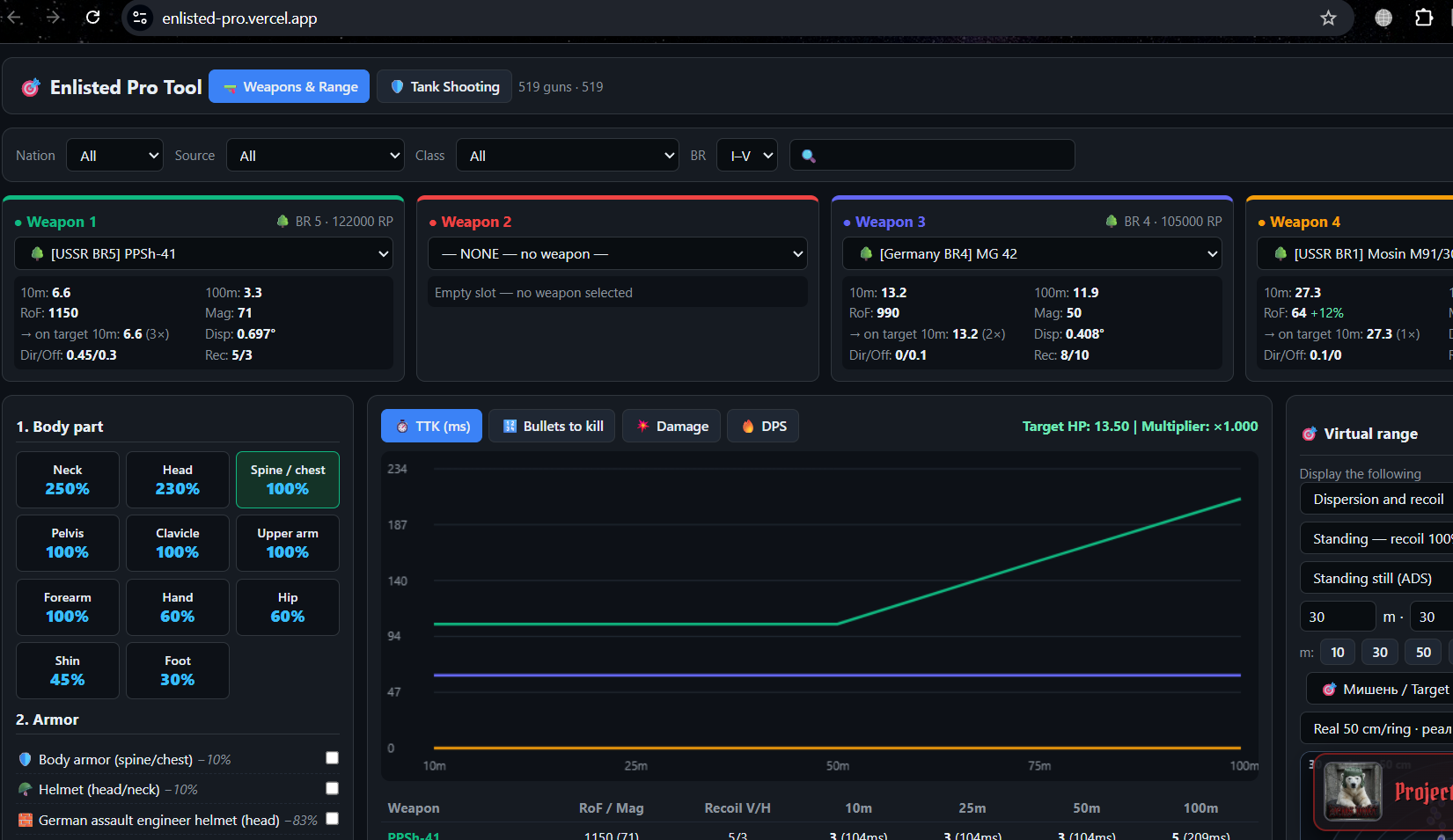
The database contains 519 weapons from all nations, covering BR I to V . All weapon statistics are calculated for the maximum upgrade level, with 5 stars.
Included weapon categories:
- Rifles
- Submachine guns
- Machine guns
- Assault rifles
- Automatic rifles
- Shotguns
- Pistols
- Anti-tank rifles
- Grenade launchers
- Flamethrowers
- Stationary machine guns
You can quickly find a weapon, inspect its statistics, and compare it with others without digging through spreadsheets manually.
But damage values alone do not tell the whole story. The more interesting question is how many hits are required to kill and how a weapon’s performance changes at different distances.
 2. Compare up to four weapons simultaneously

Choose between one and four weapons and compare them under the same conditions. Unused slots can be removed using the “NO WEAPON” button to keep the interface clean.
The tool displays:
- TTK in milliseconds , meaning calculated time to kill.
- Bullets to kill.
- Damage falloff over distance.
- DPS at different ranges , from 10 to 100 meters.
For example, you can compare two automatic rifles and see which one kills faster at a specific distance. Or check whether a submachine gun’s higher rate of fire compensates for its damage falloff.
You can also place four completely different weapons side by side and see how their effectiveness changes with range.
Instead of the usual “I feel like this gun is stronger”, you get concrete numbers that can be compared and discussed.
 3. Damage calculations with armor, perks, and body parts
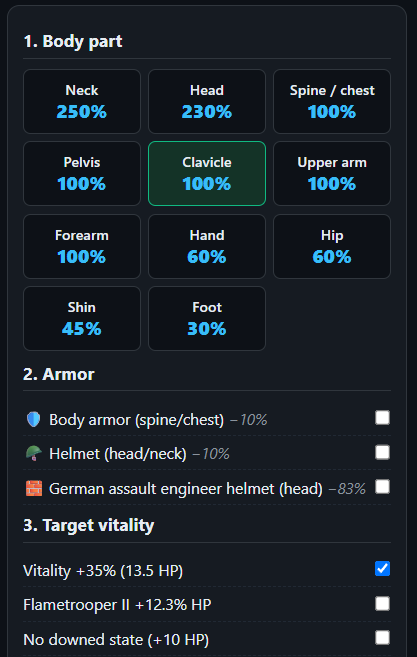
A standard weapon stat card will not tell you how many hits are needed to kill an opponent using certain perks, wearing armor, or taking a hit to a limb instead of the torso.
The calculator includes 11 body hit zones with different damage multipliers . For example, the neck has a multiplier of ×2.5, the head ×2.3, and the feet ×0.3.
The model also accounts for:
- Body armor and helmets with a 10% damage reduction.
- The German Assault Engineer armored helmet, which reduces head damage by 83%.
- The Vitality perk, providing a 35% HP bonus.
- The flametrooper’s 12.3% HP bonus.
- An additional 10 HP when firing without being knocked down.
- Shooter perks that affect recoil and bolt-action rifle rate of fire.
You can change these conditions and check how they affect the number of hits required and the calculated time to kill.
This is particularly useful when a discussion comes down to the difference between a torso hit and a limb hit, the effectiveness of body armor, or the advantage of a particular weapon against a soldier with increased HP.
4. Virtual shooting range: see where your bullets actually go
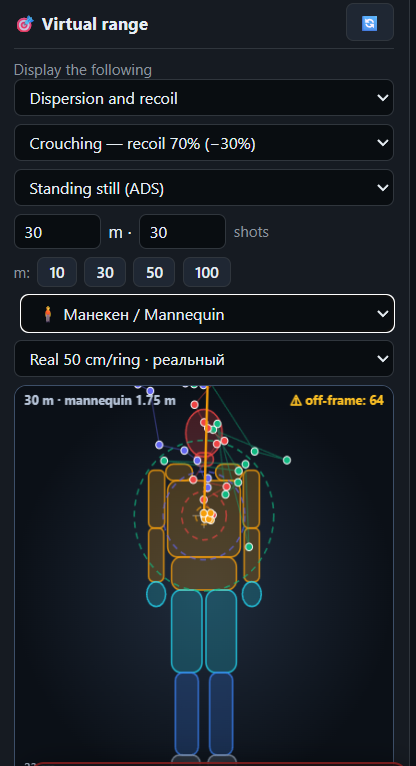
IMPORTANT: The bullet trajectories, spread patterns, and their visual representation are hypothetical. They may not reflect what actually happens in the game. The visualization is based on datamined recoil, spread, and recoil-direction data.
Damage statistics are only part of the picture. A weapon may look excellent on paper, but how easy is it to control while firing? How does the distribution of hits change depending on the soldier’s stance?
That is what the virtual shooting range is for.
Available firing positions:
- Standing.
- Crouching.
- Prone.
- Using a bipod with compatible machine guns.
- Peeking around a corner, with a recoil penalty.
Next, choose your target.
The circular target lets you evaluate shot grouping, shot displacement in centimeters, and your score.
The full-body mannequin represents a virtual soldier standing 1.75 meters tall. The tool shows the percentage of hits landing on the overall silhouette, head, and limbs.
You can compare standing and prone firing, inspect shot distribution, test the effect of a bipod, and see how the results change when peeking around a corner.
If the visual recoil scale seems too large or too small, a separate calibration option is available. The visual scale is an estimate because the original data tables do not provide a ready-made value for this type of visualization.
Keep in mind that the shooting range is a way to visualize and compare the available data, not a faithful reproduction of the game’s actual bullet trajectories or recoil behavior.
It lets you run experiments and explore differences between weapons without relying exclusively on raw numbers from spreadsheets, but the visual results should be treated as hypothetical.
 5. Grenade launchers and flamethrowers are covered too
Some weapons are not particularly well suited to conventional TTK comparisons, so they have their own calculations.
Grenade launchers:
- Penetration calculations.
- Guaranteed-kill radius.
Flamethrowers:
- Flame stream range.
- Burning time.
The tool is not limited to the usual rifles, submachine guns, and machine guns. You can also examine other weapon categories and test specific scenarios.
 6. Tank testing range: 84 guns and shell types
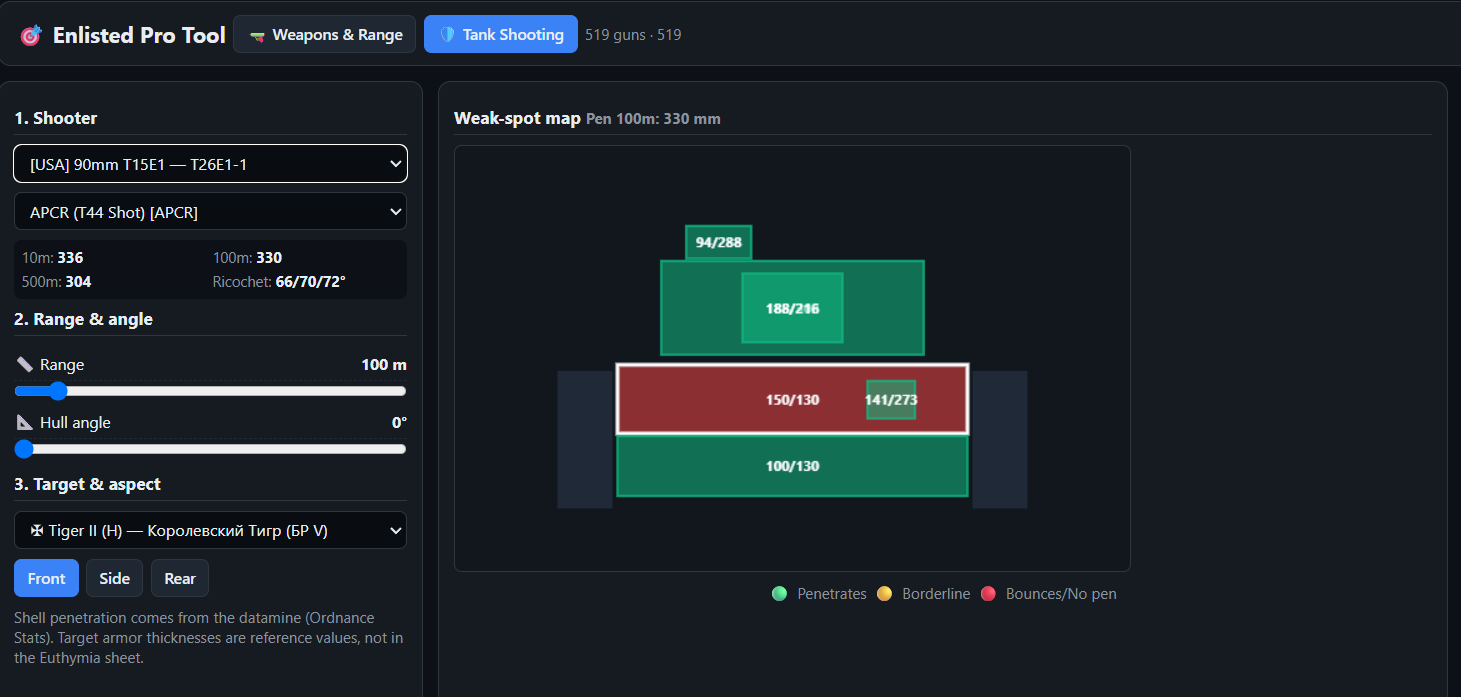
Now let’s move on to armored vehicles. There are plenty of arguments here too: what can be penetrated, at which angle, and at what distance?
The tank module includes 84 guns and shell types from the datamine .
Five tanks are available as targets:
- Tiger II (H).
- Tiger E / Tiger H1.
- Panther.
- IS-2 (1944).
- Jumbo.
Choose a gun and shell, set the distance up to 1,000 meters, select an armor section, and adjust the hull angle. Yes, the classic angling technique that regularly starts another war on the forums.
The tool then calculates effective armor thickness based on the impact angle, estimates ricochet probability, and shows possible crew and internal module damage after penetration.
What can you test?
- How the result changes with increasing distance.
- How much hull angling helps.
- Which shell is preferable under the selected conditions.
- Which crew members or internal modules could be hit after penetration.
Instead of making vague claims that “this tank is impossible to penetrate”, you get specific parameters that can be examined and discussed.
Important: The armor values for these five tanks are reference values. The results should therefore be understood within the limits of the implemented model, not as a guarantee of the outcome of every shot in the actual game.
 7. One file, two languages, and offline support
Despite the number of features, the entire project is contained in a single standalone file .
- Runs in a browser on PC and mobile.
- Requires no installation.
- Can run without an internet connection.
- Supports switching between Russian and English on the fly.
- Includes a built-in checker for updates to Euthymia’s tables.
The datamine in this version is current as of October 18, 2026 .
Damage, TTK, spread parameters, recoil vectors, and penetration are calculated using datamine data and formulas. However, some elements are simulations rather than direct reproductions of the game. In particular, the virtual shooting range’s bullet trajectories and spread visualization are hypothetical, the visual recoil scale is estimated, and the tank armor values are used as references.
Think of this tool as a calculator and an environment for testing hypotheses. It lets you compare statistics, investigate disputed scenarios, and check assumptions, but it does not turn every calculated number into absolute truth.
 8. The project is open to the community
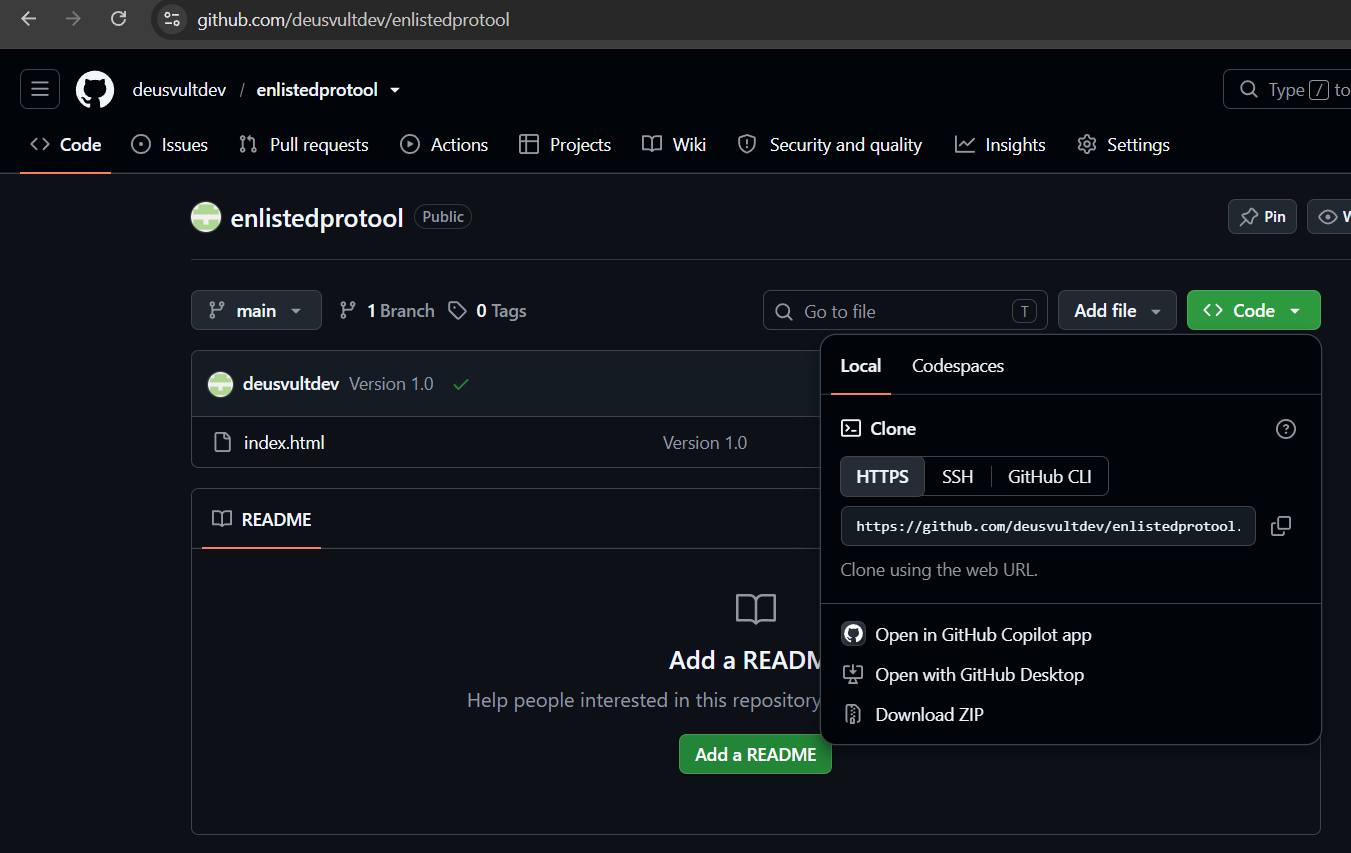
The source code is available to download, inspect, and modify.
If you know your way around code, want to add more tanks, expand the weapon database, suggest new features, or identify calculation errors, I would be glad to have your help.
Reproducible examples are especially welcome: which weapons you compared, which parameters you selected, and exactly where you found a discrepancy.
You can also share your own comparisons, tests, and ideas for future development. The more people test the tool, the more useful it will become for the entire community.
Tool: https://enlisted-pro.vercel.app/
 Source code: GitHub - deusvultdev/enlistedprotool: Virtual shootrange · GitHub
To download the source code, simply click the green CODE button on GitHub.
Feel free to use it, compare your favorite loadouts, test controversial weapons, and share your results in the comments.
 9. A postscript and special thanks
@Euthymia07-live deserves special thanks for compiling the datamine. An enormous amount of work went into extracting the data and creating the tables. Without that work, this project would not exist.
@JestersTM for consulting me on publication-related questions.
And to all of you , the active players who support Enlisted, play the game, keep the servers populated, argue on the forums, create discussions, donate, and give the game its community and its life.
Have fun testing!
P.S. A few things about the source code and future updates
The source code is fully available for download, modification, improvement, expansion, translation into other languages, and pretty much anything else you want to do with it .
Use it, ladies and gentlemen! If possible, credit me as the author. Or don’t. I’m not that full of myself. 
I tried to implement automatic synchronization with the original Google spreadsheet, but simply didn’t have enough time to test every aspect of it properly.
I’m unlikely to re-upload the entire project just to fix a single minor issue. I’ll collect a batch of problems and improvements and rebuild it when there is enough to justify another release. That said, I am not promising long-term support.
Feel free to share your thoughts, suggestions, and wishes. It would be possible to expand this into a project covering the entire datamine, perks, loadouts, and all kinds of calculators, but that could easily turn into an overloaded monster of a tool.
The main goal was simple: reduce the time spent looking things up in the datamine and make the information available through a user-friendly interface.
Much love to everyone: friends, neutrals, and haters alike. 


