In Enlisted, a Soviet anti-tank gunner looking to engage armor with a handheld launcher currently relies almost exclusively on foreign equipment. Aside from early rifle grenade attachments and anti-tank rifles, the arsenal consists largely of Lend-Lease Bazookas and captured German Panzerfausts. This creates a common misconception that the Red Army showed little interest in infantry grenade launchers until the postwar adoption of the RPG-2.
In fact, Soviet engineers spent the entire war—and particularly 1944–1945—developing and testing a broad range of experimental launchers. These ranged from unconventional early-war concepts, such as multi-barrel backpack rocket pods and a five-shot self-loading drum launcher built virtually single-handedly by a SMERSH officer, to mature recoilless prototypes that penetrated the frontal armor of captured Tiger tanks and directly established the layout of the RPG-2.
Because most of these systems remain relatively obscure outside Russian archival publications, this overview traces their chronological development from 1941 to 1948, outlining their technical specifications and proving-ground performance.
1. Before 1944: Early Challenges and Unconventional Experiments
At the outbreak of the war, Soviet infantry relied primarily on 14.5mm PTRD and PTRS anti-tank rifles, incendiary bottles, and blast-effect hand grenades such as the RPG-40 to counter German armor. Early efforts to extend infantry anti-tank range proved unsuccessful. The rod-launched VPGS-41 and VPGS-42 rifle grenades suffered severely from wartime manufacturing defects—more than half of the projectiles shed their stabilizing fins immediately after launch—and both models were withdrawn from service by March 1942.
A significant step forward arrived in 1943 with the introduction of shaped-charge (HEAT) hand grenades: the RPG-43 (995 g, roughly 70–80 mm penetration) and the RPG-6 (1,160 g, up to 100–120 mm penetration). While capable of threatening heavier German armor, throwing a one-kilogram grenade required a soldier to close within 15 to 20 meters of a moving tank. As a 1942 memorandum addressed to Stalin observed, employing such short-range weapons demanded exceptional individual heroism, whereas the army required equipment that allowed ordinary infantrymen to engage armor effectively.
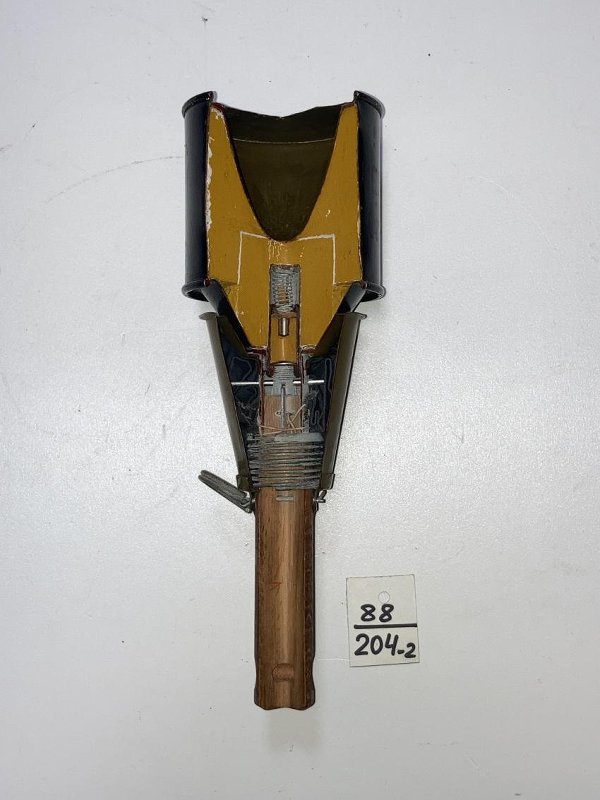
Well before the appearance of recoilless anti-tank tubes, Soviet inventors explored several unorthodox solutions to bridge this range gap.
The most unusual of these proposals was the IG-1 and IG-2 “RUS” system, drafted in late 1941 by military engineer I. I. Gvai of the Red Army’s Military Engineering Institute (NIVII KA). Decades before the American M202 FLASH, Gvai proposed a closed backpack rocket launcher (750 x 550 x 180 mm, approximately 22 kg loaded) capable of being deployed in 10 to 15 seconds. The anti-tank IG-1 housed four rocket-propelled grenades, each carrying 2 kg of TNT (intended to defeat 30 mm of armor), which could be fired individually or launched in a two-second salvo out to an effective range of 100 meters (200–220 meters maximum). Its anti-personnel counterpart, the IG-2, carried 10 to 12 fragmentation rockets (0.4 kg of TNT and roughly 4,000 fragments per round) for engaging targets at 200 to 250 meters. The project never advanced beyond technical proposals due to the extreme dispersion of early unguided rockets. Proving-ground trials of ground-launched 82mm RS-82 aircraft rockets in August 1941 failed to score a single hit on an armor plate in five shots at 200 meters, achieving only one non-penetrating hit at 100 meters.
Even future pioneers of Soviet aviation briefly turned their attention to infantry rocket launchers. Between late 1942 and early 1943, Mikhail Mil and Nikolay Kamov—later renowned for their Mi and Ka helicopters—constructed and tested three 82mm RS-82 infantry launchers at Factory No. 290. Mil’s variants (weighing 25 kg and 45 kg) protected the operator with a double-sided blast shield, whereas Kamov and Korotkikh designed a 13 kg launcher that routed the exhaust blast above the gunner’s head. Although all three prototypes proved safe to operate, the Main Artillery Directorate (GAU) calculated their probability of hitting a 3-by-2-meter tank target at 200 meters at just 3.4 percent. When Kamov submitted a revised 12 kg design using spin-stabilized rockets in March 1944, GAU declined to pursue it.
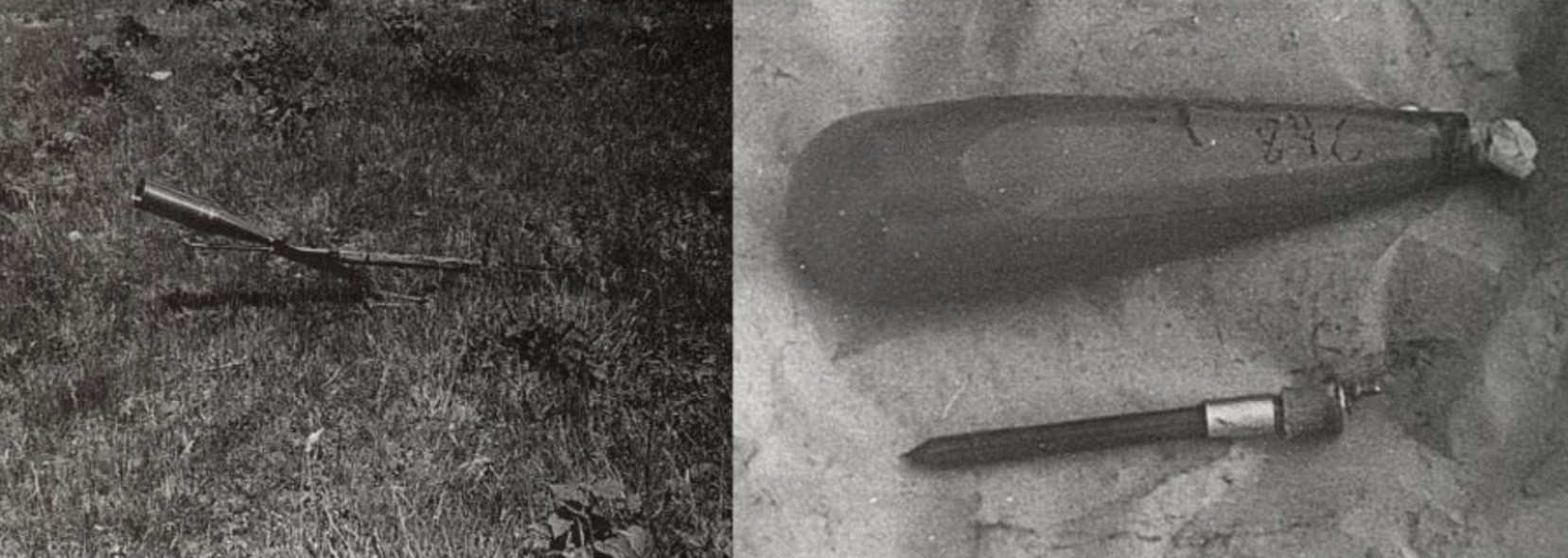
Other early experiments encountered similarly fundamental limitations. In mid-1942, the Institute of Mechanical Engineering tested a rifle-mounted cup launcher designed to fire tear-shaped 520 cc glass incendiary flasks to 50–70 meters, but the fragile vessels frequently shattered inside the launcher or failed to break upon impact. In autumn 1943, an engineer named Starikov attempted to fire 50mm and 82mm mortar bombs mounted on steel rods from a standard 14.5mm PTRD at the Gorokhovets Artillery Proving Ground (ANIOP). On the first 82mm shot, the rifle barrel ruptured completely, throwing the forward section five to six meters downrange.
2. The 1944 Turning Point: Foreign Trials and the GAU Directive
By early 1944, the shortcomings of Soviet infantry anti-tank equipment had become acute. The 14.5mm PTRD and PTRS were increasingly confined to engaging fortifications and light vehicles, proving largely ineffective against the Tiger (100 mm frontal armor, 82 mm sides), the Panther, and skirted Panzer III and IV variants. Field inspection reports from the 4th Ukrainian Front in 1944 openly recorded that infantry units lacking effective anti-tank weapons sometimes withdrew toward artillery positions when enemy armor appeared.
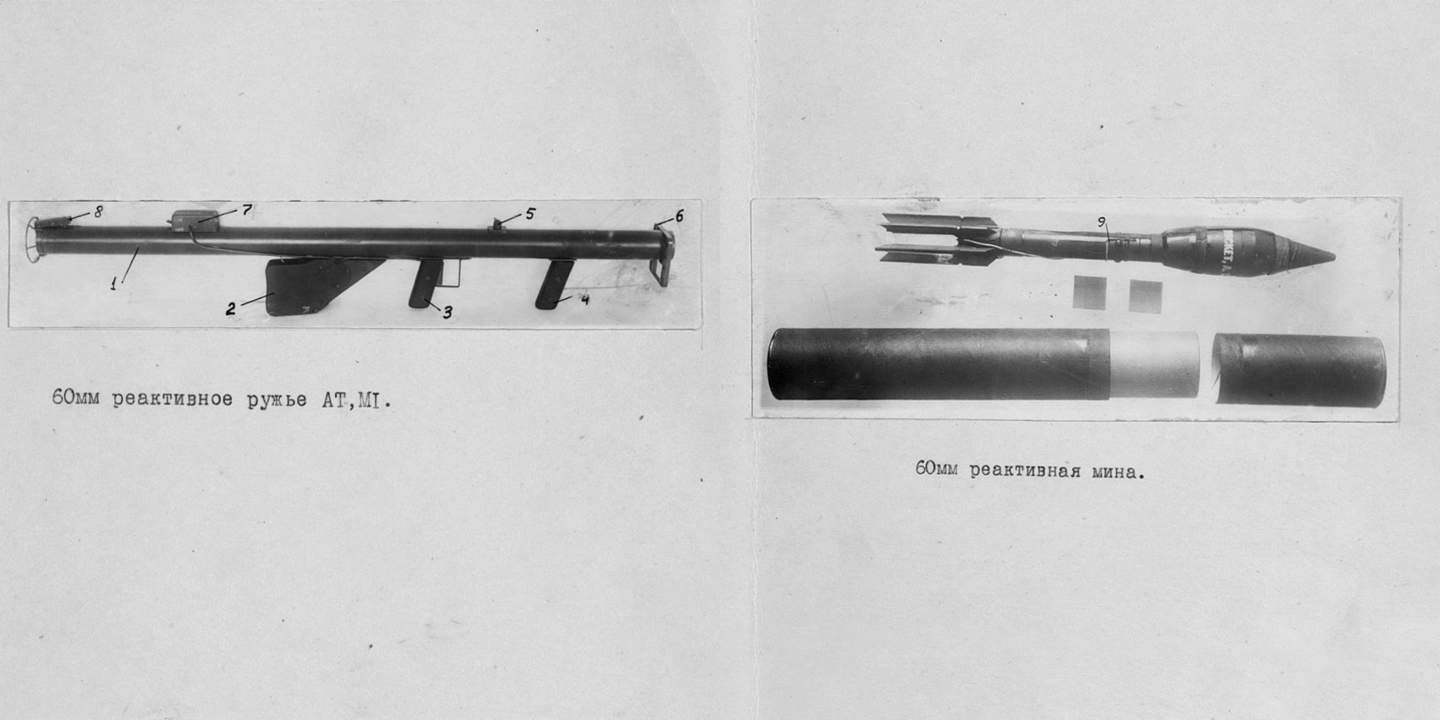
Lend-Lease weapons did not resolve the deficiency. In late 1942, the USSR received 3,000 early M1 Bazookas (weight 6.13 kg, 60mm 1.5 kg rocket, muzzle velocity roughly 89 m/s, 100 m practical range, and penetration slightly over 60 mm). Soviet trials deemed the weapon unsuitable for frontline service due to modest armor penetration, poor reliability and weak dry-cell batteries below +10 degrees Celsius, a steep trajectory, and the hazard of propellant burning outside the tube near the gunner’s face. Improved M1A1 and M9 models were not supplied for Soviet wartime trials. The British PIAT arrived in limited numbers in 1944 and achieved stronger penetration on Soviet armor plates—100 to 110 mm at 60 to 100 meters—but weighed 16 kg, produced severe recoil, proved cumbersome to cock, and relied on gelatinous dynamite filler that Soviet specialists considered too temperature-sensitive. An order issued in the Moscow Military District in May 1944 required PIAT ammunition to be stored at least 100 meters away from all other ordnance.
Captured German launchers presented a much starker contrast. Comparative Soviet testing rated the Ofenrohr / Panzerschreck (9.2 kg, 88mm 3.3 kg rocket) at 120 meters practical range and up to 200 mm of penetration, while the Panzerfaust (5.35–5.55 kg, 149mm 2.8 kg warhead) achieved 200–220 mm of penetration at 30 meters. In early 1944, a joint testing commission summarized its findings in notably direct terms:
“Domestic RPG-43 and RPG-6 anti-tank grenades lag behind German anti-tank grenades both in design and penetration. The German ‘Faust’ has twice the penetration and causes greater structural damage to the tank. Launching it through a ‘tube-barrel’ is undeniably a step forward compared to our hand grenades.”
An initial attempt to simply replicate German designs proved impractical. Comparative trials demonstrated that copying German shaped charges with available domestic steels and explosives led to a sharp drop in penetration. Furthermore, wartime shortages of RDX (hexogen) made it uneconomical to expend 0.7 to 1.5 kg of high-grade explosive per single-use 150mm warhead when artillery HEAT shells and PTAB anti-tank bomblets held higher priority. Soviet tacticians also considered the 30-meter effective range of the early Faustpatrone too restrictive for open-field engagements.
Consequently, on January 31, 1944, the Artillery Committee of GAU issued an urgent directive—followed by a February conference—instructing design organizations to create domestic close-range anti-tank launchers capable of engaging armor at 75 to 100 meters with approximately 100 mm or more of penetration.
3. Closed-Breech “Active” Systems and Unusual 1944 Prototypes
Soviet engineers immediately diverged into two main technical approaches: conventional closed-breech (“active”) launchers firing grenades via blank cartridges, and open-ended recoilless tubes.
Before the major designs matured, an unusual interim prototype was assembled at the Gorokhovets proving ground (ANIOP) in early 1944 after incomplete components of a captured German launcher arrived from the Ukrainian Front. Lacking the missing assemblies, Colonel Ivanov and technician Bazeev constructed a test model incorporating the stock and bolt of a 19th-century Berdan rifle. Because the few captured grenades had already been disassembled to analyze their explosive filler and the workshop lacked capacity to produce replacements, this prototype was never test-fired.
PG-6 (NII-6, May–November 1944)
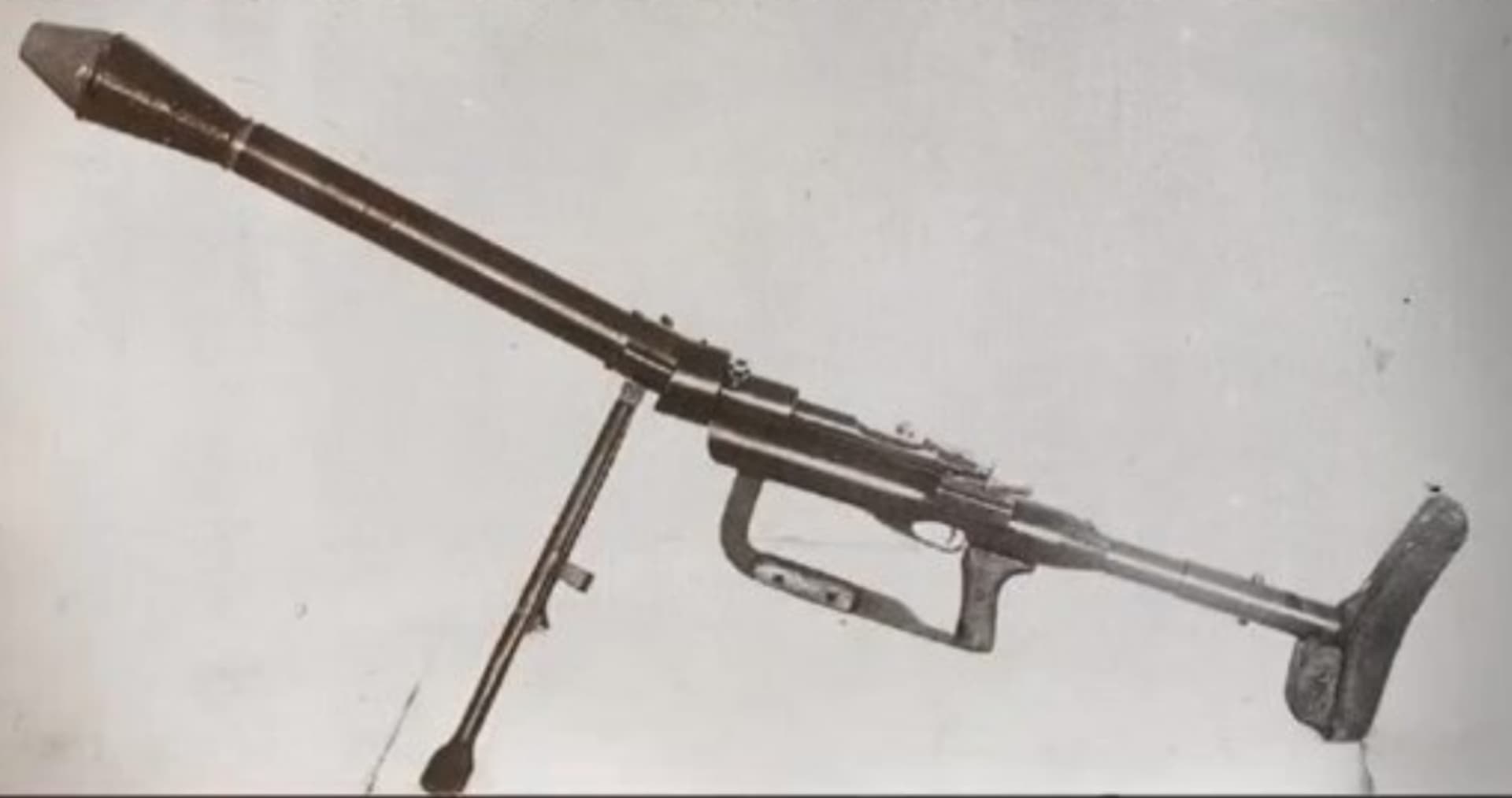
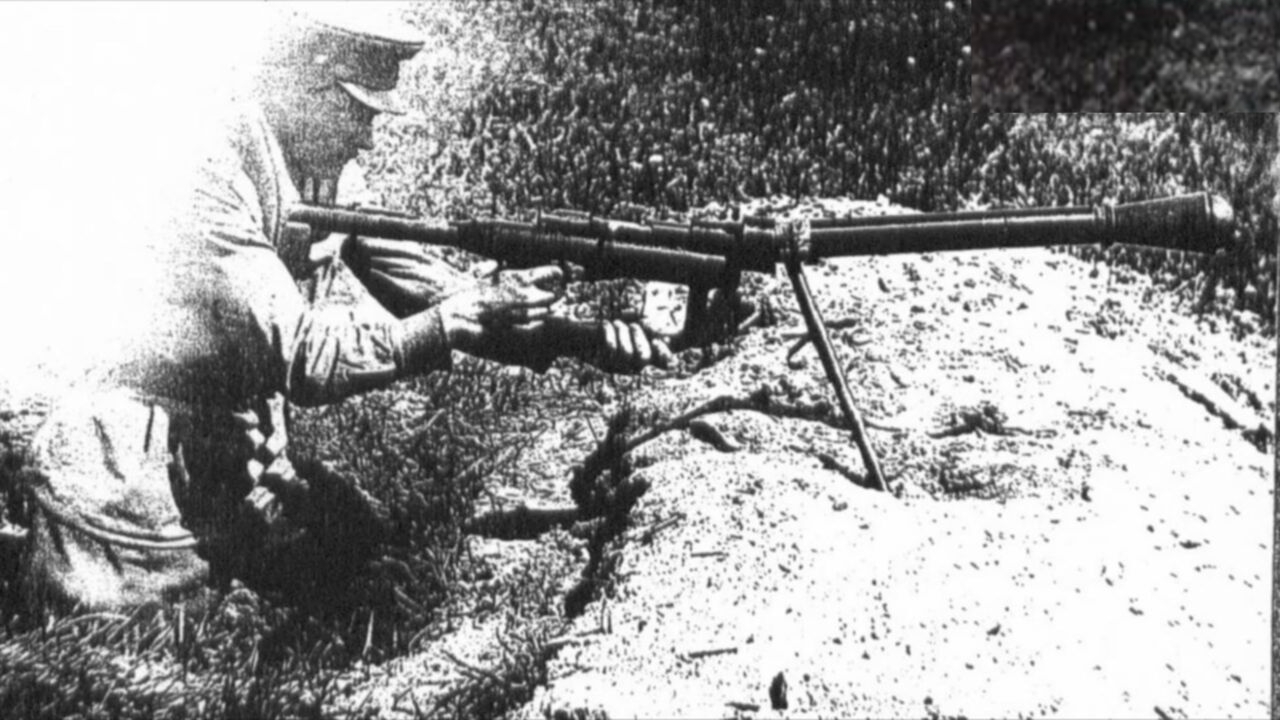
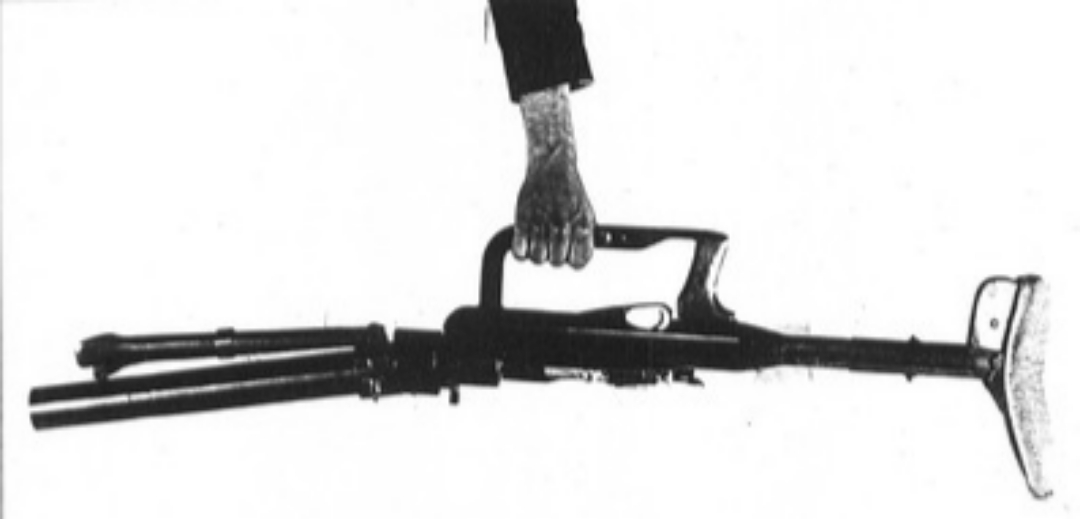
Developed in May 1944 by NII-6 of the People’s Commissariat of Ammunition, the PG-6 was designed to accelerate wartime production by assembling existing weapon components. It paired the barrel of a 50mm company mortar with the receiver and bolt of a Mosin-Nagant rifle and the stock and bipod of a PTRS. Crucially, it required no dedicated warhead: it launched standard RPG-6 HEAT grenades seated in a sabot using a blank rifle cartridge, while retaining the ability to fire standard 50mm HE mortar rounds against infantry and emplacements.
| Specification (PG-6) | Value |
|---|---|
| Caliber | 50 mm smoothbore |
| Weight | 14.0 kg |
| Length | 1,200 mm |
| Ammunition | RPG-6 in sabot (1,650 g) or standard 50mm HE mortar bomb |
| Muzzle velocity | 35 m/s upgraded to 55 m/s (HEAT), 70 m/s (HE) |
| Sight range | 75 m upgraded to 100 m (HEAT), 220 m to 550 m (HE) |
| Penetration | 100–120 mm (later 100 mm at 30 degrees) |
During its initial proving-ground trials in July 1944, however, the launcher drew sharp criticism for its ergonomics and handling. Preparing a single anti-tank shot required an eight-step sequence: unscrewing the grenade handle, inserting the fuze, reattaching the handle, pushing the sabot into the barrel, pulling the safety pin, seating the grenade in the sabot, chambering the blank cartridge, and finally aiming and firing. At its initial 35 m/s muzzle velocity, eight out of ten rounds fell short at 75 meters, with dispersion spanning 5.4 by 2.5 meters, while the grenade’s safety mechanism required a minimum arming distance of 35 meters. When hits did connect, penetration was substantial—the RPG-6 cleanly perforated 100 mm plates and even a spaced 100 + 20 mm armor array with a 15 mm air gap.
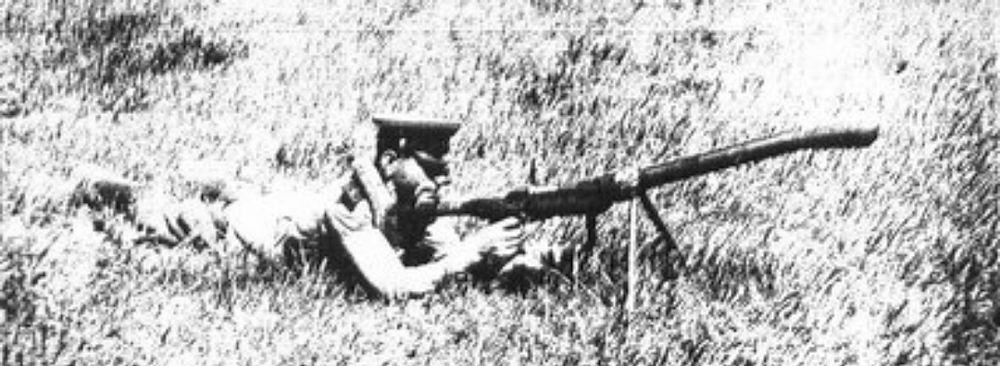
Less widely known is that the project continued well past July. Following an interagency dispute between GAU and the People’s Commissariat of Ammunition—prompting direct written resolutions from Lavrentiy Beria ordering joint re-evaluation—NII-6 spent two months substantially redesigning the weapon. On November 3, 1944, Commissar Boris Vannikov reported that the modernized PG-6 achieved 55 m/s with the RPG-6 and 70 m/s with the 50mm mortar bomb, extending practical sight range to 100 meters against armor and 550 meters with HE rounds. Recoil from the shoulder was reduced and reloading was simplified, while penetration remained 100 mm at a 30-degree impact angle. Even with these improvements, a 14 kg closed-breech system could no longer match the mobility of lightweight recoilless tubes emerging concurrently.
PTG-44 / Model “A” (NIPSMVO, Spring 1944)
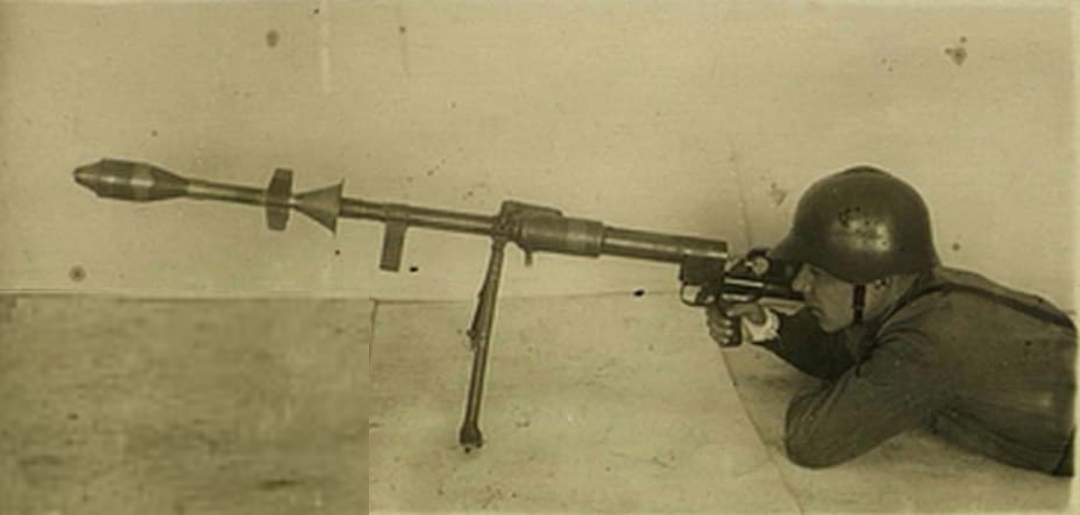
At the NIPSMVO proving ground near Moscow, an engineering group headed by Lieutenant Colonel Kazanovich (including Gribakin, Boroshnev, Georgy Lominsky, and Renberg) began work on February 5, 1944. Their first prototype, designated Model “A” and subsequently PTG-44, converted a 14.5mm PTRD-41 by shortening and boring out the barrel to 26 mm, repositioning the bipod, and fitting new sights. It fired a 70mm over-caliber shaped-charge grenade (AKG-70, stabilized by six fins) propelled by a blank 14.5mm cartridge containing 9 grams of P-45 powder.
| Specification (PTG-44 / Model “A”) | Value |
|---|---|
| Caliber | 25 mm barrel / 70 mm grenade (AKG-70) |
| Weight | 13.5 kg |
| Length | 1,250 mm |
| Grenade weight | 1.4 kg |
| Muzzle velocity | 58.2 m/s |
| Sight range | 150 m |
| Penetration | 170 mm |
The PTG-44 offered strong ballistic performance for 1944, delivering a relatively flat trajectory to 150 meters and 170 mm of armor penetration. Nevertheless, launching a 1.4 kg projectile from a closed breech generated excessive recoil, and a 13.5 kg single-shot weapon lacked the portability needed by frontline infantry. Following troop trials at the “Vystrel” courses, the commission rejected the PTG-44.
Captain Kulakov’s 5-Shot Self-Loading Drum Launcher (May 1944)
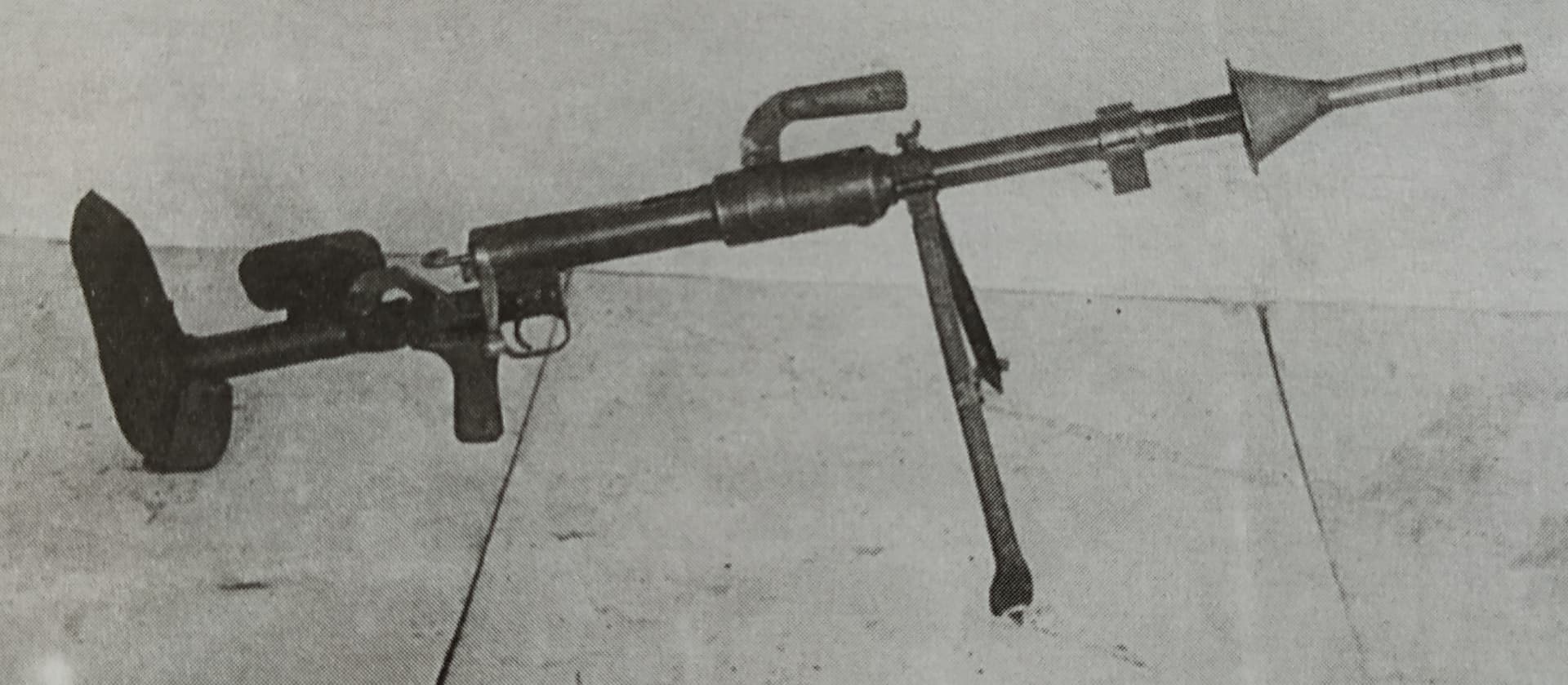
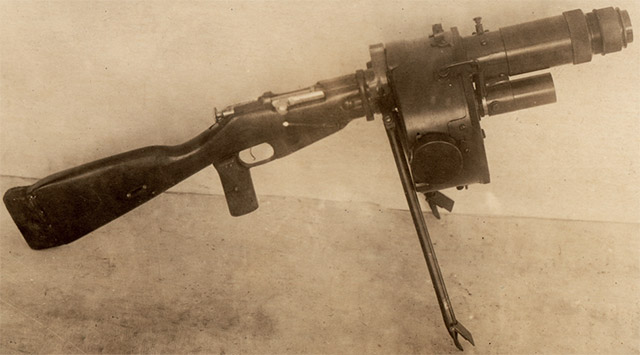
Alongside institutional anti-tank projects, one of the most unusual prototypes of 1944 emerged from an independent initiative by Captain Mikhail Kulakov, a SMERSH officer who fabricated a five-shot self-loading drum grenade launcher largely by hand at Factory No. 614 without formal engineering support.
| Specification | Value |
|---|---|
| Caliber | 44.15 mm |
| Action / Feed | 5-round revolving drum, semi-automatic |
| Muzzle velocity | 160.3 m/s (with VT powder) |
| Range | 550 m at 0.25 degrees elevation |
| Prototype weight | 14.9 kg (empty) |
| Proposed revised weight | 8–9 kg |
Kulakov’s design utilized a gas-actuated, forward-moving “false barrel” coupled with a muzzle brake to cycle a five-chamber revolving drum of compact mortar tubes. Remarkably, the prototype reached the NIPSVO proving ground in spring 1944 and was test-fired directly from the shoulder. Using VT powder, it launched dummy grenades at 160.3 m/s, achieving a range of 550 meters at just 15 arcminutes (0.25 degrees) of elevation. During an accuracy demonstration requested by a proving-ground engineer, Kulakov severed a 25–30 mm sapling at 75–80 meters with his final round.
Although the test board initially rejected the launcher due to excessive weight, slow loading, and partial cycling reliability (roughly 50 percent), Kulakov submitted a comprehensive redesign proposal in May 1944. His revisions reduced drum diameter to bring total weight down to 8–9 kg, simplified gas sealing, and introduced a TT-33-style hold-open mechanism after the fifth shot to speed up reloading. Recognizing its potential, GAU Deputy Chief General Khokhlov ordered the prototype returned to Kulakov on May 18, 1944, along with formal technical specifications (TTT No. 2611) for further refinement.
4. The Recoilless Breakthrough: LPG-70, TPG-90, LPG-44, and RPG-1 (1944–1949)

The decisive breakthrough of 1944 came from Kazanovich’s other two concepts at NIPSMVO: Models “B” and “V”, soon designated LPG-70 and TPG-90. Rather than managing heavy recoil or exposing the operator to an extended rocket exhaust plume like the Panzerschreck, the engineers created lightweight, reusable steel tubes open at both ends. The over-caliber HEAT grenade was loaded from the muzzle, and its black-powder propelling charge burned completely within the barrel—eliminating recoil, keeping weight minimal, and removing the need for a blast shield.
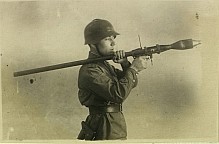
The lighter LPG-70 (Model “B”) featured a 30mm smoothbore tube measuring 1,000 mm in length and weighing just 2.0 kg. Its 70mm RKG-70 grenade (1.45 kg, stabilized by a four-fin ring and propelled by 70 grams of black powder) reached 43.8 m/s, providing a 100-meter sight range and 170 mm of armor penetration. Its heavier counterpart, the TPG-90 (Model “V”), employed a 45mm tube (1,200 mm long, 3.5 kg weight) firing a 90mm RKG-90 grenade (2.3 kg, 110 grams of black powder). This raised penetration to 200 mm—matching the Panzerfaust—at the cost of a lower muzzle velocity (35.5 m/s) and a reduced sight range of 75 meters.
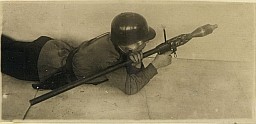
Because the lighter, higher-velocity 70mm model offered superior infantry handling, GAU selected the LPG-70 for further refinement under Senior Technician-Lieutenant Georgy Lominsky (who later became a prominent director in the Soviet nuclear program). The improved design was designated LPG-44 (Legkiy Pekhotnyy Granatomet — Light Infantry Grenade Launcher, 1944).
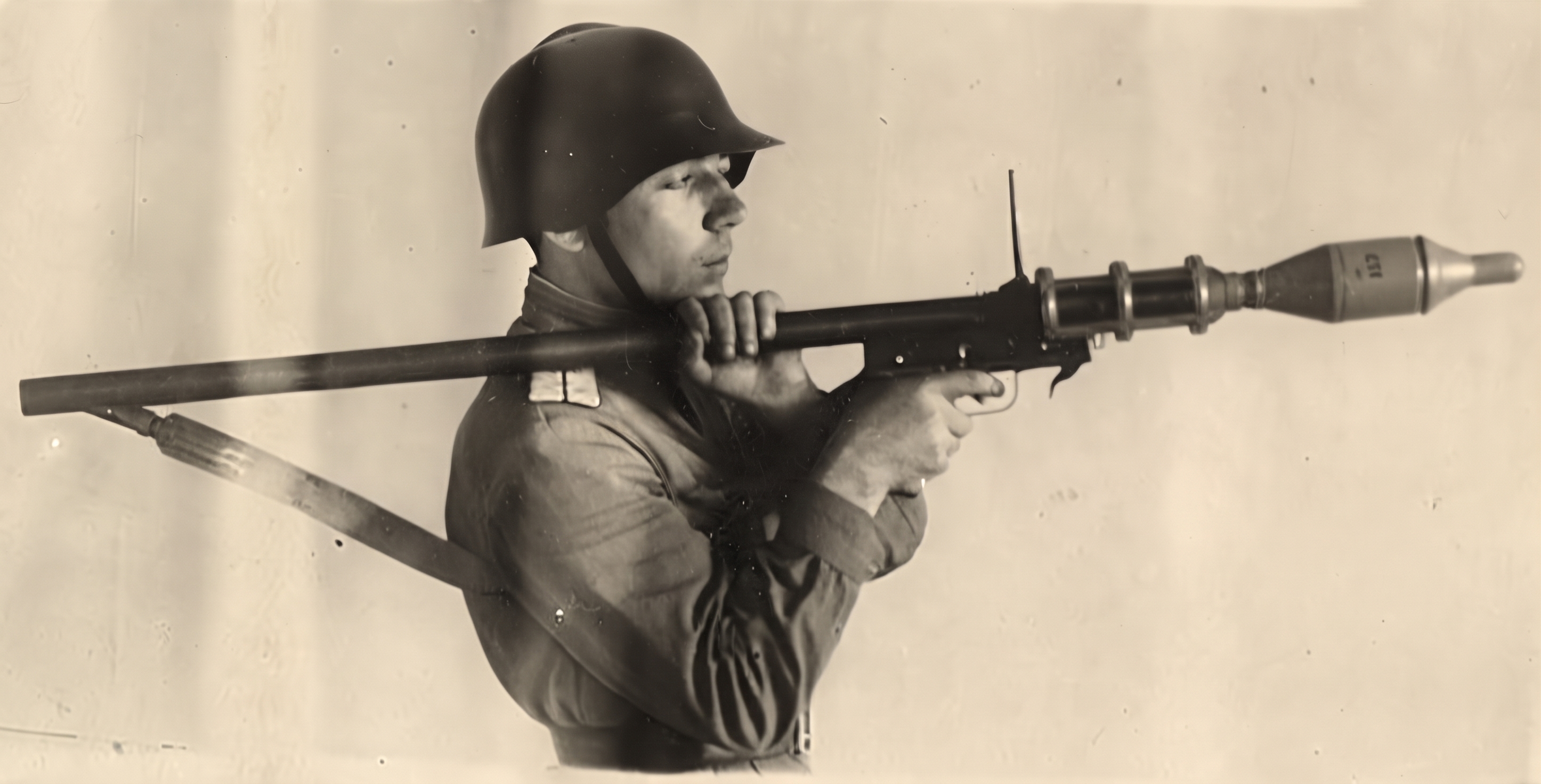
| Specification (LPG-44 / RPG-1) | Value |
|---|---|
| Caliber | 30 mm tube / 70 mm grenade (GK-70 / PG-70) |
| Weight | 2.0 kg (slightly over 2 kg with RPG-1 wood guards) |
| Length | 1,000 mm |
| Grenade weight | 1.6 kg (425 mm length) |
| Muzzle velocity | ~40–43.8 m/s |
| Sight range | 75 m (50 m point-blank) |
| Penetration | 150 mm |
| Proving-ground RoF | 9–12 rpm (4–6 rpm practical) |
The LPG-44 retained the 2.0 kg tube and simple hammer trigger assembly, using an adjustable rear leaf sight aligned directly over the nose of the grenade in place of a front post. Its revised 1.6 kg GK-70 grenade incorporated a modified base inertia fuze adapted from the VKG-40 rifle grenade. Even after the German capitulation, development proceeded rapidly: on May 19, 1945, State Defense Committee (GKO) Decree No. 8668ss ordered an initial production run of 500 LPG-44 launchers from Factory No. 2 in Kovrov and 11,000 GK-70 grenades from Factory No. 846.
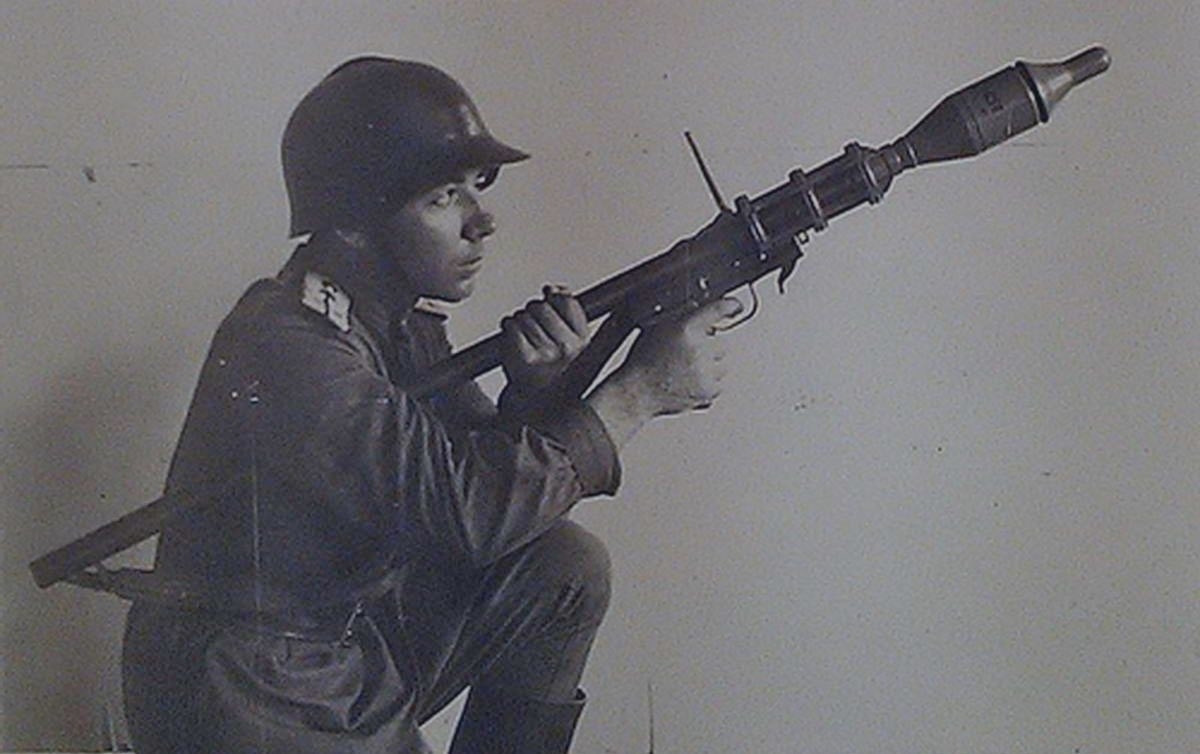
Between August 29 and September 11, 1945, NIPSMVO conducted extensive trials with 15 Kovrov launchers and 970 grenades, firing 750 rounds from standing, kneeling, underarm, and prone positions at a test cadence of 9 to 12 rounds per minute. Shoulder-fired dispersion proved practical for close-range anti-tank defense, producing a 100-percent grouping radius (R100) of 61 cm at 50 meters and 93 cm at 75 meters.
The centerpiece of the trials was live fire against a captured Pz.Kpfw. VI Tiger at distances of 50 and 75 meters (ten scored shots from each range). Every direct hit on the Tiger’s frontal armor achieved complete penetration. One frontal strike above the transmission ignited oil inside the crankcase; another hit the turret roof, destroying the hatch and gun elevation gear before perforating the steel turret floor. Strikes against the turret ring immobilized the turret completely, and a hit on the main gun shattered the muzzle brake.
Although the commission concluded that the LPG-44 had passed proving-ground trials, several issues remained. Out of 750 shots, 59 grenades failed to function properly (a 7.9 percent failure rate, largely attributable to glancing impacts and wartime assembly defects in primers and detonators), while powder fouling caused the hammer mechanism to bind after 20 to 30 shots.
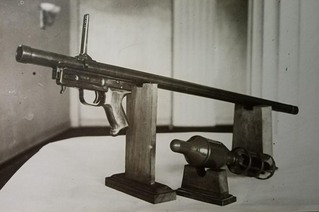
In 1946, engineers at Kovrov Factory No. 2 refined the launcher and added wooden heat shields around the center of the tube to protect the gunner’s hands during sustained fire. In 1948, GAU formally approved the production drawings as the RPG-1 (index 56-G-661) with its PG-70 grenade (57-GK-661), and an official service manual was published in 1949. Nevertheless, the RPG-1 never entered mass production. Lingering base-fuze unreliability, the dense smoke signature and seasonal sensitivity of black powder, and its limited 50-meter point-blank range (75 meters maximum) had rendered the 30mm configuration obsolescent by 1948.
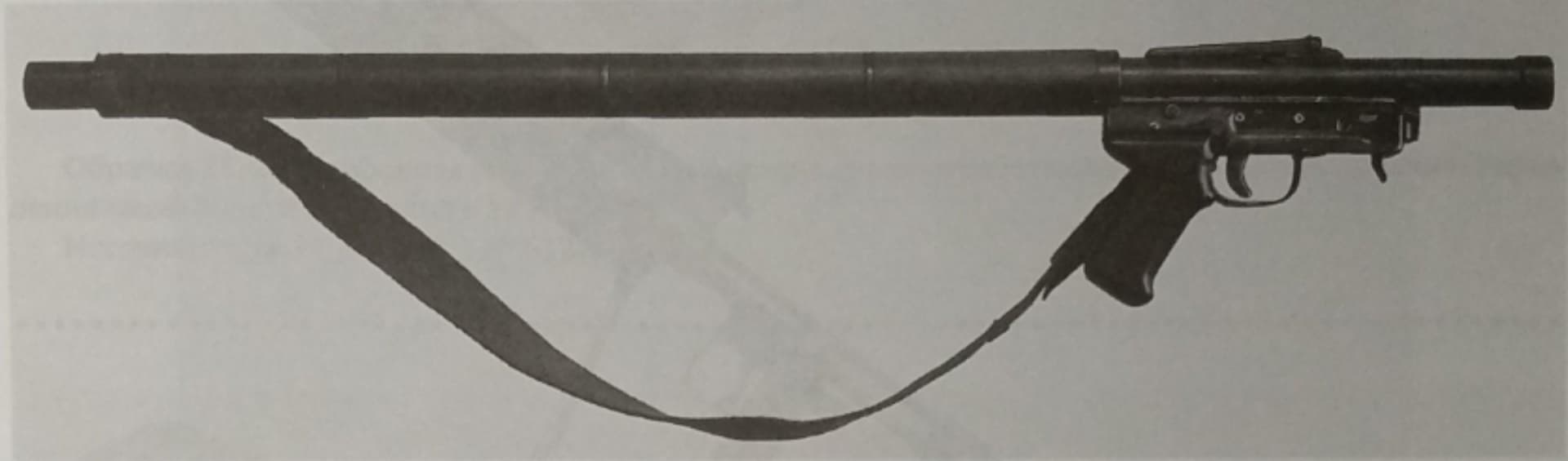
Its architecture, however, directly shaped postwar Soviet infantry armament. Scaling up the exact concept pioneered by the LPG-44 and RPG-1—a reusable open tube, wooden heat guards, an under-barrel hammer trigger, and a muzzle-loaded over-caliber HEAT grenade—designers at GSKB-30 created a 40mm launcher firing an 80mm folding-fin grenade. Adopted in 1949, this became the RPG-2 (weight 2.86 kg, muzzle velocity 84 m/s, 150 m sight range, and 180–200 mm of penetration).
5. The Parallel Track: Soviet Rocket Launchers (1942–1945)
Concurrently with Kazanovich’s recoilless tube program, two other Soviet design teams pursued true rocket-propelled launchers—heavier systems conceptually closer to the Panzerschreck and Bazooka.
PTR-82 / RPR-82 / RPR-82-M (1942–1945)

Notably, Soviet development of an 82mm rocket launcher began prior to the German Panzerschreck. Initiated in March 1942 under A. P. Ostrovsky and N. G. Grigoryan (SKB NKNP), the PTR-82 progressed far enough that on February 5, 1944, GKO Decree No. 5098ss ordered an immediate run of 250 launchers and 10,000 RPM-82 rockets. Production was suspended just two months later in April after early serial rockets exhibited degraded accuracy and dropped to roughly 80 mm of armor penetration.
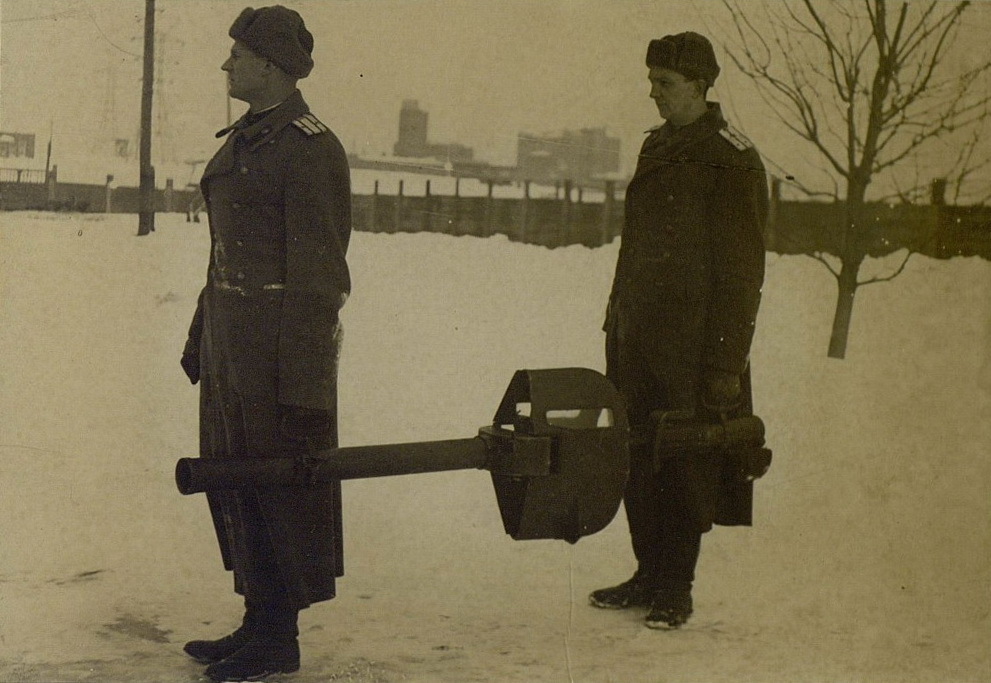
| Specification (1943 PTR-82 to 1945 RPR-82-M) | Value |
|---|---|
| Caliber | 82 mm |
| Weight | 22.0 kg (early) to 35.4 kg with shield and wheeled carriage |
| Length | 2,190 mm |
| Rocket weight | 3.99–4.5 kg |
| Muzzle velocity | 176–200 m/s |
| Point-blank range | 200 m (300 m sight) |
| Penetration | 90–100 mm upgraded to 150 mm (at 30 degrees) |
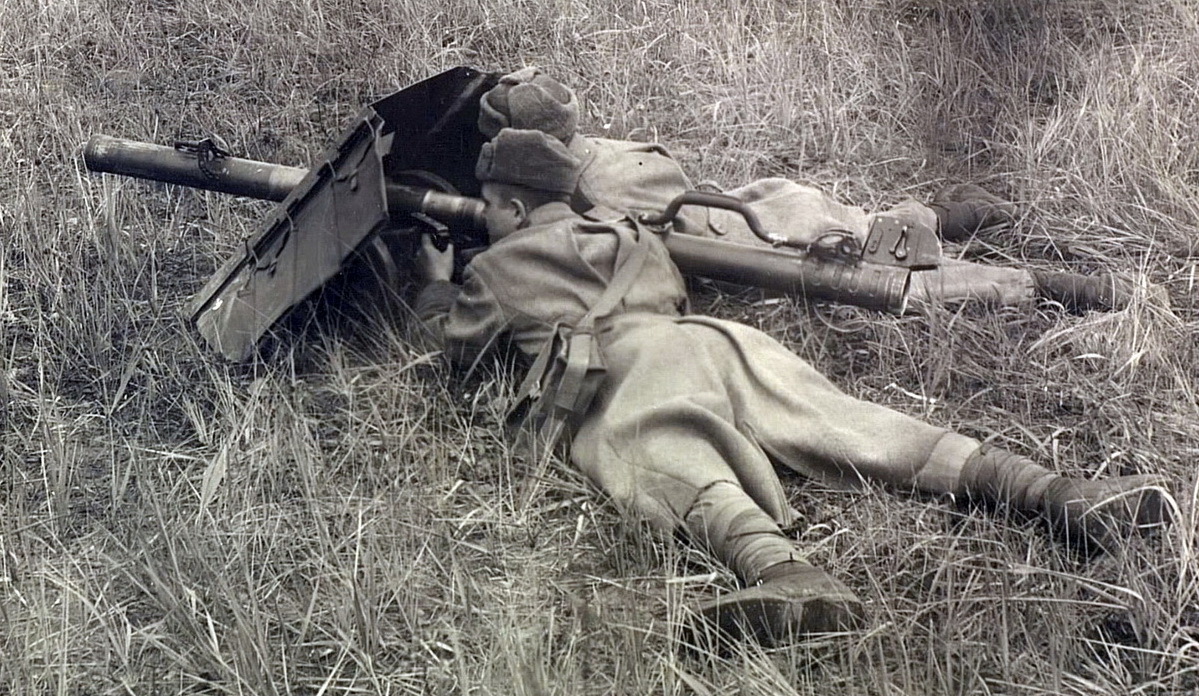
In May 1944, testing identified the underlying physical cause: spinning the rocket induced nutation, which disrupted the shaped-charge jet and reduced penetration roughly threefold. Transitioning to a non-spinning, fin-stabilized rocket (RBG-82, 3.99 kg, 176 m/s) resolved the issue. Mounted on a light wheeled carriage with a blast shield as the RPR-82-M, the weapon underwent trials in March and October 1945, reliably penetrating 150 mm of armor at 30 degrees and the frontal armor of a Tiger at 50 meters, while maintaining a flat 200-meter point-blank trajectory. Two remaining deficiencies prevented wartime deployment: the shield’s observation glass cracked after 20 to 30 shots, and rocket propellant burned erratically at -20 degrees Celsius. Following postwar refinement, it entered service in 1950 as the SPG-82 (and later SG-82 with an additional 700-meter fragmentation round).
SN-120 (TsAGI, March 1945)
One of the more intriguing late-war rocket designs originated at TsAGI under Alexander Nadiradze (later well known for Soviet ballistic missile systems). Tested at NIPSVO in March 1945, the SN-120 combined a 120mm launch tube with an unusually low weight of 7.5 kg—lighter than a German Panzerschreck—achieving a 100-meter point-blank range and approximately 120 mm of penetration.
During its March 1945 trials, four 3.7 kg rockets were fired at the front of a captured Tiger from 30 meters. All four impacted and detonated as intended, though shot placement limited internal damage: one produced a 95 mm non-penetrating crater in the frontal plate, two struck the edge of the superstructure front, and one hit the seam of the driver’s visor, leaving the tank operational. As with the RPR-82, extreme temperatures severely affected ballistic consistency—at 150 meters, dispersion expanded from 1.18 meters at +40 degrees Celsius to 4.55 meters at -40 degrees Celsius. Even so, its simplicity and light weight earned a favorable assessment from the testing commission, which recommended continued development.
| Specification (SN-120) | Value |
|---|---|
| Caliber | 120 mm |
| Weight | 7.5 kg |
| Length | 1,625 mm |
| Rocket weight | 3.7 kg (spinning HEAT) |
| Muzzle velocity | ~74–82 m/s |
| Point-blank range | 100 m |
| Penetration | ~120 mm |