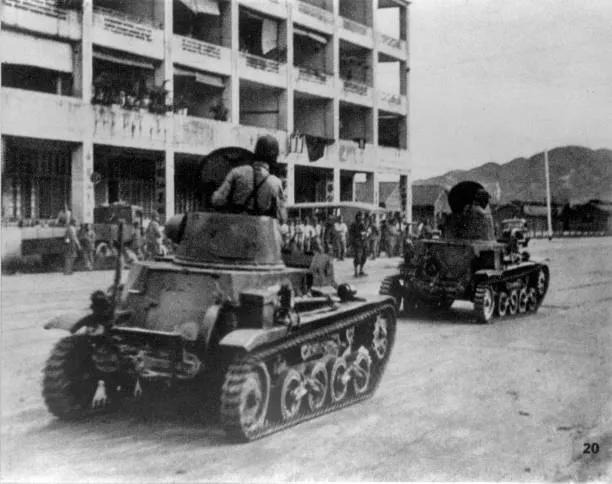
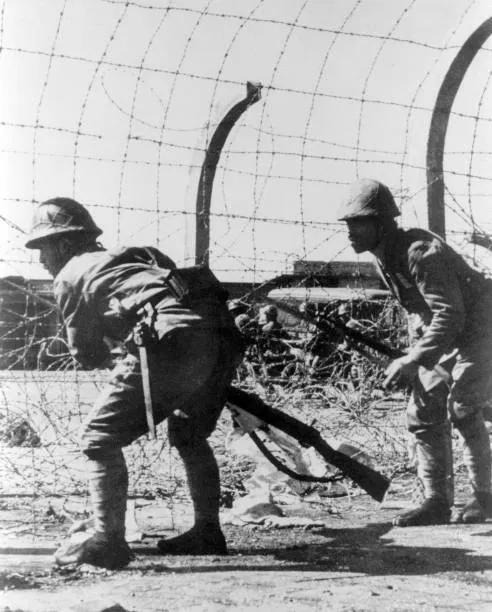
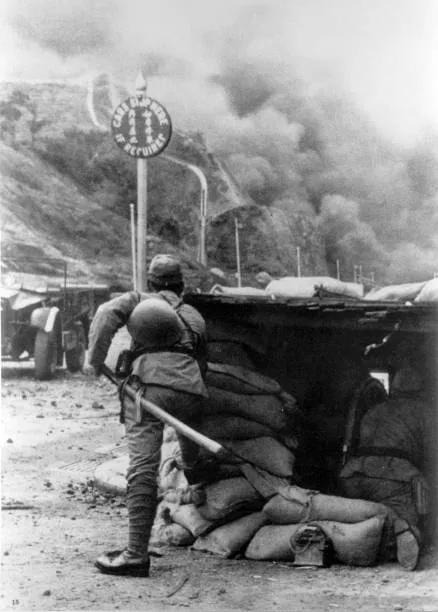
The Japanese army advanced along the Jin Du Ma Trail and Datan Road
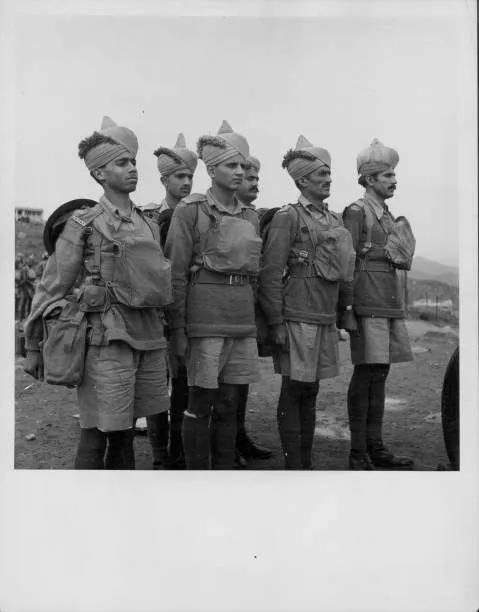
After the British defense line along the northeast coast of Hong Kong Island collapsed late on the night of the 18th, Robertson decided to retreat the line to the vicinity of Jardine’s Bazaar and Leighton Hill, waiting for sunrise to launch a counterattack. The Middlesex Camp has drawn troops from its various companies and formed the Z-Company with the headquarters of the camp, as well as the remnants of the B-Company of the Rajp Camp, to establish a defense line on Mount Leighton. The Scottish Camp has also sent half track vehicles to reinforce. Winnipeg Company A was transferred to defend Mount Pinar east of Jardine’s Bazaar, while Winnipeg Company D was transferred north of the Western Brigade Command and assigned a platoon of soldiers to guard the Golden Horse Trail.
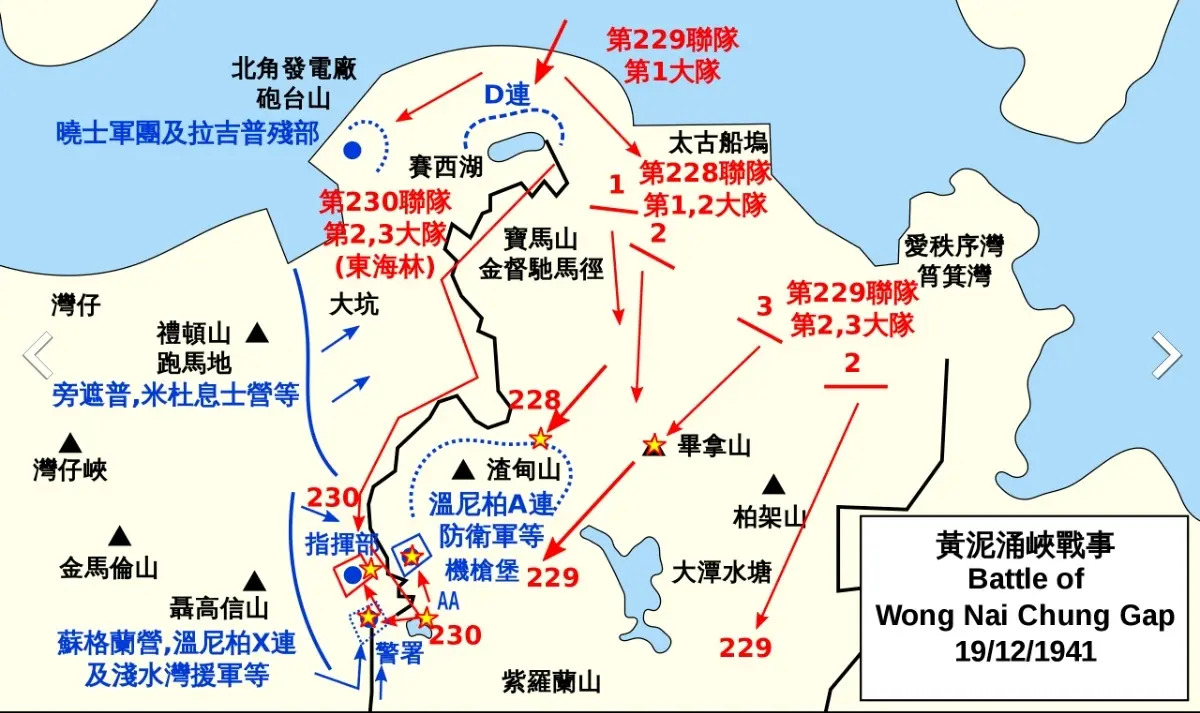
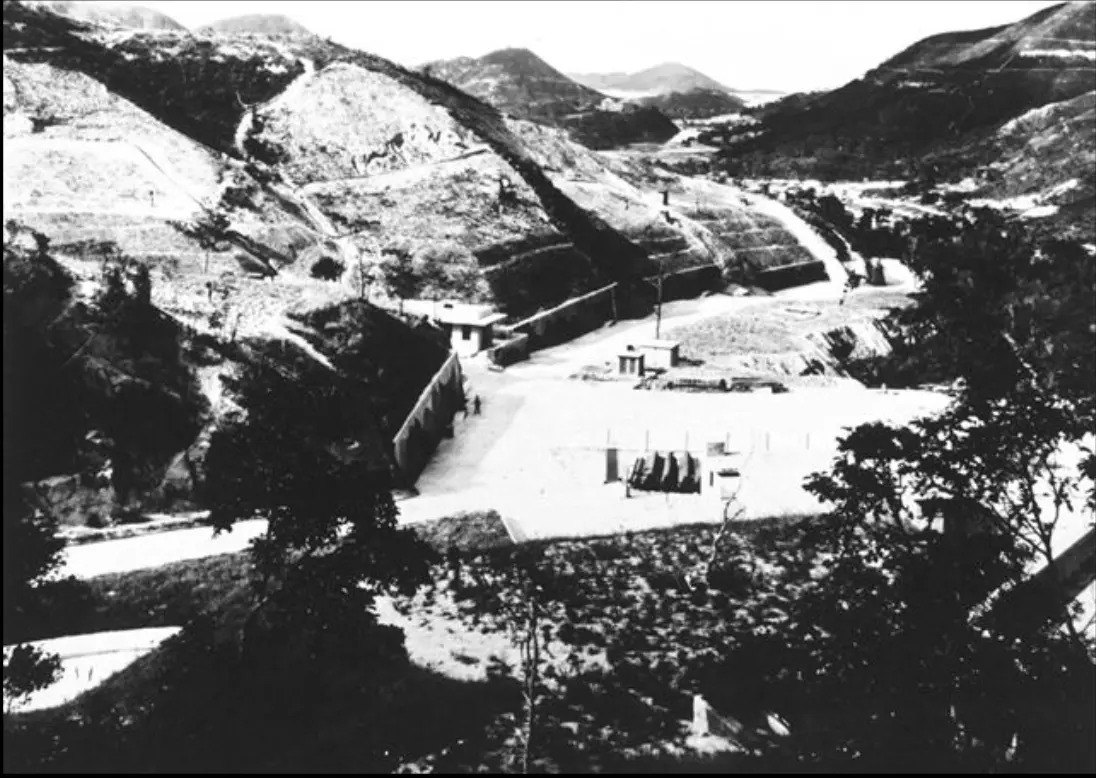
However, the 230th Squadron marched along the Golden Horse Trail in the early morning of the 19th, unexpectedly changing the situation on Hong Kong Island. Due to the strong resistance of the Xiaoshi Corps during the attack on the North Point Power Plant by the 2nd Battalion of the 230th Regiment, they were unable to capture the power plant and advance westward via King’s Road to Tai Hang by the late night of the 18th. Therefore, the Japanese army dispatched the 1st Battalion of the 229th Regiment as a reserve force from Kowloon to land at Braemar Point on Hong Kong Island, in order to strengthen their military strength on the island. The 230th Regiment decided to transfer the task of capturing the power plant and advancing westward via King’s Road to the 1st Battalion of the 229th Regiment, which came to reinforce them. The 2nd Battalion was transferred from the North Point Power Plant to Sai Westlake and marched along the same path as the 3rd Battalion, first heading south and then west. The 230th squadron plans to bypass the east and south sides of Mount BMW after these two squadrons arrive at Sai West Lake. When they reach the north side of Jardine’s Bazaar, they will then turn towards the direction of Tai Hang to advance and bypass a section of King’s Road in Fortress Hill and Tin Hau, attacking Tai Hang and Causeway Bay from south to north. Therefore, the 230th Squadron first besieged the remnants of the D Company of the Rajjep Camp at Sai Hei Lake, but when they forced back the 7th Platoon of the 3rd Company of the Hong Kong Defense Army, they were fiercely counterattacked. Although they captured two positions of the Defense Army at this location with their military advantage, five people from the 12th Squadron were killed. The captain of the 230th Squadron, Toshihide Higashi, estimated that there were a large number of British troops stationed at Jardine’s Bazaar and decided to take the Golden Governor’s Chariot Path south, then turn northwest on the way to Dakeng and attack Causeway Bay, thinking that this would avoid Jardine’s Bazaar. However, due to the fact that the Jin Du Chi Ma Trail was built along the mountain, with cliffs on one side and steep cliffs on the other, and the leader of the 230th regiment was unfamiliar with mountain roads but had to march in the dark, the 2nd and 3rd regiments of the 230th regiment entered the Jin Du Chi Ma Trail and not only failed to find the expected path to the big pit, but also walked all the way into the Huangniyong Gorge. Colonel Tokaido admitted afterwards that he was not familiar with the terrain of the area and was unaware of the British military’s deployment there; He was unaware that the southern route of the Jin Du Horse Racing Trail would be hindered by the mountain terrain, and there was a lack of a path to turn northwest towards Dakeng. Instead, he passed through Zhadian Mountain and penetrated deep into Huangniyong Gorge; He also had no idea that he was actually marching directly towards the British Western Brigade Command, let alone that Winnipeg Company A had not yet arrived at Mount Pinar for defense, and that the entire Golden Horse Trail was only guarded by a row of soldiers belonging to Winnipeg Company D.
On the evening of December 18th, a total of six infantry battalions from three Japanese regiments landed on the northeast coast of Hong Kong Island. The two sides engaged in fierce fighting along the coast, and although the British defense line was weak, they still made stubborn resistance. The Xiaoshi Corps guarding the North Point Power Plant successfully prevented the 230th Regiment from advancing westward through King’s Road into the city center; The D Company of the Lajep Camp defended West Lake and BMW Mountain to the death, temporarily obstructing the 228th Squadron; On the east side, the A Company of the Rajjep Camp and the C Company of the Rifle Camp also engaged in fierce battles with the 229th Squadron. After landing, the Japanese army was unable to march according to the original plan and could only use their superior forces to forcefully advance inland under British artillery fire.
At the same time, there were loopholes in the defense of the British army on the evening of the 18th and early morning of the 19th. The Winnipeg Battalion D Company only stationed one infantry platoon to guard the Golden Horse Trail, which was unable to stop the movement of the 230th Regiment. However, the Winnipeg Battalion D Company was unable to detect the 230th Regiment marching along the mountain trail due to the need to shift from a night position to a more concealed day position. Therefore, the commander of the Western Brigade, Robinson, judged that Huangniyong Gorge was still safe, and he did not know the movements of the Japanese 228th and 229th Regiments. At that time, the 1st and 2nd squadrons of the 228th regiment were marching south from Taikoo Dockyard, approaching Jardine’s Bazaar defended by Winnipeg Company A and the Hong Kong Defense Forces via Mount Pinar; The two squadrons of the 229th Regiment are marching southwest from Chai Wan and Shau Kei Wan. The second squadron of the 229th Regiment is advancing from Chai Wan via Tai Tam Road towards Tai Tam Gap, while the third squadron of the 229th Regiment is marching from Shau Kei Wan via Pak Ka Shan Road towards Stanley Gap. The route of the third squadron passes through Pak Ka Shan, the eastern side of Pinar Hill, and the eastern side of Tai Tam Reservoir, and then turns west to reach Stanley Gap between Jardine’s Bazaar and Violet Hill (although this gorge is called “Stanley”, it is not the present-day Stanley). Due to the fact that Zhadian Mountain is located to the east of Huangniyong Gorge, although the three infantry regiments of the Japanese army did not coordinate with each other, they were all advancing towards the weakly defended Huangniyong Gorge and the Western Brigade Command. However, Robinson was limited by intelligence, and the Winnipeg Battalion D Company reported that they had not discovered the Japanese army. He judged that although the Japanese army had successfully landed, their offensive into Hong Kong Island had been blocked. Therefore, he decided to consolidate the defense lines in Causeway Bay and Tai Hang, and prepare to counterattack the Japanese army. At 4:15 am on the 19th, Ronson first deployed the B Company of the Punjab Battalion to defend against the Great Tunnel, strengthening the defense line between Leighton Hill, Great Tunnel, and Jardine’s Bazaar to prevent the Japanese from attacking Victoria City. He also ordered the A Company of the Scottish Battalion and the Royal Engineers to prepare for a counterattack at Wong Nai Chung Gap.
Huangniyong Gorge fierce battle
On the early morning of the 19th, the Japanese Army’s 230th Regiment marched along the Golden Horse Racing Trail towards Huangniyong Gorge. At 4:15 am, the Middlesex Battalion discovered Japanese activity on a hill near Dakeng. Robertson then dispatched the Punjab Battalion’s B Company to defend the main tunnel. However, the Winnipeg Battalion, which was defending north of Huangniyong Gorge, reported that no Japanese were found. Therefore, the entire Golden Horse Racing Trail was still defended by only one row of soldiers and could not withstand the thousands of Japanese Army’s 230th Regiment. At the same time, Scottish Company A and Royal Engineers were ordered to go to Wong Nai Chung Gap to prepare for a counterattack at dawn. Due to the fact that the command center of the Western Brigade is located in the center of Hong Kong Island and the gorge is also the boundary between the East and West Brigades, it was considered to be in the rear at that time. Therefore, only the Winnipeg Battalion D Company and the Hong Kong Defense Force 3rd Company were stationed in the vicinity of the Wong Nai Chung Gorge. There is a Winnipeg Battalion D Company command center on the east side of Wong Nai Chung Gorge Road (which was built into the Hong Kong Tennis Centre in 1980), and there is also a St. John Ambulance Brigade ambulance station nearby; The 3rd Company of the Hong Kong Defense Force is mainly located in Jardine’s Bazaar, and is also stationed at the 1st and 2nd Machine Gun Forts (PB1 and PB2) near the southern end of the Golden Governor’s Trail, as well as the 3rd Machine Gun Forts (PB3) near the junction of Buli Trail and Deep Water Bay Road. The 3rd Machine Gun Forts are separated from the Wong Nai Chung Gap Police Station to the east by only one Wong Nai Chung Gap Road. At first, about 350 people were stationed at Huangniyong Gorge and Zhashan, and then 150 Winnipeg Camp soldiers came to reinforce.
At around 5 o’clock in the morning, the defenders on Zhadian Mountain discovered that the Japanese 228th and 229th regiments were coming from Mount Bina and Mount Parker, respectively. At that time, the two battalions of the 228th Regiment had threatened the right flank of the defending army on Zhadian Mountain. As for the 3rd Battalion of the 229th Regiment, after passing through the northwest of Datan Reservoir, it had approached the Stanley Gorge between Zhadian Mountain and Violet Mountain, which could cut off the defending army’s southward retreat on Zhadian Mountain. The direction of the 228th and 229th regiments will form a pincer attack towards the eastern part of the Zhadian Mountains, forming two north-south routes. At the same time, the 230th regiment, which is marching on the Jin Du cavalry trail, has already detoured to the southwestern part of the Zhadian Mountains.
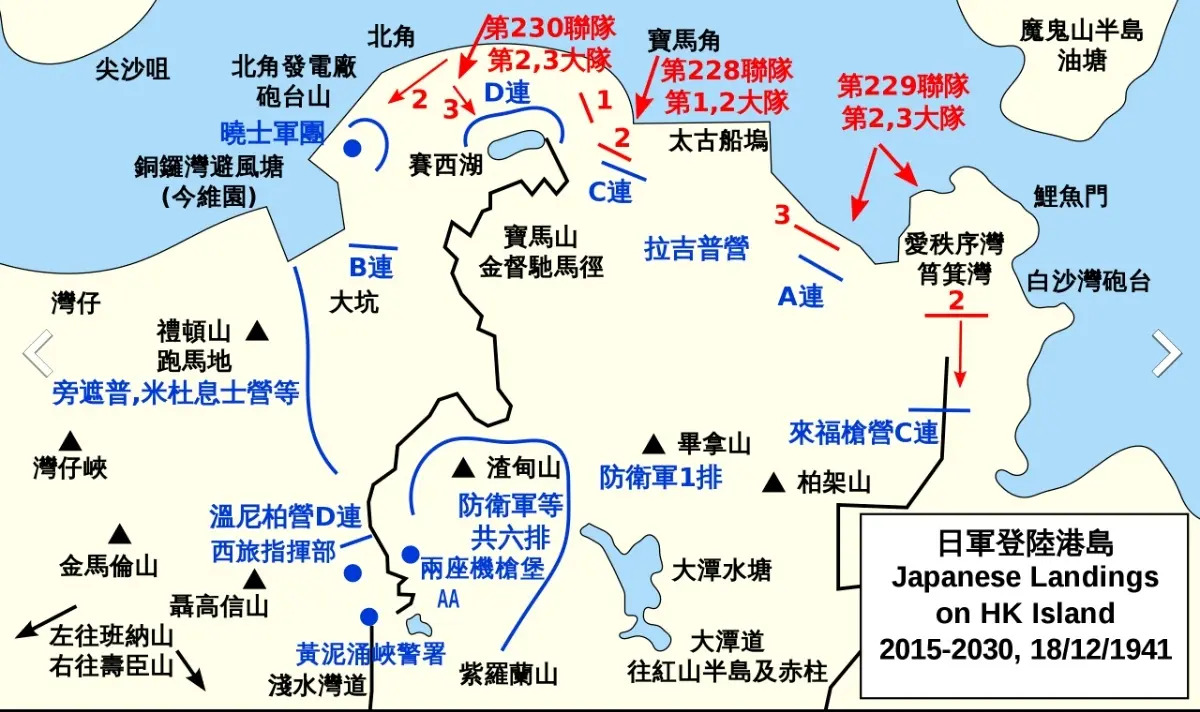
The situation map of the Battle of Huangniyong Gorge. On December 19th, the three Japanese regiments marched towards Huangniyong Gorge without prior coordination. The 230th Regiment headed south along the Jin Du Ma Trail, intending to take a detour and attack the flank of Zhadian Mountain. However, due to unfamiliar terrain and obstacles from the mountains, they unexpectedly broke into the Huangni Chung Gorge behind the British defense line. They first occupied the Huangni Chung Gorge Police Station, which was located in a key position, and then besieged the British Western Brigade Command. Although the 230th Regiment suffered serious casualties, the British army failed multiple attempts to lift the siege and counterattack, and the commander of the Western Brigade, Robinson, was ultimately killed during the breakout. On the same day, the 228th Squadron also engaged in fierce battles with the British army at Jardine’s Bazaar, and the Japanese army sent the 1st Squadron of the 229th Squadron to land at Braemar Point for reinforcement, increasing the number of Japanese battalions that had already landed on Hong Kong Island to seven.
Almost at the same time, the 230th Squadron arrived at the southern end of the Golden Governor’s Trail and was finally discovered by the Hong Kong Defense Force’s 3rd Company defending the Wong Nai Chung Gap. The Hong Kong Defense Forces immediately opened fire on the Japanese 230th Regiment that had invaded the Wong Nai Chung Gap, and strafed the Japanese from the 1st Machine Gun Fortress on Jardine’s Bazaar and the 3rd Machine Gun Fortress near the police station. However, the 2nd Machine Gun Fortress was unable to engage due to insufficient firing range. At the same time, a Hong Kong Defense Force unit went from the Wong Nai Chung Gap police station (now 1 Repulse Bay Road) to counterattack and shot at the Japanese from within the police station. The 3rd Battalion of the 230th Regiment immediately dispatched the 9th Squadron to attack the Wong Nai Chung Gap police station. The Winnipeg Battalion soldiers stationed in the Postbridge mansion near the police station also fired at the Japanese army from the mansion at this time, causing certain casualties to the Japanese army along with the firepower of the Hong Kong Defense Forces. However, at that time, there were at least 250 Japanese soldiers at the southern end of the Jin Du Chi Ma Trail, and many more came from behind. The 230th Squadron quickly set up rapid fire guns to support the attack, and with its superior strength and firepower, successfully suppressed and seized the No. 3 machine gun turret, and eliminated the defending troops who came to confront. The Huangni Yongxia Police Station, located in a strategic location, was finally captured by the 9th Squadron.
After capturing the Wong Nai Chung Gap police station, the Japanese 230th squadron sent the 11th and 12th squadrons to continue their strong attack in an attempt to expand their gains, and also sent the 2nd squadron to attack Stanley Gap. However, at this time, the 230th squadron was still subjected to crossfire from the British troops distributed around the gorge, causing increasing casualties for the Japanese army. The 3rd squadron was unable to move after attacking the Wong Nai Chung Gap police station, while the 2nd squadron attacking Stanley Gap was caught in a melee with Winnipeg Company A and the Hong Kong Defense Forces at Stanley Gap. However, with the 230th squadron setting up rapid fire guns on both sides of the Jin Du Chi Ma Jing and Huang Ni Yong Xia police stations, the Japanese army in the mountain gorge began to stand firm with the support of strong artillery fire and gradually gained the upper hand. Due to the fact that the British army did not anticipate a sudden invasion of the Huangniyong Gorge by the Japanese army, their weak defense line in the gorge was facing division and isolation. Robinson’s Western Brigade Command was located northwest of the Huangniyong Gorge Police Station, only one way away from the Japanese 230th Regiment’s stronghold in the gorge. After the occupation of Huangni Yongxia Police Station by the Japanese army, the connection between the command center and the anti-aircraft gun turret was cut off, and the entrance and exit to Repulse Bay Road were blocked. The Japanese army gradually arrived and their numbers continued to increase.
At 6:25 am, the 2nd Battalion of the 230th Regiment began attacking the British anti-aircraft gun turret located southwest of Zhadian Mountain on the east side of Huangniyong Gorge Road (now on the side of Yangmingshan Villa). The two 3.7-inch anti-aircraft guns of the turret had shot down a Japanese plane on the 16th. Apart from the artillery of the battery, the area was defended by the Winnipeg Battalion and the 3rd Company of the Hong Kong Defense Force. Although the Japanese army suffered serious casualties during the strong attack on the anti-aircraft gun emplacements, the British artillery was almost completely wiped out after two hours of fierce fighting, with about 25 defenders killed in action at the location; Afterwards, the Japanese attempted to capture the British machine gun fortresses 1 and 2 on Zhadian Mountain. In the south of the gorge, the Royal Engineers’ counterattack unit arrived at Huangniyong Gorge at 6:30 am, but was blocked by the 230th Squadron and unable to enter the Western Brigade headquarters. They could only set up a defense line on the Buli Trail west of the gorge. As for the eastern side of Jardine’s Bazaar, the 228th Regiment continued to advance towards Jardine’s Bazaar after occupying Mount Pinar in the early hours of the morning, and with its military advantage, defeated the Winnipeg Battalion A Company and two British mobile columns defending Jardine’s Bazaar. Only the two machine gun emplacements of the Hong Kong Defense Force’s 3rd Company remained stubborn in Jardine’s Bazaar.
At 7:00 am, the 9th Squadron of the Japanese 230th Regiment began to launch an attack from the Huangni Yongxia Police Station towards the Winnipeg Battalion D Company Command and the Western Brigade Command located on the east and west sides of Huangni Yongxia Road. Robinson immediately sought help from the rear. However, the military intelligence received by Robinson at that time was both insufficient and fragmented. He believed that the Japanese army could not have come from the south of Wong Nai Chung Gap, but instead attacked the gap from north to south through the middle section of Wong Nai Chung Gap Road from Jardine’s Bazaar. Due to the inference that Cameron Hill was about to be threatened by the Japanese army, the Scottish and Winnipeg battalions left their main forces at Wan Chai Gap and Cameron Hill, but indirectly reduced the number of soldiers going to rescue the Western Brigade Command. At that time, only Scottish Company A and Royal Navy infantry were ordered to reinforce at Huangni Yongxia, but their numbers and firepower were far inferior to the Japanese 230th Regiment attacking the Western Brigade headquarters here.
At 8:00 am, the 2nd Battalion of the 230th Regiment had sealed off the north and south entrances of Huangni Yongxia and deployed artillery to prepare for a counterattack from the British army; The 2nd Brigade once again attacked Stanley Gap, not only annihilating the defenders of Stanley Gap, but also besieging the 3rd Company of the Hong Kong Defense Forces at Jardine’s Bazaar; The remnants of Winnipeg Company A and two British mobile columns, which were previously repelled by the 228th Regiment, were either intercepted by the 2nd Battalion of the 230th Regiment when retreating south or annihilated by the 228th Regiment when retreating north.
The Scottish Company A was ordered to rush to Huangniyong Gorge to rescue the Western Brigade Command, but was ambushed by Japanese artillery on Zhadian Mountain with rapid fire guns while traveling east along Stubbs Road. The Scottish Company A was almost completely destroyed, and the company commander and three platoon leaders were killed. Only 15 people fought and left, arriving at the outskirts of the Western Brigade Command at noon. The Royal Navy infantry convoy led by Royal Navy Lieutenant Colonel Pias set off from Aberdeen and rushed to the Western Brigade Command via Repulse Bay Road for reinforcement. However, they were ambushed and defeated by the Japanese army near the Wong Nai Chung Gap Police Station, and the remaining troops had to hide in the Buster House. The owner of the house, George Gwinnett Noble Tinson, a Justice of the Peace, and the household servants also fought against the Japanese army. However, shortly after, Noble Tinson was injured by fragments of Japanese shells and died, while his wife escaped this disaster by working as a nurse at the Salesian Ambulance Station on Chai Wan Road. The Winnipeg Battalion D Company, which was defending outside the Western Brigade Command, was defeated by the Japanese army besieging the command center, and the D Company was trapped inside the bunkers.
The Western Brigade Command has fallen
General Luo Xun’s Western Brigade Command in Huangni Yongxia was continuously attacked by the Japanese army with intensive artillery fire from 7:00 am on the 19th. However, the reinforcements summoned to rescue were blocked by the Japanese army on the way and were unable to arrive for a long time. Japanese infantry armed with bayonets on their rifles launched wave after wave of attacks under the cover of machine guns, attempting to charge through the Huangniyong Gorge and enter the command center. Although the defending troops within the command center also intercepted the charging Japanese army with machine guns from the bunker, causing serious casualties, the command center was also heavily surrounded by the increasing number of Japanese soldiers.
At 10 o’clock in the morning, the Western Brigade Command was riddled with bullets under the continuous siege of the Japanese army, but no reinforcements came to relieve the siege. Due to the expectation that the number of Japanese troops besieging the command center would only continue to increase, it was difficult for the defenders of the command center to survive alone. Therefore, Ronson made a final communication with Commander Modby, during which Ronson declared his intention to fight to the death with the enemy. After the call ended, he ordered the destruction of the communication equipment of the command center. Ronson then took out a handgun and personally led the officers and soldiers inside the command center to break out. However, as soon as the defenders of the command center left the bunker, they were immediately fired from three sides by the 3rd Squadron of the Japanese 230th Regiment besieging the command center. General Ronson died in battle, becoming the highest ranking officer of the Canadian army to die in World War II, and almost all the officers and soldiers who broke out with Ronson were also killed.
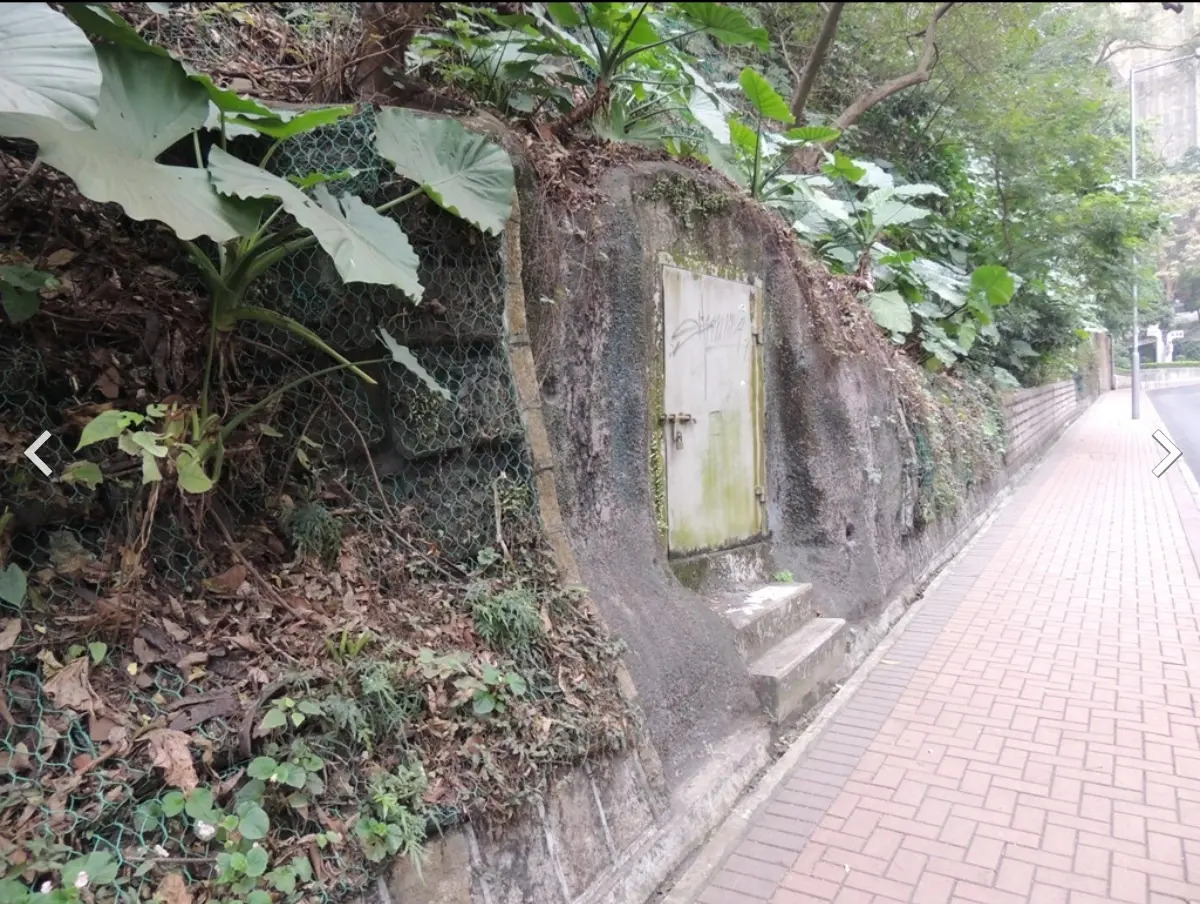
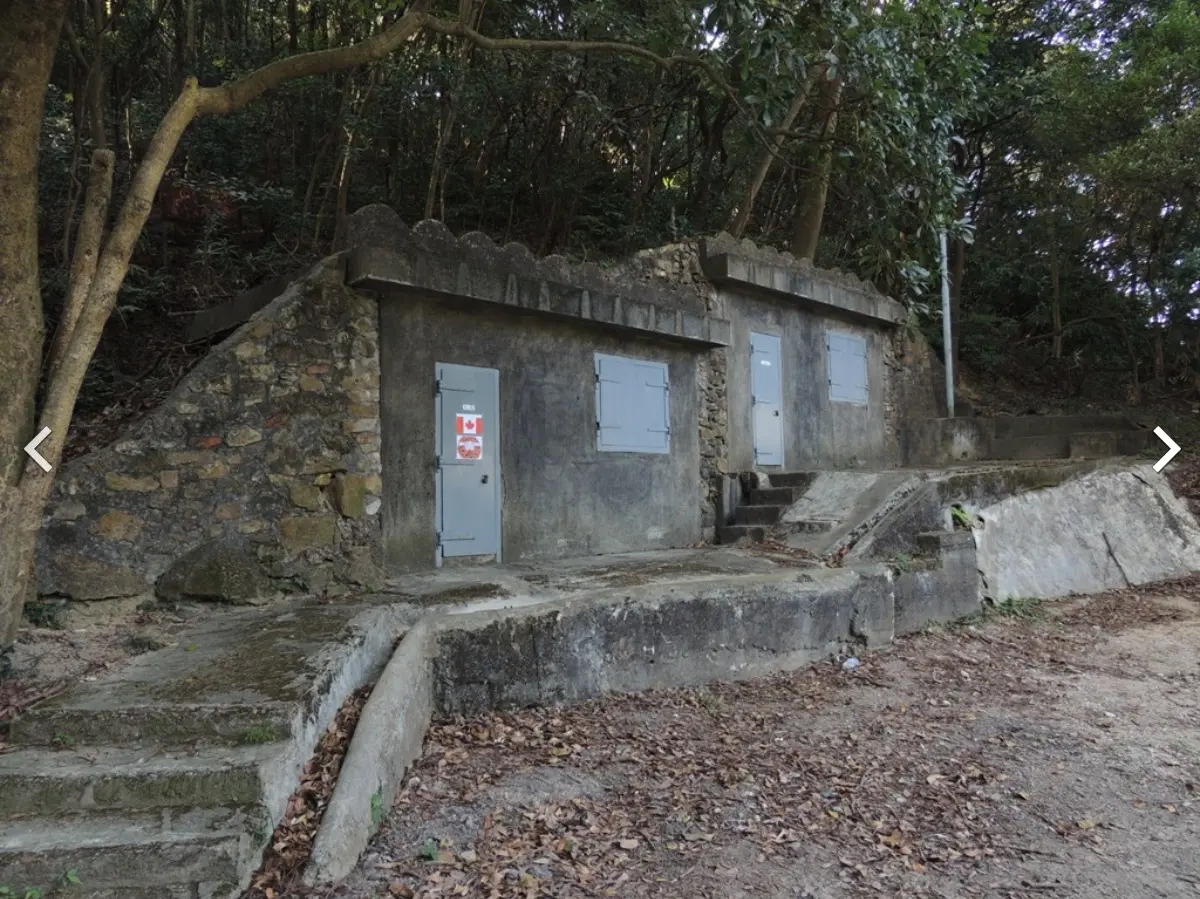
The site of the British Western Brigade Command located on Huangniyong Gorge Road.
In the early morning of the same day, soldiers from Company A and Company D of the Winnipeg Battalion in Canada engaged in a fierce battle with the incoming 1st Battalion of the 228th Regiment on Mount Pinar. The defending army did not face the formidable Japanese army, and the hill was captured. 65 members of the Winnipeg Camp, led by Sergeant John Osbourne of Company A, retreated along the mountain path to the garrison bunker on Jardine’s Peak. However, they were attacked by multiple hand grenades thrown by the Japanese army on Jardine’s Peak. Osbourne almost picked up all the grenades and threw them back at the Japanese army, but he realized that one could not be picked up in time. He shouted a warning to his colleagues and immediately crouched down. Osbourne covered the grenade with his body to block the explosion power. He was blown to pieces on the spot, but saved the lives of his comrades. The remnants of the Winnipeg Camp were eventually defeated and surrendered under the fierce attack of the Japanese army. Osbourne was posthumously awarded the Victoria Cross for his heroic sacrifice in saving lives, which is the highest honor for bravery in the British military.
The bronze statue of a British soldier erected at the Osbourne Barracks in memory of Lieutenant John Osbourne and his sacrifice in the defense of Hong Kong, now stands tall in Hong Kong Park.
The British Western Brigade launched a counterattack on Huangniyong Gorge
On the noon of the 19th, the Japanese army captured the Western Brigade Command and the Winnipeg Battalion D Company Command. The ambulance station near the Winnipeg Battalion D Company Command was also captured, and the St. John Ambulance team and wounded soldiers inside the station were killed by the Japanese army. Although the Japanese army has controlled the north and south entrances and exits of Huangniyong Gorge, there are still British troops defending bunkers and other buildings in the gorge, continuing to resist stubbornly. After the loss of the Western Brigade Command in Huangni Yongxia, the British Western Brigade set up a new command post on Buli Path between Mount Niegaoxin and Mount Cameron. After General Luo Xun left a message and led his troops to break through, there was no news of him. The headquarters and brigade also did not know his life and death. Therefore, the command of the Western Brigade was handed over to Colonel Ross, the commander of the Hong Kong Volunteer Defense Force.
As for Mo Debei at the headquarters, due to scattered intelligence and poor communication, he had not been able to grasp the situation in the northeast of Hong Kong Island and Wong Nai Chung Gap since the Japanese landed. He judged that only two Japanese battalions had landed on Hong Kong Island, and that the Japanese troops attacking Wong Nai Chung Gap were only a penetrative attack. He believed that a counterattack should be launched towards the northeast coast of Hong Kong Island to relieve the British forces in North Point and Tai Koo Dockyard. However, in reality, seven Japanese battalions had already landed on Hong Kong Island at that time, and the Raj Camp defending the northeast coast of Hong Kong Island had collapsed on the morning of the 19th. Only the remnants of the Raj Camp continued to resist in Tai Hang and Causeway Bay. As for the Xiaoshi Corps defending the North Point Power Plant, they also scattered to civilian houses on King’s Road and Electric Road during the noon breakout. In order to avoid casualties and civilians, they surrendered at 4:30 pm. Due to the lack of radio communication in the British army, communication between the command center and various positions still relied on telephone lines. If the positions needed to be transferred or withdrawn, telephone lines had to be re laid and reconnected. Before the telephone lines were connected, only messenger soldiers could be relied upon, making it difficult to adapt to the rapidly changing situation. On the 18th, the army landed on the northeast coast of Hong Kong Island. When the defending British army along the coast was caught in a fierce battle and forced to retreat, normal communication could not be maintained, and the situation could not be immediately transmitted from the company headquarters to the battalion headquarters and then reported to the brigade headquarters and the headquarters. As a result, Modby was unable to grasp the situation of the war and underestimated the scale of the Japanese army that had landed, which directly affected the success or failure of the British counterattack.
At 11:00 am, Modby ordered the A and D companies of Punjab Camp to gather at the Naval Hospital and then launch a counterattack at Galu Lian Shan and Dakeng to lift the siege of the D company of Rajp Camp in Saixi Lake. At 1 pm, Modby ordered the Western Brigade to launch a full-scale counterattack towards the east. The British army launched a counterattack in two directions from the north and south sides of Mount Niegaoxin; The Northern Expeditionary Force is composed of Scottish Company C and Company D, and will launch a counterattack from the north side of Mount Niegaoxin towards the southeast towards Mount Zhadian; The South Route Counterattack Force is a mixed X company consisting of Scottish Company B, Scottish Camp Headquarters personnel, and Winnipeg Camp Headquarters personnel. They meet with the Royal Engineers at Buli Path and then head to the southern end of Huangni Chung Gap Road to launch a counterattack from south to north.
At 3 pm, the British army began a counterattack. The Scottish Company C and D on the North Road advanced from Mount Nie Gao Xin towards Jardine’s Bazaar at 5 pm. Company C turned into Tai Hang Road at Wong Nai Chung Gap Road, while Company D continued southward along Wong Nai Chung Gap Road towards Wong Nai Chung Gap. While advancing on Wong Nai Chung Gap Road, Company D was attacked by the 230th Regiment and artillery on Jardine’s Bazaar, but still met up with the artillery inside the gap at 1 am. They then launched a counterattack on Wong Nai Chung Gap Police Station, but failed and suffered serious casualties. The remnants of Company D later joined forces with the South Road counterattack force. As for the counterattack troops on the southern route, they have already been attacked by the Japanese army at Mount Nie Gaoxin, so they can only detour the Buli Path early and then attack towards Huangni Yongxia. This southern counterattack force, consisting of a mixed X company and royal engineers, launched two counterattacks on the Huangni Yongxia Police Station in the early morning of the 20th, but both failed and suffered heavy casualties. Eventually, they withdrew to Mount Nie Gaoxin. The Scottish Company C in the Grand Tunnel also launched a counterattack towards Jardine’s Bazaar, but was outnumbered and had to retreat to Stubbs Road. The A and D companies of the Punjab battalion, which launched a counterattack on Jalan Hill and Dakeng, were also repelled by the Japanese army and withdrew to Liton Hill. Afterwards, the A company of the Punjab battalion was transferred to the University of Hong Kong for rest and recuperation.
Zhadian Mountain falls
The Eastern Brigade, commanded by Wallace, suffered a significant reduction in combat power after the collapse of the Rajjep Camp and needed to concentrate its forces in the Stanley area to block the Japanese army’s southward advance. However, on the afternoon of the 19th, the Eastern Brigade also dispatched Indian gunners led by Eastern Artillery Commander Major Henry and Major Felden, riding in two armored vehicles of the Hong Kong Defense Forces, to counterattack the Wong Nai Chung Gap from the south via Repulse Bay Road. These gunners attacked the Wong Nai Chung Gap Police Station twice at 8 pm, but also suffered serious casualties and retreated. At around 10 pm, the Japanese 229th Regiment broke through the Buster Mansion of the Justice of the Peace in Dingchen, forcing the defending troops to retreat south to the Repulse Bay area.
The Hong Kong Defense Force’s 3rd Company stubbornly resisted at the two machine gun fortresses on Jardine’s Bazaar, and was successively besieged by the 4th Squadron of the Japanese 230th Regiment. In the morning, the Japanese army cut off the barbed wire around the perimeter and advanced along the waterway to attack Machine Gun Fortress 1. However, they were heavily damaged by the defenders of the machine gun fortress. The Japanese soldiers then walked to a blind spot behind Machine Gun Fortress 1 and threw grenades through the ventilation port on the top of the fortress. The defense soldiers inside the machine gun fortress promptly walked behind the wall without serious casualties under cover and contacted the second machine gun fortress below by phone. The latter sent soldiers to ambush the Japanese army outside of Machine Gun Fortress 1, causing the Japanese army to temporarily retreat. However, under multiple Japanese sieges, all the machine guns in Machine Gun Fortress 1 could no longer be used by the afternoon. These two machine gun fortresses were constantly fiercely fired upon by the Japanese army. Under the siege of the Japanese army, the defense soldiers ran out of ammunition and contacted the second machine gun fortress below. Attempting to break through towards the direction of the big pit, the wounded soldiers who were unable to move had no choice but to surrender, However, the Japanese army killed some surrendered soldiers in retaliation. The Japanese army completely occupied Zhadian Mountain on the evening of the 19th, and the counterattacks launched by the British army on the 19th all failed, leaving only 40 soldiers trapped in the Winnipeg Camp’s D Division in Huangniyong Gorge. Although the 230th squadron took control of Huangni Yongxia after a day of intense fighting, its 2nd and 3rd battalions suffered serious casualties and lacked ammunition, making it unable to continue the attack. From the early morning of the 19th to the early morning of the 20th, during a day long battle in Wong Nai Chung Gap and Jardine’s Bazaar, 451 Hong Kong defenders were killed in action, and the number of Japanese casualties exceeded 600.
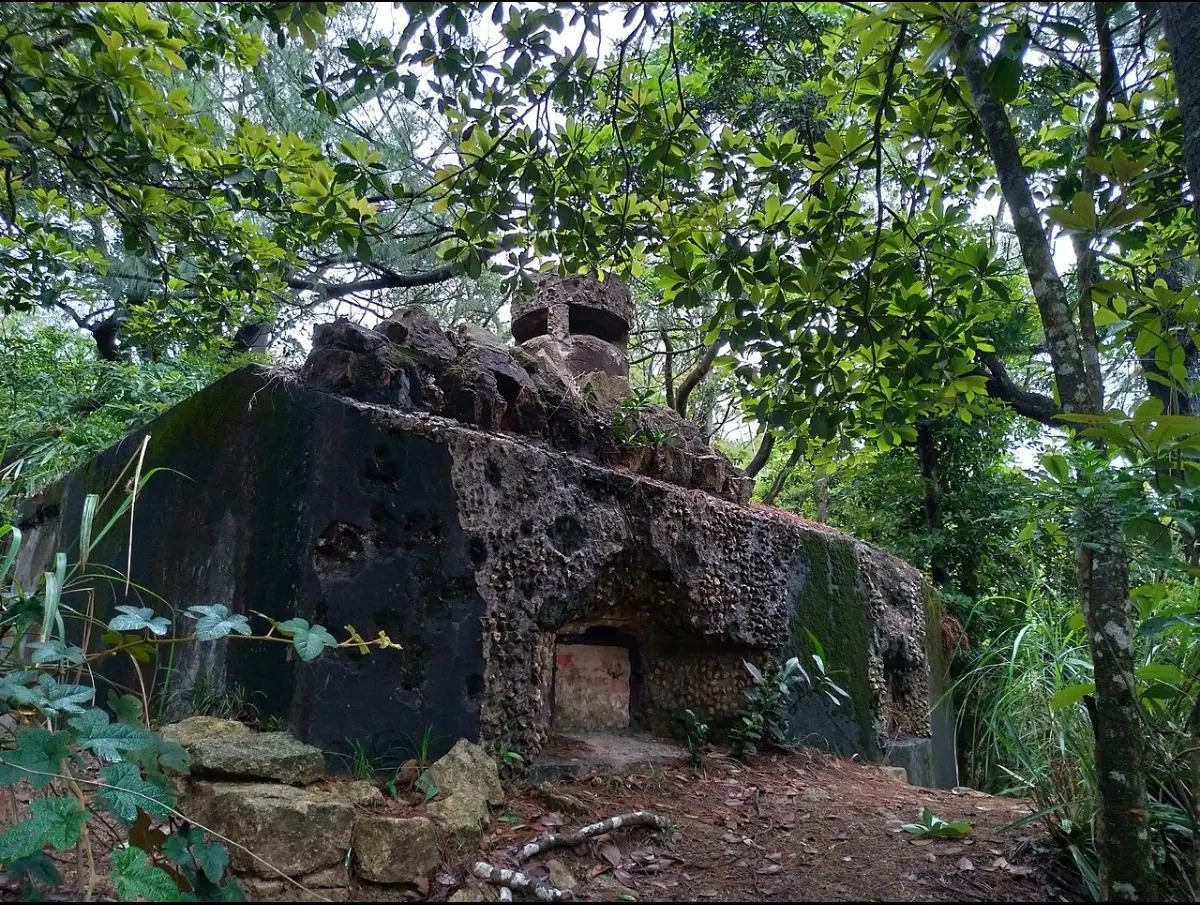
At the No. 1 machine gun fort on Zhadian Mountain, this machine gun fort and the No. 2 machine gun fort below are both guarded by the 9th platoon of the 3rd company of the Hong Kong Volunteer Defense Force. These two machine gun forts caused many casualties to the Japanese army, but the Japanese also threw grenades into the defenders inside from the ventilation port to attack them. However, the defenders inside the machine gun fort still stubbornly resisted under siege, even though the ammunition of the machine guns was exhausted, they continued to resist with rifles. It took the Japanese more than 12 hours to capture these two machine gun forts, and the outer walls of the machine gun forts were marked with bullet wounds.
On the morning of the 20th, Modby and Wallace planned another counterattack, but the situation of the British army continued to deteriorate. After capturing the Dingchen Mansion in Huangniyong Gorge in the early morning of the 20th, the 229th Squadron attempted to attack the Deep Water Bay Golf Course in the southwest of Huangniyong Gorge by following the mountain path south of the Violet Mountain diversion channel. However, they were shot at by British troops on the ridge, so they entered the diversion channel to hide and continue forward. However, the diversion channel turned east towards Shallow Water Bay instead of Deep Water Bay in the west. Colonel Ryosaburo Tanaka, the captain of the 229th Squadron, realized he had taken the wrong path at 4am and decided to leave the diversion channel. He ordered his troops to gather at the Shallow Water Bay Hotel first. However, the squadron under the jurisdiction of the Squadron got lost due to the dark sky and unfamiliarity with mountain roads. The 11th Squadron continued to follow the diversion channel. Walking to the east of Repulse Bay on Mount Ma Gang, the 9th Squadron turned alone towards Deep Water Bay, with only a small number of troops gathering near the Repulse Bay Hotel, The captain of the leading unit, Ryosaburo Tanaka, needs to turn back and search for the lost troops. Although the Japanese army entered Repulse Bay by taking the wrong route, if they occupied the roads and British garages in the area, the land connection between the British Eastern and Western Brigades would be divided.
Soldiers from Company B of the Middlesex Camp and the Royal Navy Volunteer Reserve to the west of Repulse Bay discovered that the Japanese were gathering in the bay. Shortly thereafter, about 30 Japanese soldiers arrived at the Repulse Bay Hotel and brutally attacked six prisoners of war outside the garage. Company B immediately ambushed them, causing some Japanese soldiers to flee into the garage. At 7:40 am, the Middlesex Battalion reported to Commander Modby that the Japanese army had attacked the Repulse Bay Hotel. Modby then ordered the Eastern Brigade of Wallace to immediately attack the Japanese army. Wallace sent the A and D companies of the Fu Gun Battalion, as well as two platoons of infantry from the Hong Kong Defense Force’s 2nd Company, to reinforce the Repulse Bay Hotel and counterattack northward along Repulse Bay Road. After arriving at Repulse Bay, this group of British troops opened fire on the 229th Squadron, which was searching for a mountain path. Many Japanese soldiers were killed or injured. Colonel Tanaka, who led the 229th Squadron, ordered the troops to immediately gather on the hillside north of the Repulse Bay Hotel. Under the cover of artillery fire at Stanley Hill, the British army launched a surprise attack on the garage of Repulse Bay Hotel at 10 am. At that time, the Japanese soldiers in the garage, including the command personnel of the 3rd Battalion of the 229th Regiment, were unable to resist the British attack and could only destroy their codebooks and communication equipment, and flee north back to Violet Mountain. After the British army took advantage of their victory and launched a counterattack northward, they were suppressed by the Japanese army already stationed on Violet Mountain and had to retreat to Repulse Bay Hotel.
As for the 9th Squadron of the 229th Squadron marching alone towards Deep Water Bay, the 9th Squadron easily occupied the anti-aircraft gun position south of Shouchen Mountain and advanced towards Huangzhukeng along Xiangdao Road because the C Company of the Middlesex Battalion, which was originally located there, had already retreated to Banner Mountain north of Huangzhukeng. The C Company of the Middlesex Battalion and the C Company of the Winnipeg Battalion subsequently launched attacks from Banner Hill and Shouson Hill respectively, but were repelled by the 9th Squadron. The C Company of the Winnipeg Battalion then launched a counterattack, causing nearly a quarter of the personnel of the 9th Squadron to be injured or killed and stopping their westward advance. On the eve of noon, with the support of the 6-inch guns of the Cicada gunboat, the D-company of the Rifle Battalion at the Repulse Bay Hotel launched a counterattack on Repulse Bay Road, but was repelled by the Japanese army. Mo Debei will be transferred from the Punjab Battalion A Company at the University of Hong Kong to the southern part of Hong Kong Island to prepare for another counterattack. In addition, the Hong Kong Chinese Army Group was transferred to reinforce the Dr. Li Shufen Mansion near Wong Nai Chung Gap Road on the evening of the 18th. On the morning of the 19th, they engaged in a firefight with the Japanese 230th Regiment. By the 20th, the surroundings of the mansion had fallen under Japanese control. Major Mayer, who led the Chinese Army Group, decided to break through on the afternoon of the 20th and attempted to rendezvous with the Eastern Brigade’s Rifle Battalion before assisting in the counterattack at Repulse Bay. However, the Chinese Army Group was ambushed by the Japanese with machine guns and grenades near the junction of Repulse Bay Road and Deep Water Bay Road, and nearly half of its soldiers were injured or killed.
As for the Japanese side, the commander of the 38th Division, Tadayoshi Sano, transferred the command center of the division from Kowloon City to Braemar Point on Hong Kong Island at noon on the 20th in order to grasp the Japanese offensive and progress on the island. During this time, it was shelled by the British army, and finally the command center was set up in the mansion of Chen Shulin, the son of Chen Jitang. He later mobilized the reserve forces in Kowloon and the northern part of Hong Kong Island to the front line, allowing the Japanese to resume their attack in the afternoon.
On the afternoon of the 20th, fighting also broke out in the northern part of Hong Kong Island. At 1:35 pm, Mo Debi ordered the Western Brigade to launch a full-scale counterattack towards the east, attempting to recapture Huangniyong Gorge. The British Western Brigade began advancing eastward at 3:30 pm, but the 1st Battalion of the 229th Regiment, which occupied the North Point Power Plant, also attacked westward at this time and captured the village of Dakeng. The Z Company of the Middlesex Battalion on Mount Leighton and the B Company of the Punjab Battalion on the Grand Tunnel needed to switch from attack to defense to prevent the Japanese from attacking Victoria City. As for the Scottish battalion west of Wong Nai Chung Gap, Company A and Company D suffered severe losses in their counterattack in the early morning of the 20th. Only Company B and Company C on Stubbs Road were able to fight again, but they were also unable to attack the less damaged 228th Squadron. On the afternoon of the 20th, heavy rain fell on Hong Kong Island. Tu Jing Dingqi decided to lead the 228th Squadron to advance the attack on Mount Nie Gao Xin on the west side of Wong Nai Chung Gap, defeating the flank of Scottish Company D and occupying Mount Nie Gao Xin, causing the gap between the British East and West Brigades to continue to widen. On the evening of the 20th, the 1st Battalion of the 229th Regiment swept away the British troops from North Point to Tai Hang Village and transferred to Tai Tam Road, while the 2nd and 3rd Battalions of the 229th Regiment attacked the southern part of Hong Kong Island.
The final counterattack of the British Western Brigade on Huangni Creek Gorge
At around 1am on the 21st, Modby attempted to launch a counterattack on Huangni Yongxia. Chief of Staff Newlin proposed a joint counterattack with the Eastern Brigade of Wallace, while Western Brigade Commander Ross suggested setting the counterattack time at 7am. However, Wallace’s Eastern Brigade was about to hold limited forces in Repulse Bay and was unable to raise troops to participate in the counterattack on time. Newlin decided to divide the counterattack time into 7am for the Western Brigade and 9am for the Eastern Brigade. The Western Expedition will be led by Winnipeg Battalion’s C Company as the main force to counterattack Mount Niegaoxin and Huangniyong Gorge; Donglu will launch a counterattack along Datan Road against Datan Reservoir, and break into Huangniyong Gorge from Datan Reservoir.
The Western Brigade will be counterattacked by Winnipeg Company B and Company C from the southern and northern parts of the Central Canyon, flanking the Japanese army occupying Mount Niegaoxin. At that time, the 1st, 3rd, and 2nd squadrons of the 228th Squadron were deployed to defend the south, west, and north sides of Mount Niegaoxin. The Western Brigade launched a counterattack at 7:00 am on the 21st, with Winnipeg Battalion’s C Company repeatedly attacking the positions of the 2nd Squadron of the 228th Regiment, annihilating its 3rd Squadron on the mountaintop. Winnipeg Company B launched a surprise attack on the position of the 3rd Squadron of the 228th Squadron, annihilating the 1st Squadron that launched the counterattack. However, after nearly two hours of counterattack, the soldiers of these two companies were always outnumbered and suffered heavy casualties, and were repelled by the Japanese army. Among them, all officers of Winnipeg Company B were killed in action, with 7 non commissioned officers and 29 soldiers killed in the counterattack, while the Japanese army suffered over 50 casualties. The Winnipeg Camp’s counterattack failed, not only failing to repair the gap in the center of the Western Brigade’s defense line, but also to prevent the Japanese from attacking Wan Chai Gap to the west and threatening Mount Gough. Therefore, Chief of Staff Newlin ordered the Punjab Camp stationed at Kennedy Road and the University of Hong Kong to move to the northeast side of Mount Gough at around 10 am to strengthen the defense of Wan Chai Gap. The Winnipeg Camp must defend Mount Cameron to prevent the Japanese from breaking through to the west, and the northern part of the Western Brigade’s defense line depends entirely on whether Mount Leighton can be defended. As for the Repulse Bay front in the southern part of Hong Kong Island, Company A of the Punjab Battalion launched a counterattack against the Japanese army occupying the east and south sides of Mount Shouchen at 8am. After a fierce battle, the counterattack ultimately failed, and only 8 members of Company A were able to escape unscathed. Colonel Kidd, the commander of the Punjab Battalion, was also killed in action. At the same time, the 229th Squadron branch located in Deep Water Bay is advancing towards Nanlang Mountain to the west.
The British Eastern Brigade launched a counterattack on Datan Road
On the evening of the 20th, the 1st Battalion of the 229th Japanese Army arrived at the intersection of Tai Tam Road and Tai Tam Road Reservoir Road, and dismantled the pumping facilities after occupying the pumping station of Tai Tam Reservoir. The Wong Nai Chung Reservoir was also occupied by the Japanese army in the Battle of Wong Nai Chung Gorge, and power outages caused the pumps to be unable to operate, gradually paralyzing the water supply to Hong Kong Island. The 1st Battalion of the 229th Regiment once again invaded Hongshan, also known as Bai Bi Shan, after breaking through the defense line of the Hong Kong Defense Forces, and attempted to seize Lianhua Jing Shan and Guishan to the west of the Hongshan Peninsula. The British Eastern Brigade has set the counterattack time for 9:00 am on the 21st. The D-company of the Rifle Battalion and the 1st company of the Hong Kong Defense Force will launch a counterattack from Turtle Bay on Tai Tam Road, advancing to the intersection of Tai Tam Road and Tai Tam Reservoir Road. The two companies will dispatch teams to climb Lotus Hill and Turtle Hill to cover the main team’s advance;
At 10:00 am on the 21st, the teams dispatched by the D Company of the Rifle Battalion and the 1st Company of the Hong Kong Defense Force met and engaged in a firefight with the 2nd Squadron of the 1st Battalion of the 229th Regiment on the ridge of Guishan. When the main team of the D Company of the Rifle Battalion advanced along Tai Tam Road, they encountered resistance from Japanese firepower from Hongshan and Guishan. The Hong Kong Defense Force’s 1st Company immediately reinforced and pushed the Japanese back to the Tai Tam Reservoir pumping station. However, the Japanese also immediately reinforced Tai Tam Road, and a melee broke out between the two sides. At the same time, with the support of the 1st Squadron of the Hong Kong Defense Force, the D Squadron of the Rifle Battalion was competing with the 2nd Squadron of the 229th Regiment for Lianhua Jing Mountain. At 2 pm, the D Squadron of the Rifle Battalion successfully climbed to the top of Lianhua Jing Mountain and then fired at the Japanese troops below, severely damaging the 2nd Squadron of the 229th Regiment. Lieutenant Yamada Hiroshi, the acting captain, was killed, including 36 people, and many others were injured. The C Squadron of the Rifle Battalion, which was about to launch a counterattack from Tai Tam Reservoir to Wong Nai Chung Gorge, had also arrived at the intersection of Tai Tam Road and Tai Tam Reservoir Road. The Eastern Brigade achieved its goal of the first stage of counterattack. However, the British army was exhausted at this time and unable to continue breaking through. Although the D-Company of the Rifle Battalion attempted to counterattack Hongshan, it was blocked by the fierce firepower of the Japanese army. In addition, the Japanese army dispatched the 1st Battalion of the 230th Regiment, which was on standby in Kowloon in the morning, to cross the sea and reinforce southward on Datan Road, forcing the British army to switch from attack to defense. Wallace decided to retreat at 6 pm in the evening, and Lianhua Jing Mountain was occupied by the Japanese army at 11 pm in the evening. Due to Wallace’s belief that the fierce battle between Hongshan and Datan Road had diverted the attention of the Japanese army towards Huangniyong Gorge, he ordered the A Company of the Rifle Battalion in Repulse Bay to attempt a northward counterattack along Repulse Bay Road at 8:30 pm on the early morning of the 22nd. However, the A Company was unable to bypass the Japanese firepower blockade on the gorge and scattered on Repulse Bay Road.
The British army is in a predicament
As of the evening of the 21st, the British army had been defeated by the Japanese army, which had an advantage in both numbers and firepower, in consecutive counterattacks, and suffered serious casualties. The gap in the defending army at Huangni Yongxia was still widening. Modby realized that it was only a matter of time before the British army’s east and west brigades were divided and completely defeated. The soldiers of the Western Brigade have long been exhausted, with severe damage to the Scottish and Winnipeg battalions. Only the Punjab and Middlesex A, C, and Z companies, as well as the 4th, 5th, and 6th companies of the Hong Kong Defense Force, still have combat strength. However, they cannot compare with the Japanese forces, and organizing a counterattack may accelerate the depletion of the remaining forces. They can only try their best to hold various positions and barely maintain the defense line of Nanlang Mountain Cameron Mountain Wan Chai Gorge Happy Valley Leighton Hill, but it is difficult to guarantee the safety of residential areas in Victoria City. The Eastern Brigade is also unable to launch a counterattack. The Rajjep Battalion was defeated in the anti landing land battle from the evening of the 18th to the morning of the 19th, and can only rely on the poorly trained Rifle Battalion as the main force. The B and D companies of the Middlesex Battalion, as well as the 1st and 2nd companies of the Hong Kong Defense Force, still have combat capability. The Eastern Brigade can only do its best to defend the Stanley Peninsula area; The communication and land contacts between the Eastern and Western Brigades were all based on the shallow waters of Shallow Bay, where the military strength and defense depth were already extremely thin
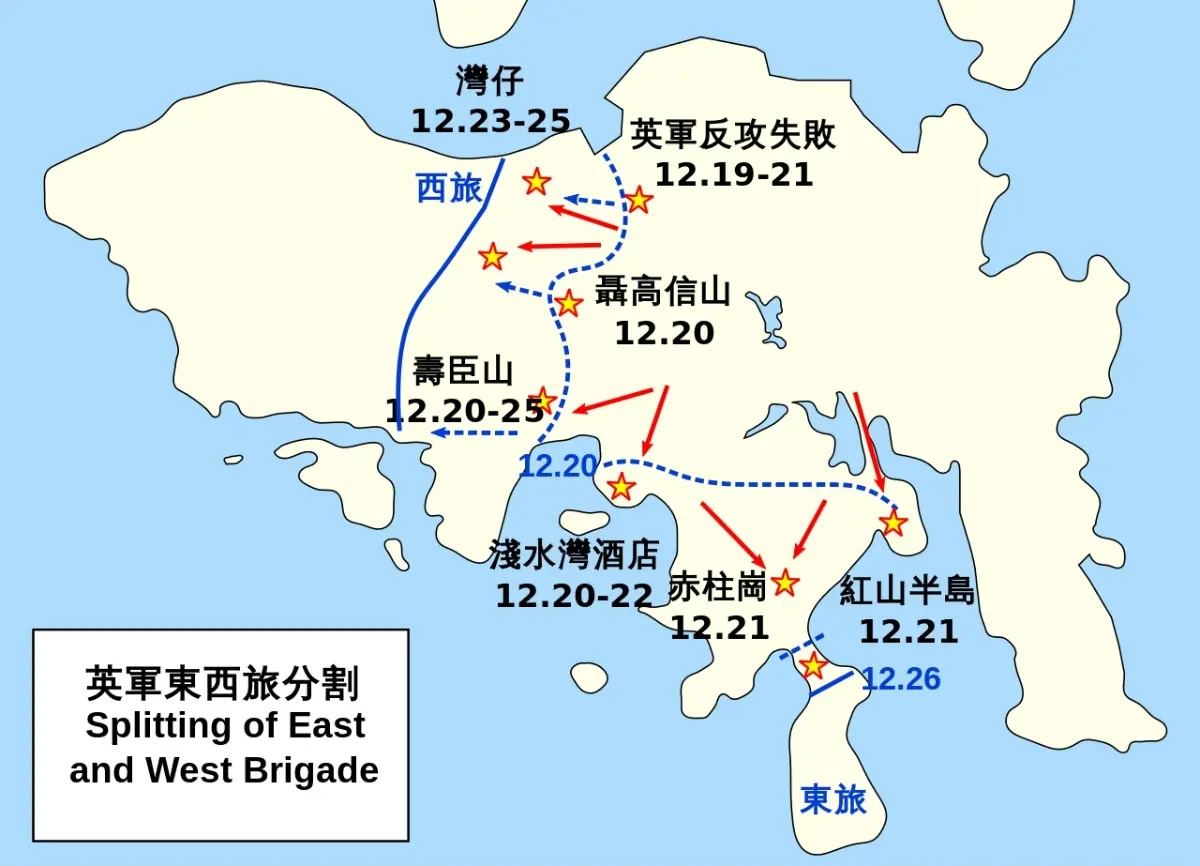
The situation map of the division of the British Eastern and Western Brigades shows that since the fall of Repulse Bay on the 22nd, the defense lines of the Eastern and Western Brigades have been continuously retreating southward and westward respectively. By around 3pm on the 25th, the Western Brigade’s defense line in the northwest of Hong Kong Island had retreated to Wan Chai Ship Street, while the Eastern Brigade barely held onto the Stanley Peninsula.