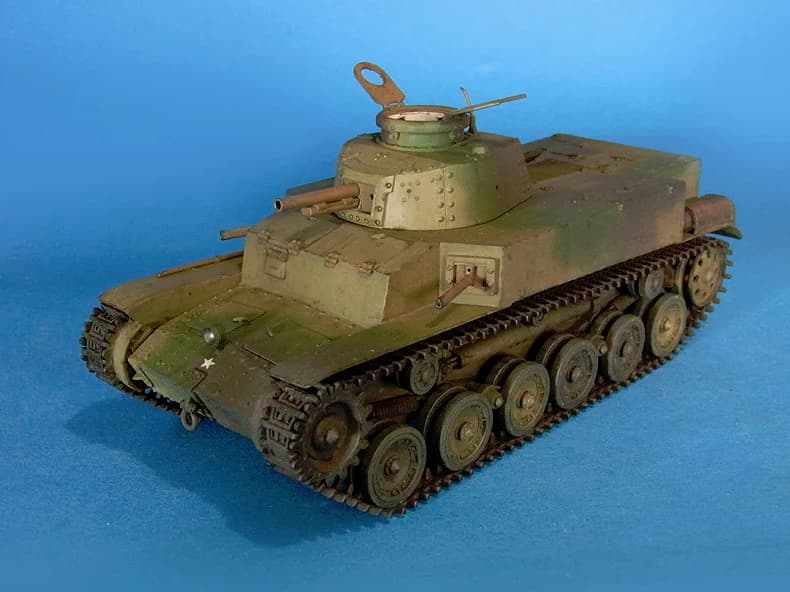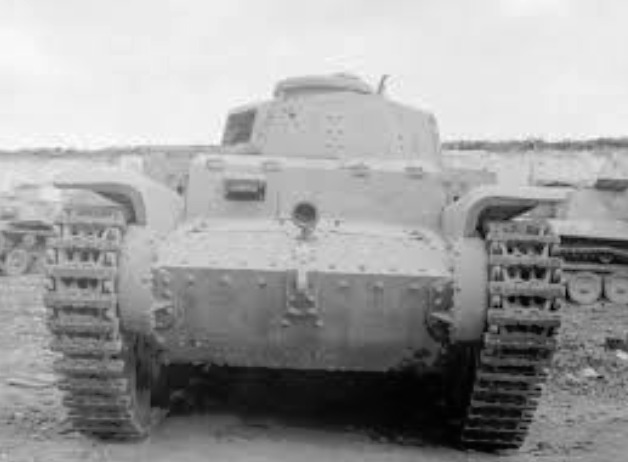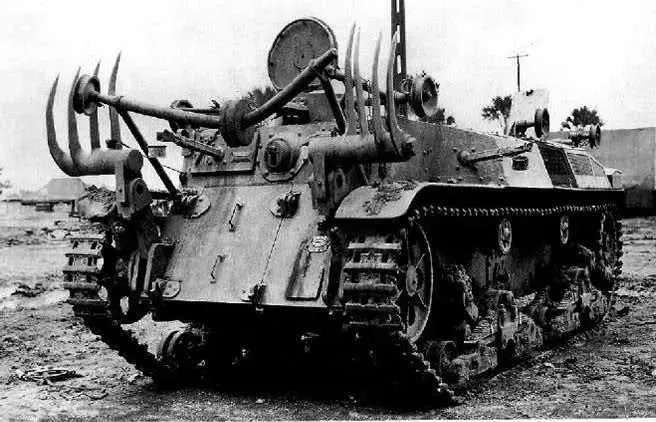
Figure 1. The mobile engineering vehicle of the Japanese army - the armored operation vehicle. The front of the vehicle is equipped with two four-pronged digging hands. The connecting rod disc is used to support and move the pontoon bridge. On the left side of the front of the vehicle, there is a forward-mounted machine gun port, and on the right side, there is a flame projector port. There is also a flame projector port on the front side of the vehicle’s side. The time and location of the photo’s capture are unknown. However, based on the tropical-style background, it can be inferred that it was taken in 1945 when the US forces captured these 8 vehicles.
Japanese flamethrower tank: Armored operation vehicle and engineer combat vehicle 【SŌKŌ SAGYŌ KI】
Although it has already been proposed, I will provide a more detailed explanation of it here.
Because Japan was the only faction that did not have flamethrower tanks.
Although the flamethrower tank currently has limited effectiveness, when this steel monster rushes towards you with its long flames, it must be very cool!
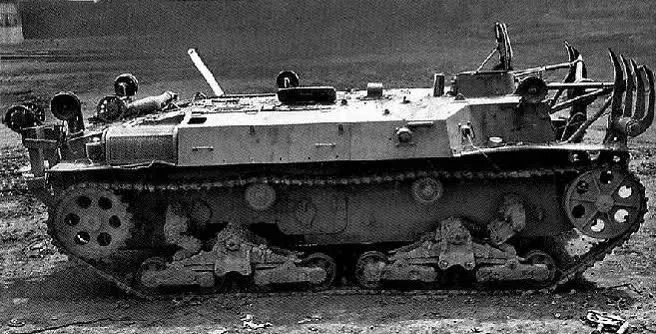
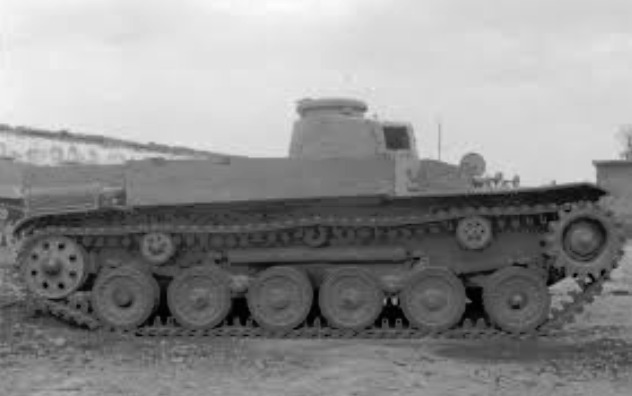
Figure 3. Possibly taken from the side view of an armored operation vehicle that was seized in the Philippines. It can be seen that there are no other upper structures above the low vehicle body. Apart from the pair of digging hands at the front of the vehicle (mainly used for digging landmines), and the floating bridge support wheels on the top of the vehicle, the hinge wheels at the rear of the vehicle can also be seen to assist trapped vehicles in getting out.
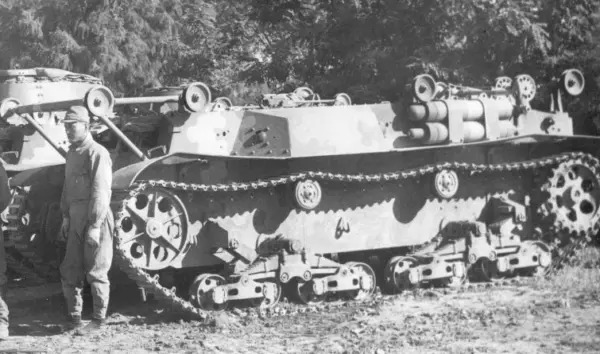
Figure 4. A possible photo taken after Japan’s surrender. On the side of the vehicle, there are two cylindrical objects resembling fuel tanks for flamethrowers, which are securely tied and fixed at the rear side. The flamethrower nozzle in the front of the vehicle’s side is in a closed state. Judging from the cleanliness of the vehicle, the maintenance condition is quite good.
The chassis of this “armored operation vehicle” (armored engineering vehicle) of the Japanese army was designed based on the chassis of the Type 89 medium tank. The suspension system consists of two groups of four wheels each, without an independent front steering frame. The steering wheels are at the front and the driving wheels are at the rear. The vehicle weighs 13 tons and can accommodate 5 crew members. As new tasks were continuously added, this armored operation vehicle had a total of 5 variants. The entire series was built with 119 units, and most of them were of Type V model produced in 1940.
Type A (SS Kou Gata): Basic type, featuring a suspension system composed of four pairs of small load-bearing wheels. 13 units were produced in 1931. They were included in the 1st Mixed Brigade and were used in the 1932 invasion of northern China’s Hotan region. It was the earliest mechanized mixed unit of the Japanese army.
Type B (SS Otsu Gata): The drive hinge system was improved. The transmission rollers were changed to 3 pairs. 8 units were produced in 1937 and were used in the Battle of Peiping-Tianjin during the invasion of North China.
Type C (SS Hei Gata): Additional armor plates were added. One unit was produced in 1937, and it is likely that it was only used for testing.
Type D (SS Tei Gata): Engineering vehicle, 20 units produced in 1939.
Type V (SS Bo Gata): Bridge crane, with an increased number of flame喷火器, 77 units were produced in 1940.
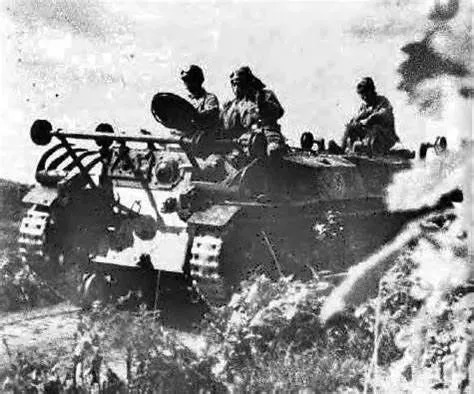
Figure 5. Japanese soldiers on board the armored operation vehicle during movement. To facilitate the driver’s access and to avoid interfering with the use of the upper equipment, the entry and exit hatches have been moved to the central position of the vehicle’s front.
Ammunition handling machine (SŌKŌ SAGYŌ KI) information:
Vehicle type: Multi-functional armored engineering tank
Service years: 1931 (Type A), 1937 (Type B, C), 1939 (Type D), 1940 (Type E)
Construction quantities: 13 (Type A), 8 (Type B), 1 (Type C), 20 (Type D), 77 (Type E)
Passengers: 5
Main weapons: 2-3 Flame Projectors
Auxiliary weapon: One Type 91 6.5mm machine gun
Dimensions: Length 4.86 meters, Width 2.52 meters, Height 2.08 meters
Total combat weight: 13 tons
Armor thickness: 25 millimeters at the front, 13 millimeters on the sides, 13 millimeters at the rear, 6 millimeters at the top, and 6 millimeters at the bottom.
Power: Mitsubishi diesel engine, 145 horsepower
Transmission system: 4 forward gears, 1 reverse gear
Maximum road distance: 400 kilometers
Maximum highway speed: 37 kilometers per hour
Maximum off-road speed: 27 kilometers per hour
Combat Record: (Chinese Theater, Pacific Theater)
In 1931, the first four vehicles were allocated to the First Mixed Brigade and sent to China. They were used as flamethrower tanks in the Battle of Beijing-Tianjin. After the full-scale invasion of China began in 1937, the Japanese army also used armored engineering vehicles in the North China theater. From the end of 1941, approximately 20 armored operation vehicles were sent to the Philippines as part of the 2nd Armored Troop until the end of the war. In the summer of 1945, the US Marine Corps captured 8 of them and classified them as flamethrower tanks.
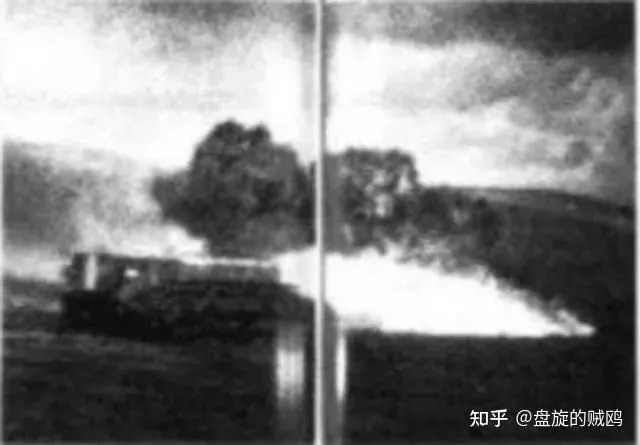
Figure 12. A blurry photo. The exact shooting time is unknown, but it can be seen that an armored operation vehicle is spraying flames.
After World War I, Japan began to introduce foreign flamethrowers. In the late Taisho period, it started to independently research and produce them. The models included Type 1, Type 2 (95-type), Type 93-type, Type 100-type, etc. However, it is not clear which type was equipped on the armored operation vehicles. It is also possible that the most advanced flamethrower model of that time was used in different modifications.
Source:
1371. 太平洋坦克战(33):日军的履带式炮兵牵引车⑤——装甲作业机SŌKŌ SAGYŌ KI和工兵战车_凤凰网
This war vehicle looks like an agricultural tractor, but in fact it is a fire-spewing monster!
Do you hope to see this kind of chariot join our battle?
Let’s light everything up!
- Yes
- No