- J1N1
- J1N1C
- J1N1S
- J1N1F
- J1N1SA
- no
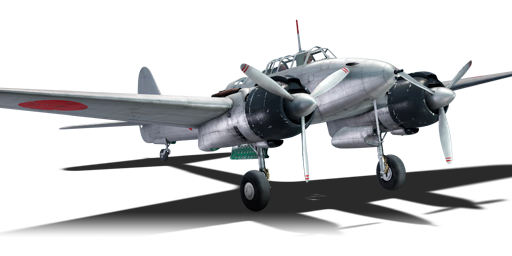
The J1N1 , a prototype in the J1N series, was initially designed in 1938 to fulfill the Japanese Navy Air Service’s need for an extended-range escort fighter for bombers. This was essential because navy fighter squadrons at the time lacked the necessary navigation and communication capabilities for lengthy land-based bomber sorties. However, due to slow development, testing could only be conducted in 1941, by which time the A6M had already proven itself as a very capable long-range fighter, capable of escorting bombers with its impressive range.
The J1N1 struggled with its maneuverability, only barely meeting the speed and cruising range requirements, and the two dual remote turrets it was equipped with were prone to reliability issues. Despite these drawbacks, the J1N1 did impress the Navy with its range, leading to its redesignation as the Type 2 Land Reconnaissance Plane (J1N1-C / later J1N1-R) , intended to replace older land-based reconnaissance aircraft. Later variants of the J1N were up-armed with obliquely mounted 20 mm cannons specifically for shooting down bombers. This led to the development of the night-fighter variant, which entered service as the Gekkō (J1N1-S) . The J1N also served as the template for the J5N Tenrai*.
Offensive armament
20 mm Type 99 Mark 2 cannon
Ammunition60 rounds
Fire rate490 shots/min
2 × 7.7 mm Type 97 machine gun
Ammunition1,200 rounds
Fire rate900 shots/min
2 × Turret — 2 × 7.7 mm Type 97 machine gun
Ammunition3,000 rounds
Fire rate900 shots/min
Setup 1. 2 × 60 kg Navy Type 97 Number 6 ground bomb
Nakajima J1N1-C/R (二式陸上偵察機)
The Nakajima J1N1-C, later renamed J1N1-R, is a Japanese long-range reconnaissance aircraft that was introduced into service on July 6, 1942. Between 50 and 54 J1N1-C/R planes were produced, which served until the end of the war. Two J1N1-Cs were modified into night fighters called J1N1-C Kai, which became prototypes for the future Nakajima J1N1-S.
History
On April 26, 1941, the prototype Nakajima J1N1, which was meant to serve as a heavy escort fighter for missions in China, was completed. On May 2 of the same year, testing of the aircraft began, and it turned out that, although the range and speed were very satisfactory, the plane was heavy and not very maneuverable, which led to the conclusion that it was unsuitable for fighting other fighters. Additionally, the remotely controlled defensive turrets were very unreliable. Furthermore, in 1941, Mitsubishi A6M2 fighters were already widely used in escort missions where they performed very well. After the outbreak of the war in the Pacific, the Japanese navy staff decided that Mitsubishi C5M reconnaissance planes were not performing well and that new reconnaissance aircraft were needed. It was determined that the unsuccessful J1N escort plane, thanks to its speed and range, was perfectly suited to be converted into a long-range reconnaissance aircraft. In March 1942, the decision was made to rebuild prototypes 5, 6, and 7 of the J1N1 into reconnaissance aircraft. It turned out that this modification was very satisfactory, and from April 1942, production of the J1N1 aircraft began, which on July 6, 1942, were adopted as J1N1-C (later changed to J1N1-R) or officially as Type 2 Land-Based Reconnaissance Aircraft (二式陸上偵察機). These planes were sent to various regions of the war in the Pacific, including the naval base in Rabaul, where in March 1943, two modified J1N1-C Kai, which were prototypes of the only mass-produced Japanese fighter Nakajima J1N1-S, were delivered and tested. Nakajima J1N1-C aircraft (from 1943, Japanese navy reconnaissance aircraft designations were changed: planes marked with ‘C’, like the C6N1, were carrier-based reconnaissance planes, while those marked with ‘R’, like the later R2Y1, were land-based reconnaissance planes) were used until the end of the war, and some were used for kamikaze missions or as training planes for J1N1-S crews. Photos of Nakajima J1N1-C/R Art about Nakjima
- Maximum speed: 529-507 km/h
- Cruise Speed: 333 km/h
- Range: 2,544 km
- Maximum Range: 3,748 km
- Service ceiling: 9,320 m
- Time to Climb to: 9 minutes 35 seconds at an altitude of 5,000 m
- Climb Rate: 8,7 m/s
- 1 x 20 mm Type 99 Model 1 gun in the nose (60 rounds) (optional)
- 2 x 7.7 mm Type 92 machine guns in the nose (600 rounds per gun)
- 4 x 7.7 mm Type 92 machine guns in remotely operated turrets, or (prototypes, pre-production, and the first few serial aircraft)
- 1 x 7.7 mm Type 92 machine gun in the observer’s position, or
- 1 x 13.2 mm Type 2 machine gun in the observer’s position, or
- Bombs:
- 2 x 30 kg bombs

The Nakajima J1N1‑S (Allied reporting name Irving) was a twin‑engine, long‑range night fighter variant of the J1N “Gekko” used by the Imperial Japanese Navy during World War II It was not designed to carry bombs in the conventional sense — it was an armed interceptor, not a bomber — but it did carry a significant armament load for its role.
-
1 × 20 mm Type 99 cannon (forward‑firing)
-
2 × 7.7 mm Type 97 machine guns (forward)
-
4 × 7.7 mm Type 97 machine guns in a powered dorsal/tail turret (two up, two down)

-
J1N1-Sa
Night Fighter same as above, armed with 3 × 20 mm forward up-firing Type 99 cannons.
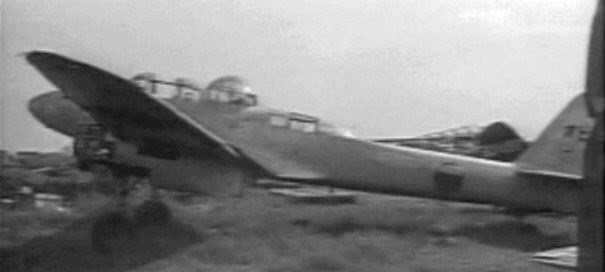
J1N1F
- 2 x 7.7 mm Type 92 machine guns in the nose (600 rounds per gun)
- 1 x 20 mm Cannon Type 99 Mark 2 Model 4 in the turret at the radio operator’s position
- 1 x 13,2mm Type 2 machine guns in the turret at the radio operator’s position (optional)
- Bombs:
- 2 x 30 kg bombs
- 2 x 60 kg bombs (?)
- 2 x 100 kg bombs (?)
- 2 x 250 kg bombs (?)