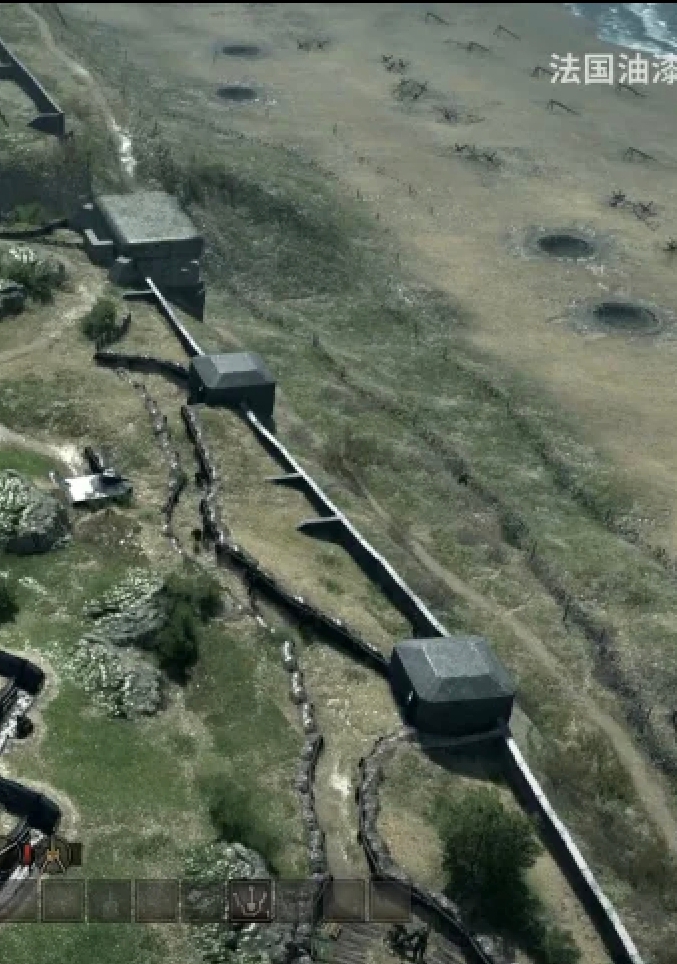
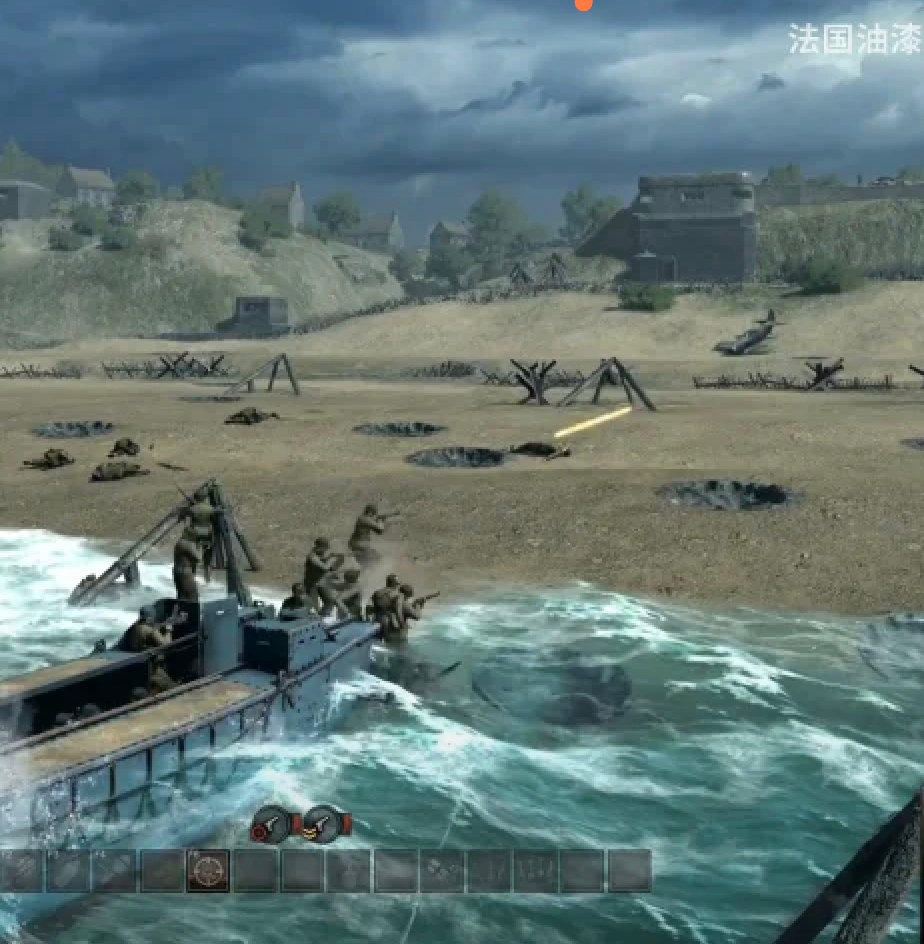
Isn’t there way too much grass in‑game?

When playing maps like Omaha Beach and Normandy, I tried other beach‑landing games such as CoD WWII, Red and Iwo Jima titles. The contrast really stood out to me.

Do you think there is too much vegetation on the Normandy beaches?
  • yes
  • no
0 voters

Enlisted has by far the densest trees, grass and bushes. Vegetation not only blocks sightlines, it also absorbs projectiles. Lots of trees on Normandy block German tanks from climbing hills, making high‑ground defence difficult and offering few good tank positions.

In your opinion, for areas around the bunkers on Normandy beaches, should there be more vegetation, or should it mainly consist of open grassland with plenty of emplacements?
  • More vegetation would be better.
  • Less. There was not that much vegetation in reality
0 voters

Omaha Beach is even worse, with ridiculously thick foliage. Once a tank drives into tall grass, your vision gets almost completely obscured. Compared with other games and modern‑day photos of real‑world battle sites, the vegetation is around 80‑90 % historically inaccurate.


I have watched player‑made comparison videos that contrast in‑game locations with real‑world footage taken by people revisiting actual battle sites.

Other games clearly put genuine effort into scene recreation. When it comes to Enlisted, I wonder whether some maps reference real locations at all or are just original creations. Historical fidelity feels heavily compromised.

Pre‑placed coastal‑gun and machine‑gun emplacements are barely useful. Thick grass blocks our sightlines while shielding enemy infantry as they sneak close to attack.

Buildings and bunkers are modelled with battle damage, complete with large shell holes on their fronts for infantry to crawl through. Meanwhile the vegetation looks overgrown, as if the area has been abandoned for years. This creates a jarring contradiction.
I know the game has PVE elements with many poorly‑behaved, high‑casualty AI bots. Still, there is no need to over‑stack vegetation. Most open flat areas are pushed to map edges away from main fighting zones.

Historically, anti‑tank and anti‑air emplacements behind trees only had sparse foreground foliage and kept clear fields of fire. In‑game vegetation shuts down vision almost entirely, favouring infantry ambushes and artificially forcing combat ranges down to under 50 metres. It feels contrived and unpleasant.

Dense foliage fragments large‑scale battles. It does not feel like a proper big‑theatre battlefield, and I dislike this design.

1 Like

Id rather not get shot across the map because there is no foliage.

2 Likes

Can you add keep it as it is

3 Likes

personally i really like how colorful Enlisted is :herb:
also foliage, trees, bushes whatever help against getting shot from across the map and losing an entire squad thx to the low ttk

1 Like

Perhaps the “No” option in the poll means keeping things as they are.

1 Like

ok

1 Like

They put way too much foliage in the new Omaha maps… I despise them for that reason… and they haven’t fixed bots shooting through bushes yet either… maybe that’s how it was in real life but it sucks in this game… then again coming from someone who is never playing passively to take advantage of them.

The grass in‑game is simply way too tall.
If people had not taken real‑world photos of Omaha Beach on‑site, I would have been fooled by the map.
There is no way Omaha Beach could have vegetation this tall. It is a coastal environment, and this completely contradicts real‑world geographic knowledge.
How can it grow so thick? How come constant sea winds do not blow these plants over?

This is a sandy beach terrain, yet it supports such dense foliage. Where are these plants even coming from?
Even China’s Gobi desert reclamation projects cannot achieve this level of greenery. Is this beach somehow black soil instead of sand? It defies basic real‑world logic.

Looking at titles like Red Storm 2, those reversed rock obstacles under bunkers that block the gunners’ sightlines are poorly conceived. Bunkers are tall vertical structures with access paths underneath; huge craters like this are unnecessary.
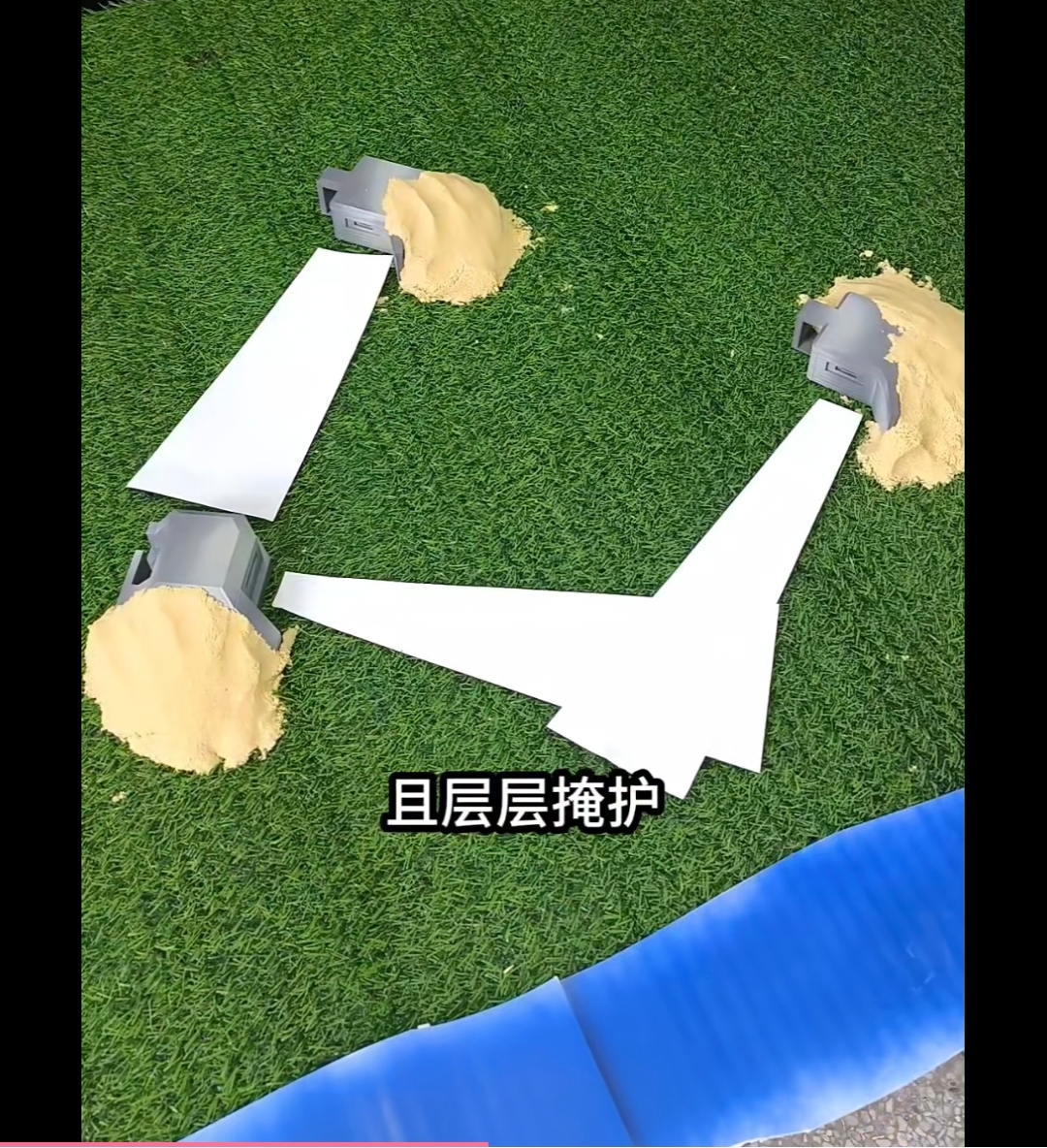
Real‑world fortifications use reverse slopes for flanking cover and embrasures for cross‑fire from both sides, rather than only firing straight forward in a dumb single‑direction manner.

Overall, this Omaha Beach map is historically inaccurate, unrealistic and scientifically questionable. It feels like devs just built random sandcastles on the shore.
We play WWII games for authentic atmosphere, yet terrain is simplified in a childish way just for gameplay convenience. It lets down players who want proper historical WWII maps.

To make things worse, the sea‑wind and sea‑spray animation near the bunker on Omaha Beach’s left side loops endlessly. Tanks staying at that position keep getting their vision blurred by wind effects. It is quite ridiculous.

Germany 50 000 men backed up by bunkers and a few hundred tanks
Allied forces 160 000 a massive navy air force and 1000 tanks
So if you want to give the allies 3 to one infantry and 5 to one tanks and almost u contested control of the air go ahead and take out all the foliage and rocks and tanks and cover

passively ot not, ““battle of the bulge””" or rather, hurtgen forest maps are a nightmare for that reason.

and is a strat when it comes to defend or ambush defenders trying to reinforce the point.

so much so, that it becomes an explosive fest just to clear out areas.

but anyway, as far the suggestion goes, i do think there’s too much vegetation.
not that i mind it particularly.

much like ono3 said, it gives a stylistic and artistic vibrant asthetic to the maps.

but i can’t say i’m gonna miss them if they were going to be removed today. or tomorrow.

If trade‑offs between vehicle quantity and performance are made in exchange for historically‑accurate maps, then I would call that fair.

That being said, the current map feels unpleasant to play, especially the reefs near the shore. The most interesting coastal bunkers are angled ones set up for cross‑fire, designed to avoid facing direct frontal assaults. Yet Omaha Beach has none of these. At times its historical fidelity feels worse than the bunker design seen on the original Normandy map.

We could take inspiration from Battlefield V.
Engineers should dig tunnels to open up advance routes. Hidden obstacles could be buried under sand. Engineers use bangalore torpedoes to blow openings and create paths for assaults, while small earthen berms serve as cover.

German coastal defences start incomplete: no barbed wire or pre‑set machine‑gun emplacements. Engineers have to build them after landing. That would greatly improve gameplay.

The first capture point could be the front‑line trench below the Atlantic Wall, and the second point the large bunkers higher up.
Capturing points would grant massive manpower reinforcements, even allowing overfill, for example +500 manpower.

If the map aims for immersive realism and high casualty rates, sufficient manpower respawns should be provided to compensate.

Screenshot_2026-09-02-17-48-38-335_tv.danmaku.bili-edit

Add a restriction for Germany: during the first two capture points, tanks cannot deploy to forward defensive positions. They have to rely on map‑built anti‑tank assets instead.
Screenshot_2026-09-02-17-52-14-285_tv.danmaku.bili-edit

The most memorable fortifications of Omaha Beach are those tall, towering vertical bunkers. Small emplacements sit below them, providing access routes leading into the main fortress.

Honestly, that is what Omaha Beach should feel like. The current defences lack depth.
Infantry can easily sneak up. The positions are full of gaps and are tactically very weak.

1 Like

I still disagree but not nearly as hard I would like to test it

Flamethrower squads resolve the bushes giving your enemies concealment.

Flamethrower squads can burn vegetation now, yet most players rarely have spare squad slots to bring them. Even when thick brush is set on fire by tanks, charred leftover branches still block bullets, shells and sight‑lines. These debris should turn to ash after burning, but they still act as cover in‑game.

Burning everything down to clear the battlefield also costs far too much time and is impractical.

Instead, I suggest making all defensive structures half‑built. Engineers should finish constructing them, similar to how it works in Battlefield 5. No permanent pre‑built fortifications should spawn on the map from the start.

Vegetation behaviour remains a major issue. I have been looking through many historical photos of Omaha Beach bunkers, trying to find real‑world examples where reef rocks block the machine‑gun embrasures exactly like they do in‑game.

Many bunkers in‑game are nothing but empty shells, like toothless turtles. Attackers can simply rush straight inside through pre‑existing holes in their walls. Their embrasures get easily suppressed by tank fire and lose all real deterrence. In reality, coastal bunkers delivered devastating firepower.

Historically on Omaha Beach, only one strongpoint truly made a decisive impact, and defensive positions were widely spaced. The map representation does not match real‑world conditions.

Back when I had no PC, playing the Omaha Beach landing mission in Call of Duty: WWII really impressed me. I have long hoped another game would faithfully recreate this landing battle.