THE BATTLE OF BERLIN
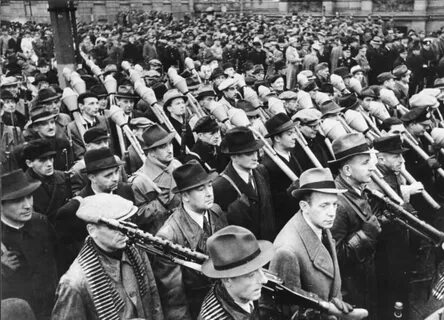
As they approached the capital of Nazi Germany, Soviet tank crews encountered a huge problem: the Panzerfaust anti-tank grenade launcher. Its cumulative grenade stream burned through the side armor of tanks, and molten metal fragments killed the crew inside. Field engineers attempted to install iron mesh on the tanks’ armor, but reports showed that the cumulative stream penetrated the screen toward the side of the vehicle and tore a hole through the armor. Tank crews nevertheless installed these meshes until the end of the war. The advantage of the Panzerfaust was that it was disposable, but it was used to arm the old men, young men, and teenagers who replenished Wehrmacht losses. This resistance organization was called the Volkssturm.
In January 1945, Soviet tankers crossed the Oder River and reached almost Berlin. The enemy capital was only 100 kilometers away, but General Headquarters decided to halt the advance. They needed to replenish their resources and strengthen their flanks. In March, Soviet troops liberated Pomerania and Silesia. Now they could advance further.
On March 28, Georgy Konstantinovich Zhukov was already working on the Berlin Offensive Operation. But General Headquarters decided to encircle Berlin from both sides to prevent the British and Americans from entering first, and to prevent the Germans from surrendering to the Americans and from transferring reinforcements to the capital from the West.
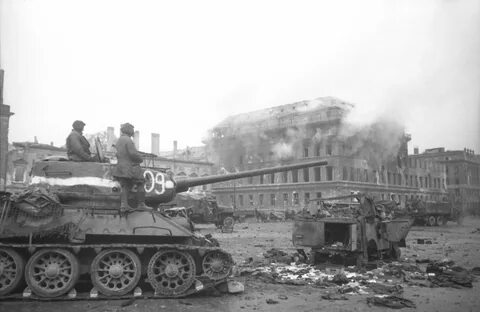
Those advancing on Berlin had to storm the Seelow Heights, which were heavily defended by tank divisions and two infantry divisions.
Berlin itself was transformed into a fortress. Barricades of rubble, sandbags, and iron were erected in the streets. They were up to 3-4 meters thick, and the approaches were mined. Immobilized tanks dug into the ground and fired like pillboxes. Giant anti-aircraft towers were erected in the city. Several lines of defense surrounded the capital.
On April 15, Semyon Krivoshein’s tank corps crossed the Oder. And on the night of April 16, 1945, 6,500 guns and mortars opened fire along the entire front line, along with 1,100 Katyusha rocket launchers.
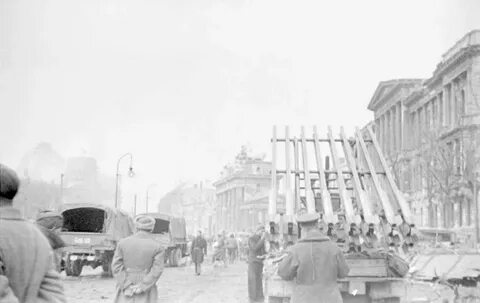
As soon as the shelling ceased, the troops advanced, followed by searchlights to blind the enemy in the trenches, but fog prevented this plan from being realized. The Red Army advanced 1-2 kilometers, but by 1:00 PM, it was clear that they had failed to break through the Seelow Heights defenses. Then, G.K. Zhukov, commander of the 1st Belorussian Front, committed tank reserves to the battle, but the maneuver failed, and the offensive failed. That evening, Stalin expressed his dissatisfaction to the Marshal, to which Zhukov replied that the Seelow Heights defenses would be breached the following day. The defense collapsed the following day, but German units of Army Group Vistula began approaching from the north. To the southwest, Marshal Konev, commanding the 1st Ukrainian Front, launched an offensive on the Neisse River. On the evening of April 17, Konev requested Joseph Stalin’s permission to turn to Zhukov’s aid and received approval. Having crossed the Spree River, the 3rd and 4th Guards Tank Armies turned toward Berlin. Since the enemy was not expecting an attack here, the troops advanced almost unopposed. Meanwhile, troops of the 1st Belorussian Front captured the crossing near the town of Platkov on the Seelow Heights, and their motorized infantry advanced with incredible speed. On April 21, 1945, Krivoshein’s tank corps reached the outskirts of Berlin and were the first to storm the city streets. Konev fared worse. He had to storm pillboxes and minefields hidden in forests and swamps. But his tanks were able to link up with Zhukov’s forces, and the 120,000-strong Wehrmacht group was encircled and could no longer help its capital. Adolf Hitler lost hope of escape, and so Wenck’s 12th Army, facing the Allied forces, withdrew and headed for Berlin.
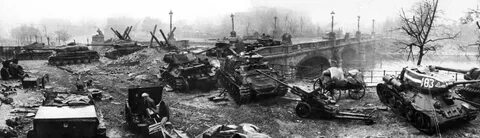
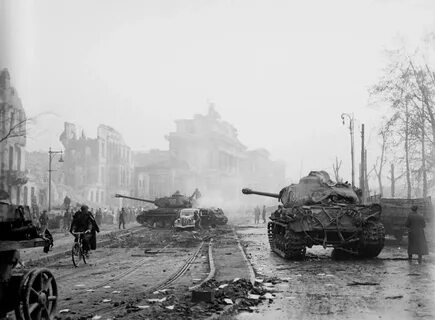
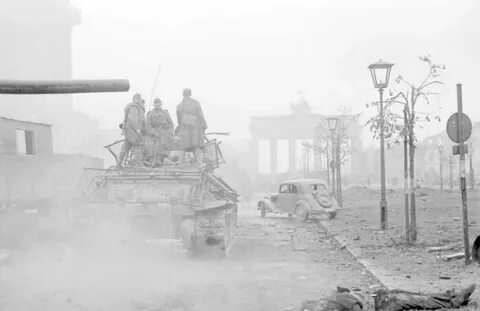
Red Army soldiers who fought from Brest and Kyiv, from Sevastopol and Leningrad, to Warsaw and Vienna, Romania and Seel. Tanks followed the infantry, suppressing them with Faustniks and machine guns. Barricades had to be destroyed with explosives. Soviet snipers, stormtroopers and flamethrowers worked in Berlin. Every The room had to be cleared separately.
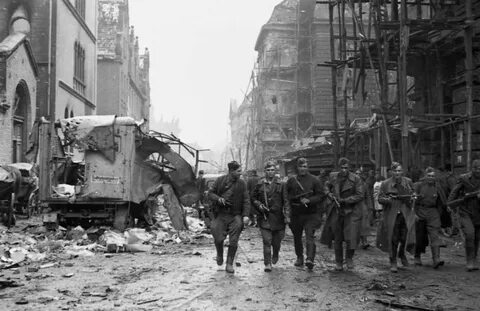
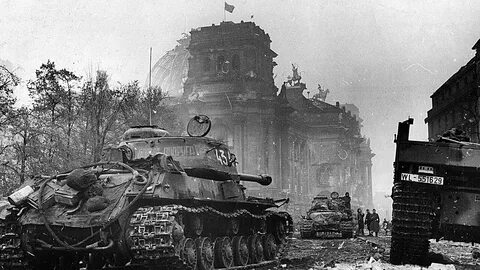
From the north, having crossed the Spree River, Krivoshein’s mechanized corps linked up with Rybalko’s 3rd Guards Tank Army. Berlin was surrounded. After heavy fighting, the Red Army reached the Reichstag. Previously, this was Germany’s main building, but it would become the symbol of victory over Germany. Adolf Hitler himself, on whose orders tens of millions of people were killed, was in the Reich Chancellery bunker at 77 Wilhelmstrasse. On April 30, Soviet tanks would fire directly at the Reich Chancellery, unaware that Hitler was there. Nikolai Kuznetsov’s 3rd Shock Army, which had begun the war on June 22, 1941, near Grodno, was located 300 meters from the Reichstag. And it was they who were ordered to raise the Victory Banner over the Reichstag. On April 29, soldiers managed to break through to the Reichstag, but were forced to retreat due to fire from the Kroll Opera House. On April 30, the assault on the Reichstag began with an artillery barrage, and at 10:30 PM, the Victory Banner was raised on the Reichstag dome. This was what the entire world and all Soviet citizens had been striving for since the very first day of the war.
On the afternoon of April 30, 1945, Nazi Germany’s dictator Adolf Hitler, along with his young wife and model Eva Braun, entered a room in the Reich Chancellery bunker where the Nazi leader shot himself with his Walther PPK pistol, and his wife poisoned herself with potassium cyanide. Their bodies were carried into the garden, doused with gasoline, and set ablaze in a shell crater. Soon, parliamentarians from the new German government proposed negotiations, but Zhukov demanded complete surrender. The fighting continued. The commandant of the city of Wendling took over the next negotiations. The date of surrender was set for May 2nd. And on May 2nd, 1945, the Berlin garrison capitulated. On May 7th, the Treaty of Unconditional Surrender of Germany was signed by German General Alfred Jodel, French General François Sevez, Lieutenant General Walter Smith, and Soviet Lieutenant General Ivan Susloparov. However, Susloparov lacked the necessary authority, so the USSR insisted on a different instrument.
On May 8th, 1945, at 10:43 PM Central European Time and at 12:43 AM Moscow Time, the Act of Unconditional Surrender of Nazi Germany was signed!!!
On May 9th, 1945, the Red Army entered Prague. On May 10, the city of Hel was liberated, and on the 11th, the “Courland” group was liquidated. On all fronts, German soldiers and officers surrendered by May 14.
And on May 9, the Red Army celebrated victory at the Reichstag. A victory they had earned through blood and sweat, fighting through the entire war and participating in the greatest battle in history: the Berlin Offensive.
![i (97)|455x320](upload://jK1imLTj30IO5qcnUkA8r9qWDJW.jpeg