Aircraft Browning on a Bipod: A Forgotten Trophy of the Netherlands East Indies
Aircraft Brownings in the Skies Over the East Indies
The history of rifle-caliber Colt-Browning machine guns in the region began in 1929, when the Netherlands Naval Aviation Service (Marineluchtvaartdienst — MLD) ordered its first twelve aircraft machine guns chambered in the British .303 cartridge (7.7×56mmR) from the British firm W.G. Armstrong, Whitworth & Co. In 1930, they entered service on Fokker C.VII-W floatplanes in the Netherlands East Indies under the designation Mitrailleur van 7,7 mm No. 3 . The choice of the British caliber was explained by the fact that the Vickers and Lewis machine guns already in service with naval aviation used the .303 British round.

In January 1933, Armstrong Whitworth terminated its licensing agreement with Colt, and the European manufacturing rights for the machine gun passed to the Belgian Fabrique Nationale (FN) in Herstal. FN’s chief designer Dieudonné Saive improved the American design (which received the commercial designation FN Modèle 1932), increasing the rate of fire from 1,100 to 1,200–1,450 rounds per minute.
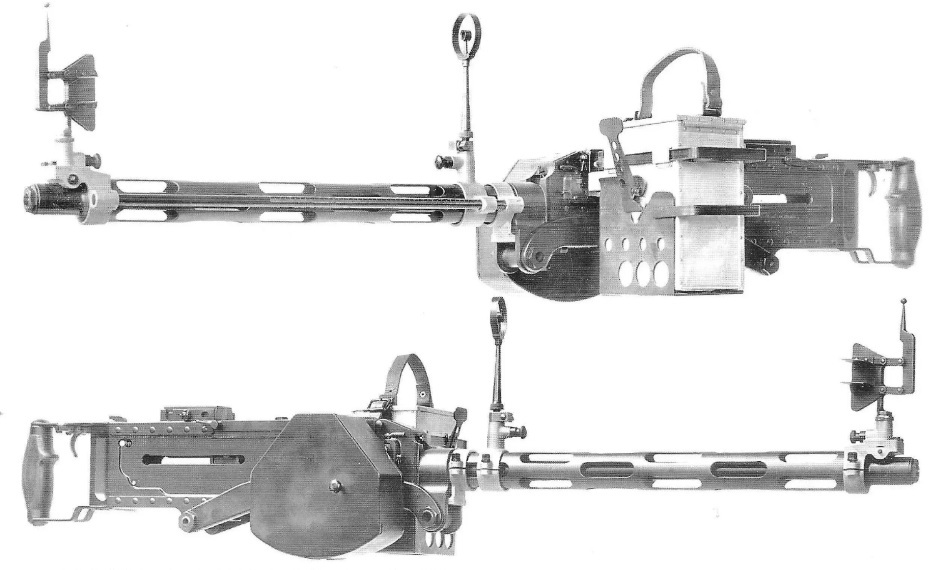
Starting in 1935, procurements of Belgian machine guns for the defense of the Netherlands East Indies were conducted simultaneously through two independent departmental channels. Between 1935 and 1939, the Navy (MLD) acquired approximately 200 machine guns from FN, assigning them the designation Mitrailleur van 7,7 mm No. 3 Nieuw Model (“New Model”). They became the primary onboard armament of Dornier Do 24K flying boats, as well as Fokker C.XI-W and T.IVa floatplanes. In parallel, the Royal Netherlands East Indies Army (KNIL) launched its own rearmament program. To equip 120 US-purchased Glenn Martin B-10 bombers and Koolhoven F.K.51 reconnaissance aircraft, army aviation ordered hundreds of identical 7.7mm machine guns from FN, adopting them under the designations LvB M-36 (fixed forward-firing, belt-fed) and LvT M-36 (flexible turret-mounted for the observer).
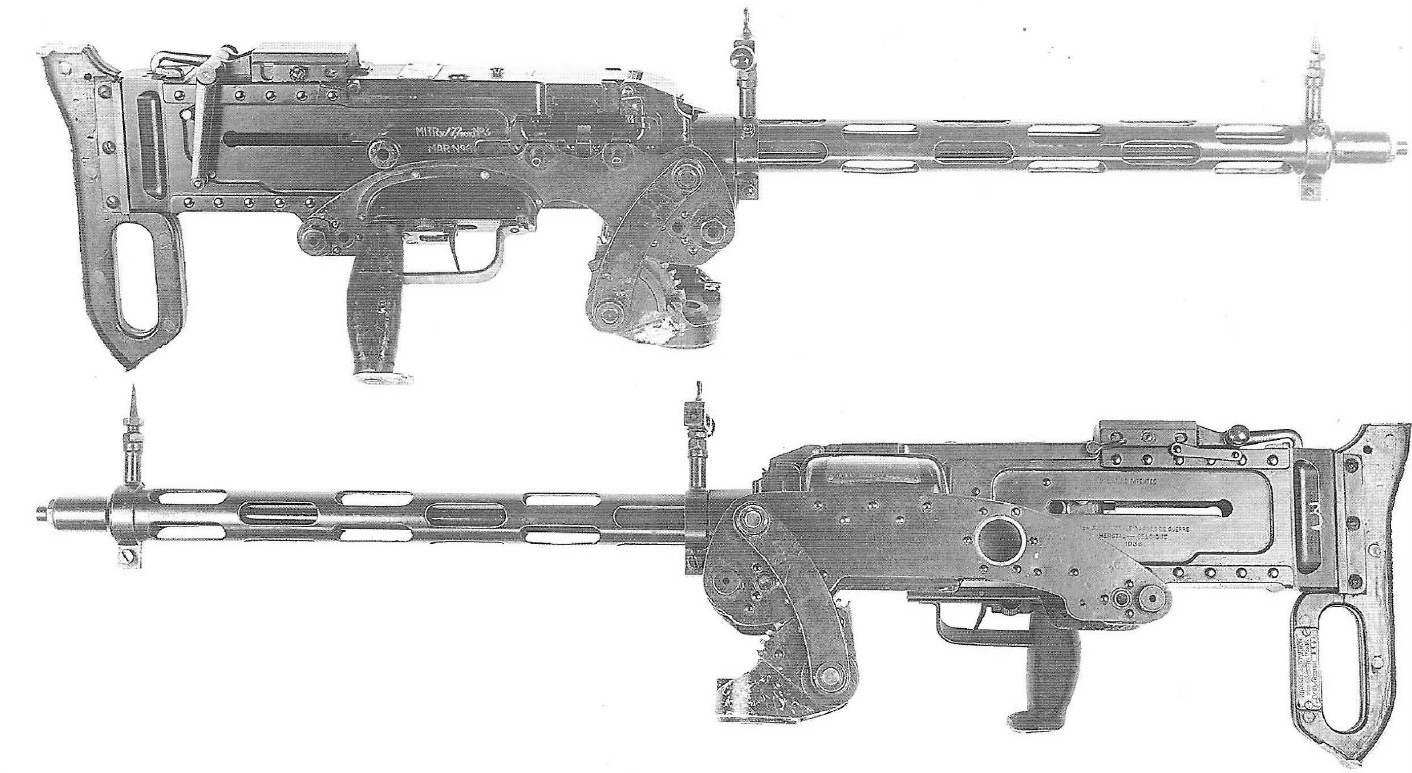
In May 1937, the naval command attempted to standardize ammunition between the East Indies and the metropole by sending a single 7.7mm FN machine gun (No. 100) to the state-owned Artillerie Inrichtingen factory in the Netherlands for conversion to the standard Dutch rimmed 7.92×57mmR cartridge. However, by September it became clear that the thicker casing of the 7.9mm round would not fit the feed mechanism and bolt face of the .303 caliber gun, leading to the abandonment of the rebarreling project. When the Netherlands capitulated to Germany in May 1940 and supplies from Europe ceased, retaining the .303 British caliber turned into a massive advantage for the isolated colony. The East Indies were able to purchase ammunition and weapons of this caliber in the United States and draw them from British depots in the Far East. Between 1940 and 1942, in addition to the Belgian stocks, colonial authorities managed to receive over 2,500 Colt MG40 aircraft machine guns in .303 caliber from the US (which also received the M-36 designation).
Birth of the Infantry Conversion: Design and Surviving Examples
Finding themselves encircled by a blockade and preparing to repel a Japanese invasion, the command in the East Indies faced a severe shortage of infantry automatic weapons for the newly formed KNIL divisions, militia, and airfield defense units. The Dutch Purchasing Commission in New York was buying up virtually every available weapon worldwide—even going so far as to acquire decommissioned World War I memorial Hotchkiss machine guns from American city parks, rebarreled for the Russian 7.62×54mmR cartridge. Against this backdrop, aviation depots in the East Indies held a substantial reserve of high-rate-of-fire 7.7mm FN Browning aircraft machine guns (removed from obsolete biplanes, damaged aircraft, or held in naval reserve).
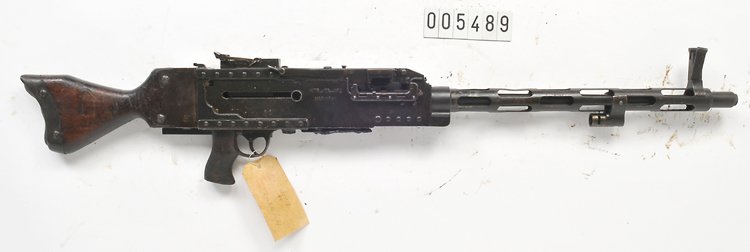
It was these stocks that formed the basis for the program to convert aircraft Brownings into squad light machine guns. Notably, the authors of the foundational Dutch reference work Nederlandse Vuurwapens , Bas Martens and Guus de Vries, explicitly point out that the exact date of this conversion is absent from metropolitan records. There is important physical evidence for this on the guns themselves. Starting in 1939, a brass data plate indicating the model and caliber (MITR.v/7.7mm No. 3) was mandatorily riveted onto the top receiver cover of all active naval aircraft machine guns directly over the stamped crowned “W” monogram (Queen Wilhelmina’s property mark). However, on a surviving converted FN light machine gun (Naval No. 51, manufactured in 1936), the crowned “W” is completely exposed and shows no traces of rivets. This indicates that the machine guns were transferred from aviation into storage and converted directly in the East Indies (most likely at the main colonial arsenal, Artillerie Constructie Winkel in Bandung) during the emergency mobilization of 1940–1942.
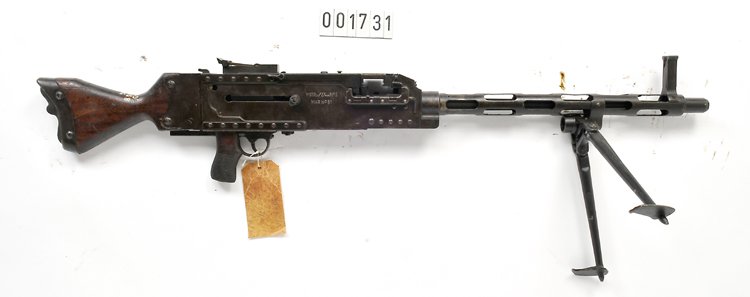
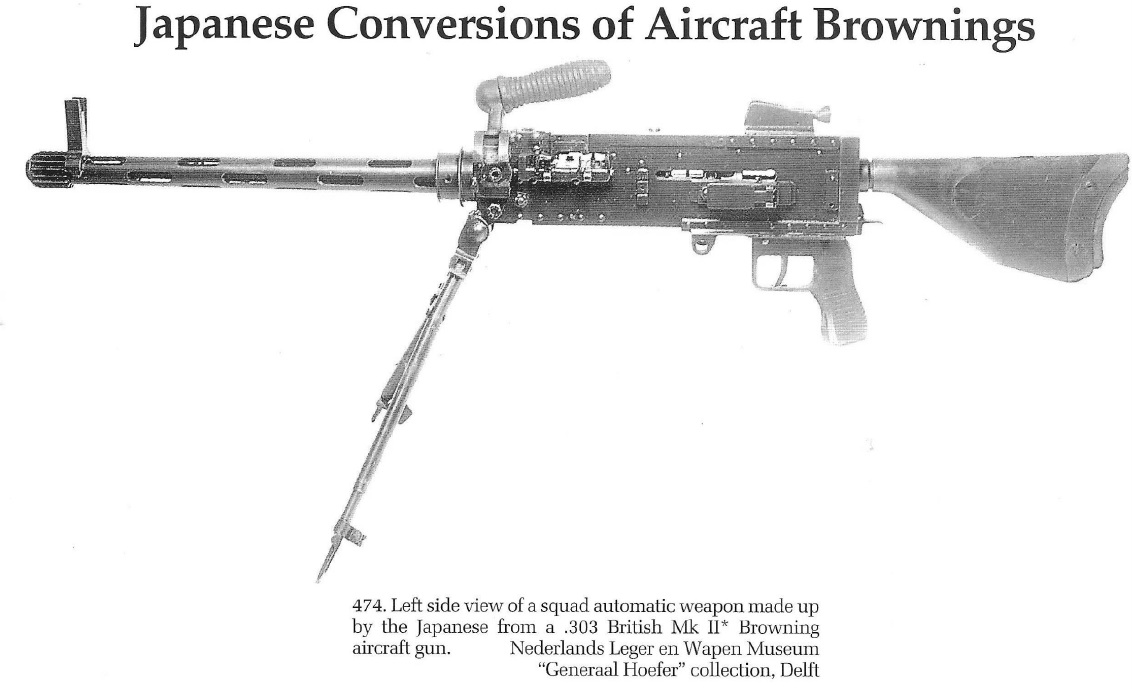
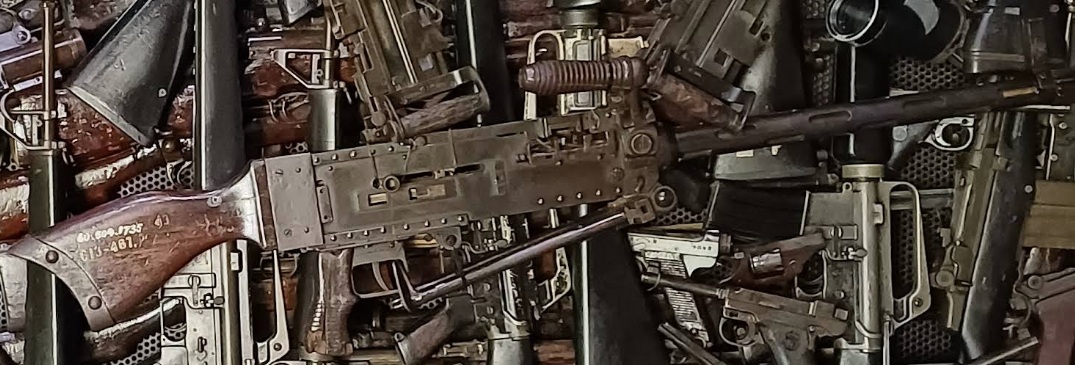
Structurally, the armorers did not design the infantry furniture from scratch, but rather adapted a naval aviation turret mount design they were already familiar with. On Dornier Do 24K flying boats, FN machine guns were mounted in Alkan rings on a Type 25 carrier (type 25 mitrailleurdrager / M-25 cradle), which came standard with a detachable shoulder rest and an offset downward-right pistol grip with a trigger linked to the sear via a system of levers. When creating the light machine gun, this principle was transferred to an infantry setup: a rifle-type wooden buttstock and a pistol grip assembly with a trigger linkage were attached to the receiver backplate, while a collar with a folding bipod was mounted onto the perforated barrel jacket (approximately three-fifths of the barrel length forward of the receiver to improve balance and handling during fire). As researcher Dolf Goldsmith noted, in its concept, light weight, and devastating volume of fire, this weapon significantly outperformed the American M1919A6 and served as a direct precursor to the famous US Marine Corps AN/M2 “Stinger” field machine gun.
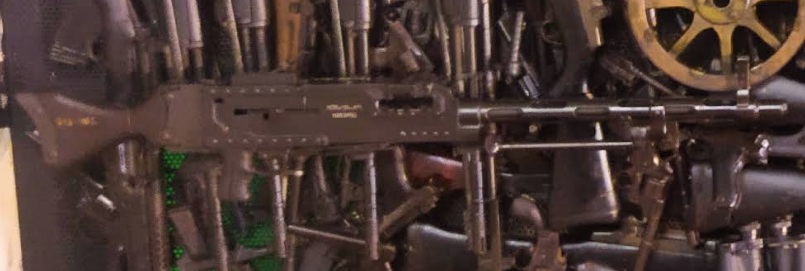
All currently known examples exhibit high factory-grade build quality without any signs of crude workshop improvisation:
-
Two FN Browning Modèle 32 examples (1936 production) in the collection of the Nationaal Militair Museum (Netherlands) and one example at the Dharma Wiratama Museum (Yogyakarta, Indonesia): feature an entirely identical construction of the wooden buttstock, trigger group with pistol grip, and bipod mounting collar.
-
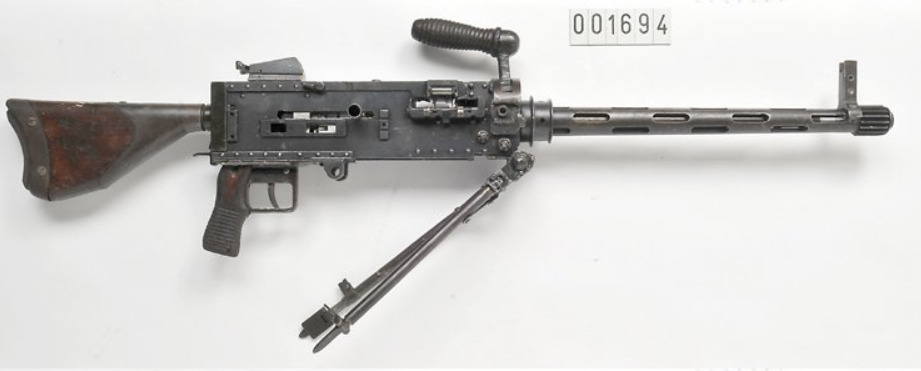
Two examples based on the British BSA Browning Mk II * (one at the Nationaal Militair Museum in the Netherlands, the second at the Dharma Wiratama Museum in Indonesia) : built to the exact same patterns and concept as the Belgian models, differing only in minor mounting details for the stock and bipod dictated by the geometry of the British receiver and barrel jacket.
-
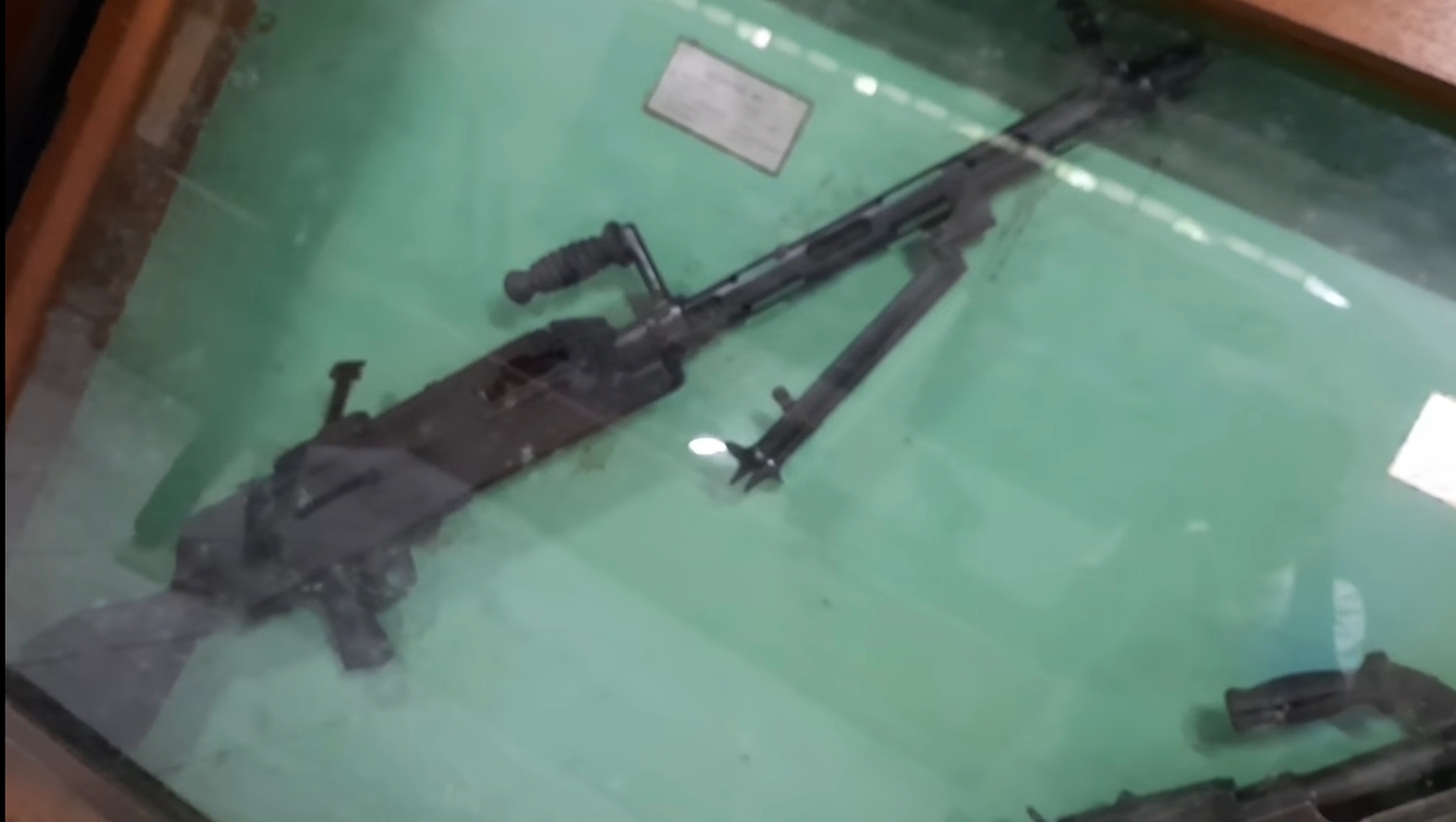
An FN Browning Modèle 32 example at the Satria Mandala Museum (Jakarta, Indonesia): represents the same standard East Indies conversion, but with a unique feature—mounted on the barrel jacket is a carrying handle from a Japanese Type 96 or Type 99 light machine gun .
The Japanese Trail: 16th Army Trophies and Arsenals on Java
Following the rapid capitulation of Dutch and Allied forces on Java on March 9, 1942, the arsenals of the KNIL and the ABDA contingent fell into the hands of the Japanese 16th Army. According to the final consolidated tally of the 16th Army Headquarters, a total of 1,738 light machine guns (including 1,371 on Java), 2,735 heavy machine guns, 105 anti-aircraft machine guns, and over 7.82 million rounds of machine gun ammunition were captured across the islands of the Netherlands East Indies.
A more detailed breakdown by specific weapon systems is provided by the preliminary report of the Japanese commission on captured weapons in the four main centers of Java—Batavia, Bandung, Surabaya, and Malang (JACAR archival document C14110703700). The authors of the document specifically note that the armament of the former Netherlands East Indies Army was extremely diverse, and that the figures provided were preliminary and subject to change during further sorting. Thus, out of 1,081 light machine guns accounted for at that time across the four cities, the brief list of primary models names only 430 Madsen machine guns (6.5mm), 325 Bren machine guns (7.7mm), and 69 Dutch “Hembrug” pattern Lewis guns. At the same time, it is impossible to state with certainty under which exact category the Japanese officers recorded the rare infantry conversions of aircraft Brownings during the hasty initial inventory (or whether all of them made it into this early tally). Due to their belt feed and distinctive aircraft barrel jacket, they could have been logged under heavy and special-purpose systems, which explicitly mentions “a certain number of Browning anti-aircraft machine guns (7.7mm) and Colt tank machine guns (7.7mm)” , grouped into the unspecified remainder of light machine guns (alongside American Lewis guns and other small-batch models), or counted together with aircraft small arms, which included 536 serviceable 7.7mm Vickers-Armstrong machine guns, 103 Colt machine guns (7.7mm), and “other types in significant quantities.”
In the final chapter of report JACAR C14110703700 (“Procedures for Handling Firearms”), the Japanese command ordered that standard mass-produced small arms be retained to equip newly formed local militia units, while high-rate-of-fire and anti-aircraft machine guns (even in small numbers, provided there was an adequate supply of ammunition—which totaled over 10.5 million rounds in the four Java cities alone) were to be immediately placed into combat readiness for the defense of vital facilities, ships, and unit reinforcement, merging their inventory with captured weapons of the same British caliber taken in Singapore (Shōnan). As confirmed by the Japanese monograph “Another History of Army Armament” , the repair and maintenance of these captured weapons were carried out at Japanese “Field Ordnance Arsenals” (野戦兵器廠) deployed on Java, after which the weapons were issued both to regular Japanese combat units and air defense detachments (“Heiho”), as well as to the Japanese-established Defenders of the Homeland volunteer army on Java (PETA).
Specifications
| Specification | Value |
|---|---|
| Caliber | 7.7×56mmR (.303 British) |
| Action | Short-recoil operated, air-cooled |
| Feed system | Disintegrating metal link belt |
| Rate of fire | 1,200–1,450 rpm (1,100–1,200 rpm for BSA Browning Mk II* conversion) |
| Barrel length | 605 mm |
| Receiver length (without stock) | 980 mm |
| Weight | 9.7 kg (bare gun receiver); approx. 11 kg (infantry light machine gun configuration) |
Polls
- Yes
- No
- Japan (Captured 16th Army / PETA trophy)
- Allies (KNIL / ABDA colonial weapon)
- Tech Tree
- Event - Standalone weapon
- Event - Squad weapon
- Battle Pass
- Premium Squad
- BR III
- BR IV
- BR V
- Yes
- No
- Japan (Captured 16th Army / PETA trophy)
- Allies (KNIL / ABDA colonial weapon)
- Tech Tree
- Event - Standalone weapon
- Event - Squad weapon
- Battle Pass
- Premium Squad
- BR III
- BR IV
- BR V
Sources
Sources
- Bas Martens & Guus de Vries. Nederlandse Vuurwapens. Deel 3: Marine, mariniers en Marineluchtvaartdienst, 1896–1942.
- Dolf L. Goldsmith. The Browning Machine Gun, Volume II: Rifle Caliber Brownings Abroad (Collector Grade Publications), Chapter: “The Dutch Brownings”.
- Another History of Army Armament: The Unknown Captured Weapons and the Reality of Allied Forces (もう一つの陸軍兵器史:知られざる鹵獲兵器と同盟軍の実態), Section 5: The Royal Netherlands East Indies Army (蘭印軍編).
- National Institute for Defense Studies (NIDS) / JACAR Archives, Reference Code
C14110703700: Part 3: Survey Matters on Java Island, Chapter IV: Confiscated Firearms on Java Island (第3編 「ジャバ」島に於ける調査事項). - Nationaal Militair Museum Collection (Soesterberg, Netherlands).
- Museum Pusat TNI AD Dharma Wiratama Collection (Yogyakarta, Indonesia).
- Museum Satria Mandala Collection (Jakarta, Indonesia).