I. Overview
In the second half of 1944, the German armored vehicle industry was hit by a combination of Allied strategic bombing, raw material shortages, the collapse of the transport system, and increased production demands. The German military began to re-examine the tank painting process.
Previously, tanks were typically given a full base coat of Dunkelgelb (RAL 7028) yellow paint, followed by green and brown camouflage.
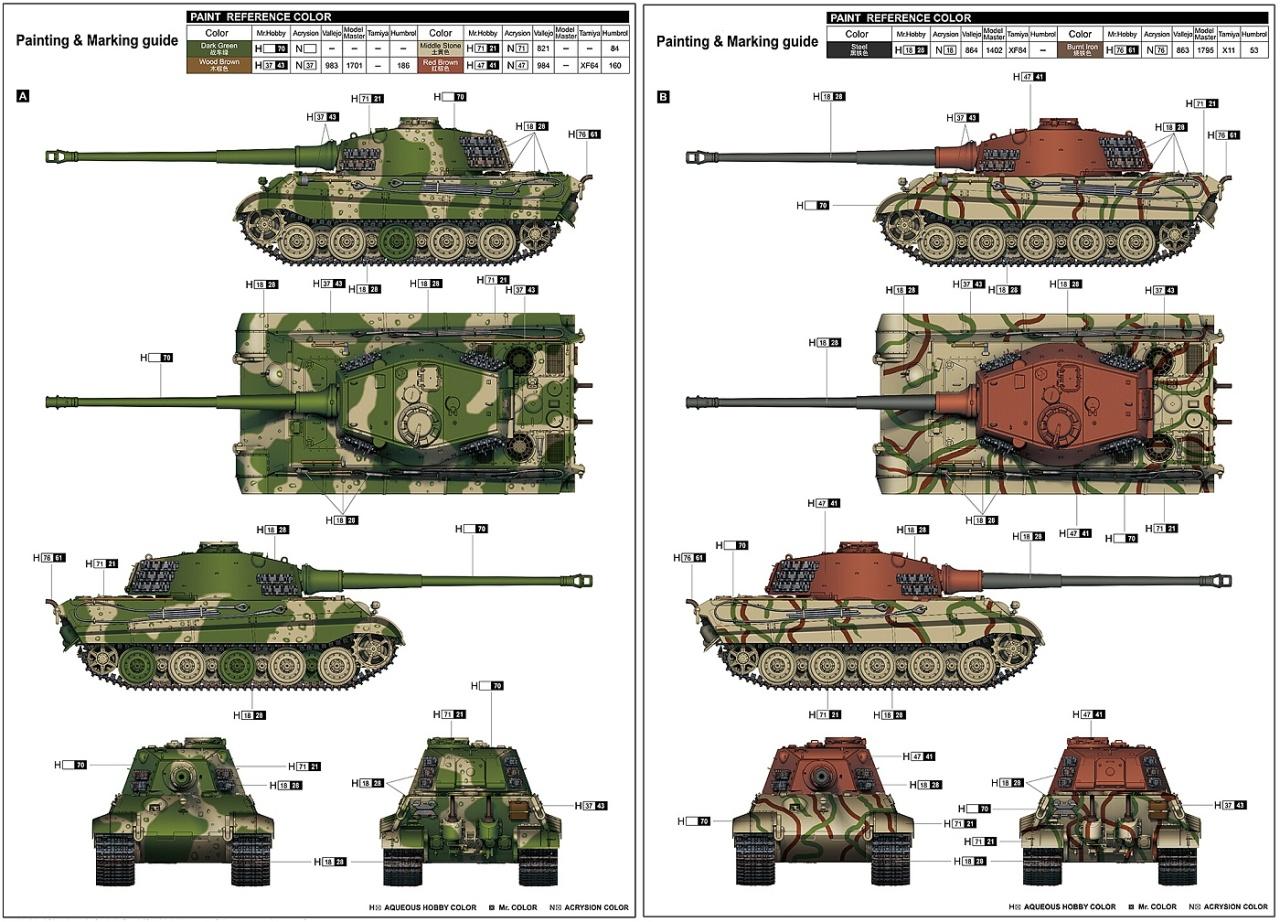
From mid-September 1944, some German armored vehicle manufacturers gradually dropped the full RAL 7028 Dunkelgelb base coat, instead using the RAL 8012 Rot (Rotbraun) red-brown anti-rust primer already applied by armor suppliers as the external base layer, and spraying camouflage directly on top of it.
This change, together with the discontinuation of the Zimmerit anti-magnetic coating, the reduction of production steps, and paint conservation measures, formed part of the simplification of German armored vehicle production in the second half of 1944.
On 31 October 1944, MNH received an explicit supplementary painting directive requiring camouflage to be sprayed over the red oxide primer using RAL 8017 Rotbraun, RAL 6003 Olivgrün, and RAL 7028 Dunkelgelb. Before this, Henschel had already produced Tiger IIs based on the red primer, with only sparse green and yellow camouflage sprayed on.
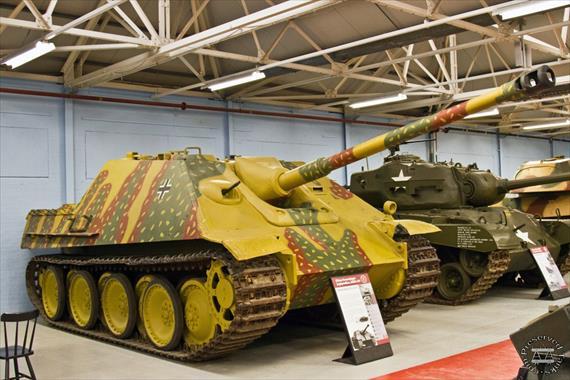
In late 1944, some Panthers, Jagdpanthers, and Tiger IIs retained large, clearly visible areas of red-brown primer. The exact coverage ratio varied by factory, production batch, and supply conditions.
From December 1944, Germany gradually switched to RAL 6003 Olivgrün as the new base color for armored vehicles, with plans for full implementation by 1 March 1945. However, due to the collapse of industrial production and the supply system, actual implementation was inconsistent.
II. Historical Background
===
On 18 February 1943, the German Army established a new armored vehicle painting system through Heeresmitteilung Nr. 181. Its basic structure was:
- RAL 7028 Dunkelgelb as the overall base color
- RAL 6003 Olivgrün olive green camouflage
- RAL 8017 Rotbraun red-brown camouflage
Initially, vehicles left the factory primarily with the dark yellow base coat, and field units applied green and brown camouflage paste themselves according to the battlefield environment.
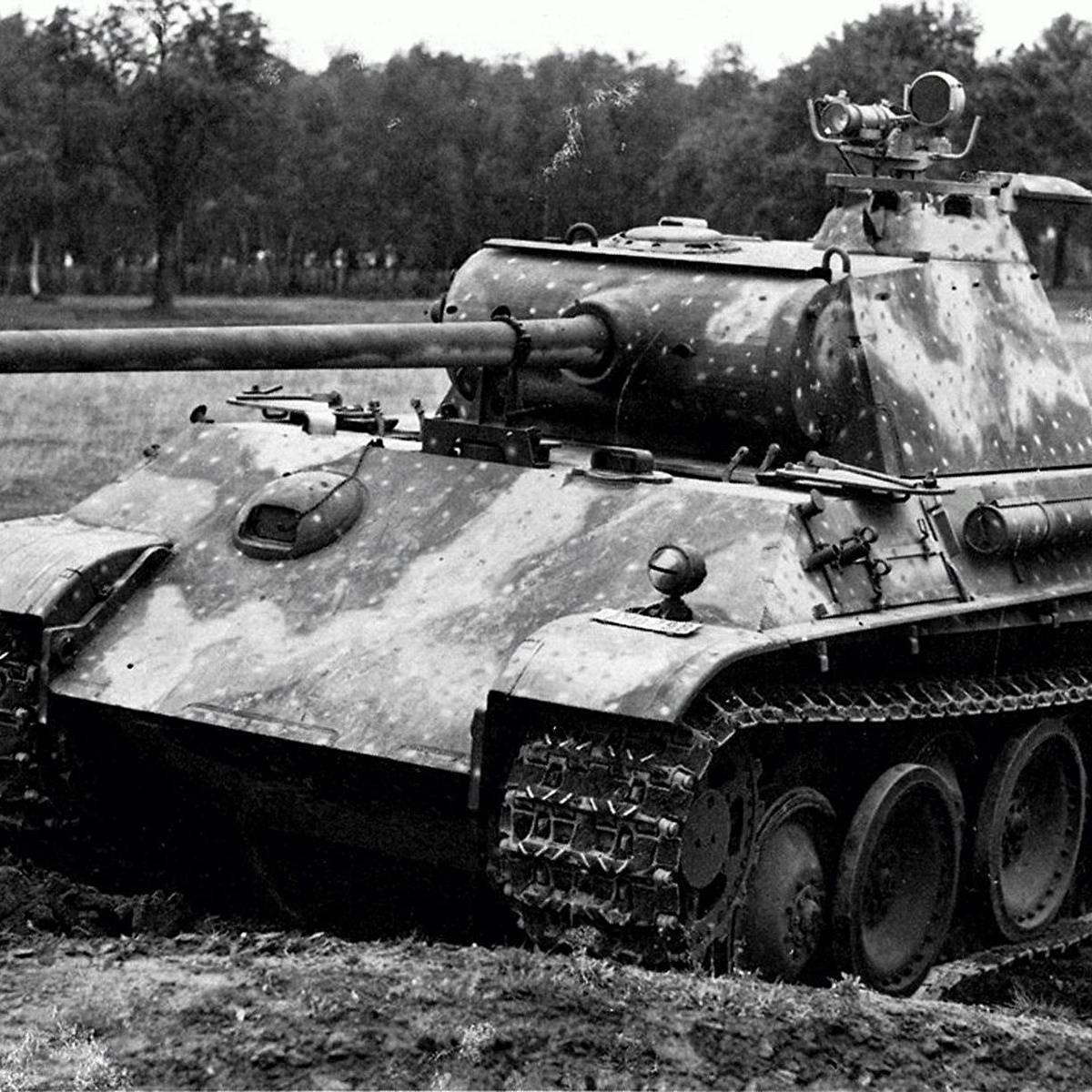
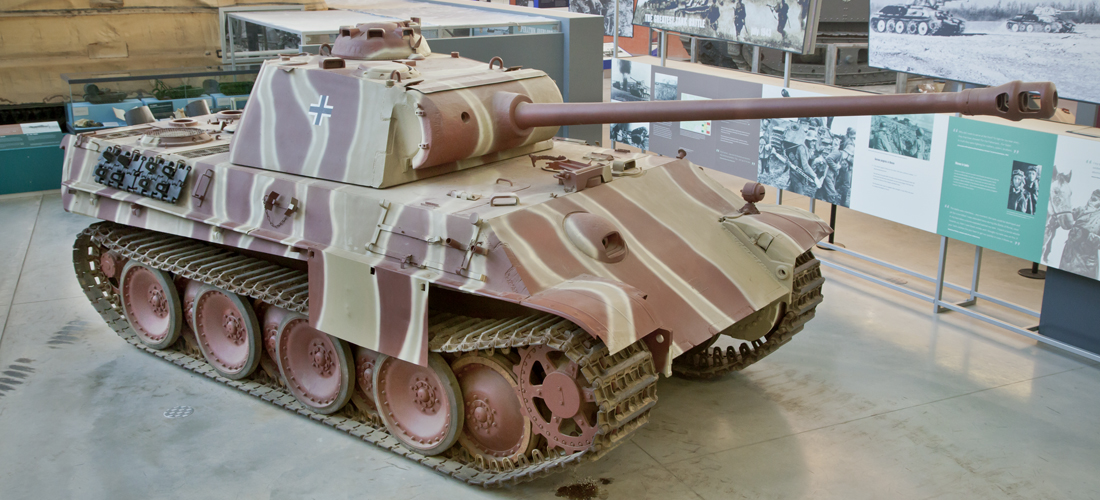
Not until 19 August 1944 did OKH Wa J Rue (WuG 6) VIII issue new painting requirements to armored vehicle manufacturers. The core requirement was that all armored vehicles should have their camouflage applied at the factory, rather than relying entirely on a second painting by field units after receipt.
The new factory paint scheme still used:
- RAL 7028 Dunkelgelb
- RAL 6003 Olivgrün
- RAL 8017 Rotbraun
and also introduced the famous Hinterhalt-Tarnung (Ambush Camouflage).
===
On 7 September 1944, with paint supplies exhausted and the army needing to simplify the production process to shorten production time and reduce additional material consumption, the Generalinspekteur der Panzertruppen (Inspector General of Armored Troops) made the decision to discontinue the use of the Zimmerit anti-magnetic coating, while continuing to use Dunkelgelb paint.
===
From 1944, the red-brown primer began to be widely used as the external base color.
Reference: Germany’s Tiger Tanks — VK45.02 to Tiger II.pdf
Jentz and Doyle note in their production history of the Tiger II:
After 9 September 1944, the Tiger IIs produced by Henschel no longer received the original full Dunkelgelb base coat. One reason was that the armor components delivered to Henschel and Wegmann by armor suppliers already carried the red oxide anti-rust primer, so the assembly plants no longer sprayed a full dark yellow base coat, but instead sprayed camouflage directly over the red oxide primer, in sparse amounts.
Early records from this phase mainly mention:
- RAL 8012: retained as the base primer
- RAL 6003: olive green camouflage sprayed
- RAL 7028: dark yellow camouflage sprayed
One important example is Tiger II chassis number Fgst.Nr. 280243.
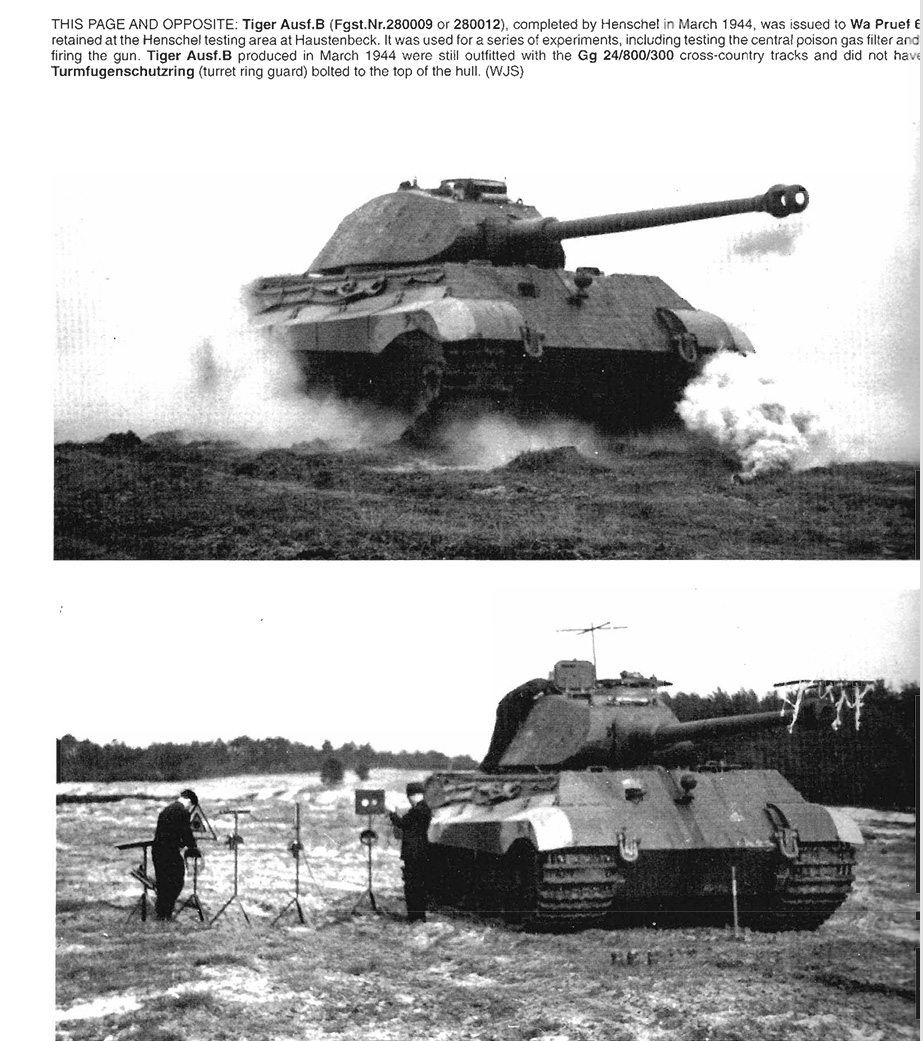
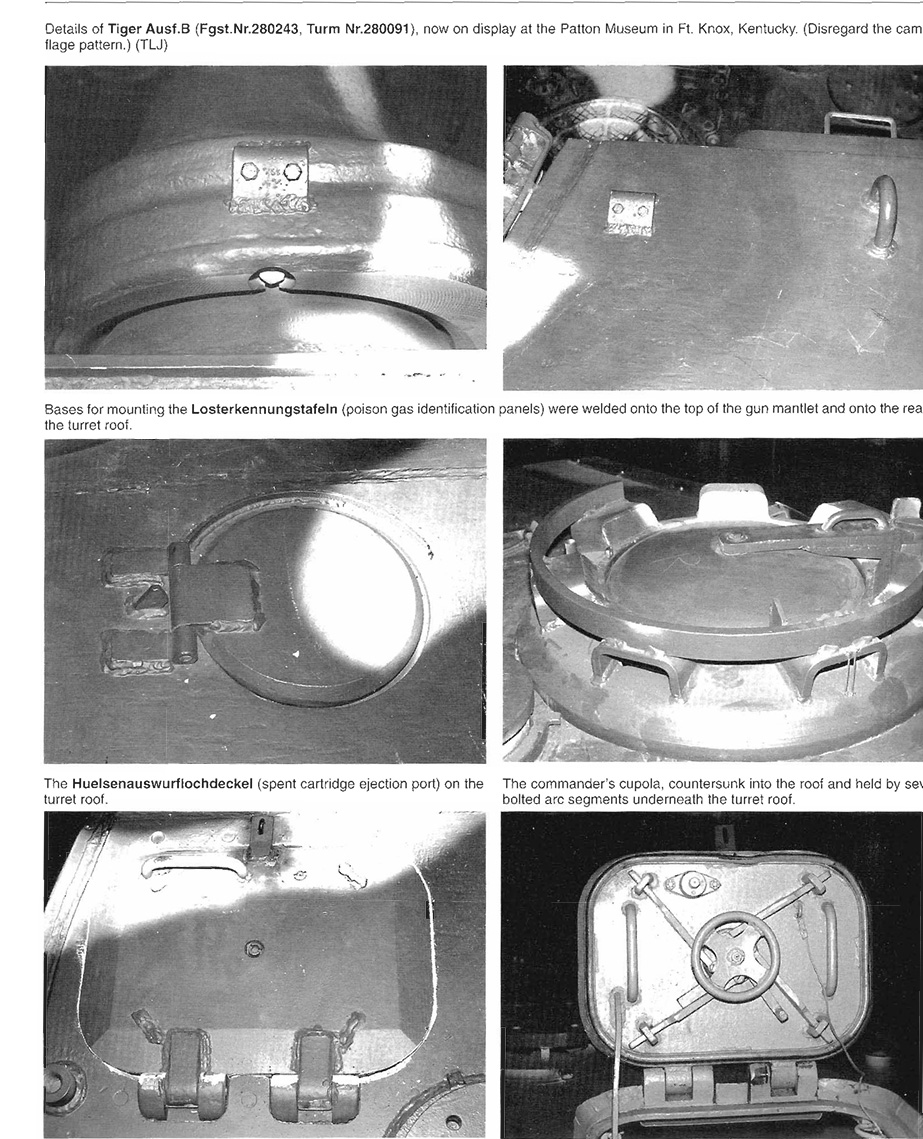
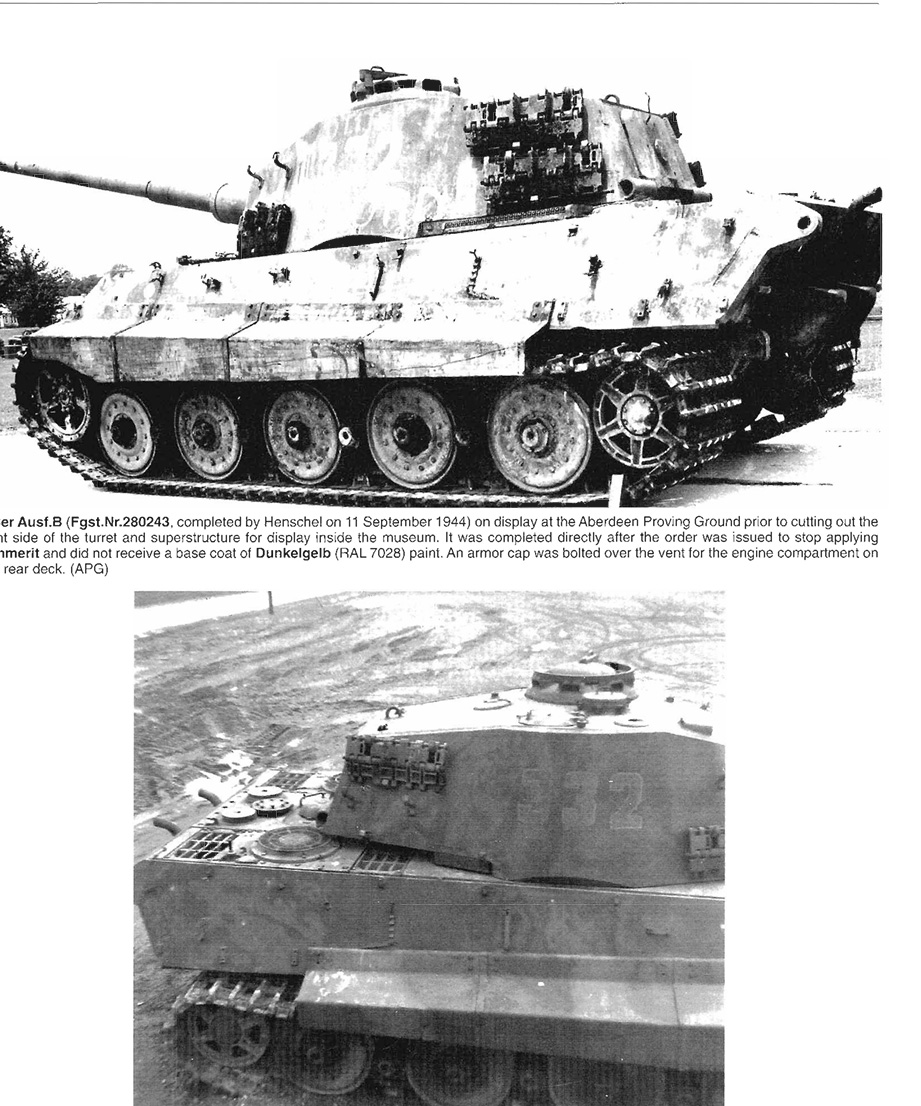
This vehicle was completed at Henschel in September 1944, and left the factory with RAL 8012 red oxide primer, over which only relatively wide but sparsely covering RAL 6003 and RAL 7028 stripes were sprayed. This vehicle is an important case study for the early red-primer paint scheme.
===
On 31 October 1944, MNH received an explicit red-primer painting directive.
According to documents cited by Jentz and Doyle, on 31 October 1944, the Heeres-Abnahmestelle II(K) in Hanover issued new painting requirements to MNH (Maschinenfabrik Niedersachsen Hannover).
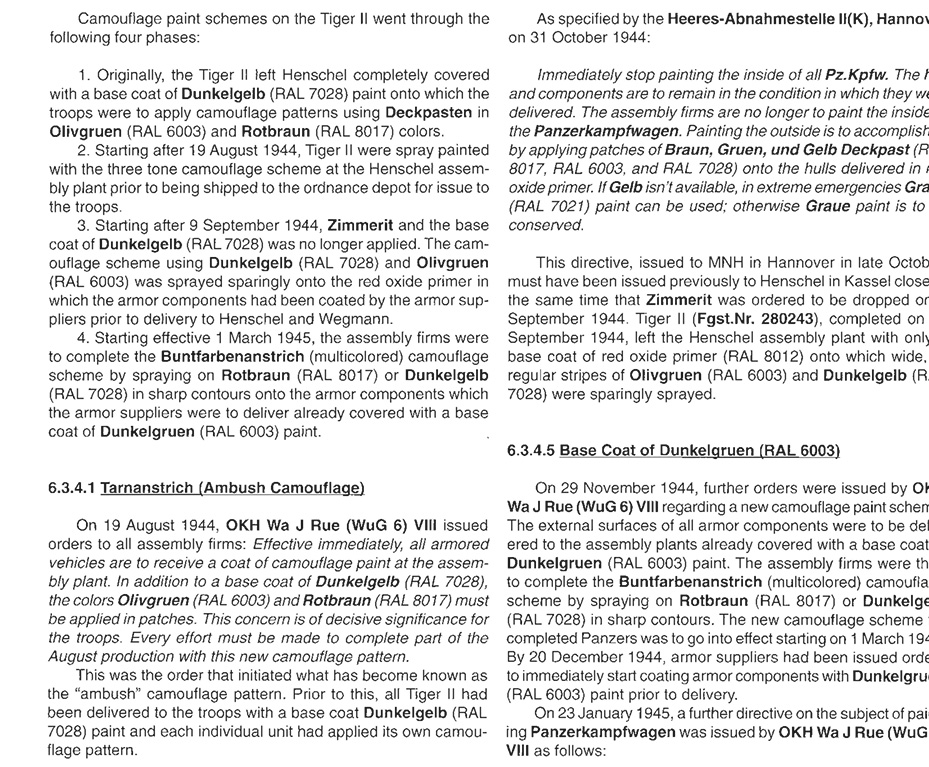
Its main contents were roughly as follows:
- Immediately stop the existing full painting work within the assembly plant.
- Vehicles and components were to enter the assembly plant in the condition in which they were delivered by suppliers.
- The vehicle exterior was to retain the red oxide primer provided by the supplier.
- External camouflage was to use RAL 8017, RAL 6003, and RAL 7028.
- In extreme cases, if dark yellow was unavailable, a small amount of RAL 7021 Dunkelgrau could be used as a substitute.
===
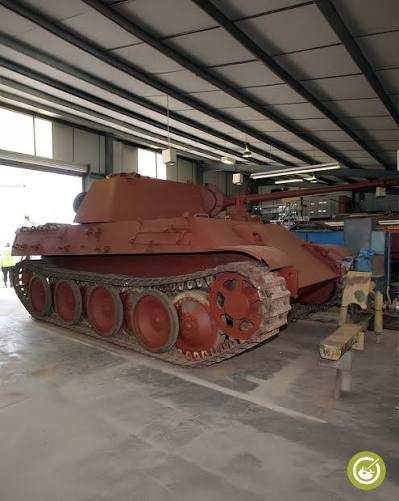
The RAL 8012 red oxide primer paint scheme was an important transitional production practice in the German armored vehicle industry from September to December 1944. Its historical significance lies not in the Germans formally designing an all-red camouflage, but in the fact that the anti-rust primer, normally hidden beneath the paint layers, was directly retained on the vehicle’s exterior, becoming a highly representative visual feature of late-war German armored vehicles.
III. Color Chart
| Color Code | Historical Name & Use | Role on Late-War Vehicles | Period |
|---|---|---|---|
| RAL 8012 | Rot (Rotbraun), red-brown | Anti-rust primer; also became the base color of some vehicles in late 1944 | Sep–Nov 1944 |
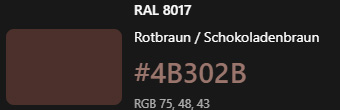
| RAL 8017 | Rotbraun / Schokoladenbraun | Standard red-brown camouflage | 1943 – May 1945 |
| RAL 6003 | Olivgrün | Olive green camouflage; later became the new base color | 1943 – May 1945 |
| RAL 7028 | Dunkelgelb | Dark yellow camouflage | 1943 – May 1945 |
| RAL 7021 | Dunkelgrau | Dark gray; was permitted as an emergency substitute when yellow was unavailable | 1944 – May 1945 |
*Based on the RAL 840-HR original factory standard color cards





IV. Implementation
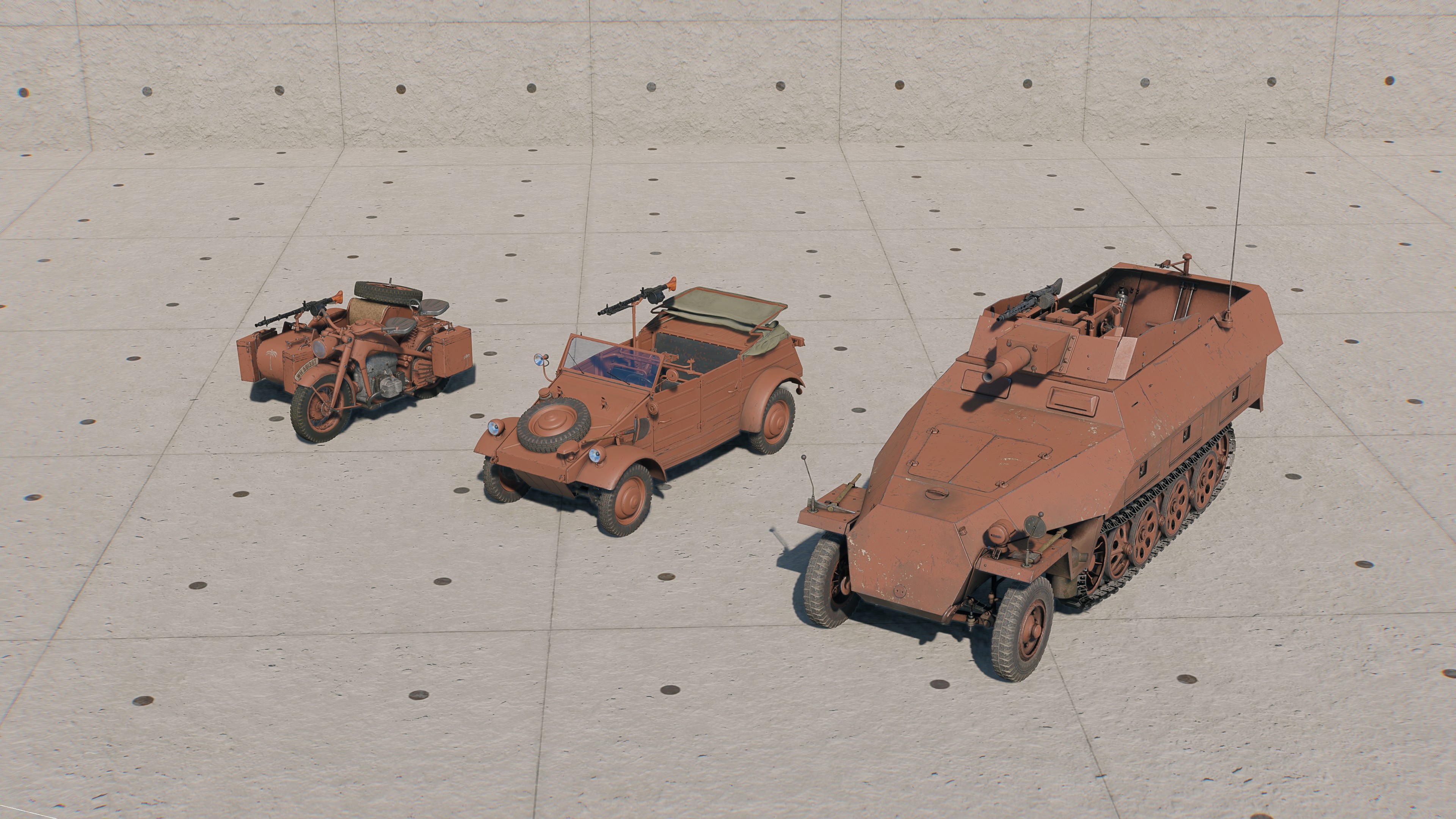
The game already has the relevant all-red-oxide paint schemes, but like many other assets, they only exist in the editor.
The Panther tank in the beginner tutorial also uses this paint scheme.
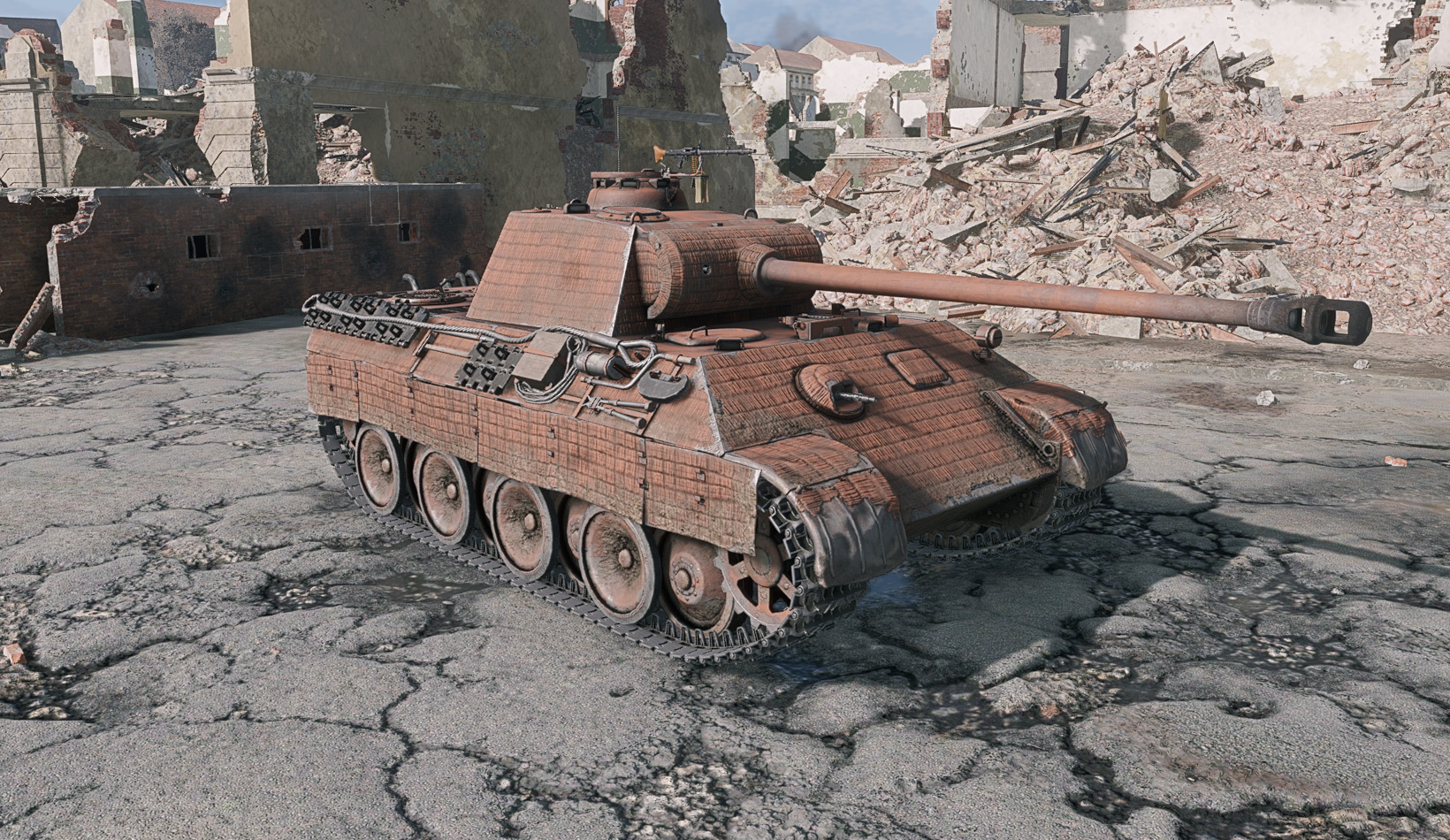
Therefore, I suggest that the developers — out of consideration for both the diversity of the customization system and the historical angle — add the RAL 8012 paint scheme to the customization interface for German vehicles, for players to choose from.
V. Poll
- Yes — historically accurate and visually distinctive
- No — completely opposed
- Neutral
