In 1933, with the backing of Liu Xiang, the Chinese warlord who controlled Sichuan Province, Huaxing Machinery Plant was founded at Daxigou in Chongqing. Upon its establishment, the factory commenced the reverse engineering of the SIG KE7 light machine gun and initiated mass production in 1934.
During the replication of the KE7 light machine gun, Huaxing Machinery Works modified the original Swiss SIG KE7 variant, rechambering it from the Swiss 7.5 mm rifle cartridge to the 7.92 mm Mauser rifle cartridge. This adaptation enabled the weapon to fire the 7.92×57 mm Mauser rifle cartridge, which was extensively equipped throughout China at that time.
To facilitate firing while standing, Sichuan Huaxing Machinery Plant added a shoulder rest to the stock during the localized reverse engineering of the SIG KE7 light machine gun.
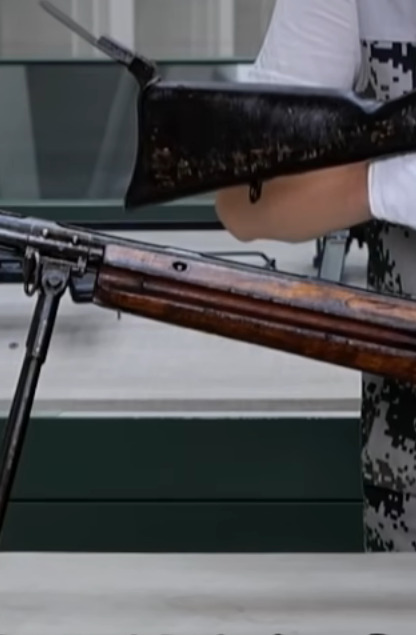
(The photo above shows the KE7 light machine gun manufactured by Huaxing Machinery Works, which was fitted with a shoulder rest mounted on the stock for shooting in a standing position.)
Furthermore, during the reverse engineering of the SIG KE7, Huaxing Machinery Plant redesigned the elongated oval barrel cooling shroud of the original SIG KE7 into a circular configuration. Due to this distinctive feature, the weapon earned the unofficial moniker “Chongqing-made Barrel-Shroud Light Machine Gun” among Chinese troops of that era.
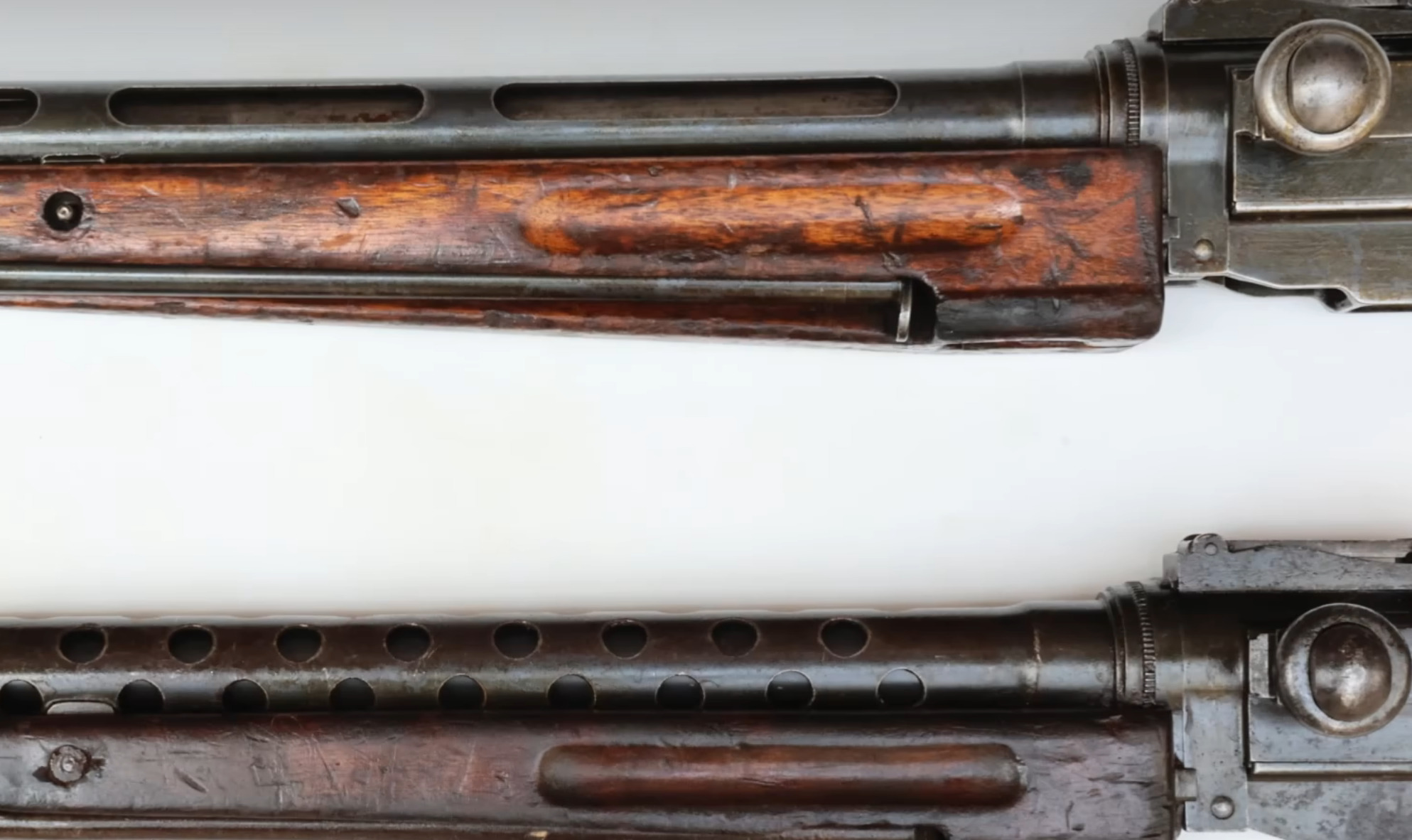
(This image illustrates the differences in the barrel jacket between the original KE7 light machine gun manufactured by Switzerland’s SIG company and the replica produced by Sichuan Huaxing Machinery Works. The cooling holes on the barrel jacket of the original SIG KE7 are elongated oval slits, while those on the version copied by Sichuan Huaxing Machinery Works are circular holes.)
From 1934 to 1936, Huaxing Machinery Plant manufactured three batches of reverse-engineered SIG KE7 light machine guns, with an aggregate output exceeding 6,000 units. This production volume surpassed the total quantity of original SIG KE7 light machine guns imported by the government of the Republic of China from Switzerland’s SIG firm throughout the decade spanning 1928 to 1938.
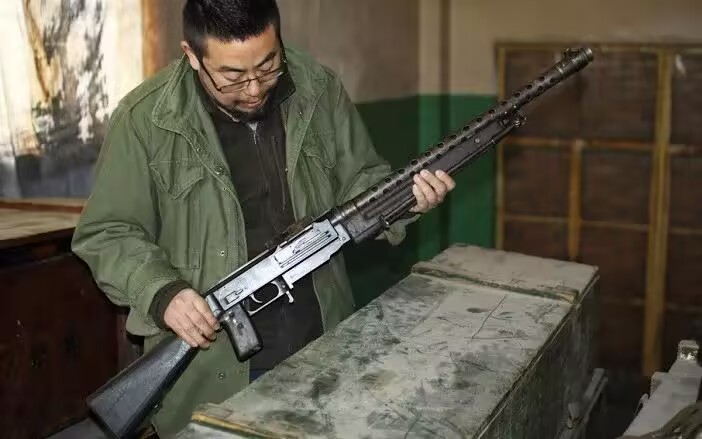
(This photograph shows staff members of an ordnance museum or firearms factory in China removing a surviving Sichuan-made copy of the KE7 light machine gun, manufactured by Sichuan Huaxing Machinery Works, from a wooden slat crate.)
Since the Sichuan-produced KE7 is a localized reverse-engineered variant of the Swiss-origin KE7 light machine gun manufactured by Sichuan Huaxing Machinery Plant, its in-game performance statistics can directly adopt those of the KE7 light machine gun belonging to either the German or Japanese faction within the game. Such attributes include firearm damage, rate of fire, magazine capacity, magazine reload duration and other relevant parameters.
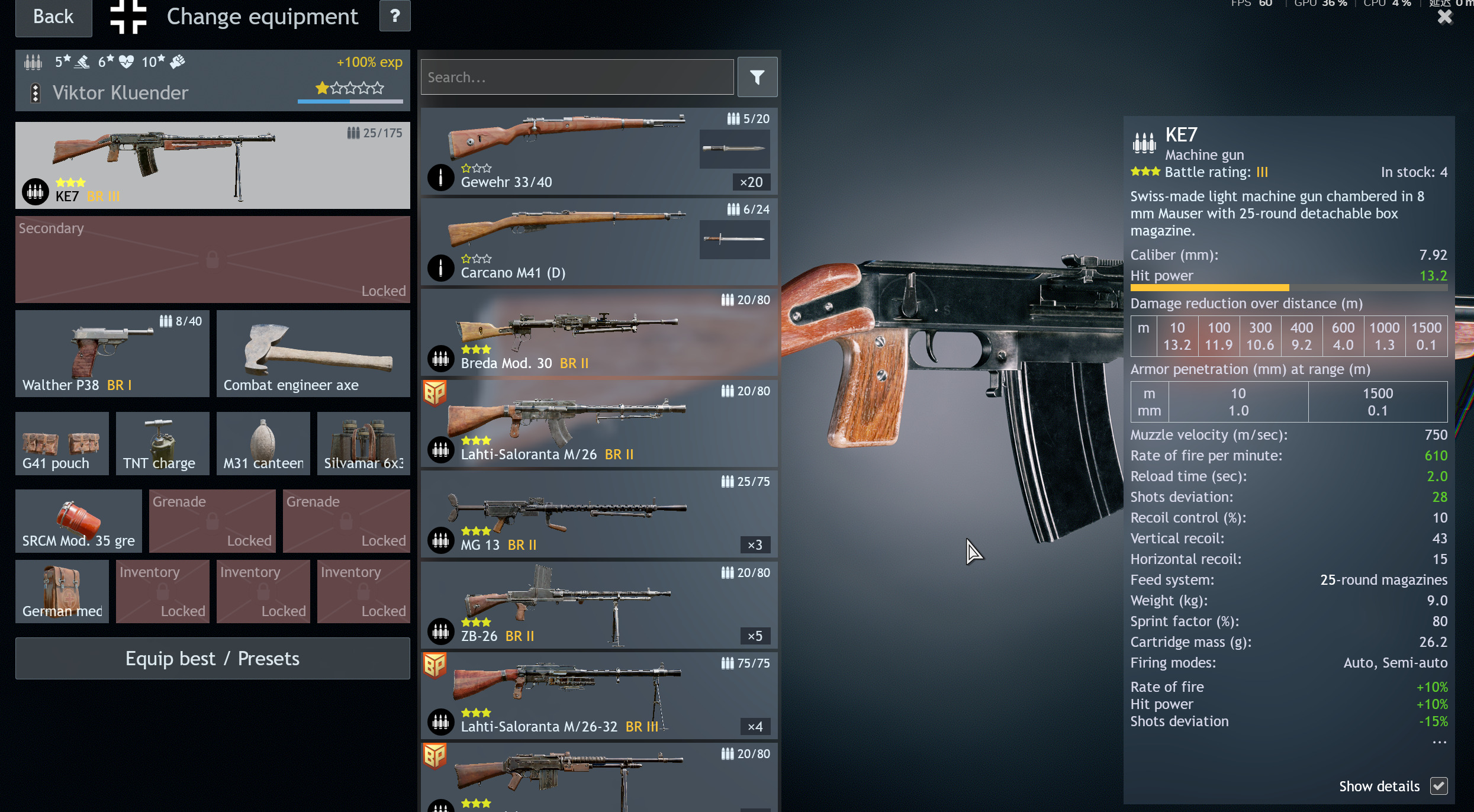
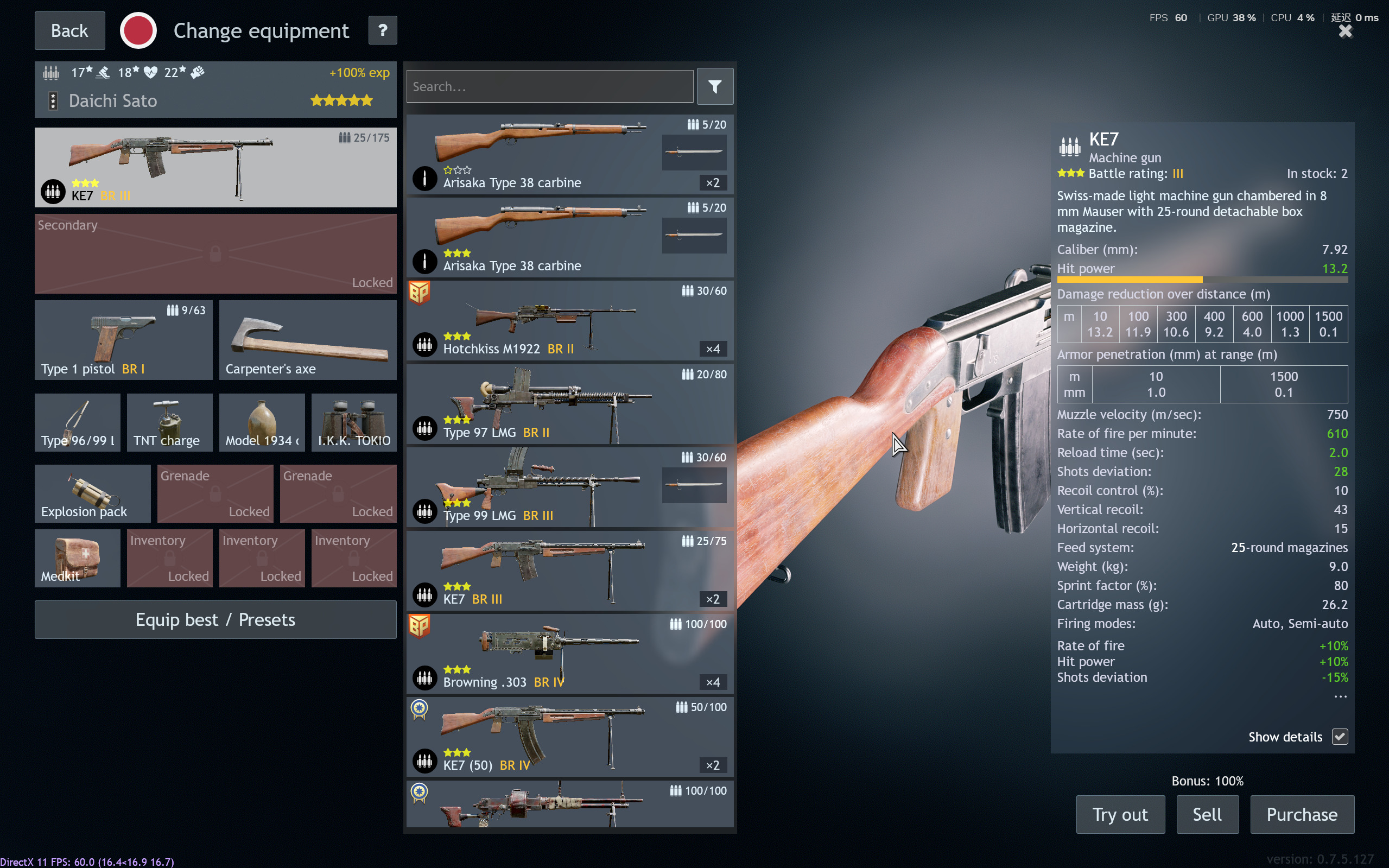
Given that the total production of reverse-engineered KE7 light machine guns manufactured by Sichuan Huaxing Machinery Plant exceeds 6,000 units, within the game, both the German and American factions deploy two or more elite BR3 machine-gunner squads. In contrast, the Soviet faction only possesses a single elite BR3 machine-gunner squad equipped with Lewis light machine guns, and the Japanese faction merely has one BR3 squad armed with captured Browning M1918A2 automatic rifles.
NPlayers on official forums have already proposed adding the Type 92 Lewis light machine gun, a Japanese licensed-production variant of the Lewis gun, to the Japanese faction as the weapon for its second elite BR3 machine-gunner squad.
Taking this opportunity, I recommend the game developers introduce the KE7 light machine gun reverse-engineered by Sichuan Huaxing Machinery Factory to the Soviet faction as its second elite BR3 machine-gunner squad. This change will grant the Soviet faction a minimum of two elite machine-gunner squads under its BR3 lineup, bringing it in line with the existing squad configuration of the American and German factions.
