Hello fellow enlisted players, I’m here to propose a BR reduction for the ISU-152.
As the only decent grand prize for Victory Day, to prevent it from ending up in the awkward BR 4 bracket like the Il-8, I will illustrate with examples for your reference. Thank you for your patience.
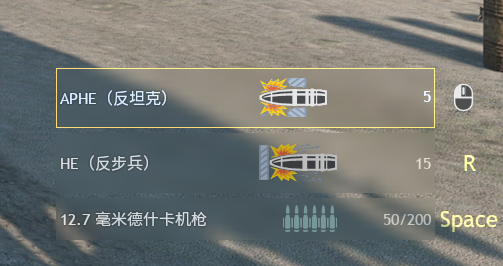
Here is the ammunition load of the ISU-152 as shown in the picture.
For a 3-man crew without skills and lacking two loaders, the reload time is 42.5 seconds.
For a 4-man crew without skills and missing one loader, the reload time is 21.5 seconds.
For a full 5-man crew without any skill bonuses and a complete loader team, the reload time is also 21.5 seconds.
Next, let’s talk about armor protection. Do not be intimidated just because it adopts the IS hull. In fact, it only borrows the hull engine and overall frame design.
In War Thunder, the Soviet anti-aircraft vehicle built on the T-54 chassis sits at Battle Rating 7.7, yet it only has 35mm armor, penetrable even by BT series light tanks.
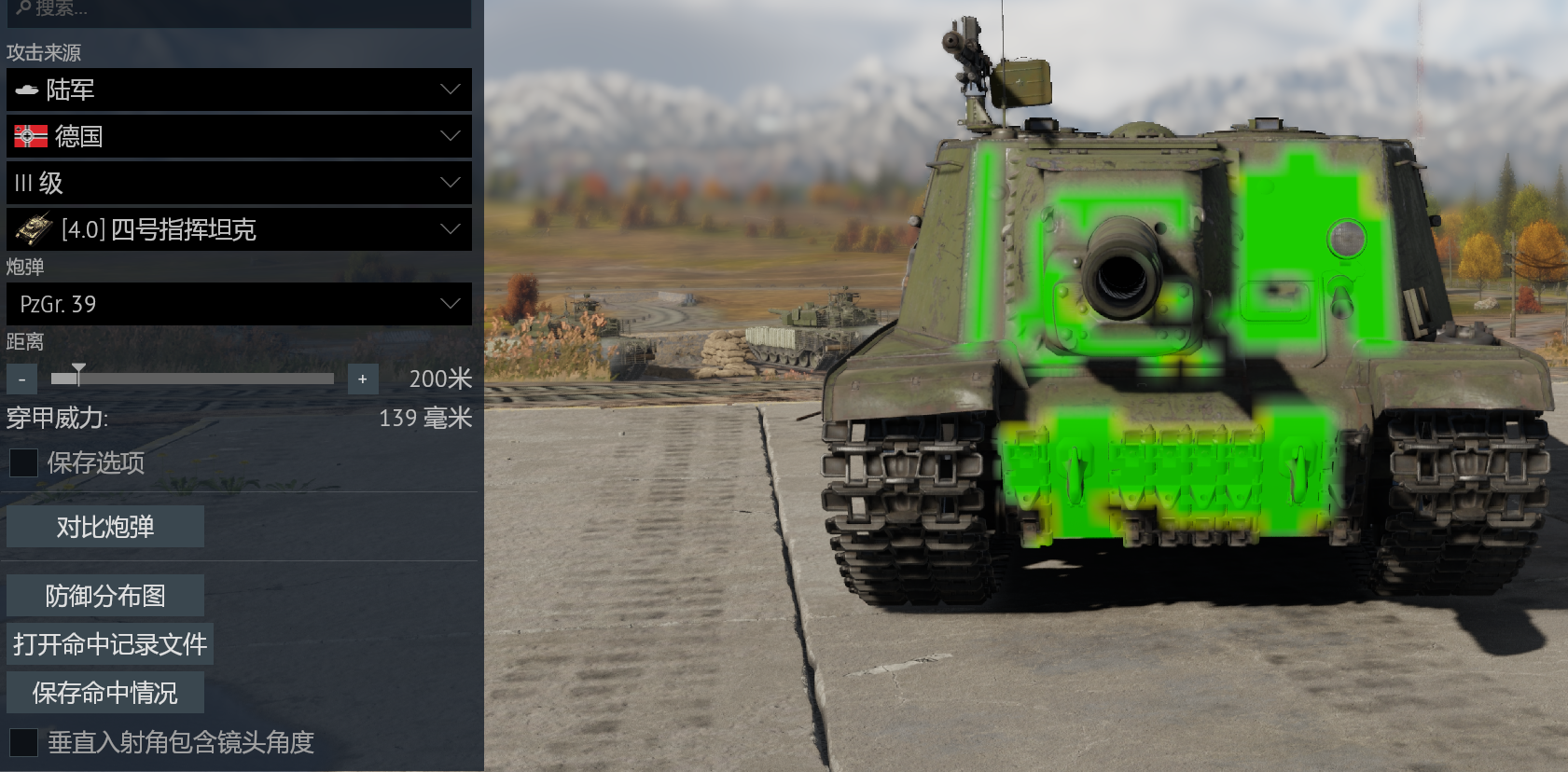
By the same logic, let’s analyze how the ISU-152 fares in defense against German tanks of BR 3. Please refer to the attached screenshots.
These are screenshots from my War Thunder tests. Enlisted inherits its vehicle models and stats directly from War Thunder, so the data is fully applicable. Besides, Enlisted cannot simulate complex shell penetration mechanics for now.
This is the firing perspective of the Panzer IV, showing the penetrable weak points within 100 to 300 meters.
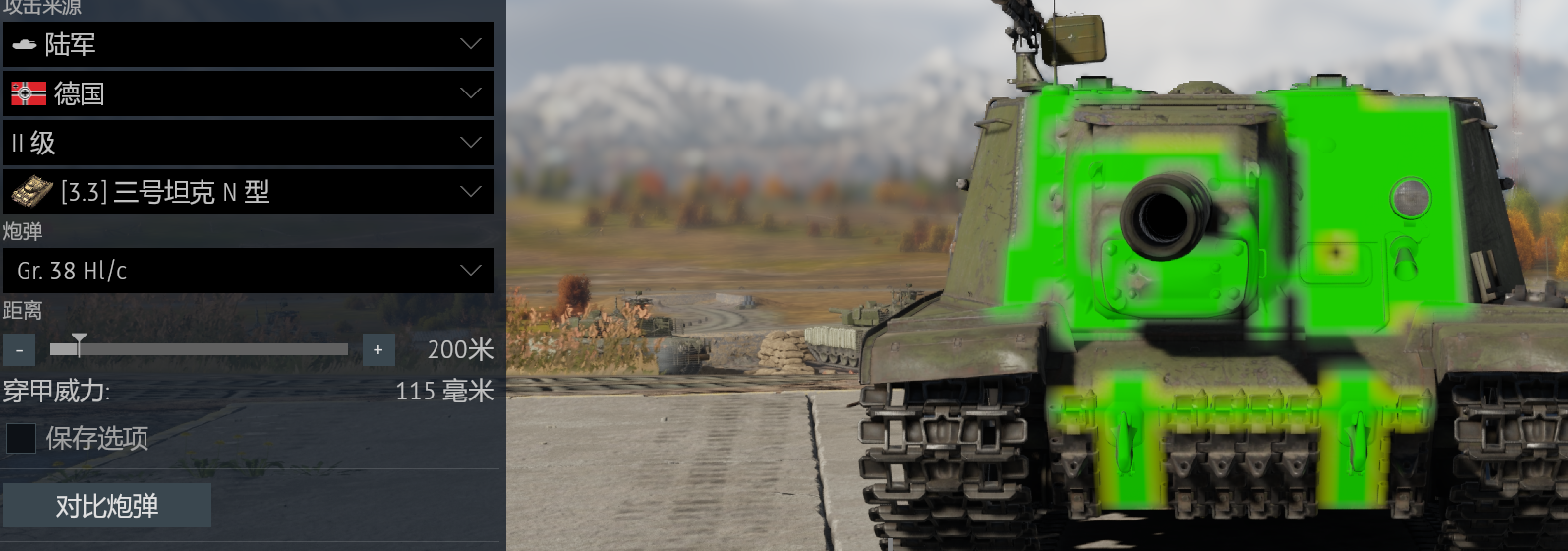
Here is the view from the Panzer III N, marking the areas penetrable by HEAT shells at a distance of 100 to 300 meters.
These are the vulnerable spots of the ISU-152 that the StuF III (BR 2) can punch through from 100 to 300 meters away.
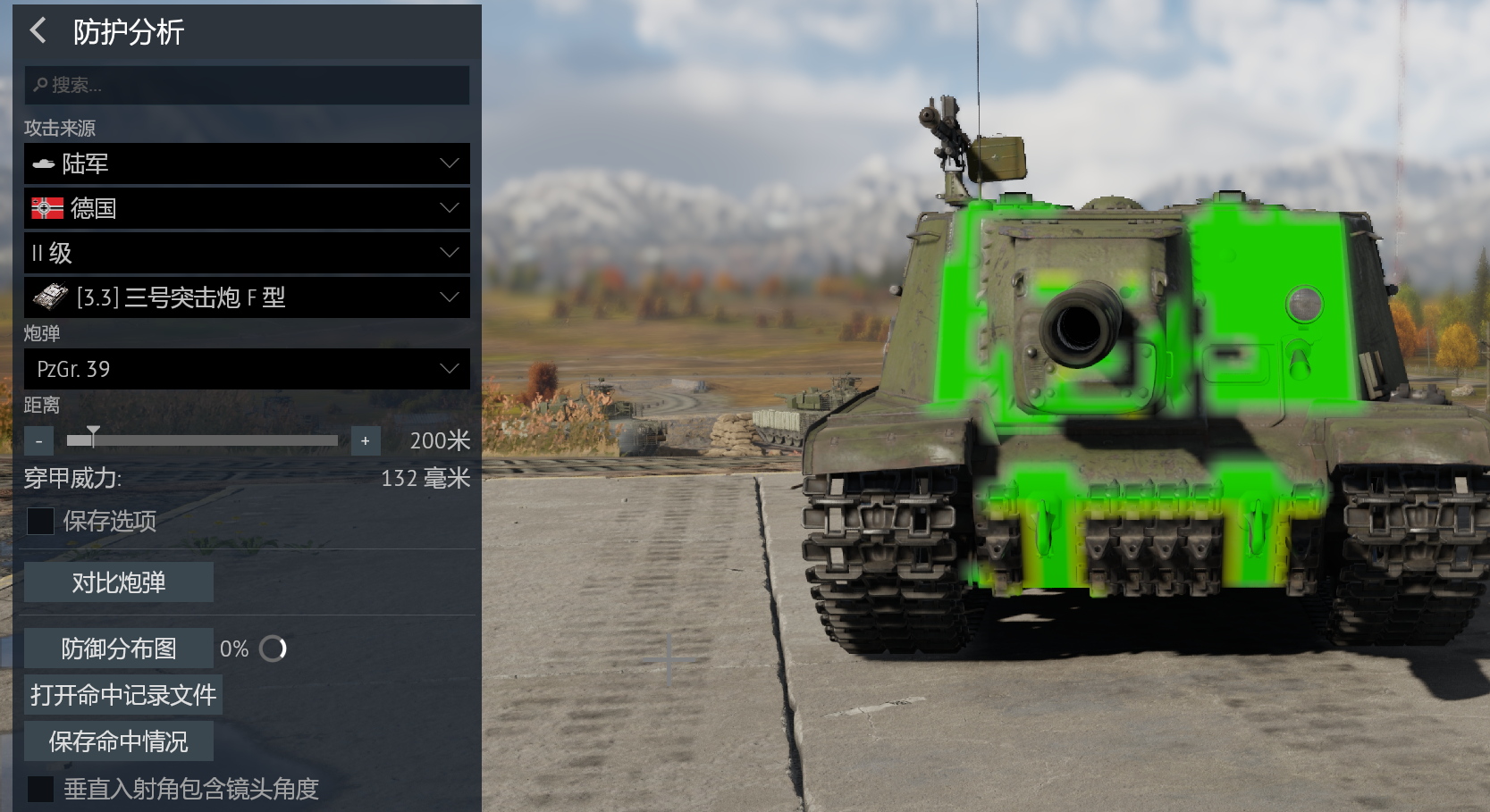
To push the comparison further, these are the penetration points accessible to the PUMA fitted with the long-barreled 50mm cannon.
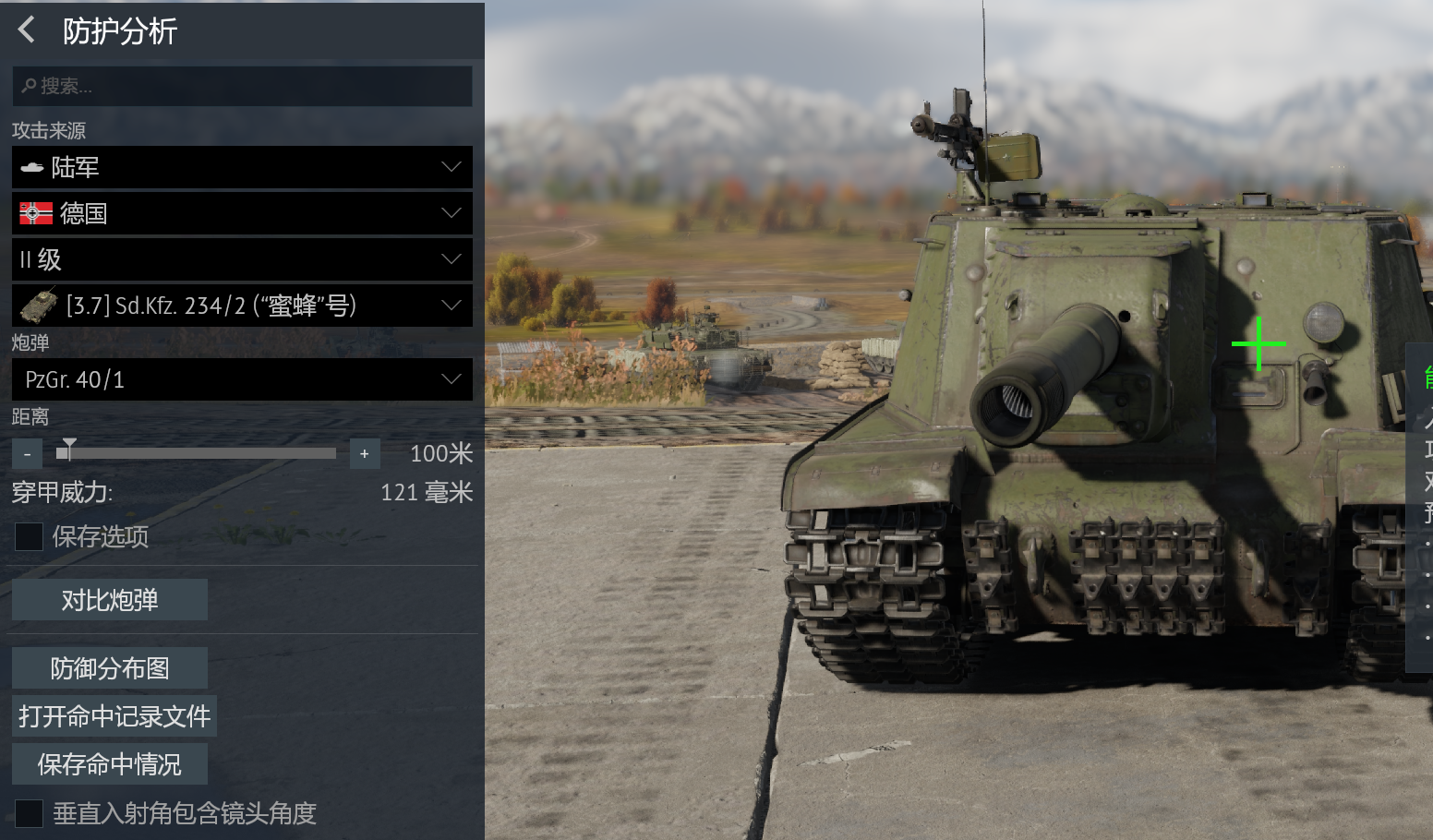
As you can see, its weak points are quite extensive. Furthermore, its armor is a single solid plate, lacking the composite layered armor and variable-thickness armor that BVD introduced in its vehicles post-2023.
90 millimeters of armor is fixed 90 millimeters, with no flexible defense attributes.
Tanks ranging from BR 2 to BR 3 can penetrate it effortlessly. Coupled with its reload speed that is actually slower than the KV-2, it is clear that DF is practically pushing players to purchase the premium BR 3 KV-2. That premium tank rarely faces BR 5 opponents and boasts far better survivability than the ISU-152. This is clearly a predatory monetization tactic!
Behind the right-side armor plate of the ISU-152 sit the gunner, driver and loader. That means a shot to this side will definitely take out the driver, and a 75mm shell will almost certainly kill the gunner. With a bit of luck, the loader will be taken out as well.
A single shot can cripple the ISU-152 completely. Even if the vehicle survives, its combat effectiveness will be severely diminished.
Standard armaments of BR 2 and BR 3 tanks are more than capable of destroying this vehicle.
Additionally, Soviet tank designs differ greatly from German ones.
The lower transmission section can block incoming shells. Firing 50mm to 75mm cannons at the hull armor below the main gun will detonate the reactive fuel tanks with near-perfect certainty. Since Enlisted lacks War Thunder’s comprehensive fire suppression mechanics aside from engine fires, the sustained blaze from an exploding fuel tank is fatal for tanker crews without damage resistance skills. Exiting the vehicle equals being eliminated with no room for recovery.
Though built on the IS chassis, it never inherited the IS series’ reliable armor. In truth, the original IS-1 was already underwhelming. Historically, the first batch of combat-deployed IS tanks suffered frontal penetrations from Panzer IV cannons. One even lost mobility and erupted in fuel tank fires after a 37mm anti-tank shell struck its lower hull. Clearly, these vehicles were never outstanding combat units, even in-game.
After learning all this, do you still think the ISU-152 is overpowered?
- BR5
- BR4
- BR3
It is nothing more than a tank destroyer variant of the KV-2, much like the conversion of the Panther into the Jagdpanther. Ironically, its armor can still be easily penetrated by vehicles of its own battle rating. Historically, it was engineered primarily for bunker and concrete fortification assaults, with anti-tank combat as a secondary role.
Both 152mm and 76mm cannons can destroy enemy tanks with comparable defensive performance, yet the 152mm suffers a drastically slower reload speed. If we equate time to currency and infantry eliminations to profit, comparing it to 85mm and 76mm weaponry reveals a clear gap. The smaller cannons fire more rounds in the same timeframe for far higher overall gains, with identical odds of shell ricochet or high-explosive fragment absorption.
By this metric, the Panzer III N stands as the most cost-effective option with negligible combat drawbacks, while the 152mm and 122mm platforms struggle heavily. Landing a devastating multi-infantry kill with one shell only to miss countless follow-up targets during the lengthy reload, followed by frustrating ricochets on subsequent shots, leaves a lingering frustration even after winning the match.
I was thrilled when the IS-2 (1944) was released, only to be utterly disheartened. Shots against staircases, trees, stone walls, windows, open ground and flat surfaces frequently ricochet, and countless high-explosive fragments vanish due to flawed developer collision mechanics. The experience felt akin to being caught in the blast of a Pz.Kpfw. VIII’s massive mortar shell. After that disappointment, I relied solely on the T-34-100 for anti-tank duties and mastered kamikaze ramming tactics to counter heavy tanks. Soviet armor would be nearly unplayable without combat zones like the Berlin Opera House that limit tank engagements.
Even in open terrain, Soviet tanks become ineffective anti-infantry platforms once enemy armor is eliminated, much like fighter jets depleted of ordnance. The 122mm cannon feels entirely random in combat: a perfect shot can secure over ten kills, while a twenty-second reload can yield merely three. Few understand the frustration of tanker gameplay reduced to a gamble on every single shot.
Conversely, tanks reliable at infantry suppression often lack the firepower to penetrate heavy tanks. Soviet armor is constantly forced into a compromise: sacrificing anti-infantry dominance for anti-tank capability, or abandoning anti-tank potential to focus on infantry clearance.
Back when only the Henschel-turret heavy tanks were available, players favored the T-34-85 over the IS-2, excelling at both turret penetrations and infantry suppression. With the widespread deployment of the standard heavy tank and Ferdinand tank destroyer, viable dual-role Soviet vehicles are scarce.
The T-34-100 and SU-100 once filled this niche, yet they are limited-time event vehicles inaccessible to new players with abysmal crate drop rates. Such is the plight of Soviet tank users.
To add to the struggle, the T-34-100’s high-explosive shells underperform those of the 85mm cannon. Plagued by slow reloads and mediocre armor, the IS-2 is vulnerable to the Panzer III N’s 115mm HEAT rounds even at BR 5, unable to compete as a balanced anti-tank platform.
- IS-2(1943):BR4
- IS-2(1943):BR5
- IS-2(1944):BR4
- IS-2(1944):BR5
Thanks for reading. We’ve finished talking about Soviet vehicles, now let’s move on to Japanese and German ones.
Many players claim the StuG II is overpowered, which is why it currently sits at BR 3. However, from my own gameplay experience, its dominance mainly comes from its rear-mounted main gun. Most players fail to switch to HE shells for quick eliminations or fail to watch out for ambushes, letting the StuG II take the initiative and gain the upper hand easily.
If the StuG II is set to stay permanently at BR 3, what will become of the vehicle I’m going to introduce next? Please welcome Germany’s urban warfare butcher and building wrecker—the Brummbär!
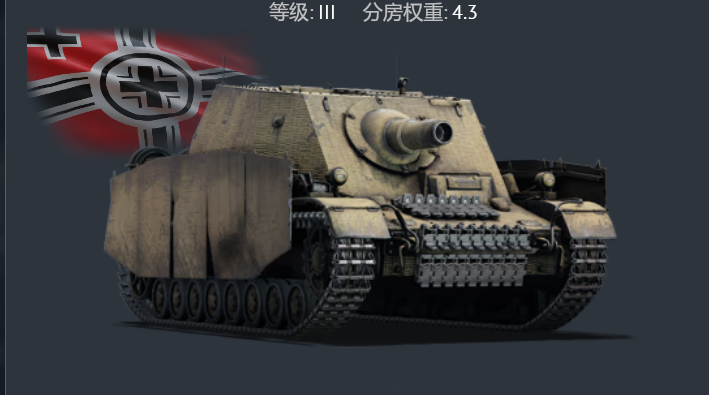
Where should it be placed in the battle rating lineup? Should it be matched against the T-34-85 and Jumbo at BR 4? It adopts the Panzer IV chassis. German players would definitely be glad to see it stay at BR 3, while players from other nations would surely complain if it gets moved to BR 4.
It really is a tough situation. German players struggle to hold onto their good vehicles, while Soviet players can hardly get their premium units. What an awkward predicament for both sides.
This vehicle currently fights alongside Shermans, KV tanks and T-34s at 4.3 BR. Let’s talk about its defenses. Its superstructure armor is 100mm angled at 80 degrees, reaching an effective thickness of 150mm.
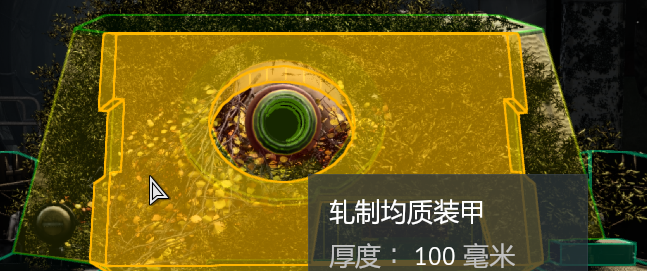
Its hull is built with two overlapping 53mm steel plates, offering combined protection over 106mm. In War Thunder, stacked armor slows incoming shells twice and weakens their penetration greatly. Behind the 50mm hull plating lies a bulky transmission assembly that can even withstand 122mm shells!
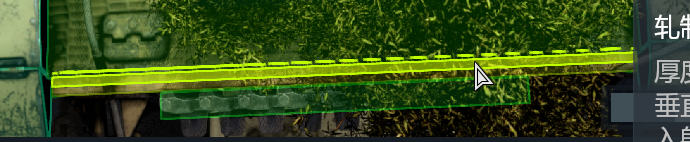
Impressive enough to catch you off guard, right? With defense comparable to the Tiger tank, why is it matched against low-tier vehicles at 4.3? There are two key reasons.
First, its gun barrel is even shorter than the StuG II’s, leading to severe bullet drop that makes aiming extremely tricky. Aiming takes precious time in close combat encounters, paired with a lengthy 23-second reload. It also lacks a hull machine gun, so players dare not push forward aggressively.
Second, just like giants have fatal weak points, the Brummbär has a glaring frontal flaw: the driver’s hatch with merely 20mm armor plating. Any 75mm or 76mm tank shell landing here results in an instant crew wipe. This vehicle demands exceptional skill to operate, and it is hard to land reliable shots even in arcade mode.
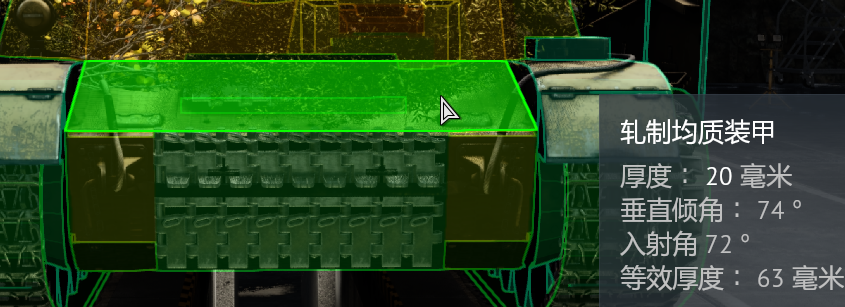
To make matters worse, its side armor is extremely thin. A 45mm shell striking at a 60-degree angle can wipe out the entire crew, and a single Bazooka shot from American troops can easily disable it mid-combat.
Some people once asked me: “Your analysis sounds reasonable, but what if the enemy hides in cover?”
I was caught off guard at first and had to admit that was a valid concern.
But after plenty of gameplay, I realized no perfect cover can offer permanent protection. Those hiding spots would have long been bombed by airstrikes.
There is no need to worry about enemies camping behind cover at all. Anyone trying to do so will get wiped out by the devastating Allied air raids.
As a German main, I sincerely hope the Brummbär will be assigned to BR 3 instead of BR 4 when it is added to the game. If it gets moved to BR 4, the only large-caliber vehicle left for German forces at BR 3 will be the captured KV-2. It is even worth noting that the community is reluctant to add the German-modified T-34-47(r) to the game at all.
- Brummbär to BR4
- Brummbär to BR3
- StuG II back to BR2
- StuG II stays at BR3
Next up is the Panzer IV Ausf. A.
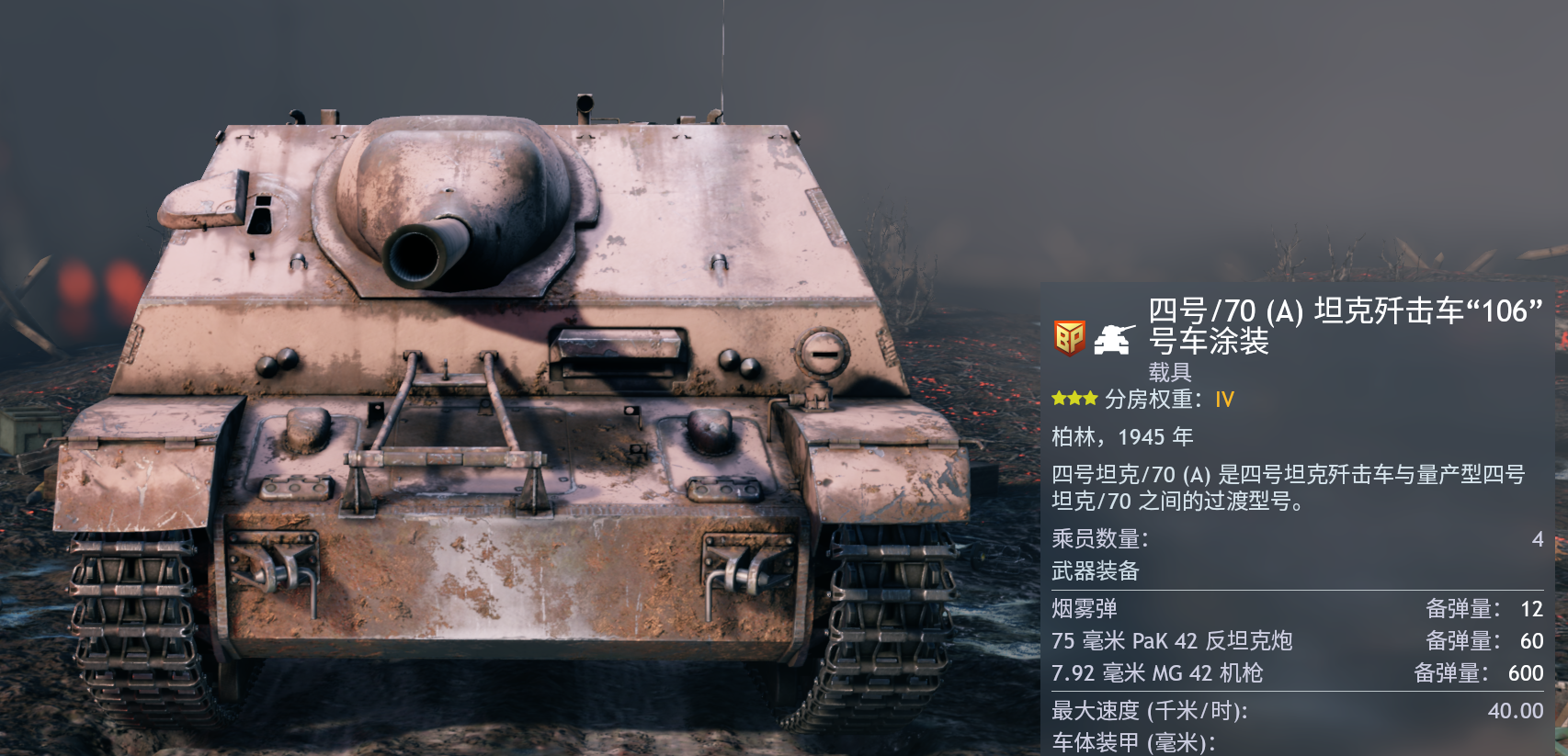
Its weaknesses are glaringly obvious. It retains the classic Panzer IV hull, trading its original 50mm frontal armor for an impenetrable fighting compartment. Historically, it served only as a transitional model.
It is quite popular in War Thunder as a 4.3 BR limited-time returning vehicle. Logically, it should be placed at BR 3 in this game and released as a rotating limited vehicle. Unfortunately, it was added far too early. If it were moved to BR 3, it would hinder the sales of the Panzer IV command variant and other premium German tanks. It pains me to see this vehicle gather dust unused. It deserves a spot at BR 3, yet it has been neglected ever since the map mode launched, barely ever spotted in matches.
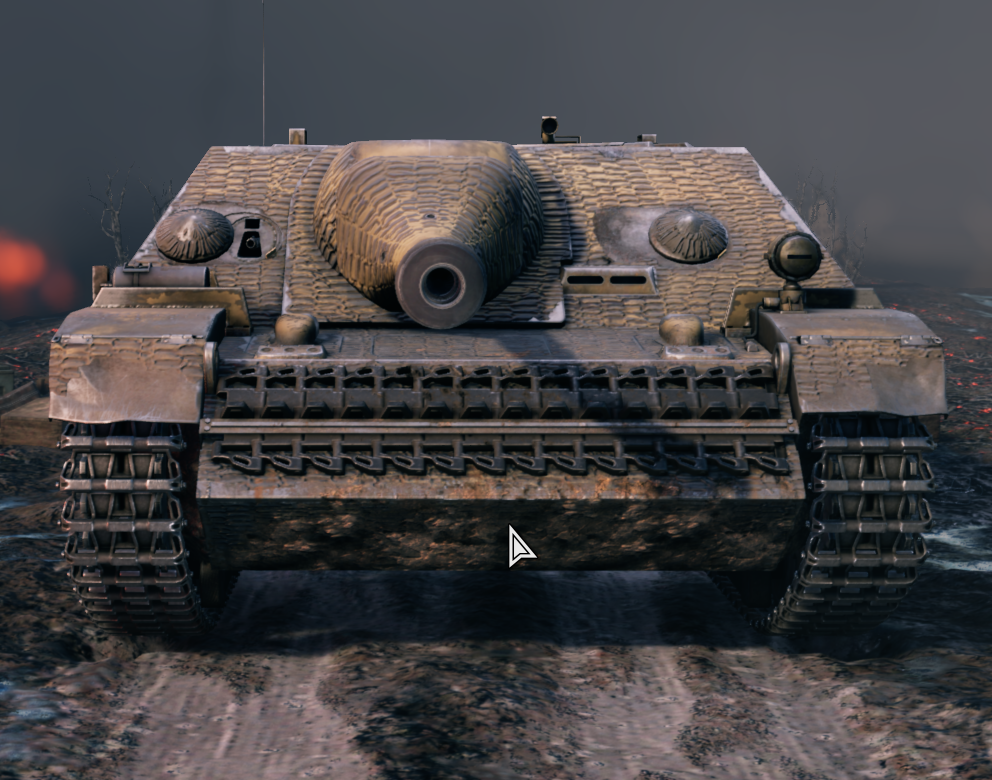
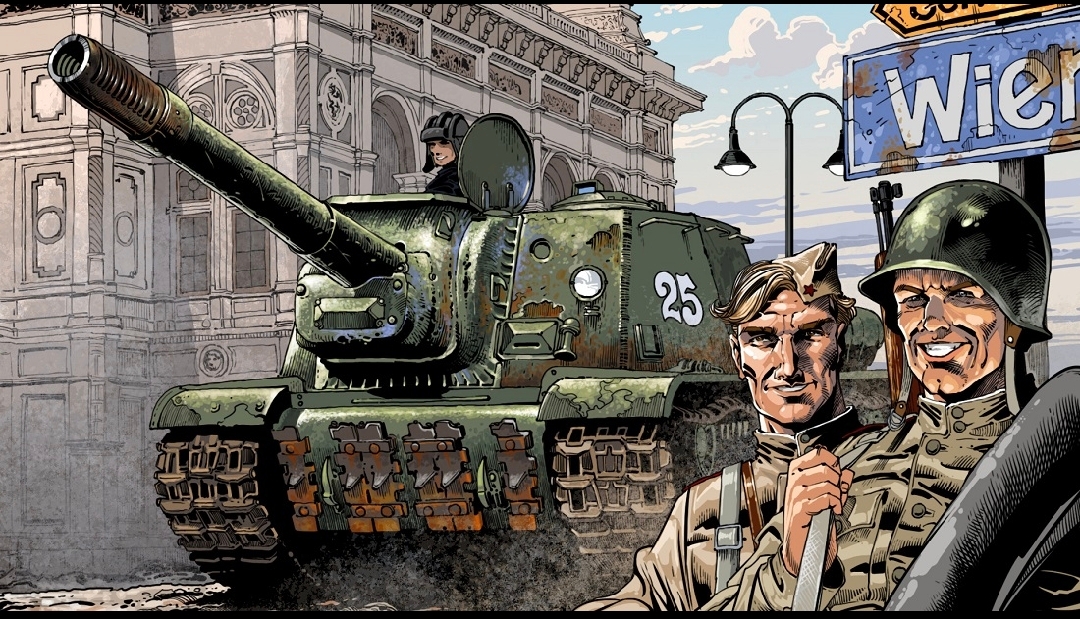
I hope German players will gain new thoughts after reading my analysis of the ISU-152. Adjust both tank destroyers to BR 3, and the classic matchup of Panzer IV against KV and T-34 will become far more dynamic.
- Long-barrel Panzer IV TD (A) to BR3!
- No, keep it at BR4
- Short-barrel Panzer IV TD (S) to BR3
- Still not feasible. 【The US side already has the 5.7 Hellcat at BR3.】
As for the short-barreled variants, they also belong at BR 3. The bracket already accommodates the BR 3 KV-2 alongside the ISU-152. The Brummbär can shrug off most 76mm rounds while still being vulnerable to 152mm shells, giving the KV-2 proper combat purpose without breaking balance.
The last vehicle to discuss is Japan’s Type 3 Chi-Nu medium tank
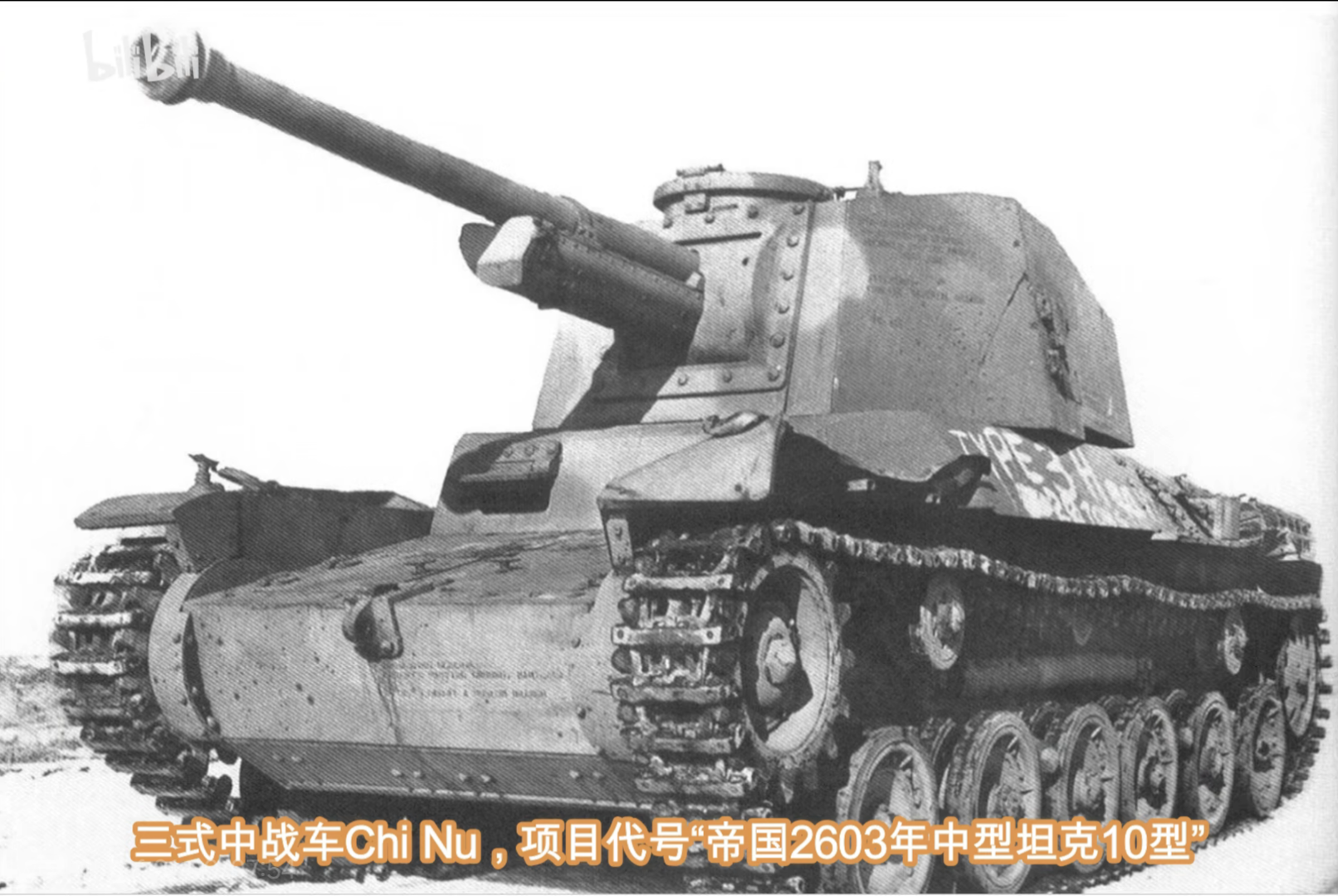
. It is currently set at 3.3 BR. The StuG III F of the same original BR bracket has been lowered to BR 2, yet the Chi-Nu’s 102mm penetration shells can easily pierce the frontal armor of Sherman tanks. The green marked weak points in the reference image are practically negligible, as landing effective penetrating shots there is nearly impossible.
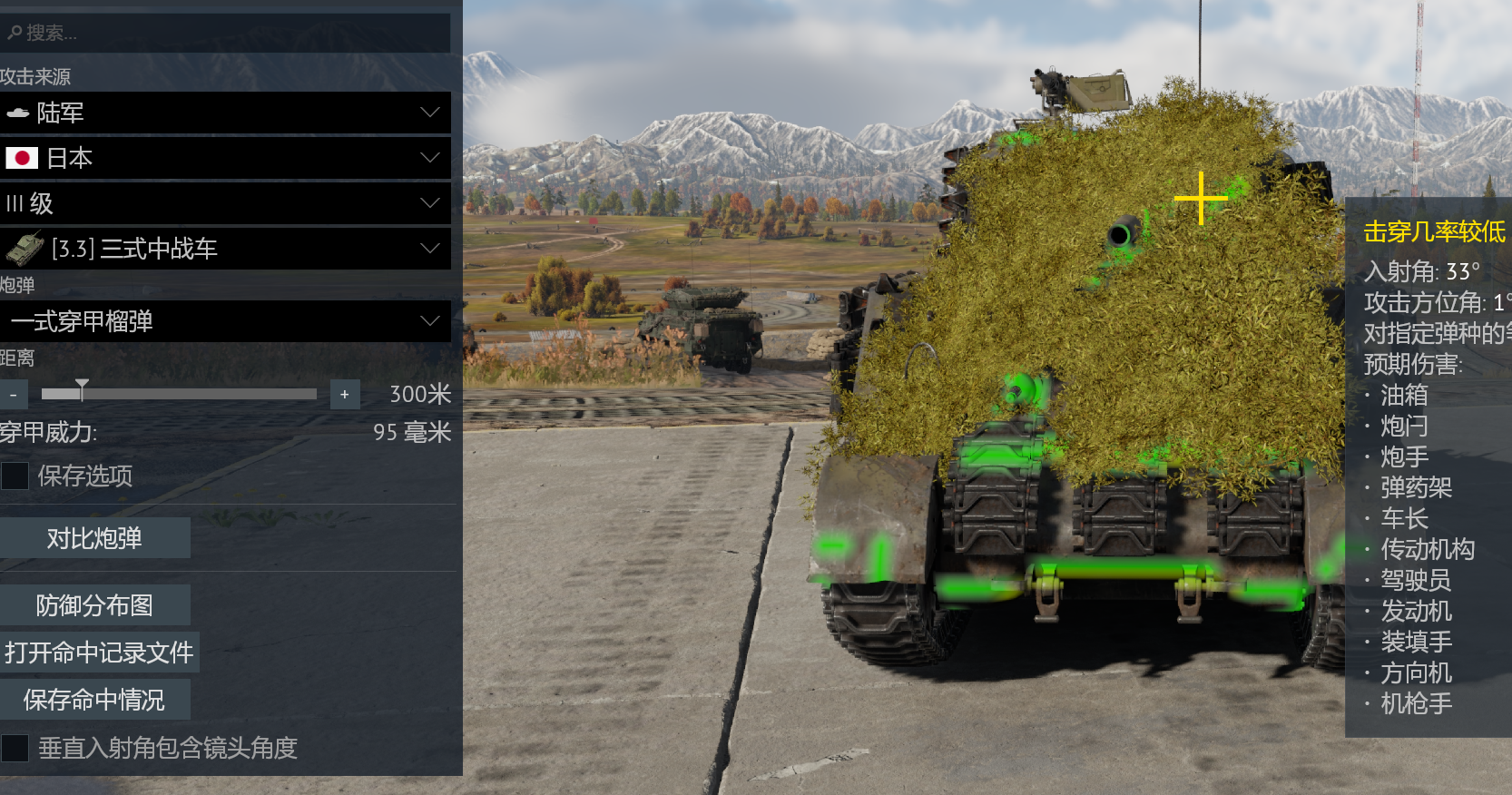
As shown in the picture, these are the penetration zones of the Type 3 Chi-Nu’s shells at a distance of 50 to 100 meters.
Though the green areas are marked as penetrable, those shots only work on flat ground. The Pacific battlefield is full of hills and slopes, which greatly increases the effective armor thickness in actual encounters.
It is unreliable for the Type 3 Chi-Nu to penetrate the Sherman’s frontal armor in regular combat, and flanking ambushes are equally difficult. The maps are quite confined, so flanking attempts will easily end in destruction from Bazooka fire and explosive charges.
I recall this vehicle’s BR adjustment was once widely approved in proposals, yet it seems to have been forgotten over time. After replaying with it, I find it performs no better than a standard 75mm armed Panzer III, and fighting against Shermans is an outright struggle.
- Stay at the current BR3
- Lower its battle ratingBR2
I hope its battle rating can be lowered soon, reworked to be comparable to the long-barreled BR 3 Panzer III N Stalingrad variant. Everyone keeps saying Japanese vehicles are underpowered, so let’s cast a vote for this adjustment.
Let me further elaborate on how hopeless the armor of Japanese tanks appears from the perspective of the IS-2. This is what true hull-down positioning looks like—it renders them nearly invulnerable.
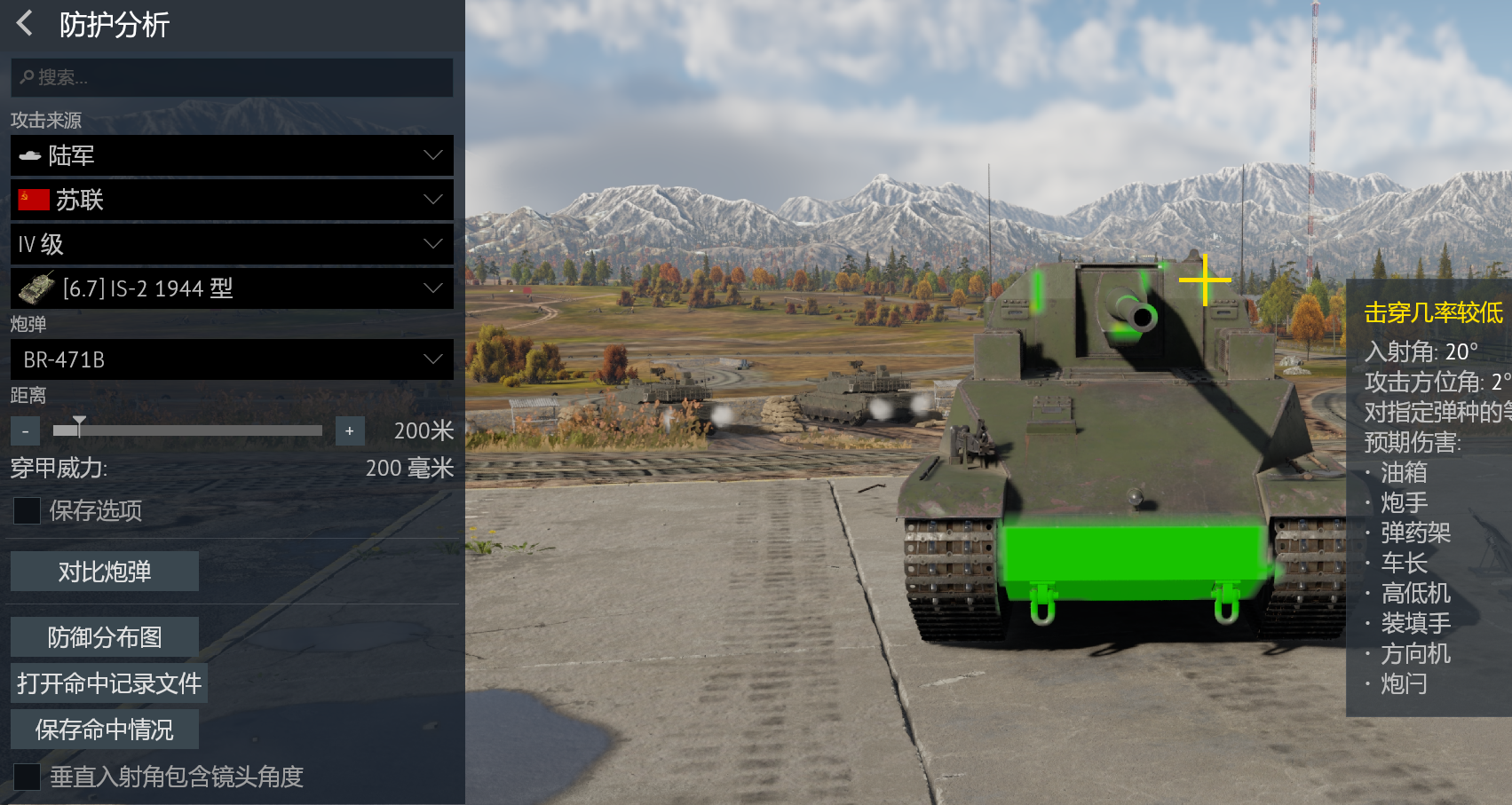
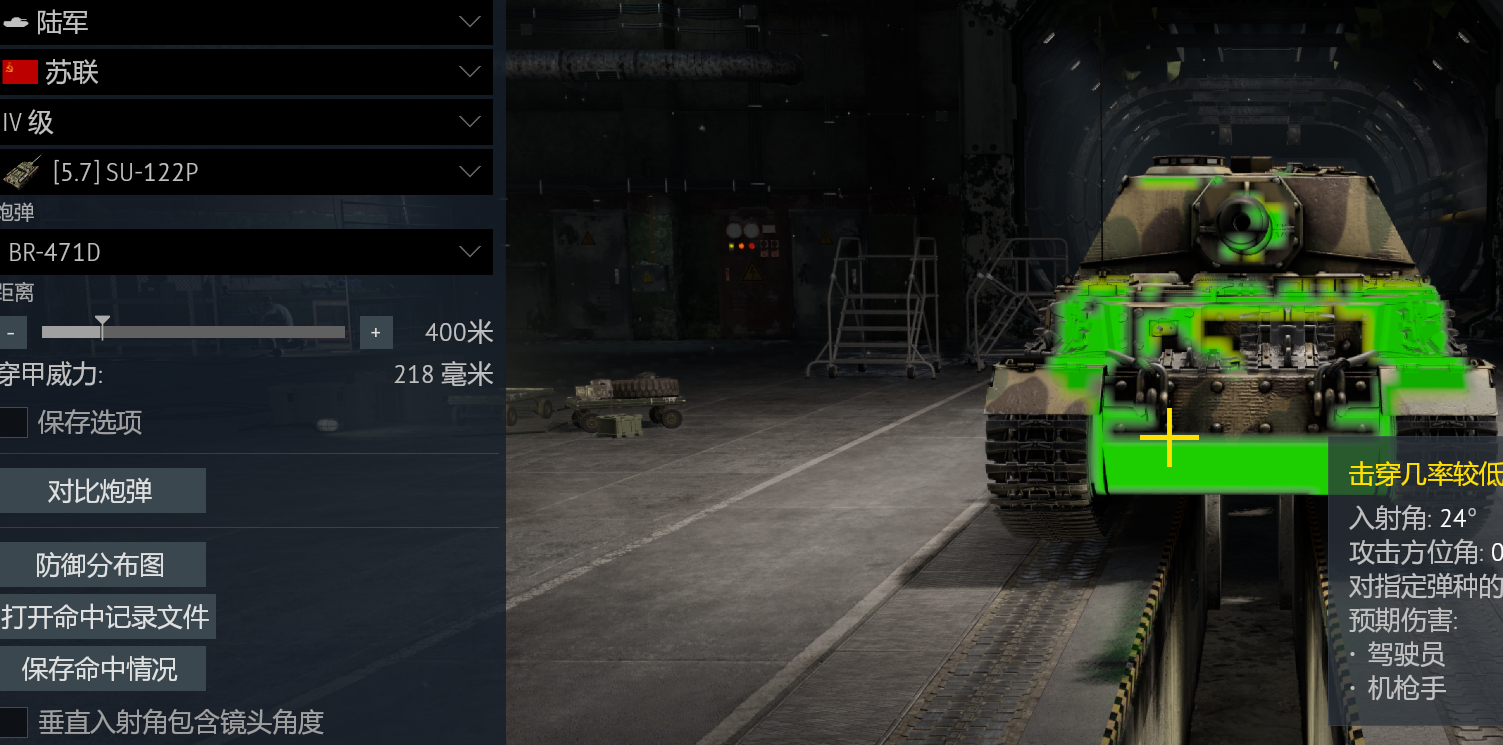
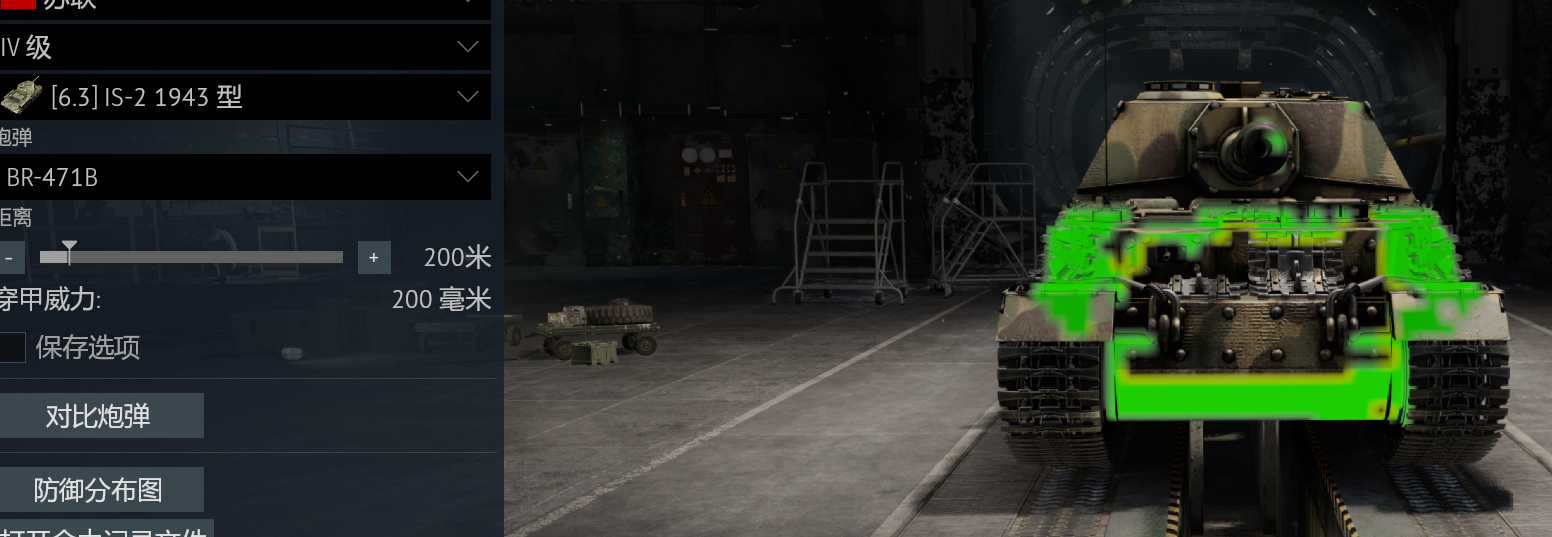

Additionally, the Chi-Ri IIsits at BR 7.3 in War Thunder. To put that in perspective, it is balanced alongside vehicles like the IS-3 and IS-6. I would never dare to expose my tank to take a hit from its cannon. Even the Super Jumbo can only damage its hull on Pacific maps. American air support is the only effective counter to it.
Coincidentally, the Soviet army does not rely on air power. To make matters worse, ground forces lack access to vehicles like the 44-100 and IS-3 right now. What are players of the Soviet ground tree supposed to do? D-series shells are barely effective either.
The IS-2 in War Thunder truly gets the short end of the stick. BVD equipped it with D-shells boasting 203mm vertical penetration, yet their angled penetration falls behind B-shells. Even with this flawed loadout, the IS-2 still has to face Ferdinand tank destroyers and Tiger heavy tanks. What an utterly miserable matchup.
In my opinion, this balance logic is just as ridiculous as claiming the T-34-57 is equal in strength to the Tiger and Panther just because it can penetrate their armor. I am frustrated with BVD’s balancing choices. The 5.7 Soviet lineup has put me through endless hardships. The recent buffs to Russian vehicles have only made other players hold more resentment towards the Soviet faction.
- Target the fighting compartment with over 200mm effective armor for an instant knockout blow.
- Shoot the driver’s compartment to gradually take out the entire crew with successive shots.
- There is no viable counter, you can only wait for airstrikes.
- Or hold out until the arrival of the 44-100 and IS-3.
That covers all my carefully compiled thoughts for now. I’ve analyzed Soviet, German and Japanese vehicles to prove I’m not biased toward the Soviet faction.
I sincerely hope everyone can take the time to read my content and cast your vote. Thank you so much. I spent the whole night finishing this write-up. The sky is already bright now, I need to get some sleep right away to avoid burning myself out.
As for British vehicles, I hope the Cromwell won’t share the same battle rating as the 105mm Sherman, since the 105mm variant is far more essential in combat.
- Separate, different squads
- Do not separate