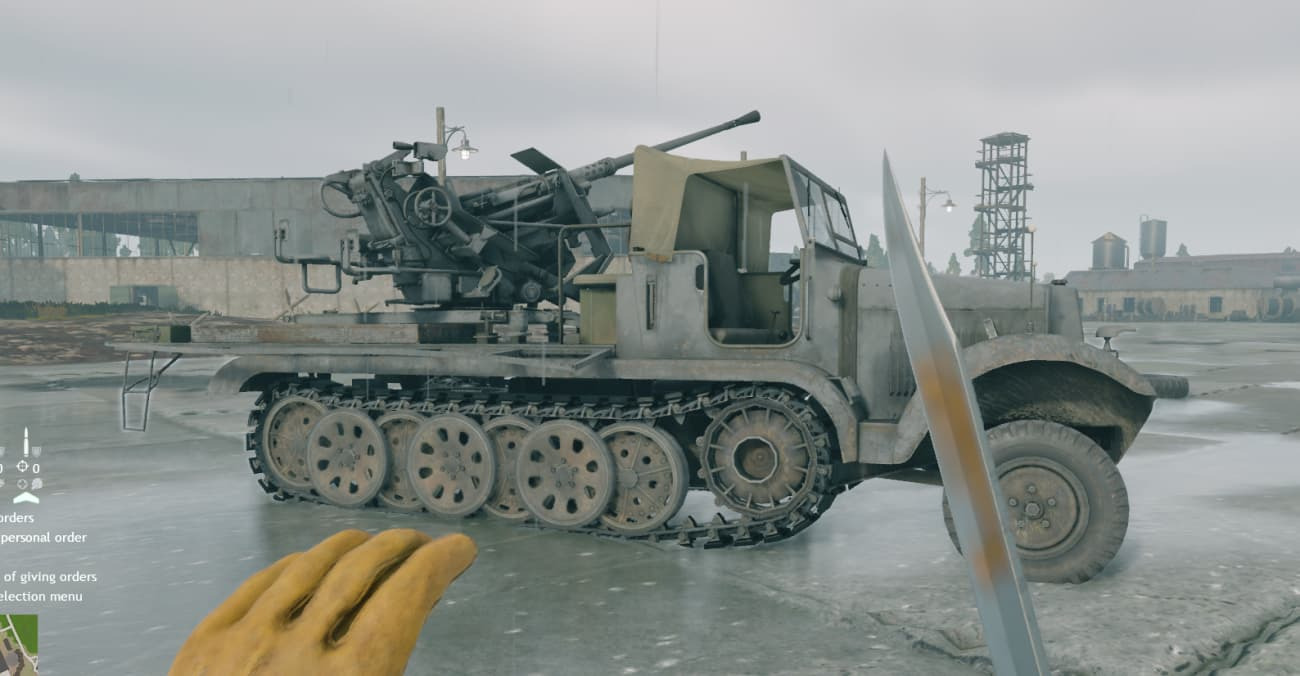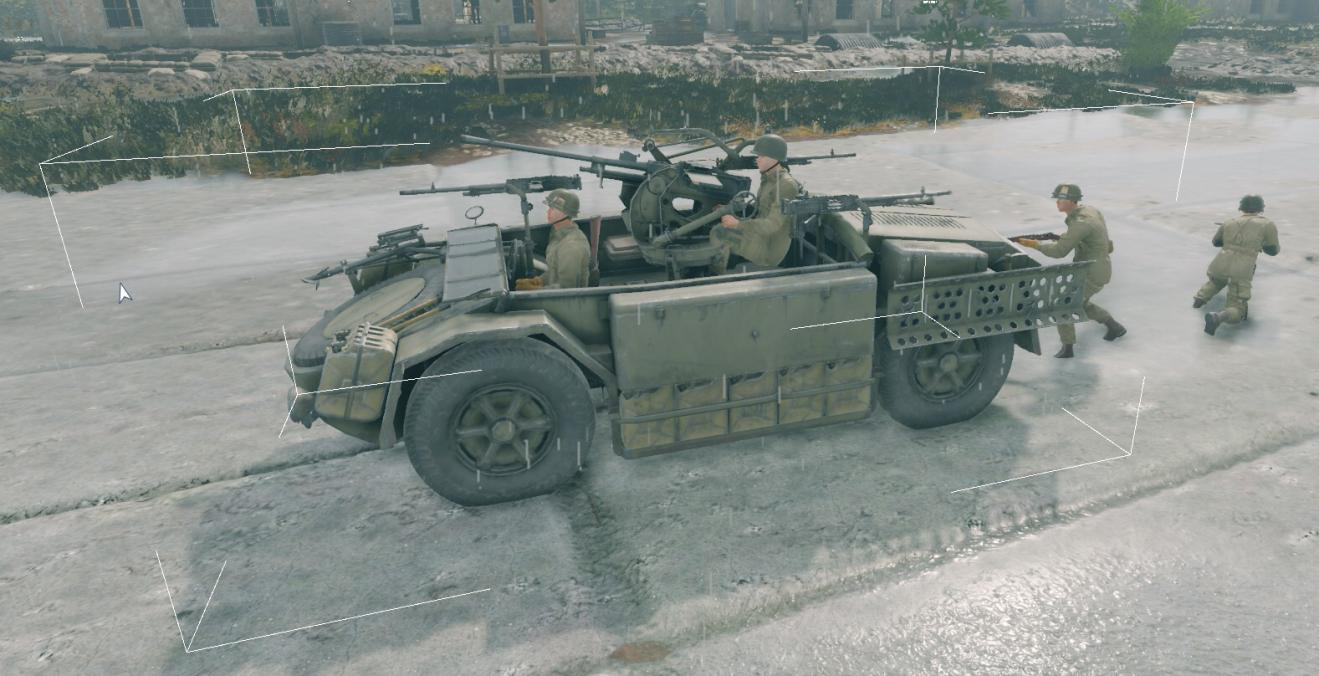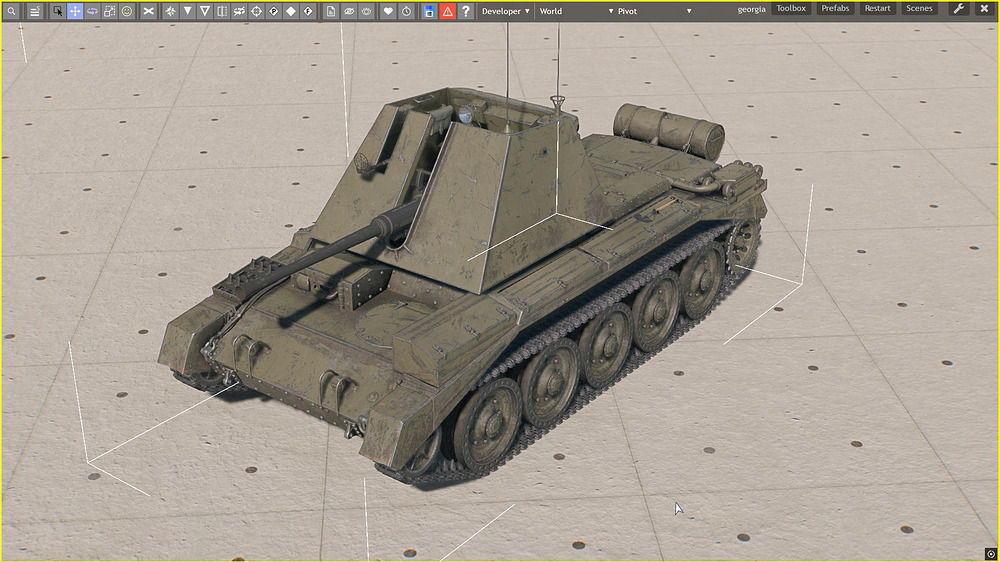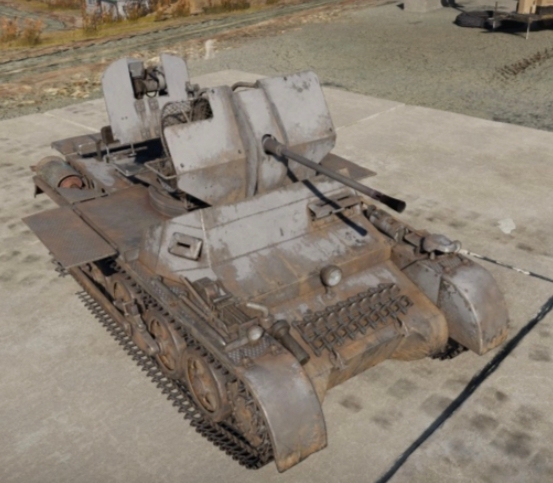
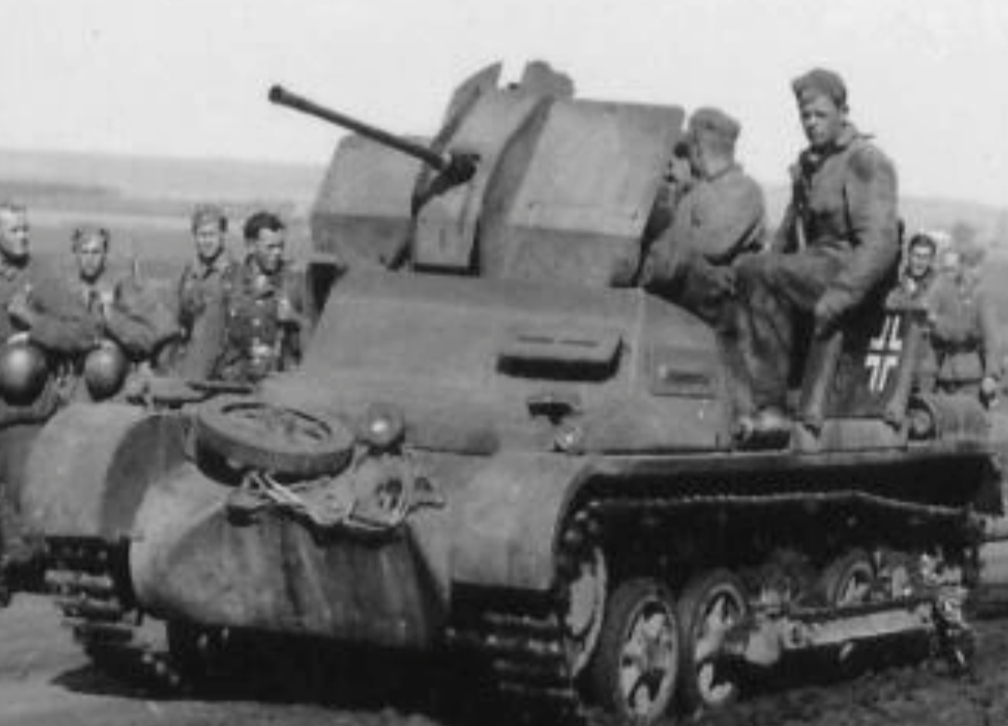
FLAKPANZER 1
DESCRIPTION
Flakpanzer I (2 cm FlaK 38 auf Pz.Kpfw. I Ausf. A) — a German self-propelled anti-aircraft gun based on the Pz.Kpfw. I Ausf. A chassis. It was created in 1941 by converting standard tanks, whose turrets and most of the turret box were removed, and replaced with a platform carrying an openly mounted 20 mm FlaK 38 anti-aircraft gun. A total of 26 SPAA vehicles of this type were manufactured by the company “Alkett” in the same year, and were subsequently used on the Eastern Front until 1943. Due to the extreme wear of the chassis, originally produced in 1935–1936, these SPAAs spent most of their service life undergoing repairs.
SPECIFICATIONS
Crew: 2 men
Armor protection: (front / side / rear)
hull: 13 / 13 / 13 mm
gun shield: 8 / 8 / 8 mm
Maximum speed:
forward: 37 km/h
reverse: 4 km/h
Power-to-weight ratio: 10.4 hp/t
Engine power: 57 hp
Weight: 5.5 t
Armament: 20 mm FlaK 38 automatic cannon
Ammunition: 320 rounds
Magazine size: 20 rounds
Reload time: 2–3 seconds
Operational range: 145 km
Height: 2.25 m
Length: 4.42 m
Width: 2.06 m
Spoiler
I know this is an event vehicle, but it should be in the tech tree from the start.
https://forum-ru.enlisted.net/t/flakpanzer-1-i-gaz-mm-72-k-dolzhny-byt-v-prokachke/170021�
Here I suggested bringing it back to the tech tree.
SHOULD IT BE RETURNED? (But to the tech tree)
- YES
- NO
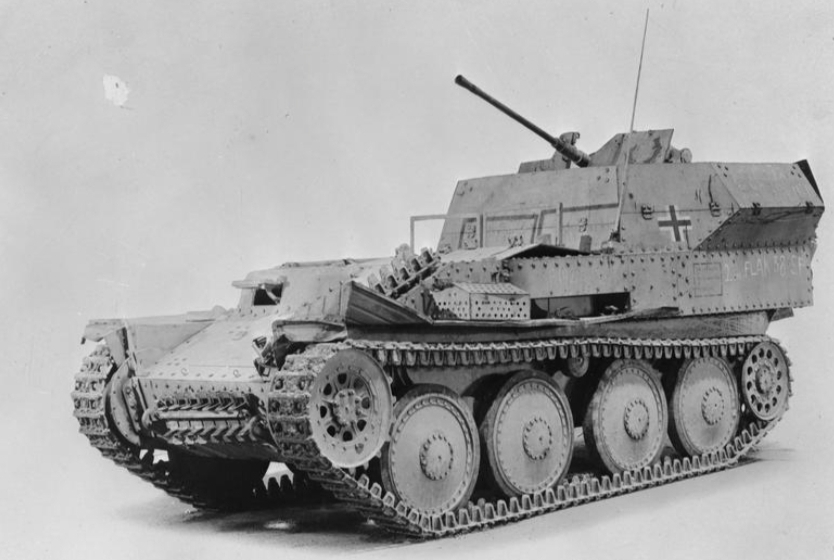
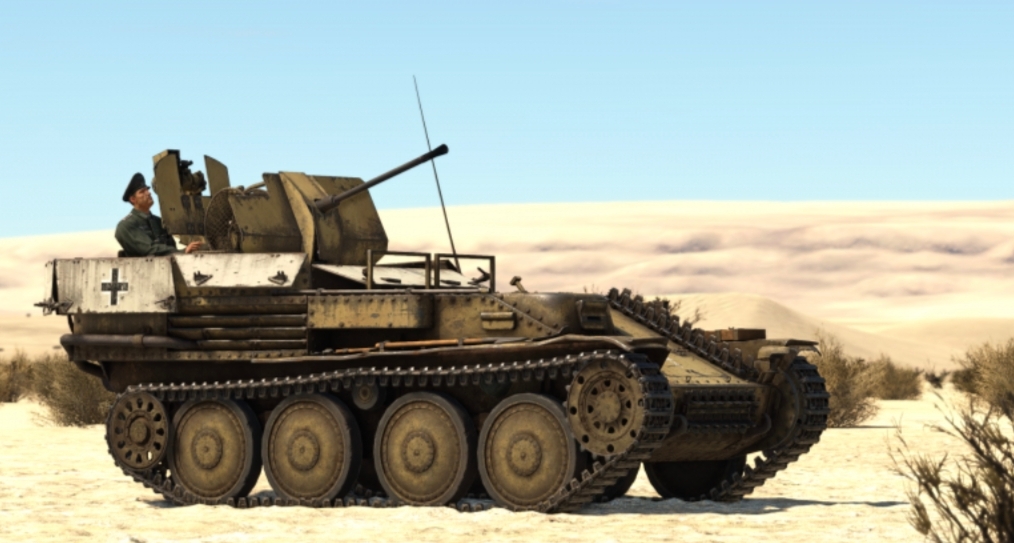
FLAKPANZER 38 (T)
DESCRIPTION
Flakpanzer 38 (also known as Sd.Kfz. 140) — a German self-propelled anti-aircraft gun of the Second World War, created on the basis of the Czechoslovak Pz.38(t) tank. By 1942, when it became clear that the 38(t) tanks had no future on the Eastern Front due to their weak main gun, which could not be effectively upgraded, the military leadership decided to establish the production of various specialized vehicles based on this model. Since the chassis was highly reliable, the company ČKD launched the production of several different self-propelled artillery and anti-aircraft vehicles based on the Pz.38(t), including an SPAA armed with a 20 mm FlaK 38 automatic cannon under the designation Flakpanzer 38. A total of 141 Flakpanzer 38 vehicles were built in 1943–1944 and were used by the Wehrmacht during the Second World War to combat low-flying Allied aircraft.
SPECIFICATIONS
Armor protection: (front / side / rear) hull: 20 / 15 / 10 mm turret: 7 / 0 / 0 mm
Maximum speed:
forward: 42 km/h
reverse: 6 km/h
Power-to-weight ratio: 15 hp/t
Engine power: 150 hp
Weight: 9.8 t
Armament: 20 mm FlaK 38 automatic cannon Ammunition: 1080 rounds
Magazine size: 20 rounds
Reload time: 3 seconds
Operational range: 210 km
Height: 2.25 m
Length: 4.61 m
Width: 2.15 m
Gun angles:
horizontal: 360°
vertical: −5° / +90°
WOULD YOU LIKE TO SEE IT IN THE GAME?
-
YES
-
NO
AS A
-
TECH TREE VEHICLE
-
EVENT VEHICLE
-
EVENT SQUAD
-
PREMIUM SQUAD
-
PREMIUM VEHICLE
AT BR
-
I
-
II
-
III
-
IV
-
V
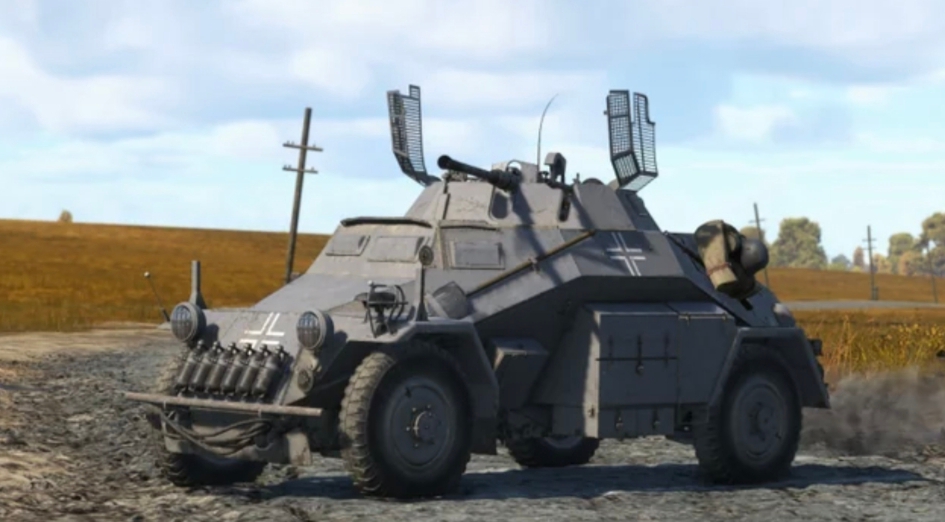
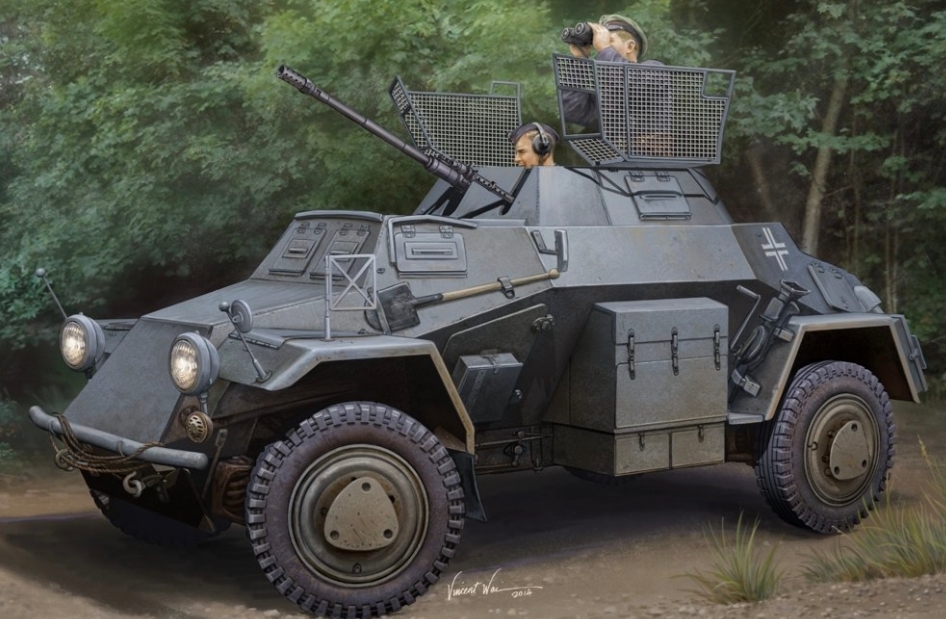
SD.KFZ.222
DESCRIPTION
Sonderkraftfahrzeug 222 or Sd.Kfz.222 is a German light reconnaissance armored car designed in 1935 by order of the Ministry of Armaments as an improved version of the previous armored car — the Sd.Kfz.221. Unlike its predecessor, the Sd.Kfz.222, in addition to a redesigned hull, received a 20 mm automatic cannon. Both the Sd.Kfz.221 and Sd.Kfz.222 were actively used in all military campaigns of the Third Reich as reconnaissance and command vehicles, and they performed most successfully during the early years of the Second World War, when combat operations were conducted mainly in areas densely covered by a road network. Later, the Sd.Kfz.222 lost its relevance due to increasingly inadequate armor protection and poor off-road mobility; nevertheless, the vehicle remained in service with Wehrmacht units until Germany’s surrender and was used both for its primary reconnaissance role and for supporting advancing infantry, providing anti-aircraft barrage fire, police operations, and so on. A total of 994 Sd.Kfz.222 vehicles were produced.
SPECIFICATIONS
Crew: 3 men
Armor protection: (front / side / rear)
hull: 30 / 8 / 8 mm
turret: 14 / 8 / 8 mm
Maximum speed:
forward: 90 km/h
reverse: 15 km/h
Power-to-weight ratio: 18 hp/t
Engine power: 90 hp
Weight: 5.0 t
Armament: 20 mm KwK 38 automatic cannon
Coaxial armament: 7.92 mm MG 34 machine gun
Ammunition:
20 mm cannon — 180 rounds
MG 34 — 1050 rounds
Magazine size: 10 rounds
Reload time: 2–3 seconds
Range: 300 km
Height: 2.0 m
Length: 4.8 m
Width: 1.95 m
Gun angles:
horizontal: 360°
vertical: −7° / +80°
Spoiler
Not exactly an anti-aircraft vehicle, but it can perform that role.
WOULD YOU LIKE TO SEE IT IN THE GAME?
-
YES
-
NO
AS A
-
TECH TREE VEHICLE
-
EVENT VEHICLE
-
EVENT SQUAD
-
PREMIUM SQUAD
-
PREMIUM VEHICLE
AT BR
-
I
-
II
-
III
-
IV
-
V
AS 42
DESCRIPTION
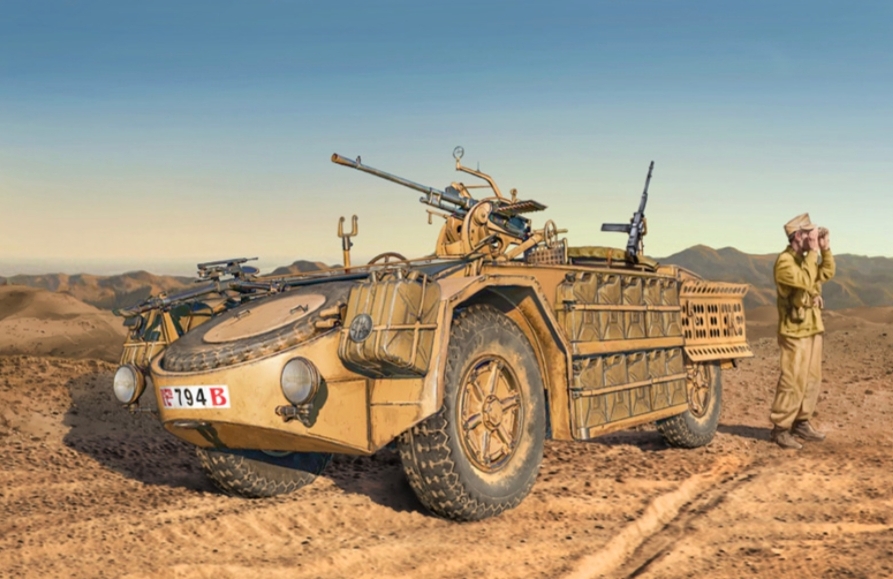
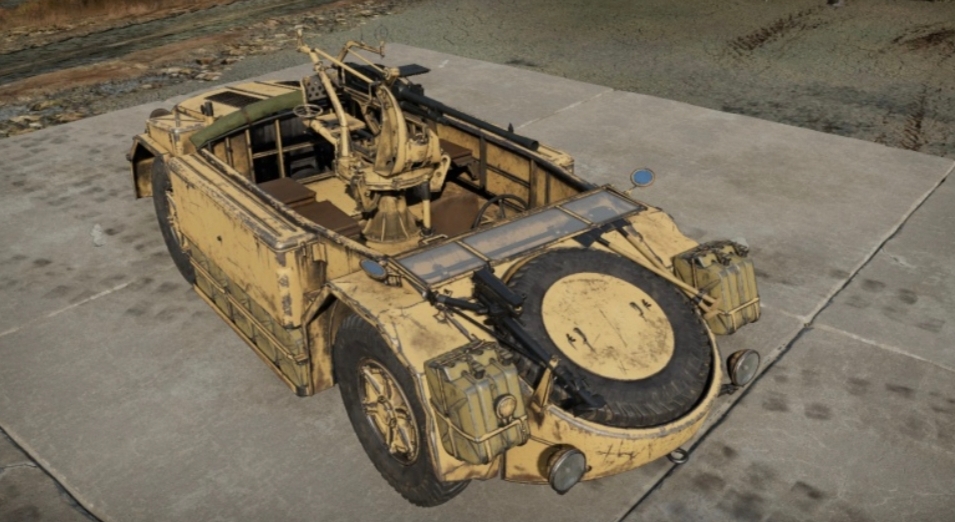
The AS.42 “Sahariana” was an Italian reconnaissance combat vehicle of the Second World War, developed by SPA-Viberti for the Italian North African Corps. It was based on the popular AB 41 armored car, which itself was built on the TM40 artillery tractor chassis. The vehicle entered service in 1942, and at least 100 units were produced. Depending on its mission, the vehicle could be equipped with various armament options: a 20 mm Breda Mod.35 cannon, a 20 mm anti-tank rifle, a 47 mm gun, or standard machine guns.
SPECIFICATIONS
Crew: 2 men
Armor protection: (front / side / rear)
hull: 0 / 0 / 0 mm
Maximum speed:
forward: 84 km/h
reverse: 15 km/h
Power-to-weight ratio: 18.3 hp/t
Engine power: 110 hp
Weight: 5.6 t
Armament: 20 mm Breda Mod. 35 automatic cannon
Additional armament: 8 mm Breda 38 machine gun
Ammunition:
20 mm cannon — 1200 rounds
8 mm machine gun — 840 rounds
Magazine size (cannon): 12 rounds
Magazine size (machine gun): 24 rounds
Reload time: 3–4 seconds
Range: 1400 km
Height: 1.75 m
Length: 5.62 m
Width: 2.20 m
Gun angles:
horizontal: 360°
vertical: −10° / +65°
WOULD YOU LIKE TO SEE IT IN THE GAME?
-
YES
-
NO
AS A
-
TECH TREE VEHICLE
-
EVENT VEHICLE
-
EVENT SQUAD
-
PREMIUM SQUAD
-
PREMIUM VEHICLE
AT BR
-
I
-
II
-
III
-
IV
-
V
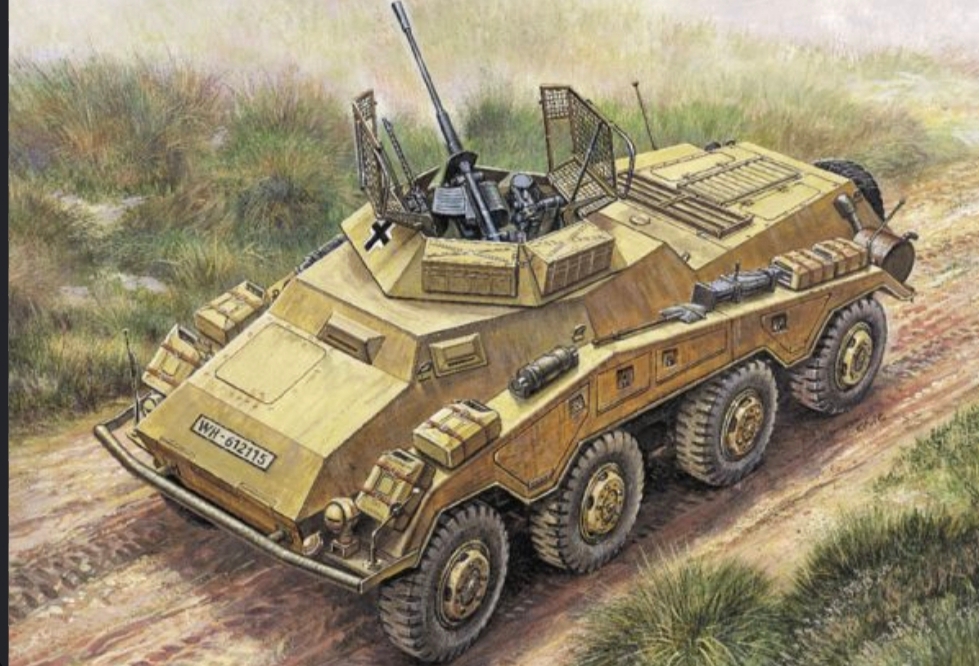
SD.KFZ.234/1
DESCRIPTION
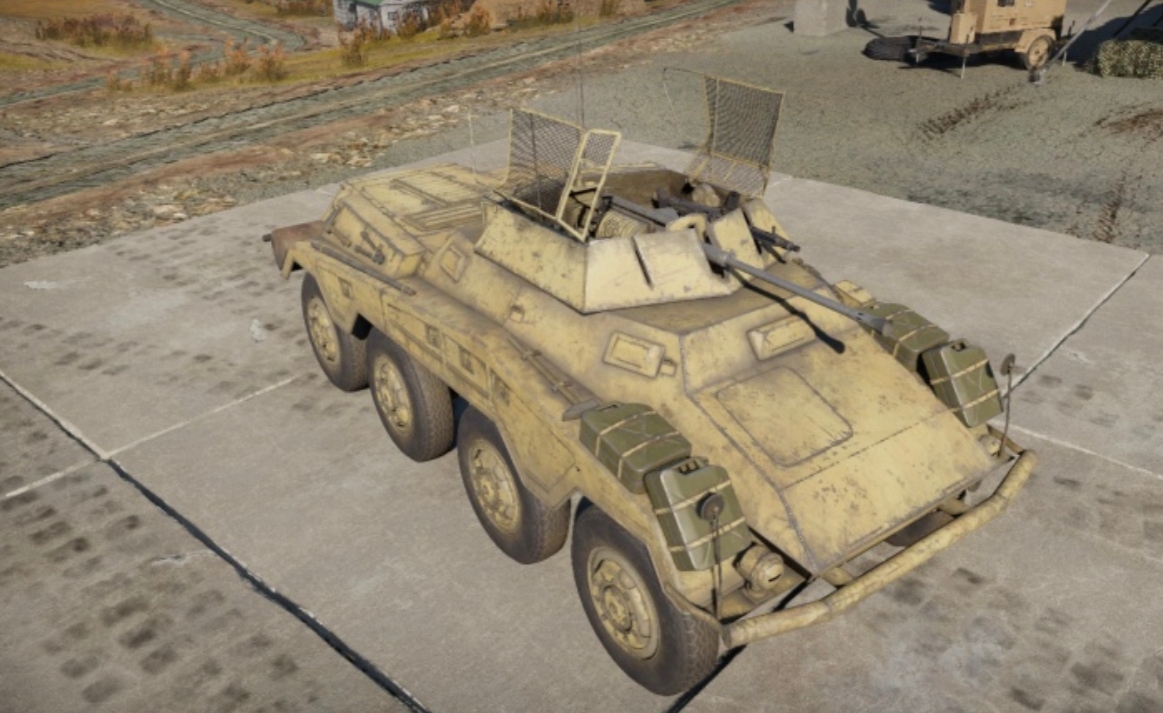
Sd.Kfz.234 (s.Pz.Sp.Wg.) was a German heavy reconnaissance armored car of the Second World War. It was developed by Bussing-NAG in the early 1940s specifically for the German Africa Corps and for reconnaissance operations in the desert conditions of North Africa. However, due to the prolonged development process, it entered mass production only after the surrender of the Africa Corps. Nevertheless, it proved to be a highly effective vehicle in combat operations in Europe. It featured an advanced design for its time, including a self-supporting armored hull, a powerful diesel engine, and four pairs of driven and steerable wheels. From 1944 to 1945, 478 Sd.Kfz.234 armored vehicles were built in four main variants.
SPECIFICATIONS
Crew: 4 men
Armor protection: (front / side / rear)
hull: 30 / 9 / 10 mm
turret: 30 / 14 / 14 mm
Maximum speed:
forward: 90 km/h
reverse: 90 km/h
Power-to-weight ratio: 18.3 hp/t
Engine power: 210 hp
Weight: 11.5 t
Armament: 20 mm KwK 38 automatic cannon
Additional armament: 7.92 mm MG 42 machine gun
Ammunition:
20 mm cannon — 250 rounds
MG 42 — 1800 rounds
Cannon magazine size: 10 rounds
Cannon reload time: 2–3 seconds
Machine gun belt size: 150 rounds
Machine gun reload time: 4–5 seconds
Range: 900 km
Height: 2.10 m
Length: 5.86 m
Width: 2.33 m
Gun angles:
horizontal: 360°
vertical: −4° / +85°
WOULD YOU LIKE TO SEE IT IN THE GAME?
-
YES
-
NO
AS A
-
TECH TREE VEHICLE
-
EVENT VEHICLE
-
EVENT SQUAD
-
PREMIUM SQUAD
-
PREMIUM VEHICLE
AT BR
-
I
-
II
-
III
-
IV
-
V
Sd.Kfz. 140/1
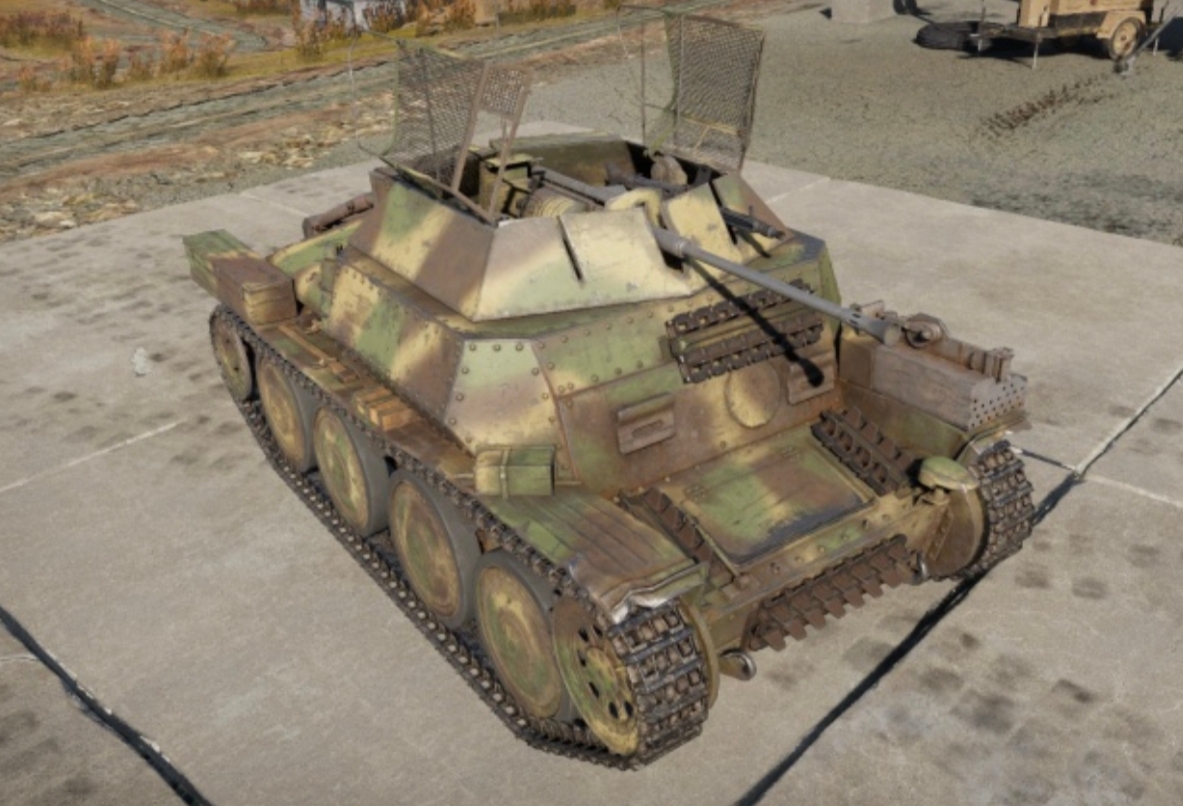
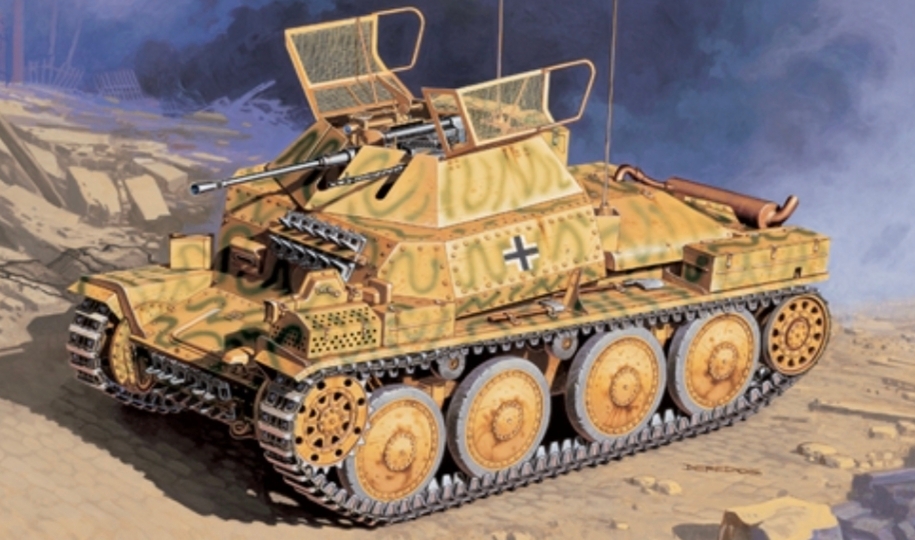
DESCRIPTION
Aufklärungspanzer 38(t), or Sd.Kfz.140/1, was a German light reconnaissance tank developed in 1942–1943 on the basis of the Czech LT vz.38 tank. The vehicle was designed and mass-produced by the Czech company BMM. The chassis of the LT vz.38 light tank was used as the foundation, while the hull was significantly modified to accommodate either a short-barreled 75 mm StuK L/24 gun or a 20 mm 2 cm Hangelafette 38 anti-aircraft gun as the main armament. Ultimately, both variants were accepted into service and entered serial production. The version armed with the 20 mm cannon received the designation Sd.Kfz.140/1, and only 70 such vehicles were built between February and March 1944. These tanks were issued to Wehrmacht reconnaissance units, where they were successfully employed until the end of the war as reconnaissance vehicles and self-propelled anti-aircraft guns.
SPECIFICATIONS
Crew: 4 men
Armor protection: (front / side / rear)
hull: 50 / 30 / 30 mm
turret: 30 / 14 / 14 mm
Maximum speed:
forward: 58 km/h
reverse: 6 km/h
Power-to-weight ratio: 13.6 hp/t
Engine power: 150 hp
Weight: 11 t
Armament: 20 mm KwK 38 automatic cannon
Additional armament: 7.92 mm MG 42 machine gun
Ammunition:
20 mm cannon — 300 rounds
MG 42 — 1800 rounds
Cannon magazine size: 10 rounds
Cannon reload time: 2–3 seconds
Machine gun belt size: 50 rounds
Machine gun reload time: 4–5 seconds
Range: 240 km
Height: 2.10 m
Length: 4.64 m
Width: 2.13 m
Gun angles:
horizontal: 360°
vertical: −5° / +70°
WOULD YOU LIKE TO SEE IT IN THE GAME?
-
YES
-
NO
AS A
-
TECH TREE VEHICLE
-
EVENT VEHICLE
-
EVENT SQUAD
-
PREMIUM SQUAD
-
PREMIUM VEHICLE
AT BR
-
I
-
II
-
III
-
IV
-
V
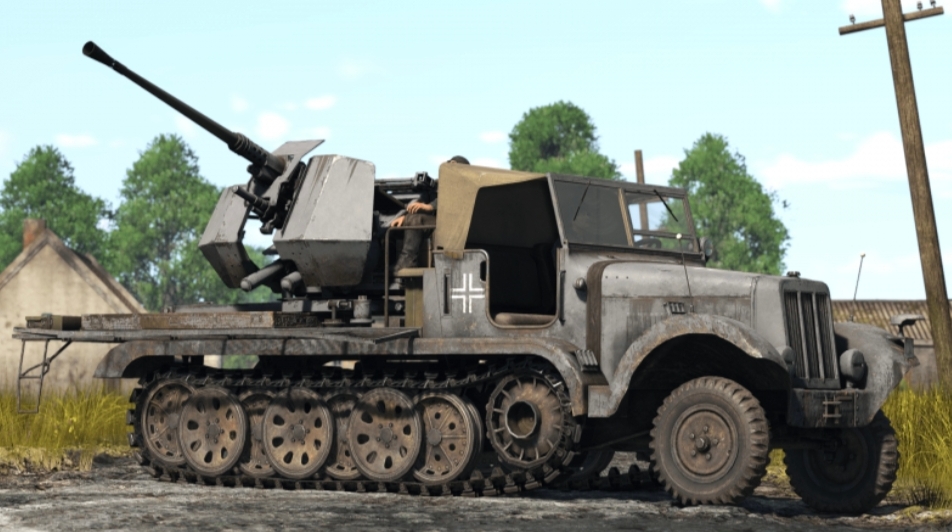
SD.KFZ. 6/2
DESCRIPTION
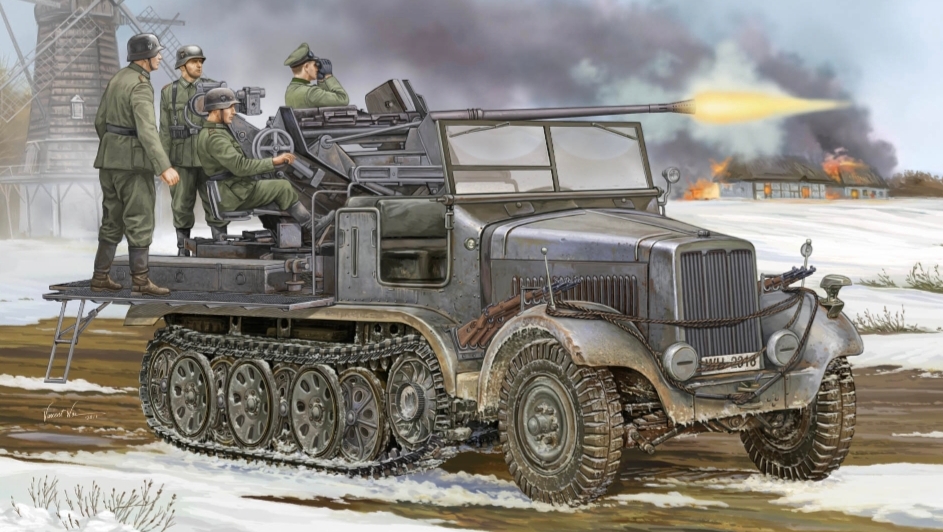
3.7 cm Flak 36 auf Selbstfahrlafette, or simply Sd.Kfz. 6/2, was a self-propelled anti-aircraft gun based on the Sd.Kfz. 6 half-track tractor and armed with the 3.7 cm FlaK 36 L/98 anti-aircraft gun. This SPAAG was developed to counter Allied and Soviet aircraft and to protect Luftwaffe airfields from air attacks. Since the anti-aircraft gun occupied the vehicle’s cargo platform, a single-axle trailer was attached for carrying ammunition. Early production vehicles lacked a gun shield, which was added in later production variants. Most Sd.Kfz. 6/2 vehicles were assigned to Luftwaffe air defense units, although some also served with Wehrmacht and SS formations. The Sd.Kfz. 6/2 was first tested on the Eastern Front in 1941 and was later used in all major theaters of war. It was produced by Bussing-NAG, Daimler-Benz, Böhmisch-Mährischen Maschinenfabrik, and Praga from 1941 to 1943, with a total of 339 Sd.Kfz. 6/2 vehicles built.
SPECIFICATIONS
Crew: 4 men
Armor protection: (front / side / rear)
hull: 0 / 0 / 0 mm
gun shield: 7 / 0 / 0 mm
Maximum speed:
forward: 50 km/h
reverse: 9 km/h
Power-to-weight ratio: 12.5 hp/t
Engine power: 130 hp
Weight: 10.4 t
Armament: 37 mm FlaK 36 automatic anti-aircraft gun
Ammunition: 318 rounds
Clip size: 6 rounds
Reload time: 4–5 seconds
Range: 300 km
Height: 2.65 m
Length: 6.35 m
Width: 2.26 m
Gun angles:
horizontal: 360°
vertical: −8° / +85°
Rate of fire: up to 180 rounds/minute
WOULD YOU LIKE TO SEE IT IN THE GAME?
-
YES
-
NO
AS A
-
TECH TREE VEHICLE
-
EVENT VEHICLE
-
EVENT SQUAD
-
PREMIUM SQUAD
-
PREMIUM VEHICLE
AT BR
-
I
-
II
-
III
-
IV
-
V
SD.KFZ.251/21
DESCRIPTION
Sd.Kfz.251 was a German armored personnel carrier of the Second World War. It was developed by Hanomag in the mid-1930s. Originally, the vehicle was intended to transport troops across the battlefield under armored protection, but over time the Sd.Kfz.251 found a wide variety of combat roles. It was produced by Hanomag, Adlerwerke, Horch, Hermann-Göring-Werke, and Borgward from June 1939 to March 1945. During this period, approximately 15,600 Sd.Kfz.251 vehicles were built in four major variants and 23 different subtypes.
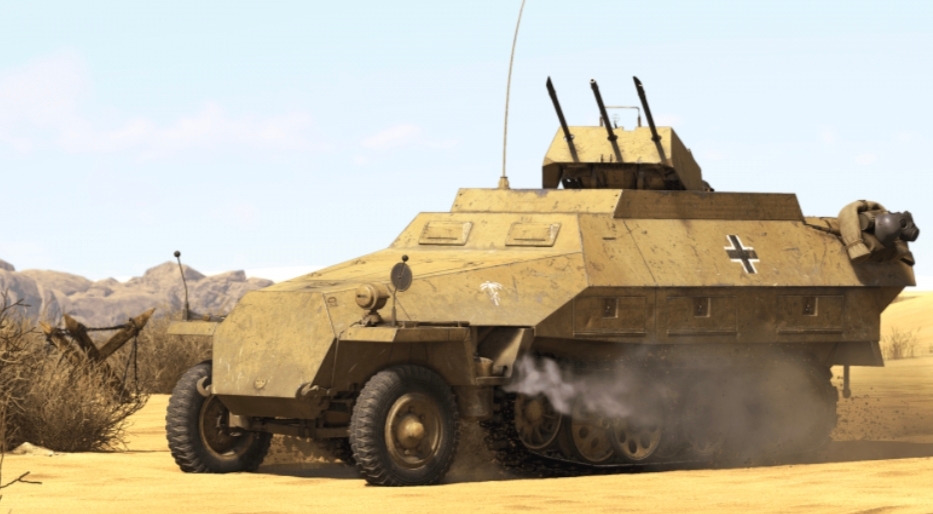
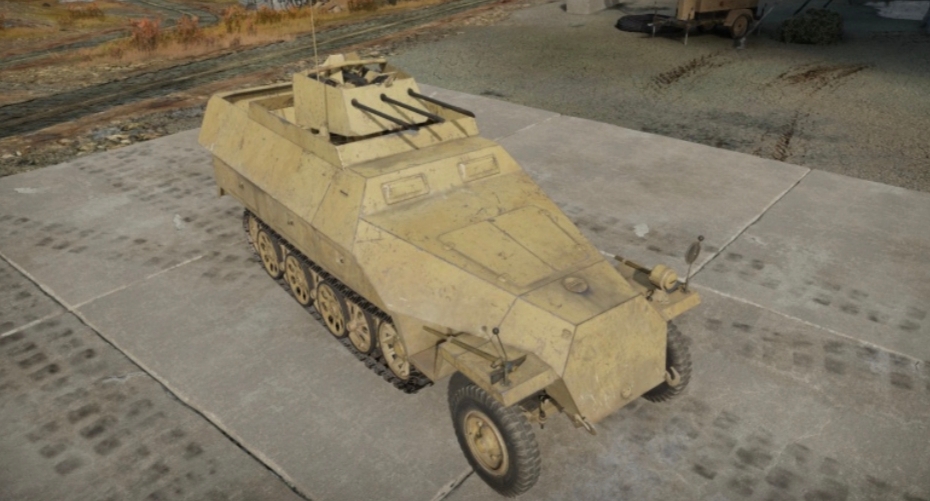
Sd.Kfz.251/21 was the anti-aircraft variant of the Sd.Kfz.251 armored personnel carrier. A triple mount of 15 mm MG 151/15 aircraft machine guns was installed in the vehicle’s fighting compartment. The mount could rotate 360 degrees and had excellent vertical aiming angles. Later production versions featured a U-shaped armored shield protecting the gunner. It was produced from 1944 to 1945, and a total of 387 units of this SPAAG were built during that period.
SPECIFICATIONS
Crew: 4 men
Armor protection: (front / side / rear)
hull: 14 / 8 / 8 mm
turret: 14 / 14 / 0 mm
Maximum speed:
forward: 52 km/h
reverse: 11 km/h
Power-to-weight ratio: 12.5 hp/t
Engine power: 100 hp
Weight: 8 t
Armament: 3 × 15 mm MG 151/15 automatic cannons
Ammunition:
15 mm — 3000 rounds
Belt size: 250 rounds per barrel (the center gun had a 500-round belt)
Reload time: 14–18 seconds
Range: 300 km
Height: 2.20 m
Length: 5.98 m
Width: 2.10 m
Gun angles:
horizontal: 360°
vertical: −10° / +90°
Rate of fire:
700–750 rounds/minute per barrel
combined — up to 2250 rounds/minute
WOULD YOU LIKE TO SEE IT IN THE GAME?
-
YES
-
NO
AS A
-
TECH TREE VEHICLE
-
EVENT VEHICLE
-
EVENT SQUAD
-
PREMIUM SQUAD
-
PREMIUM VEHICLE
AT BR
-
I
-
II
-
III
-
IV
-
V
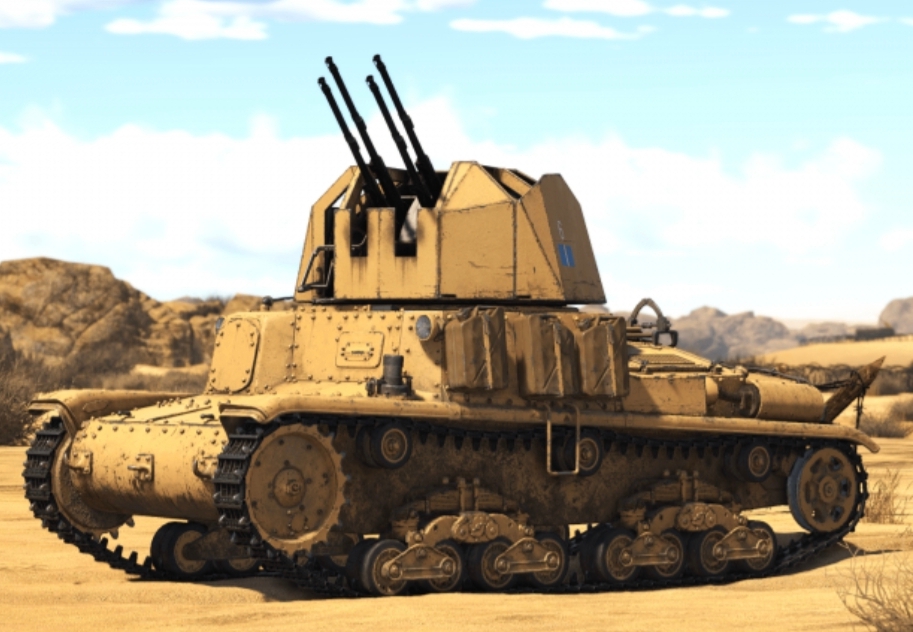
M42 CONTRAEREO
DESCRIPTION
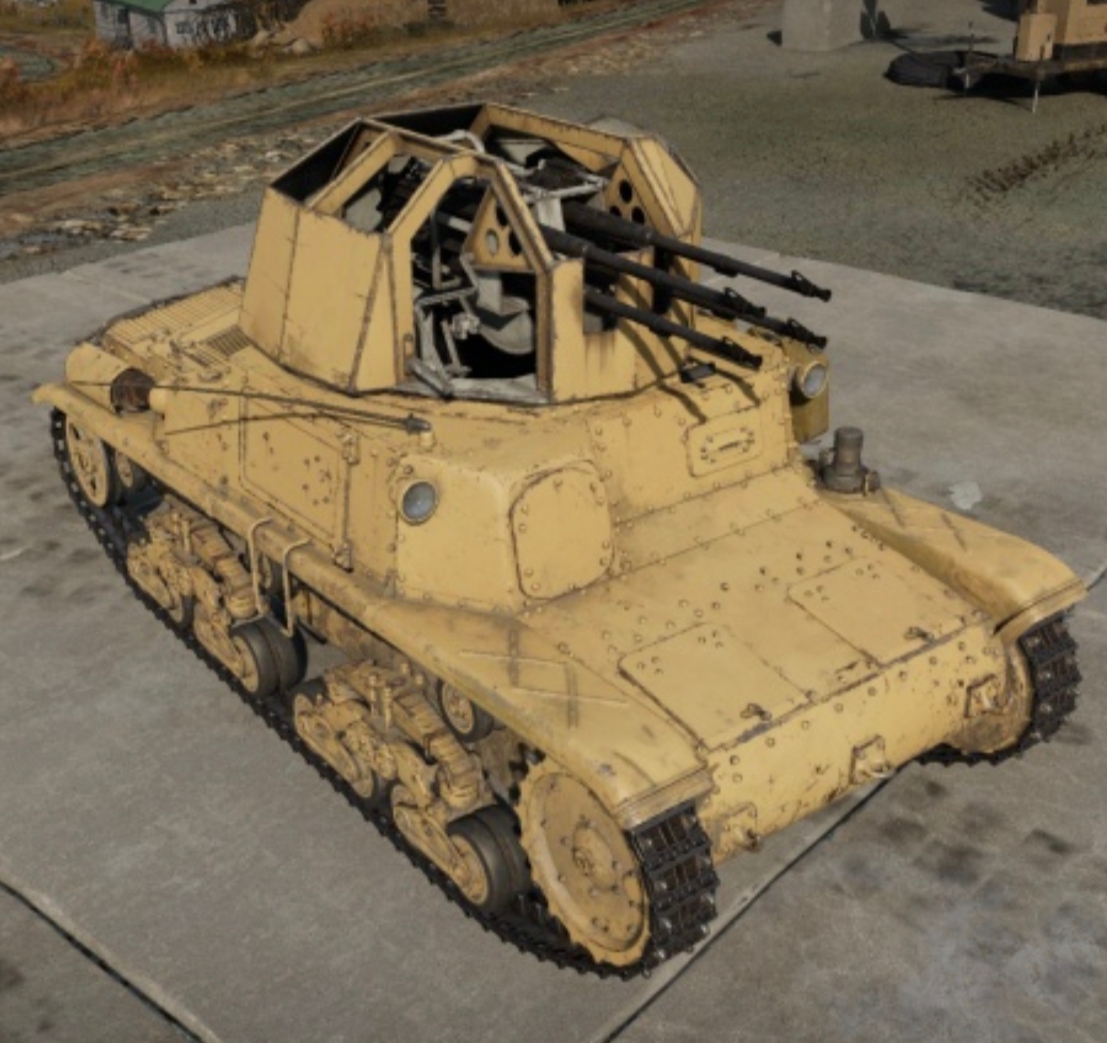
Semovente M42 Contraereo was an Italian self-propelled anti-aircraft gun of the Second World War. Development of this SPAAG began in 1942 by engineers of the Ansaldo company in response to the Italian Army’s need for protection against enemy aircraft in the North African theater of operations. The vehicle was based on the hull of the Carro Armato M15/42 medium tank and fitted with a welded polygonal turret armed with four Scotti Isotta Fraschini 20/70 mod.41 20 mm autocannons. Although testing in early 1943 proved successful, mass production was never started due to Italy’s withdrawal from the war. The only prototype, captured by the Wehrmacht, continued to see combat service until the surrender of the Third Reich.
SPECIFICATIONS
Crew: 3 men
Armor protection: (front / side / rear)
hull: 30 / 25 / 25 mm
turret: 15 / 15 / 15 mm
Maximum speed:
forward: 38 km/h
reverse: 3 km/h
Power-to-weight ratio: 11.9 hp/t
Engine power: 185 hp
Weight: 15.5 t
Armament: 4 × 20 mm Scotti-IF 20/70 mod.41 automatic cannons
Ammunition: 640 rounds
Belt size: 160 rounds per barrel
Reload time: not required during firing (belt-fed)
Range: 200 km
Height: 2.3 m
Length: 5.0 m
Width: 2.3 m
Gun angles:
horizontal: 360°
vertical: −5° / +90°
Rate of fire: 600 rounds/minute per barrel
combined — up to 2400 rounds/minute
WOULD YOU LIKE TO SEE IT IN THE GAME?
-
YES
-
NO
AS A
-
TECH TREE VEHICLE
-
EVENT VEHICLE
-
EVENT SQUAD
-
PREMIUM SQUAD
-
PREMIUM VEHICLE
AT BR
-
I
-
II
-
III
-
IV
-
V
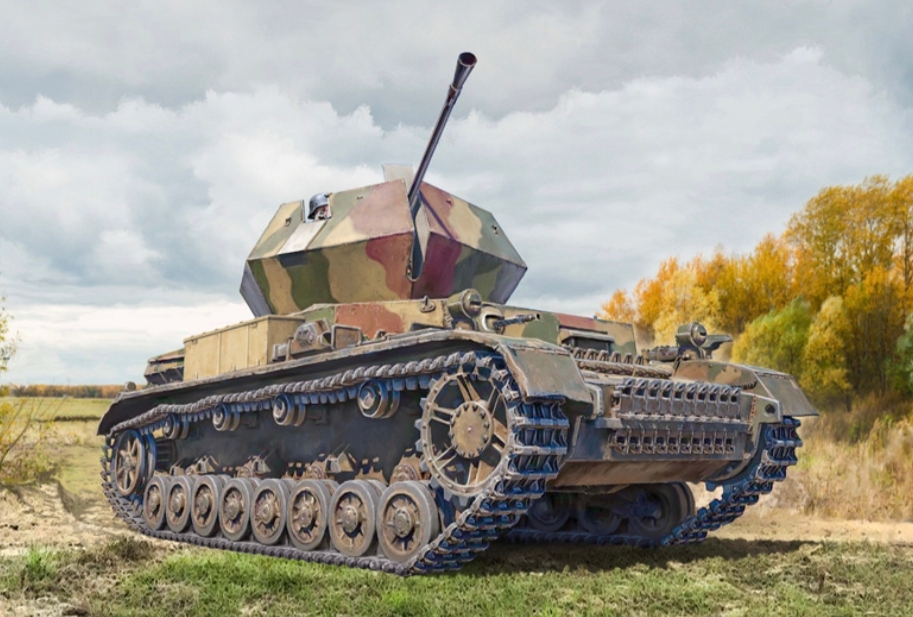
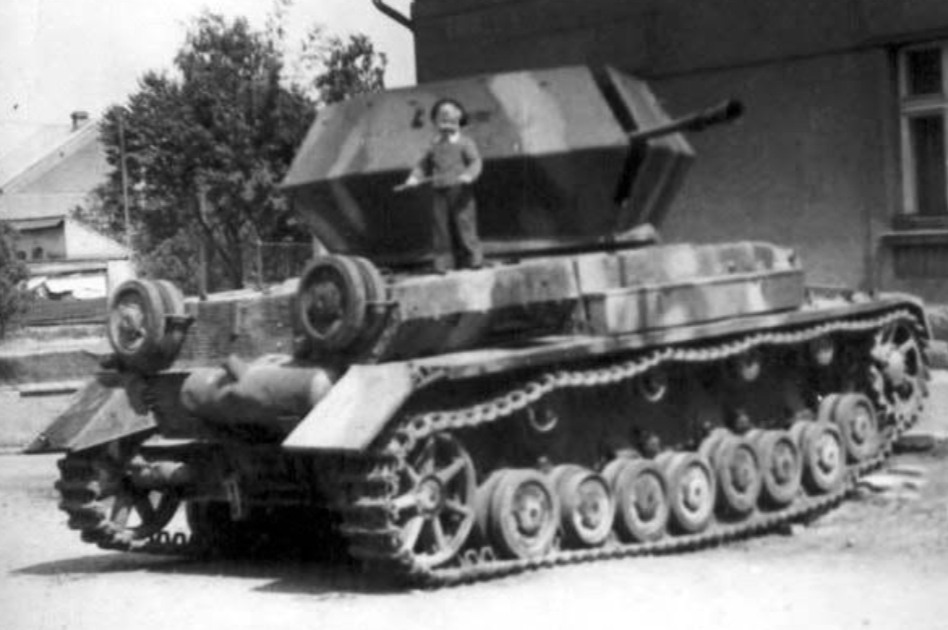
OSTWIND
DESCRIPTION
Ostwind (German for “East Wind”) was a German self-propelled anti-aircraft gun of the Second World War, built on the chassis of the Pz.IV medium tank. It was developed in 1944 as a replacement for the Wirbelwind, which had proven insufficiently effective against armored ground-attack aircraft such as the Il-2 and Il-10. Compared to its predecessor, the Ostwind demonstrated a higher success rate against high-altitude targets, while its 37 mm autocannon was highly effective against attack aircraft. A total of 40 vehicles were produced. This limited production was due to two main factors: the evacuation of industry in the face of the advancing Soviet forces and the German leadership’s view that the vehicle was only a temporary solution until the Kugelblitz entered production. The Ostwind first saw combat during the German Ardennes Offensive, where one vehicle was lost, and it was last used in the defense of Berlin as American and Soviet forces advanced on the city.
SPECIFICATIONS
Crew: 5 men
Armor protection: (front / side / rear)
hull: 80 / 30 / 20 mm
turret: 25 / 25 / 25 mm
Maximum speed:
forward: 39 km/h
reverse: 7 km/h
Power-to-weight ratio: 12 hp/t
Engine power: 300 hp
Weight: 25 t
Armament: 37 mm FlaK 43 automatic anti-aircraft gun
Additional armament: MG 34
Ammunition (cannon): 1000 rounds
Ammunition (machine gun): 1200 rounds
Clip size (cannon): 8 rounds
Belt size (machine gun): 150 rounds
Reload time: 0.2–0.3 seconds
Range: 200 km
Height: 2.8 m
Length: 5.92 m
Width: 2.95 m
Gun angles:
horizontal: 360°
vertical: −10° / +87°
Rate of fire: ~250 rounds/minute
WOULD YOU LIKE TO SEE IT IN THE GAME?
-
YES
-
NO
AS A
-
TECH TREE VEHICLE
-
EVENT VEHICLE
-
EVENT SQUAD
-
PREMIUM SQUAD
-
PREMIUM VEHICLE
AT BR
-
I
-
II
-
III
-
IV
-
V
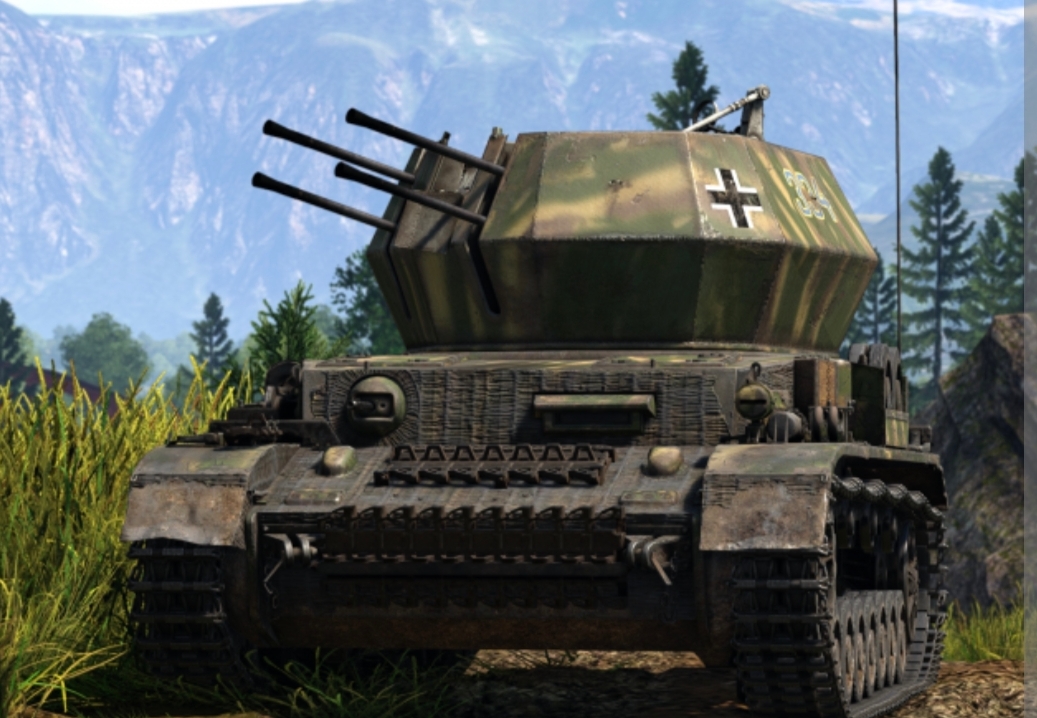
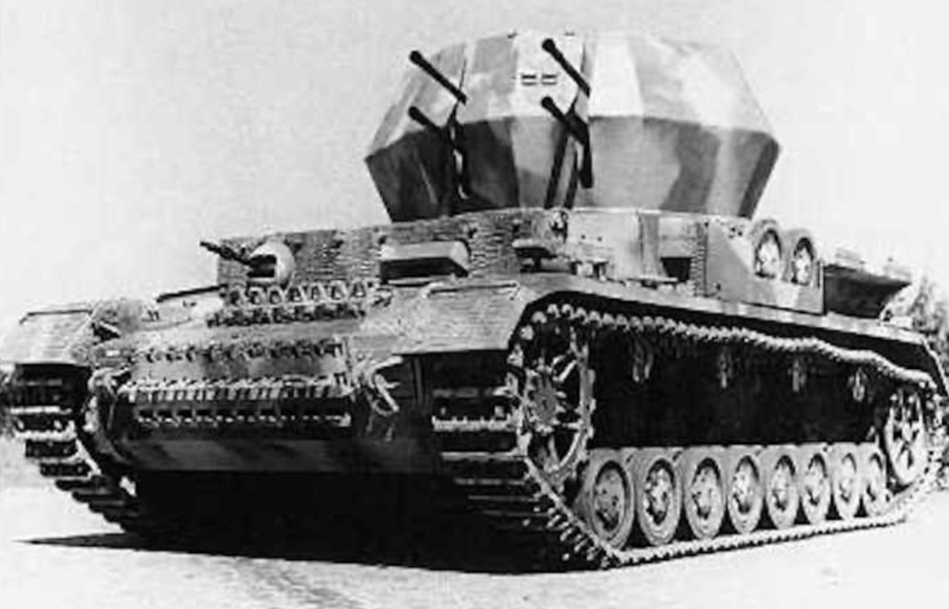
WIRBELWIND
DESCRIPTION
Flakpanzerkampfwagen IV Wirbelwind (German for “Whirlwind”) or Sd.Kfz. 161/4 was a German self-propelled anti-aircraft gun of the Second World War, built on the chassis of the Pz.IV medium tank. Development of this SPAAG began at the start of 1944, when the Wehrmacht needed to strengthen the air defense of its units. To reduce development time, engineers used the hull of the Pz.Kpfw.IV Ausf.G without modification and mounted an open-topped turret armed with four 20 mm FlaK 38 automatic cannons. The first prototype fully met military requirements, and mass production soon began in Silesia, on the territory of present-day Poland. However, the insufficient firepower of the 20 mm guns led to the Ostwind, armed with a single 37 mm cannon, gradually replacing the Wirbelwind in late 1944. In total, approximately 100 Wirbelwind SPAAGs were produced.
SPECIFICATIONS
Crew: 5 men
Armor protection: (front / side / rear)
hull: 80 / 30 / 20 mm
turret (open nine-sided turret): 16 / 16 / 16 mm
Maximum speed:
forward: 39 km/h
reverse: 7 km/h
Power-to-weight ratio: 12 hp/t
Engine power: 300 hp
Weight: 25.0 t
Armament: 4 × 20 mm FlaKvierling 38 automatic cannons
Additional armament: MG 34
Ammunition: approximately 3200 rounds
Ammunition (machine gun): 1200 rounds
Magazine size: 20 rounds (per barrel)
Machine gun belt size: 150 rounds
Reload time: 4–5.2 seconds (combined)
Range: 200 km
Height: 2.7 m
Length: 5.92 m
Width: 2.95 m
Gun angles:
horizontal: 360°
vertical: −10° / +90°
Rate of fire: up to 1920 rounds/minute (combined)
WOULD YOU LIKE TO SEE IT IN THE GAME?
-
YES
-
NO
AS A
-
TECH TREE VEHICLE
-
EVENT VEHICLE
-
EVENT SQUAD
-
PREMIUM SQUAD
-
PREMIUM VEHICLE
AT BR
-
I
-
II
-
III
-
IV
-
V
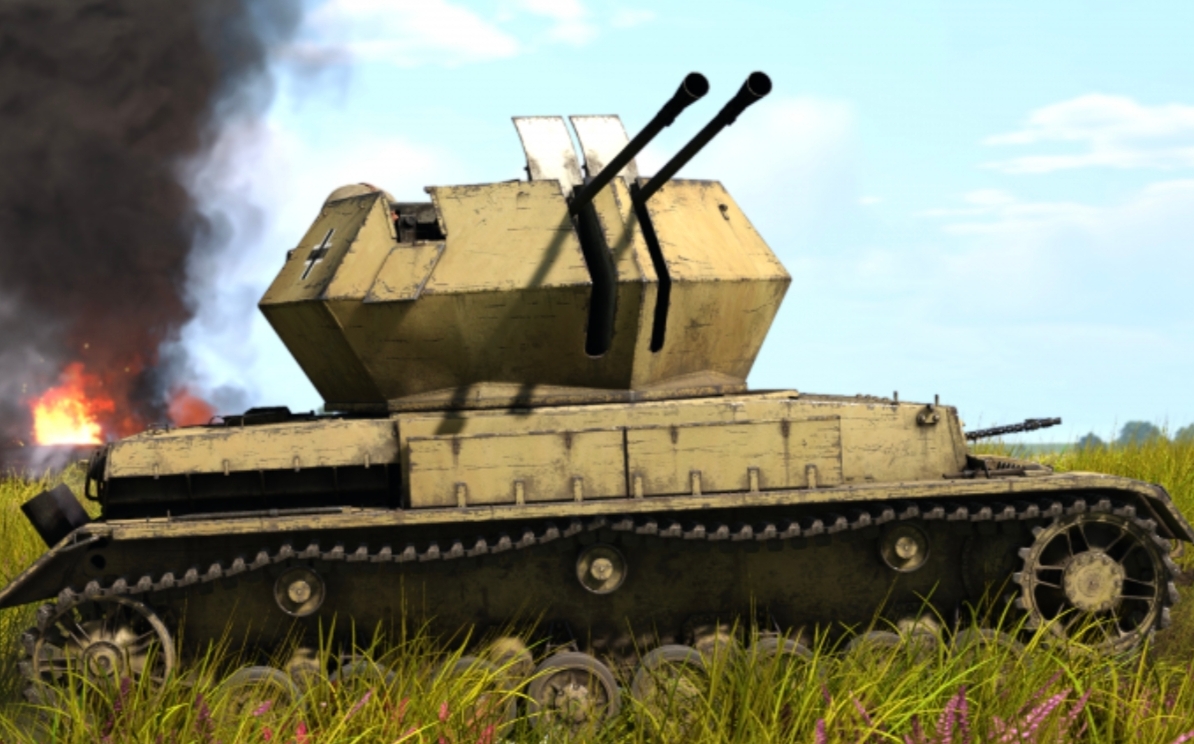
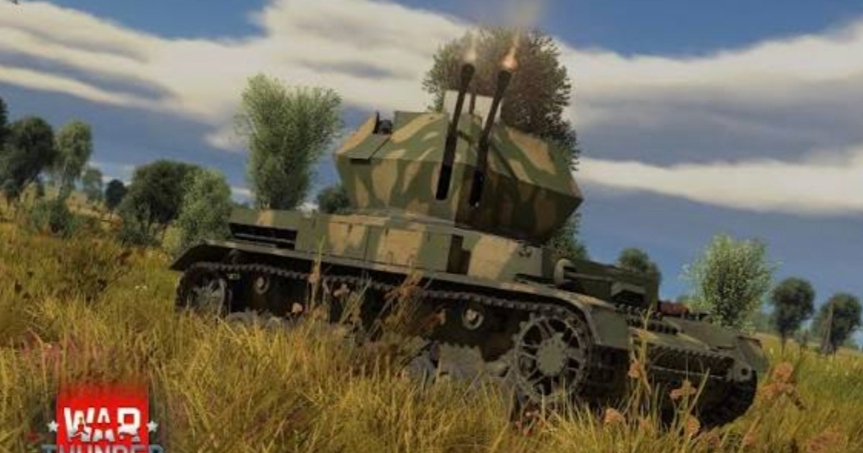
OSTWIND II
DESCRIPTION
Ostwind II (German for “East Wind”) was a prototype German self-propelled anti-aircraft gun of the Second World War, built on the chassis of the Pz.IV medium tank. It differed from the original Ostwind by its new armament, consisting of two twin-mounted 37 mm FlaK 44 automatic anti-aircraft guns. According to some sources, several prototypes were assembled in 1945, but the vehicle never entered mass production before the end of the war.
SPECIFICATIONS
Crew: 5 men
Armor protection: (front / side / rear)
hull: 80 / 30 / 20 mm
turret: 25 / 25 / 25 mm
Maximum speed:
forward: 39 km/h
reverse: 7 km/h
Power-to-weight ratio: 12 hp/t
Engine power: 300 hp
Weight: 25 t
Armament: 2 × 37 mm FlaK 44 automatic anti-aircraft guns
Ammunition: 992 rounds (combined)
Clip size: 8 rounds
Reload time: 0.2–0.3 seconds
Range: 200 km
Height: 2.9 m
Length: 5.92 m
Width: 2.95 m
Gun angles:
horizontal: 360°
vertical: −10° / +87°
Rate of fire:
250 rounds/minute per barrel (up to 500 rounds/minute combined)
Additional armament: 7.92 mm MG 34 machine gun
Machine gun ammunition: 1200 rounds
Belt size: 150 rounds
WOULD YOU LIKE TO SEE IT IN THE GAME?
-
YES
-
NO
AS A
-
TECH TREE VEHICLE
-
EVENT VEHICLE
-
EVENT SQUAD
-
PREMIUM SQUAD
-
PREMIUM VEHICLE
AT BR
-
I
-
II
-
III
-
IV
-
V
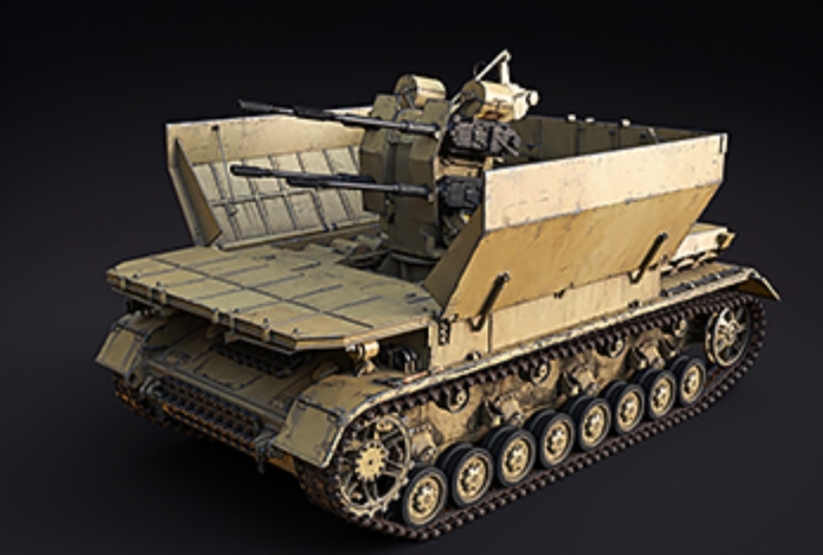
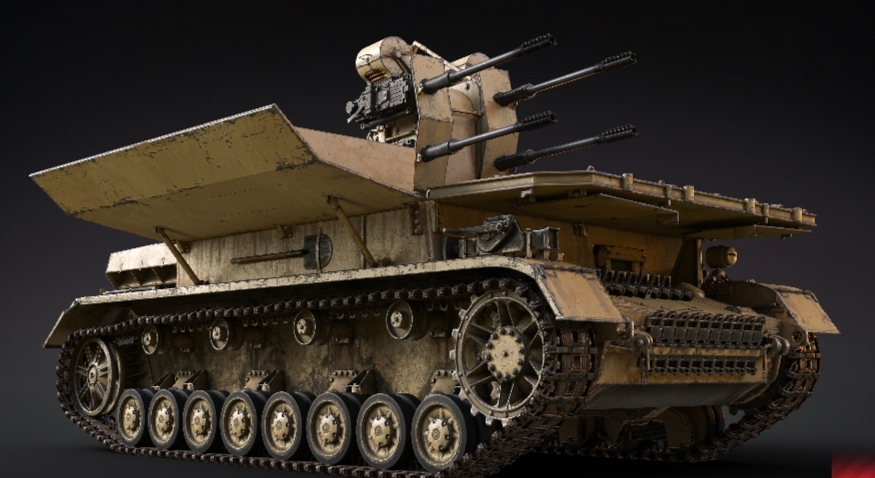
ZERSTÖRER 45
DESCRIPTION
Flakpanzer IV (3 cm Flakvierling) “Zerstörer 45” was a German experimental self-propelled anti-aircraft gun. During the second half of the Second World War, Germany lost air superiority, causing its ground forces to come under frequent air attack. To improve protection for frontline units, the new Flakpanzer 38 SPAAG was developed and entered production by 1943. However, its firepower and armor protection were still considered insufficient, leading German engineers to begin work on anti-aircraft vehicles based on the Panzer IV chassis, resulting in the Wirbelwind and Ostwind. Nevertheless, these vehicles also had shortcomings: the quadruple 20 mm guns lacked range and destructive power, while the 37 mm guns lacked sufficient volume of fire. Therefore, in November 1944, the Ostbau-Sagan workshop, which had previously developed other anti-aircraft vehicles, received a requirement to create a vehicle armed with a quadruple mount of 30 mm MK 103 cannons. The designers chose the chassis of the Möbelwagen SPAAG as the basis, replacing its single 37 mm gun. Two prototypes were built to test the concept, and future development plans included mounting the guns in a Wirbelwind-style turret, but this never occurred due to the end of the war.
SPECIFICATIONS
Crew: 5 men
Armor protection: (front / side / rear)
hull: 50 / 30 / 20 mm
turret: 16 / 16 / 16 mm
Maximum speed:
forward: 39 km/h
reverse: 7 km/h
Power-to-weight ratio: 12 hp/t
Engine power: 300 hp
Weight: 25 t
Armament: 4 × 30 mm MK 103/38 automatic cannons
Ammunition: 840 rounds
Belt size: 30 rounds (per barrel)
Reload time: 4–5 seconds
Range: 320 km
Height: 2.76 m
Length: 5.92 m
Width: 2.90 m
Gun angles:
horizontal: 360°
vertical: −7° / +80°
Rate of fire:
450 rounds/minute per barrel
up to 1800 rounds/minute combined
WOULD YOU LIKE TO SEE IT IN THE GAME?
-
YES
-
NO
AS A
-
TECH TREE VEHICLE
-
EVENT VEHICLE
-
EVENT SQUAD
-
PREMIUM SQUAD
-
PREMIUM VEHICLE
AT BR
-
I
-
II
-
III
-
IV
-
V
VFW
DESCRIPTION
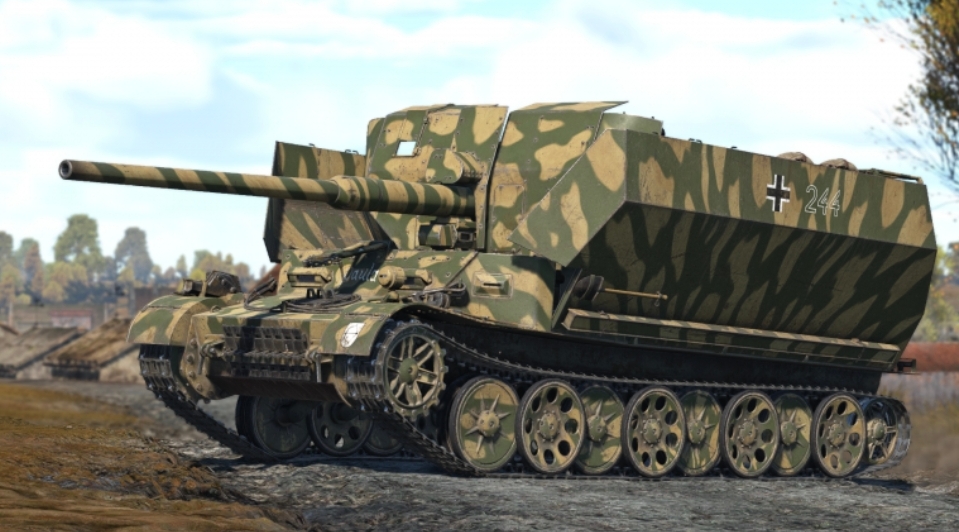
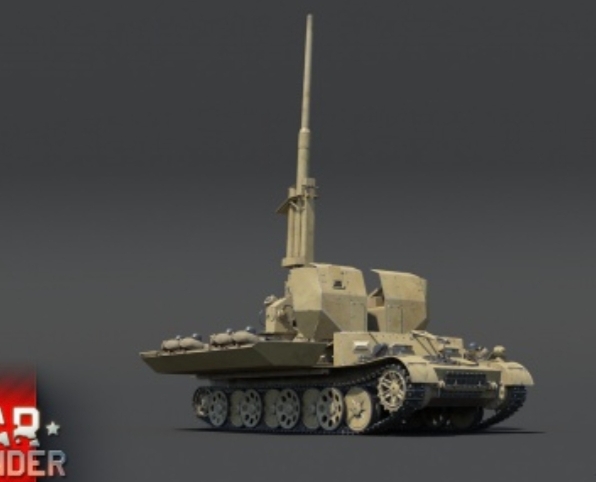
VFW was a German experimental self-propelled anti-aircraft gun of the Second World War. It was developed by Krupp in 1942. The purpose of the project was to provide mobility to heavy 88 mm anti-aircraft artillery pieces. The first and only VFW prototype was completed in late 1942. Following trials conducted in 1943–1944, the Wehrmacht Anti-Aircraft Command and personally Albert Speer considered mass production of the VFW impractical. Furthermore, by 1944, the concept of mobile 88 mm guns for protecting armored formations had largely lost its relevance. The VFW never participated in combat operations, and its ultimate fate remains unknown.
SPECIFICATIONS
Crew: 5 men
Armor protection: (front / side / rear)
hull: 20 / 14 / 14 mm
gun shield: 12 / 0 / 0 mm
Maximum speed:
forward: 58 km/h
reverse: 6 km/h
Power-to-weight ratio: 13.1 hp/t
Engine power: 340 hp
Weight: 26 t
Armament: 8.8 cm FlaK 41 gun
Ammunition: 30 rounds
Clip size: 1 round
Reload time: 4–5 seconds
Range: 200 km
Height: 2.8 m
Length: 7.0 m
Width: 3.0 m
Gun angles:
horizontal: 360°
vertical: −3° / +90°
WOULD YOU LIKE TO SEE IT IN THE GAME?
-
YES
-
NO
AS A
-
TECH TREE VEHICLE
-
EVENT VEHICLE
-
EVENT SQUAD
-
PREMIUM SQUAD
-
PREMIUM VEHICLE
AT BR
-
I
-
II
-
III
-
IV
-
V
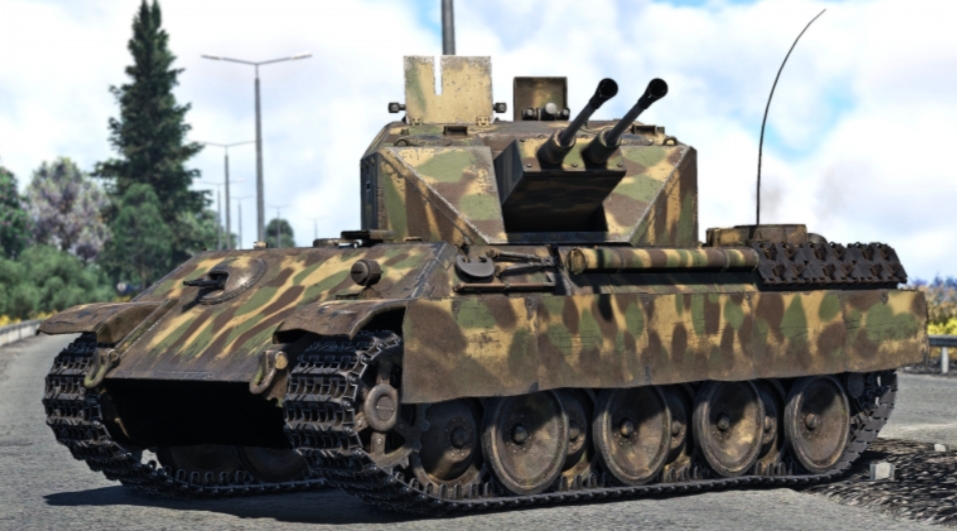
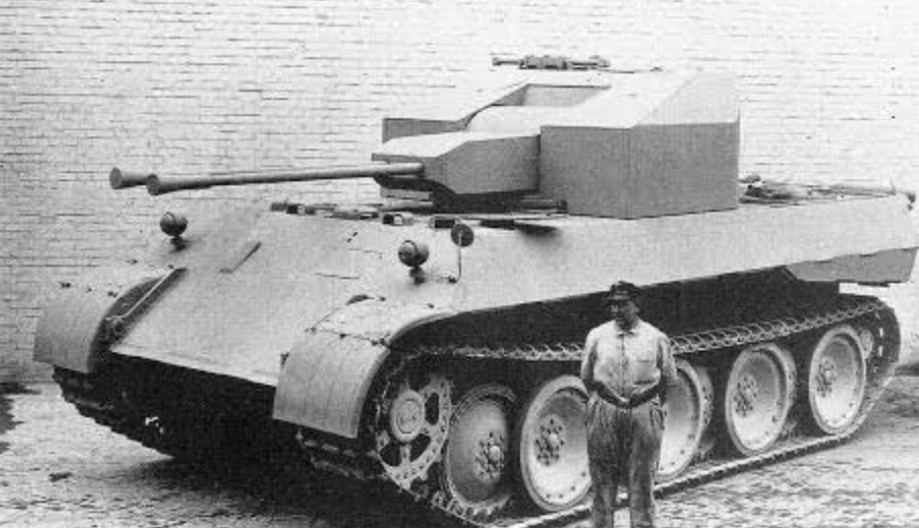
FLAKPANZER 341
DESCRIPTION
3.7 cm Flakzwilling auf Panther Fahrgestell Flakpanzer 341, or simply Flakpanzer 341, was a German self-propelled anti-aircraft gun project of the Second World War based on the Panther tank and developed by Rheinmetall-Borsig. By the second half of the war, the Wehrmacht was facing increasingly frequent attacks by ground-attack aircraft, whose strikes caused significant damage not only to rear-area supply columns but also to armored units. As a result, a growing number of anti-aircraft vehicles entered service, ranging from improvised conversions based on captured equipment to purpose-built vehicles based on German tank chassis. Under a project presented by Rheinmetall in May 1943, a SPAAG based on the new Panther tank and armed with four 20 mm cannons was proposed. The design was later significantly revised, with the armament changed to two 3.7 cm FlaK 43 L/89 guns. To demonstrate the concept to the military, a wooden mock-up turret was mounted on a Panther D hull. In 1944, amid the strategic bombing campaign against German industry and the Allied landings in Normandy, work on the project slowed considerably, and in early 1945 it was terminated entirely. No Panther-based SPAAG of this design was ever completed in metal.
SPECIFICATIONS
Crew: 5 men
Armor protection: (front / side / rear)
hull: 80 / 50 / 40 mm
turret: 60 / 40 / 40 mm
Maximum speed:
forward: 46 km/h
reverse: 8 km/h
Power-to-weight ratio: 13.4 hp/t
Engine power: 600 hp
Weight: 44.8 t
Armament: 2 × 37 mm Gerät 341 automatic cannons
Ammunition: 1500 rounds
Clip size: 5 rounds
Reload time: 0.4–0.5 seconds
Additional armament: 7.92 mm MG 34 machine gun
Machine gun ammunition: 1200 rounds
Belt size: 150 rounds
Range: 250 km
Height: 3.0 m
Length: 6.87 m
Width: 3.42 m
Gun angles:
horizontal: 360°
vertical: −5° / +90°
Rate of fire:
250 rounds/minute per barrel
up to 500 rounds/minute combined
WOULD YOU LIKE TO SEE IT IN THE GAME?
-
YES
-
NO
AS A
-
TECH TREE VEHICLE
-
EVENT VEHICLE
-
EVENT SQUAD
-
PREMIUM SQUAD
-
PREMIUM VEHICLE
AT BR
- I
- II
- III
- IV
- V
Зенитки для Германии в прокачку - Техника - Enlisted — официальный форум (Suggestion like this but on RU forum)
Thank you for attention!